
Review · CHARLESTON
Highlights of Charleston Guided Walking Tour
Charleston’s past comes into focus on foot, one churchyard, painted row of houses, and old public building at a time. This two-hour walk links the French Quarter and South of Broad, pairing famous sights with less obvious details about religion, commerce, politics, slavery, and preservation. Guides such as Bill Harris and Vanna bring strong subject knowledge, humor, and plenty of room for questions.
I like the route for two reasons. First, it gives a first-time visitor a useful map of central Charleston without wasting time on far-flung sights. Second, it treats the city’s difficult past as part of the main story, not a footnote. The main caution is simple: this can become a talk-heavy tour. One guide may keep you in place for long stretches, so people hoping for constant walking should know what they are signing up for.
Key points to know before you book
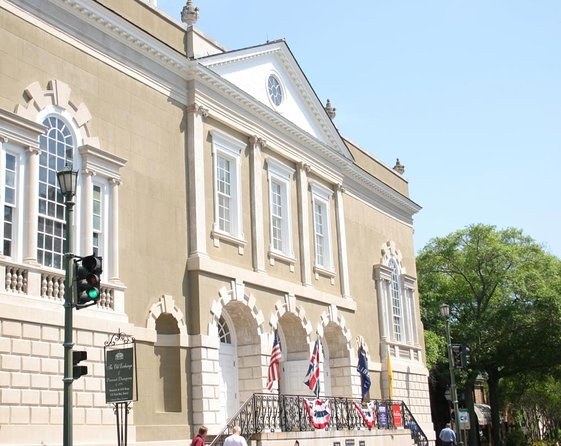
- Charleston’s core in two hours: The route connects the French Quarter and South of Broad, ending near Meeting and Broad Streets.
- A history-first approach: Expect context about Charleston, the colonies, religion, politics, slavery, and the forces that shaped the city.
- Six major stops: St. Philip’s Church, the French Huguenot Church, the Pink House Gallery, the Old Slave Mart Museum, the Old Exchange, and Rainbow Row.
- Guide quality matters: Bill Harris receives especially strong praise for his humor, warmth, and command of local history. Vanna is also described as personable and engaging.
- Mostly outdoors: Bring water, sun protection, rain gear, and comfortable shoes. Restrooms may not be available along the route.
- A small-group format: The maximum group size is 20, but the pace and amount of walking can vary with the guide and group.
What this Charleston walk actually gives you
This is not a hop-on, hop-off overview. You move through a compact part of old Charleston at street level, with the guide explaining what happened here and why the buildings still matter.
That difference is important. A carriage or trolley can show you more ground, but a walking tour lets you pause at doorways, church fronts, alleys, and public squares. You can look closely at the architecture and ask questions without shouting over an engine.
The route begins at 200 East Bay Street and generally finishes near the intersection of Meeting Street and Broad Street. That makes the walk useful early in a Charleston visit. You get your bearings, see several central landmarks, and finish in an area where you can continue sightseeing on your own.
The tour lasts about two hours. The exact rhythm depends on the guide. Bill Harris, in particular, is praised for giving a broad account of Charleston and then connecting individual places to larger events in American and world history. That approach can make the city easier to understand, but it also means you may spend a while listening at one location.
More City Highlights Walking Tours in the USA:
- Historic Charleston Guided Sightseeing Walking Tour
★ 5.0 · 6,216 reviews - Downtown Nashville Guided Sightseeing Walking Tour
★ 5.0 · 1,304 reviews - Boston History Tour: Scenic Walk Through Time & Landmarks
★ 5.0 · 627 reviews
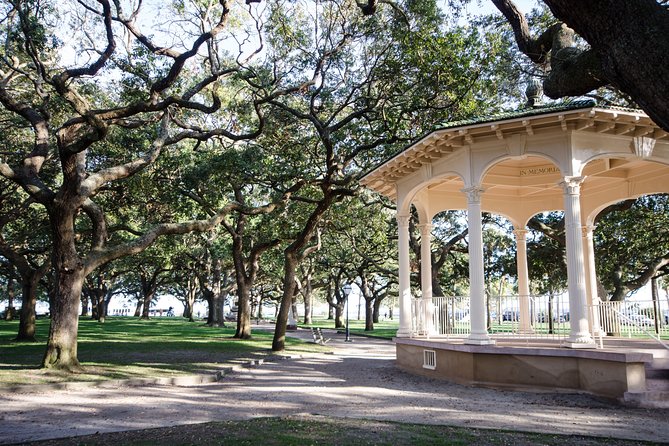
St. Philip’s Church and the shape of old Charleston
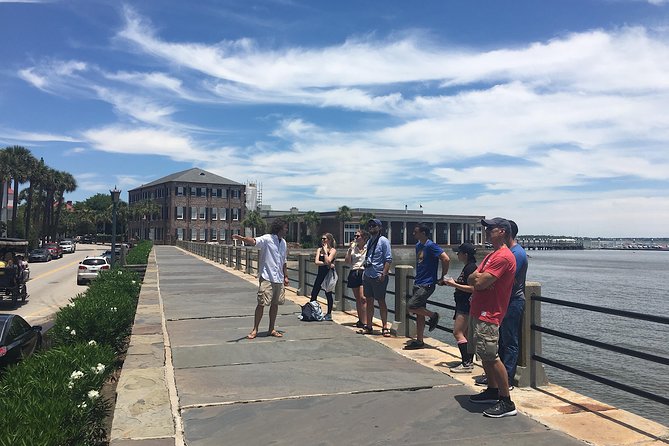
The first stop is St. Philip’s Church, home to Charleston’s longest-meeting congregation. You view the historic church from the outside, with no admission charge included or required for this stop.
The value here is not simply the building. A church that has served the same congregation for such a long period gives the guide a natural way to explain Charleston’s religious and civic life. The stop also helps establish how central churches were to the city’s identity and public affairs.
Allow about 10 minutes. That is enough time to see the exterior and hear the main story, though the guide may add wider context. If you prefer a tour that keeps moving, this is one of the places where you may feel the pace is slow. If you like dates, social background, and connections between religion and local power, you will likely appreciate the pause.
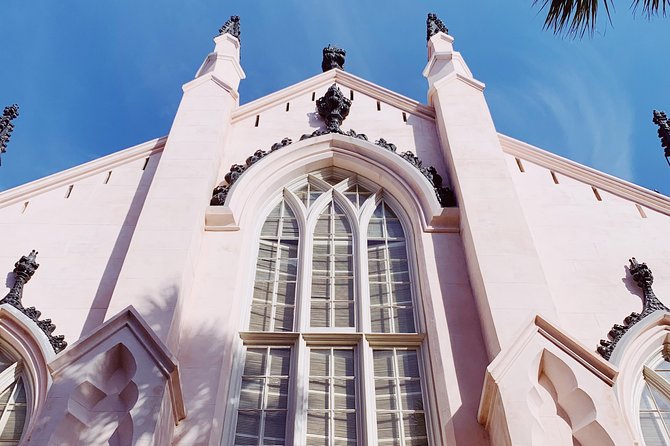
The French Huguenot Church and a distinct religious story
Next comes the French Huguenot Church, described as the only church of its denomination in North America. Again, you view the site from outside, with admission included because there is no paid entry listed for the stop.
This is one of the more useful stops for understanding how Charleston developed as a port city with several European religious and cultural influences. The church adds a different thread to the story told at St. Philip’s. Instead of treating old Charleston as a row of pretty façades, the guide can show you how groups with different beliefs helped shape the town.
The stop lasts around 10 minutes. Listen for the parts that explain migration, faith, and community life. Those details help turn an attractive building into a place with a reason for being there.
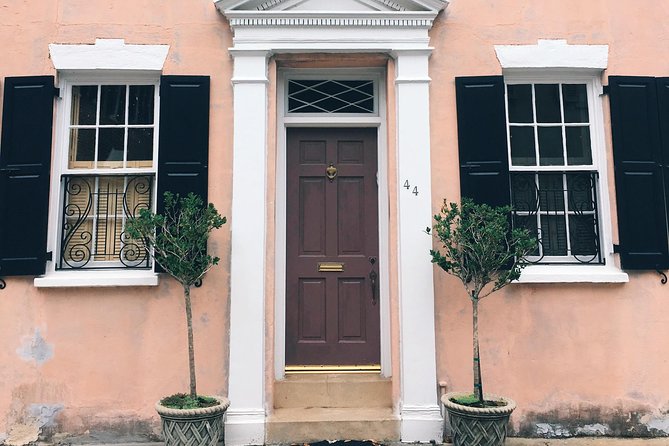
The Pink House Gallery and Charleston’s oldest private residence
The Pink House Gallery is presented as the oldest private residence in Charleston. You view the property from the route, with no admission ticket included.
This is a classic Charleston stop: small scale, highly photogenic, and easy to appreciate even if you are not an architecture specialist. The house gives you a chance to look at the city’s residential side after the larger church landmarks.
The guide’s explanation is what makes the stop worthwhile. A quick photograph tells you that the building is old and distinctive. A good explanation places it within Charleston’s development and shows how private homes fit into the city’s wider story.
Expect another 10-minute pause. The exact amount of detail can vary. Bill’s style, based on the descriptions of his tours, is to add political and social context rather than offer only a list of dates. That makes the stop more substantial, but it may feel like more history than some families expect from a short city walk.
More walks with a guide around the USA:
- History and Hauntings of Salem Guided Walking Tour
★ 5.0 · 14,564 reviews - Cambridge: Harvard University Student-Guided Walking Tour
★ 4.6 · 3,931 reviews - Harvard University Campus Guided Walking Tour
★ 4.5 · 3,632 reviews - Historic Savannah Guided Walking Tour
★ 5.0 · 2,918 reviews
The Old Slave Mart Museum and the hard center of the story
The Old Slave Mart Museum is the most important stop for visitors who want Charleston’s past presented honestly. It is described as the only museum dedicated to the history of enslaved people in Charleston.
Admission is not included in the walking tour ticket. The tour stop itself allows you to view the museum, but you should confirm current opening details and ticket arrangements if you want to go inside. The supplied information does not promise an interior visit as part of the tour.
This distinction matters. A guide can explain the site, its place in Charleston’s commercial life, and the broader system of slavery, but a brief outdoor stop cannot offer the same experience as a museum visit. If this subject is a main reason for your visit, consider setting aside extra time to return independently.
The strongest guides appear to place slavery within the larger political and economic story of Charleston rather than treating it as a brief apology before returning to architecture. That is a major strength. The city’s beautiful streets make more sense when you understand the labor, wealth, laws, and human suffering that helped build them.
This can also be an emotionally serious part of the walk. Families should decide how much historical detail is suitable for younger children. Children are allowed, but they must be accompanied by an adult, and the tour is designed mainly with adults in mind.
The Old Exchange and Provost Dungeon
The Old Exchange and Provost Dungeon marks the pre-Revolutionary center of Charleston’s economic life. It is another site where admission is not included.
The building helps explain Charleston before and during the Revolutionary period, when commerce, government, and political action met in the same small urban core. The name also points to the darker side of the site, since the Provost Dungeon was connected with detention.
You should clarify with your guide what can be viewed from the route and what would require a separate admission. The walking tour does not promise an interior visit. Even from outside, the building gives the guide a strong setting for explaining how Charleston functioned as a port and colonial center.
This is also where a history-focused guide can add unusual value. The most praised guides do not simply point at a façade. They connect the building to the colony, the coming Revolution, and the economic forces that shaped local power. If you enjoy context, this may be one of the best stops on the route.
Rainbow Row and the postcard version of Charleston
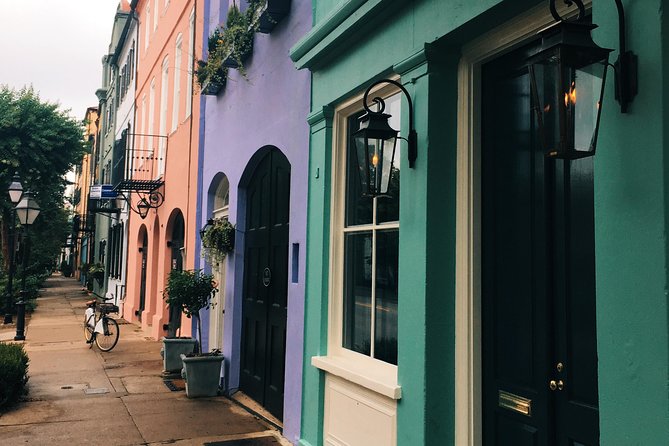
The walk finishes at Rainbow Row, Charleston’s most photographed sight. The colorful row of historic houses is free to view and makes an obvious closing point for the tour.
Rainbow Row delivers the visual moment many people expect from Charleston. After churches, museums, and political buildings, the bright façades offer an easy final photograph. It is also a useful reminder that preservation is part of the city’s modern identity.
Do not let the pretty colors make this stop feel shallow. A guide can use the row to explain how Charleston’s old buildings survived, how the city presents itself today, and why preservation can shape the experience of a historic district.
The published end point is 71 Broad Street, but the walk usually finishes near Meeting and Broad Streets. Your exact finish can change with the group’s speed and the guide. That is not a problem for most people, though you should avoid scheduling a tight reservation immediately afterward.
The guide can make or break the experience
The clearest strength of this tour is the person leading it. Bill Harris is repeatedly singled out for humor, warmth, strong historical command, and a willingness to discuss difficult or less familiar parts of Charleston’s past. Descriptions of his style suggest a lively guide who may talk about religion, national politics, local personalities, and the city’s place in wider events.
That personality is a plus if you enjoy a tour with a point of view. You are not getting a neutral audio recording or a rapid list of facts. You are getting an interpreter who may ask what level of history your group wants and adjust the material.
Vanna is also described as personable, funny, and well prepared. Since guide assignments can change, you should not assume a particular person will lead your departure. If you especially want Bill, you can ask the operator about guide availability, but it cannot be guaranteed from the information provided.
There is one important tradeoff. A guide who knows a great deal can sometimes say too much. One account describes long periods standing in one place and limited walking. That criticism is worth taking seriously. Ask at the start how much detail your group prefers, and wear shoes that remain comfortable while standing.
Who will get the most from this walk
I would choose this tour for a first visit, especially if you want a quick orientation before exploring Charleston on your own. The route covers major landmarks in a compact area and gives you useful background for later visits to museums, churches, and historic homes.
It suits adults, older children, and anyone who enjoys history told as a connected story. Families can take it, but parents should prepare children for serious material at the Old Slave Mart and for periods of standing still.
History teachers, students, and curious independent visitors may find the tour especially rewarding. The strongest guide style here appears to go beyond dates and names, explaining why Charleston developed as it did and how the city’s past still affects its public image.
This is less suitable for someone who wants a light sightseeing stroll with only short comments. It is also not ideal if you have trouble walking or standing for two hours. The tour calls for a moderate level of physical fitness, and the route is almost entirely outdoors.
Timing, weather, and what to carry
Check in at the meeting point 5 to 10 minutes before departure. The group cannot wait for late arrivals, so arriving early is the sensible choice.
Charleston heat can make a two-hour walk feel longer. Bring bottled water because it may not be available for purchase along the route. Sunscreen, a hat, sunglasses, or a parasol are recommended, along with comfortable shoes.
The tour generally runs in rain, but dangerous or disruptive conditions such as lightning, flooding, or high winds can lead to cancellation. Bring your own rain gear rather than assuming the operator supplies it.
Restrooms are not always accessible along the route. Use one before meeting the guide. Service animals are allowed, but ordinary pets are not. Strollers should be discussed with the operator in advance.
If you drive, parking fees are separate. The recommended garages are at 1 Cumberland Street and 89 Cumberland Street, both described as about a five-minute walk from the meeting point. Public transportation is also nearby.
Value, admissions, and cancellation terms
The value here is the guide’s interpretation, not a package of admissions. The walking tour includes the guide, while entry to the Old Slave Mart Museum and Old Exchange is not included. The other listed viewing stops are free.
That can make the tour a good first step for visitors who want to decide which sites deserve more of their time and money. You get a compact introduction before choosing to return to a museum or paid historic interior. If you want every building entered as part of one ticket, this is not that kind of experience.
Free cancellation is available up to 24 hours before the start time for a full refund. Inside that window, changes and cancellations are not accepted for a refund. Poor weather may lead to a different date or a full refund if the operator cancels.
Should you book the Highlights of Charleston Guided Walking Tour?
Book it if you want Charleston explained by a strong storyteller rather than simply photographed. The best reason to choose it is the chance to hear the city’s religious, commercial, political, and enslaved histories connected in one walk.
Go in ready to listen. You may cover less ground than expected because the guide can spend substantial time at a stop. Bring water, protection from the sun, and patience for serious subject matter.
For a first visit, I think the route offers solid value, especially when led by a guide such as Bill Harris or Vanna. If you want a brisk stroll, minimal commentary, or guaranteed interior admissions, choose another format. If you want an honest, thoughtful introduction to old Charleston, this is a strong pick.
FAQ
How long is the Highlights of Charleston Guided Walking Tour?
The tour lasts approximately two hours.
Where does the tour begin?
It begins at 200 East Bay Street, Charleston, South Carolina 29401.
Where does the tour finish?
It generally ends near the intersection of Meeting Street and Broad Street. The exact finish can vary based on the group’s walking speed and the guide.
What sights are included on the route?
The route includes St. Philip’s Church, the French Huguenot Church, the Pink House Gallery, the Old Slave Mart Museum, the Old Exchange and Provost Dungeon, and Rainbow Row.
Are museum admissions included?
Admission to the Old Slave Mart Museum and the Old Exchange is not included. The listed church, residence, and Rainbow Row stops are viewing stops with no admission ticket required.
What should I bring?
Bring comfortable walking shoes, bottled water, sunscreen, a hat, sunglasses, and rain gear when needed. Restrooms may not be available along the route.
Are children and pets allowed?
Children may attend but must be accompanied by an adult. Registered service animals are allowed, but other pets are not permitted.
What happens if the weather is bad?
Tours usually operate in rain, but the operator may cancel in dangerous conditions such as lightning, flooding, or high winds. If the tour is canceled, you may reschedule or receive a full refund.
New walking tours around the USA
- NYC: Walking Tour with Local Guide and 30+ Top NYC Sights★ 4.5 · 248 reviews
- New York City: Gangsters and Ghosts 2-Hour Walking Tour★ 4.7 · 615 reviews
- NYC: History of Slavery & Underground Railroad Walking Tour★ 4.7 · 87 reviews
- New York City’s Hell’s Kitchen: Walking Food Tour★ 4.8 · 200 reviews
- New York City: Central Park Walking Tour★ 4.7 · 82 reviews
- NYC: Brooklyn Bridge and DUMBO Guided Walking Tour★ 4.8 · 93 reviews
- New Orleans: French Quarter Ghost and Legends Walking Tour★ 4.3 · 129 reviews
- New Orleans: Witches Coven Garden District Walking Tour★ 4.9 · 113 reviews
Charleston Walking Tours, side by side.

Historic Charleston Guided Sightseeing Walking Tour
Read our review →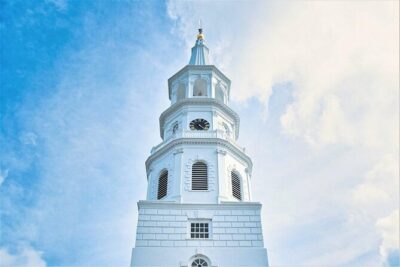
Ghosts of Charleston Night-Time Walking Tour with Unitarian Church Graveyard
Read our review →
Hidden Alleyways and Historic Sites Small-Group Walking Tour
Read our review →
Charleston French Quarter or Brunch Food Tour with 7+ Tastings
Read our review →
Charleston Haunted Booze and Boos Ghost Walking Tour
Read our review →
Charleston: Old Walled City Historical Walking Tour
Read our review →
Charleston: History and Architecture Guided Walking Tour
Read our review →
Charleston: 90-Minute Ghost and Dungeon Walking Tour
Read our review →Lists this walk sits on