
Review · VIETNAM
Hue Customizable Tour with Imperial Citadel & Forbidden City
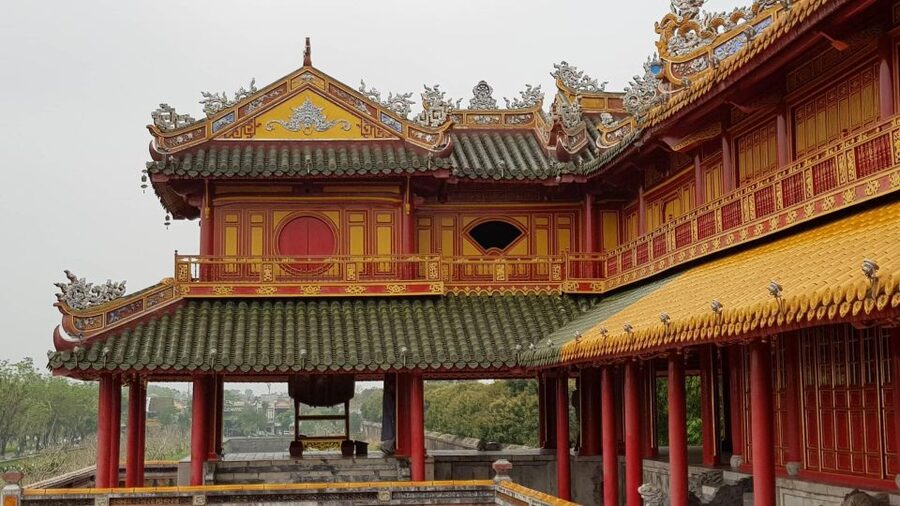
Hue’s Imperial Citadel makes far more sense with someone to explain it. Behind the walls are ceremonial gates, royal temples, bronze urns, damaged palace foundations, and the former Forbidden Purple City. A good guide connects these pieces to the Nguyen emperors, their families, Confucian beliefs, and the workings of court life.
I like the choice between a focused 2.5-hour walking tour and a private car day that can include tombs and Thien Mu Pagoda. I also like the guides’ personal approach: Misa, Nhi, Ha, Nhien, Linh, and Duy are repeatedly praised for clear English, warmth, humor, and a pace that leaves time for questions and photographs.
The main catch is simple: entrance tickets are extra, and the private car option includes a driver rather than a licensed tour guide. Pickup is included only for the private car option and selected central locations, so check the details before booking.
Key points to know before booking
- The walking tour begins at the four bronze cannons by Ngan Gate, not at your hotel.
- You spend about two and a half hours inside the Citadel, with the Forbidden Purple City as the main focus.
- Guides explain royal life, including emperors, queens, minor wives, concubines, eunuchs, rituals, and palace symbolism.
- The private car option is flexible, with choices including Thien Mu Pagoda, Minh Mang Tomb, Tu Duc Tomb, Khai Dinh Tomb, and the abandoned water park.
- Imperial City admission costs 200,000 Vietnamese dong per adult, with combo tickets available for the Citadel and royal tombs.
- The tour suits families and first-time visitors, especially if you want the buildings to have meaning rather than simply taking photographs.
Why a guide changes the Imperial Citadel
Hue’s Citadel is not a single palace that you walk through from front to back. It is a large royal compound with courtyards, temples, ceremonial buildings, gardens, gates, and open spaces. Some structures are beautifully restored. Others were damaged during war and survive only as fragments or foundations.
Without help, you can still enjoy the tiled roofs and formal courtyards, but the symbols and purpose of each building are easy to miss. A guide can explain why certain animals appear in decorations, how numbers carried meaning, and why the layout reflects Confucian order, Feng shui, and Buddhist ideas.
That context is the real value here. Misa, Nhi, Ha, Nhien, Linh, Hoa, Hung, and Duy are among the guides associated with the walking tours. The strongest descriptions of the experience focus on their ability to make complicated royal history easy to follow. Misa, in particular, is praised for using questions, humor, and architectural details to keep the walk lively.
The tone is generally personal rather than academic. You can ask about the Nguyen emperors, court customs, family life, or the role of individual buildings. Several guides also take photographs, suggest places for food and coffee afterward, and adjust the pace for heat or rain.
More streets worth walking around Vietnam:
- Ho Chi Minh City Street Food Tour & Sightseeing By Motorbike
★ 5.0 · 9,413 reviews - Private Street Food Evening Walking Tour in Ho Chi Minh City
★ 5.0 · 3,175 reviews - [HOT] Hanoi Old Quarter Walking Street Food – Small Group Tour
★ 5.0 · 2,163 reviews
Starting at the Nine Holy Cannons
Meet your guide near the four bronze cannons at Ngan Gate, also called Cua Ngan. Your guide holds an A4 sheet with your name, which helps at a meeting point where another group may be waiting near the five cannons on the opposite side.
The cannons are part of the story before you even enter the main royal precinct. Hue artisans cast the nine original cannons in 1803, during the second year of Emperor Gia Long’s reign. They are regarded as important bronze works, and their present position dates from the reign of Emperor Khai Dinh.
Allow a few minutes here for photographs and orientation. This is also where the walking tour differs from the private car option. The guide-led walk starts at the Citadel, while the private car can collect you from a central Hue hotel, Hue Railway Station, or selected transport points.
Flag Tower and Noon Gate
The Flag Tower rises from the southern side of the Citadel. It was part of the Nguyen Dynasty’s defensive and ceremonial architecture, and the royal flag was displayed here. The open setting makes it one of the easiest places to understand the scale of the Citadel walls and fortifications.
From here, the route continues toward Noon Gate, or Ngo Mon Gate. Built in 1833 under Emperor Minh Mang, it served as the principal southern entrance and was used for royal ceremonies and troop movements.
Your guide will help you separate the gate’s practical role from its symbolic one. It was not simply an entrance for anyone who happened to be passing by. Access to the inner areas reflected rank and ceremony, and the gate helped frame the formal approach to the royal center.
This part of the walk is exposed, so morning departures are sensible in hot weather. The route includes plenty of open ground. Bring water, wear practical shoes, and use sun protection.
Thai Hoa Palace and the Nguyen throne
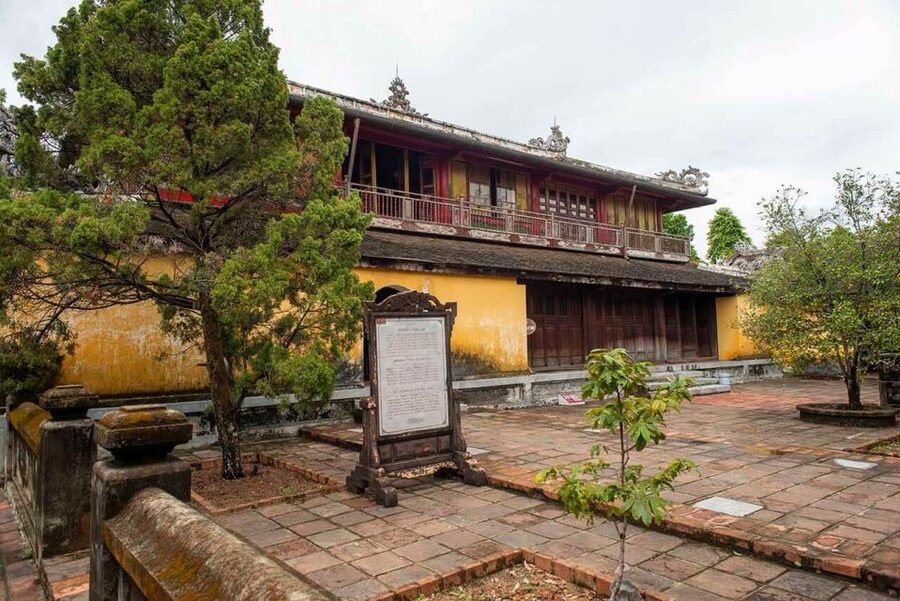
The Supreme Harmony Palace, or Thai Hoa Palace, is one of the most important stops. Thirteen Nguyen emperors, from Gia Long through Bao Dai, were crowned here. In the old royal system, this was the symbolic center of the country.
The palace is valuable not just for its appearance but for the ceremonies connected with it. Your guide can explain how the building functioned within the court and why its name suggests harmony between ruler, government, and the wider order of society.
This is one of the places where a guide earns the fee. A quick photograph cannot tell you why the palace mattered or how the emperor’s position was presented through architecture and ritual. The explanations are pitched for general visitors, not for specialists, which makes the history easier to absorb.
Same streets, a different story:
- Super Niche Walking Street Food Tour in Ho Chi Minh City
★ 5.0 · 1,636 reviews - Private Walking Tour of Hanoi City
★ 5.0 · 1,251 reviews - Hanoi: Small-Group Street Food Walking Tour
★ 4.8 · 1,165 reviews - Private Hanoi Street Food Walking Tour With Real Foodie
★ 5.0 · 1,042 reviews
Hien Lam Pavilion, the dynastic urns, and royal ancestors
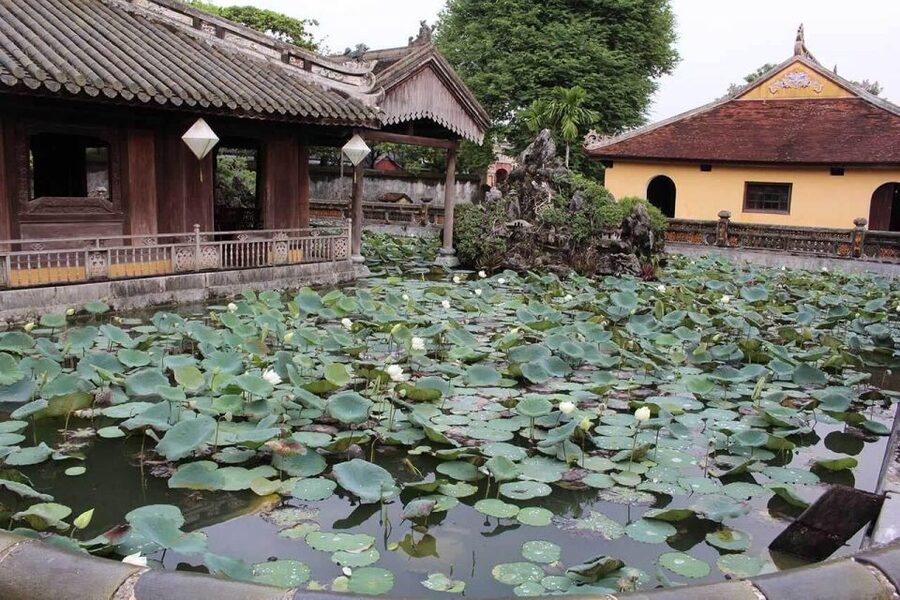
The route then moves through Hien Lam Pavilion and toward the Nine Dynastic Urns. Emperor Minh Mang commissioned the urns in 1835, and they were completed in 1837. Each large bronze vessel carries symbolic importance and sits in front of The Mieu Temple.
The Mieu was built in 1821 under Minh Mang to honor ten Nguyen emperors. Together, the temple and urns show how the dynasty presented its own past. This was not only a place for worship. It was also a carefully arranged statement about legitimacy, ancestry, and the proper order of the royal house.
The nearby Hung To Mieu and Hung Mieu add more layers to the family and ancestral story. These stops may seem less immediately dramatic than the main gate or palace, but they are useful if you want to understand how the Nguyen court viewed family lines and royal succession.
I would pay close attention here rather than rushing from one photogenic building to the next. The purpose of these spaces can be hard to grasp from signs alone, while a clear explanation makes the arrangement much more meaningful.
The Forbidden Purple City and surviving royal spaces
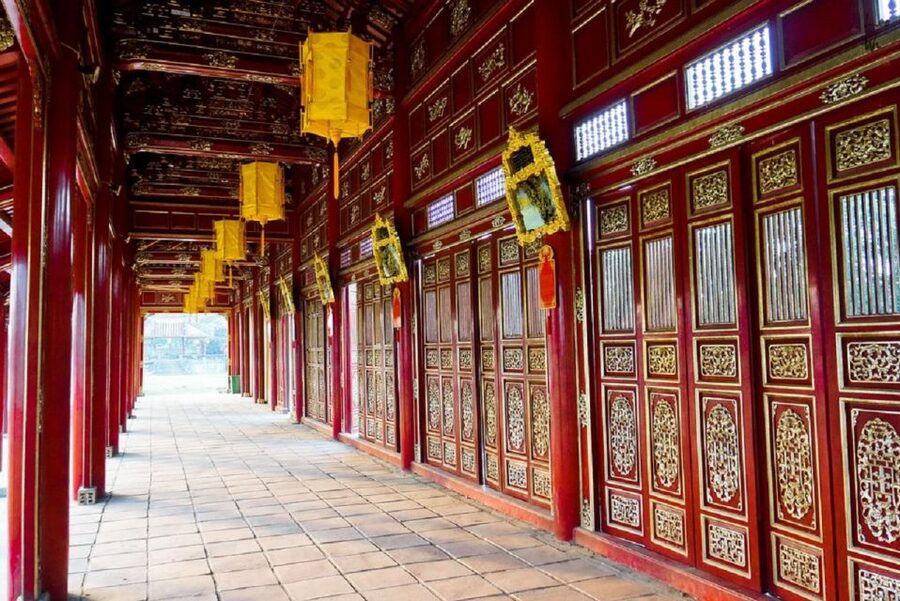
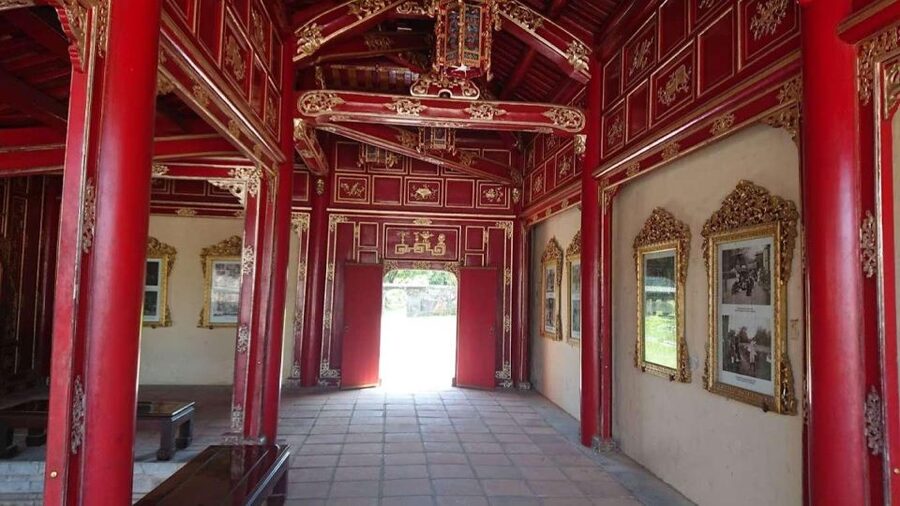
The Forbidden Purple City, or Tu Cam Thanh, was the private center of royal life. Gia Long began building it in 1804, and Minh Mang renamed it in 1822. It lay behind Thai Hoa Palace and was associated with the daily life of the emperors, queens, minor wives, concubines, and eunuchs.
This is the emotional center of the walk. The buildings and spaces were once restricted, and the guide helps you picture the people who lived and worked there. You learn about more than emperors and battles. Court life included strict ranks, complicated household relationships, ceremonial duties, and a large staff serving the royal family.
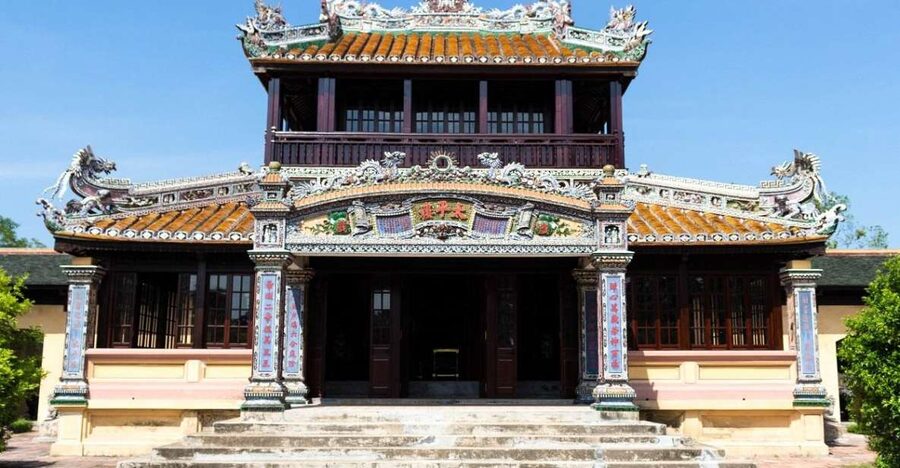
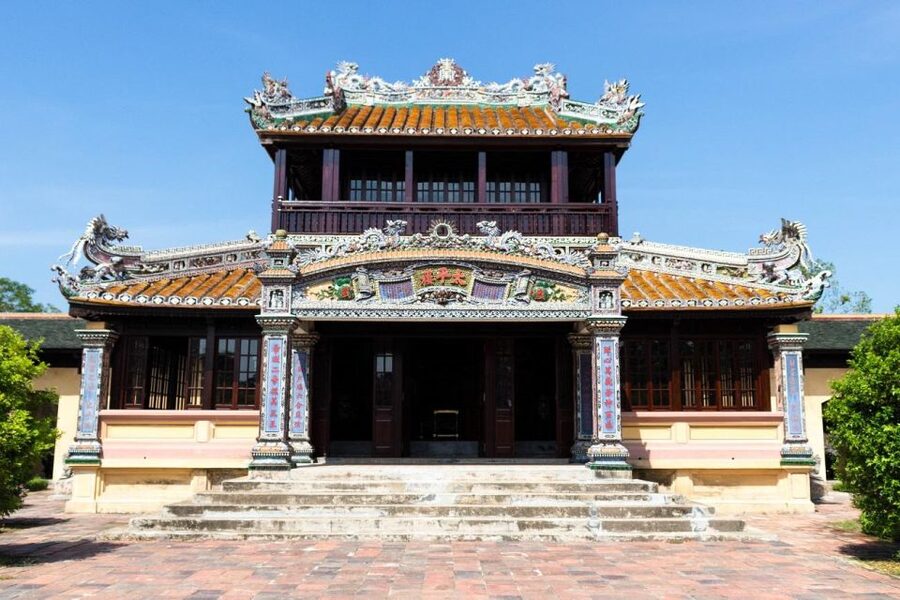
The route includes the broader Dai Noi, or Imperial City, as well as individual areas within it. Stops may include Kien Trung Palace, Thai Binh Pavilion, Thieu Phuong Garden, Duyet Thi Duong Royal Theater, and the Hien Nhon Gate.
Some of these places have been repaired or reconstructed, while other sections reveal the damage caused by war. That contrast matters. Hue is not a perfectly preserved royal town, and pretending otherwise would make the visit less honest. The gaps and ruins help you see how much was lost, while the restored buildings show the care being put into the site today.
What the 2.5-hour walk feels like
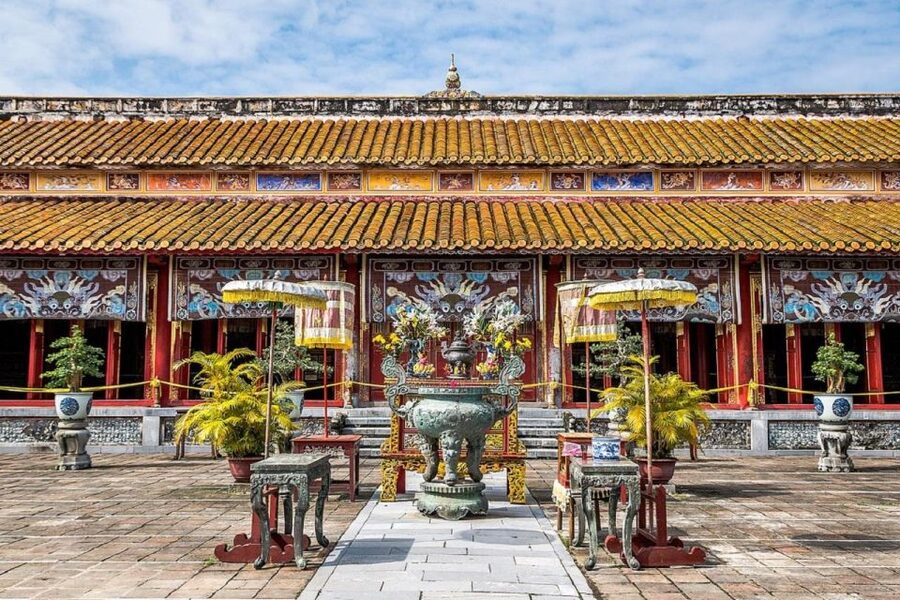
The listed timing gives roughly fifteen minutes at several major points, with about two hours assigned to the wider Imperial City. In practice, the pace depends on your group, weather, and how many questions you ask.
The walk is active but not described as a race. Guides such as Linh and Misa have adjusted stops for intense heat, shade, rain, and rest. Several people particularly valued having enough time for photographs and independent looks inside exhibits. Families can also manage the length, with one account calling it the right amount of time for children.
Morning is the best choice if you can arrange it, especially from May through summer. One guide recommended an early start because much of the route is outdoors. Rain is possible, too, so a light rain layer or umbrella can help during Hue’s changeable weather.
At the end, the local guide says goodbye inside or near the Citadel. You are then free to continue exploring the area on your own. The walk does not include a ride back to your hotel.
Choosing the private car option
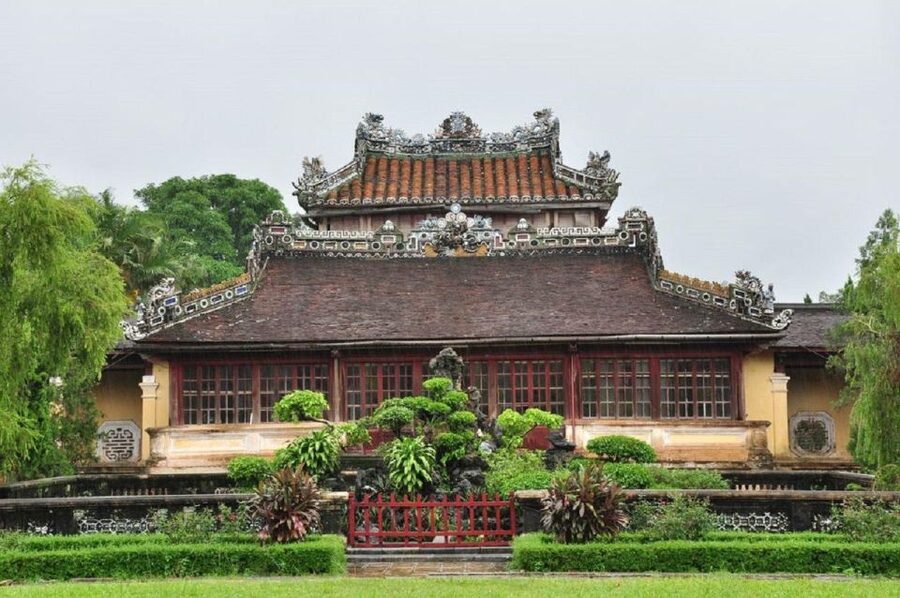
The private car trip is a different product, not simply a longer version of the walking tour. An English-speaking driver collects you from a central Hue hotel or Hue Railway Station and takes you to the places you select.
Possible stops include:
- Imperial City
- Thien Mu Pagoda
- Minh Mang Tomb
- Tu Duc Tomb
- Khai Dinh Tomb
- Thuy Tien abandoned water park
This works well if you want to see several spread-out sights in one day or prefer not to arrange separate transport. You can set a trip lasting from around 150 minutes up to eight hours, depending on the option chosen.
The important limitation is that the driver is there for communication and transport, not as a professional licensed guide. If detailed explanations are your priority, choose the walking tour for the Citadel or arrange a separate guide. If flexibility and door-to-door transport matter more, the car option may be the better fit.
The tombs also offer a useful contrast with the Citadel. Minh Mang, Tu Duc, and Khai Dinh each reflect a different royal personality and setting. The private car gives you a chance to build a day around those contrasts, though every attraction still requires its own entrance payment.
Price, tickets, and what the $12 really buys
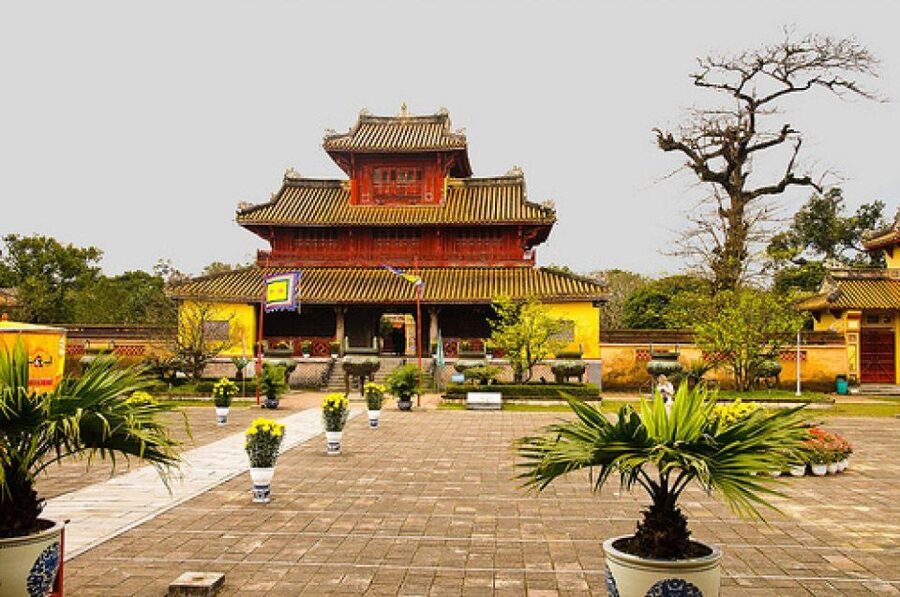
At about $12 per person, the walking option is strong value if you want an English-speaking guide for the Citadel. You are paying for historical explanation, route planning, local interpretation, and the chance to ask questions while standing in the actual royal spaces.
Do not treat the advertised price as the full cost of the visit. Imperial City admission is not included and is listed at 200,000 dong per adult. Combo tickets cost 420,000 dong for the Imperial City plus two tombs, or 530,000 dong for the Imperial City plus three tombs, with two-day validity.
The private car price should be judged differently. Its value depends on the number of people sharing the vehicle, the length of the route, and how many sites you want to connect. It can save planning time, but admission tickets, food, drinks, and guide services remain separate.
Pickup and drop-off are included for selected central hotels in Hue and Hoi An, as well as Hue Railway Station and Phu Bai Airport, when the private car option is selected. Locations outside the central areas may cost extra. Confirm your exact address before departure.
Who should book this Hue tour?
I would choose the walking tour if this is your first visit to Hue, you enjoy history, or you want the Forbidden City to feel like more than a collection of restored buildings. It also suits families, since the guides use stories, symbols, and questions rather than a long lecture.
It is a good match for solo visitors, too. One solo participant had the route adjusted to personal interests and was able to ask detailed questions throughout. Small groups can offer that same easy conversation, and sometimes a group booking becomes a private walk if numbers are low.
Choose the private car if you have only one day in Hue and want to connect the Citadel with pagodas and royal tombs. Just remember that you are booking transport with an English-speaking driver, not the same guided history experience.
The main reasons to hesitate are the extra ticket cost, outdoor walking in hot or rainy weather, and the meeting point for the walking route. None is a major problem, but each affects how smoothly the day works.
Should you book it?
Book the walking option if you want clear stories about Nguyen emperors, court life, royal architecture, and the Forbidden Purple City. The guides named in the experience, including Misa, Nhi, Ha, Nhien, Linh, and Duy, are known for friendly delivery, strong English, patience, and a relaxed pace.
Choose the private car when your priority is seeing more of Hue in one outing. Either way, budget for entrance tickets and confirm pickup details. For most first-time visitors, the 2.5-hour walk is the better value because it gives the Citadel a human story, not just a grand backdrop.
FAQ
Where does the walking tour meet?
The walking tour meets at the four bronze cannons near Ngan Gate, or Cua Ngan, at the Hue Citadel. Your guide holds an A4 paper with your name. There are five cannons on the opposite side, so check that you are waiting at the four-cannon area.
How long is the walking tour?
The guided Imperial Citadel and Forbidden City walk lasts about two and a half hours. The full customizable experience can last from 150 minutes to eight hours, depending on the option selected.
Are entrance tickets included?
No. Imperial City admission is listed at 200,000 Vietnamese dong per adult. Combo tickets are available for the Imperial City with two or three royal tombs.
Does the private car include a tour guide?
No. The private car option includes an English-speaking driver for communication and transport. It does not include a professional tour guide.
Can the private car collect me from my hotel?
Pickup and drop-off are included for central hotels in Hue and Hoi An, as well as Hue Railway Station and Phu Bai Airport, when you select the private car option. An extra charge may apply outside the central areas.
Can I cancel or pay later?
You can cancel up to 24 hours before the activity for a full refund. The booking also allows you to reserve now and pay later.
New walking tours around Vietnam
- Hue Imperial City Walking Tour: Citadel & Forbidden City★ 4.8 · 245 reviews
- Hue Imperial Ancient City Walking Tour★ 4.8 · 308 reviews
- Hoi An/Da Nang: Private Photoshoot & Guided Walking Tour★ 5.0 · 160 reviews
- Hoi An: Ancient Town Guided Walking Tour★ 4.9 · 766 reviews
- Hoi An Ancient Town – Walking Tour with Local Guide★ 4.9 · 385 reviews
- Ho Chi Minh City: Private Street Food Evening Walking Tour★ 5.0 · 436 reviews
- Ho Chi Minh City: Highlights & Hidden Gems Walking Tour★ 4.8 · 113 reviews
- Ho Chi Minh City: Walking Tour with Local Guide★ 4.8 · 363 reviews
Vietnam Walking Tours, side by side.

Private Street Food Evening Walking Tour in Ho Chi Minh City
Read our review →
[HOT] Hanoi Old Quarter Walking Street Food – Small Group Tour
Read our review →
Super Niche Walking Street Food Tour in Ho Chi Minh City
Read our review →
Private Hanoi Street Food Walking Tour With Real Foodie
Read our review →

Lists this walk sits on