
Review · VIETNAM
Hue Imperial Ancient City Walking Tour
Hue’s Imperial City makes much more sense with someone to explain what you’re seeing. Red gates, formal courtyards, palace halls, gardens, and damaged walls can look beautiful on their own, but the stories behind them turn the complex into a portrait of Vietnam’s Nguyen emperors. Linh Nguyen is the guide most often associated with this experience, and his approach mixes dates and architecture with personal observations about Vietnam today.
I especially like the use of old photographs to show how the citadel changed over time, and the chance to pause for photos or explore parts of the complex on your own. The $2 booking price is remarkable value, but you should also plan for a tip, and possibly the site admission fee, since those costs are not listed among the inclusions.
Key points
- Linh’s storytelling style: Expect clear English, humor, historical detail, and personal insight into Vietnamese life.
- The main royal sights: The route focuses on Meridian Gate, Thai Hoa Palace, Dien Tho Palace, and the Forbidden City.
- A small-group setting: Groups are limited to 10, with no bookings for parties larger than six.
- Useful visual context: Old photographs help you picture buildings and spaces that have changed or suffered damage.
- Flexible exploration time: The guided walk includes pauses for photos, rest, and some independent wandering.
- Very low upfront price: The $2 rate is excellent value, but a tip is expected by many people, and entry is not clearly included.
Why Hue’s Imperial City needs a guide
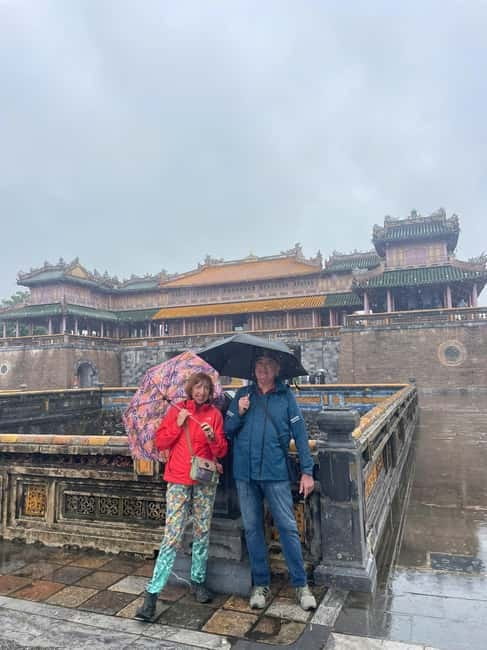
Hue’s Imperial City is not just one palace. It is a large royal complex built for the Nguyen Dynasty, which ruled Vietnam from 1802 until 1945. Without context, it can be hard to tell where the emperor’s public duties ended and private life began.
That is the main reason I would consider this walk. A guide can show you how the spaces worked together: the outer citadel, the ceremonial areas, the family residences, and the emperor’s private domain. You are not simply moving from one photogenic gate to another. You are learning how power, family, ritual, and government were arranged in physical form.
The tour also places the dynasty within the larger story of Vietnam. Expect discussion of the emperors, French colonial rule, the struggle for independence, and the damage caused by war. That broader frame is useful because Hue’s buildings do not tell the whole story by themselves.
More History Walking Tours in Vietnam:
- Hoi An: Ancient Town Guided Walking Tour
★ 4.9 · 766 reviews - Hoi An Ancient Town – Walking Tour with Local Guide
★ 4.9 · 385 reviews - Hanoi: Cho Gioi Vietnam War History Walking Tour
★ 5.0 · 102 reviews
Meeting at the ticket booth
The meeting point is in front of the Hue Imperial City ticket office. Tours begin at 9:00 AM or 3:00 PM, with the exact time confirmed before the walk. You should provide a valid WhatsApp number or Vietnamese phone number so the organizer can reach you.
The meeting arrangement is simple, but do not arrive assuming your guide will find you anywhere inside the complex. Go to the ticket booth area and check your messages before setting out. Clear WhatsApp communication before the meeting has been a strong feature of the experience, especially for travelers arriving in Hue with limited time.
Wear comfortable walking shoes. You will cross courtyards and move between several sites, and the tour is built around walking rather than riding between monuments. Bring water and sunscreen. Hue can be hot, and there may not be shade everywhere you want it.
The advertised duration is 150 minutes. Some tour descriptions and visitor experiences describe the walk as closer to three hours, so allow some flexibility if you have a tight afternoon plan. The tour can also run longer in practice when the group has questions or takes time for photographs.
Meridian Gate: the right place to begin
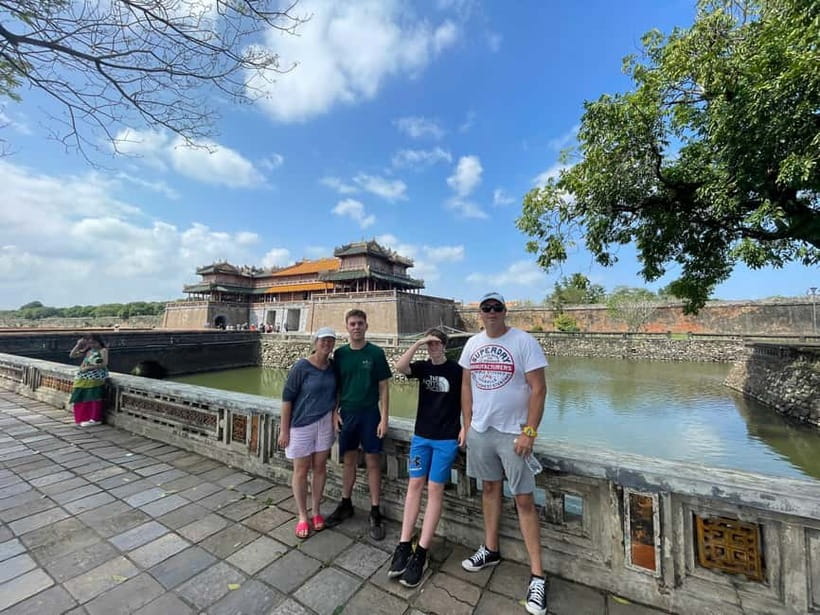
Meridian Gate is the main entrance to the Imperial City and a fitting first stop. It introduces you to the formal scale of the royal compound and gives the guide a place to explain how the citadel was organized.
This is where historical background becomes practical. Instead of hearing a list of emperor names, you can begin to understand who was allowed into which areas, how ceremonies were staged, and why the gate carried such importance. The Imperial City was designed to express rank and order, and the entrance sets that tone immediately.
I like starting here because it gives you a map in your head. Once you understand the difference between public ceremonial spaces and restricted royal areas, later buildings become easier to read. You also get some of the first strong architectural views of the complex, so have your camera ready.
Thai Hoa Palace and the public face of royalty
Thai Hoa Palace, the ceremonial main hall, shows the public side of Nguyen rule. This was a place for formal events and royal display, not ordinary domestic life.
Your guide explains how the palace functioned and why its design mattered. Look for the details that mark the room as ceremonial rather than personal: the scale, the arrangement, and the sense that movement and behavior were carefully controlled.
This is also a good point to ask questions. The guide does not simply recite a prepared script. Linh has been praised for answering questions clearly and connecting imperial events to wider Vietnamese history. His English is described as strong, and he uses humor to keep the material from becoming a dry sequence of dates.
The palace may be the kind of place you would pass through quickly on your own. A guide gives you reasons to slow down. You learn what the building was for, who used it, and how it fitted into the court system.
More walking tours around Vietnam:
- Private Street Food Evening Walking Tour in Ho Chi Minh City
★ 5.0 · 3,175 reviews - [HOT] Hanoi Old Quarter Walking Street Food – Small Group Tour
★ 5.0 · 2,163 reviews - Super Niche Walking Street Food Tour in Ho Chi Minh City
★ 5.0 · 1,636 reviews - Private Walking Tour of Hanoi City
★ 5.0 · 1,251 reviews
Dien Tho Palace and the women of the court
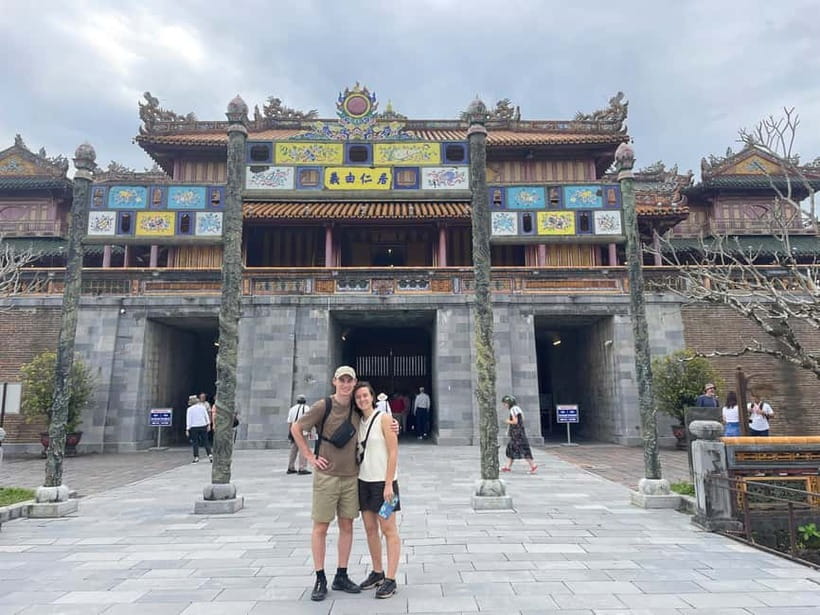
Dien Tho Palace was the residence of the queen mother, so it adds an important family and household dimension to the visit. The Imperial City was not only a place for emperors to receive officials. It was also a home for a large royal family and court community.
This stop helps balance the usual focus on kings, battles, and political decisions. You can learn about the customs and expectations surrounding royal women, family relationships, and life within the court. The guide also discusses Vietnamese traditions and social pressures, including aspects of family life that connect the old court to Vietnam today.
That personal link is one of the most interesting parts of the experience. Linh has shared observations about being a Vietnamese man and about family expectations, giving the tour a more human tone. These comments are not a substitute for historical evidence, but they can help you see the palace as a lived-in place rather than a set of restored walls.
The Forbidden City and the private emperor
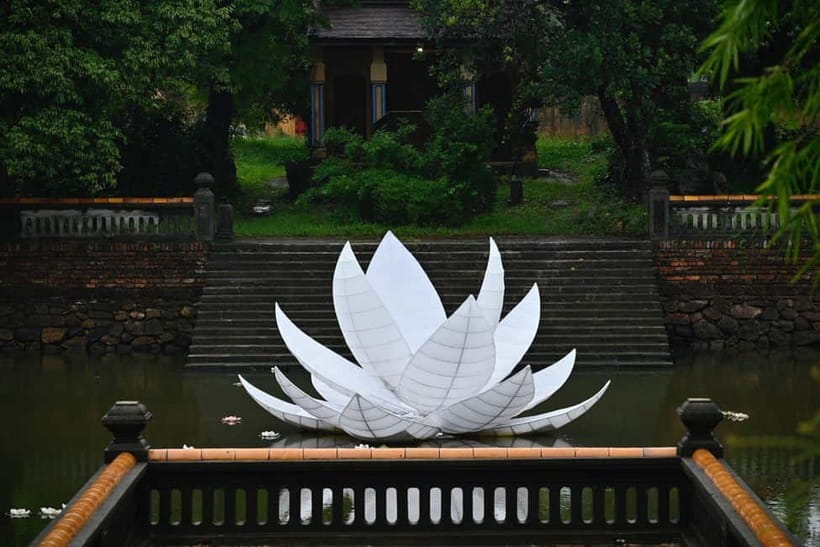
The Forbidden City was the emperor’s private area, and it is one of the most important parts of the route. This was the inner zone of the complex, where access was more restricted and daily royal life took place.
The word private can be misleading if you picture a quiet family home. The emperor’s personal space was still part of a highly ordered court, with servants, officials, family members, and rules governing access. Your guide explains how the private and official sides of palace life overlapped.
The Forbidden City has also suffered major damage over the years, particularly during war. Old photographs are especially useful here. They help you picture missing or altered structures and make the present-day site easier to understand.
I would not expect every building to look complete or polished. That is part of the honest value of the visit. The ruins and repaired sections reflect Vietnam’s difficult modern history, and the guide connects the physical condition of the site to colonial rule, conflict, and national independence.
Stories that go beyond the palace walls
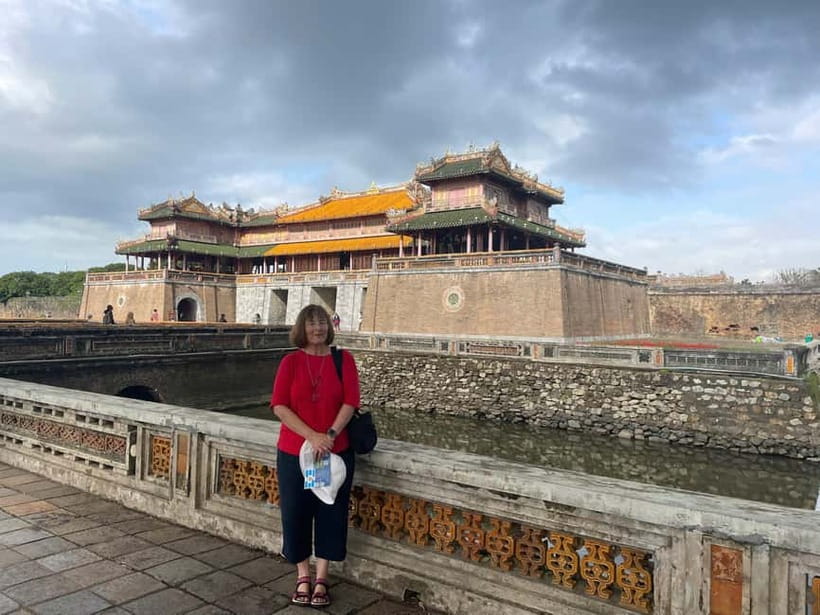
One of the better features of this walk is its wider scope. You do not only hear about architecture. You learn about the Nguyen emperors, French Indochina, the fight for independence, and the effect of the American war on Hue.
That wider history matters because the Imperial City is both a royal monument and a place shaped by modern Vietnam. The guide can explain why the dynasty ended, how colonial rule changed the country, and why some parts of the citadel look very different from old images.
Linh is also known for bringing visual material, including photographs of the city in different periods. This is a simple but effective teaching tool. A damaged wall or empty courtyard can be difficult to imagine in its former form until you see an older image.
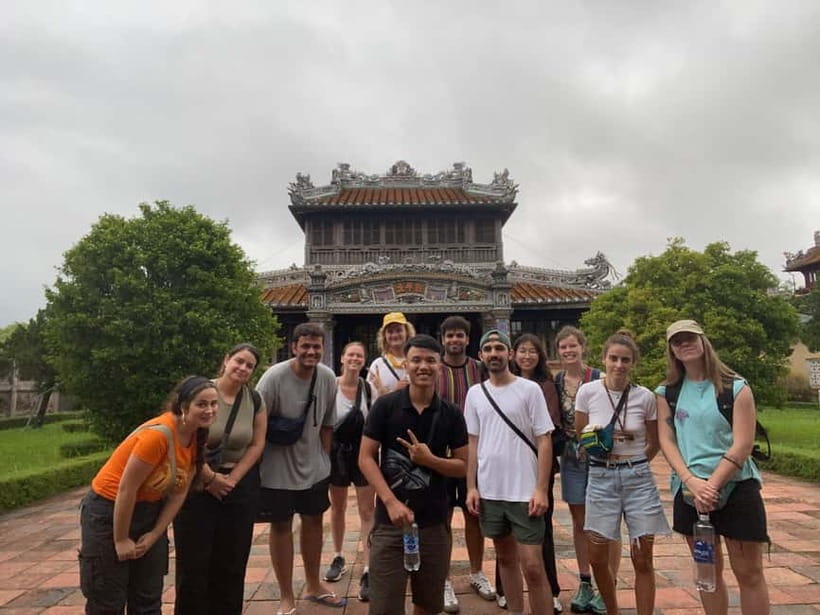
The tone is generally conversational. Expect jokes, questions, and opportunities to talk with people from different countries. The small-group format makes it easier to hear the guide and ask questions than it would be on a large coach tour.
Time to wander, rest, and take photographs
This is not a nonstop march. The walk includes time to look around independently, take photographs, and rest. That matters in a large complex where you may want to study details at your own pace.
Still, listen carefully when the guide explains what will be covered later. One person found the breaks slightly unclear, particularly when deciding which areas to explore independently and which would be part of the guided route. If you want to wander farther, ask before leaving the group.
The extra time can be valuable. One visitor stayed in the Imperial City until sunset after the tour, using the guided walk as an introduction and then returning to areas that deserved another look. That is a sensible plan if your schedule allows it.
What the $2 price really means
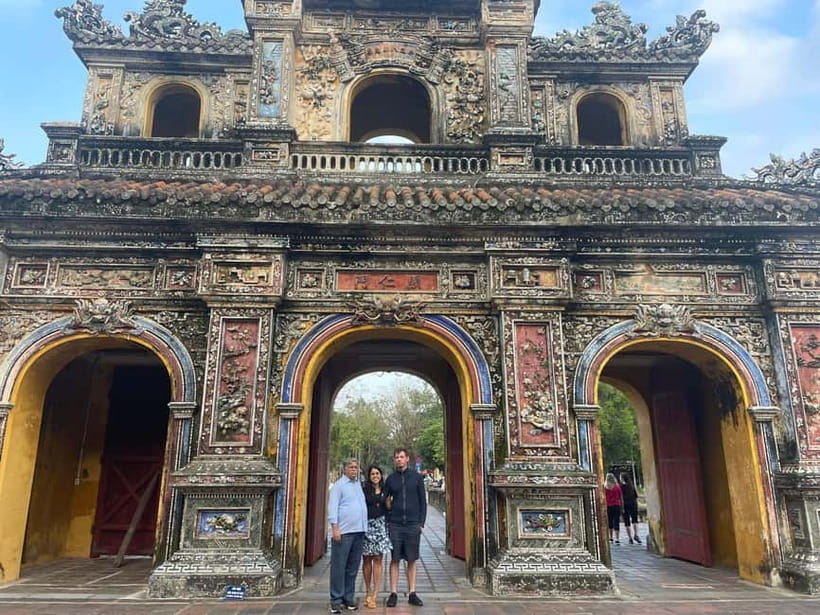
At $2 per person, this is an unusually inexpensive way to get historical context at a major Vietnamese monument. The value is strongest if you would otherwise walk through the complex without understanding its layout or political meaning.
The low booking price does not mean the complete outing costs only $2. The included services are the walking tour and local guide. Site admission is not listed as included, and some people specifically advise carrying cash for the entrance ticket. Bring cash for a tip as well. The experience is described as tip-based, and a gratuity is expected by many participants even though it is officially at your discretion.
That is still excellent value. A guide who spends two and a half to three hours explaining the buildings, answering questions, and sharing visual material can add far more value than the booking price suggests. Just budget honestly instead of treating $2 as the final cost.
Free cancellation up to 24 hours before the tour and reserve-now, pay-later booking make it easier to fit into a changing Vietnam itinerary. These are useful extras, but the main reason to book is the guide-led explanation.
Group size, language, and accessibility
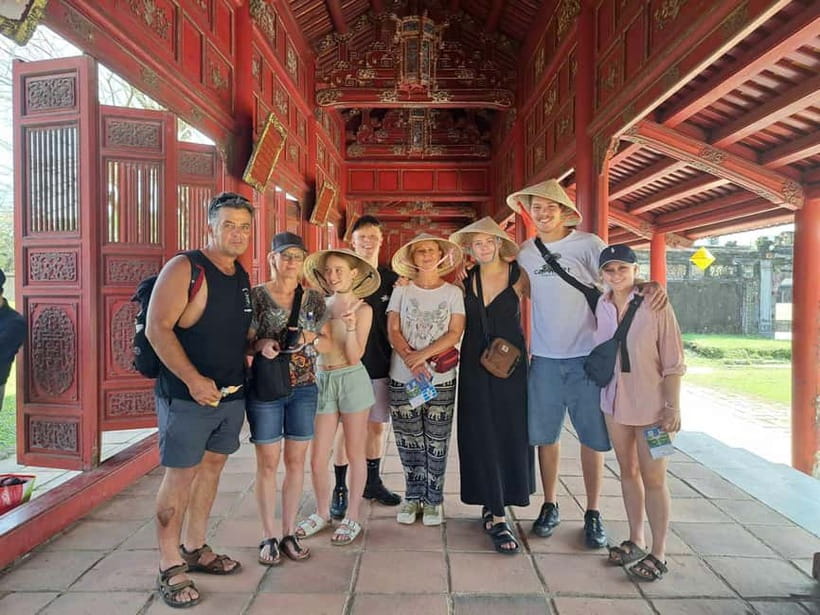
The tour is limited to 10 people and is designed for solo visitors, couples, families, and small groups. Groups larger than six, including children, are not accepted through separate bookings, so larger parties need to ask about a custom arrangement.
English is the tour language. Linh Nguyen is the named provider, and Linh is the guide most often associated with the experience. Other guide names appear in the supplied information, including Thanh, Thang, and Kun, so the exact guide may vary depending on availability. If having Linh specifically matters to you, confirm this before booking.
The activity is listed as wheelchair accessible, but it remains a walking tour through a historic complex. You should contact the provider ahead of time if you have specific mobility needs, since the information does not describe every surface, route variation, or rest point.
Who should book this Hue walking tour?
I would recommend it to first-time visitors who want a clear introduction to Hue’s royal history. It also suits solo visitors who like meeting a small international group, couples who want more context than a self-guided walk provides, and families with older children who can manage a long outdoor visit.
History fans will get the most from the discussion of the Nguyen Dynasty, colonial rule, war, and royal customs. Food-minded visitors may also appreciate the local suggestions offered at the end, including recommendations for Hue specialties such as bun bo Hue.
You may want to skip it if you prefer to explore completely alone, dislike stopping for explanations, or have only a strict two-hour window. The tour is relaxed, but the site is large and the actual pace can vary with questions, photographs, and the guide’s storytelling.
Should you book it?
Yes, if you want the Imperial City to feel like a functioning royal world rather than a collection of old buildings. The strongest reasons are the small group, clear English, visual aids, and the guide’s ability to connect palace architecture with Vietnamese history and modern life.
Book early if you want a morning or afternoon spot, since only 10 people are accepted per tour. Confirm the meeting time, bring water, sunscreen, comfortable shoes, cash for the site and tip, and keep extra time afterward if you want to revisit the complex.
The main caution is financial clarity: the $2 price is an excellent starting rate, not necessarily your full out-of-pocket cost. With that understood, this is one of the better-value ways to make sense of Hue’s most important historic site.
FAQ
How long does the Hue Imperial Ancient City Walking Tour last?
The advertised duration is 150 minutes, or two and a half hours. Some descriptions and experiences place the walk closer to three hours, so allow extra time if your schedule is tight.
Where does the tour meet?
The meeting point is in front of the Hue Imperial City ticket booth. The organizer contacts you before the tour to confirm the designated time.
What time does the tour start?
Tours are offered at 9:00 AM and 3:00 PM. You should check availability and wait for confirmation before arriving.
Is the entrance ticket included?
The listed inclusions are the walking tour and local guide. Entrance admission is not identified as included, so bring cash in case you need to purchase a site ticket.
Is the tour conducted in English?
Yes. The live guide language is English. Linh Nguyen is the named provider, though the available guide may vary.
How large is the group?
The tour accepts up to 10 participants. It does not accept bookings for groups larger than six people, including children, even if separate reservations are made.
New walking tours around Vietnam
- Hue Imperial City Walking Tour: Citadel & Forbidden City★ 4.8 · 245 reviews
- Hue Customizable Tour with Imperial Citadel & Forbidden City★ 4.9 · 937 reviews
- Hoi An/Da Nang: Private Photoshoot & Guided Walking Tour★ 5.0 · 160 reviews
- Hoi An: Ancient Town Guided Walking Tour★ 4.9 · 766 reviews
- Hoi An Ancient Town – Walking Tour with Local Guide★ 4.9 · 385 reviews
- Ho Chi Minh City: Private Street Food Evening Walking Tour★ 5.0 · 436 reviews
- Ho Chi Minh: Original Walking Street Food Tour with Foodies★ 5.0 · 379 reviews
- Ho Chi Minh City: Highlights & Hidden Gems Walking Tour★ 4.8 · 113 reviews
Vietnam Walking Tours, side by side.

Private Street Food Evening Walking Tour in Ho Chi Minh City
Read our review →
[HOT] Hanoi Old Quarter Walking Street Food – Small Group Tour
Read our review →
Super Niche Walking Street Food Tour in Ho Chi Minh City
Read our review →
Private Hanoi Street Food Walking Tour With Real Foodie
Read our review →
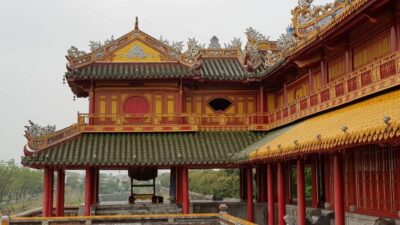
Hue Customizable Tour with Imperial Citadel & Forbidden City
Read our review →Lists this walk sits on