
Review · LA PAZ
La Paz and El Alto: Cable Car Rides and Walking Tour
La Paz is easiest to understand from above, and this tour puts you in the city’s famous Teleférico cable cars before taking you into its streets, markets, and squares. You glide over steep hills, crowded roads, and brick neighborhoods on the way to El Alto, then return to central La Paz by another route.
I like two things here. First, the cable cars give you a quick sense of how La Paz and El Alto fit together. Second, the guide adds context at places that can feel puzzling on your own, especially the Witches’ Market and San Pedro Square. The main drawback is the pace: 150 minutes is short for two cities, several cable car lines, and a fair amount of walking.
Key points
- Ride several Teleférico lines for wide views over La Paz and the high plateau around El Alto.
- Visit both Witches’ Markets, where the El Alto stop may include a live ritual by a local practitioner.
- Start and finish at San Francisco Church, a central meeting point in La Paz.
- Connect the sights on foot, including San Pedro Square, Jaén Street, Plaza Murillo, and open-air markets.
- Expect useful local advice, including food suggestions and guidance on areas to visit or avoid.
- Bring sun protection and good shoes, and remember that the tour runs in rain or shine.
Why the cable cars are the heart of this La Paz tour
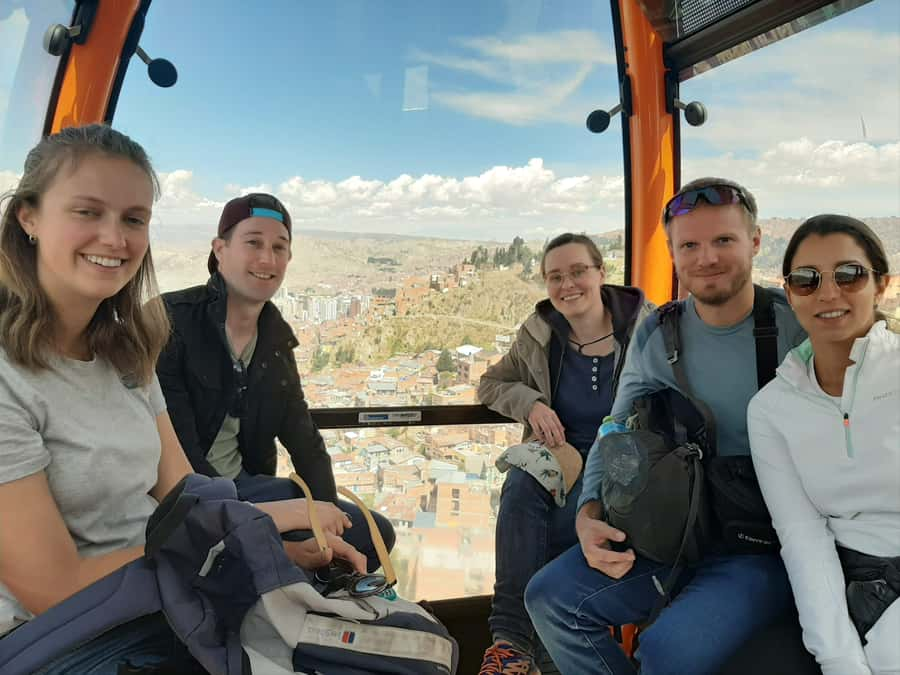
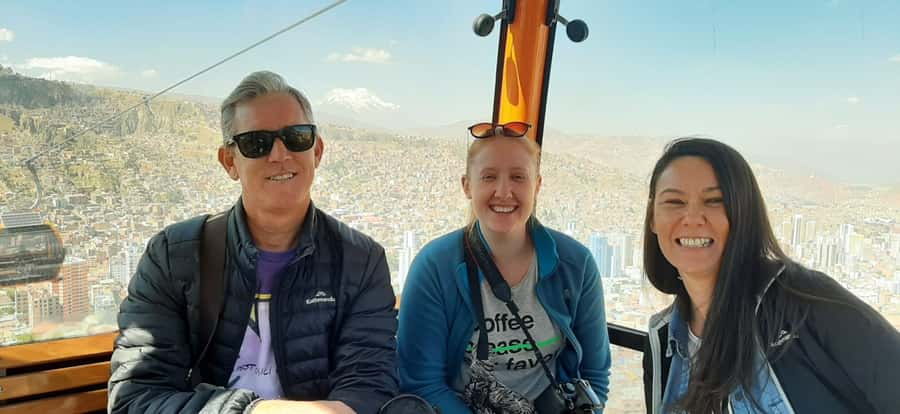
La Paz is built in a dramatic bowl, with the city climbing sharply toward the high plateau. The cable car system makes that shape clear in a way a street walk cannot. As your cabin rises, you see the city spread across steep slopes, with El Alto sitting high above it.
The ride is also practical, not just scenic. The Teleférico carries local residents above traffic, and you get a glimpse of ordinary movement between the two cities. From the cabin, your guide can point out neighborhoods, roads, public buildings, and the changing character of La Paz as you travel.
Several guides have taken groups across four cable car lines. That makes this more than a single ride up to a viewpoint. You get repeated changes in angle and altitude, with the city appearing different from each line.
If you are uneasy with heights or enclosed spaces, take the warning seriously. The cabins are enclosed, and the views are broad and exposed. The tour is not a good match for anyone with claustrophobia or a strong fear of heights.
More walking tours around the world:
- Magical London: Harry Potter Guided Walking Tour
★ 4.7 · 22,044 reviews - Reykjavik Food Walk – Local Foodie Adventure in Iceland
★ 5.0 · 18,952 reviews - History and Hauntings of Salem Guided Walking Tour
★ 5.0 · 14,564 reviews
Starting at San Francisco Church and entering the Witches’ Market
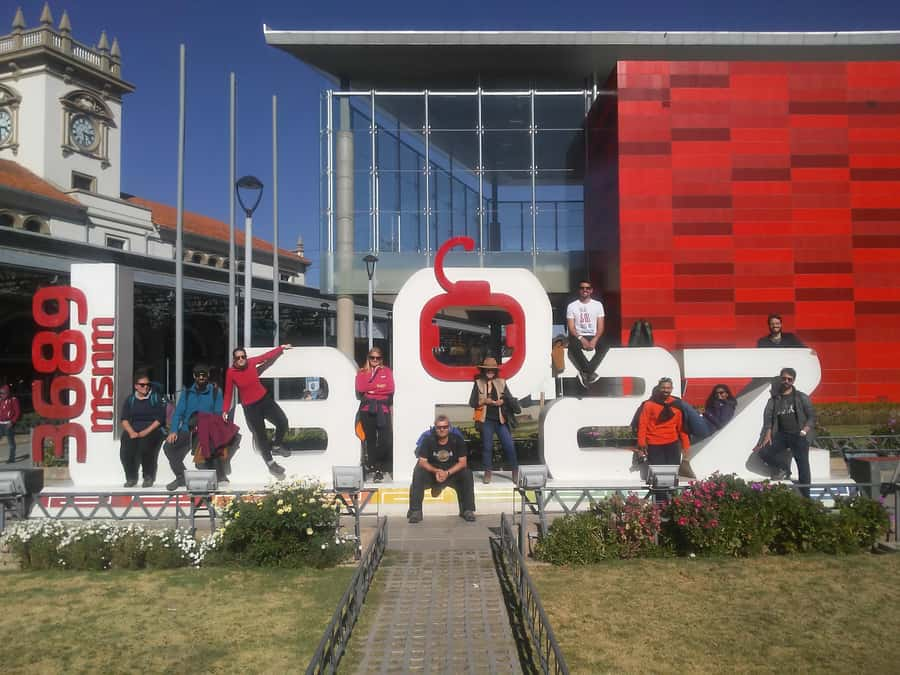
You meet your guide by the main door of San Francisco Church. Look for a beige vest with orange pockets and the Hanaqpacha Travel logo on the back. This detail matters in a busy central area, especially if you arrive early and see several tour groups nearby.
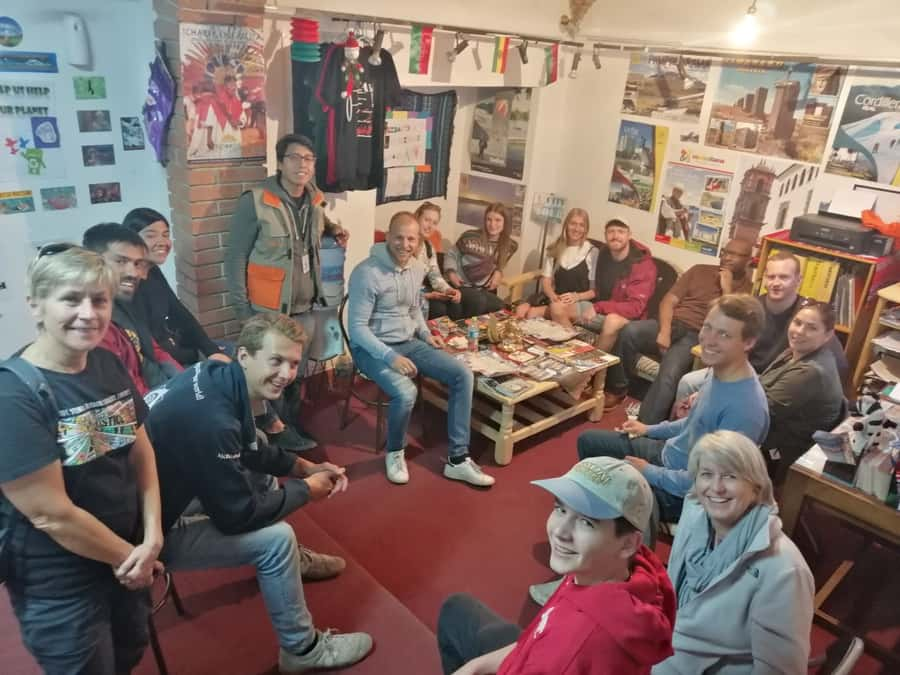
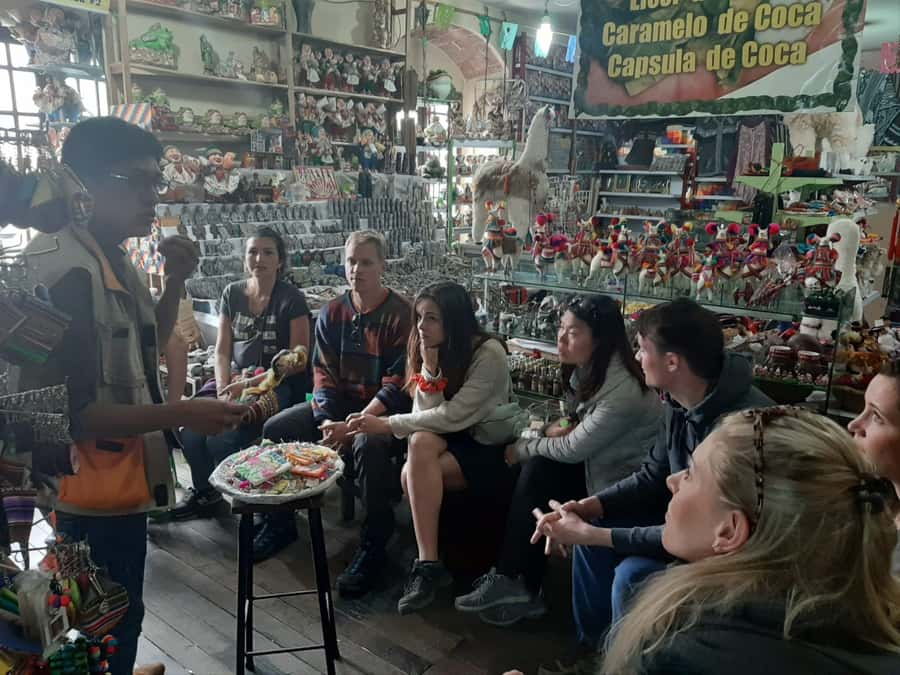
From here, the walking portion begins in central La Paz. The first major stop is the Witches’ Market, a compact shopping area known for traditional remedies, ritual objects, and Andean spiritual practices. A guide helps explain what you are seeing without reducing it to a collection of odd souvenirs.
This is one of the places where good explanations matter most. Some items may look strange or unsettling if you do not know their cultural purpose. Your guide can provide background on local beliefs and the role of ritual in daily life, while you decide how closely you want to browse the stalls.
The market is also a practical souvenir stop. You may have time to look at small items, but do not expect a long shopping session. The tour has several more stops and a fixed duration, so this part works best as an introduction rather than a dedicated market visit.
San Pedro Square and the story behind the prison
The route continues toward San Pedro Square, where the guide explains the infamous history connected with San Pedro Prison. This stop adds a more complicated side of La Paz. Instead of seeing only churches, plazas, and market stalls, you hear about the city’s social and political realities.
The value here depends heavily on the guide. Fernando, Luis, Marcia, Carolina, Nickey, and several other guides have been singled out for clear explanations, good English, and an ability to answer questions. Guides also bring different strengths, so the exact tone may vary from one departure to another.
San Pedro Square is not presented as a grand sightseeing attraction. It is a place where a local explanation gives the surroundings meaning. Some people will find this section less visually exciting than the markets or cable cars, but it helps balance the tour with a look at modern urban life.
The route includes hills and uneven walking. One useful feature is that the walking is broken up by cable car rides, so you are not climbing continuously for two and a half hours. Still, wear shoes with a firm sole and expect a few steep sections.
Crossing to El Alto by cable car
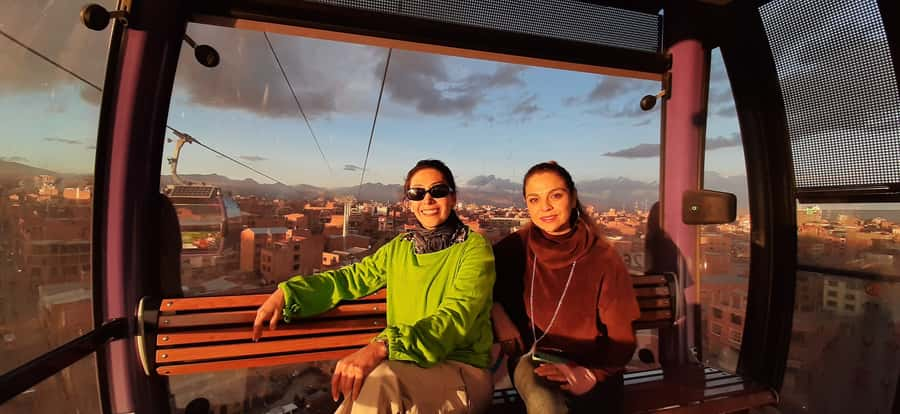
After the central La Paz stops, you reach a cable car station and begin the ride toward El Alto. This is the tour’s clearest change of scene. You leave the lower city behind and rise toward the high plateau, seeing how quickly the urban setting changes.
The views are the main reward. You can look down over La Paz’s steep streets and dense construction, then out toward the broad, high setting of El Alto. Your guide may point out features along the route and explain how the two cities connect.
The ride gives you a useful sense of scale. La Paz and El Alto are often discussed together, but from street level it can be hard to grasp their relationship. From the cabin, the physical difference is obvious.
Crowding and operating conditions can affect the ride. The tour takes place rain or shine, and the cabins may not feel quiet or private if the system is busy. You are also moving through several stations in a limited time, so stay close to your guide and listen for instructions.
Same streets, a different story:
- New Orleans Premier Ghost, Voodoo and Vampire Walking Tour
★ 4.5 · 12,856 reviews - Amsterdam Anne Frank: Small-Group Walking Tour & Local Guide
★ 4.8 · 12,789 reviews - Edinburgh: Harry Potter Magical Guided Walking Tour
★ 4.8 · 11,944 reviews - Edinburgh Castle: Guided Walking Tour with Entry Ticket
★ 4.7 · 11,699 reviews
The El Alto Witches’ Market feels different
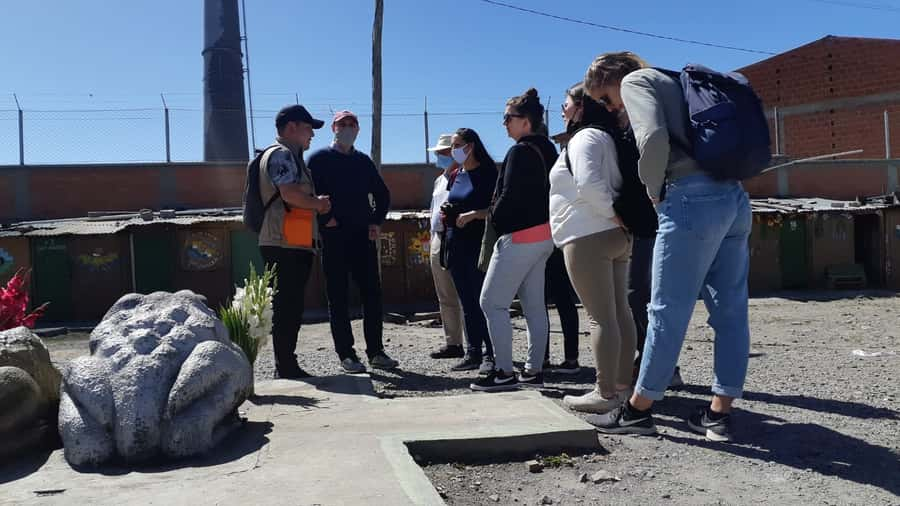
The El Alto Witches’ Market is not simply a repeat of the market in central La Paz. The setting and atmosphere are different, and the tour description notes that a local witch doctor may be performing a ritual during your visit.
That possibility gives this stop a more immediate quality than a row of prepared displays. You might see an active ceremony, though it is not guaranteed. Treat any ritual with respect, keep your distance as directed, and let your guide explain what is appropriate.
This stop can be especially useful if you want to understand how local traditions continue outside the main tourist center. It also shows why this tour is more interesting than a cable car ride alone. The cable car provides the wide view, while the walk provides contact with places where local customs are practiced and sold.
Time is the limitation. You will not have unlimited time to explore El Alto, and the tour returns to La Paz by another station. If you want a long, independent visit to El Alto, this is not the right format. If you want a guided first look, it gives you a manageable introduction.
Returning through Jaén Street and Plaza Murillo
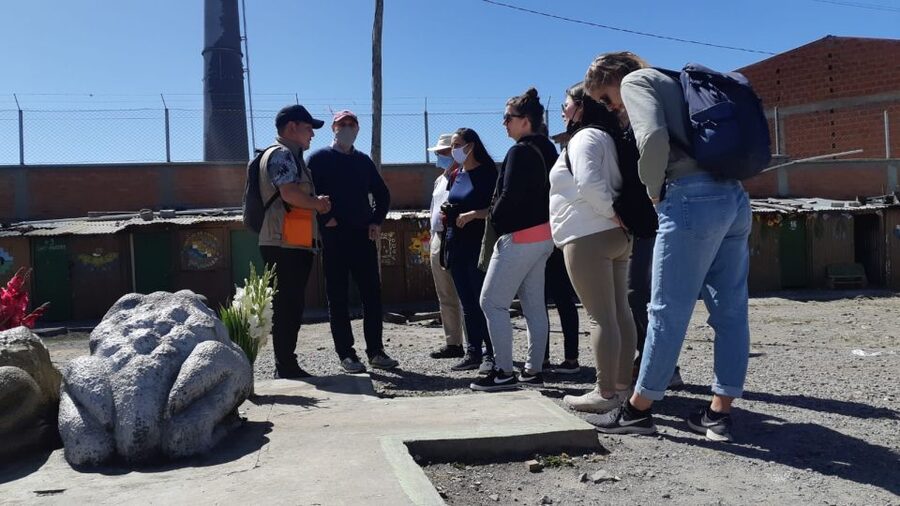
The return route brings you back toward La Paz and into the historic center. Jaén Street is one of the most appealing walking sections, with colonial buildings and a more enclosed, intimate feel than the large central avenues.
From there, you continue to Plaza Murillo, the city’s main square and its Kilometer 0. The square brings together major civic and religious sights, including the cathedral and government buildings. It is an important place to hear how La Paz functions as Bolivia’s seat of government and how the country’s history appears in its public spaces.
The contrast with El Alto makes this part of the tour work well. Within the same outing, you move from cable car stations and high plateau neighborhoods to colonial streets and formal government buildings. You also pass through open-air markets and shops, so the route includes both official La Paz and everyday commercial life.
Do not expect a long interior visit at every building. The tour is primarily a walking and cable car orientation, not a museum program. If you want to study the cathedral or spend serious time shopping, you will need to return later on your own.
What the guides add to a fast itinerary
At $10 per person, the tour offers unusually good value if you want both transportation and interpretation. The fee includes the guide and cable car tickets, which means you are paying for a structured route rather than just a walk around central La Paz.
The most praised feature is the guiding. Carolina has been appreciated for clear historical explanations and a warm manner. Luis has helped people with practical advice on food and safe areas, while Fernando has been noted for fluent English and an easy way of explaining the city.
Nickey has also been praised for detailed answers and for continuing to help with questions after the tour. Marcia, Fabian, Valeria, Veronica, Abraham, and others have each been described as friendly, useful, and well informed about local culture and history.
You should not assume you will receive a particular guide unless the booking specifically confirms one. The important point is that the experience depends on having someone who can connect the stops. Without that explanation, the route would still offer good views, but the markets and city history would have less meaning.
The tour can work well for solo visitors, couples, and families. One family with children aged 10, 13, and 15 found the pace manageable, while solo visitors have appreciated the easy structure and company during the cable car rides.
Walking, altitude, and what to bring
La Paz sits at high altitude, and the tour is not suitable for people suffering from altitude sickness. If you have just arrived in Bolivia and feel unwell, do not force yourself through a hilly walking tour simply because the price is low.
Wear comfortable shoes and clothes. You will walk through markets, streets, squares, and stations, with some steep hills along the way. Sunglasses and a sun hat are sensible because the sun can feel strong at altitude, even when the air is cool.
Leave luggage and large bags behind. Food and drinks are not allowed in the vehicle. The tour runs in all weather, so a light rain layer is a practical addition even though it is not listed among the required items.
The meeting point is central, but hotel pickup and drop-off are not included. You need to reach San Francisco Church yourself and arrange your own return from the finish. The tour ends back at the church, which makes onward planning simpler.
Is two and a half hours enough?
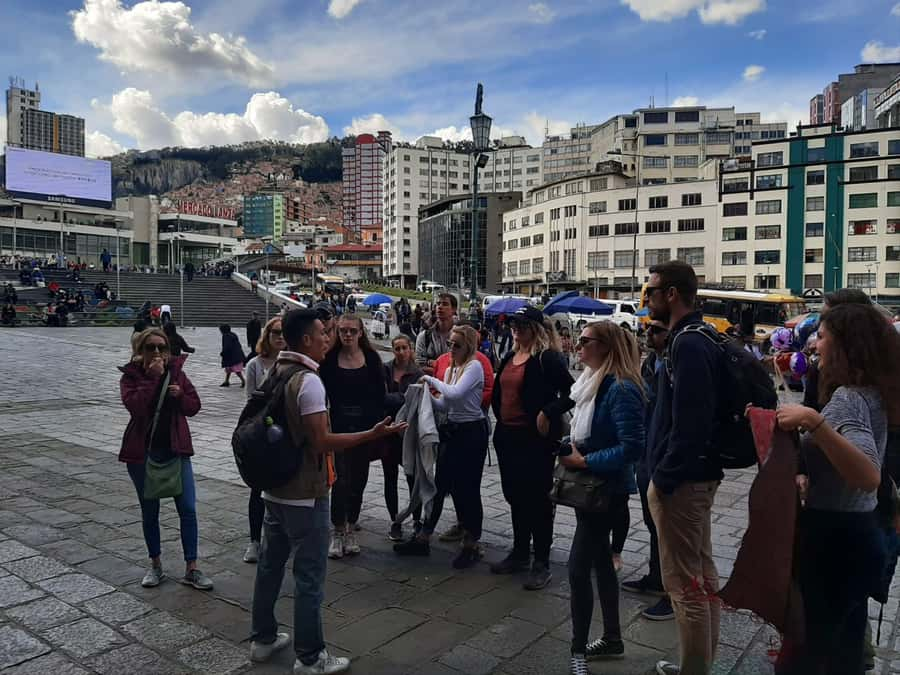
The 150-minute duration gives you a strong overview, but it does not allow long stops. The tour covers central La Paz, San Pedro Square, the first Witches’ Market, a journey to El Alto, the El Alto market, another cable car route back, Jaén Street, Plaza Murillo, and the return to San Francisco Church.
That sounds like a lot because it is. The cable cars make the schedule possible by replacing long road journeys, but you still need to keep moving. If you like a brisk orientation and want to see several districts in one outing, the pace is a strength.
If you prefer lingering over one market, taking detailed photographs, or reading every plaque, it may feel rushed. I would treat this as a first-day city overview. Afterward, you can decide which areas deserve a slower return visit.
The tour is offered in English and Spanish. For English speakers, the quality of the explanation matters, and the named guides have repeatedly been praised for clear English. Still, guide assignments can change, so book it for the route and format rather than for a promised individual personality.
Who should book this La Paz and El Alto experience?
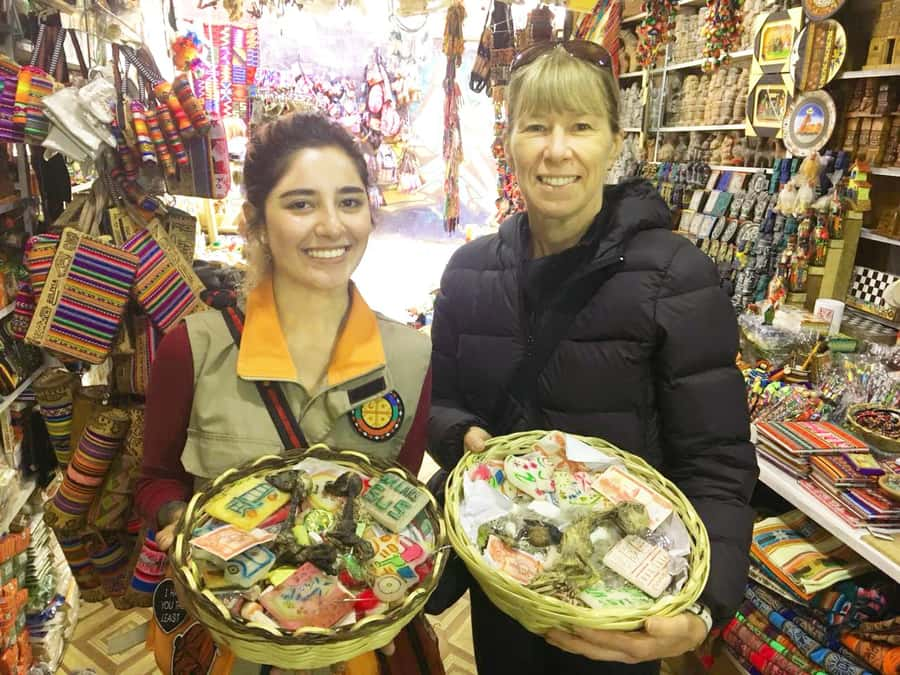
I would book this if you want a low-cost introduction to La Paz that combines local transport, city history, markets, and walking. It is especially useful early in your stay, when the city’s steep layout and relationship with El Alto are still difficult to picture.
It suits curious first-time visitors, solo travelers who want a planned route, families with older children, and anyone who wants practical tips about food and areas to visit. The cable car rides are also a good choice for people who want major views without arranging a separate excursion.
I would skip it if you have altitude sickness, dislike heights, need a slow pace, or want a deep visit to museums and historic interiors. The tour stays outdoors and on the move, and its greatest strengths are the guide’s explanations and the cable car system.
Free cancellation up to 24 hours before the tour and the option to reserve now and pay later make planning easier. For $10, the combination of included cable car tickets and a local guide is hard to fault, as long as you understand that the route is a fast overview rather than a leisurely full-day exploration.
Should you book it?
Yes, if you want to get your bearings quickly and see La Paz from the city streets and from the air. The cable cars are the highlight, but the Witches’ Markets, San Pedro Square, Jaén Street, and Plaza Murillo give the ride a useful cultural frame.
Book it early in your stay if possible, then use what you learn to plan slower visits afterward. Just arrive ready for hills, strong sun, changing weather, and a packed schedule. For a modest price, this is one of the most efficient ways to understand La Paz and El Alto in a single afternoon.
FAQ
How long does the La Paz and El Alto tour last?
The tour lasts 150 minutes, or two and a half hours.
Where does the tour meet?
Meet your guide by the main door of San Francisco Church in La Paz. Look for a beige vest with orange pockets and the Hanaqpacha Travel logo on the back.
Does the price include cable car tickets?
Yes. The price includes the tour guide and cable car tickets.
Which languages are available?
The tour is offered in English and Spanish.
Does the tour include hotel pickup and drop-off?
No. Hotel pickup and drop-off are not included. You must reach the meeting point at San Francisco Church yourself.
What should I bring?
Bring comfortable shoes, comfortable clothes, sunglasses, and a sun hat. Large bags and luggage are not allowed.
Is the tour suitable for people afraid of heights or with altitude sickness?
No. The activity is not suitable for people with claustrophobia, a fear of heights, or altitude sickness. It takes place rain or shine.
New walking tours around the world
- Niagara Falls, Canada: White Water Walk Entry Ticket★ 4.5 · 147 reviews
- NYC: Walking Tour with Local Guide and 30+ Top NYC Sights★ 4.5 · 248 reviews
- Zadar: Food Tasting & Old Town Walking Tour★ 5.0 · 94 reviews
- Niagara Falls: Walking Tour, Journey Behind Falls, & Cruise★ 4.8 · 773 reviews
- New York City: Gangsters and Ghosts 2-Hour Walking Tour★ 4.7 · 615 reviews
- NYC: History of Slavery & Underground Railroad Walking Tour★ 4.7 · 87 reviews
- New York City’s Hell’s Kitchen: Walking Food Tour★ 4.8 · 200 reviews
- New York City: Central Park Walking Tour★ 4.7 · 82 reviews