
Review · LISBON
Lisbon Tram No. 28 Ride & Walking Tour
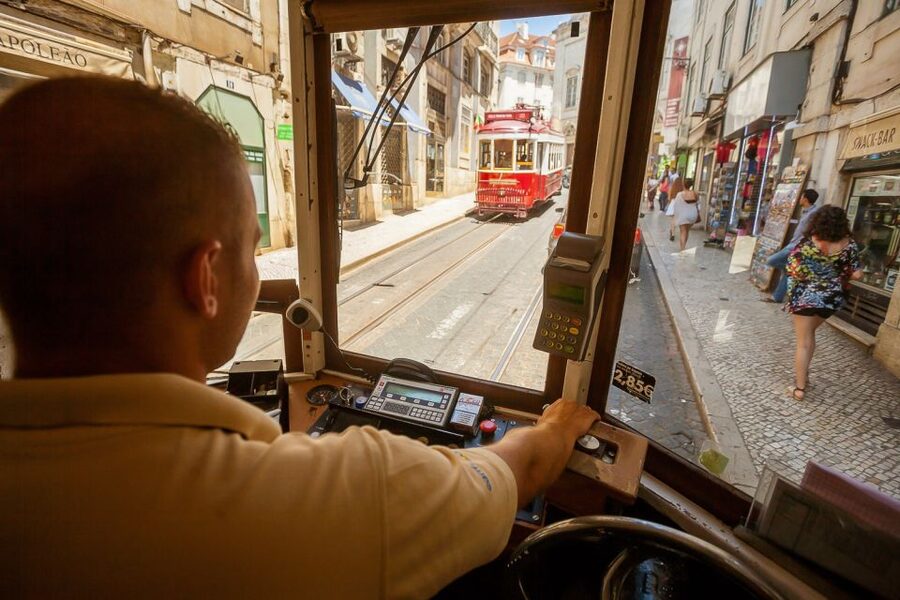
Lisbon’s famous Tram 28 is more than a sightseeing ride. It is a working public tram that rattles through tight streets, climbs steep hills, and gives you a quick lesson in how this old city is built. I like that this tour combines the tram with a guided walk through Alfama, where the best discoveries are often around a corner rather than beside a tram stop.
I also like the small group size, capped at 10 people, and the strong local storytelling. Guides such as Nuno have been praised for explaining Lisbon’s politics, religion, real estate, and past in a lively way. The main drawback is that Tram 28 remains public transport, not a private tour vehicle. Traffic, crowds, or a broken-down car can change the route or limit your time aboard.
Key points
- Historic Tram 28: Ride one of Lisbon’s most famous public trams through the old quarters.
- Alfama on foot: Walk steep, uneven lanes, small squares, and streets beyond the tram route.
- Major sights: See Sé de Lisboa, São Vicente de Fora, and the National Pantheon.
- Fado insight: Learn how Portugal’s traditional urban music fits into Alfama life.
- Small group: The tour is limited to 10 people, making questions and conversation easier.
- Good value: Three hours of transport, guiding, city views, and walking costs $23 per person.
Lisbon is a city best understood from two angles: through the window of an old tram and at walking speed on a steep stone lane. This three-hour experience gives you both.
For $23, you ride Tram 28 through Lisbon’s historic center, then leave the rails to explore Alfama and the hill where the city began. Along the way, you see major monuments, viewpoints over the city and river, and the smaller streets where daily life continues away from the main avenues.
The tour is conducted in English and limited to 10 people. That is a useful size for Lisbon, where a large group can easily block a narrow pavement or lose sight of a guide at a busy corner. You meet at Praça Luís de Camões, near the statue. Look for a guide carrying a black backpack with the Lisbon Spirit logo.
Starting at Praça Luís de Camões
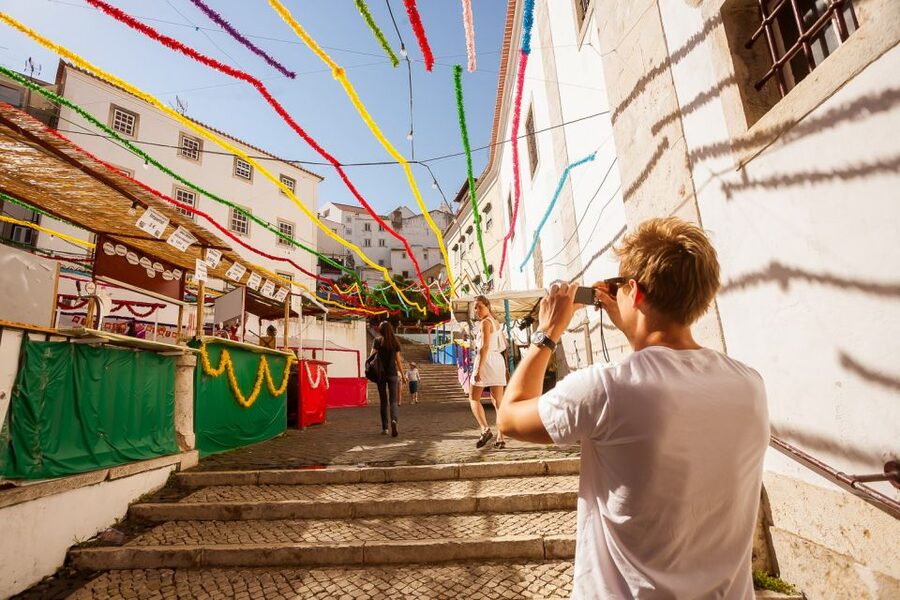
Praça Luís de Camões is a practical meeting point in the central part of Lisbon. Your guide will gather the group there before setting off toward the old quarters.
This opening is useful if you are new to Lisbon. The guide can begin putting the city into context before you reach Alfama, and you can ask basic questions about the tram system, hills, and neighborhoods. Guides including Nuno have been praised for giving practical local tips as well as historical explanations.
Do not expect a private vehicle waiting at the square. The tour uses public transport, and that shapes the whole experience. You are seeing Lisbon in the same way many residents do, with the delays and changes that come with it.
That also means you should allow some flexibility. Rush-hour traffic has forced route changes in the past, with the group using a funicular or bus before reaching Tram 28. A broken-down car has also caused a change of plan. The guide’s job is to keep the tour moving, but the exact sequence cannot always be promised.
More walking tours around Lisbon:
- Lisbon: History, Stories and Lifestyle Walking Tour
★ 4.8 · 10,902 reviews - Best of Lisbon Small-Group Guided Walking Tour
★ 5.0 · 4,869 reviews - Lisbon: Food and Wine Small Group Walking Tour
★ 4.9 · 4,082 reviews
Riding Tram 28 Through the Old Town
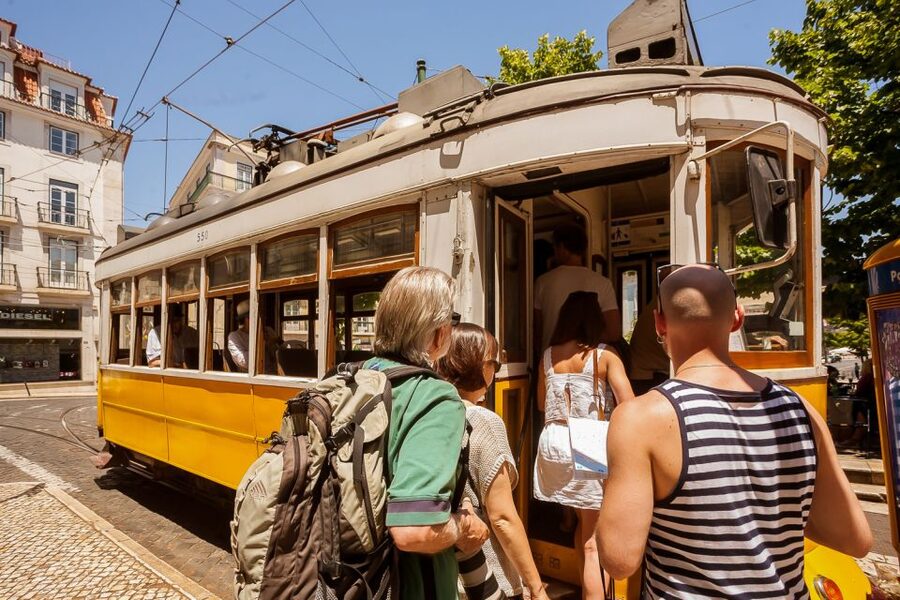
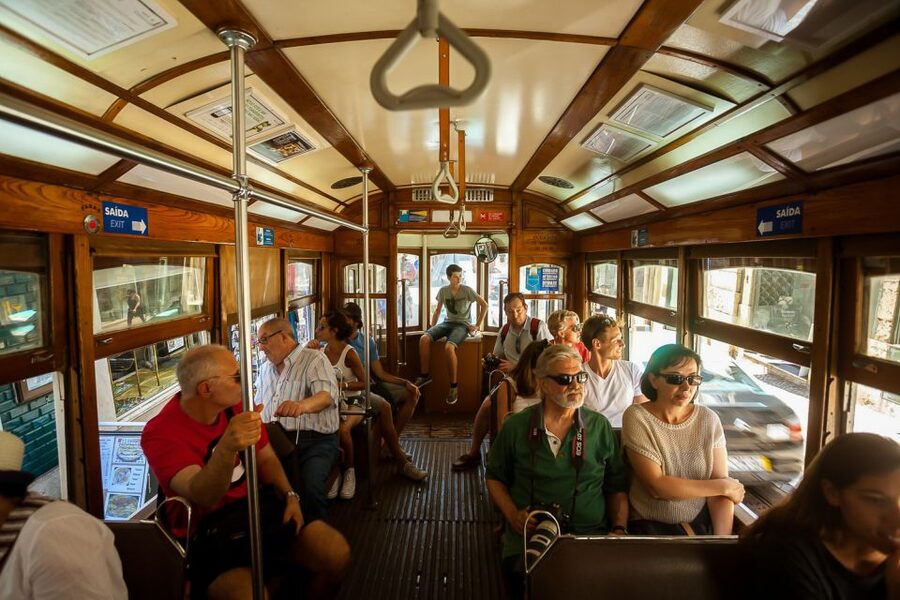
The tram ride is the hook, and rightly so. Tram 28 is one of Lisbon’s best-known public transport routes because it winds through old neighborhoods on tracks that seem barely wide enough for the tram itself.
You climb through the historic quarters while the tram passes close to buildings, parked cars, and street corners. The ride gives you a sense of Lisbon’s shape: this is a city of hills, not a flat grid. As the tram rises, you get broad views toward the rooftops and river.
I like this part because it is not staged as a sightseeing loop. You are riding a real mode of public transport, which makes the experience feel more connected to the city. The tradeoff is comfort and control. The tram can be crowded, and you may not get the seat or view you hoped for. You also cannot stop whenever a building catches your eye.
The amount of time spent on Tram 28 can vary. Some groups have wanted a longer ride, while others have had to use another tram or bus because of traffic. One recorded route even used Tram 12 instead of Tram 28. If riding the entire route is your main goal, treat this tour as a guided introduction rather than a guaranteed full-length tram journey.
Still, the tram adds something a standard walking tour cannot. You feel the climb, hear the old vehicle work its way around tight bends, and see how Lisbon’s streets fit together from the window.
Sé de Lisboa and Nearly a Thousand Years of History
The walking portion takes you beyond the tram line and into the old hilltop districts. One major stop is Sé de Lisboa, Lisbon’s medieval cathedral.
The cathedral is valuable not just as a grand church, but as a place where layers of Lisbon’s past are visible in the building itself. Its walls have witnessed nearly 1,000 years of religious and civic change. A good guide can help you notice details that you might otherwise pass without a thought.
This is where the tour’s historical side becomes useful. Instead of receiving a list of dates, you get a wider explanation of how Lisbon developed around its hills, churches, neighborhoods, and political institutions. Nuno, in particular, has been praised for connecting local history with Portugal’s broader story.
You should not expect a long private visit inside every monument. The supplied plan focuses on seeing the important buildings and understanding their place in the city. If you want extended interior time at the cathedral, check the schedule carefully and consider returning on your own.
São Vicente de Fora and the National Pantheon
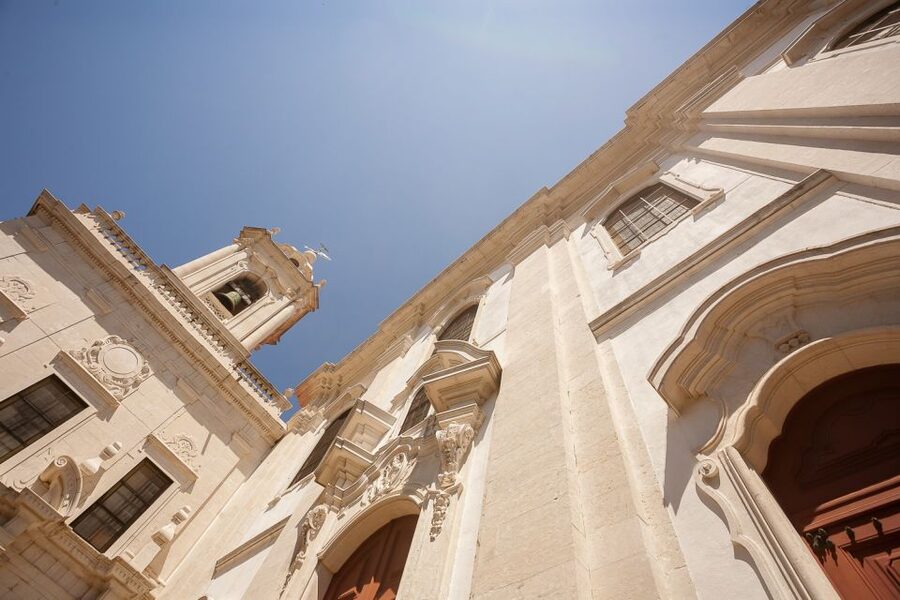
The route continues toward Mosteiro de São Vicente de Fora, or Saint Vincent Monastery. Its scale makes it an important landmark on the Alfama hill, and it helps show how religious buildings shaped the old city.
The National Pantheon is another major stop. Its large dome is one of the most recognizable features in Lisbon’s skyline. The guide also explains the legend connected with the building, giving you a story to remember rather than another anonymous monument in a long sightseeing list.
These stops work well together. The cathedral shows the deep age of Lisbon’s religious center. The monastery and Pantheon add more layers, from religious power to national memory. You see the buildings from the streets and viewpoints, then place them within the story of the neighborhood.
The practical point is that this is an outdoor sightseeing experience with plenty of walking between landmarks. If you want to enter each building, confirm what is included before booking. The listed inclusions are the Tram 28 ride and the guided walk through Alfama, not admission to every monument.
Same streets, a different story:
- Best of Lisbon Walking Tour: Rossio, Chiado & Alfama
★ 4.9 · 2,700 reviews - Age of Discoveries Walking Tour in Belém
★ 5.0 · 1,513 reviews - Lisbon Food Tour with 10+ Tastings of Local Delicacies & Wines
★ 5.0 · 1,339 reviews - Lisbon Roots – Small group Food & Culture Walking Tour w/tastings
★ 5.0 · 910 reviews
Walking Alfama’s Steep, Uneven Streets
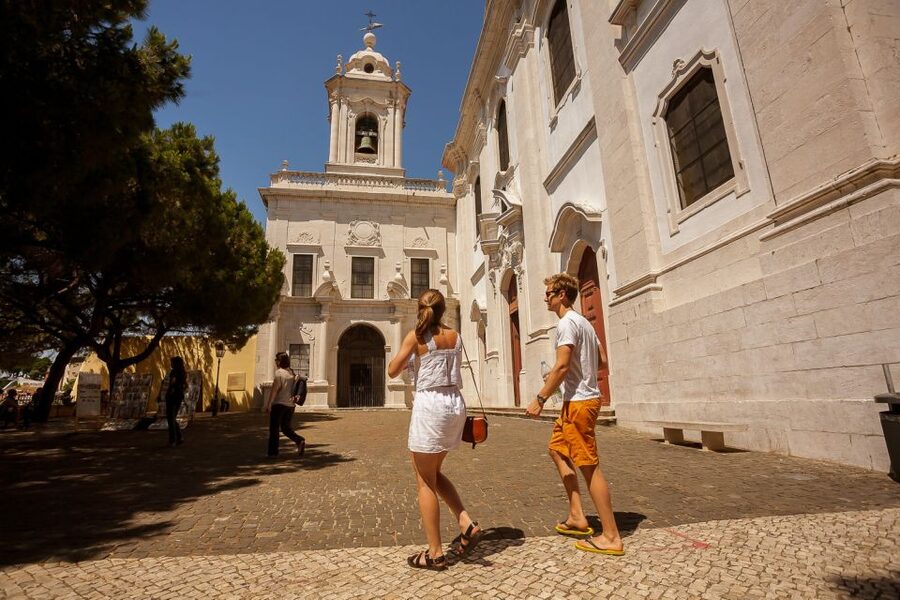
Alfama is the heart of the walking section. Its lanes twist, climb, narrow, and open into small squares. The neighborhood rewards slow movement, but it is not an easy stroll on smooth pavement.
Wear comfortable shoes with good grip. This is not optional advice. The walk includes steep streets and uneven surfaces, and one group with a wide age range, from 17 to 83, found the pace leisurely enough for everyone. Even so, you should be ready for hills and stone paving.
I like this section because it takes you beyond the postcard version of Lisbon. You see ordinary doorways, compact lanes, small gathering places, and the way residents use a neighborhood built long before cars. The guide can point out how the streets function, not just which building has the best photograph.
The route may feel demanding if you have knee, balance, or mobility concerns. No specific accessibility arrangement is included in the tour details, so ask the provider before booking if steep and uneven streets are a concern.
Alfama also gives the guide room to adjust the pace. Groups have described the walking as relaxed, and guides have sometimes stayed beyond the scheduled time to finish a conversation or answer questions. Do not count on extra time, but the small group format makes it easier to ask for clarification.
Fado in Alfama’s Small Bars and Cafés
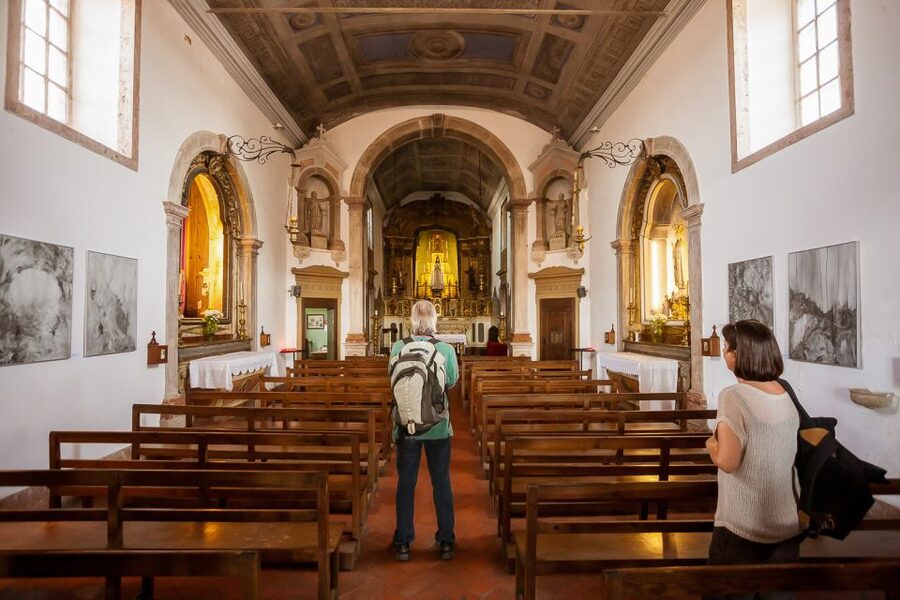
Fado is central to Alfama’s identity, and the tour introduces you to its place in Lisbon’s culture. You learn about the traditional Portuguese music associated with small bars and cafés in the neighborhood.
This is an introduction, not a full evening Fado performance. The value is in knowing what you are hearing and why the setting matters. After the tour, you will have more context if you choose to attend a Fado show or stop at a small local venue.
The subject also adds an emotional side to the history lesson. Alfama is not only a collection of old stones and viewpoints. It is a living neighborhood with music, homes, businesses, and long-standing traditions. A guide who explains that connection can make the walk feel less like a monument checklist.
The tour does not promise a performance, dinner, or entry to a Fado house. If live music is your priority, plan that separately.
Feira da Ladra on Tuesdays and Saturdays
If you take the tour on a Tuesday or Saturday, the route may include Feira da Ladra, Lisbon’s famous flea market.
The market adds a different texture to the morning. Instead of only viewing old buildings, you see a place where people browse, bargain, and sell an assortment of goods. It is a useful contrast to the polished monuments and formal viewpoints.
The market can also make the route busier and less predictable. Crowds may slow the group, and you may have less time to linger at each stall. If you like local markets, that tradeoff is worthwhile. If you prefer a quiet walk through Alfama, choose another day if your schedule allows.
What the Guides Add
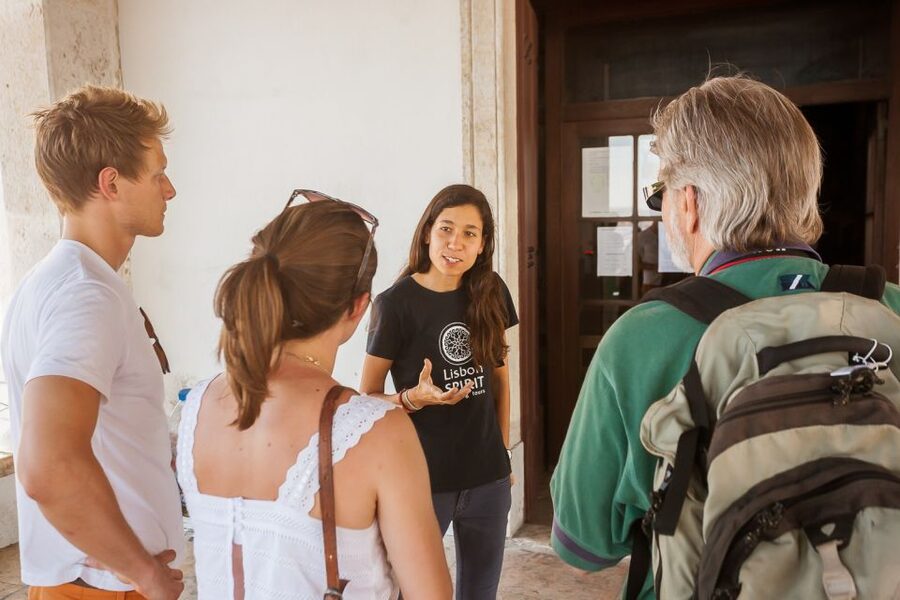
The guide is the most important variable on this tour. The strongest feedback has focused on guides who explain Lisbon with energy, answer questions patiently, and connect local details to Portuguese history.
Nuno has been singled out repeatedly for his humor, wide knowledge of Lisbon, and willingness to keep talking after the scheduled finish. Some people spell his name Nono or Nunu, but the descriptions clearly point to the same frequently praised guide. Luana has also received warm comments for leading an enjoyable and informative outing.
You should expect a guide-led history walk rather than a scripted audio tour. Topics can range from religion and politics to local property and the changing city. One useful warning is that a guide may sometimes go further into history than you want. If you prefer a light overview, say so. If you enjoy context, this is one of the tour’s strongest features.
The small group matters here. With no more than 10 people, you can hear the guide in narrow streets and ask questions without holding up a large crowd.
Is $23 a Good Price?
At $23 per person, this is good value if you want both transport and interpretation. You receive a Tram 28 ride, a three-hour guided walk, city views, and visits around Alfama. A comparable self-guided outing would still require you to work out the route, identify the sights, and find the right streets.
The value is greatest on a first visit. The tour helps you get your bearings in the oldest part of Lisbon, then gives you ideas for where to return on your own.
The price is less attractive if you want a guaranteed long tram ride or private access to monuments. It is also not the right choice if you dislike group transport or walking on hills. You are paying for a guided introduction to the old city, not a private sightseeing car.
Free cancellation up to 24 hours before the start and the option to reserve now and pay later make booking less risky. Starting times vary, so check availability when choosing your date.
Who Should Book This Tour?

I would choose this tour for a first or second day in Lisbon, especially if you want historical context before exploring alone. It suits people who enjoy walking, local stories, public transport, and views more than formal museum visits.
It is also a good fit for mixed-age groups if everyone can manage steep and uneven streets. The relaxed pace can help, but the terrain remains demanding in places.
You may want a different plan if your priority is a complete Tram 28 route, a private vehicle, extensive cathedral or Pantheon interiors, or a full Fado performance. In those cases, use this tour only as a starting point and arrange the main attraction separately.
Should You Book It?
Book it if you want a compact introduction to Lisbon’s old quarters, with a real tram ride followed by a useful walk through Alfama. The strongest reasons are the small group, the local guides, the views, and the way the route links major monuments with everyday streets.
Go in knowing that Tram 28 is public transport. Traffic, crowds, and service problems can change the plan. Wear sturdy comfortable shoes, stay flexible, and you will get the best value from the experience.
FAQ
How long is the Lisbon Tram 28 and Alfama tour?
The tour lasts three hours.
What language is the tour conducted in?
The live tour is conducted in English.
Where does the tour meet?
You meet at Praça Luís de Camões, near the statue. The guide will be carrying a black backpack with the Lisbon Spirit logo.
Is Tram 28 a private tram for the group?
No. Tram 28 is public transport, so traffic and other unexpected problems can affect the ride and route.
What should I wear or bring?
Bring comfortable shoes. The walking section includes steep and uneven streets in Alfama.
Does the tour include hotel pickup and drop-off?
No. Pickup and drop-off are not included.
New walking tours around Lisbon
- Lisbon: Walking Tour in the Center (Max 12 Participants)★ 5.0 · 741 reviews
- Lisbon: Kickstart Street Art Walking Tour★ 4.9 · 717 reviews
- Lisbon Through the Eyes of a Local – Food and Walking Tour★ 4.9 · 141 reviews
- Lisbon: Private Boat Trip, Guided Walking Tour, Bike & Tram★ 4.8 · 116 reviews
- Lisbon: Jewish Walking Tour★ 4.9 · 96 reviews
- Lisbon: Food and Culture 3-Hour Walking Tour★ 4.7 · 95 reviews
- Lisbon: Street Art Walk★ 5.0 · 79 reviews
- Lisbon: Helicopter Ride, Boat Trip, & Old Town Walking Tour★ 4.7 · 480 reviews
Lisbon Walking Tours, side by side.

Lisbon: History, Stories and Lifestyle Walking Tour
Read our review →
Best of Lisbon Small-Group Guided Walking Tour
Read our review →
Lisbon: Food and Wine Small Group Walking Tour
Read our review →
Best of Lisbon Walking Tour: Rossio, Chiado & Alfama
Read our review →

Lisbon Food Tour with 10+ Tastings of Local Delicacies & Wines
Read our review →
Lisbon Roots – Small group Food & Culture Walking Tour w/tastings
Read our review →
Lisbon Private Food Tour – Taste 10+ Local Dishes & Wines
Read our review →Lists this walk sits on