
Review · MUNICH
Munich: Third Reich & WWII Walking Tour
Munich’s Nazi past is not locked away in a distant museum. It is written into the city center, from the beer hall where Hitler’s movement gathered force to the square used for party rallies. This 165-minute walking tour connects those places and explains how postwar anger, political violence, and economic chaos helped Nazism grow.
I like two things here. First, you see the actual sites instead of hearing a detached classroom lecture. Second, the strongest guides, including Michael, Steve, Alex, Josh, Florian, and Danielle, are praised for clear storytelling, strong voices, and a respectful approach to a difficult subject. The main drawback is simple: this is an outdoor tour, and cold or wet weather can make nearly three hours feel long.
Key points to know before you book
- Hofbräuhaus begins the political story: Learn how Nazi mass meetings used one of Munich’s best-known beer halls.
- Feldherrnhalle marks a failed power grab: The tour explains the attempted coup that helped shape Hitler’s path to national attention.
- Königsplatz reveals the movement’s public theater: See the setting for Nazi rallies and examine how architecture and ceremony served propaganda.
- The White Rose adds a vital counterpoint: At the Hofgarten, the focus shifts from Nazi power to young Germans who resisted it.
- Guide quality matters: Named guides include Steve, Michael, Alex, Josh, Florian, Danielle, Ulrich, Aileen, and Brigit Muller.
- Plan for the weather: Wear comfortable shoes and bring warm clothing, especially in winter.
Why Munich is the right place for this history
Munich was more than a backdrop to the Third Reich. It was where Adolf Hitler built his early political career, where the Nazi movement tested its message, and where public spaces became tools for power.
The tour begins in the unsettled years after World War I. Germany had lost the war, the monarchy had fallen, and Bavaria was marked by revolution, assassination, and severe economic trouble. Munich became fertile ground for political movements promising order, national pride, and revenge.
That context matters. Without it, the story can sound like one man simply arrived and took control. The tour instead traces a chain of events: public anger, radical groups, persuasive speeches, organized gatherings, violence in the streets, and a failed attempt to seize power.
I find this approach useful because it places responsibility where it belongs while also explaining the conditions that allowed extremism to grow. Understanding the setting does not excuse the crimes. It helps you see how ordinary political life can be pushed toward dictatorship.
More walking tours around Munich:
- Third Reich Walking Tour Munich
★ 4.5 · 4,291 reviews - Munich: Old Town & Viktualienmarkt City Walk in German
★ 4.7 · 2,304 reviews - Munich: Night Watchman Walking Tour
★ 4.7 · 2,092 reviews
Hofbräuhaus and the first mass meetings
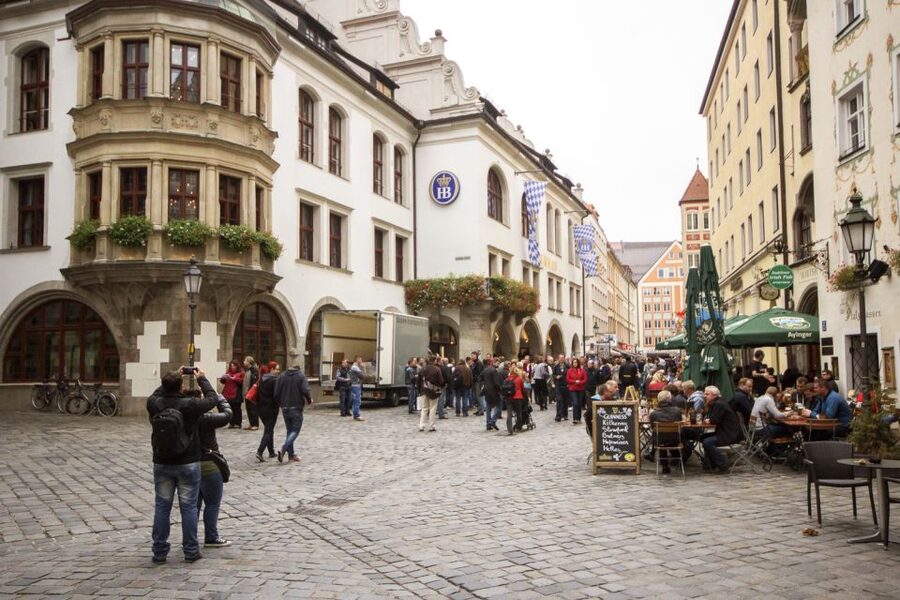
The Hofbräuhaus is one of Munich’s most famous beer halls, but this tour uses it for a darker purpose. Here, you learn about the early Nazi movement and the large political meetings that helped it move from a fringe group into a force with a public audience.
The setting makes the story tangible. A beer hall is not a distant government building. It is a place where people gathered, listened, argued, ate, and drank. Political messages could be delivered in a social setting, then repeated beyond the room.
Your guide explains how Nazi organizers used speeches, symbols, group identity, and carefully staged meetings to attract attention. This is one of the tour’s most valuable lessons: political movements grow not only through formal institutions, but also through public rituals and repeated messages.
The stop can be crowded, and the tour is not simply a long indoor visit. Much of the experience takes place outside as the group moves through the city. Still, beginning here gives the rest of the walk a clear starting point.
You should also expect the tone to be serious. Guides may use humor to keep a long group focused, but the subject remains the birth of a criminal dictatorship and the violence that followed.
Feldherrnhalle and the failed coup
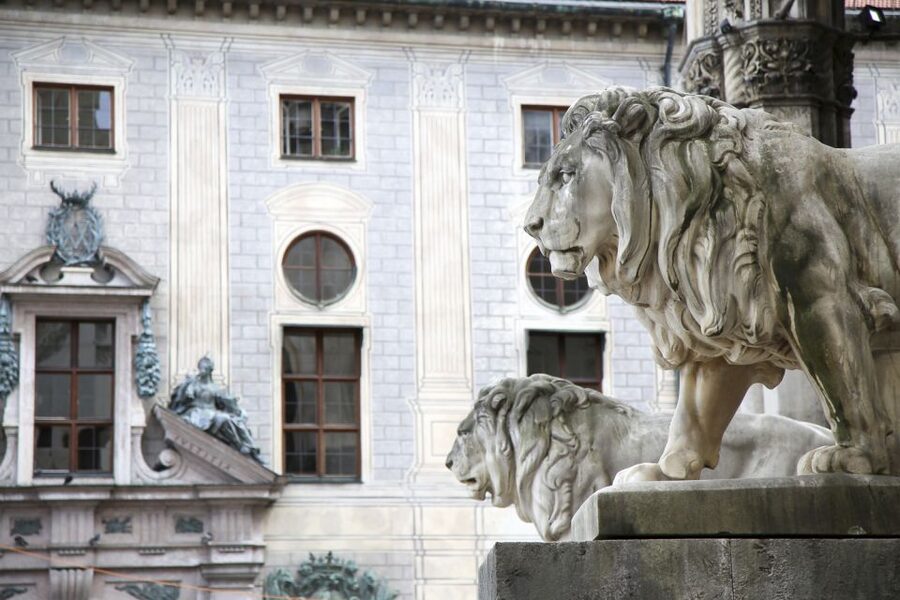
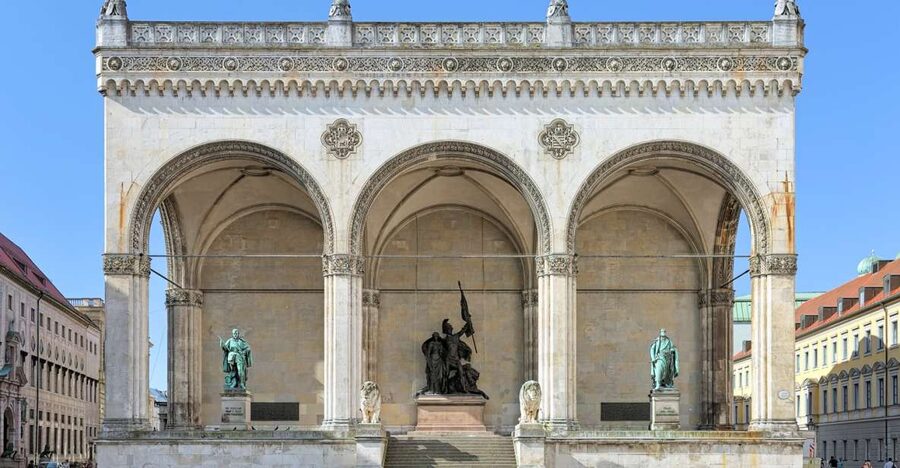
From the early meetings, the story moves toward the Feldherrnhalle, the monumental loggia on the Odeonsplatz. This is the site connected with Hitler’s 1923 attempt to seize power in Bavaria.
The failed coup, often called the Beer Hall Putsch, is a key turning point. The tour explains how Hitler and his supporters tried to force their way into power, and how the attempt collapsed. The event did not bring immediate success, but it gave Hitler a national profile and helped shape the tactics he used afterward.
At the Feldherrnhalle, the location itself helps clarify the risks of political theater. This was not just a speech or a private meeting. It was a public confrontation designed to project strength, and its failure showed the limits of a direct grab for power.
Your guide can also explain how the Nazi movement later used the memory of the dead from the coup as a political tool. Public remembrance became part of the movement’s mythology. That is the kind of detail that turns a familiar name and date into a clearer picture of how propaganda works.
The stop is outdoors, so your comfort depends on the season. In winter, warm layers are essential. Several guides have taken extra care with cold-weather groups, including bringing hot tea or mats for sitting, but you should still dress for a long walk.
From political fringe to government power
The tour does not stop with the failed coup. It follows the movement’s growth across central Munich and explains how Hitler changed tactics after 1923.
The important point is that the Nazi rise was not based on one dramatic event. The movement continued organizing, recruiting, speaking, and exploiting public frustration. Over time, it used elections and legal political structures while keeping intimidation and violence close at hand.
Munich lets you follow that process on foot. Streets and squares that now feel like normal parts of a city center once served as meeting places, parade routes, and stages for political performance.
I like this part of the tour because it links local places with larger German events. You are not simply memorizing Hitler’s biography. You are learning how a city can become a testing ground for a movement that later reshaped an entire country.
The quality of this section depends heavily on the guide. Josh is praised for holding a large group’s attention for more than two hours, while Steve is noted for explaining complex events in a clear, organized way. Alex and Michael are also described as engaging and approachable. Since the guide may vary, expect the same main route but a slightly different delivery.
Same streets, a different story:
- Munich Ghosts and Spirits Evening Walking Tour
★ 5.0 · 1,900 reviews - Munich: Birthplace of the Third Reich Guided Walking Tour
★ 4.6 · 771 reviews - Munich: Old Town Walking Tour
★ 4.7 · 589 reviews - Discover Munich 2-Hour Small Group Walking Tour
★ 4.6 · 491 reviews
Königsplatz and the stage-managed city
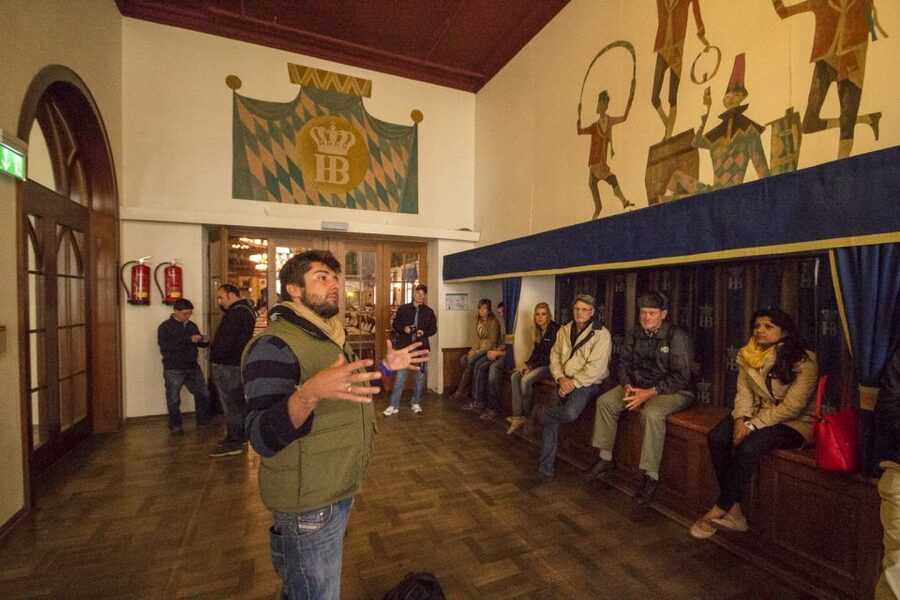
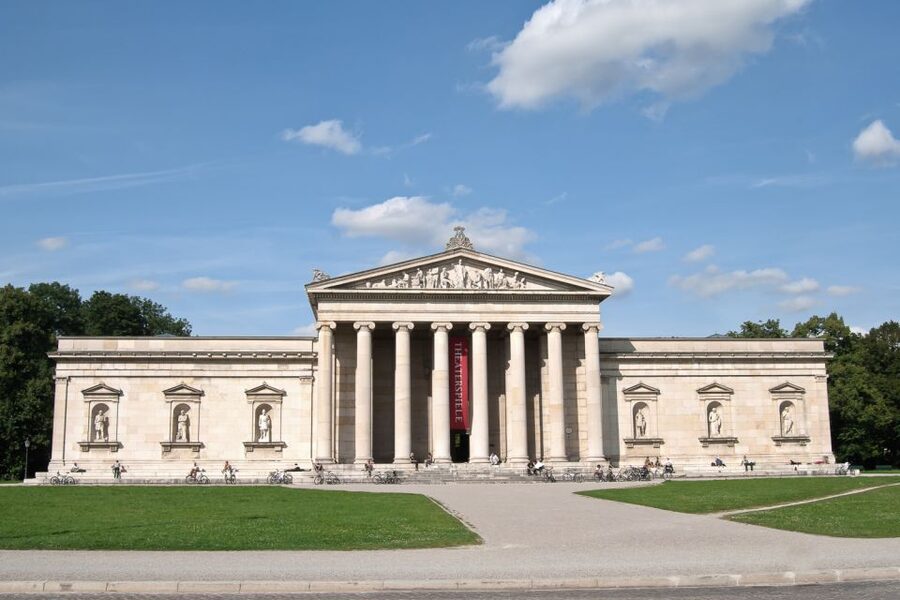
Königsplatz is one of the tour’s most important stops. The square was used for Nazi rallies, ceremonies, and displays of political power. Its open space and monumental buildings made it well suited to mass gatherings.
Here, the tour looks at how the Nazis used architecture, scale, ceremony, and crowds to create an image of unity and authority. A rally was not only about the words spoken from a platform. It was also about where people stood, what they saw, how symbols were displayed, and how the crowd was made to feel part of something larger.
This is a strong place to pause and consider the difference between a city’s normal public life and a city arranged for propaganda. The buildings and paving remain, but their meaning changes when you understand what happened there.
The advertised route includes Königsplatz, though one participant reported that the tour ended elsewhere on one occasion. If seeing the square is a major reason you are booking, confirm the meeting and finishing details for your chosen departure before you set out. Conditions, group movement, or guide arrangements may affect the final stop.
The nearby Munich Documentation Centre can make a useful follow-up visit. One person continued there after the walk because the tour ended close by. The center is not included in the guided walk, so allow separate time and admission arrangements if you want to visit it.
The Hofgarten and the White Rose
The stop at the Hofgarten gives the tour a needed change in focus. Instead of examining Nazi organization and state power, you learn about the White Rose resistance movement.
The White Rose was made up largely of students and others who opposed Nazi rule and distributed leaflets calling for resistance. Their story shows that opposition existed inside Germany, even under a dictatorship that punished dissent severely.
This section matters because a tour about Hitler can become overly centered on Hitler. The White Rose reminds you that Munich’s wartime story also includes people who rejected the regime and risked their lives to speak against it.
The setting helps the contrast. After hearing about mass rallies, party meetings, and political control, you pause in a garden associated with a very different form of public action: quiet resistance through words and conscience.
A good guide handles this subject with care. The strongest comments about guides such as Steve, Josh, Michael, and Aileen describe an approach that is serious without becoming theatrical. That balance is important here.
What the 165-minute format feels like
The tour is listed as 2.5 hours or 165 minutes, and the description also presents it as roughly 2 hours and 45 minutes. In practical terms, plan on most of an afternoon or morning, not a quick one-hour orientation.
You will be standing and walking through central Munich, with frequent stops for explanation. The route is not described as a nonstop march. One account notes regular pauses, which makes the length easier to manage, but you still need comfortable shoes.
The long format is useful for this subject. Hitler’s rise, the Third Reich, World War II, and the White Rose cannot be explained well in a few sound bites. You have time to move from one site to the next and connect the events.
Large groups can create drawbacks. A guide may need to remind people to stay together, and surrounding city noise can make it harder to hear. One participant suggested that a portable speaker would help when crowds are nearby. If hearing every word is important to you, stay close to the guide.
Private groups are available. That option may suit families, history students, or people who want more time for questions and a pace shaped around their group.
Guide style and the human side of the tour
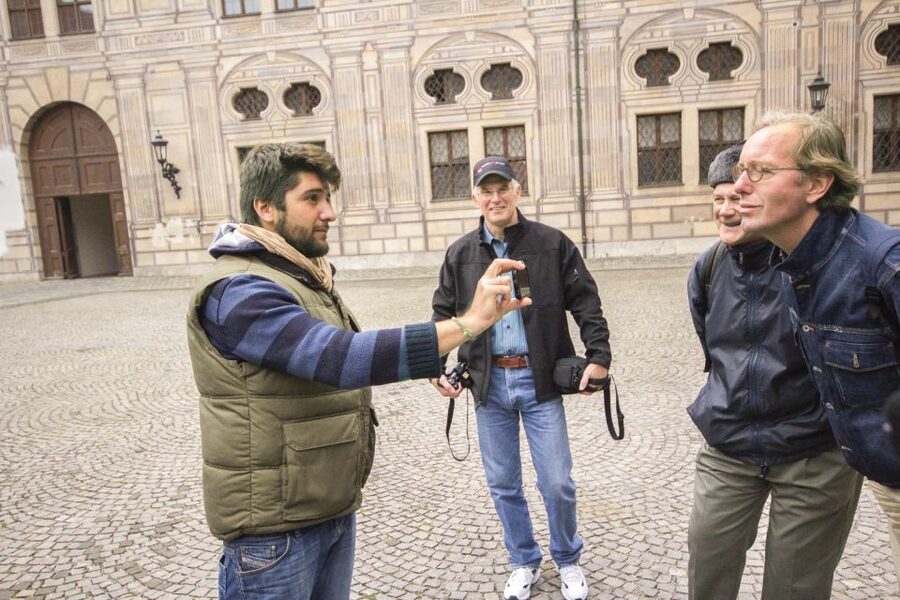
The guide is the biggest variable in this experience. The named guides include Michael, Steve Le, Alex, Josh, Danielle, Florian, Ulrich, Aileen, and Brigit Muller.
The most praised qualities are consistent: clear voices, strong command of the subject, respectful handling of genocide and war, and the ability to answer questions without losing the group. Josh is praised for connecting the history to present-day civic life. Steve is noted for thoughtful care in cold weather, including tea and seating pads. Florian is described as personable and especially good at adding lesser-known details.
You should not expect every guide to tell the story in exactly the same way. One person may add more local detail, another may focus on political development, and another may bring more personal warmth or humor. The main sites and subjects remain the same, but the experience can feel quite different depending on who leads it.
This is not a light sightseeing walk with a few war facts added on. The subject includes dictatorship, genocide, resistance, and the destruction of Munich. Guides generally approach it with seriousness, but the best ones keep the group attentive through vivid examples and straightforward explanation.
Price, value, and practical planning
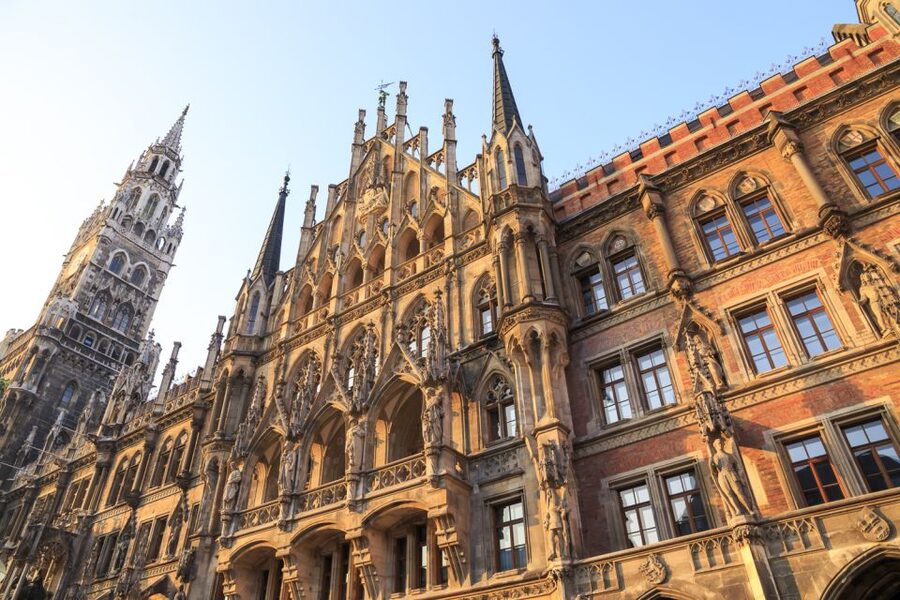
At $31 per person, the tour is reasonably priced for a 165-minute guided walk in central Munich. You are paying for a live guide, a structured route, and historical explanation at several major sites. There are no listed museum admissions included, so the value comes from the guiding rather than from entry to attractions.
I think the price works best if you want context. You can walk past the Hofbräuhaus, Feldherrnhalle, Königsplatz, and Hofgarten on your own, but you will not automatically understand how those places connect to the rise of Nazism or the White Rose.
The tour is available in English and German. A live English guide is especially useful for visitors who want more than dates and names, since the meaning of the sites depends on sequence and explanation.
Wear comfortable shoes. Bring warm clothing in winter and protection from rain when needed. Recent winter departures have taken place in cold, snowy, and wet conditions, and the tour remains outdoors for much of its length.
The meeting point can change according to the option you book, so check your confirmation carefully. Free cancellation is available up to 24 hours before the start, and you can reserve now and pay later. The tour is wheelchair accessible, though the exact comfort of a long outdoor route may depend on the chosen meeting point and current city conditions.
Who should book this Munich history walk
I would recommend it to anyone with a serious interest in 20th-century European history, especially if you want to understand why Munich became so important to the Nazi movement.
It also suits first-time visitors who want to connect famous central sights with local history. Families with older children, history students, and visitors planning to continue at the Munich Documentation Centre can get particular value from the route.
You may want to skip it if you dislike long outdoor walks, have limited time in Munich, or want a general introduction to Bavarian culture. This is a focused tour about Nazism, World War II, resistance, and political memory. It is not a broad city sightseeing tour.
Should you book it?
Book this tour if you want the city itself to explain the story. The Hofbräuhaus, Feldherrnhalle, Königsplatz, and Hofgarten form a strong sequence, and the White Rose stop keeps the experience from becoming only a study of Nazi power.
The $31 price is fair, the 2.5 to 2.75-hour format gives the guide room to explain cause and effect, and the strongest guides bring both care and clarity. Just dress for the forecast, wear good shoes, stay near the guide in busy areas, and confirm the exact route if Königsplatz is essential to your plans.
FAQ
How long does the Munich Third Reich and WWII Walking Tour last?
The activity is listed as 2.5 hours or 165 minutes. The description also presents it as approximately 2 hours and 45 minutes, so plan for a walk of nearly three hours.
How much does the tour cost?
The listed price is $31 per person.
Which sites are included?
The route includes the Hofbräuhaus, Feldherrnhalle, Königsplatz, and the Hofgarten. The tour connects these places to Hitler’s rise, the Third Reich, World War II, and the White Rose resistance movement.
Is the tour offered in English?
Yes. Live guides are available in English and German.
Who might guide the tour?
Guides named for this experience include Michael, Steve, Alex, Josh, Danielle, Florian, Ulrich, Aileen, and Brigit Muller. The guide depends on the date and option booked.
Is the walking tour wheelchair accessible?
Yes, the activity is listed as wheelchair accessible.
What should I bring?
Bring comfortable shoes. Warm clothing is important in cold weather, and you should prepare for outdoor conditions.
Is a private group option available?
Yes, a private group option is available.
Can I cancel the booking?
You can cancel up to 24 hours in advance for a full refund. The activity also offers a reserve now and pay later option.
Where does the tour meet and finish?
The meeting point may vary depending on the option booked. Königsplatz is part of the advertised route, but the final stopping point can vary, so check the details for your selected departure.
New walking tours around Munich
- Munich : Private Walking Tour with A Guide (Private tour)★ 4.5 · 85 reviews
- Munich: Raven Black Witches and Executioners Walking Tour★ 4.7 · 294 reviews
- Munich: Guided Food Walking Tour with Beer Tasting★ 4.7 · 183 reviews
- Munich Old Town – Guided Walking Tour in English★ 4.7 · 153 reviews
- Munich: Old Town Guided Walking Tour★ 4.6 · 479 reviews
- Munich: Old Town Walking Tour★ 4.7 · 589 reviews
- Munich: Birthplace of the Third Reich Guided Walking Tour★ 4.6 · 771 reviews
- Discover Munich 2-Hour Small Group Walking Tour★ 4.6 · 491 reviews
Munich Walking Tours, side by side.
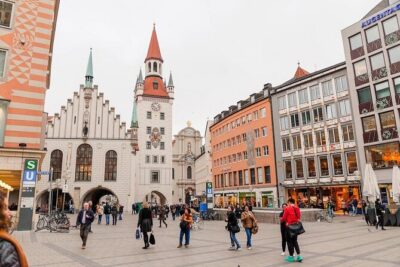
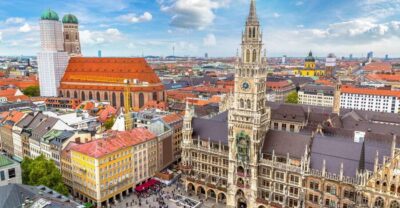
Munich: Old Town & Viktualienmarkt City Walk in German
Read our review →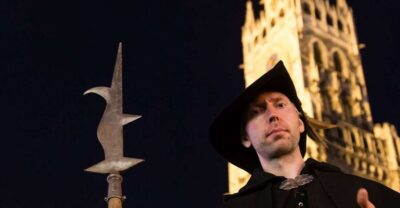
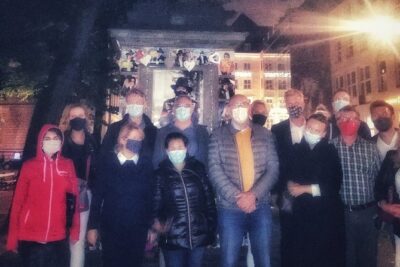
Munich Ghosts and Spirits Evening Walking Tour
Read our review →
Munich: Birthplace of the Third Reich Guided Walking Tour
Read our review →
Discover Munich 2-Hour Small Group Walking Tour
Read our review →
Munich Private Tour with a Local – Highlights & Hidden Gems
Read our review →Lists this walk sits on