Review · MUNICH
Munich Old Town – Guided Walking Tour in English
Munich’s Old Town is more than pretty church towers and beer halls. This 150-minute walk connects royal power, Bavarian beer culture, music, food, and the city’s dark role in Nazi history. I like that the tour does not polish Munich into a postcard. It explains how the city became both a proud regional capital and a birthplace of political terror.
I especially like the useful first-day orientation and the mix of famous sights with small local details, such as the Munich child found on city symbols, the figure of Aloisius at Hofbräuhaus, and the Leberkäse sandwiches at Viktualienmarkt. The main drawback is that the route gives serious attention to the Third Reich, which some guests may find heavier than expected, while the carillon’s knightly display may be less exciting than the tour description suggests.
Key points to know before booking
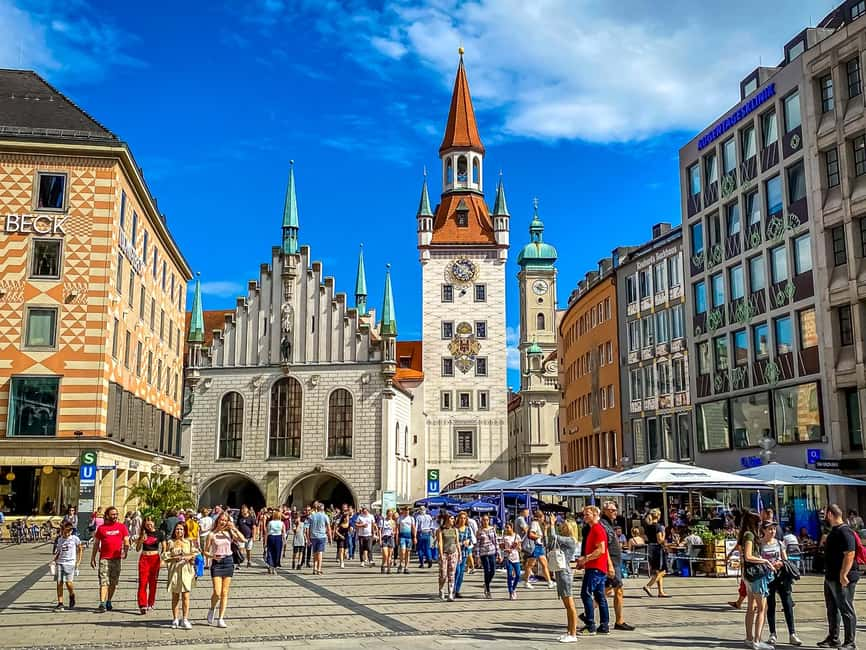
- Marienplatz begins the story: See the New Town Hall, Old Town Hall, and the city’s famous central square.
- Hofbräuhaus gets context: Learn how beer shaped Bavarian identity, not just where to order a litre mug.
- Royal Munich comes into view: Walk through Max Joseph Platz and the former residences of Bavarian rulers.
- Nazi history is handled directly: Visit places connected with the Beer Hall Putsch and the rise of the NSDAP.
- The guides add local help: Jean, Alex, Patrick, Noel, and others have offered restaurant tips, follow-up suggestions, and answers to questions.
- The price is $29: That covers the reservation and guide payment, with no extra payment required on the spot.
Why this Munich walk works well as a first activity
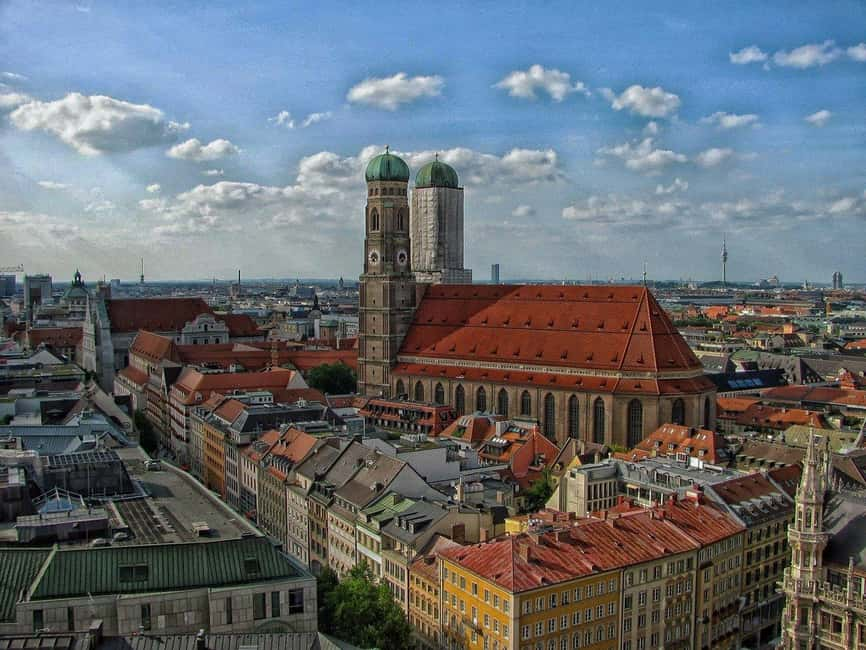
A good city walk should help you read the streets after it ends. This one does that by tying buildings to the forces that shaped Munich: the Wittelsbach dynasty, Catholic power, Bavarian independence, German unification, industry, football, beer, and the Nazi movement.
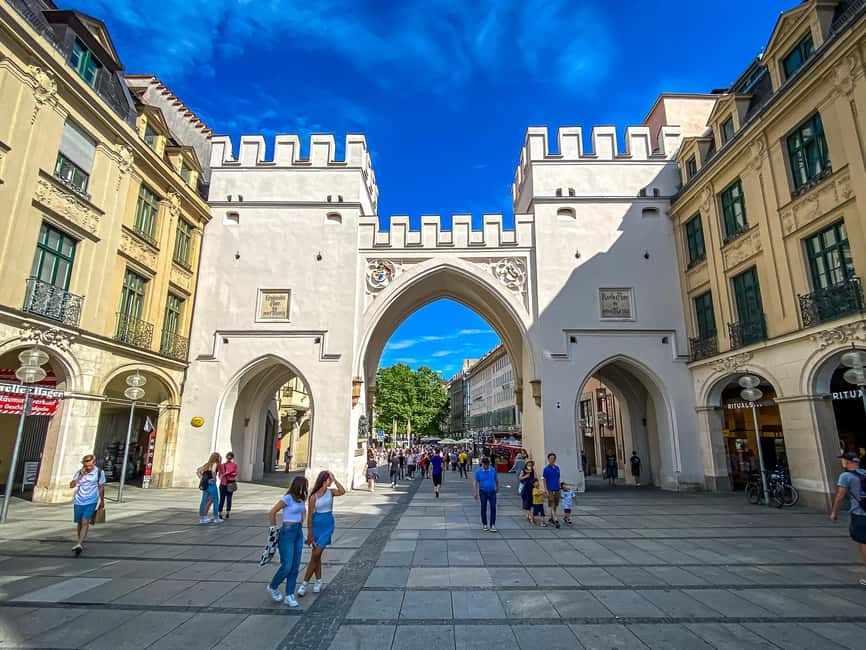
You begin at the main gate of St. Peter’s Church, one of the clearest meeting points in the Old Town. Look for the yellow Walkative umbrella. The location matters because it puts you close to Marienplatz and the oldest central part of Munich, rather than wasting the opening minutes on a distant neighborhood.
The walk is conducted in English or German, depending on the departure you choose. The guides named in recent bookings include Jean, Alex, Patrick, Noel Byrnes, Karl, Lima, Brigitte, Patricia, Charles, Jan, and others. The quality of the experience can vary slightly with the individual guide, as it does on any city walk, but the strongest pattern is clear: guides are praised for storytelling, local suggestions, humor, and the ability to explain difficult history with care.
I would book this early in your Munich stay. It gives you a map in your head, points out places for later meals, and supplies the background that makes the churches, palaces, and beer halls easier to understand.
More Old Town Walking Tours in Germany
- Munich: Old Town & Viktualienmarkt City Walk in German
★ 4.7 · 2,304 reviews - Munich: Old Town Walking Tour
★ 4.7 · 589 reviews - Munich: Old Town Guided Walking Tour
★ 4.6 · 479 reviews
Marienplatz and the two town halls
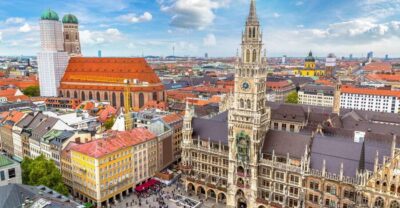
Marienplatz is Munich’s main public square and the natural opening scene. The New Town Hall dominates the space with its Gothic-looking facade, while the Old Town Hall gives you a glimpse of the city’s earlier civic center.
The square is not just an attractive photo stop. It shows how Munich presents itself: grand, Catholic, civic-minded, and proud of its past. Your guide explains what you are looking at rather than leaving you to photograph the facade and move on.
The tour also discusses the carillon in the New Town Hall. Its moving figures recreate scenes from Munich’s past, including a knightly tournament. This is one place where expectations should stay modest. The display is famous, but the mechanical performance may feel more quaint than thrilling, especially if you have seen large-scale historic shows elsewhere.
Still, the square is a useful place to learn how Munich’s symbols work. One local detail concerns the Münchner Kindl, the Munich child that appears on city flags, signs, and emblems. Small facts like this help you recognize the city beyond the major monuments.
St. Peter’s Church and Munich’s early beginnings
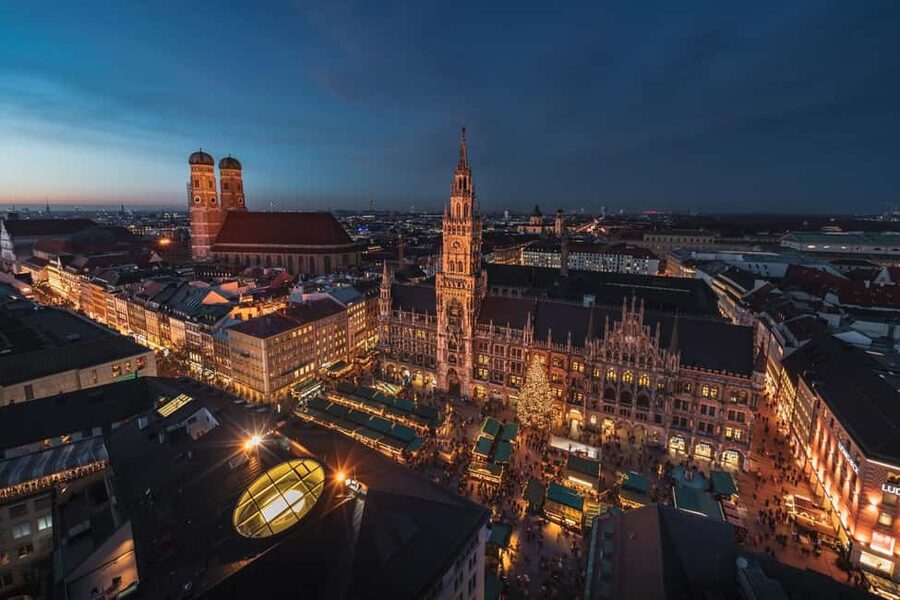
The meeting point at St. Peter’s Church places the tour beside one of Munich’s oldest churches. The discussion reaches back to the Roman beginnings of the city and follows Munich’s growth into the capital of Bavaria.
The point is not to give you every date. It is to show how a settlement developed into a seat of power. Munich’s central streets were shaped by religion, trade, court life, and the authority of the Wittelsbach family, which ruled Bavaria for roughly 700 years.
If the tour allows time to look inside churches, you can appreciate the contrast between Munich’s exterior streets and its ornate Catholic interiors. One useful practical detail from the experience is that you may have time to explore churches and take photographs, but this remains a walking tour, not an interior-focused church visit. Services, crowds, or timing can affect how long you spend inside.
Hofbräuhaus and the Bavarian beer story
Hofbräuhaus is the stop most closely tied to the Munich image many people bring with them. The tour goes beyond the large beer hall and explains how beer became part of Bavarian culture.
That context is valuable. You learn why beer is not simply a drink here, but part of social life, civic identity, food traditions, and tourism. The guide also connects the subject to local characters and stories, including Aloisius, the figure associated with Hofbräuhaus.
You will not get a full food tour on this walk, but you do receive pointers for eating later. Viktualienmarkt comes up as a useful place to explore, including the classic Leberkäse sandwich. That is the sort of advice I appreciate: specific enough to act on, but not a forced restaurant stop that interrupts the history.
Do not expect the tour price to include beer or food. Those costs are separate. The value here is knowing what you are seeing and having a better idea of what to try afterward.
More Old Town Walking Tours in Munich:
- Underground Vaults Walking Tour in Edinburgh Old Town
★ 4.5 · 8,506 reviews - Prague: 3-Hour Walking Tour of Old Town & Prague Castle
★ 4.7 · 5,696 reviews - Dubrovnik: Old Town Walking Tour
★ 4.8 · 5,174 reviews - Split: Old Town and Diocletian Palace Walking Tour
★ 4.9 · 4,727 reviews
From Max Joseph Platz to the royal residence
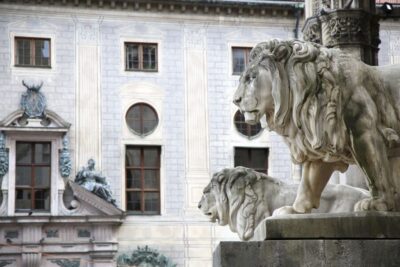
The route continues to Max Joseph Platz and the former residence of the Bavarian kings. This is where Munich’s royal side comes forward.
The Wittelsbachs ruled Bavaria for centuries, and their former home reflects the scale of that power. Even if you do not enter the residence during this tour, the exterior and surrounding square help explain how court life shaped the city center.
The State Opera and National Theater are also part of the route. These buildings show another side of Munich’s ambitions: music, performance, and royal patronage. The tour places them in the same story as the churches and palace, showing how the city’s rulers used architecture and culture to project status.
This portion is especially useful if you plan to visit the Residence, the opera area, or nearby museums later. You receive enough background to decide which places deserve more of your time. The walk itself cannot replace an interior visit, so art and palace fans should leave room in their schedule for separate museum time.
Odeonsplatz and the difficult history of Munich
The most serious part of the tour concerns Munich’s role in the rise of Nazism. The city was where Adolf Hitler attempted to seize power during the Beer Hall Putsch in 1923. After the failed coup, he was imprisoned and wrote Mein Kampf. Munich was also the birthplace of the NSDAP, the party that later took power across Germany.
This is not a minor footnote. It is central to understanding the city and the country. A tour that only offers beer halls and royal squares would leave out the political history that changed Europe and the world.
The guides handle this subject with varying styles, but the strongest descriptions emphasize clear explanations, sensitivity, and a willingness to answer questions. Alex is especially praised for presenting the Third Reich period in a thoughtful way, while Jean is frequently described as engaging and careful with complex subjects.
The balance may not suit everyone. One booking described the tour as excellent but wished it placed less weight on war-related material. That is a fair warning. If you want a light introduction focused almost entirely on architecture, food, and beer, this tour may feel more serious than expected. If you want an honest account of Munich, the difficult section is one of its main strengths.
Joseph Ratzinger and the city’s competing identities
The tour also touches on Joseph Ratzinger, the future Pope Benedict XVI, who worked in Munich while he was still an archbishop. This adds another layer to the city’s religious story.
Munich can seem full of contradictions. It has grand Catholic churches and a famous beer culture. It is proud of regional customs but also tied to major industry and modern technology. It produced both religious leaders and political extremists. The walk does not force these subjects into a simple explanation, but it gives you the landmarks needed to see how they coexist in one city.
That is the larger idea running through the experience. Munich is not one thing. It is royal, commercial, religious, musical, industrial, sporty, traditional, and modern. The beer hall may be the easiest symbol to recognize, but it cannot explain the whole place.
What the guides add to the experience
The guide is the deciding factor on a walking tour, and this one benefits from a strong group of English-speaking personalities.
Jean is repeatedly praised for his command of Munich’s history, his humor, and his ability to make people feel welcome. He also speaks French, German, English, and Spanish, which can help a mixed-language group feel more at ease.
Alex is described as patient, organized, funny, and good at finding the right level of detail. If you want a guide who connects local culture with the Third Reich period, he appears to be a particularly good fit.
Patrick is often praised for practical suggestions about restaurants and things to do after the walk. Noel Byrnes brings local culture and Irish humor, and has provided follow-up recommendations after the tour. Other guides, including Karl, Lima, Patricia, Jan, and Brigitte, are described as lively, friendly, or attentive to the group.
Because the tour joins the general pay as you wish walking tour, group size may vary. A larger group can make questions and photographs less easy, though the guides are expected to keep everyone together. If you prefer a smaller private experience, contact Walkative Tours before booking to ask about arranging one.
The pace, length, and practical value
Two and a half hours is a useful length for Munich’s Old Town. It is long enough to connect the main sights, but short enough to leave your afternoon open for a museum, meal, or separate palace visit.
You should expect to stand and walk outdoors for most of the experience. Wear comfortable shoes and prepare for changing weather. One group completed the walk in light rain, so a waterproof layer is sensible. Winter visitors should be ready for cold conditions, especially in open squares.
The meeting point is the main gate of St. Peter’s Church. Arrive with enough time to find the yellow umbrella, since Marienplatz can be busy and the tour starts from a precise location.
The listed price is $29 per person. For a guided introduction lasting 150 minutes, that is a fair price, particularly because it includes the reservation and guide payment in advance. You do not need to make another payment on the spot. The arrangement is connected to a general pay as you wish walk, but your booking fee covers the cost here.
The price does not include hotel pickup, food, drinks, or admission to attractions. That is normal for a city walk, and it keeps the route focused on outdoor sights and storytelling. If you want palace interiors or a full beer and food tasting, plan those separately.
Free cancellation is available up to 24 hours before the tour for a full refund, and you can reserve now and pay later. Those terms are useful if your Munich plans are still shifting.
Who should book this Old Town tour?
I would choose this walk if you are visiting Munich for the first time, especially if you want cultural context before choosing restaurants, museums, and beer halls.
It suits you if you enjoy:
- A broad introduction to Munich rather than one single attraction
- Royal, religious, political, and food history in the same walk
- Direct discussion of the Nazi period
- Local tips for places to eat and visit afterward
- A guide-led experience with time for questions
- A sensible 150-minute schedule
You may want something else if you dislike serious historical subjects or want a tour devoted only to beer, food, architecture, or art. The experience covers all of those areas, but none receives the depth of a specialized tour.
Should you book it?
Yes, if you want a strong first look at Munich and prefer a guide who explains the city’s contradictions rather than selling you a single Bavarian stereotype.
The best reason to book is the combination of clear orientation and honest history. You see Marienplatz, Hofbräuhaus, Odeonsplatz, the opera area, and the royal residence, but you also learn why Munich mattered in the rise of Nazism. At $29, the walk offers solid value for your first day, especially with a guide such as Jean, Alex, Patrick, or Noel.
Book it early in your stay, bring good shoes, and keep your afternoon open for the places that catch your interest. If the carillon leaves you cold, the beer culture, royal squares, and serious history should still give you plenty to think about.
FAQ
How long does the Munich Old Town walking tour last?
The tour lasts 150 minutes, or two and a half hours.
What language is the tour conducted in?
The tour is available in English and German. English-speaking guides include Jean, Alex, Patrick, Noel Byrnes, and others.
Where does the tour meet?
The meeting point is at the main gate of St. Peter’s Church. The guide waits with a yellow Walkative umbrella.
What sights are included?
The route includes Marienplatz, the New Town Hall, the Old Town Hall, Hofbräuhaus, Odeonsplatz, the National Theater, the State Opera, Max Joseph Platz, and the former residence of the Bavarian kings.
Does the tour discuss Nazi history?
Yes. It covers Munich’s role in the Beer Hall Putsch, Adolf Hitler’s early political activity, the writing of Mein Kampf, and the origins of the NSDAP.
Is food or beer included in the price?
No. Food, drinks, and hotel pickup and drop-off are not included.
Is another payment required during the tour?
No. The amount paid in advance covers the reservation fee and the guide’s payment, so no additional payment is required on the spot.
Can I cancel the booking?
Yes. You can cancel up to 24 hours in advance for a full refund. You can also reserve now and pay later.
New walking tours around Munich
- Munich : Private Walking Tour with A Guide (Private tour)★ 4.5 · 85 reviews
- Munich: Raven Black Witches and Executioners Walking Tour★ 4.7 · 294 reviews
- Munich: Old Town Guided Walking Tour★ 4.6 · 479 reviews
- Munich: Guided Food Walking Tour with Beer Tasting★ 4.7 · 183 reviews
- Munich: Old Town Walking Tour★ 4.7 · 589 reviews
- Munich: Birthplace of the Third Reich Guided Walking Tour★ 4.6 · 771 reviews
- Discover Munich 2-Hour Small Group Walking Tour★ 4.6 · 491 reviews
- Munich Private Tour with a Local – Highlights & Hidden Gems★ 5.0 · 469 reviews
Munich Walking Tours, side by side.
Munich: Old Town & Viktualienmarkt City Walk in German
Read our review →
Munich Ghosts and Spirits Evening Walking Tour
Read our review →
Munich: Birthplace of the Third Reich Guided Walking Tour
Read our review →
Discover Munich 2-Hour Small Group Walking Tour
Read our review →