

Review · KENYA
Nairobi Walking tour:Explore History Culture and Traditions
Nairobi reveals itself best at street level, where a mosque, market, memorial, park, and office tower can appear within the same short walk. This three-hour city tour connects those pieces with local guides who explain Kenya’s politics, daily life, traditions, and past in plain language.
I like the coffee break, which gives your feet a rest and lets you talk with the guide beyond the usual sightseeing script. I also like the route’s range, from Jamia Mosque and the McMilan Memorial Library to Uhuru Park and the KICC viewing point.
The main consideration is the pace. You cover a lot of ground, and Nairobi’s sun, traffic, and uneven pavements can make the walk tiring. The schedule may also stretch or shorten depending on your group, guide, and opening hours.
Key points to know before booking
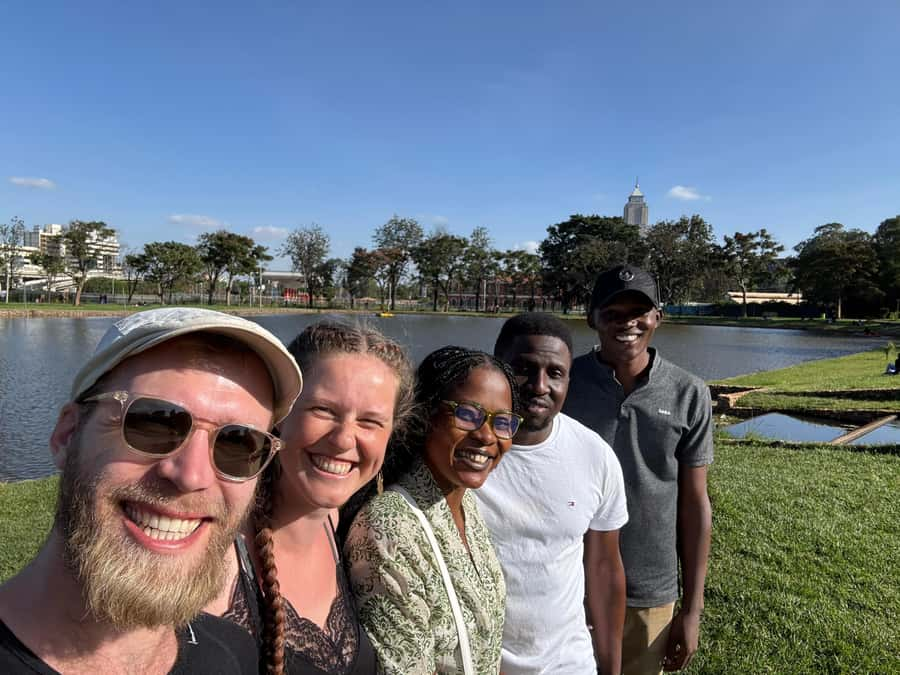
- Start beside the Supreme Court: Meet at the Carrefour entrance near the Supreme Court building, with pickup available from many hotels and apartments within 10 kilometers of Nairobi Municipality.
- Edwin is a frequent guide: He is especially good at storytelling, local questions, and adjusting the pace. John, Dennis, Sam, and Pierre have also led tours in English, French, or Spanish.
- The route mixes major sights with ordinary city life: You’ll pass monuments, markets, religious buildings, gardens, government offices, and shopping areas.
- Kenyan coffee is optional: The café stop is a useful pause, but coffee and other drinks are not included in the $22 price.
- Uhuru Park is the breathing space: Expect a greener, quieter section of the walk where you can sit on the grass and escape the sun for a while.
- The KICC helipad costs extra: The building visit and city views are part of the experience, but the helipad fee is not included.
What this Nairobi walking tour does well
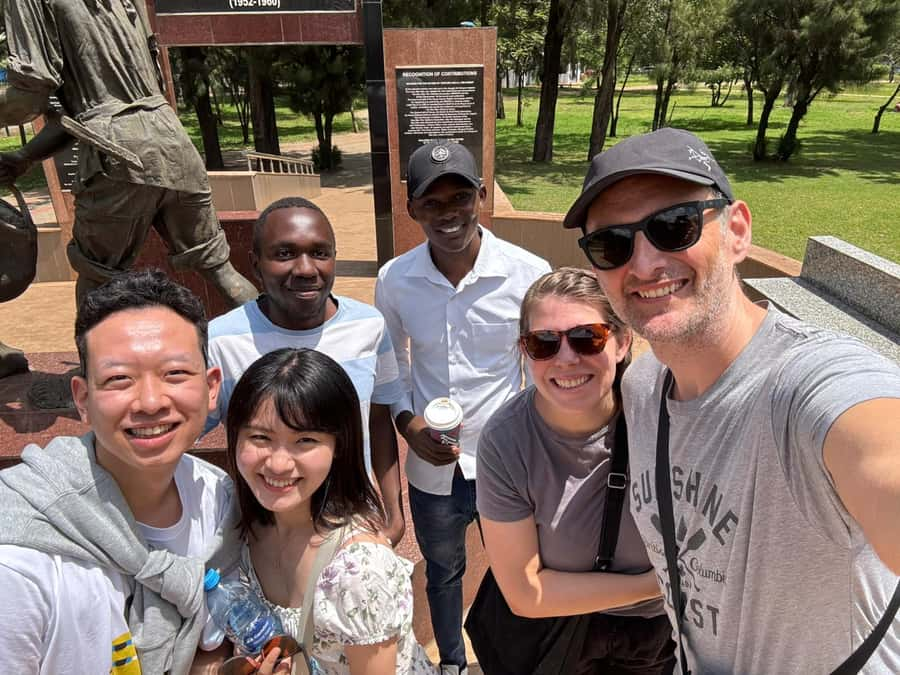
At $22 per person, this is an efficient way to get your bearings in central Nairobi without trying to decode the city from a phone map. You get a guide, hotel pickup to the meeting point, access to the McMilan Memorial Library and Uhuru Park, and a route through several of the city center’s major sights.
The strongest feature is the human explanation. A monument or government building can be easy to photograph and easy to forget. A good guide gives it context, connects it to Kenyan life, and answers the questions that arise as you walk. Edwin is often praised for his humor and storytelling, while John is noted for leading visitors through the main sights and helping with market prices. Pierre offers French and can also teach some Swahili.
This is not a museum-heavy tour. It is a moving conversation through the city. You’ll learn about culture, politics, architecture, food, sports, local customs, and the ways Nairobi has changed. That makes it a useful first activity, especially if you have just arrived and want an introduction before visiting Nairobi National Park or other parts of Kenya.
More History Walking Tours in the world:
- History and Hauntings of Salem Guided Walking Tour
★ 5.0 · 14,564 reviews - Lisbon: History, Stories and Lifestyle Walking Tour
★ 4.8 · 10,902 reviews - Boston: Freedom Trail History Small Group Walking Tour
★ 5.0 · 6,450 reviews
Starting at the Supreme Court and Carrefour
Pickup is available from a long list of hotels, hostels, apartments, and airport properties. The stated service covers locations within 10 kilometers of Nairobi Municipality. If your accommodation is not on the list, you can send the location by WhatsApp and arrange the meeting details.
The walking tour itself begins at the Carrefour entrance beside the Supreme Court. This is a practical meeting point, but confirm the exact entrance and pickup time before setting out. The opening safety briefing is short, about 15 minutes, and gives you a chance to meet the guide and ask about the route.
Starting here puts you immediately in the middle of Nairobi’s civic center. You are not eased in with a long drive or a remote attraction. You begin among the buildings and streets that shape the city’s public life.
Monuments, the monastery, and McMilan Memorial Library

Early stops include the War Monuments, a monastery, and the McMilan Memorial Library. The monuments offer a way to discuss Kenya’s past and the people and events remembered in the city center. They are also a reminder that Nairobi is not only a modern business capital. Its public spaces carry layers of political, religious, and colonial-era history.
The McMilan Memorial Library is one of the tour’s more distinctive stops. Entry is included, and the building gives you a break from the street while adding an architectural and literary side to the route. If you enjoy old city buildings, this stop should interest you more than another quick photo from the pavement.
Do not expect a long, scholarly library visit in a three-hour walk. The value comes from seeing the building in relation to the rest of Nairobi. Your guide can help explain why it matters and how it fits into the city’s development.
Jamia Mosque and the City Market area
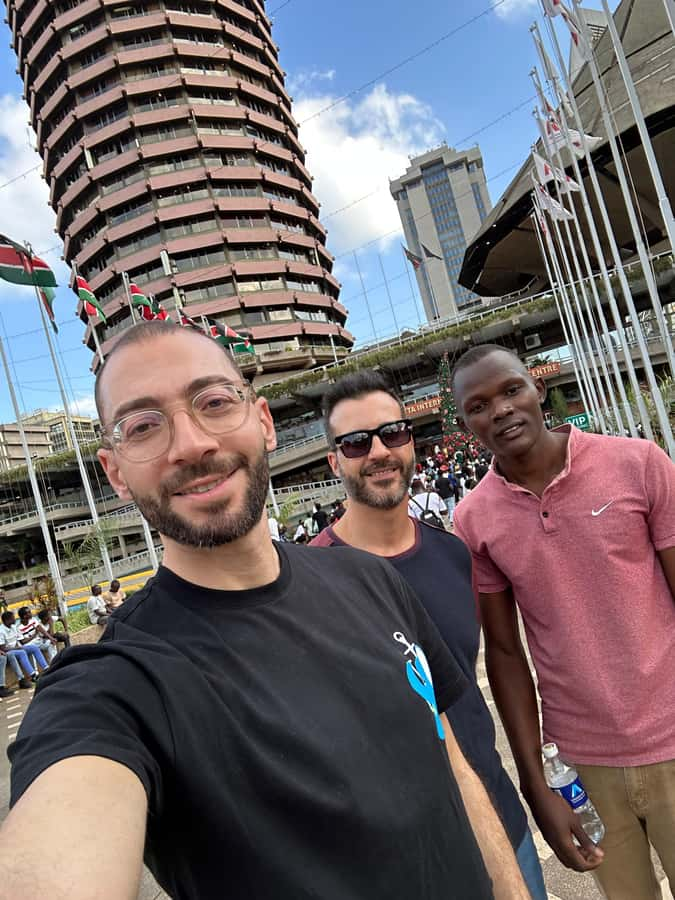
Jamia Mosque is one of the key religious landmarks on the route. You visit the site as part of the walk, and the guide explains its place in Nairobi’s cultural life. As with any religious building, dress and conduct should be respectful. Photography is allowed on the tour, but always follow the guide’s instructions around worshippers and interior spaces.
From there, the route moves toward City Market. This section feels more commercial and immediate than the formal government district. You may pass through or pause near the market, depending on the timing and what is open.
City Market and the nearby shopping areas are useful for seeing how Nairobi works day to day. You are not simply looking at polished landmarks. You are moving through places where people buy food, crafts, clothing, and other goods. The market can also be a chance to ask your guide about prices, bargaining, and suitable souvenirs.
The Masai Market is included as a shopping stop. It is a good place to browse local crafts, but the cost of purchases is your responsibility. John has helped visitors negotiate fair prices, and that kind of practical assistance can be valuable if you are not used to bargaining in Kenya. Keep your buying time under control, since shopping can quickly eat into the rest of a short walking tour.
More Cultural Walking Tours around the world:
- Savannah First Squares Culinary & Cultural Walking Food Tour
★ 5.0 · 3,229 reviews - Tokyo Tsukiji Fish Market Food and Culture Walking Tour
★ 5.0 · 3,184 reviews - New Orleans French Quarter, Voodoo and Culture Walking Tour
★ 4.5 · 2,961 reviews - Amsterdam: Cultural Highlights Walking Tour
★ 4.9 · 2,629 reviews
Jevanjee Garden, coffee, and the University of Nairobi
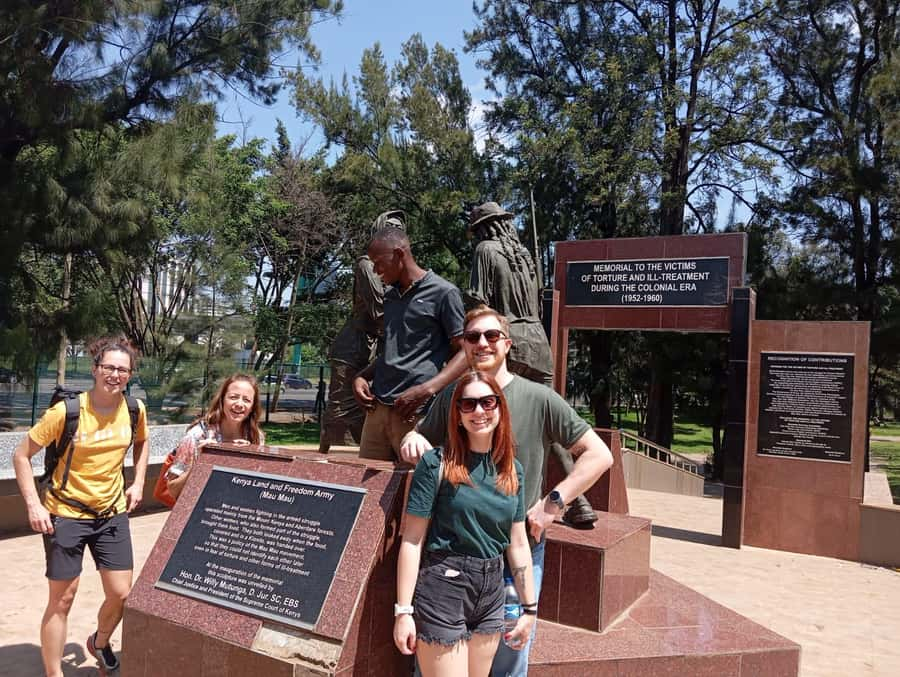
Jevanjee Garden gives the route another change of mood. After the market streets, a garden offers a little visual relief and a place to discuss Nairobi’s public spaces. The walk continues toward the University of Nairobi, where you get a glimpse of campus life and the nearby Norfolk Hotel.
The coffee break is one of the smartest details in the schedule. It is timed as a short rest, often around 15 minutes, and gives you a chance to try Kenyan coffee if you wish. Coffee is optional and not included, so bring a little extra money if you want a drink.
I would use this stop to ask questions. Guides such as Edwin are praised for discussing subjects well beyond buildings, including Kenyan culture, politics, food, sports, and ordinary life. A café is a more relaxed setting for those conversations than a roadside monument.
The University of Nairobi section is mainly a stroll and a view rather than a full campus tour. The Norfolk Hotel is seen from the route, not presented as a hotel visit. These are small stops, but together they show how Nairobi’s institutions, hotels, gardens, and shopping streets sit close together.
Uhuru Park gives the walk room to breathe

Uhuru Park is described as the most beautiful park in the city, and it provides the clearest pause in the route. Here, you can walk through the greenery, take photographs, or sit on the grass while the guide explains more about the city.
This stop matters because the tour is otherwise active. Walking from landmark to landmark can feel like a checklist if there is no time to slow down. Uhuru Park gives you a chance to cool off and absorb what you have seen.
Bring water, sunscreen, and a hat. Nairobi’s weather can change, and the sun may be strong even when the air feels comfortable. The park is included in the admission arrangements, but the wider tour remains outdoors, so comfortable walking shoes are essential.
The park also helps balance the urban experience. You see Nairobi not only through buildings and traffic but through one of its central green spaces. The contrast makes the route feel less mechanical.
Holy Family Basilica and the government district
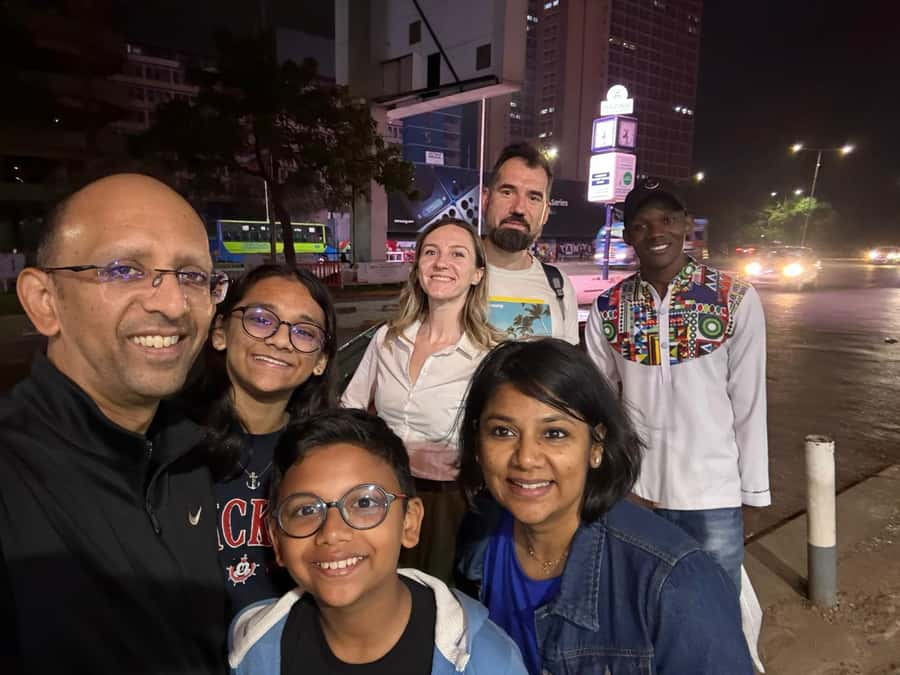
The Cathedral Basilica of the Holy Family adds another important religious and architectural stop. The tour’s mix of mosque, monastery, and basilica gives you a useful view of Nairobi’s different faith communities and public traditions.
The basilica is near the government district, so the route then shifts back toward major civic buildings. Your guide can connect the architecture to Kenya’s national institutions and explain what you are seeing rather than leaving you with a list of names.
This part of the walk may be especially useful if you are interested in how Nairobi functions as Kenya’s capital. You see religious buildings, courts, government offices, parks, and conference facilities close together. It is a compact lesson in the city’s public identity.
KICC views and the optional helipad
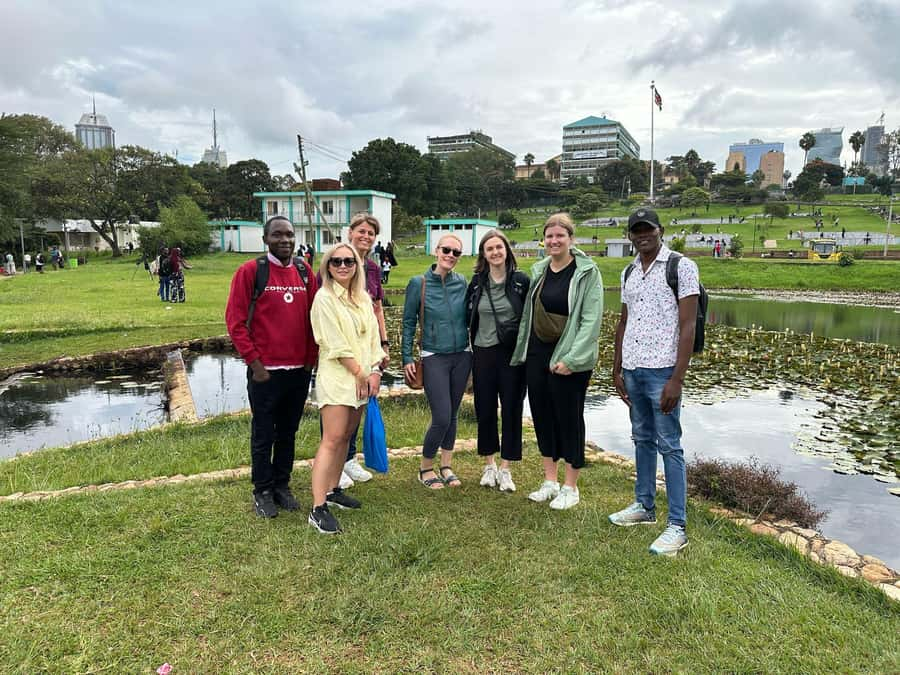
The Kenyatta International Convention Centre, usually called the KICC, is one of the tour’s visual high points. You stop for photographs, visit the building, and get views over central Nairobi and the nearby government buildings.
The helipad is the optional extra. The fee is not included, so check the current price before deciding. If you want a higher city view and the helipad is open, it can add a memorable finish to the central business district portion. If you are watching your budget, the regular KICC visit still gives you an important landmark without that extra charge.
The timing here can depend on access and opening arrangements. Evening tours may find some places closed, but the outdoor views and street-level explanations can still work well. One evening group finished in a little over two hours, while another tour lasted almost four hours after the guide added time and allowed a relaxed pace. Treat the three-hour duration as a useful guide, not a promise that every stop will receive exactly the same amount of time.
Railway Museum and Bomb Blast Memorial Park

The Kenya Railway Museum adds a transport story to the tour. Its inclusion broadens the experience beyond central government landmarks and gives you a look at the role of railways in Nairobi’s growth. Depending on the day and schedule, the visit may be brief or may be more of a pass-by stop.
The Bomb Blast Memorial Park is a quieter and more serious part of the route. The tour includes a respectful visit, and the guide can help you understand why the memorial matters. This is not a light photo stop. Give the place the same care you would show at any memorial.
Together, the Railway Museum and Bomb Blast Memorial Park add useful contrast. One points toward movement, trade, and the city’s development. The other asks you to pause and remember loss. That range gives the walk more substance than a simple list of attractive buildings.
How much walking and flexibility should you expect?
The route is designed to take about three hours, with many stops lasting roughly 15 minutes. You should expect regular walking, standing, street crossings, and time outdoors. The total distance is not specified, so anyone with limited stamina should tell the guide at the start.
Flexibility is one of the tour’s practical strengths. Guides have adjusted the pace for people who wanted more rest, more photographs, or a shorter route. Some groups have stayed longer in Uhuru Park, while others have finished earlier when an evening schedule meant certain places were closed.
That flexibility is helpful, but it also means the exact experience can differ. You may not spend equal time at every landmark, and shopping or questions can push the schedule beyond three hours. If you have a flight, dinner reservation, or separate afternoon booking, leave a buffer.
The tour is listed as wheelchair accessible, though the route includes city sidewalks, markets, parks, and multiple outdoor transitions. Contact the provider in advance if you need specific assistance with surfaces, entrances, or rest breaks.
Languages, guides, and the human side of the walk
English, French, and Spanish are available. Pierre has led French-language walks and has been praised for clear French and his ability to add Swahili lessons. Spanish is also available, while English is the main language used by guides such as Edwin, John, Dennis, and Sam.
Edwin is the name that appears most often in the feedback, and the pattern is clear: visitors value his storytelling, humor, patience, and ability to answer questions. He is especially suited to anyone who wants more than dates and building names. John is also noted for being helpful at the market, while Sam, also called Kayler, is described as warm, funny, and informative.
The guide makes a major difference here. The route itself is strong, but the best moments come when you ask about something you have just seen. Ask about local life, food, politics, sports, architecture, or Swahili phrases. This is a conversation-led tour, so you will get more from it if you participate.
Is $22 good value?
At $22, the price is fair for a guided introduction to Nairobi’s center. You receive pickup to the start point, a guide, access to the McMilan Memorial Library and Uhuru Park, and a route that includes many of the city’s better-known landmarks.
Meals and drinks are not included. Coffee is optional, and the KICC helipad fee is extra. You should also budget for anything you buy at City Market or the Masai Market. These exclusions are reasonable, but they matter if you are comparing the total cost with a private sightseeing vehicle.
The real value is time saved and confidence gained. You do not need to find each site, work out the safest walking route, or wonder what a building represents. You get a local point of view and a structured half-day introduction for less than the cost of many private city tours.
Who should book this Nairobi walk?
I would choose this for a first day in Nairobi, a short stop between flights, or a visitor who wants to understand the city before exploring farther afield. It suits curious adults, solo visitors, couples, and families who can manage several hours on foot.
It is also a good fit if you want direct conversation. Edwin and the other guides can discuss modern Kenya as well as landmarks, and the pace can be adjusted to your interests.
I would think twice if you dislike walking in heat, prefer a tightly timed bus tour, or want long indoor visits at each attraction. This is an urban walk with changing conditions, not a polished museum circuit.
Free cancellation is available up to 24 hours before the start, and you can reserve now and pay later. Those terms make it easier to fit the tour into a changing Nairobi schedule.
Should you book it?
Book this tour if you want a practical first look at central Nairobi, a local guide who can explain more than the guidebook, and a good spread of history, culture, parks, markets, and city views for $22.
The strongest match is someone who enjoys walking, asking questions, and leaving room for a coffee or market stop. Wear proper shoes, carry water, and allow extra time beyond the advertised three hours. If you do that, this is a sensible and affordable way to meet Nairobi at street level.
FAQ
Where does the Nairobi walking tour start?
The walking tour starts at the Carrefour entrance beside the Supreme Court building in Nairobi.
Is hotel pickup included?
Pickup to the starting point is included from the entrance of hotels, apartments, or hostels located within 10 kilometers of Nairobi Municipality. If your accommodation is not listed, you can send the location by WhatsApp.
How long does the tour last?
The advertised duration is three hours. The exact length can vary, since guides may adjust the pace, allow extra time for photographs and questions, or shorten the route when some places are closed.
Which languages are available?
The tour is available in English, French, and Spanish.
Is coffee included in the price?
No. The coffee stop is included as a break, but coffee and other drinks are optional and must be paid for separately.
Is the KICC helipad included?
No. The KICC visit and city views are included, but the helipad fee is not part of the tour price.
New walking tours around the world
- Niagara Falls, Canada: White Water Walk Entry Ticket★ 4.5 · 147 reviews
- NYC: Walking Tour with Local Guide and 30+ Top NYC Sights★ 4.5 · 248 reviews
- Zadar: Food Tasting & Old Town Walking Tour★ 5.0 · 94 reviews
- Niagara Falls: Walking Tour, Journey Behind Falls, & Cruise★ 4.8 · 773 reviews
- New York City: Gangsters and Ghosts 2-Hour Walking Tour★ 4.7 · 615 reviews
- NYC: History of Slavery & Underground Railroad Walking Tour★ 4.7 · 87 reviews
- New York City’s Hell’s Kitchen: Walking Food Tour★ 4.8 · 200 reviews
- New York City: Central Park Walking Tour★ 4.7 · 82 reviews
Cultural Walking Tours, side by side.

Savannah First Squares Culinary & Cultural Walking Food Tour
Read our review →
Tokyo Tsukiji Fish Market Food and Culture Walking Tour
Read our review →
New Orleans French Quarter, Voodoo and Culture Walking Tour
Read our review →
Anne Frank Walking Tour Amsterdam Including Jewish Cultural Quarter
Read our review →
Southernmost Food & Cultural Walking Tour by Key West Food Tours
Read our review →
Ultimate Melbourne Walking Tour: History, Laneways & Culture
Read our review →
Lists this walk sits on