
Review · PALERMO
Palermo No Mafia walking tour: discover the Anti-mafia culture in Sicily
Palermo’s No Mafia walking tour does something useful: it pulls the Mafia out of movie mythology and puts it back into the streets, courts, churches, shops, and civic life of Sicily. With an Addiopizzo guide such as Sylvia, Valeria, Francesco, or Marienella, you follow the city’s fight against organized crime and the people who refused to accept it as normal.
I like the tour for two clear reasons. It focuses on resistance, not Mafia glamour, and the small group of no more than 15 makes it easier to ask serious questions. I also like the practical link to daily life: you can stop at Cappadonia Gelati, a business that refuses to pay pizzo, the extortion money demanded by organized crime.
The main consideration is focus. This is not a general Palermo sightseeing walk, and one person found some repetition and too much standing. If you want art, architecture, and a broad city history lesson, choose another tour or add one. If you want to understand anti-mafia action, this is the better fit.
Key points to know before booking
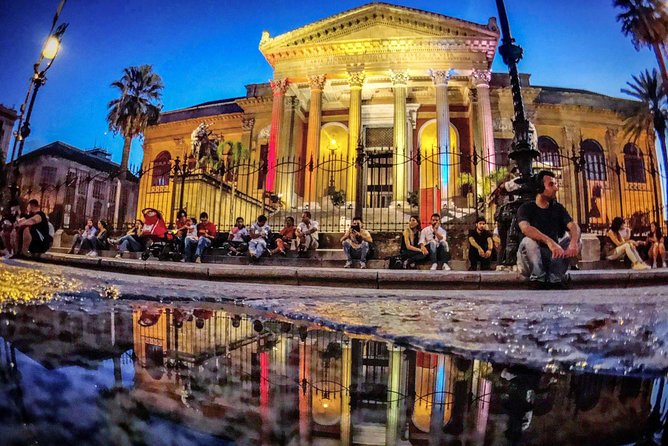
- Teatro Massimo begins the story: Palermo’s grand opera house becomes a symbol of civic renewal, not just a film location.
- The Wall of Legality puts faces to the past: A 70-meter mural honors people killed by the Mafia and offers one of the walk’s strongest photo stops.
- The market shows the issue at street level: You learn how extortion affected ordinary shopkeepers and local commerce.
- The message is anti-mafia, not mafioso entertainment: The guide explains resistance, civic action, and the continuing fight against organized crime.
- Your gelato stop can support a cause: Cappadonia Gelati belongs to the Addiopizzo network of businesses that reject the pizzo.
- The walk ends well for further sightseeing: Pretoria Fountain places you in Palermo’s old town, close to places to eat and continue exploring.
Why this Palermo walk feels different from a Mafia movie tour
The first thing to understand is the tour’s purpose. It does not treat Cosa Nostra as a colorful character from cinema, and it does not spend three hours collecting sensational stories about gangsters. The subject is the damage organized crime caused, along with the long effort by residents, judges, prosecutors, shopkeepers, politicians, churches, and community groups to push back.
That distinction matters. Movies often turn the Mafia into a world of codes, family loyalty, and dramatic men in dark suits. This walk replaces that image with a harder picture: extortion, fear, corruption, violence, lost lives, and the effect on children and neighborhoods. You also hear how the anti-mafia movement works today, rather than treating the issue as something finished decades ago.
The guides are a major part of the experience. Sylvia is described as especially passionate about the subject, while Valeria has spoken about how the Mafia affected her own life, as well as the lives of friends and family. Other highly praised guides include Giuseppe, Federico, Ermes, Laura, Salvador, Francesco, and Marienella.
Guide quality can naturally vary from one departure to another, but the pattern is clear: this tour depends on a guide who can explain difficult material in plain English and connect it to real places. You should expect a serious tone, plenty of questions, and stories that may be moving rather than entertaining in the usual sightseeing sense.
More Cultural Walking Tours around Italy:
- Matera’s Sassi Walking Tour – History and Culture
★ 4.8 · 356 reviews - Savannah First Squares Culinary & Cultural Walking Food Tour
★ 5.0 · 3,229 reviews - Tokyo Tsukiji Fish Market Food and Culture Walking Tour
★ 5.0 · 3,184 reviews
Teatro Massimo: from movie fame to civic renewal
The walk begins at Piazza Giuseppe Verdi, outside Teatro Massimo. The theater is famous to film fans as the setting for the dramatic final scene of The Godfather Part III, but the guide uses that association only as a starting point.
The more important story is Palermo’s attempt to recover after decades of Mafia violence. Teatro Massimo becomes a symbol of public life returning to a city that had suffered from fear and corruption. You spend about 30 minutes here, enough time for the guide to set out the basic history and explain why this building matters beyond its grand facade.
This opening stop also gives you a useful warning about the tone of the walk. If you arrived expecting a tour built around movie locations, you will quickly see that film is only a small piece of the discussion. The focus shifts toward civic courage and Palermo’s effort to change its public identity.
The Wall of Legality and the faces behind the names
The Wall of Legality is one of the tour’s most direct visual moments. At 70 meters long, it is described as Italy’s longest wall painting and features well-known victims of the Mafia.
A mural can make a difficult subject easier to grasp. Instead of hearing a long list of names, you encounter faces. The guide explains who these people were and why remembering them matters. You have about ten minutes here, with time for photographs and a quick explanation of the urban renewal work connected to the wall.
I would not treat this as a simple photo stop. The point is not just the scale of the painting. The faces make the cost of organized crime personal, and they help you understand why public memory is part of the anti-mafia effort.
The old market and the cost of refusing extortion
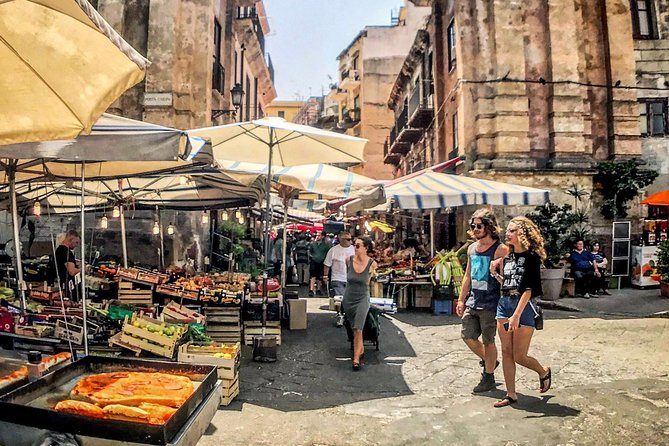
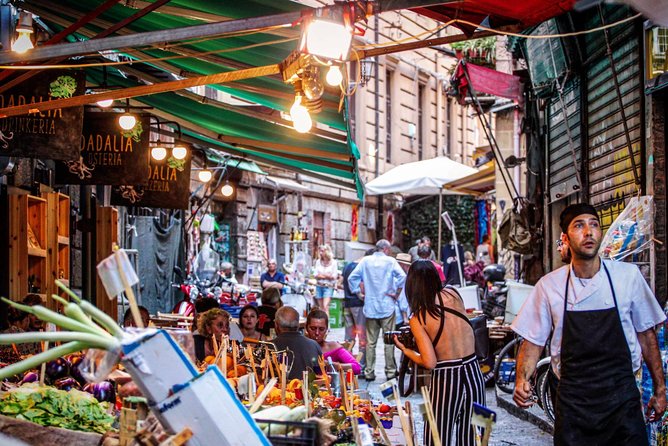
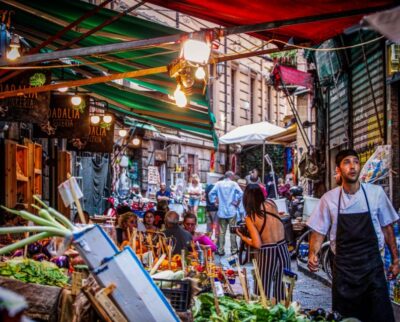
The colorful open-air market brings the subject into ordinary commercial life. Here, the guide discusses the relationship between Mafia power and shopkeepers while you walk through one of Palermo’s loudest and most interesting areas.
This is where the tour moves away from famous figures and official buildings. Extortion is not an abstract political problem when it affects the person behind a market stall or the owner of a small store. The discussion helps explain why refusing the pizzo can take real courage, particularly when a business owner believes that saying no may bring trouble.
The market also adds sound, movement, and street detail to a walk that includes several solemn memorials. Still, keep your expectations clear. The market is used to explain a social issue, not as a full food tour. Lunch is not included, and the walk does not promise tastings here.
More walking tours around Italy:
- Venice: Doge’s Palace and St Mark’s Basilica Walking Tour
★ 4.4 · 6,291 reviews - Milan: Guided Walking Tour & Last Supper Visit with Ticket
★ 4.7 · 5,409 reviews - Naples: Street Food Walking Tour with Local Guide
★ 4.9 · 4,976 reviews - Florence: Highlights Walking Tour with Expert Guide
★ 4.6 · 4,662 reviews
Piazza della Memoria beside the Palace of Justice
At the Palace of Justice, you stop at Piazza della Memoria, a memorial dedicated to judges and prosecutors killed by the Mafia. This section looks at the people who worked inside the legal system and paid the highest price for confronting organized crime.
The stop lasts about 15 minutes. That is enough for a focused explanation, though the amount of detail will depend on your guide and the questions from the group. You may find the subject heavy, but the location gives it force. This is not a distant monument placed in a museum. It sits beside the court house, directly connected to the institutions that tried to hold criminal networks accountable.
This part is particularly useful if you want to understand how anti-mafia efforts involved courts and prosecutors, not just street protests or individual acts of bravery.
Palermo Cathedral and the church’s complicated role
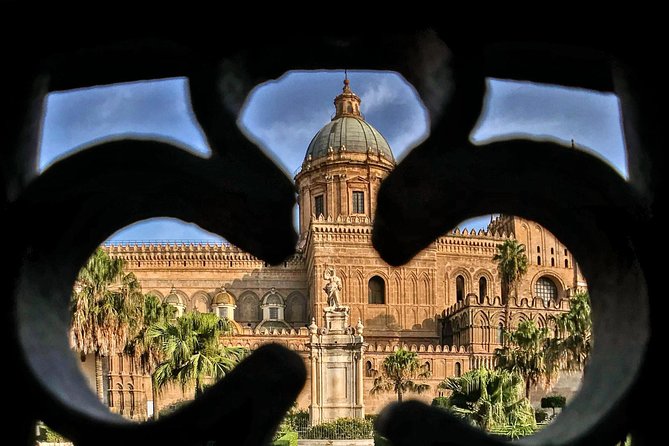
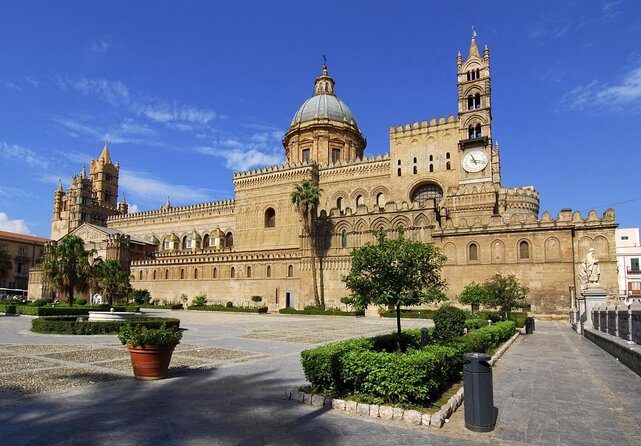
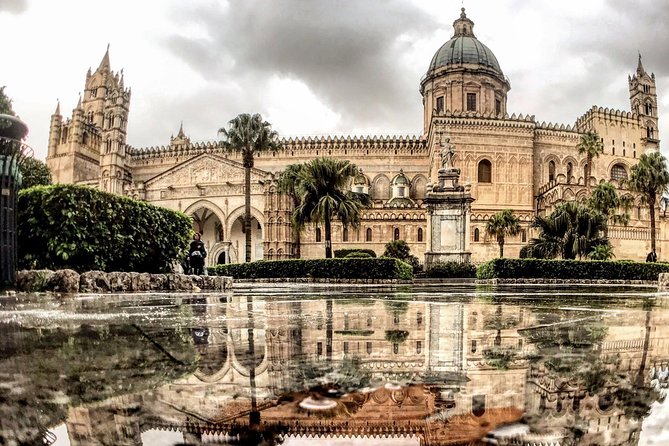
In front of Palermo Cathedral, the guide discusses the relationship between the Catholic Church and the Mafia. The setting is striking: an Arab-Norman cathedral that is one of Palermo’s best-known landmarks, paired with a difficult conversation about religion, influence, and public morality.
You spend roughly 15 minutes here. The tour does not present the church as a simple hero or villain. Instead, it looks at the tension between religious authority and organized crime, including the ways institutions can resist corruption and the ways they may be compromised or slow to act.
The cathedral is also a practical orientation point. If you have just arrived in Palermo, this stop helps connect the anti-mafia story to the city’s major sights. You should not assume that admission inside the cathedral is part of the walk, since the stop is described as an outdoor talk in front of it.
Cappadonia Gelati and the meaning of pizzo-free shopping
Cappadonia Gelati offers the most tangible action you can take during the walk. Along the Cassaro, you look for an orange sticker in the window. It identifies businesses that have said no to paying pizzo and joined the mafia-free consumption campaign promoted by Addiopizzo.
You can stop for gelato and support the idea with your purchase. This is a small act, but that is exactly why it works as part of the tour. The anti-mafia movement is not only about courts, memorials, and public speeches. It also depends on customers choosing businesses that reject extortion.
A small contribution to the Addiopizzo local nonprofit is included in the tour price, adding another direct connection between your booking and the organization’s work. The gelato itself is not included, so bring a little spending money if you want to make the stop.
City Hall and the closing walk to Pretoria Fountain
The final main stop is Palazzo Pretorio, Palermo’s City Hall. The guide explains how the building has been connected with both corrupt politicians and officials who fought against Mafia influence.
That contrast neatly closes the tour. Organized crime does not operate only in hidden rooms or on the edges of society. It can reach public institutions, while public institutions can also become part of the answer. The guide’s job here is to show the conflict rather than reduce it to a simple story of good people and bad people.
The tour ends at Fontana Pretoria in Piazza Pretoria, in the center of Palermo’s old town. This is a convenient finish because you can continue sightseeing, find food, or follow the guide’s suggestions for Sicilian specialties. Hotel pickup and drop-off are not included, so plan to reach the starting point at Teatro Massimo on your own.
What the three-hour format feels like on foot
The experience lasts about three hours and includes several stops where you listen while standing. That is worth knowing before you book. One person found the amount of standing a drawback and felt that the commentary could sometimes continue while walking.
Comfortable shoes are a sensible choice. The route is in the city center, near public transportation, and most people can take part without special health restrictions. Rain changes the practical side of the walk, so bring an umbrella and a dry jacket if the forecast looks poor.
The group is limited to 15 people. That is not a private tour, but it is small enough for a guide to answer questions and keep the conversation personal. Several strong guide evaluations focused on clear explanations, passion, and the ability to respond to questions, so participation is part of the experience rather than an interruption.
Families can consider it too. A four-year-old took part successfully, although the serious subject matter and three hours of walking may not suit every young child. The tour is emotionally demanding in places, even though the pace is not described as physically strenuous.
Is $39.30 a fair price?
At $39.30 per person, this is not the cheapest way to walk around Palermo, but you are paying for a focused subject, a local guide, a small group, and a contribution to Addiopizzo. You are also getting context that would be difficult to assemble from the outside by simply visiting the cathedral, market, and court house on your own.
The value is strongest if the anti-mafia movement is a main reason you want to visit Palermo. The price is less attractive if you mainly want architecture, food samples, or a broad introduction to every major sight. Those goals call for a different tour.
The average booking point is 24 days before the experience, which suggests planning ahead during busy periods. The tour offers free cancellation if you cancel at least 24 hours before the start time. Changes or cancellations inside that window are not accepted for a refund.
Who should book this walk?
I would choose this tour early in a Palermo stay if I wanted a better frame for the city. It gives you a clear introduction to the Mafia’s influence, the cost of resistance, and the role of ordinary consumers in supporting change.
It suits you best if you:
- Want a serious, civic-minded look at Palermo
- Prefer local stories to movie mythology
- Are interested in how organized crime affects shops, courts, churches, and government
- Appreciate a guide-led walk with time for questions
- Want to support an anti-mafia organization through your booking and purchases
- Do not mind standing outside for explanations
You may want to skip it if you want a general history tour, a food tour, or a fast-moving route packed with interior visits. One three-star assessment found repetition and limited general history, and that is a fair warning. This experience has a clear message, and it stays with that message.
FAQ
How long does the Palermo No Mafia walking tour last?
The tour lasts approximately three hours.
Where does the tour begin?
It begins at P.za Giuseppe Verdi, 455, in Palermo, near Teatro Massimo.
Where does the tour end?
It ends at Fontana Pretoria in Piazza Pretoria, in Palermo’s old town center.
What language is the tour offered in?
The tour is offered in English.
How many people can join the tour?
The maximum group size is 15 people.
Is hotel pickup or drop-off included?
No. You must make your own way to the meeting point, and the tour does not include hotel transportation.
Is food included?
No lunch is included. You may have the chance to buy gelato at Cappadonia Gelati, but that purchase is separate.
What should I wear or bring?
Comfortable shoes are recommended. In rainy weather, bring an umbrella and a dry jacket.
Can I cancel for a full refund?
Yes, if you cancel at least 24 hours before the experience begins. Cancellations made less than 24 hours before the start time are not refunded.
Should you book the Palermo No Mafia tour?
Book it if you want to understand Palermo through the people resisting organized crime, not through the stereotypes sold by films. The Wall of Legality, Piazza della Memoria, the market, and Cappadonia Gelati give the subject a human and practical shape.
Skip it if you want a standard sightseeing circuit or a lighter afternoon. For the right audience, the $39.30 price buys more than three hours of commentary. It gives you a way to see Palermo’s streets, institutions, and businesses as part of an ongoing civic struggle, with your booking helping Addiopizzo continue that work.
New walking tours around Italy
- Rome: Fountains and Squares Small-Group Walking Tour★ 4.7 · 335 reviews
- Napoli: Walking Tour of Naples with Local Tour Guide★ 4.9 · 95 reviews
- Naples: Spanish Quarters Walking Tour★ 4.6 · 72 reviews
- Naples: Street Art, Wine and Food Tasting Walking Tour★ 5.0 · 163 reviews
- Naples: Historic Center and Sansevero Chapel Walking Tour★ 4.8 · 208 reviews
- Naples: Old Town Guided Walking Tour★ 4.8 · 553 reviews
- Naples: Street Food Experience With 6 Stops★ 4.7 · 392 reviews
- Naples Essentials: Monuments, Local Life & Street Art★ 4.9 · 79 reviews
Palermo Walking Tours, side by side.
Palermo Original Street Food Walking Tour by Streaty
Read our review →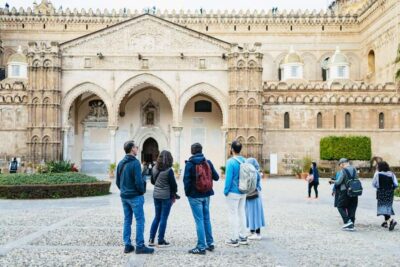
Palermo: Street Food and History Walking Tour
Read our review →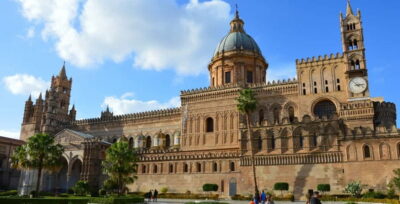
Lists this walk sits on