
Review · PALERMO
Palermo: NO Mafia Walking Tour
Palermo’s No Mafia Walking Tour does more than point out famous buildings. It uses the city streets to explain how organized crime affected daily life, politics, business, and public trust, then turns to the citizens who pushed back. I like that it replaces the movie version of the Mafia with a clear, human account of harm, courage, and civic action.
I also like the orange anti-extortion stickers along the Cassaro and the contribution to Addiopizzo, the charitable group behind the tour. Those details show how your visit connects with local action. The main consideration is that this is a serious, story-led walk rather than a tour of crime scenes, and three hours on foot may feel long if you want only quick sightseeing.
Key points at a glance
- The orange stickers tell a living story: See shops supporting the pago chi non paga, or I pay who does not pay, campaign against extortion.
- The route covers Palermo’s essential center: Teatro Massimo, Il Capo market, Palermo Cathedral, city hall, Piazza Beati Paoli, and Piazza della Memoria.
- The subject is broader than Cosa Nostra: Guides explain social and political conditions, violence, intimidation, and the civic response.
- The strongest part is the guiding: Guides including Valeria, Attilio, Salvatore, Marinella, Ermes, and Laura are praised for clear, passionate storytelling.
- Your ticket supports Addiopizzo: The price includes a contribution to the anti-mafia organization.
- Plan for a full walking experience: It lasts three hours, uses city streets rather than museum interiors, and requires comfortable shoes.
Why this Palermo walk is different
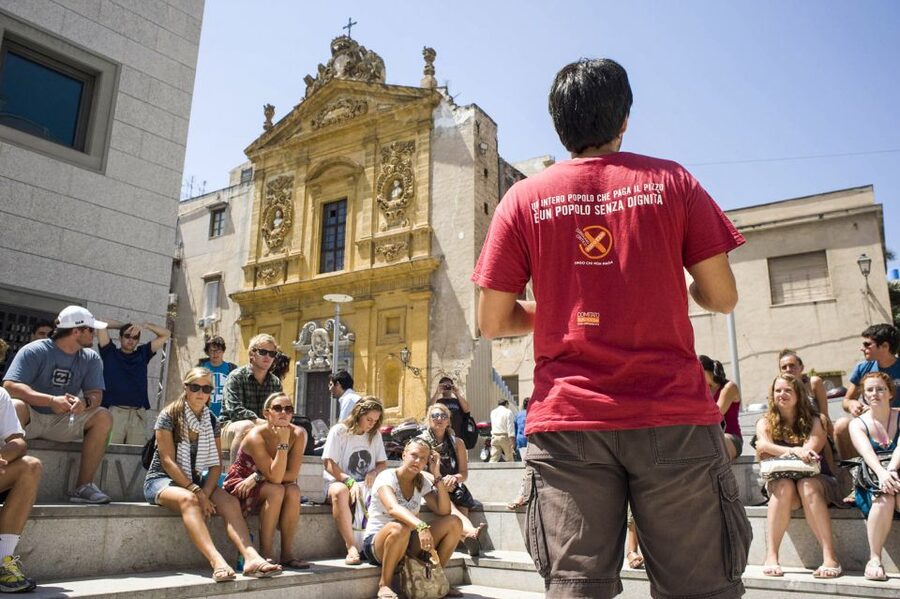
Many city walks move from church to palace, giving you dates and architectural labels. This one uses those same streets to explain how power worked behind the public face of Palermo.
You will hear about the origins and influence of the Mafia, but the tour does not treat it as colorful folklore. The emphasis is on the damage caused by extortion, intimidation, political influence, and murder, along with the people and groups who challenged that power.
That distinction matters. Films and television have often made the Mafia look glamorous, clever, or strangely heroic. This tour strips away that image. You get a civic history of Sicily, not a gangster fan club.
The guiding is central to the experience. Names vary by departure, but guides such as Valeria, Attilio, Salvatore, Marinella, Ermes, Laura, Giuseppe, and Silvia have been singled out for their clear English, humor, patience, and personal commitment to the subject. Some guides are especially strong storytellers, keeping a group focused for the full three hours.
I would book this early in your Palermo stay if the topic interests you. The route gives you useful orientation around the old center, and the guide’s food suggestions can help with the rest of your visit.
More walking tours around Italy:
- Venice: Doge’s Palace and St Mark’s Basilica Walking Tour
★ 4.4 · 6,291 reviews - Milan: Guided Walking Tour & Last Supper Visit with Ticket
★ 4.7 · 5,409 reviews - Naples: Street Food Walking Tour with Local Guide
★ 4.9 · 4,976 reviews
Teatro Massimo begins the city story
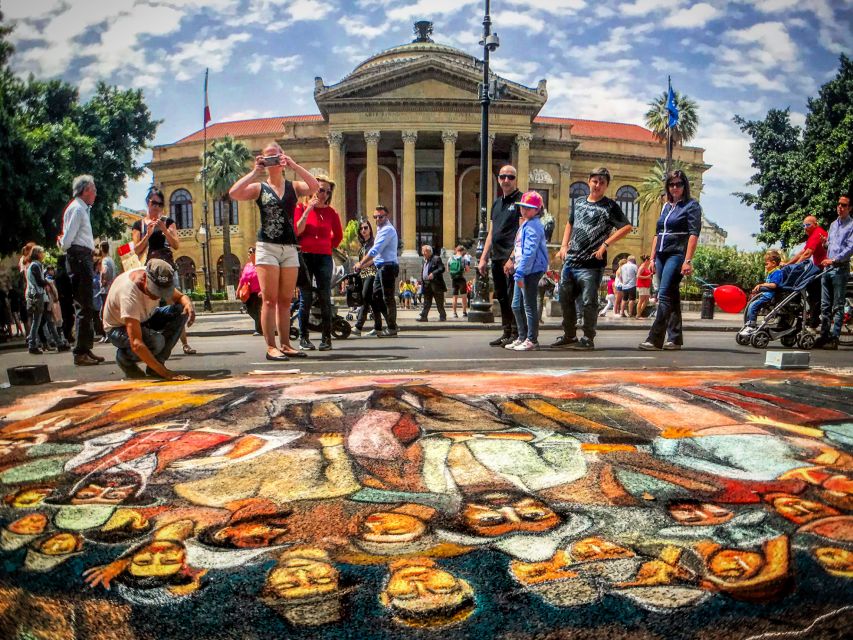
The walk includes Teatro Massimo, Palermo’s grand opera house and one of the city’s best-known buildings. You will see it as part of the historic center, but the point is not simply to admire its scale or take a photograph.
Here, the guide begins placing Palermo’s public life into context. The route gives you a sense of how monuments, commercial streets, political institutions, and ordinary businesses sit close together. That setting helps make the subject less abstract.
Do not expect admission to Teatro Massimo or any other monument. Entrance tickets are not included, so think of this as an outdoor city walk with explanations at key sites. If you want to tour the interior of the opera house or cathedral, plan that separately.
Il Capo shows everyday Palermo
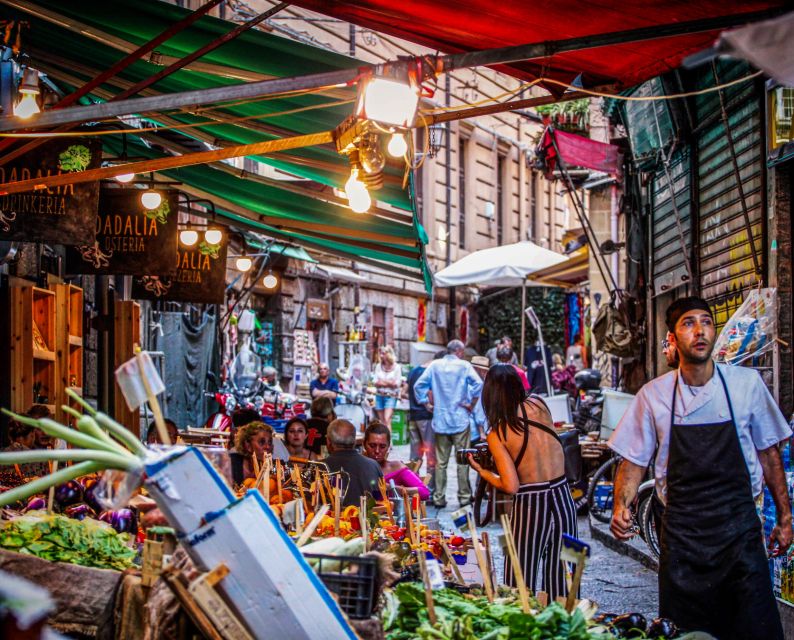
The route continues toward Il Capo, an open-air market that brings a more ordinary side of Palermo into the walk. Markets are useful places for this subject because the tour is concerned with daily life, commerce, and the pressures faced by local businesses.
You are not simply being shown a market as a colorful photo stop. The guide links the streets and shops to wider questions about who controls economic activity and how people respond when businesses are pressured to pay for protection.
The market can also make the walk feel less formal. You move through a working part of the city instead of spending the entire time at monuments. At the same time, it can be busy and active, so stay close to the guide and expect the pace to change around pedestrians and stalls.
Piazza della Memoria makes the cost personal
One of the most important stops is Piazza della Memoria, a memorial to prosecutors and judges killed by the Mafia. This is where the subject moves from systems and institutions to named people and the price paid by those who confronted organized crime.
The stop gives the tour emotional weight without relying on theatrical effects. The guide explains the role of judges and prosecutors in challenging Mafia power and places their deaths within the wider history of Sicily.
You will hear about violence and murder, so this is not a light sightseeing activity. Families with older children or teenagers may find the subject suitable if they are prepared for serious discussion. One family found the tour held a teenager’s attention, but the content remains difficult in places.
Same streets, a different story:
- Florence: Highlights Walking Tour with Expert Guide
★ 4.6 · 4,662 reviews - Venice: San Marco to Rialto Walk & Spritz Like a Local
★ 4.2 · 3,651 reviews - Uffizi & Accademia Timed Entry: Small Group Duomo Walking Tour
★ 4.5 · 3,630 reviews - Venice Walking Tour and Gondola Ride
★ 3.5 · 3,630 reviews
The orange stickers are the most practical lesson
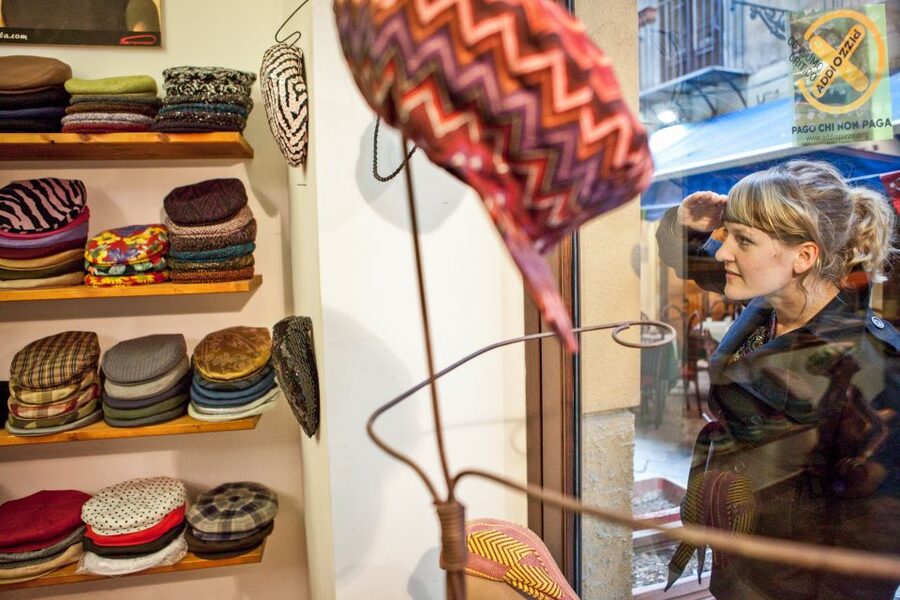
Along the Cassaro, look for shops and businesses displaying orange stickers. These identify owners who have rejected extortion and joined the pago chi non paga ethical consumer campaign.
This is one of the tour’s most useful features because it turns history into something you can see. The Mafia is not presented as a distant subject from decades ago. The stickers show how local commerce and consumer choices still connect with anti-mafia work.
The lesson for you is practical. The tour explains that visitors can support businesses that refuse extortion, and that spending choices can help strengthen a civic movement. Your ticket also includes a contribution to Addiopizzo, the organization associated with this work.
That does not mean the walk turns into a shopping tour. The stickers are part of a larger explanation of how resistance operates at street level, through business owners, consumers, and community groups.
Palermo Cathedral and the Cassaro widen the picture
The route includes Palermo Cathedral and the Cassaro, one of the historic center’s main streets. These stops add the city’s religious and civic layers to the story.
The cathedral is one of Palermo’s major sights, so this part is useful even if you know little about the Mafia. You get help reading the city around you, while the guide explains how Sicilian society changed across different periods and how criminal power fit into those changes.
Along the Cassaro, the tour may feel more like a traditional city walk for a time, but the focus returns to businesses, public life, and resistance. This mixture is one reason the experience works well for people who want more than a standard list of churches and palaces.
You will not receive a complete architectural tour of every building. If your main goal is detailed art history, choose a dedicated Palermo monuments walk as well. Here, the city’s architecture supports the social story rather than taking center stage.
Piazza Beati Paoli and city hall add local context
Piazza Beati Paoli and Palermo’s city hall are also part of the route. These locations help connect the tour’s subject with stories about law, government, rumor, and the way Palermo has been portrayed.
The guide’s interpretation matters here. The same square or street can look very different after you understand the forces that shaped public life. You are encouraged to think beyond famous names and dramatic events, toward the institutions and citizens involved in change.
This section also shows why the tour cannot be reduced to a list of Mafia sites. Several people who took it appreciated that the route offered a local view of Cosa Nostra while still including major city sights. The locations are useful, but the narrative is the real reason to book.
Expect stories, questions, and a serious tone
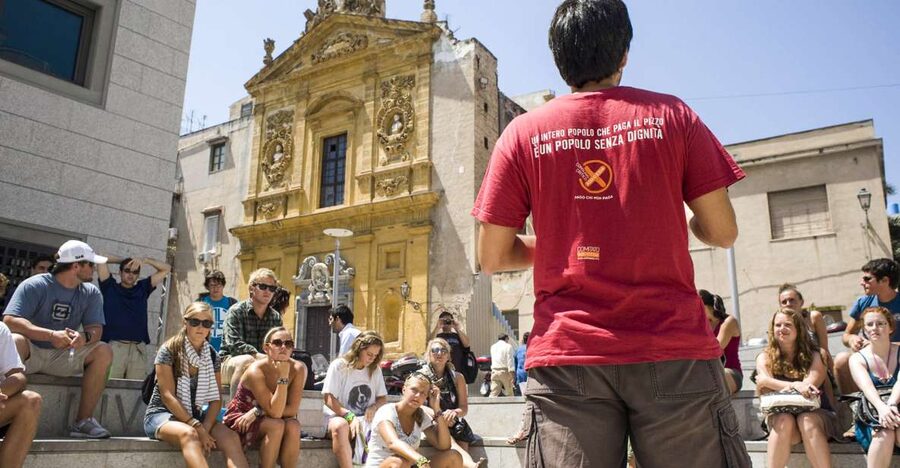
The guide talks for much of the three-hour walk, but the best departures allow room for questions. Guides have been praised for answering patiently and for explaining the political, social, and economic sides of the subject in clear English.
The language options are English, Italian, Spanish, and French. Polish is not listed, so Polish-speaking visitors should choose another language with care. English delivery has been described as clear, though your experience will naturally depend on the guide and the size of the group.
Humor may appear, but this is not a comedy walk. Some guides use a light touch to keep the group engaged, then return to the hard facts. That balance helps the three hours pass at a good pace without making the subject feel trivial.
A small group option is available. If you value the chance to ask questions or hear the guide clearly, select it when offered. Group size and the exact meeting point depend on the option you book.
Three hours on foot: what the pace means
Bring comfortable shoes. The activity lasts three hours and moves through Palermo’s old center, so you should be ready for a sustained urban walk rather than a short talk at one square.
Some guides make room for people to sit in the shade during parts of the discussion. Do not count on a fixed seating arrangement, though. The route is outdoors, and weather, traffic, and the chosen starting point can affect the rhythm.
The meeting point may vary by booking option. Check your confirmation closely instead of assuming every departure begins at Teatro Massimo or another familiar landmark.
Because the tour ends in the heart of the old town, it is easy to continue sightseeing or stop for food afterward. Guides offer suggestions for Sicilian specialties and places to eat, which adds practical value if you are still getting your bearings in Palermo.
Is $40 a fair price?
At $40 per person, this is not the cheapest way to walk around Palermo. You are paying for three hours of guided interpretation, not admission to a monument, food, or transportation.
I think the price is fair if you want a serious introduction to Sicily’s modern social history. The route covers several important sights, but the main value comes from the guide’s ability to explain connections that you would not get from simply walking past the buildings.
The Addiopizzo contribution also matters. Your ticket supports an organization linked to anti-extortion work, so the cost has a civic purpose as well as a sightseeing purpose.
The value is weaker if you want a conventional highlights tour or prefer to explore at your own pace. You will not enter museums or monuments, and the subject receives far more attention than architecture. In that case, use this walk as one part of your Palermo plan rather than as your only city tour.
Who will get the most from it
I recommend this experience to you if you:
- Want to understand Sicily beyond food, beaches, and Mafia movie clichés
- Prefer local social history to a standard monument checklist
- Like asking questions and listening to a strong guide
- Are interested in ethical travel and community action
- Want a useful first look at Palermo’s old center
- Can manage three hours of walking and serious subject matter
It may not suit you if you want a relaxed stroll with little commentary, a dedicated architecture tour, or a quick introduction lasting an hour or less.
The tour can work for older children and teenagers, but parents should explain that the discussion includes violence, murder, intimidation, and corruption. It is educational, but not designed as a light family attraction.
Book this if you want Palermo without the movie version
I would book the No Mafia Walking Tour if you want to understand how Palermo’s past still shapes its streets and civic life. The orange stickers, memorials, market, cathedral, and public buildings give you visible reference points, while the guide supplies the meaning.
Choose it for the anti-mafia movement, not for dramatic Mafia sightseeing. You will not be taken from one cinematic crime location to another. Instead, you will learn about citizens, judges, prosecutors, business owners, and organizations working against criminal power.
At $40, the tour earns its place in your itinerary through the quality of the explanation and the Addiopizzo contribution. Wear good shoes, check the language and meeting point, and allow the full three hours. If that sounds like the kind of Palermo you want to meet, book it near the start of your stay.
FAQ
How long does the Palermo No Mafia Walking Tour last?
The tour lasts three hours and takes place on foot through Palermo’s historic center.
How much does the tour cost?
The listed price is $40 per person.
Which languages are available?
Live tours are available in English, Italian, Spanish, and French.
What sights are included on the walking route?
The route includes Teatro Massimo, Il Capo open-air market, Piazza della Memoria, the Cassaro, Piazza Beati Paoli, Palermo Cathedral, and Palermo city hall.
Does the tour include entrance to museums or monuments?
No. Entrance to museums and monuments is not included.
What should I bring?
Bring comfortable shoes, since the experience is a three-hour walking tour.
Does the ticket support an anti-mafia organization?
Yes. The activity includes a contribution to the Addiopizzo charitable organization.
New walking tours around Italy
- Rome: Fountains and Squares Small-Group Walking Tour★ 4.7 · 335 reviews
- Napoli: Walking Tour of Naples with Local Tour Guide★ 4.9 · 95 reviews
- Naples: Spanish Quarters Walking Tour★ 4.6 · 72 reviews
- Naples: Street Art, Wine and Food Tasting Walking Tour★ 5.0 · 163 reviews
- Naples: Old Town Guided Walking Tour★ 4.8 · 553 reviews
- Naples: Street Food Experience With 6 Stops★ 4.7 · 392 reviews
- Naples: Historic Center and Sansevero Chapel Walking Tour★ 4.8 · 208 reviews
- Naples Essentials: Monuments, Local Life & Street Art★ 4.9 · 79 reviews
Palermo Walking Tours, side by side.
Palermo Original Street Food Walking Tour by Streaty
Read our review →
Palermo: Street Food and History Walking Tour
Read our review →
Palermo No Mafia walking tour: discover the Anti-mafia culture in Sicily
Read our review →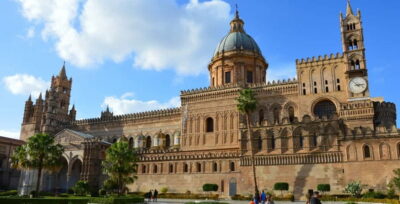
Lists this walk sits on