
Review · QUEBEC CITY
Quebec City: Old Quebec Historical Walking Tour
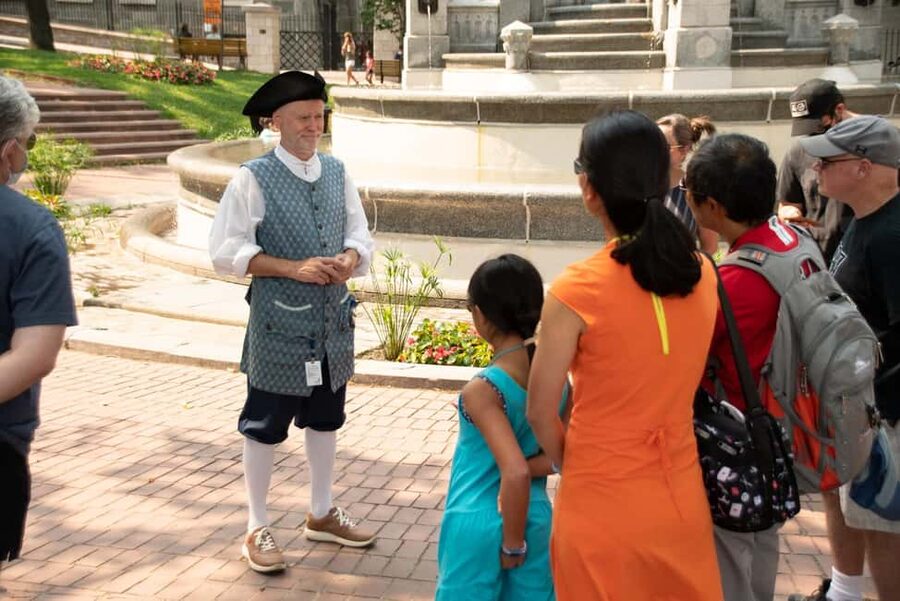
Quebec City’s best history lesson comes with a walking pace and a period costume. This two-hour tour leads you through Old Quebec’s walled streets, from the grand Château Frontenac to Place Royale, while guides such as Pierre, Sylvain, Bernard, and Marie-Anne Barbel turn dates and battles into stories you can follow.
I like the storytelling and humor, which keep the tour from becoming a dry list of names. I also like the way guides adjust the route for the group, sometimes using sloping streets instead of stairways. The main drawback is simple: two hours goes quickly, and the hills, stairs, and uneven streets can be tiring.
Key points
- A costumed history lesson: Your Cicerone guide takes on a historical character, such as Samuel de Champlain, Louis Hébert, or Marie-Anne Barbel.
- A strong first look at Old Quebec: The route covers Château Frontenac, Dufferin Terrace, Notre-Dame de Québec Basilica, and Place Royale.
- More than famous façades: Guides add political, religious, Indigenous, farming, and settlement stories to the city’s better-known sights.
- Good value at $24: You get two hours with a licensed guide, which is a fair price for getting your bearings and learning the story behind the streets.
- Moderate walking, with hills: Wear comfortable shoes and expect slopes, stairs, and some effort near the end.
- Best for first-time visitors: The tour gives you a useful framework before you explore Old Quebec on your own.
Why a costumed guide changes the feel of Old Quebec
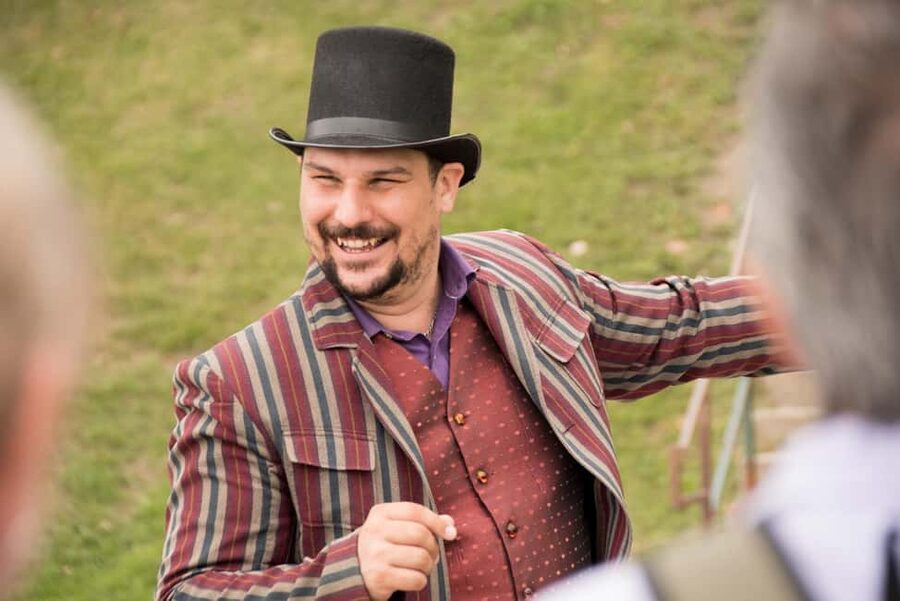
Old Quebec can look almost too polished at first. Stone buildings, church towers, fortified walls, and the Château Frontenac make it easy to admire the setting without understanding how the city developed.
That is where this tour helps. Your guide does not simply point at a building and give you a date. The guides perform a historical character and use that role to explain how French settlement took root, how the colony developed, and how political and religious forces shaped the city.
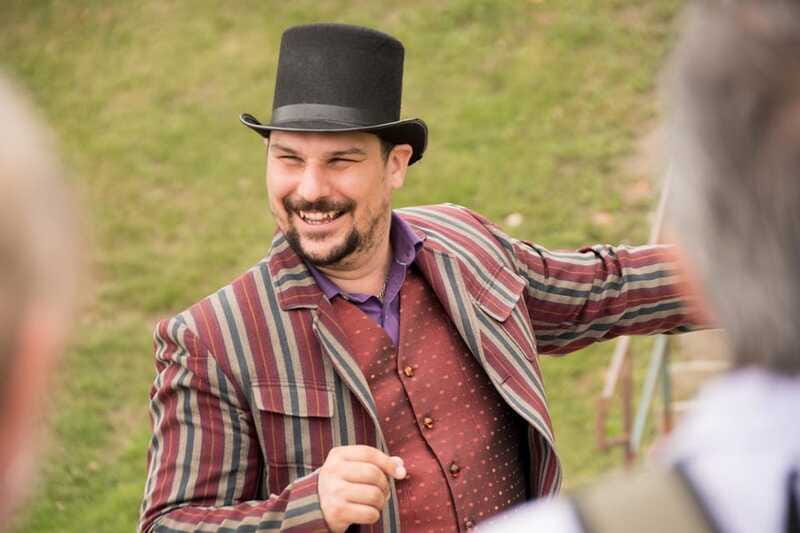
The format varies with the guide. Pierre has been praised for mixing facts with humor and responding to the people in his group. Alex presented himself as Louis Hébert, linking the city’s early growth to farming and the settlers who made life in the colony possible. Another guide, Kevin, took on Champlain and answered questions while staying in character.
That theatrical touch is not for everyone. If you prefer a quiet architectural walk with no performance, the costumes may feel a little much. But the guides generally keep the acting in check. The strongest versions use the character as a doorway into the past, not as a substitute for solid information.
More History Walking Tours in Canada
- Gastown Historic Walking Food Tour
★ 5.0 · 1,863 reviews - Vancouver: Gastown Historical Walking Food Tour
★ 4.8 · 539 reviews - Pete’s Historic Walking Tour
★ 5.0 · 321 reviews
Starting at the Cicerone information centre
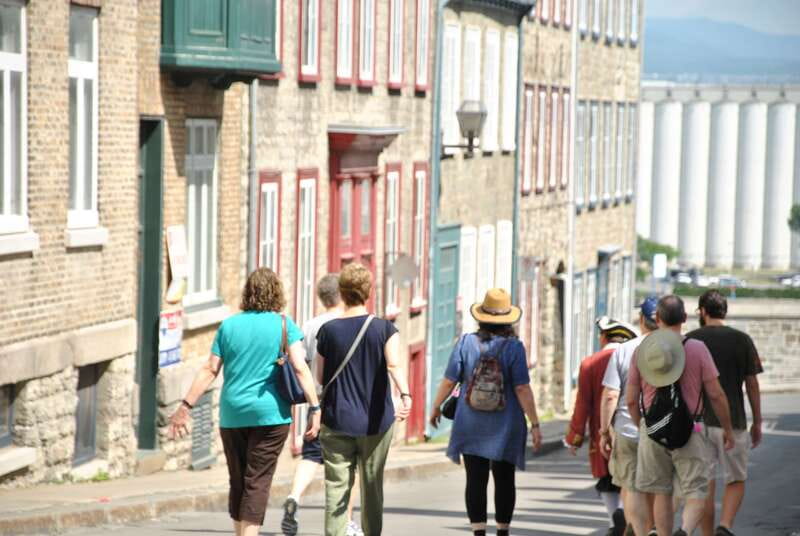
The stated check-in point is the Cicerone information centre at 12 Sainte-Anne Street, postal code G1R 3X2. Because the meeting point can vary by booking option, check your confirmation carefully before setting out.
This detail matters in Old Quebec. The streets are compact, but the lanes and addresses can be confusing, especially when you are hurrying to meet a group. One past booking had an incorrect starting address, which caused an unnecessary walk through an unfamiliar city. I would allow extra time and verify the location on the day of the tour.
The experience lasts two hours. Starting times depend on availability, so choose a slot that leaves room for a meal or another attraction afterward. At $24 per person, the price is modest for a guided introduction to one of North America’s most historically important urban areas. You are paying for a licensed guide, not transport or entry to a long list of interiors, so the value depends on how much you want context while walking.
Small groups are available. That option is worth considering if you want to hear questions and answers clearly or prefer a more personal exchange with the guide.
Château Frontenac and Dufferin Terrace
The Château Frontenac is one of the visual anchors of Quebec City. Its towers and steep rooflines dominate the upper town, and the building is easy to admire even if you know nothing about its past.
The tour gives you a chance to study its exterior architecture while learning why this hotel became such an important symbol of the city. The views from nearby Dufferin Terrace add another layer, opening the city toward the St. Lawrence River and connecting the upper town with the broad setting around it.
Be clear about what you are booking. The highlights refer to access to exclusive areas of the Château Frontenac, while the detailed route specifically names the beautiful exterior and the terrace. The available information does not explain exactly which interior spaces are included in every option. If seeing inside the hotel is essential to you, confirm that detail before paying.
Some people would also prefer more time at the Château and on the boardwalk. That is the tradeoff of a broad city tour. You see several major areas rather than spending the whole two hours at one landmark.
Notre-Dame de Québec Basilica and the religious story
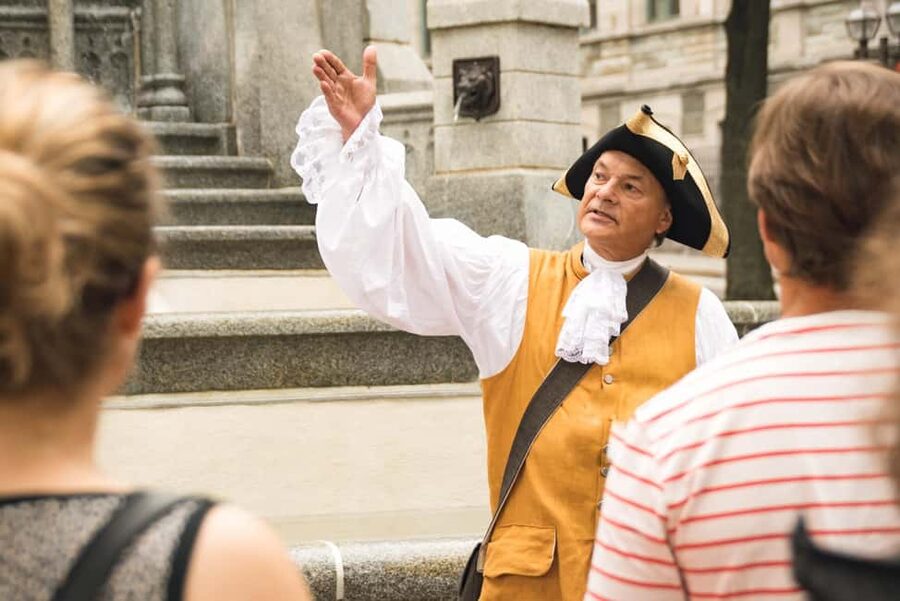
The Basilica of Notre-Dame de Québec is one of the tour’s useful reminders that Quebec City is not just about military history and grand hotels. Religious institutions shaped daily life, education, settlement, and politics for centuries.
A good guide can place the basilica within the wider story rather than treating it as an isolated stop. The tour has been described as presenting Quebec through religious, Indigenous, political, geographical, and modern Canadian perspectives. That range is important because the city’s past is not one simple tale of French explorers and British battles.
The guide may explain how religious power affected the growing colony and how older institutions still influence the city you see today. You should expect an outdoor historical walk centered on context and storytelling, not a dedicated church tour with extended interior viewing.
Same streets, a different story:
- Quebec City Walking Tour
★ 5.0 · 4,716 reviews - Old Quebec City: Grand Walking Tour with Private Option
★ 4.8 · 2,609 reviews - Montreal Mile End Authentic Food Tour with 7 Delicacies Tastings
★ 5.0 · 2,598 reviews - The Original Old Montréal Walking Tour by Guidatour
★ 4.5 · 2,217 reviews
Place Royale, the cradle of French civilization in North America
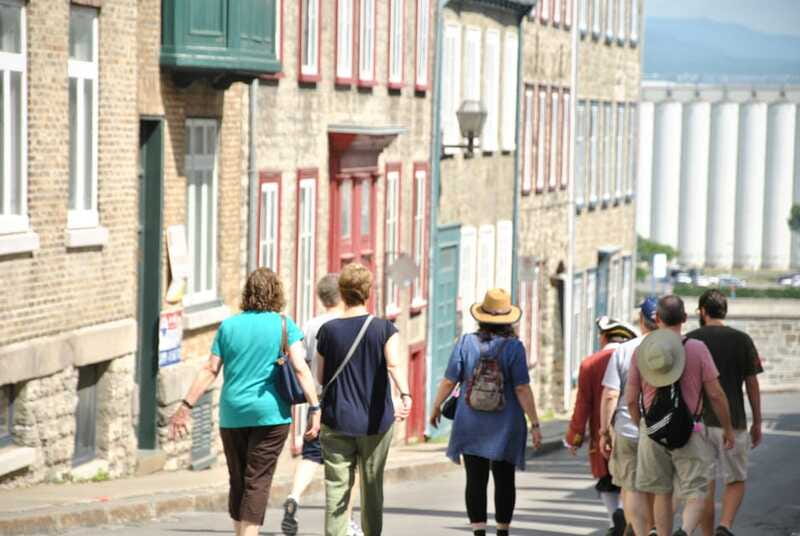
Place Royale is one of the most meaningful stops because it connects the city’s handsome appearance with its role in French settlement. It is often described as the cradle of French civilization in North America, and the tour uses the square to explain how the colony took shape.
Here, the value comes from seeing the city as a working settlement rather than a postcard. Buildings, streets, and the surrounding lower town begin to make more sense when your guide explains who lived here, how the colony grew, and why this location mattered.
The route may use sloping roads to reach the lower part of Old Quebec. That can be easier than tackling every stairway, though you still need to be ready for uneven pavement and changing grades. One guide deliberately avoided many flights of stairs to reduce the risk of injuries while still reaching the lower town.
Place Royale also shows why a guide adds value to a walking tour. Without explanation, you may see an attractive square and move on. With the settlement story, the stop becomes a key piece of the city’s development.
A history lesson told through several lenses
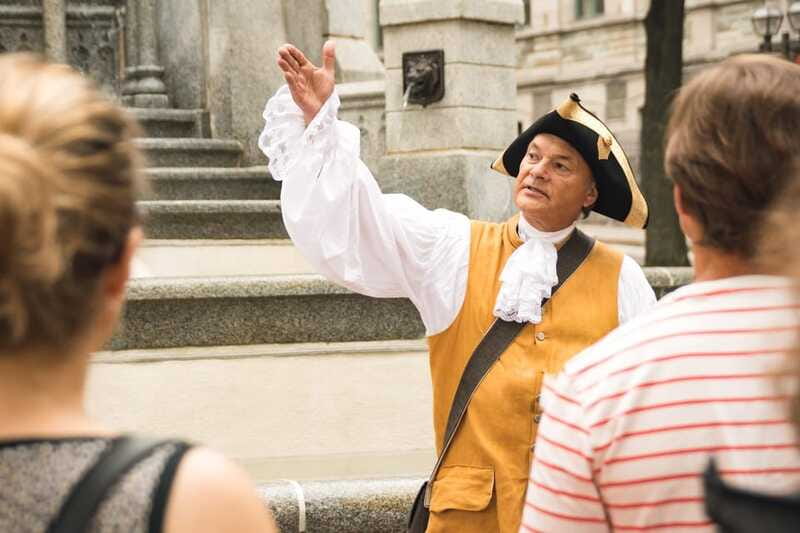
The tour covers roughly 400 years, so it cannot provide a specialist’s account of every period. Its strength is the broad framework. Guides explain the early colony, the people who settled it, the role of farmers, religious influence, political change, and the connection between Quebec’s past and present.
I like that the better tours do not treat history as a straight line. One guide began by outlining three phases of Quebec’s story, then used the route to fill in those periods. Another brought together French, Indigenous, religious, and current Canadian viewpoints.
That approach gives you a useful base for later exploration. You may leave with a list of stories you want to investigate, rather than a pile of disconnected dates. The guides also welcome questions, including subjects that go beyond the exact building in front of you.
The quality depends partly on who leads your group. Names associated with especially strong presentations include Sylvain, Bernard, Gary, Charles, Jean-Claude, Marie-Anne, and Pierre. The recurring strengths are clear speech, humor, a good pace, and the ability to turn local history into a story.
French and English tours are available. Some guides speak additional languages, but the guaranteed tour languages are French and English.
How demanding is the two-hour walk?
The route is manageable for many people, but this is not a flat stroll. Old Quebec has slopes, stairs, cobblestone or uneven sections, and a lower town reached by changing elevation.
Several details can make the difference between an enjoyable walk and an uncomfortable one:
- Wear shoes with good support.
- Dress for the weather, since the experience takes place outdoors.
- Expect to remain on your feet for much of the two hours.
- Ask about the route if stairs are a concern.
- Build in a little recovery time if you are older or have trouble with hills.
Guides may adapt the route for the group. One guide used sloping streets instead of numerous stairs, while another adjusted the pace to suit different abilities. Still, the tour is listed as unsuitable for wheelchair users, so it is not a reliable choice for anyone who needs a fully accessible route.
One participant nearing 80 found the walk more difficult toward the end and wished for more sitting breaks. That is fair advice. There may be a rest stop, but you should not count on regular opportunities for tea, shopping, or extended seating.
What the $24 price gets you
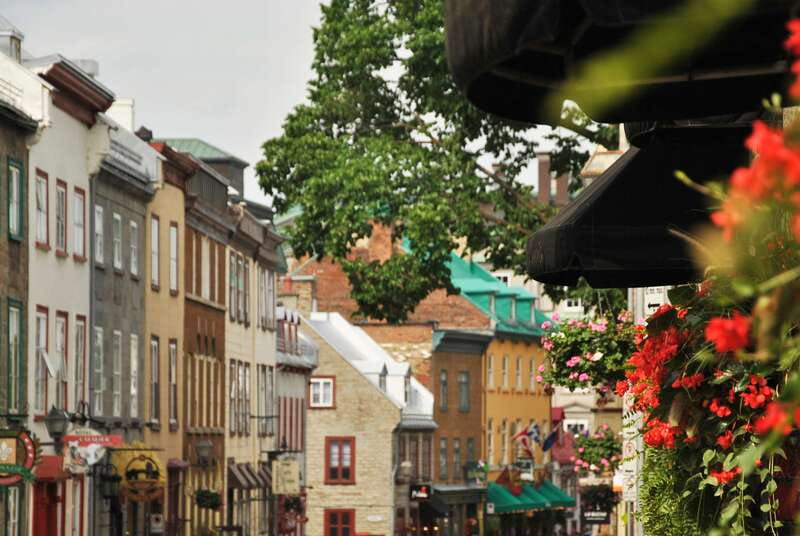
At $24, this is a good-value orientation tour if you want more than a self-guided walk. The price includes two hours of walking and a licensed guide in period costume. It does not include gratuity, so plan to tip if the guide gives you a strong experience.
The value is highest on a first visit. Old Quebec is easy to wander, but it is harder to understand without a basic timeline. After this tour, the basilica, lower town, terrace, and hotel should feel connected rather than scattered.
The price is less compelling if you mainly want to enter the Château Frontenac, spend a long time on Dufferin Terrace, or take photographs at each stop. The tour covers several sights, which means the time at any one place is limited. It is an overview, not a full inspection of every landmark.
You can also reserve now and pay later, which helps if your schedule is still changing. Cancellation is free up to 24 hours in advance for a full refund.
Who should book this Old Quebec walk?
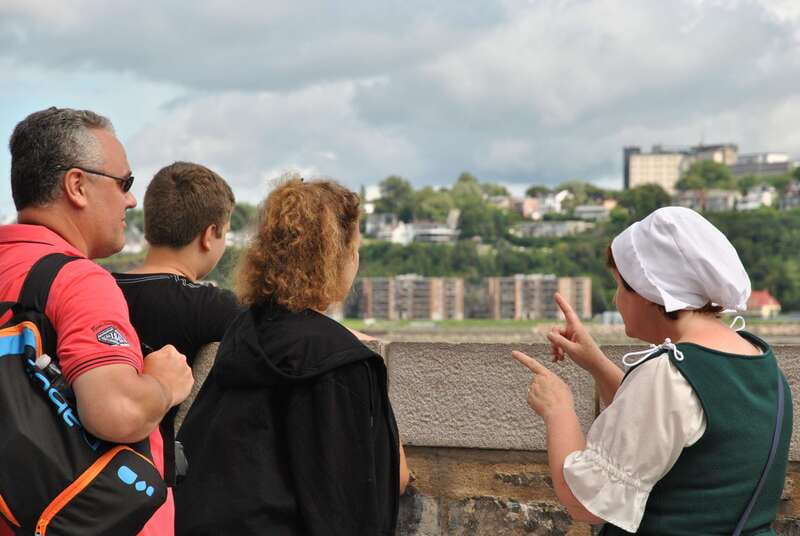
I would recommend it most strongly to first-time visitors, history fans, and anyone who wants a quick orientation before exploring alone. It also suits people who learn better from stories than from plaques and guidebooks.
Families and mixed-age groups may appreciate the humor and theatrical delivery, provided everyone is comfortable walking uphill. The guides tend to answer questions and adjust the pace, which makes the outing more flexible than a rigid lecture.
You may want another option if you use a wheelchair, dislike hills, or want a slow photography walk. The tour also may not satisfy you if your main goal is extensive interior access at the Château Frontenac. In that case, confirm the precise option before booking.
Should you book it?
Yes, if you want a lively, affordable introduction to Old Quebec. The best guides combine historical detail with humor, bring lesser-known corners into the route, and explain how French settlement, farming, religion, Indigenous perspectives, and modern Canada fit into the city’s story.
Go in prepared for hills and a fairly quick pace. Wear comfortable shoes, check the meeting address, and treat the Château Frontenac portion as an architectural and historical stop unless your booking clearly confirms interior access.
For $24, this tour gives you a useful map of the city in both the literal and historical sense. Book it early in your visit, then return to the places that catch your interest at your own pace.
FAQ
How long is the Old Quebec Historical Walking Tour?
The tour lasts two hours.
How much does the tour cost?
The listed price is $24 per person.
What languages are available?
The live tour is available in French and English.
Where does the tour meet?
Check in at the Cicerone information centre at 12 Sainte-Anne Street, G1R 3X2. The meeting point may vary depending on the option booked, so check your booking details.
What sights are included?
The route includes or visits the area around Château Frontenac, Dufferin Terrace, the Basilica of Notre-Dame de Québec, and Place Royale.
Is the tour suitable for wheelchair users?
No. The activity is listed as unsuitable for wheelchair users.
Can I cancel the booking?
Yes. You can cancel up to 24 hours in advance for a full refund. You can also reserve now and pay later.
New walking tours around Canada
- Niagara Falls, Canada: White Water Walk Entry Ticket★ 4.5 · 147 reviews
- Niagara Falls: Walking Tour, Journey Behind Falls, & Cruise★ 4.8 · 773 reviews
- Montreal: Old Montreal Guided Walking Tour★ 4.9 · 268 reviews
- Montreal: RESO Underground City and Downtown Walking Tour★ 4.8 · 236 reviews
- Montreal: The Original Locally Owned Street Art Walking Tour★ 4.9 · 97 reviews
- Montreal: Private Walking Tour with a Local★ 4.4 · 420 reviews
- Mont-Tremblant: Treetop Observatory and Self-Guided Walk★ 4.7 · 130 reviews
- Kingston: Haunted Night Walking Tour★ 4.6 · 144 reviews
Quebec City Walking Tours, side by side.

Old Quebec City: Grand Walking Tour with Private Option
Read our review →
Old Quebec City Food Tour with 10+ Autentic Local Tastings
Read our review →Lists this walk sits on