
Review · QUEBEC CITY
Quebec City Walking Tour
Québec City’s best introduction is on foot, and this tour takes you from the grand terraces above the river down into the narrow lanes of Petit-Champlain. I like the downhill route and the small group, capped at 15 people, which makes it easier to hear the guide and ask questions.
I also like the balance of famous sights and quieter corners, including the Ursuline monastery courtyard and the Seminary of Québec. Guides such as Mark, Louise, Robert, Christian, Stefan, and Francis are praised for mixing history with humor and practical tips. The main drawback is weather: two hours outside can be hard in Québec’s winter cold.
Key points at a glance
- A downhill route through Old Québec: Begin in Upper Town and finish near the Old Québec Funicular in Petit-Champlain.
- A compact group of up to 15: The size helps your guide keep the walk personal and audible.
- History from 1608 to today: Expect stories about French settlement, British rule, military defense, religion, architecture, and modern Québec.
- More than a photo stop: You may enter the Ursuline chapel if it is open and walk into the Seminary of Québec courtyard.
- A useful first-day tour: Guides often provide restaurant ideas, maps, and suggestions for what to see next.
- Weather matters: The tour runs in all conditions, so warm clothing and sturdy shoes are essential.
Why This Two-Hour Walk Works So Well
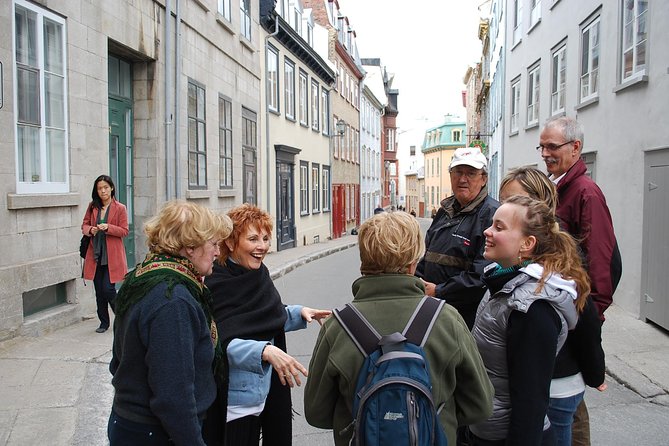
Old Québec can feel confusing at first. The Upper Town sits above the river, the Lower Town drops toward the waterfront, and many streets twist around walls, churches, squares, and steep stairways. This tour gives you a clear route through the historic core without asking you to plan every turn.
The walk begins at 12 Rue Sainte-Anne, inside the Québec Tourist Information Centre. You will find it across from the Château Frontenac, one of the easiest landmarks in the city. From there, your guide leads the group through Upper Town before gradually descending toward Place Royale and Petit-Champlain.
At $30.29 per person, I see this as a fair price for a licensed guide, two hours of commentary, and a useful orientation to the city. You are not paying for museum admission or a private tour, but the route covers a lot of ground and makes the old streets easier to understand later.
The tour is conducted in English and uses a mobile ticket. It is offered in a small group of no more than 15 people, though a minimum number is required for the tour to operate. That small-group limit matters more here than it might on a bus tour because streets can be narrow and outdoor commentary can get lost in the wind.
More walking tours around Canada:
- Old Quebec City: Grand Walking Tour with Private Option
★ 4.8 · 2,609 reviews - The Original Old Montréal Walking Tour by Guidatour
★ 4.5 · 2,217 reviews - Old Montreal Small-Group Walking Tour | Max 10 | by MTL Detours
★ 5.0 · 2,088 reviews
Starting at the Samuel de Champlain Monument
After meeting at the tourist office, you walk to the monument honoring Samuel de Champlain, the founder of Québec City. This is a sensible place to begin because it introduces the city’s French origins and gives your guide a natural way to explain why Québec developed on this particular site.
The opening section is useful for getting your bearings. You begin near the political and religious heart of Old Québec, then move through places that show how the city grew over centuries. The guide’s stories cover daily life as well as major events, so the walk is not limited to dates and military battles.
The quality of the experience depends partly on the individual guide. Mark is often praised for his humor and command of Québec history. Louise is noted for answering questions and offering restaurant and activity suggestions. Robert, Christian, Stefan, Francis, and Philippe are also associated with warm, lively tours.
You should not expect a scripted lecture delivered without pauses. The best guides adjust their pace, answer questions, and connect the past to modern Québec culture. That makes the tour more useful than simply walking past buildings with a list of dates.
Terrasse Dufferin and the Château Frontenac View
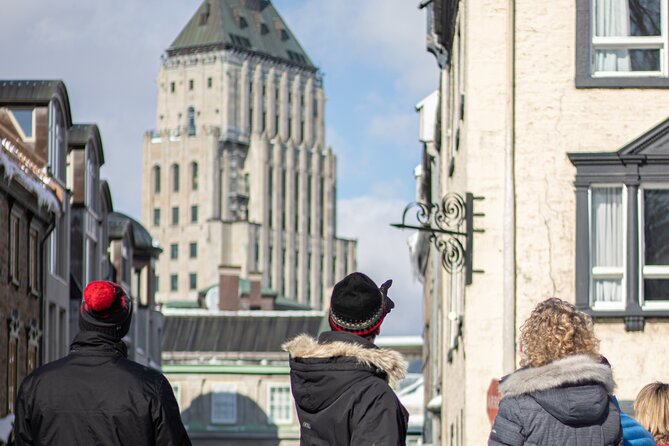
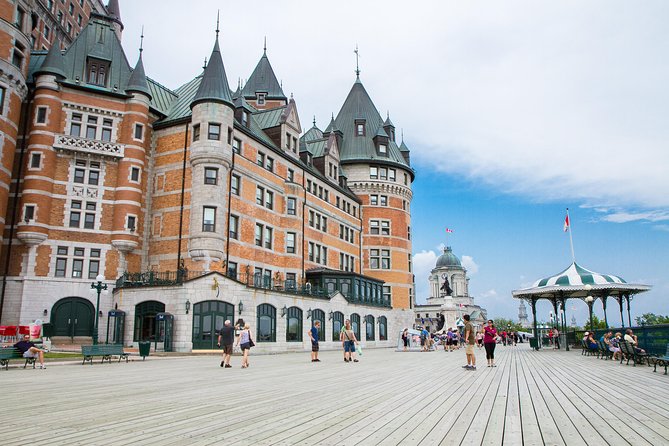
The route continues along Terrasse Dufferin, the broad promenade beside the Château Frontenac. This is one of the city’s finest viewpoints, with a wide look over the St. Lawrence River and the Lower Town.
Your guide explains what you are seeing from this elevated position, including the role of the Château Frontenac in Québec City’s identity. The stop lasts about 10 minutes, enough for photos and a short explanation without turning the tour into a long pause.
This is also where the downhill design begins to make sense. You get the grand view first, then gradually descend into streets that feel older, tighter, and more intimate. I like that progression because it gives you a visual map of the city. Upper Town represents power, defense, and major institutions. Lower Town brings you closer to commerce, workshops, residences, and the river.
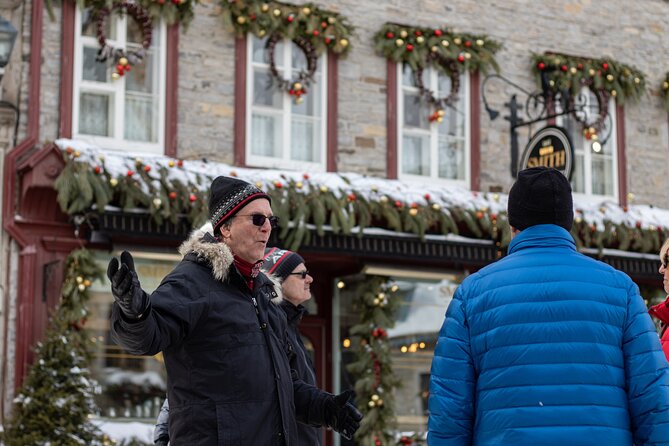
The open terrace can be windy and cold. In winter, a hat, gloves, insulated footwear, and layers make a real difference. The tour runs in all weather, and several people have found the information worthwhile but the cold difficult. If temperatures are low, bring more clothing than you think you need.
The Ursuline Monastery and Québec’s Religious Story
The walk passes the Pôle culturel du Monastère des Ursulines, where the Ursuline Sisters have been present since 1639. This stop gives you a look at the role religious communities played in education, health care, and daily life in early Québec.
If the chapel is open, the group may visit it. That qualification matters. You should treat the interior visit as a possibility, not a guaranteed part of every departure. Even from outside, the monastery adds an important layer to the city’s story because Québec was shaped as much by religious institutions as by soldiers and merchants.
The tour does not linger at every site for a long time. Most stops last about five to 10 minutes, which keeps the route moving but means you will receive an introduction rather than a full museum visit. I think that is the right trade for a first look at the city. You can return later to the places that interest you most.
Same streets, a different story:
- Montreal Mile End Authentic Food Tour with 7 Delicacies Tastings
★ 5.0 · 2,598 reviews - Gastown Historic Walking Food Tour
★ 5.0 · 1,863 reviews - Old Quebec City Food Tour with 10+ Autentic Local Tastings
★ 5.0 · 1,288 reviews - Vancouver Lost Souls of Gastown Walking Tour
★ 5.0 · 1,273 reviews
Cathedral Courtyards and City Hall Square
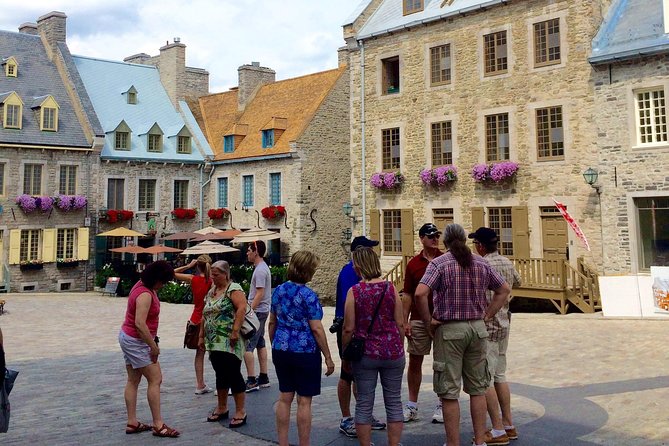
The Cathedral of the Holy Trinity brings another historical perspective. Its courtyard belongs to the first Anglican cathedral built outside the British Isles, a reminder that Québec’s story changed after the British conquest and continued to include several religious traditions.
The stop is short, around five minutes, but it helps you see that Old Québec is not a single-period French village preserved under glass. Its churches, public buildings, and streets reflect changing control, language, faith, and culture.
At Québec City Hall, your guide presents the main landmarks around the square. This is a good place to connect the city’s old institutions with its role as the provincial capital today. You may also hear about the Basilica Notre-Dame, one of the major religious landmarks in the old city.
Because several significant buildings cluster around the square, the guide’s explanation adds real value. Without context, you might take a few photographs and move on. With context, you begin to see how public power, religion, and commerce shared the same compact area.
The Seminary of Québec Courtyard
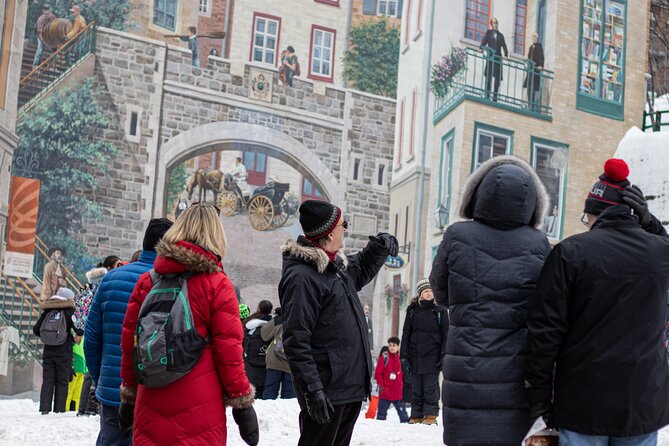
The route enters the courtyard of the Seminary of Québec, a setting that can feel like a step back into the 18th century. This is one of the more atmospheric stops because the enclosed space offers a break from the main streets and a closer look at the city’s institutional architecture.
The Seminary has played a major role in Québec’s religious and educational life. Your guide uses the courtyard to explain that older buildings were not simply decorative. They housed institutions that helped organize the colony and later the city.
This is also one of the places where a good guide can make a short stop feel substantial. Philippe, for example, is praised for taking time to enter significant buildings when possible and for adding food advice along the way. Access can depend on the day and the site’s opening conditions, so do not expect every interior to be available on every tour.
Fortifications, the Citadelle, and a City Built for Defense
Québec City is the only walled city north of Mexico, and the fortifications are central to understanding its location and survival. Your guide explains how the walls helped protect the settlement and how the city’s defensive system developed over time.
The Citadelle of Québec is also part of the city’s military story. It remains an active military installation and serves as the official residence of the Canadian monarch and the Governor General of Canada. The walk gives you context about its purpose, but this is not a dedicated Citadelle admission tour, so you should not expect a full interior visit.
The same applies to the city walls. You will learn why they matter and see important sections as you move through Old Québec, but the two-hour format is designed for a broad overview. If military architecture is your main interest, you may want to return later for a more focused visit.
I like this part of the route because it explains why Québec looks different from most North American cities. The walls are not an isolated monument. They shaped streets, limited expansion, and helped preserve the compact form you see today.
Place Royale and the Birthplace of French America
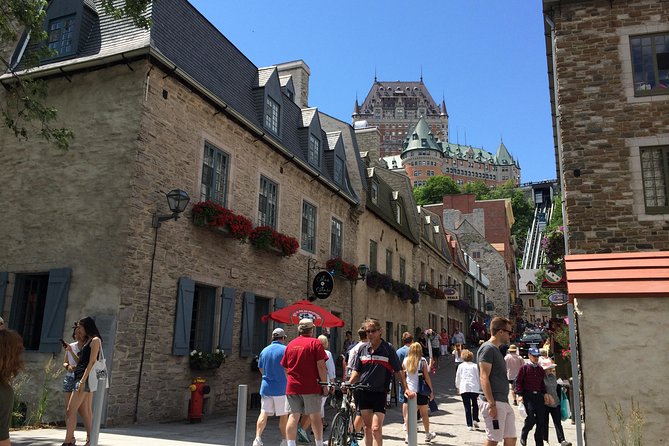
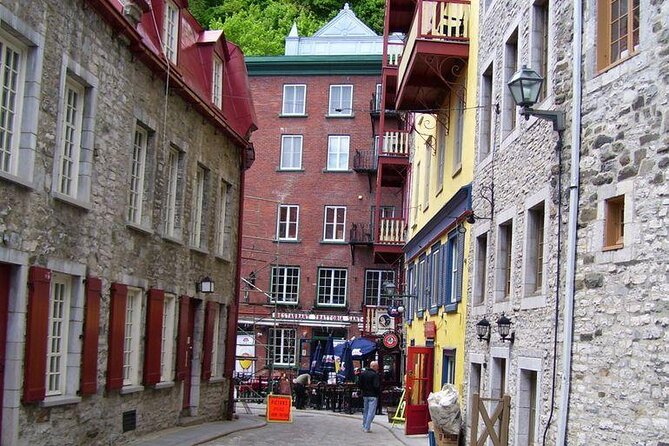
The walk eventually reaches Place Royale, one of Québec City’s most important historic squares. It is often called the birthplace of French America, and the surrounding buildings show how the Lower Town developed as a center of trade and settlement.
Notre-Dame-des-Victoires Church is associated with this part of the route. It is one of Canada’s oldest stone churches and occupies the site where Québec began. The church is small compared with the grand churches of Europe, but its location gives it unusual importance.
Place Royale is a place where the tour’s earlier explanations come together. You can connect Champlain’s founding of Québec, the river trade, the city’s French identity, and the later layers of British and Canadian history. The square is also one of the most photographed parts of Old Québec, so you will have a chance to enjoy the setting as well as hear about it.
The stop itself is brief, about five minutes. That is enough for an explanation and a quick look, but not enough for a detailed church visit or a long photography session. If you want quiet photographs, return early or late in the day after the tour.
Petit-Champlain and the Old Québec Funicular
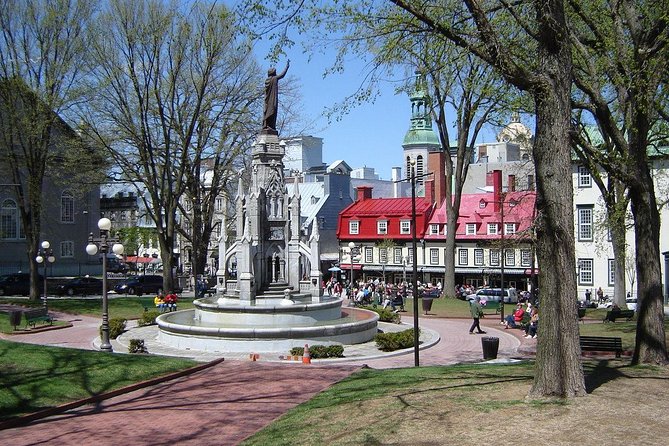
The final stretch leads into Petit-Champlain, a narrow and attractive district below the main escarpment. The tour ends on Petit-Champlain Street near the Old Québec Funicular, at 16 Rue du Petit Champlain.
Ending here is practical. You are close to shops, restaurants, and the funicular, and you can continue exploring on foot after the guide leaves. You may also use the funicular if you want to return uphill, though the tour itself does not include that ride.
The downhill route saves you from making the full climb during the walk. Still, this is not a flat stroll. Old Québec has uneven paving, stairs, and changing grades, so a moderate level of fitness is recommended. Wear shoes with good grip, especially in wet or icy conditions.
The finish also gives you a good choice. You can stay in Lower Town for food and photographs, ride the funicular back toward Upper Town, or use the guide’s suggestions to plan the rest of your day.
What the Guides Add to the Walk
The most praised part of this experience is the guide’s ability to make history easy to follow. Mark is described as candid, funny, and willing to answer questions after the scheduled walk. Robert is praised for adapting to severe cold and finding indoor places where the group could warm up. Christian is noted for explaining how past events still shape modern Québec culture.
Those details matter because a city tour can become dull if it only lists dates and names. Here, the strongest guides connect architecture, politics, social life, religion, and food. Several also offer restaurant recommendations, maps, and ideas for later activities.
Your experience will vary with the guide assigned to your departure. The small group helps, but it does not guarantee a private conversation or a custom route. The tour follows a set path, and the short stops mean the guide must keep moving.
One practical issue deserves attention: stay close to the group. A participant once became separated and missed several stops. In narrow streets and crowded squares, it is easy to lose sight of a guide, so keep an eye on the group and speak up if you need to pause.
Winter Conditions and Physical Comfort
Québec City can be extremely cold. Temperatures around 10 to 12 degrees Fahrenheit have been reported during winter departures, and two hours outside can feel long even when the guide keeps the pace moving.
Dress for standing as well as walking. You need a warm coat, gloves, a hat, and insulated boots. Hand and toe warmers are available for purchase at the check-in desk, and some guides adjust the route or include indoor stops when conditions are severe.
Spring, summer, and fall are easier seasons for enjoying the commentary at a relaxed pace. Winter has its own appeal, with snowy streets and a crisp atmosphere, but you should book this tour only if you are ready for the weather.
The route is not advertised as wheelchair accessible, and the physical requirement is moderate. Uneven streets, slopes, and possible winter ice are relevant considerations. If you have mobility concerns, contact the operator before booking.
Who Should Book This Québec City Walk
I would choose this tour early in a Québec City stay. It gives you a mental map, explains the major landmarks, and can save you time when deciding where to eat and what to revisit.
It suits you best if you:
- Want a broad introduction rather than an in-depth museum visit
- Enjoy history, architecture, and stories about daily life
- Prefer walking to riding around in a vehicle
- Like having a guide available for questions
- Want to see both Upper Town and Lower Town in one outing
- Can manage slopes, uneven streets, and two hours of walking
It may not suit you if you want guaranteed interior access to every church and historic building, a private guide, or a leisurely pace with long photography stops. It is also a poor match if you dislike cold weather and plan to visit in winter without serious warm clothing.
The tour has free cancellation up to 24 hours before the start time. Within 24 hours, the payment is not refunded. If the minimum number is not reached, the operator offers an alternative or a full refund.
Should You Book It?
Yes, I would book this as a first activity in Québec City, especially at $30.29. The route covers the city’s essential historic areas, the group is limited to 15, and the downhill finish near Petit-Champlain is convenient.
Book it for orientation, context, and personality, not for long visits inside individual monuments. Ask questions, stay near your guide, and use the restaurant and activity suggestions to shape the rest of your stay.
Choose a warmer season if you are sensitive to cold. If you visit in winter, bring serious layers and insulated shoes. With that preparation, this is a practical way to understand why Old Québec feels unlike almost anywhere else in North America.
FAQ
How long is the Québec City walking tour?
The guided walk lasts approximately two hours.
Where does the tour begin?
It begins at Tours Voir Québec’s sales desk inside the Québec Tourist Information Centre at 12 Rue Sainte-Anne, across from the Château Frontenac.
Where does the tour end?
The tour ends near the Old Québec Funicular on Petit-Champlain Street, at 16 Rue du Petit Champlain.
Is the tour conducted in English?
Yes. The tour is offered in English.
What happens if the weather is bad?
The tour operates in all weather conditions, so you should dress appropriately. Guides may adjust the route or include indoor stops during severe cold, but outdoor walking remains part of the experience.
Can I cancel for a refund?
Yes. You can cancel at least 24 hours before the start time for a full refund. Cancellations or changes made less than 24 hours before the start time are not refunded.
New walking tours around Canada
- Niagara Falls, Canada: White Water Walk Entry Ticket★ 4.5 · 147 reviews
- Niagara Falls: Walking Tour, Journey Behind Falls, & Cruise★ 4.8 · 773 reviews
- Montreal: RESO Underground City and Downtown Walking Tour★ 4.8 · 236 reviews
- Montreal: The Original Locally Owned Street Art Walking Tour★ 4.9 · 97 reviews
- Montreal: Old Montreal Guided Walking Tour★ 4.9 · 268 reviews
- Montreal: Private Walking Tour with a Local★ 4.4 · 420 reviews
- Mont-Tremblant: Treetop Observatory and Self-Guided Walk★ 4.7 · 130 reviews
- Kingston: Haunted Night Walking Tour★ 4.6 · 144 reviews
Quebec City Walking Tours, side by side.
Old Quebec City: Grand Walking Tour with Private Option
Read our review →
Old Quebec City Food Tour with 10+ Autentic Local Tastings
Read our review →
Quebec City: Old Quebec Historical Walking Tour
Read our review →Lists this walk sits on