
Review · SAN FRANCISCO
San Francisco Chinatown Walking Tour
San Francisco Chinatown reveals itself in layers: paper lanterns and pagoda-style buildings on the surface, then food markets, herbal remedies, private clubs, temples, and immigrant stories just behind them. This two-hour walk takes you into those less obvious corners, including a working herbal shop and the small factory where fortune cookies are folded by hand.
I like the way the tour connects daily Chinatown life with the neighborhood’s past, rather than simply pointing out painted balconies and ornate entrances. I also like the small-group format, capped at 15 people, and the chance to see unusual foods such as ginseng, dried seafood, sea cucumbers, and gecko lizards. The main drawback is value: at $59 per person, the tour may feel expensive if you want only a quick introduction or prefer a fast-paced walk.
Key things to know before you book
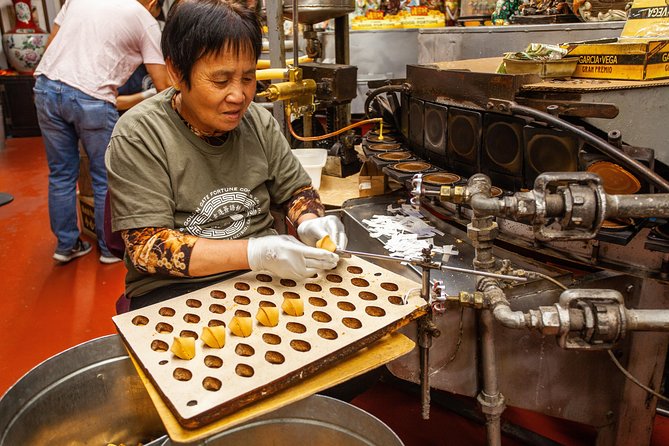
- The fortune cookie factory is a real working stop: You watch the cookies being made and sample one.
- Stockton Street shows working Chinatown: Food markets sell seafood, produce, dried goods, and specialty ingredients used in Chinese cooking.
- Linda Lee gives the tour a personal voice: She was born in Chinatown and has led tours for decades, adding local stories and humor.
- Waverly Place brings the neighborhood’s less visible side: The two-block alley has painted balconies, temples, and stories about private Chinese associations.
- The pace is gentle: That suits families and curious first-time visitors, but may feel slow if you want to cover a lot of ground.
- You finish near where you started: The end point is at 800 Clay Street, about two blocks from Old St. Mary’s Cathedral.
Why this walk is more than a photo stop
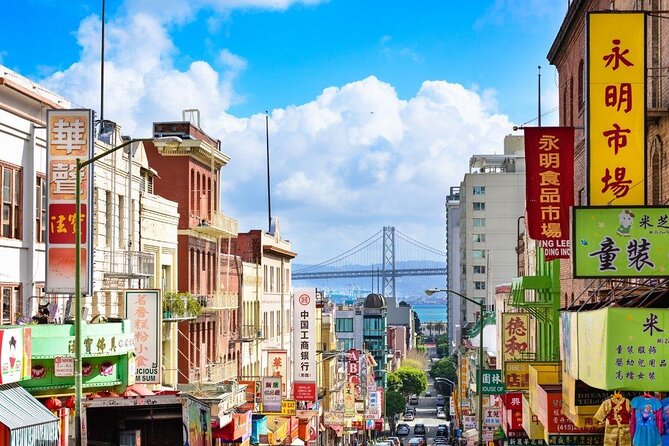
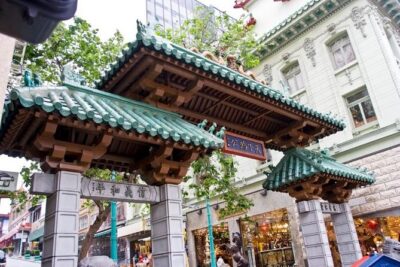
San Francisco Chinatown is easy to visit badly. You can walk Grant Avenue, take a picture beneath the decorative gate, buy a souvenir, and leave without seeing much of the neighborhood’s working side.
This tour points your attention toward the places that make Chinatown feel lived-in. You see food being sold for local kitchens, medicinal products displayed in traditional shops, and streets that carry the memory of Chinese immigrant life in San Francisco. The guide also explains how Chinatown preserved its culture through pressure, discrimination, and changing city life.
That mix is the tour’s real strength. You are not just collecting landmarks. You are learning why a pharmacy displays pearl pills, what dried fish bladders are used for, and how a narrow alley became an important social and religious place.
The walk is offered in English and lasts about two hours. It begins at 10 a.m., which is a useful time for seeing Chinatown wake into its daily rhythm. The group is limited to 15 people, small enough for questions and conversation without the guide shouting across a crowd.
More walking tours around the USA:
- History and Hauntings of Salem Guided Walking Tour
★ 5.0 · 14,564 reviews - New Orleans Premier Ghost, Voodoo and Vampire Walking Tour
★ 4.5 · 12,856 reviews - Little Havana Food and Walking Tour in Miami
★ 5.0 · 8,882 reviews
Starting at Old St. Mary’s Cathedral
Meet at Old St. Mary’s Cathedral, at 660 California Street. This is a practical starting point near public transportation and close to the edge of Chinatown.
The opening portion sets the neighborhood in context. You learn how Chinese immigrants shaped this part of San Francisco and how Chinatown kept its identity through major changes in the city. The guide also introduces the idea that Chinatown is not a museum district. It remains a place where people shop, work, worship, eat, and maintain family and community ties.
If Linda Lee leads your walk, expect a personal style. She was born in Chinatown and has guided groups for 41 years. Her approach is conversational and playful, with the habit of learning people’s names and adjusting examples to the group. That can make the tour especially appealing to families, since younger participants are not expected to listen to a long lecture.
The first stop itself is brief, about 10 minutes. Use the time to settle in, check your shoes, and make sure you can hear the guide before the group moves into the neighborhood.
Portsmouth Square, Chinatown’s outdoor living room
Portsmouth Square is described as Chinatown’s outdoor living room, and that is a helpful way to understand its role. It is also tied to several early San Francisco milestones, including the raising of the city’s first American flag, the first public school, and the first cable car line.
This stop gives the walk a civic frame. Chinatown is not isolated from San Francisco’s story. It is part of the city’s earliest development, and the square helps connect Chinese American life with the broader growth of San Francisco.
You spend about 15 minutes here. The stop is free, of course, and there is no separate admission to manage. The value comes from the explanation, since the square itself may not reveal all of its importance at a glance.
Stockton Street and the working food markets
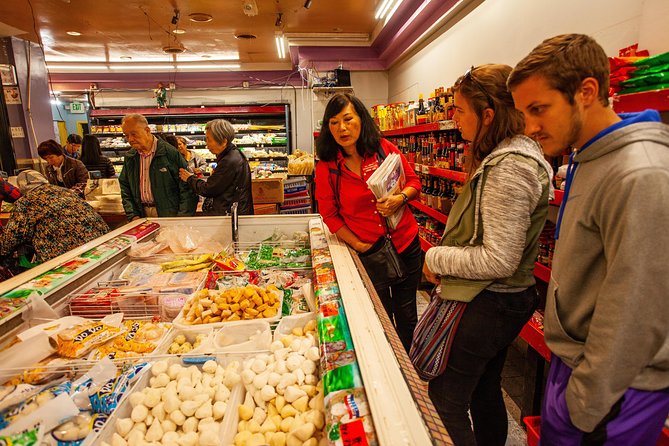
Stockton Street is one of the most useful parts of the walk for anyone who plans to eat or shop in Chinatown later. The markets sell fresh seafood, produce, and ingredients that may be unfamiliar if you usually shop at a standard American grocery store.
Your guide explains what you are seeing rather than leaving you to guess. You might encounter dried seafood, specialty foods, and produce selected for Chinese cooking. The sights and smells give you a better sense of how local kitchens operate.
I especially like this stop because it shifts the focus from decorative Chinatown to everyday Chinatown. Grant Avenue often gets more attention from first-time visitors, but Stockton Street shows the neighborhood serving its community.
The market visit lasts about 15 minutes. That is enough time for an introduction, not a full shopping trip. You can return afterward if you want to inspect a store more carefully or buy ingredients.
Same streets, a different story:
- Chicago: Gangsters and Ghosts Walking Tour
★ 5.0 · 7,155 reviews - Boston: Freedom Trail History Small Group Walking Tour
★ 5.0 · 6,450 reviews - Historic Charleston Guided Sightseeing Walking Tour
★ 5.0 · 6,216 reviews - New Orleans Food Walking Tour of the French Quarter with Small-Group Option
★ 5.0 · 6,118 reviews
The Golden Gate Fortune Cookies Co.
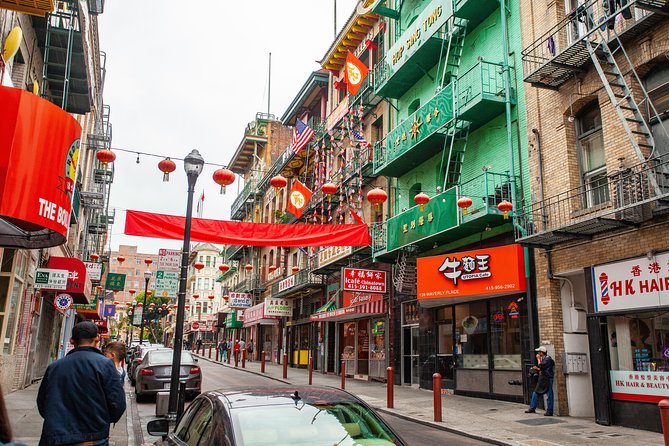
The Golden Gate Fortune Cookies Co. is a compact but memorable stop. You watch the cookies being made and receive a sample.
The appeal is simple: you see the production process rather than buying a sealed cookie from a tourist shelf. The stop also helps explain how a small food item became linked so strongly with the American idea of Chinese restaurants.
Plan on about 10 minutes here. It is not a long factory visit, and you should not expect a full meal or an extended tasting. Still, the hands-on element breaks up the historical talk and works well for children.
A useful tip is to look around the entrance while you are there. The factory has a weathered newspaper clipping connected to the guide, which adds a personal touch to the visit.
Herbal medicine and the dried-goods shop
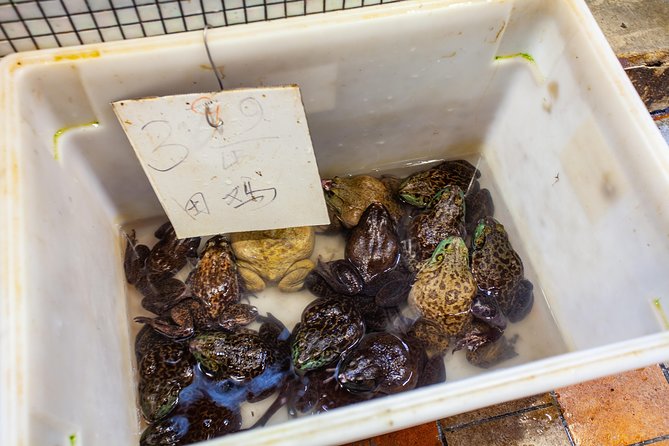
One of the more unusual stops takes you into an herbal pharmacy or dried-goods store. Here you may see ginseng root, pearl pills, gecko lizards, fish bladders, sea cucumbers, abalone, and bird’s nests.
The point is not to turn you into an herbal doctor. It is to show how Chinese traditions view food, health, balance, and preparation. Your guide explains the traditional uses associated with these goods, giving you a way to understand why the shop looks so different from a standard pharmacy.
This is also where the tour benefits from a guide who can explain details without making the display seem strange or merely exotic. The products are part of a living food and health tradition, not just curiosities arranged for tourists.
The stop lasts about 10 minutes. Some people will find it fascinating. Others may find the unfamiliar ingredients confronting, especially the animal products. The tour presents them as part of the neighborhood’s commercial and cultural life, but you should expect an observational visit rather than a tasting.
Waverly Place and the painted balconies
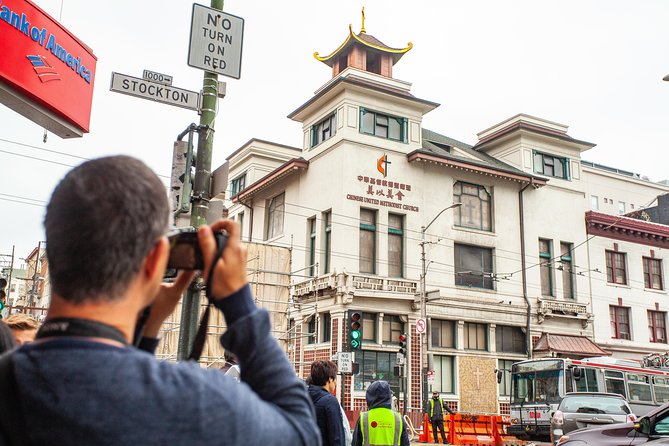
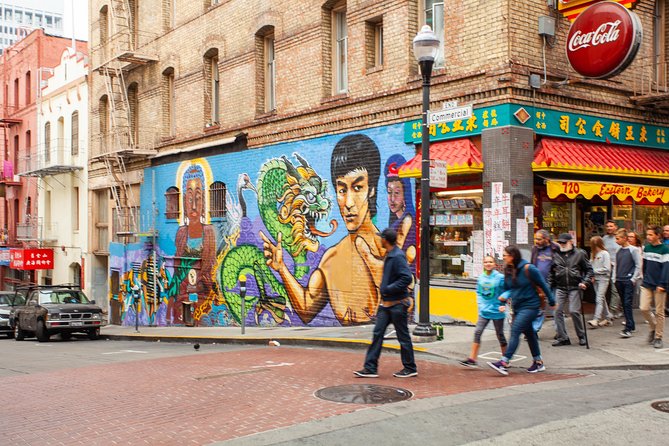
Waverly Place is a narrow, two-block alley known for its painted balconies and layered stories. The architecture gives you good photographs, but the guide’s explanation adds more weight to the stop.
You hear about temples, private clubs, and secret institutions connected with the neighborhood. Time permitting, the group may also visit a secluded Buddhist temple. Because that visit depends on timing, you should treat it as a possibility rather than a guaranteed part of the walk.
This section helps explain why Chinatown cannot be understood from its main streets alone. Narrow lanes and upper-floor spaces once provided room for community organizations, religious activity, and social life in a neighborhood shaped by limited space and outside pressure.
The stop is listed at about 10 minutes, so do not expect a long temple visit. The value is in seeing the street and learning how much social history can be packed into a short alley.
Grant Avenue, signs, shops, and language
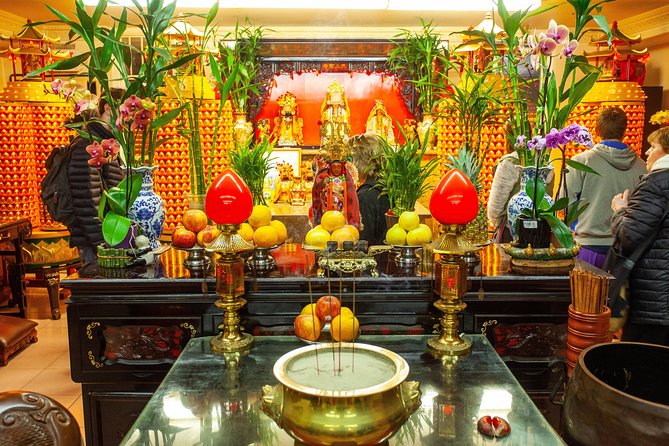
Two Grant Avenue stops add lighter details to the walk. One involves a stationery or party-goods store, where the guide asks you to look closely and figure out what the shop actually sells. It is a small exercise, but it shows how Chinatown storefronts can serve several different purposes.
The next stop looks at the East West Bank building as an example of pagoda-style architecture. The guide also explains what occupied the site before the bank and uses the building to discuss the complexity of Chinese language, both written and spoken.
These stops are useful because they teach you to look above the shop signs and beyond the obvious tourist decoration. Architecture, lettering, and storefronts all carry clues about the neighborhood.
The tour ends at 800 Clay Street, near Grant Avenue and roughly two blocks from Old St. Mary’s Cathedral. That makes it easy to continue on foot, return to a shop, or stop for lunch based on your guide’s suggestions.
Linda Lee’s guiding style
Guide quality matters more on a neighborhood walk than on a bus tour. You are close to the person for two hours, and the experience depends on whether the stories feel connected to the streets around you.
Linda Lee receives especially strong praise for being warm, funny, patient, and able to adjust her talk to different ages and backgrounds. Families describe children staying engaged, while repeat participants say she showed them places they had missed on earlier Chinatown walks.
Her humor can be personal and spontaneous. She may connect the group’s backgrounds to the neighborhood or use an unexpected story to make a point. That style will suit you if you enjoy conversation and local personality. If you prefer a tightly scripted lecture with exact timing at every stop, the informal approach may feel less polished.
The pacing is another factor. Most people will find the walk manageable, and the two-hour length is reasonable for a family outing. One criticism is that the tour can move slowly and cover less ground than expected. That is worth considering if you have only a short time in San Francisco.
Is $59 a fair price?
At $59 per person, you are paying for access to a guide’s interpretation, not admission tickets. The stops themselves are mostly free, and the fortune cookie sample is modest. The price makes the most sense if you want context, local stories, and help noticing places you would likely pass without understanding.
I would consider it good value for a first visit if you enjoy food culture, immigrant history, architecture, and small shops. It is also useful at the start of a San Francisco stay because your guide can suggest places to eat and shop afterward.
The value is weaker if you already know Chinatown well, want a fast overview, or plan to explore independently with a guidebook. You may also feel the cost more sharply if your group includes several people.
A small group capped at 15 helps justify the price. You have a better chance to ask questions, hear the guide, and enter compact shops without being part of a large crowd.
Practical details for a comfortable walk
The tour operates rain or shine, so check the forecast and dress for changing conditions. Wear comfortable shoes. Chinatown involves ordinary city walking, stops in shops, and time outdoors.
Hotel pickup and drop-off are not included. You meet at Old St. Mary’s Cathedral and finish near Grant Avenue, so plan your route to the starting point rather than waiting for transport.
The tour requires at least two people to confirm. If you are traveling alone and the minimum is not met, the operator may offer another date. Most people can participate, and service animals are allowed.
Confirmation is sent within 48 hours of booking, subject to availability. Free cancellation is available until 24 hours before the start time. After that cutoff, changes and refunds are not accepted.
Who should book this Chinatown walk?
I would recommend it to first-time visitors who want more than a quick pass through Grant Avenue. Families are a good match because the fortune cookie stop, food displays, and short sections keep the subject varied.
It also suits repeat visitors. Chinatown changes with each layer of explanation, and a local guide can point out details you may have missed on earlier visits. The tour is a good choice for anyone interested in Chinese American life, traditional remedies, food markets, architecture, or San Francisco’s early history.
You may want to skip it if your priority is speed. The walk is designed to pause, explain, and talk. If you want a long meal, extensive shopping time, or a broad city tour, this is not the right format.
Should you book the San Francisco Chinatown Walking Tour?
Book it if you want to understand what you are seeing, not just photograph it. The herbal pharmacy, Stockton Street markets, Waverly Place, and fortune cookie factory give the walk a useful mix of culture, food, architecture, and local life.
The $59 price is not a bargain for a simple stroll, and the pace may feel slow to independent explorers. But with a small group and a guide such as Linda Lee, you get the kind of personal explanation that turns Chinatown’s shops, signs, and alleys into a connected place. For a first visit, I think the tour earns its place in your San Francisco plans.
FAQ
How much does the San Francisco Chinatown Walking Tour cost?
The tour costs $59 per person.
How long does the Chinatown walking tour last?
The tour lasts approximately two hours.
What time does the tour begin?
The scheduled start time is 10:00 a.m.
Where does the tour start?
The meeting point is Old St. Mary’s Cathedral at 660 California Street, San Francisco, California 94108.
Where does the tour end?
The tour ends at 800 Clay Street near Grant Avenue, about two blocks from Old St. Mary’s Cathedral.
Is the tour offered in English?
Yes. The tour is offered in English.
What is included in the price?
A professional guide is included. Hotel pickup and drop-off are not included.
What happens if the minimum group size is not met?
At least two people are needed to confirm the booking. If the tour is canceled because the minimum is not met, you will be offered another date or experience, or receive a full refund.
New walking tours around the USA
- NYC: Walking Tour with Local Guide and 30+ Top NYC Sights★ 4.5 · 248 reviews
- New York City: Gangsters and Ghosts 2-Hour Walking Tour★ 4.7 · 615 reviews
- NYC: History of Slavery & Underground Railroad Walking Tour★ 4.7 · 87 reviews
- New York City’s Hell’s Kitchen: Walking Food Tour★ 4.8 · 200 reviews
- New York City: Central Park Walking Tour★ 4.7 · 82 reviews
- NYC: Brooklyn Bridge and DUMBO Guided Walking Tour★ 4.8 · 93 reviews
- New Orleans: Witches Coven Garden District Walking Tour★ 4.9 · 113 reviews
- New Orleans: French Quarter Ghost and Legends Walking Tour★ 4.3 · 129 reviews
San Francisco Walking Tours, side by side.
Chinatown & North BeachLittle Italy: 7 Tastings & History
Read our review →
North Beach & Little Italy Walking Tour: Food, History & Flavor
Read our review →
San Francisco Authentic Food Tour with 5 Locals Favorites Dishes
Read our review →
Lists this walk sits on