
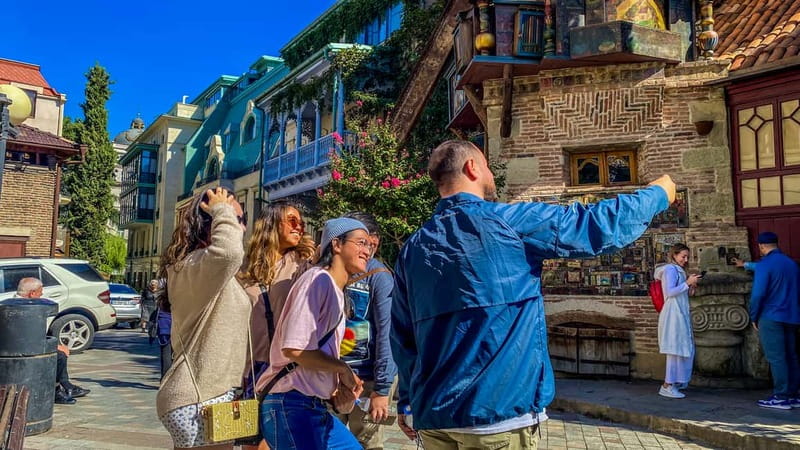
Review · TBILISI
Tbilisi: City Highlights Guided Walking Tour
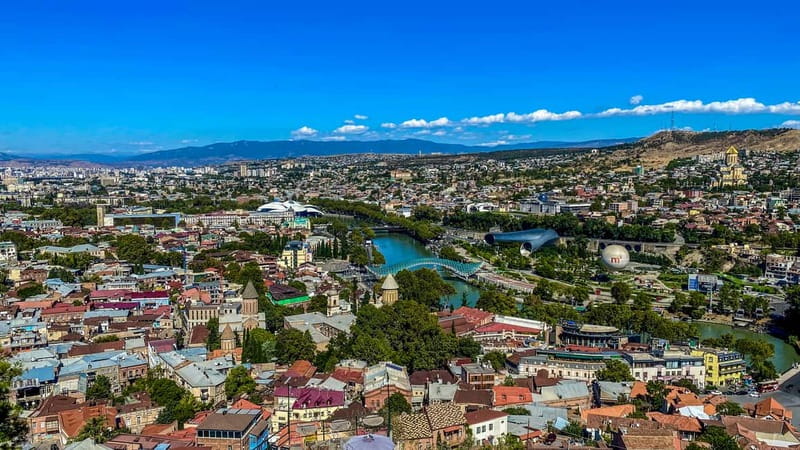
Tbilisi’s best introduction is not a single monument. It is the way the city layers churches, fortress walls, sulfur baths, balconies, modern bridges, and steep hills into one compact walk. This four-hour route gives you that big picture, with a cable-car ride to the Mother of Georgia and a finish near Meidan Bazar.
I especially like the excellent mix of sights and the stop at a local bakery, where traditional pie and lemonade turn a long walk into a more local experience. The main drawback is the pace and terrain: cobbled streets, slopes, stairs, and summer heat can make this tiring, and the cable car may stop in windy weather.
Key points at a glance
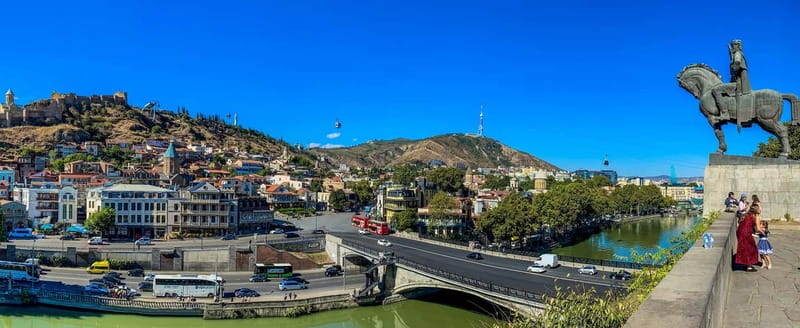
- Cable-car views from Rike Park: Ride toward the Mother of Georgia monument and look across Tbilisi from above.
- A strong Old Tbilisi route: See Metekhi, three historic churches, the Clock Tower, Shardeni Street, the sulfur baths, and Leghvtakhevi Waterfall.
- Local food included: Stop at a bakery for traditional Georgian pie and lemonade, with wine tasting sometimes included but not guaranteed.
- Good first-day orientation: The route connects the old city with Europe Square, Rike Park, and the Bridge of Peace.
- Story-led sightseeing: Guides such as Anna, Nene, Niko, Tako, and Beka have been praised for clear explanations, local stories, and helpful answers.
- A real walking tour: Wear proper shoes and prepare for uneven paving, hills, weather, and several hours on your feet.
Why this tour works as a first look at Tbilisi
At $19 per person, this is an unusually full introduction to central Tbilisi. The price covers a certified English-speaking guide, entrance fees, the cable-car ride, a traditional Georgian pie, lemonade, and online support. You are not simply paying for a list of photo stops. You are paying for a route that joins the city’s main quarters in a sensible order.
I like the way the tour begins at Avlabari Metro Station and ends at Meidan Bazar. You start on the eastern side of the old center, cross through the modern riverfront, rise above the city, then work your way through the old streets toward the sulfur baths and waterfall. That gives you a useful mental map for later wandering on your own.
Your guide makes a big difference. Different departures have been led by guides including Anna, Nene, Niko, Tako, Beka, Nini, Soso, and others. The strongest feedback focuses on guides who explain clearly, tell local stories, answer questions, and keep the group moving without rushing. One guide has even been praised for timing the route so the group could see the Clock Tower puppet show.
This is a group tour, so the experience will not be as private or flexible as a one-on-one guide. Still, the route is planned tightly enough to cover a great deal without turning into a dull march from one monument to the next.
More City Highlights Walking Tours in the world:
- Historic Charleston Guided Sightseeing Walking Tour
★ 5.0 · 6,216 reviews - Dublin Highlights and Hidden Gems Guided Walking Tour
★ 5.0 · 6,020 reviews - Vienna: Guided Walking Tour of City Center Highlights
★ 4.7 · 4,989 reviews
Starting at Avlabari and meeting King Vakhtang
Meet at Avlabari Metro Station at 9:45 AM. Look for the representative holding an orange flag in front of the entrance. This is a practical meeting point, especially if you are staying near central Tbilisi and want an easy start by metro.
The first major stop is Metekhi St. Virgin Church, usually given about 15 minutes. The church sits above the Mtkvari River, so you get an immediate sense of Tbilisi’s steep setting and its long connection to the river crossing below. The stop includes sightseeing, a guided explanation, and time for photographs.
Nearby, the statue of King Vakhtang Gorgasali receives a shorter visit. Vakhtang is closely tied to the traditional foundation story of Tbilisi, and your guide uses this part of the route to explain how the capital developed around hot springs, river crossings, and defensive heights.
Do not expect a long church service or an extended museum visit. The tour uses short stops to build a broad picture. If you want quiet time inside every church, you may find the schedule brisk.
Europe Square, Rike Park, and the Bridge of Peace
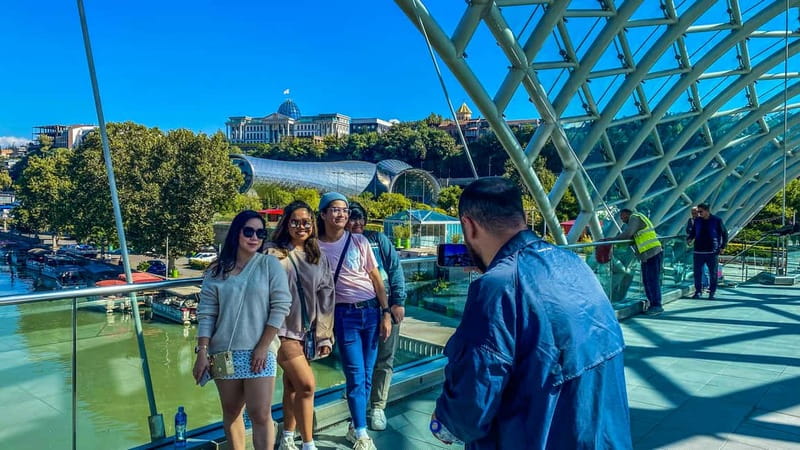
The route then moves to Europe Square and Rike Park. These stops show you a newer face of Tbilisi, with open public spaces and modern urban design beside the old riverfront.
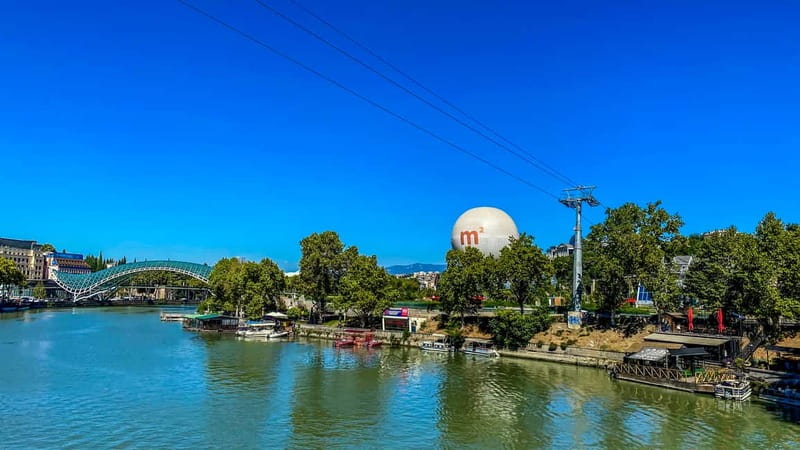
The Bridge of Peace is one of the city’s most recognizable modern structures. Your guide explains its place in present-day Tbilisi, while the walk across gives you views back toward the older districts. Rike Park is also where the cable car begins, so the route flows naturally rather than sending you back and forth across town.
These first modern stops matter because Tbilisi is not only an old city preserved behind church walls. You see a capital still changing, with contemporary public spaces placed beside ancient neighborhoods. That contrast is one of the most useful themes of the tour.
Riding up to the Mother of Georgia

The cable-car ride is one of the strongest parts of the day. It takes you from Rike Park toward the Mother of Georgia monument, giving you a quick aerial view of the river, rooftops, hills, and old center.
At the top, the Mother of Georgia stop lasts about 10 minutes. The monument is a familiar symbol of Georgian identity, often understood through the contrast between hospitality and defense. Your guide can put the statue into the wider story of Georgia and Tbilisi, while you get time for photographs.
The view is the point here. From above, the city’s layout becomes much easier to understand. You can see why the old quarters cling to hills and ravines, and why Narikala Fortress mattered for defense. The tour highlights Narikala in its overview, although the listed stop is focused on the Mother of Georgia area rather than a long fortress visit.
Wind is the main practical warning. The cable cars do not operate in windy weather. The tour still runs in all weather conditions, so on a bad-weather day the route may continue without this part.
More walks with a guide around the world:
- Magical London: Harry Potter Guided Walking Tour
★ 4.7 · 22,044 reviews - History and Hauntings of Salem Guided Walking Tour
★ 5.0 · 14,564 reviews - Amsterdam Anne Frank: Small-Group Walking Tour & Local Guide
★ 4.8 · 12,789 reviews - Edinburgh: Harry Potter Magical Guided Walking Tour
★ 4.8 · 11,944 reviews
Three churches and Tbilisi’s oldest streets
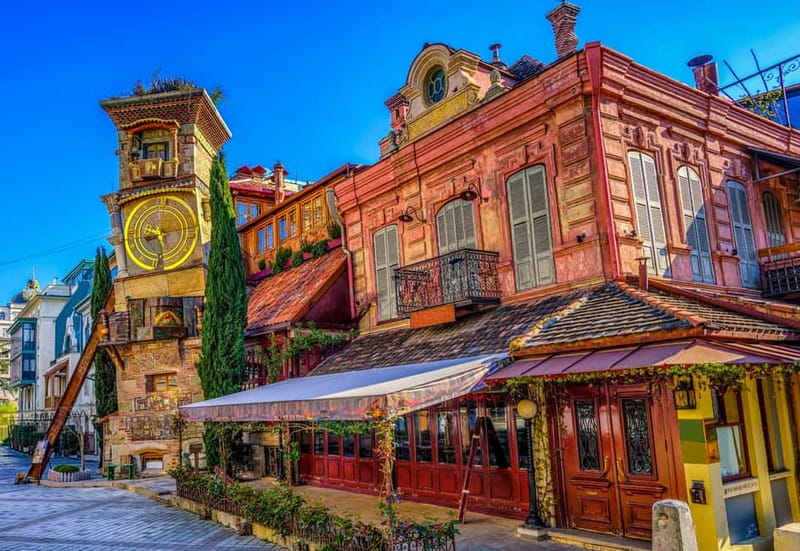
After returning toward the center, the tour takes you through several important religious sites. The Patriarchate of Georgia receives a brief guided stop, followed by Anchiskhati Basilica, generally visited for around 10 minutes.
Anchiskhati is especially valuable for anyone trying to understand the age of Tbilisi’s old center. The setting feels very different from the open modern spaces around Rike Park. Narrow streets, old walls, and compact church interiors make the city’s past feel close at hand.
The Clock Tower is next, with about 10 minutes for photographs and explanation. Its playful appearance makes it a welcome change from the solemn churches. If the timing works, you may catch the small puppet show associated with the tower. The route has been timed for this by some guides, but it should not be treated as guaranteed.
Sioni Cathedral follows. This is another major religious landmark in the old center, and the guide uses it to explain Georgian religious and cultural traditions. The three church visits give the tour more substance than a simple architecture walk, but visitors should dress respectfully and follow any instructions given at the sites.
A bakery stop with Georgian pie and lemonade
The bakery break is one of the tour’s best practical touches. You receive a traditional Georgian pie and lemonade, with about 20 minutes for the stop. Several food descriptions from the experience point to savory baked items, including bean and mushroom fillings, khachapuri, and a large local pastry from a long-established bakery.
The exact item may vary, so do not book this expecting a full restaurant lunch. It is a generous snack or light meal, not a long sit-down feast. Still, it gives you a quick taste of everyday Georgian food and a chance to rest before the second half of the walk.
I also like that the food is tied to a local bakery rather than presented as a polished tourist tasting. One guide has been praised for buying food for the group and sharing it picnic-style in a park. Wine tasting has also appeared on some versions of the experience, sometimes involving two wines, but wine is not included in the formal list of core inclusions. Confirm this if wine is important to you.
Tamada, Shardeni Street, and the sulfur baths
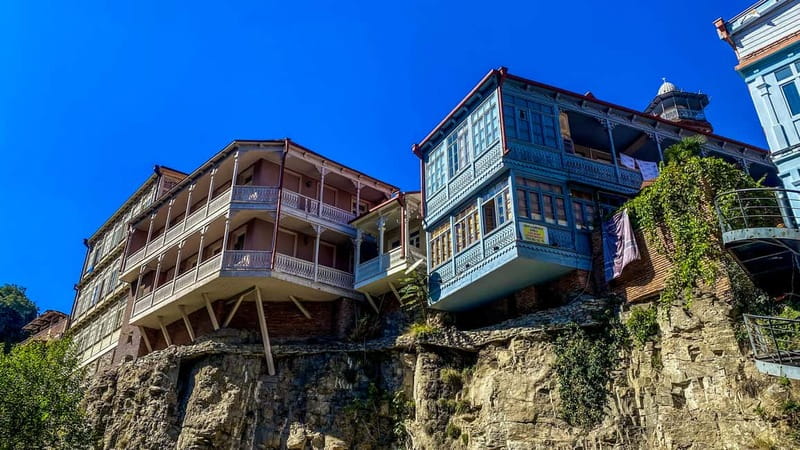
The Tamada Sculpture introduces a figure central to Georgian dining culture. Tamada means toastmaster, and this short stop gives your guide a natural opening to discuss Georgian hospitality, food, wine, and the social importance of shared toasts.
From there, you walk along Jan Shardeni Street. It is one of the old center’s more polished and popular lanes, with restaurants, bars, and shops. The short walk helps connect the historic monuments to the social side of modern Tbilisi.
Then comes Abanotubani, the sulfur baths district. This is not just another old quarter. The hot springs helped shape the city’s identity and its traditional origin story. You see the distinctive bathhouse roofs and hear how the springs fit into Tbilisi’s past.
The stop is brief, about five minutes, so you will not have time for a bath during this tour. If you plan to book a private sulfur bath later, use this visit to note the district and ask your guide for practical suggestions.
The Bridge of Love and Leghvtakhevi Waterfall
The route continues through the Bridge of Love toward Leghvtakhevi Gorge. This section feels more enclosed and atmospheric than the broad spaces around the river. The gorge cuts into the old city, creating a short walk that ends at Leghvtakhevi Waterfall.
The waterfall is a photogenic finish, especially after the stone streets and bathhouses. You get about five minutes at the listed stop, so think of it as a scenic pause rather than a long nature walk. The route also includes views into the gorge and time to take photographs.
The final stop is Meidan Bazar. This is a useful place to finish because you are already in the heart of Old Tbilisi, close to food, shopping, and the sulfur bath district. You can continue exploring on foot after the guide leaves, or use the location as a starting point for a later meal.
How difficult is the walking?
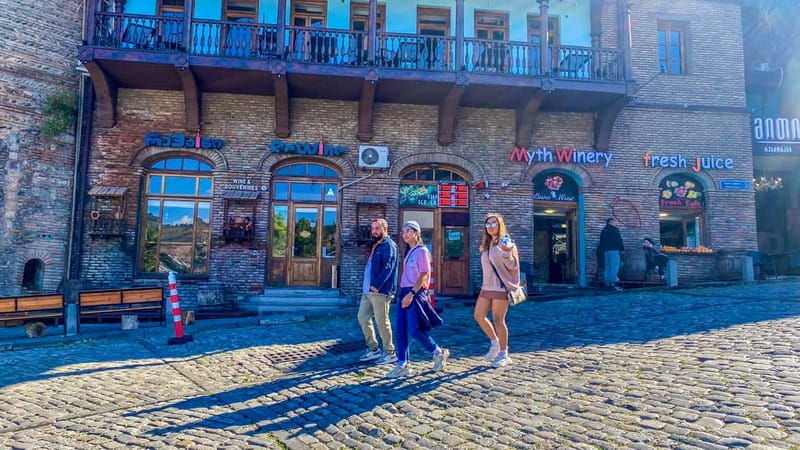
The tour is described as a walking experience, and you should take that literally. You will cross cobbled streets, walk between several districts, handle some hills, and spend four hours moving between outdoor and indoor stops.
Comfortable shoes are essential. In warm weather, bring water and wear clothing suited to the conditions. One summer experience became harder in temperatures around 33 degrees Celsius, even though the pace remained manageable. The tour runs in all weather, so a light rain layer or sun protection is sensible.
The activity is not suitable for children under five, pregnant women, or wheelchair users. The uneven historic streets and changes in elevation are the main concerns. Children aged five and over can join, but parents should decide if they are comfortable with the distance and pace.
What the $19 price really gets you
The price is the clearest strength. At $19, you receive four hours with a certified guide, a cable-car ride, entrance fees, and food and lemonade. Even if you only value the transport and the guide, the cost is low for a route that covers this many major sights.
The value is highest if you are new to Tbilisi, short on time, or arriving without a clear sense of the city’s layout. You get the old center, riverfront, hilltop view, churches, food, and waterfall in one morning.
The value is lower if you dislike group schedules or already know central Tbilisi well. The short stops mean you will not study every monument at length. Independent walkers can move more slowly and return to the places that interest them most.
Free cancellation up to 24 hours before the activity and reserve-now, pay-later booking add useful flexibility. Still, check the starting time when booking, since availability can vary.
Who should book this Tbilisi walk?
I would choose this tour for a first day in Tbilisi. It gives you enough history to make later sightseeing more meaningful, while the cable car and bakery stop keep the morning varied.
It also suits solo visitors who want company, families with older children, and anyone who prefers a guide to explain the churches, monuments, and local customs. The international group setting can make the walk more social, and several guides have been praised for bringing strangers together.
You should think twice if you have limited mobility, dislike uneven pavement, or want a slow photographic tour. You should also confirm the wine tasting before booking if that is a deciding factor, since the main inclusions specify pie and lemonade, not wine.
Should you book the City Highlights Guided Walking Tour?
Yes, if you want a low-cost, well-packed first look at Tbilisi. The route covers the city’s essential old and modern sights, adds a fine hilltop view, and includes a useful taste of Georgian food. The strongest part is the guide-led context, especially with an energetic storyteller such as Anna, Nene, Niko, Tako, or Beka.
Book it early in your stay so you can use the route to plan the rest of your visit. Wear shoes made for cobbles, expect real walking, and keep your schedule flexible in case wind cancels the cable car. For $19, this is an efficient and genuinely useful orientation to Tbilisi.
FAQ
Where does the Tbilisi walking tour start?
The tour starts at Avlabari Metro Station. Meet at 9:45 AM in front of the entrance, where a representative will hold an orange flag.
Where does the tour finish?
The tour finishes at Meidan Bazar in the Old Tbilisi area.
How long does the tour last?
The tour lasts four hours. Check availability when booking for the exact starting time.
What language is the tour in?
The live tour guide speaks English.
Is the cable-car ride included?
Yes. The cable-car ride is included in the activity price. Cable cars may not operate during windy weather.
Is food included?
Yes. The tour includes a traditional Georgian pie and traditional Georgian lemonade. Wine tasting has appeared on some experiences, but it is not listed among the standard inclusions.
What should I wear or bring?
Bring comfortable shoes and clothing suited to the weather. The tour includes considerable walking on cobbled streets and operates in all weather conditions.
Can children join the tour?
Children aged five and older can join. The activity is not suitable for children under five.
Is the tour suitable for wheelchair users or pregnant women?
No. The activity is listed as unsuitable for wheelchair users and pregnant women, in part because of the walking route and uneven historic streets.
New walking tours around the world
- Niagara Falls, Canada: White Water Walk Entry Ticket★ 4.5 · 147 reviews
- NYC: Walking Tour with Local Guide and 30+ Top NYC Sights★ 4.5 · 248 reviews
- Zadar: Food Tasting & Old Town Walking Tour★ 5.0 · 94 reviews
- Niagara Falls: Walking Tour, Journey Behind Falls, & Cruise★ 4.8 · 773 reviews
- NYC: History of Slavery & Underground Railroad Walking Tour★ 4.7 · 87 reviews
- New York City’s Hell’s Kitchen: Walking Food Tour★ 4.8 · 200 reviews
- New York City: Gangsters and Ghosts 2-Hour Walking Tour★ 4.7 · 615 reviews
- New York City: Central Park Walking Tour★ 4.7 · 82 reviews
Tbilisi Walking Tours, side by side.

Tbilisi Walking Tour Including Cable Car and Traditional Bakery
Read our review →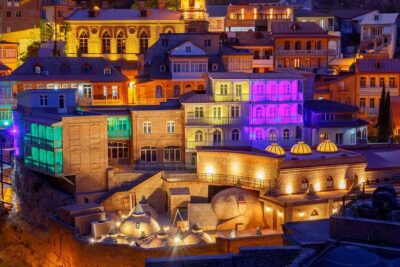
Tbilisi:Evening Walking & Talking Tour with Wine & Boat Ride
Read our review →Lists this walk sits on