
Review · PHILADELPHIA
The Constitutional Walking Tour of Philadelphia
Philadelphia’s founding story is packed into a surprisingly small area, and this 1.25-mile walking tour gives you a fast, useful introduction to it. In 75 minutes, you’ll pass Independence Hall, the Liberty Bell Center, Franklin Court, Carpenters’ Hall, Betsy Ross House, and more than 20 historic sites tied to the country’s early years.
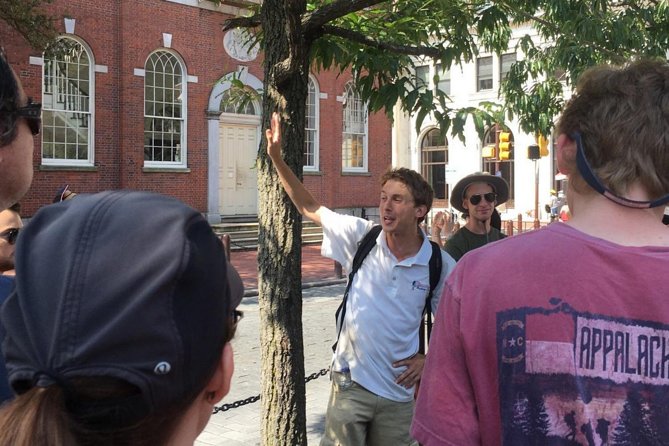
I like the tour’s clear geographic focus and its lively human guides. PJ, Connor, Will, Avi, John, Abby, and others have earned praise for telling stories, answering questions, and keeping the history approachable. I also like the price: $30 is fair for a guided overview that helps you decide which places deserve a longer visit.
The main catch is important: this is an outdoor orientation walk. You do not tour the interiors of Independence Hall or the Liberty Bell Center during the 75 minutes, and some people find the pace brisk or the guide difficult to hear near traffic. Bring good walking shoes, water, and realistic expectations.
Key points before you book
- See Philadelphia’s founding district on foot: The route covers the compact historic core around Independence National Historical Park.
- Expect more than 20 historic sites: The walk includes Independence Hall, the Liberty Bell Center, Franklin Court, Carpenters’ Hall, Betsy Ross House, and many others.
- Plan separate indoor visits: Admission fees are not included, and the tour does not take you inside the buildings.
- Guides make the difference: PJ, Connor, Will, Avi, John, Abby, and other guides bring different styles, from story-driven and energetic to quieter and more measured.
- Allow 75 minutes and about 1.25 miles: There are stops to catch your breath, but few places to sit.
- It runs in all weather: Dress for sun, cold, rain, or wind, and check in 15 minutes early outside the National Constitution Center.
Why this short Philadelphia walk works
The best reason to book this tour is simple: Philadelphia’s historic sights are easy to walk between, but not always easy to understand on your own. A building may look like another handsome old brick structure until someone explains that Congress met there, a major constitutional argument began there, or Benjamin Franklin lived nearby.
This tour gives you that framework. It moves through the area where the Declaration of Independence and United States Constitution were created, while connecting the famous landmarks with less familiar places. You’ll see the former homes of government, early financial institutions, meetinghouses, churches, libraries, military sites, and burial grounds.
The route is broad rather than deep. You stop for a few minutes at each location, hear the essential story, then continue. That makes it useful on a first visit, especially if you want to learn the shape of the district before choosing which buildings to enter later.
I would not book it expecting a full historical lecture or a slow architectural tour. With nearly 20 named stops in 75 minutes, the guide has to keep moving. The reward is range. You cover a lot of ground without spending a full morning on one site.
More walking tours around the USA:
- History and Hauntings of Salem Guided Walking Tour
★ 5.0 · 14,564 reviews - New Orleans Premier Ghost, Voodoo and Vampire Walking Tour
★ 4.5 · 12,856 reviews - Little Havana Food and Walking Tour in Miami
★ 5.0 · 8,882 reviews
Meeting the guide at the National Constitution Center
The tour begins outside the main entrance of the National Constitution Center at 525 Arch Street. Look for the three large stone benches directly outside. This matters because the museum itself is not the meeting point, and confusion here has caused at least one visitor to miss the guided walk.
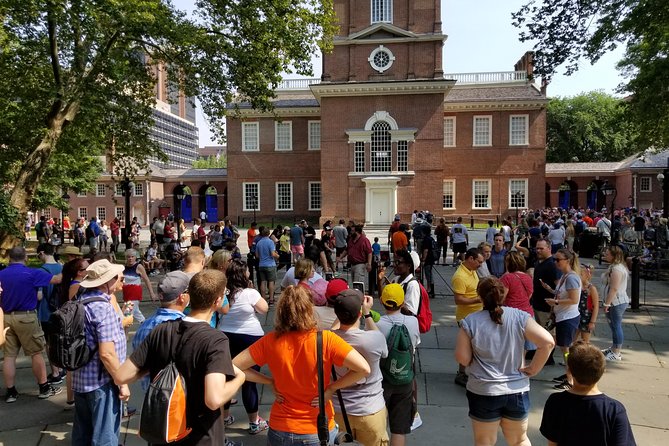
Check in 15 minutes before departure. The maximum group size is 40, which is large enough to feel like a group tour but still manageable when everyone gathers close to the guide. A smaller group can make questions and hearing easier, though street noise, wind, and traffic may still be a problem.
The opening stop is brief. You’ll get the tour introduction and a sense of the area before heading toward the early presidential sites.
From the President’s House to the Declaration House
The President’s House is an open-air memorial marking the location where George Washington and John Adams lived while Philadelphia served as the United States capital from 1790 to 1800. This is a useful reminder that Philadelphia was not only the birthplace of the nation, but also its working capital during the government’s earliest years.
The stop at Declaration House, also called the Graff House, points to the place where Thomas Jefferson lived while writing the Declaration of Independence. You should treat both locations as quick outdoor explanations, not full museum visits.
These first stops help establish the main theme of the walk: the nation’s founding happened in ordinary city blocks, homes, offices, halls, and churches. The grand meaning came later.
The Liberty Bell Center and Independence Hall
The Liberty Bell Center is one of the tour’s headline stops. You’ll see the building and hear about the bell as a symbol of American freedom, but the guided walk does not include an indoor visit or a close-up viewing through the center’s admission process.
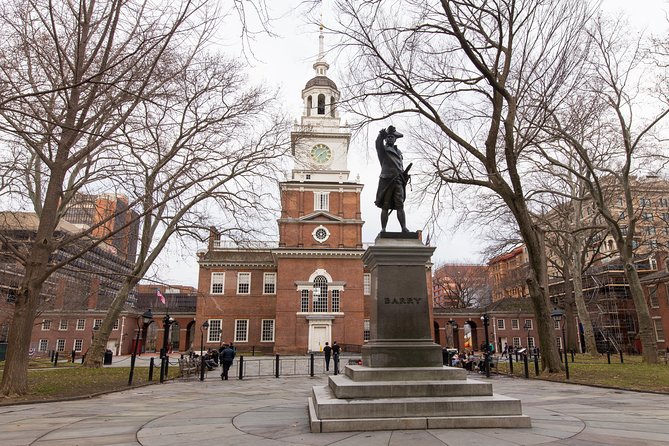
Independence Hall receives the same treatment. The building was constructed in 1732 as the Pennsylvania State House and later became the setting for the debates connected with American independence and the Constitution. You’ll view it from outside and learn why it matters.
This is the point where careful planning pays off. If you want to enter Independence Hall, you need to arrange that separately, and timed access is required. The Liberty Bell Center also involves its own security and admission process. Neither fits neatly into a 75-minute route that also covers the rest of the district.
I see this limitation as reasonable, but the tour description needs to be read carefully. The value is in the overview and explanation. The indoor visits come afterward, if you choose to add them.
Same streets, a different story:
- Chicago: Gangsters and Ghosts Walking Tour
★ 5.0 · 7,155 reviews - Boston: Freedom Trail History Small Group Walking Tour
★ 5.0 · 6,450 reviews - Historic Charleston Guided Sightseeing Walking Tour
★ 5.0 · 6,216 reviews - New Orleans Food Walking Tour of the French Quarter with Small-Group Option
★ 5.0 · 6,118 reviews
The former seat of American government
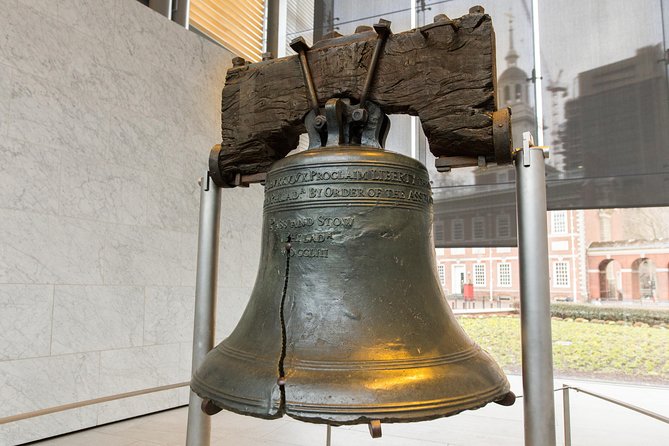
Congress Hall and Old City Hall form a compact lesson in the young federal government. Congress Hall was built between 1787 and 1789 as the Philadelphia County Courthouse and served as the United States Capitol from 1790 to 1800.
Old City Hall was once home to the United States Supreme Court. These stops show how close the early branches of government were to one another and how much of the country’s first national administration took place in Philadelphia.
You’ll also see The Signer, a statue inspired by George Clymer. It is a quick stop, but it adds a human figure to a route otherwise filled with institutions and famous buildings.
This section is especially helpful if you think of Independence Hall as the whole story. The nation’s early government depended on courthouses, meeting rooms, banks, libraries, and offices spread through the surrounding streets.
Libraries, philosophy, and the roots of public life
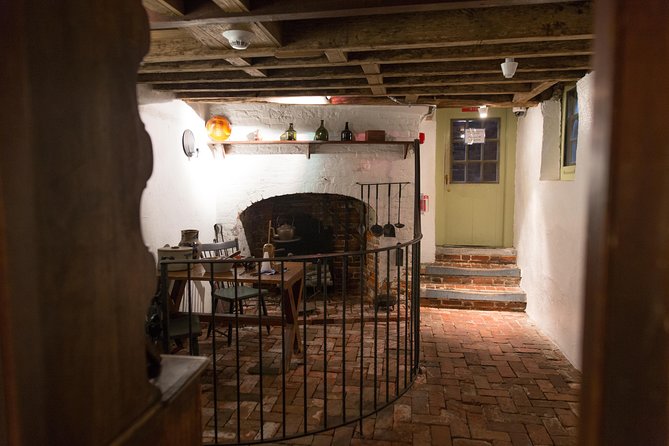
The American Philosophical Society Museum represents the country’s oldest scholarly society. The nearby Library Hall recalls the nation’s first public library and the former Library of Congress.
These sites broaden the tour beyond presidents and founding documents. Early Philadelphia was also a place for scientific study, debate, reading, and the exchange of ideas. The guide’s explanation is brief, but it helps connect Benjamin Franklin’s interests with the intellectual life of the city.
You will not have time to explore the museums during the walk. If you enjoy science, books, political thought, or early American civic life, note these locations and return later.
Banks, constitutional arguments, and Carpenters’ Hall
The Second Bank of the United States is now a portrait gallery, but its original role was financial and political. It was one of the country’s most important financial institutions, and its story leads naturally into the debates over federal power and the Constitution.
The First Bank of the United States provides another look at those arguments. Its creation sparked one of the early major constitutional disputes over the authority of the federal government.
Carpenters’ Hall is one of the route’s most interesting stops because it connects a trade organization with national politics. It is often linked with the formation of an American identity and was the meeting place of the First Continental Congress in 1774.
These stops work well together. You are not simply seeing old banks and a handsome hall. You are following the struggle to decide how the new nation would pay its bills, regulate itself, and define the powers of its government.
New Hall Military Museum and Franklin Court
New Hall Military Museum focuses on the role of the military in early United States history. It is a small but useful change of subject after the constitutional and financial sites.
Franklin Court is one of the tour’s longer stops, at about five minutes. This area recalls Benjamin Franklin’s home and includes the only Colonial-themed post office. Franklin’s house no longer survives in the usual sense, so the site asks you to think about the city through its layout and interpretation rather than one preserved room.
Franklin Court is also a good example of why an orientation tour can be useful. You may not have enough time to study every display, but you’ll know where to return if Franklin’s life interests you.
Christ Church, Betsy Ross House, and the Quaker meetinghouse
Christ Church has served as an active parish since 1695 and is often called the Nation’s Church. Its connection to early American leaders gives the stop a strong place in the route, but again, the walk is not an interior church tour.
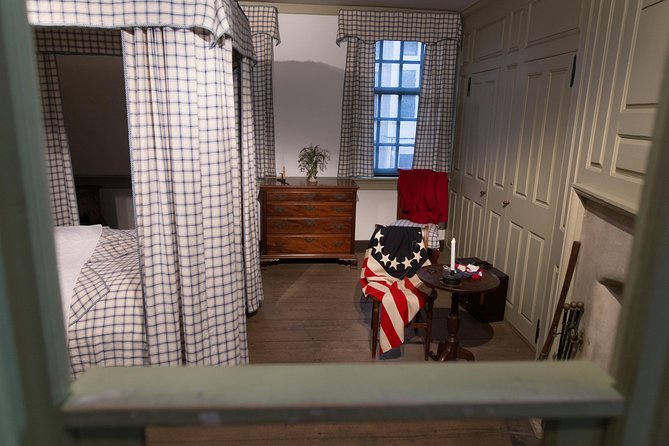
The Betsy Ross House is one of the most familiar names on the itinerary. The site is associated with the sewing of the first Stars and Stripes. The guide can give you the basic story and place it within the neighborhood, while a later visit lets you spend more time with the house itself.
Arch Street Meeting House introduces the Society of Friends, commonly known as Quakers. This stop adds a different religious and civic tradition to the tour and helps explain Philadelphia’s early identity as a city shaped by varied forms of worship and public life.
The buildings are close together, so the route keeps its momentum. You’ll see how religious, residential, and political spaces overlap in this part of Old Philadelphia.
Christ Church Burial Ground and Benjamin Franklin’s grave
The final stop is Christ Church Burial Ground, where Benjamin Franklin is buried. Franklin’s grave is one of the most recognizable points in the cemetery, and the site also connects the tour’s earlier Franklin stops with his final resting place.
The cemetery gives the ending a quieter tone. After a fast circuit of government buildings, banks, churches, and meeting halls, you finish with a reminder that the people behind the founding story were real citizens who lived and died in this neighborhood.
There is time for a short explanation, not a full cemetery visit. If you want to examine the graves or read the markers, plan to return separately.
What the guides do best
The strongest part of this experience is the guide’s ability to turn a string of buildings into a connected story. Connor has been praised for combining strong historical command with a friendly, nonpolitical presentation. PJ is described as attentive, open to questions, and especially good at helping a group stay engaged. Will brings enthusiasm and a clear delivery, while Avi uses stories and historical facts to keep the route moving.
The style can vary. One guide may perform more, while another may speak in a quieter or more textbook-like way. That is normal on a tour with several guides, but it means your experience can depend on who leads the group.
You should also stay near the guide. Traffic and wind can make it hard to hear, and some guides speak quickly. If you have a question, ask it early rather than waiting until the group has moved on.
Is $30 a good value?
At $30 per person, I consider this a fair price for a 75-minute guided introduction. You are paying for a live guide, route planning, historical context, and the convenience of seeing a large number of sites in one compact walk.
The value drops if you expect admission to Independence Hall, the Liberty Bell Center, or any other historic building. Those costs are separate, and the tour does not include food, drinks, or indoor access.
For a first afternoon in Philadelphia, the tour can save you time by showing you what deserves a return visit. If you already know the district well, or if you want detailed interpretation at only one or two sites, you may prefer to spend $30 on a longer admission-based visit instead.
Shoes, weather, timing, and comfort
Wear comfortable walking shoes. The route is only about 1.25 miles, but it moves briskly and includes many standing stops. There are few places to sit, so anyone who needs regular rest should plan accordingly.
Bring water, especially on a sunny day. Lightweight clothing and a hat help in warm weather, while a rain jacket and warm layers matter in colder months. The tour operates rain or shine, and recent departures have gone ahead in both rain and temperatures in the low 30s.
Most people can participate, but the tour is still a walking activity. The group may pause often for explanations, yet you should not treat it as a leisurely seated sightseeing experience.
Free cancellation is available if you cancel at least 24 hours before the start time. Changes or cancellations inside that window are not refunded.
Who should book this walk?
I would choose this tour for a first visit, families with older children, couples who want a historical introduction, and anyone who prefers learning a city by walking through it. It also suits locals who want a quick refresher or a way to organize a future visit.
History fans should see it as a starting point. You will get names, locations, and connections, but not the time needed for detailed debate or close study.
If your top priority is going inside Independence Hall or seeing the Liberty Bell up close, book those separately and use this tour before or after. The walk helps you understand the district, but it does not replace indoor admission.
Should you book the Constitutional Walking Tour?
Book it if you want a lively overview of Philadelphia’s historic center, prefer a human guide to an audio app, and are happy to see the buildings from outside. The route covers an impressive number of important locations for $30, and strong guides such as Connor, PJ, Will, and Avi can make the short format feel worthwhile.
Skip it if you want a slow, detailed visit to the interiors, need frequent sitting breaks, or dislike brisk group walks. For most first-time visitors, though, it is a practical way to get oriented. Just arrive at the National Constitution Center’s outside benches, dress for the weather, and reserve separate time for the sites you want to enter.
FAQ
How long is the Constitutional Walking Tour of Philadelphia?
The tour lasts approximately 1 hour and 15 minutes.
How far does the tour walk?
The route covers about 1.25 miles through Philadelphia’s historic center.
Where does the tour begin?
It begins outside the main entrance of the National Constitution Center at 525 Arch Street, Philadelphia. Look for the three large stone benches.
Where does the tour end?
The activity ends back at the meeting point outside the National Constitution Center.
Does the tour go inside Independence Hall?
No. The tour provides an outdoor overview of Independence Hall. Indoor admission must be arranged separately, and Independence Hall requires timed tickets.
Can I go inside the Liberty Bell Center during the tour?
No. The tour stops at the Liberty Bell Center but does not include indoor admission or the security process required to enter.
Are admission tickets included?
No. Admission to historic sites is not included. Fees vary by site, and you can visit selected locations separately after the walk.
Does the tour operate in bad weather?
Yes. The tour operates rain or shine, so dress for the conditions and bring suitable footwear.
How far in advance can I cancel for a full refund?
You must cancel at least 24 hours before the experience’s start time for a full refund. Cancellations or changes made less than 24 hours before the start time are not refunded.
New walking tours around the USA
- NYC: Walking Tour with Local Guide and 30+ Top NYC Sights★ 4.5 · 248 reviews
- New York City’s Hell’s Kitchen: Walking Food Tour★ 4.8 · 200 reviews
- New York City: Gangsters and Ghosts 2-Hour Walking Tour★ 4.7 · 615 reviews
- NYC: History of Slavery & Underground Railroad Walking Tour★ 4.7 · 87 reviews
- New York City: Central Park Walking Tour★ 4.7 · 82 reviews
- NYC: Brooklyn Bridge and DUMBO Guided Walking Tour★ 4.8 · 93 reviews
- New Orleans: French Quarter Ghost and Legends Walking Tour★ 4.3 · 129 reviews
- New Orleans: Witches Coven Garden District Walking Tour★ 4.9 · 113 reviews
Philadelphia Walking Tours, side by side.
Philadelphia Old City Historic Walking Tour with 10+ Top Sites
Read our review →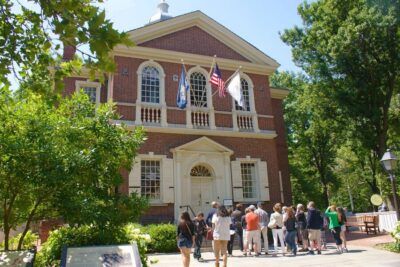
Philadelphia: History, Highlights & Revolution Walking Tour
Read our review →
Philadelphia: Revolutionary Walk Through Historic Old City
Read our review →Lists this walk sits on