Review · AMSTERDAM
Amsterdam: Cultural Highlights Walking Tour
Amsterdam’s story comes into focus quickly on this two-hour walk through central Amsterdam. You begin at the National Monument on Dam Square, then move through royal landmarks, old merchant streets, canal houses, memorials, and Begijnhof. It is a useful first look at a city that can otherwise feel like a maze of bridges and waterways.
I like the mix of history and present-day life. You hear about medieval merchants, the Dutch Golden Era, World War II, colonialism, Amsterdam’s multicultural character, and local food in one compact outing. I also like the practical advice, from where to find bitterballen to which districts are worth exploring by bike. The main limitation is time: two hours gives you a broad introduction, not a close look at the interiors or full stories of each landmark.
Key points at a glance

- Dam Square sets the scene: Learn how Amsterdam grew from a settlement beside the Amstel River and see the Royal Palace, Nieuwe Kerk, and National Monument.
- The route covers more than postcard views: Expect memorials, the former post office, the Beurs van Berlage, canal houses, and the narrow streets of De Negen Straatjes.
- History stays connected to modern life: The guide discusses war, colonialism, tolerance, migration, architecture, food, and local customs.
- Begijnhof is the quiet change of pace: After busy central streets, this enclosed courtyard offers a calmer look at Amsterdam’s past.
- The guides add personality: Names praised for clear explanations and lively storytelling include Francesco, Alex, Deborah, Stephanie, Lili, Josh, and Santina.
- The tour is easy to fit into a first day: It is suitable for children, wheelchair accessible, and includes no paid admissions.
Why this is a useful first look at Amsterdam
A good orientation walk should do more than point at attractive buildings. It should help you understand why the city is shaped the way it is, where its major stories happened, and what to do next. This tour aims at that larger picture.
The route stays in central Amsterdam, so you get a strong introduction without spending time on transport. You walk from Dam Square through streets and squares that connect the city’s royal, commercial, religious, artistic, and political past. The guide also brings the story into the present with comments on food, neighborhoods, culture, and current city life.
The experience is especially helpful if Amsterdam is your first stop in the Netherlands. You can use the final recommendations to plan independent time by bike, choose food to try, or decide which parts of the center deserve a return visit. I would take it early in your stay, since the advice has more value before you have already made all your plans.
The group size can vary. Some departures have been very small, including groups of three or four, while private groups are also available. A small group makes it easier to ask questions and hear the guide clearly. You should still expect a shared walking tour unless you specifically book the private option.
More City Highlights Walking Tours in the Netherlands
- Amsterdam Highlights Walking Tour: Small Group Experience
★ 5.0 · 1,132 reviews - Amsterdam: Highlights & History Walking Tour
★ 4.8 · 266 reviews - Amsterdam: Iconic Canals & Historic Sights Walking Tour
★ 4.5 · 90 reviews
Dam Square, the Royal Palace, and Amsterdam’s beginnings
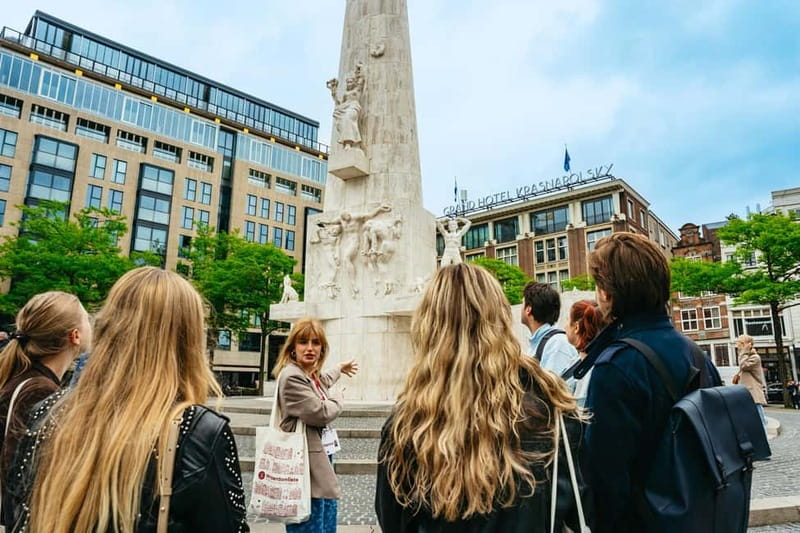
Meet on the steps of the National Monument, the large white pillar on Dam Square. Your guide wears a red name tag around the neck, so look carefully before setting off. One practical point: a past participant found the red lanyard hard to distinguish from those used by other guides, so allow a little time to identify the right person.
Dam Square is the natural starting point because it tells the basic story of Amsterdam’s growth. The city’s name comes from the dam built on the Amstel River, and this open square became a central place for trade and civic life. You spend about 15 minutes here, enough to orient yourself and take photographs without turning the stop into a long lecture.
The Royal Palace is next, with around 10 minutes of explanation. You see the building from outside and hear about its role in Amsterdam’s civic and royal story. Since there is no admission included or required during this walk, you will not go inside as part of the tour. If the palace interiors interest you, treat this stop as a useful preview for a separate visit.
Nearby, the New Church, or Nieuwe Kerk, adds another layer to the square. The former main post office, now associated with Magna Plaza, shows how central buildings have found new uses over time. These stops are close together, so the tour gives you several landmarks without making you cross the city.
Commercial Amsterdam at Beurs van Berlage and Magna Plaza
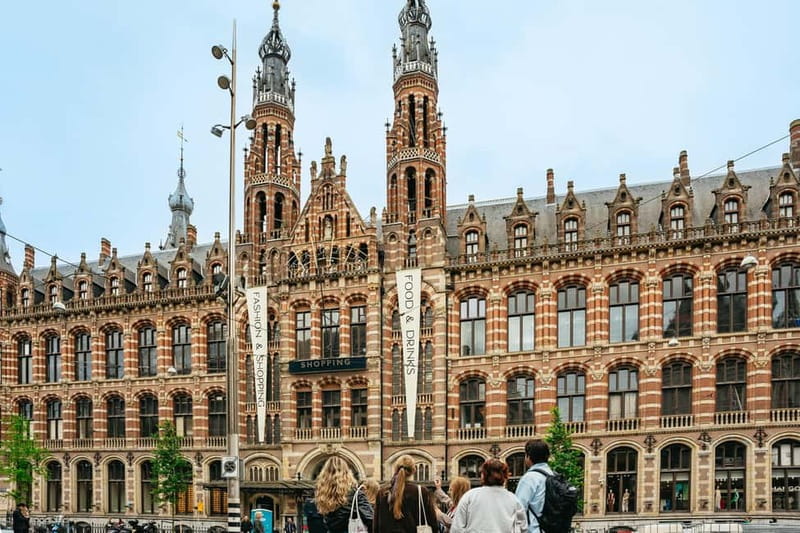
The Beurs van Berlage provides a look at Amsterdam as a trading city. The guide connects the building and surrounding streets to merchants, salesmen, and ordinary people who lived and worked here in earlier centuries. You get about 15 minutes at this stop, which makes it one of the more substantial early sections of the walk.
That focus matters because Amsterdam can look like a collection of elegant canal houses if you only follow the prettiest streets. The commercial story explains why the city became prosperous and why so much of its architecture was built for business, storage, trade, and urban living.
The stop at Magna Plaza is shorter, around five minutes. It is a quick photo and orientation point rather than a full visit. The building is useful for seeing how a former civic or postal structure can become part of the modern shopping center. If shopping is not on your list, you will not lose much by keeping this stop brief.
Canal houses, Multatuli, and the city’s complicated past
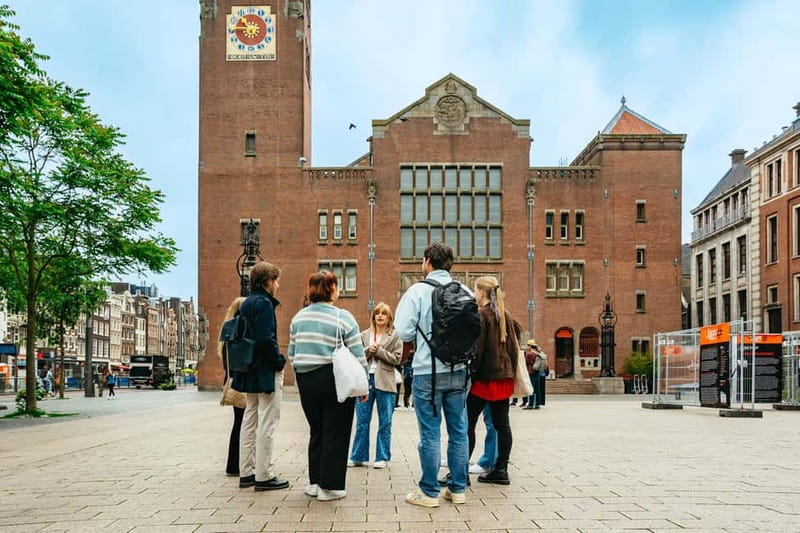
The route then moves toward the Torensluis Bridge and the Multatuli statue. Here the tour shifts from buildings to ideas. You hear about the colonial era and the writer Eduard Douwes Dekker, known by the pen name Multatuli. The statue gives the guide a fixed point for discussing how Amsterdam’s prosperity was linked to events and power beyond the Netherlands.
This is one of the more valuable parts of the walk because it avoids presenting the city as only picturesque. Amsterdam’s canals, merchant wealth, and Golden Era art did not develop in isolation. A short stop cannot cover every detail, but it can point you toward the questions worth asking as you explore museums and historic sites later.
The guide also points out one of Amsterdam’s smallest houses. That detail is easy to remember and helps explain how valuable space became in the old center. Canal-side homes can look grand from the street, but their narrow fronts, tall proportions, and varied designs reflect practical limits and the city’s long history of building beside water.
You stroll past romantic canal houses and cross Spui Square on the way to Begijnhof. This section is scenic, but it is not just a photo walk. The guide discusses architectural styles that were popular in the past and explains how the buildings fit into everyday city life.
More Cultural Walking Tours around Amsterdam:
- Anne Frank Walking Tour Amsterdam Including Jewish Cultural Quarter
★ 5.0 · 1,879 reviews - Amsterdam: Food and Culture Walking Tour with Tastings
★ 4.9 · 838 reviews - Savannah First Squares Culinary & Cultural Walking Food Tour
★ 5.0 · 3,229 reviews - Tokyo Tsukiji Fish Market Food and Culture Walking Tour
★ 5.0 · 3,184 reviews
War, memory, and Amsterdam’s changing identity
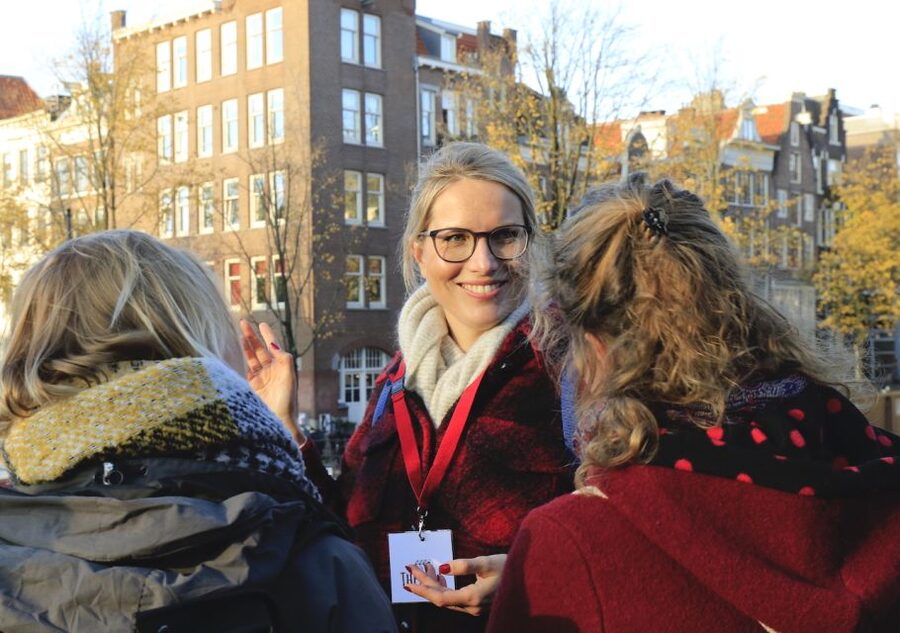
The Anne Frank Monument and Westerkerk bring World War II into the walk. These stops connect Amsterdam’s streets to the experience of occupation, persecution, and loss. The guide also explains how the war changed the people of the city, giving you context before or after a separate visit to the Anne Frank House.
The Anne Frank Monument is listed as a roughly 15-minute stop. That allows space for explanation and questions, but it is still important to keep your expectations in check. This is not a substitute for the Anne Frank House, and no museum admission is part of the walk. Instead, it helps place the subject within Amsterdam’s wider wartime story.
Westerkerk receives a shorter, five-minute stop. Its location near the Anne Frank House makes it a useful landmark for understanding this part of the city. You see the church from the outside and hear how religious buildings and surrounding streets fit into the center’s history.
The Homomonument adds a modern memorial and a clear reminder of Amsterdam’s reputation for tolerance. The guide discusses the city’s cultural makeup and what it feels like to live in a multicultural place today. This section is particularly useful if you want more than old buildings and dates. It shows how Amsterdam continues to debate identity, inclusion, memory, and public space.
Guides bring different personalities to this material. Francesco is praised for clear explanations and enthusiasm about Amsterdam’s past. Deborah is described as professional and willing to take questions. Lili has been singled out for personalizing the walk, while Stephanie and Santina are noted for friendly delivery and a good sense of humor. Your guide will vary, but the strongest pattern is an emphasis on storytelling rather than a dry list of facts.
De Negen Straatjes and the quieter Begijnhof
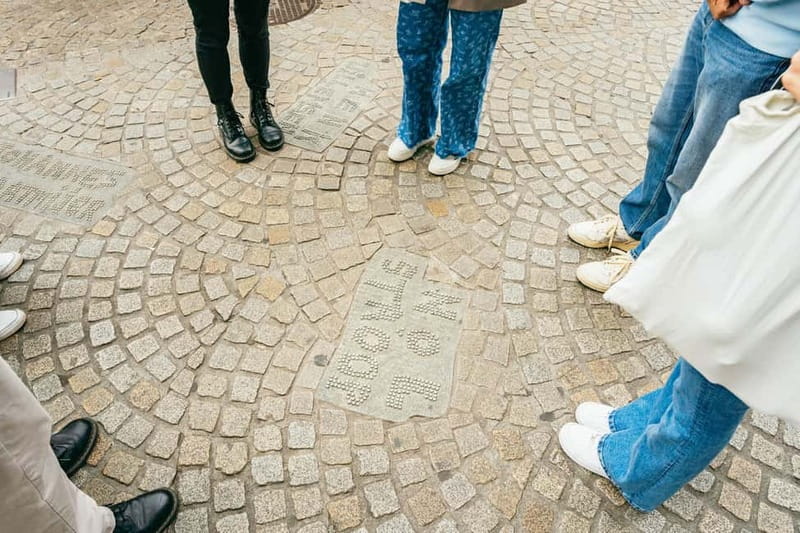
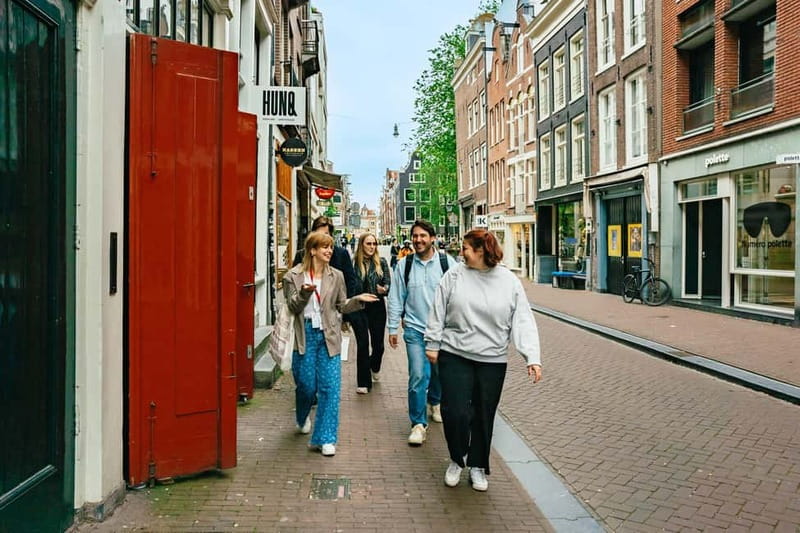
De Negen Straatjes, or Nine Streets, is a compact area of small streets and canals known for independent shops, cafes, and attractive views. The tour gives this stop about five minutes, so you will not have time to browse properly. Think of it as an introduction and a prompt to return on your own.
This is where the guide’s practical advice becomes useful. You can ask about shopping, food, and which central areas are best explored slowly. The tour also includes suggestions for districts to discover by bike, which can help you move beyond the compact center later in your stay.
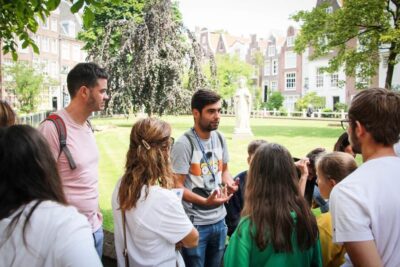
Begijnhof is the longest stop in this part of the route, with about 15 minutes for a guided visit and photographs. The enclosed courtyard feels notably calmer than the main streets. It offers a glimpse into a historic community setting and gives the walk a welcome pause after the traffic, shops, and city noise.
You should treat Begijnhof respectfully. It remains a place with residents, not simply a scenic courtyard made for group photographs. A guide can help you understand its purpose and history while reminding you how to behave in a shared living space.
Returning along the Amstel to the National Monument
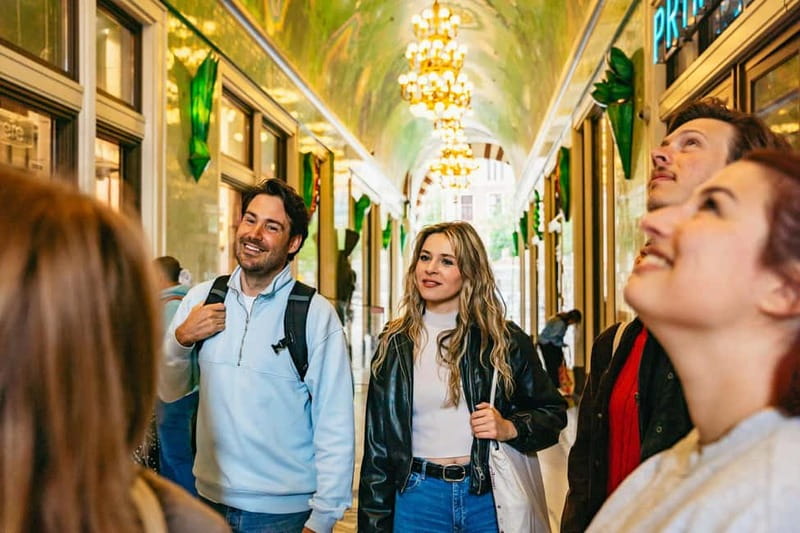
The route returns toward Dam Square and the Amstel River, the waterway that gives Amsterdam its name. This final stretch ties the city’s geography back to its origins. You have seen the commercial center, the canals, and the historic squares, so the river now makes the city’s development easier to picture.
The tour finishes at the National Monument, where it began. The monument was first built to remember Dutch victims of World War II and now serves as a memorial to people who died in wars worldwide. Ending here gives the walk a thoughtful final note rather than simply dropping you beside a shopping street.
The return to the starting point is practical. You can continue to the Royal Palace, head toward a museum, find lunch, or use the guide’s food suggestions immediately. One useful tip mentioned during the experience is to try bitterballen, a Dutch snack often recommended as part of getting to know local food.
How much walking and how hard is it?
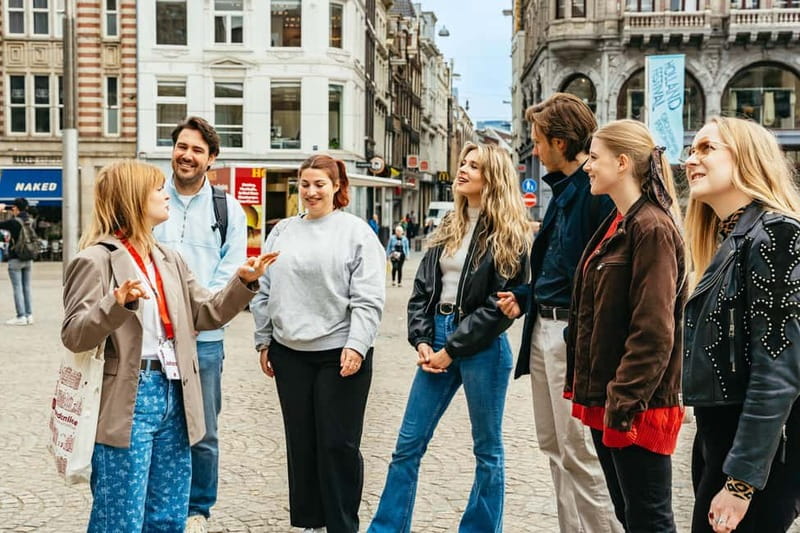
The activity lasts two hours, with frequent stops for photos and explanations. The pace is generally moderate, and the repeated pauses make it easier than a nonstop city march. One participant specifically found the walking lighter than expected, while another noted that the stops made the two hours comfortable even after a long day.
You still need comfortable shoes. Amsterdam’s center includes paved streets, bridges, and busy public areas, and weather can change quickly. Bring water and an umbrella. Rain does not cancel the cultural value of the walk, but it can make listening and taking photographs less pleasant.
The tour is suitable for children and is wheelchair accessible. The supplied details do not explain the exact surface conditions or route adjustments, so if you use a wheelchair, it is sensible to confirm current access arrangements when booking.
English, German, and Italian are available. The clarity of the guide matters more than the language list alone, especially in a busy street setting. A past participant found a strong German accent slightly difficult to follow, though the walk remained enjoyable. If language comfort is important for your group, select your preferred language carefully.
Is $30 a fair price?
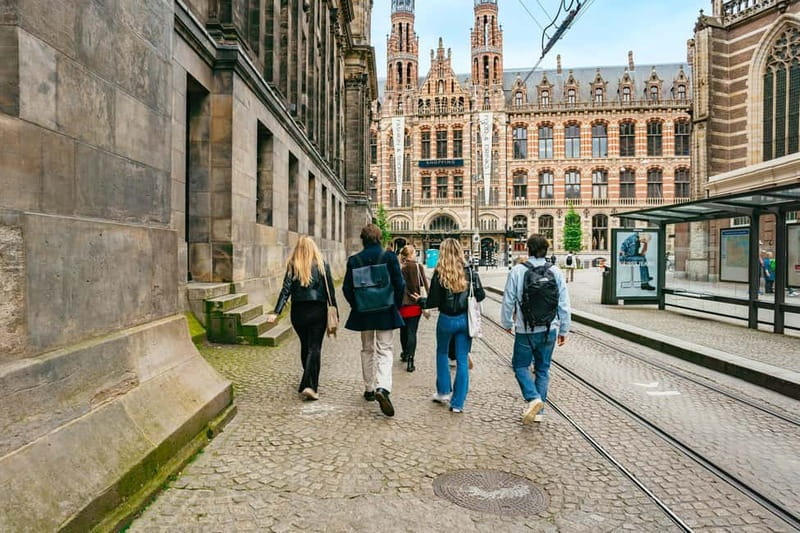
At $30 per person, this is a reasonable price for a live, two-hour introduction in central Amsterdam. You are paying for a guide, structure, local recommendations, and the chance to ask questions, not for admission to museums or palace interiors. Since all stops on the route can be visited for free during the walk, there are no surprise entrance costs attached to the basic experience.
The value is strongest if you are new to Amsterdam and want a clear starting point. A good guide can save you from wandering past important places without understanding them, and the advice about food and neighborhoods may shape the rest of your stay.
The price is less compelling if you already know the center well or prefer to explore at your own pace. You also need a separate budget for museums, food, and any indoor attractions you decide to visit later.
Who should book this walk?
I would recommend it to first-time visitors, families, short-stay guests, and anyone who wants history explained in plain language. It is also a good choice for people who enjoy asking questions, since several guides have been praised for adapting the walk to the group and giving tailored suggestions.
It suits curious visitors who want Amsterdam’s difficult subjects included alongside its handsome canals. The discussion of World War II, colonialism, multicultural life, and the Homomonument gives the tour more substance than a simple landmark circuit.
You may want something else if your priority is a museum interior, the Anne Frank House, a canal cruise, or a specialized architectural tour. This walk gives you a broad framework. You will need separate visits for detailed study.
Should you book the Amsterdam Cultural Highlights Walking Tour?
Book it if you want an affordable, central orientation with a guide who can connect Amsterdam’s buildings to its history and current life. The strongest reasons are the varied route, the frequent stops, the practical local tips, and the chance of a small group with plenty of questions.
Skip it if you dislike guided walks or already have a firm understanding of central Amsterdam. For everyone else, especially on the first day or two, the $30 cost buys a useful map in your head and a better sense of what deserves your time next.
FAQ
Where does the Amsterdam Cultural Highlights Walking Tour start?
Meet on the stairs of the National Monument in Dam Square. The monument is a large white pillar or obelisk.
How do I identify the guide?
The guide wears a red name tag around their neck. Look carefully because other guides may use similar lanyards.
How long does the tour last?
The walking tour lasts two hours.
Which languages are available?
The tour is available in English, German, and Italian.
Is the tour wheelchair accessible?
Yes, the activity is listed as wheelchair accessible.
Is the tour suitable for children?
Yes, children can join the tour.
Are admission fees included?
There are no admission fees during the walk. The listed sights can be visited for free as part of the tour route.
Is food included?
No. Food and drinks are not included.
Can I book a private group?
Yes, a private group option is available.
What should I bring?
Bring comfortable shoes, water, and an umbrella. You may also want protection from changing weather while walking between stops.
More City Highlights Walking Tours in Amsterdam
- Ho Chi Minh City Street Food Tour & Sightseeing By Motorbike
★ 5.0 · 9,413 reviews - Historic Charleston Guided Sightseeing Walking Tour
★ 5.0 · 6,216 reviews - Dublin Highlights and Hidden Gems Guided Walking Tour
★ 5.0 · 6,020 reviews - Vienna: Guided Walking Tour of City Center Highlights
★ 4.7 · 4,989 reviews
New walking tours around Amsterdam
- Amsterdam: Haunted History and Ghost Walking Tour★ 4.5 · 488 reviews
- Amsterdam: Food and Culture Walking Tour with Tastings★ 4.9 · 838 reviews
- Amsterdam: Small-group Guided Walking Tour (French/English)★ 5.0 · 289 reviews
- Amsterdam: Walking Tour, Jewish Museum & Synagogue Tickets★ 4.3 · 110 reviews
- Amsterdam: Treasure Hunt Walking Tour “A Secret Sender”★ 4.7 · 71 reviews
- Amsterdam: Sex, Drugs, and Freedom Walking Tour★ 4.6 · 74 reviews
- Amsterdam Small-Group Walking Tour★ 4.7 · 995 reviews
- Amsterdam: Jordaan District Local Food Walking Tour★ 4.8 · 311 reviews
Amsterdam Walking Tours, side by side.
Amsterdam Anne Frank: Small-Group Walking Tour & Local Guide
Read our review →
Anne Frank’s Story – Guided Walking Tour through Amsterdam
Read our review →
Absolutely Amsterdam – the Essential Introductory Walking Tour
Read our review →
Amsterdam: Anne Frank Guided Small Group Walking Tour
Read our review →
Anne Frank Walking Tour Amsterdam Including Jewish Cultural Quarter
Read our review →
Amsterdam Highlights Walking Tour: Small Group Experience
Read our review →