
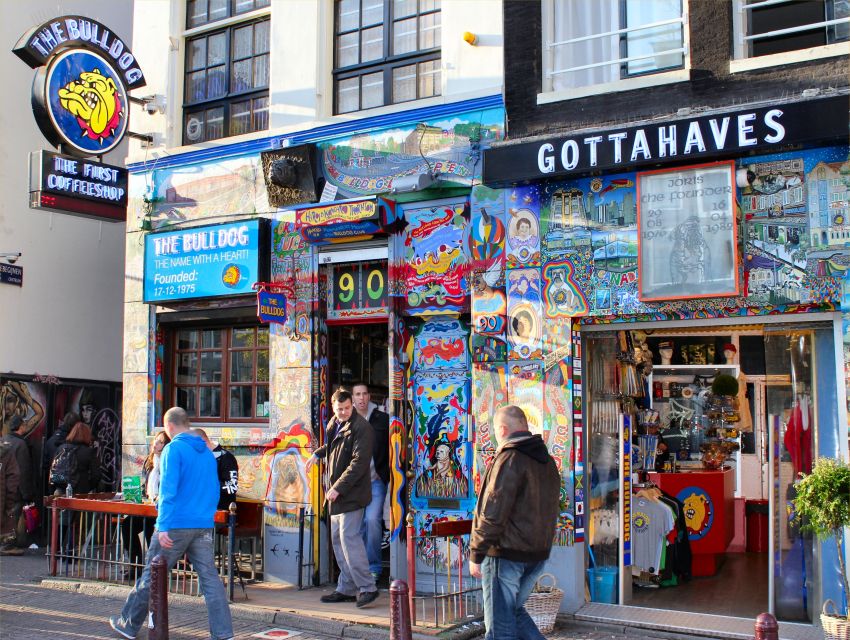
Review · AMSTERDAM
Amsterdam: Sex, Drugs, and Freedom Walking Tour
Amsterdam’s most famous streets make little sense if you only see the red-lit windows and coffeeshop signs. This two-hour walking tour looks at the rules, history, and social choices behind them, from prostitution and soft drugs to gay rights and sexual liberty.
I like the tour’s focus on clear local context, not just spectacle. I also like that it includes the Old Church, Dam Square, the Royal Palace, and lesser-known corners, giving you a better sense of how this district fits into the city. The main drawback is pace: two hours can only sketch the drug economy and prostitution debate, and the route is not a good match for people with mobility impairments.
What makes this walk worth your time
- Amsterdam beyond the postcard: Learn how the Red-light District functions instead of simply passing through it.
- Drugs explained without the usual myths: Hear about coffeeshops, soft drugs, and the Netherlands’ unusual regulations.
- A serious look at sex work: The tour explains prostitution’s legal framework and what it is like to work in the industry.
- Historic sights on the same route: See the Old Church, Condomerie, Dam Square, and Royal Palace.
- Good guide energy: Guides including Martin, David, Stan, Jesse, and others have been praised for friendly, engaging explanations.
- Flexible booking: The tour lasts two hours, costs $31 per person, and offers free cancellation up to 24 hours before departure.
The Red-light District is more than a row of windows
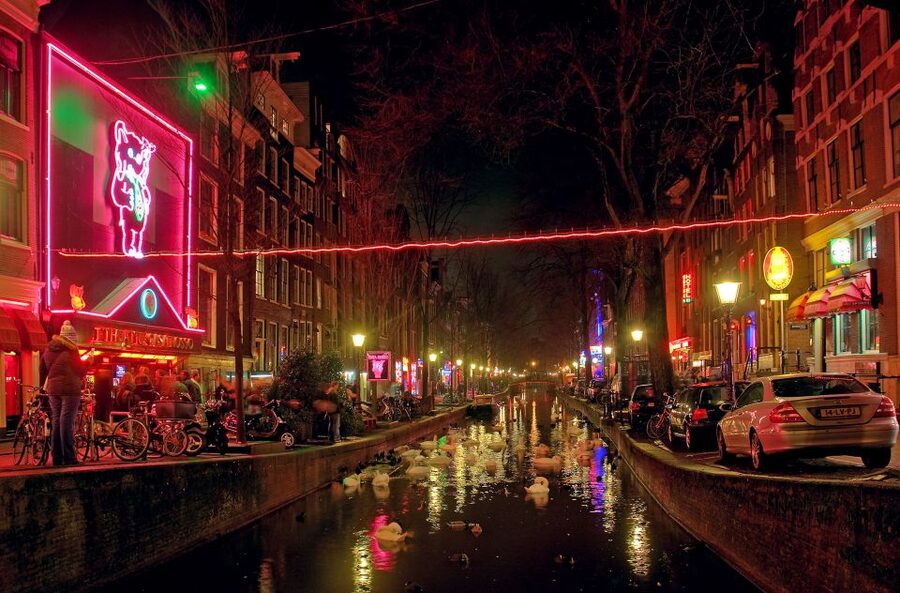
I like this tour because it asks you to pause before making easy judgments. Amsterdam’s Red-light District is often treated as a joke or a photo stop, yet the area raises serious questions about work, regulation, privacy, safety, and public attitudes toward sex.
Your guide leads you through winding streets and alleyways while explaining how the district developed and how the Netherlands approached the legalization of prostitution. You learn about the working reality behind the windows, not just the eye-catching display seen from the street.
That distinction matters. You are not simply shown where the district is. You are given a framework for understanding why it operates as it does, what the legal approach was intended to achieve, and why the subject remains complicated.
The tour also looks at how people use the area. That can include the difference between public curiosity and respectful behavior, as well as the social issues surrounding sex work. The information is presented as a cultural and historical subject, not as an invitation to treat the neighborhood like an amusement park.
I would choose this walk early in your Amsterdam stay if you want a quick orientation. One past participant described it as a good introduction to Amsterdam when arriving, and that is a fair way to view it. The route gives you a basic map of the district and some context for sights you may revisit later.
More walking tours around Amsterdam:
- Amsterdam Anne Frank: Small-Group Walking Tour & Local Guide
★ 4.8 · 12,789 reviews - Anne Frank’s Story – Guided Walking Tour through Amsterdam
★ 5.0 · 11,619 reviews - Absolutely Amsterdam – the Essential Introductory Walking Tour
★ 5.0 · 3,629 reviews
Coffeeshops, soft drugs, and Dutch contradictions
The drug section covers Amsterdam’s unusual attitude toward soft drugs, including the origins of coffeeshops and the difference between public assumptions and actual regulation. Your guide also discusses the use and manufacturing of soft drugs.
This is useful because the word coffeeshop can confuse first-time visitors. In Amsterdam, it refers to venues associated with cannabis, not ordinary cafés serving coffee. The tour helps explain how these places developed within the Netherlands’ approach to drug policy.
You should expect a broad explanation rather than a detailed policy seminar. One participant wished for more discussion of the Dutch economy and drugs, but also recognized that the two-hour time limit made that difficult. That is the tradeoff here: you get a readable introduction, but not every legal, economic, and public-health angle.
I appreciate that the tour treats the subject as a policy issue instead of simply presenting coffeeshops as a tourist attraction. You hear about the peculiar regulations and the thinking behind them. If you want a detailed account of supply chains, taxation, or current national drug policy, this walk will probably leave you with more questions to explore on your own.
Still, it is a useful first layer. You can ask questions during the walk, and the guide can help separate common myths from the Dutch system discussed on the route.
The Old Church beside the Red-light District
The Old Church gives the tour an important point of contrast. This is not a district created in isolation. Religious history, civic life, commercial activity, and the sex industry have long existed close together in central Amsterdam.
The stop helps you understand the district’s unusual visual mix. You may move from a centuries-old church to narrow lanes associated with prostitution and modern nightlife within a short walk. That contrast is one of the most striking parts of the route.
Your guide uses the surrounding streets to explain how the area changed over time. The focus is not only on buildings, but also on the people and choices that shaped the neighborhood.
The lanes can be winding and crowded, and the tour is conducted on foot throughout. Wear comfortable shoes and bring water. The route is not suitable for people with mobility impairments, so check your own comfort level before booking.
Condomerie and the practical side of sexual liberty
The Condomerie is another memorable stop. It connects the tour’s discussion of sexual liberty with a very practical part of Amsterdam’s public culture.
Here, the subject of sex is not treated only as entertainment or scandal. The stop fits the broader discussion about sexual health, openness, and the Dutch fight for social awareness. It helps show how sexual liberty can appear in ordinary public life, not just in the Red-light District.
I find this kind of stop more useful than a tour that simply points out the most photographed windows. It gives you another way to think about Amsterdam’s liberal reputation. The city’s image comes from policies, social movements, and everyday institutions, not just nightlife.
The tone may vary with your guide and group. The activity is designed for adults interested in sex, drugs, equality, and social history, so it is not a standard sightseeing walk for every family or every visitor.
Same streets, a different story:
- Amsterdam: Anne Frank Guided Walking Tour in DE/EN/IT/ES
★ 4.9 · 3,107 reviews - Amsterdam: Anne Frank Guided Small Group Walking Tour
★ 4.8 · 2,722 reviews - Amsterdam: Cultural Highlights Walking Tour
★ 4.9 · 2,629 reviews - Amsterdam: Ganja Walking Tour
★ 4.2 · 2,127 reviews
Dam Square and the Royal Palace put the story in context
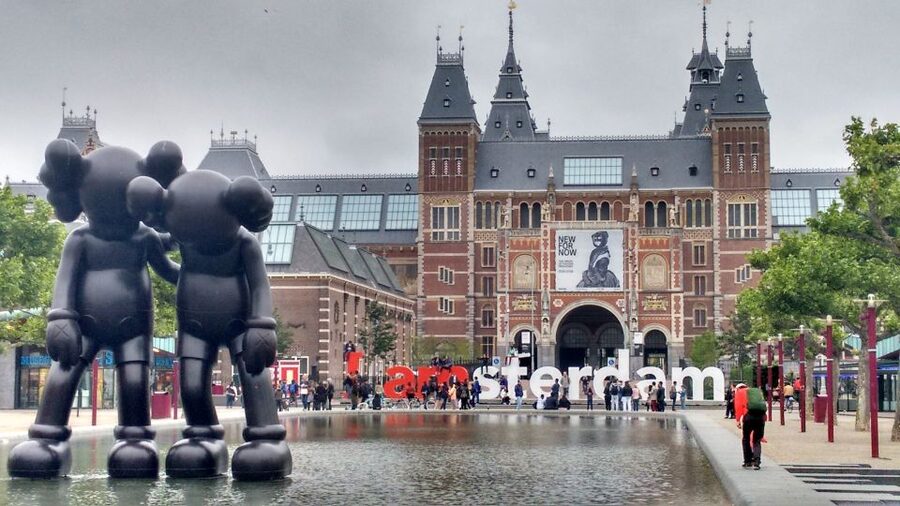
Dam Square and the Royal Palace widen the scope of the walk. These landmarks show that the tour is not limited to one narrow theme or one set of alleyways.
Dam Square is one of the city’s main public spaces, while the Royal Palace represents a more official side of Amsterdam. Their inclusion lets you compare public power and civic identity with the informal culture associated with coffeeshops and the Red-light District.
I like this change of scale. A tour about Amsterdam’s alternative scenes can become repetitive if every stop focuses on sex or drugs. Moving through major landmarks keeps the route connected to the wider city.
You may not receive an in-depth architectural tour of the palace or a full history of Dam Square. Those sites support the larger story rather than serving as the main subject. If you want detailed art or royal history, book a specialist sightseeing tour instead.
The local corners are part of the appeal
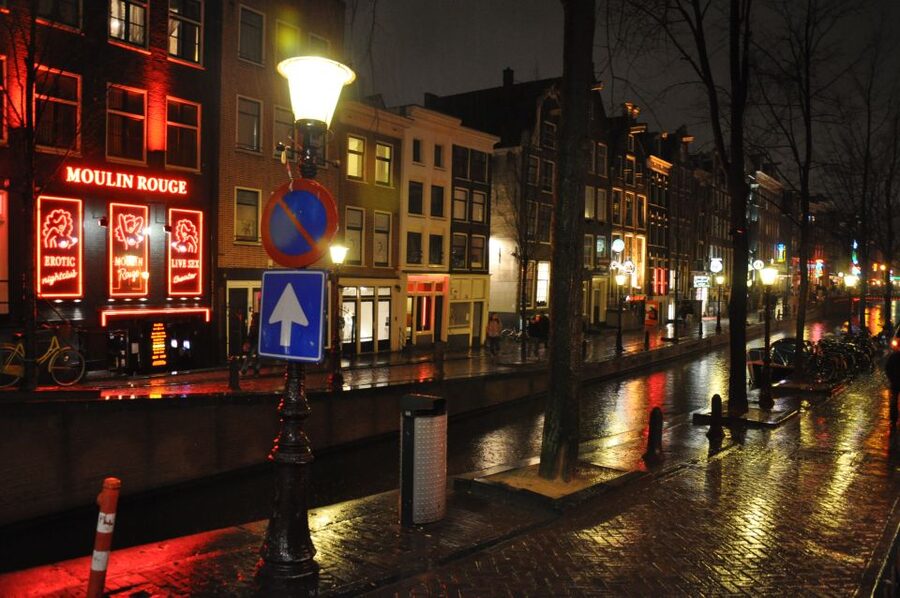
The experience promises places known only to locals, and that is one of its strongest practical features. You get more than the standard route between the main square and the best-known Red-light District streets.
The exact meeting point and route may vary by the option you book, so do not plan your day around a precise starting corner until your reservation details confirm it. The route itself is described as a walk through narrow streets and alleyways, with lesser-known places added to the main sights.
This can make the tour feel more personal. You are not only collecting landmark photographs. You are getting small pieces of local orientation that may help you move around the district later.
The quality depends heavily on the guide. Past guides named in the feedback include Martin, David, Stan, and Jesse. Martin was praised for being friendly and well informed, David for sharing local and family history, and Jesse for a patient style and clever humor. Another guide was praised for keeping a distracted, tipsy group together without losing patience.
Those details matter because a walking tour on this topic needs tact. The guide must keep the group moving, answer awkward questions, and explain sensitive subjects without turning the route into a lecture or a crude comedy routine.
A closer look at the guide style
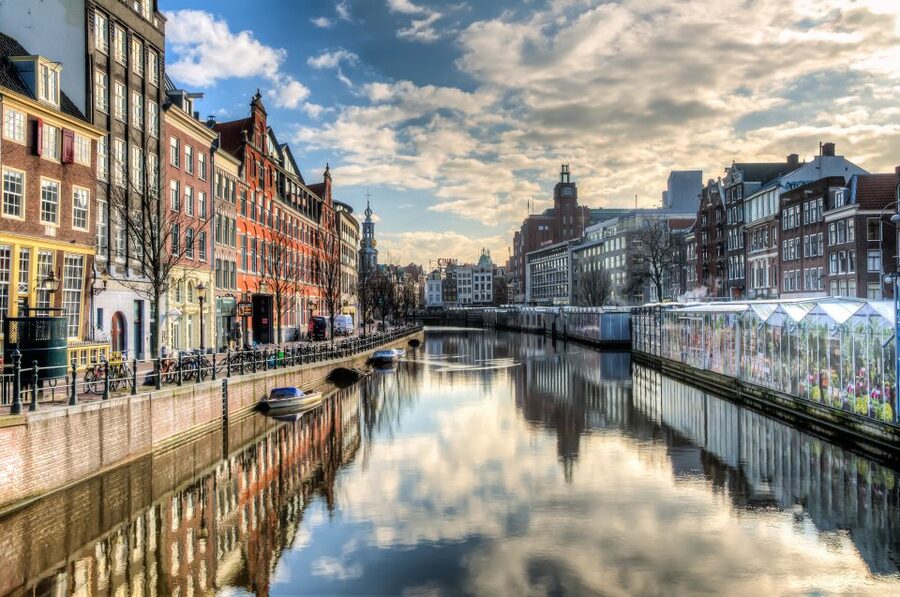
The strongest pattern in the feedback is the guide’s ability to make difficult material easy to follow. Blake described the tour as informative and easy to digest, while Amy highlighted an engaging guide who answered questions and told fascinating stories.
That is exactly what you need here. The topics can become technical or emotionally charged. A good guide has to explain prostitution, drug regulation, gay rights, and sexual freedom in plain language.
Charisma also matters. Mateusz praised a guide’s personality and felt the tour offered more than earlier walks. Lisa enjoyed anecdotes about the district, including a local expression involving sleeping in the monkey. These details suggest that storytelling is a central part of the experience.
The tour is not dependent on one named guide, so your experience may differ. Still, the repeated praise for friendly, calm, engaging leadership is encouraging. The rating is 4.6 from 74 reviews, which supports the view that the human element is a major strength.
You can take the tour in English, Spanish, Dutch, or German. A private group is also available, which may suit people who want more control over questions and pace. The standard public option is likely the better value if you are comfortable learning alongside other people.
Is $31 a fair price for two hours?
At $31 per person, this is reasonably priced for a guided walk in central Amsterdam. You are paying for two hours of explanation, local orientation, and access to a subject that is difficult to understand from guidebook paragraphs alone.
The value is strongest if you are curious about the reasons behind Amsterdam’s liberal image. You receive more than a list of locations: the guide connects prostitution, coffeeshops, equality movements, sexual liberty, and the history of the district.
The value is weaker if you mainly want a conventional sightseeing tour or a detailed academic study of Dutch drug policy. Food and drinks are not included, and the tour does not promise museum entry or extended visits inside the major landmarks.
I would see the price as a fair introduction, especially early in a stay. The walk can help you decide which parts of the city deserve a second visit and which subjects you want to study further.
Who should book this walking tour?
I would recommend it to adults who want context before exploring Amsterdam’s nightlife areas. It suits first-time visitors, history-minded people, and anyone interested in how law and social attitudes shape everyday city life.
It is also a good match if you enjoy asking questions. The guide is there to explain the complicated issues around prostitution and drugs, and the experience gains value when you engage rather than simply follow the route quietly.
You may want to skip it if you prefer art, architecture, or food-focused sightseeing. It is also not suitable for people with mobility impairments, and comfortable shoes are essential.
The tour can work for a private group, couples, solo visitors, or friends, though the subject matter may not suit every group dynamic. If someone in your party is uncomfortable discussing sex work, drug use, or gay rights, choose another walking tour.
Practical ways to get more from the two hours
Arrive ready to walk. Wear comfortable clothes and shoes, and carry water. The route passes through narrow city streets, so stay close to the group and listen for instructions.
Treat the area with respect. The tour is about real people and real workplaces, not only colorful scenery. Follow your guide’s advice about behavior and photography, and avoid turning workers or private spaces into souvenirs.
Keep your questions thoughtful. You can ask about the legal framework, coffeeshop origins, equality movements, or the social effects of regulation. A good question can make the difference between a basic orientation and a useful conversation.
If you are comparing start times, choose a slot that leaves you alert enough to listen. The tour lasts only two hours, and the subjects require attention. It is less useful if you are rushing between reservations or treating it as a late-night add-on.
Cancellation is free up to 24 hours before departure, and you can reserve now and pay later. Since the meeting point can vary by booking option, check the confirmation carefully before setting out.
Should you book it?
Book this tour if you want Amsterdam’s Red-light District and coffeeshops explained with history, policy, and social context. The combination of major sights, local corners, and candid discussion gives you a more useful first look than wandering the area without preparation.
I would be cautious if you expect a full study of Dutch drug economics, a detailed palace tour, or a long examination of prostitution law. Two hours sets a clear limit.
For most curious adults, the $31 price is fair, especially when the tour is led by a calm and engaging guide. Choose it early in your stay, wear good shoes, and approach the district as a neighborhood with people and rules, not as a sideshow.
FAQ
How long is the Amsterdam Sex, Drugs, and Freedom Walking Tour?
The tour lasts two hours.
How much does the tour cost?
The listed price is $31 per person.
Which languages are available?
The tour is available in English, Spanish, Dutch, and German.
What sights are included?
The route includes the Old Church, the Condomerie, the Royal Palace, Dam Square, and places known only to locals.
Does the tour enter the Royal Palace or Old Church?
The information provided identifies these as sights on the route, but it does not state that the tour includes interior admission.
What subjects does the guide cover?
The guide discusses Amsterdam’s Red-light District, prostitution, coffeeshops, soft-drug regulations, sexual liberty, gay rights, social awareness, and the history of the area.
Is a private tour available?
Yes. A private group option is available.
What should I bring?
Bring comfortable shoes, water, and comfortable clothing.
Is the tour suitable for people with mobility impairments?
No. The tour is not suitable for people with mobility impairments.
New walking tours around Amsterdam
- Amsterdam: Haunted History and Ghost Walking Tour★ 4.5 · 488 reviews
- Amsterdam: Food and Culture Walking Tour with Tastings★ 4.9 · 838 reviews
- Amsterdam: Small-group Guided Walking Tour (French/English)★ 5.0 · 289 reviews
- Amsterdam: Walking Tour, Jewish Museum & Synagogue Tickets★ 4.3 · 110 reviews
- Amsterdam: Treasure Hunt Walking Tour “A Secret Sender”★ 4.7 · 71 reviews
- Amsterdam Small-Group Walking Tour★ 4.7 · 995 reviews
- Amsterdam: Jordaan District Local Food Walking Tour★ 4.8 · 311 reviews
- Amsterdam Walking Tour and Canal Cruise★ 4.6 · 117 reviews
Amsterdam Walking Tours, side by side.
Amsterdam Anne Frank: Small-Group Walking Tour & Local Guide
Read our review →
Anne Frank’s Story – Guided Walking Tour through Amsterdam
Read our review →
Absolutely Amsterdam – the Essential Introductory Walking Tour
Read our review →
Amsterdam: Anne Frank Guided Small Group Walking Tour
Read our review →
Anne Frank Walking Tour Amsterdam Including Jewish Cultural Quarter
Read our review →
Amsterdam Highlights Walking Tour: Small Group Experience
Read our review →Lists this walk sits on