
Review · AMSTERDAM
Absolutely Amsterdam – the Essential Introductory Walking Tour
Amsterdam’s story comes together quickly on this walking tour. In a few city blocks, you move from the old harbor and Red Light District to a former monastery, a Jewish quarter, a global trading headquarters, and the Royal Palace. The guide links the sights to bigger questions about trade, tolerance, religion, war, and modern city life.
I like two things here. First, the route gives you useful bearings for the rest of your stay, with a manageable walking pace and plenty of practical suggestions. Second, the low upfront price makes this a remarkably affordable introduction, especially when guides such as Jaap, Raymond, Sergio, David, and Fernando bring humor and personal insight to the walk.
The main consideration is that this is an outdoor overview, not an indoor museum tour. You will see the hidden church from outside, and entry fees are not included at the Waag, the church museum, or the Royal Palace. Busy streets and bicycles can also make the walk less relaxed at peak times.
Key points to know before you book
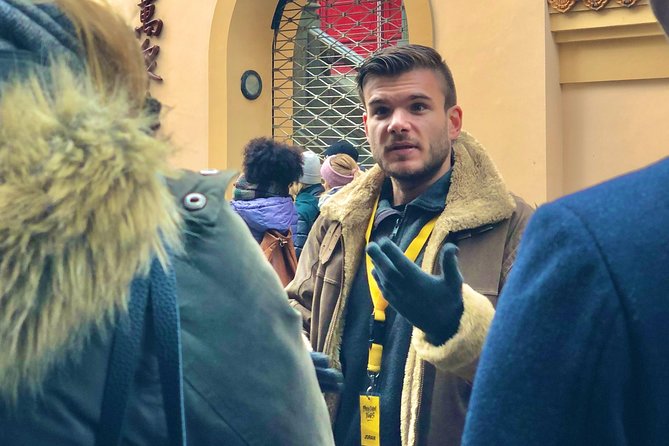
- The route covers ten central stops: You get a broad look at Amsterdam’s old center rather than spending the full morning in one museum or neighborhood.
- The stories go beyond postcard sights: Expect frank discussion of prostitution, drug policy, slavery and colonial trade, Nazi occupation, and religious tolerance.
- The pace suits first-time visitors: The walk lasts about two and a half hours, with most stops lasting 10 to 20 minutes.
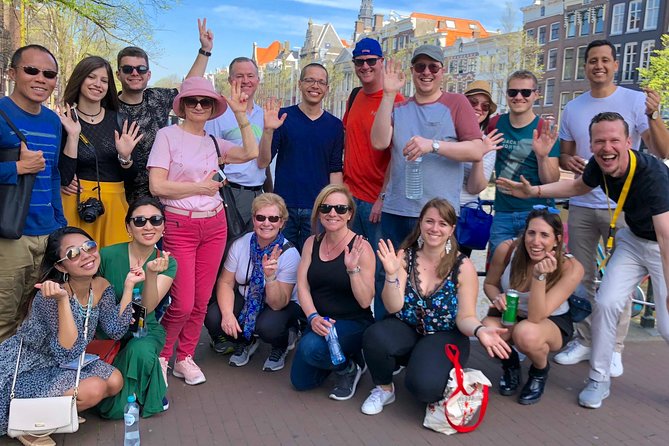
- The group is limited to 15 people: That is small enough for questions and a more personal guide experience.
- The price is unusually low: You pay $5.93 per person and can tip according to the value you feel you received.
- Wear sensible shoes: You cover a good section of the old center on foot, often among bicycles, crowds, and uneven city streets.
Why this makes a strong first morning in Amsterdam
I see this tour as a city orientation with substance. It is not just a parade of buildings. The guide explains why Amsterdam grew where it did, how water shaped the city, how trade made it wealthy, and how public policy created some of its most famous neighborhoods.
The tour begins at Beursplein 5, in front of the Beurs van Berlage. That puts you near Damrak and the central station area, a useful starting point if you have just arrived or are staying in the historic core. The activity ends at the Royal Palace on Dam Square, so you finish close to many restaurants, shops, and other central sights.
The guides use visual aids when helpful. One guide, Gianni, used maps and pictures to make complicated ideas easier to follow, while another guide, Raymond, was described as a lifelong local who mixed facts with humor. Those details matter because Amsterdam’s past includes many dates, institutions, and political changes. A good storyteller makes the information stick.
You should expect the guide to vary. Names associated with this tour include Jaap, Raymond, Sergio, David, Fernando, Esi, Samuel, Alexander, Ramses, Roman, Dani, Carl, Sebastien, and Gianni. The strongest praise centers on clear explanations, warmth, humor, and an ability to bring the group together. That gives you a good sense of the intended style, though the exact personality and emphasis will depend on who leads your departure.
More walking tours around Amsterdam:
- Amsterdam Anne Frank: Small-Group Walking Tour & Local Guide
★ 4.8 · 12,789 reviews - Anne Frank’s Story – Guided Walking Tour through Amsterdam
★ 5.0 · 11,619 reviews - Amsterdam: Anne Frank Guided Walking Tour in DE/EN/IT/ES
★ 4.9 · 3,107 reviews
Beurs van Berlage and Damrak: water, money, and the old harbor
The opening stop at the Beurs van Berlage sets up the whole city. The building occupies ground where the Amstel River once flowed, and the guide uses that fact to explain Amsterdam’s beginnings. You learn how water, commerce, and finance shaped the city instead of treating the canals as mere decoration.
This is a useful first lesson: Amsterdam was built around movement. Goods came through the harbor, money followed trade, and the city developed institutions to manage both. At roughly 20 minutes, the stop gives the guide enough time to explain the basic framework without turning the introduction into a lecture.
The short walk to Damrak shifts the subject from formal commerce to the city’s more complicated public life. Here, the guide discusses the old harbor, the origins of the Red Light District, and the changing relationship between the Church and prostitution.
The subject is handled as social history rather than cheap spectacle. You learn how prostitution became legal, how the neighborhood changed in the 20th and 21st centuries, and what challenges it faces today. That frank context is valuable because the Red Light District can be easy to misunderstand if you only see it as a collection of windows and neon signs.
The Damrak stop lasts about 15 minutes. It is mostly an explanation from the street, so do not expect access to private premises or a long visit inside a specific attraction.
Our Lord in the Attic and Chinatown: tolerance and drug policy
At Our Lord in the Attic Museum, you learn how Catholic worship continued after Catholicism became illegal in the 17th century. The key idea is that religious tolerance did not always mean equal rights. In practice, worship could continue under strict and unusual conditions.
You do not enter the hidden church during this walk. Instead, you see the building from outside, and the guide uses photographs to show what is inside. That limitation is important if the museum is high on your list. You can return later for a proper visit, but admission is not part of the tour.
The guide then draws a line between older forms of tolerance and the way tolerance works today. I like this approach because it connects a building to a living political question instead of leaving the story in the past.
The Chinatown stop continues the theme of public policy. The guide explains Dutch drug policy and how the area changed from a no-go zone in the 1970s into a place associated with coffeeshops selling marijuana.
This is another street-side explanation, not a visit to a coffeeshop. The value comes from learning how policy, policing, neighborhood decline, and commercial change interacted. At 15 minutes, it gives you enough background to understand what you are seeing without asking you to spend the rest of the tour on one subject.
The Waag: Rembrandt and the making of a public image
The Waag is a short stop, about 10 minutes, but it adds an artistic thread to the tour. The guide explains where Rembrandt painted his first major work and how that painting changed portrait-making.
A copy of the painting is used to point out details. That is a small but useful teaching tool. In a crowded square, it can be hard to see why a painting matters from a short verbal explanation alone. A visual reference helps you follow the composition and understand the guide’s point.
The stop is also a reminder that Amsterdam’s civic buildings had several lives. The same city that built financial institutions and trading offices also created settings for art, science, medicine, and public ceremony. The tour does not provide museum entry here, so think of the Waag as a compact lesson and a prompt for later exploration.
Same streets, a different story:
- Amsterdam: Anne Frank Guided Small Group Walking Tour
★ 4.8 · 2,722 reviews - Amsterdam: Cultural Highlights Walking Tour
★ 4.9 · 2,629 reviews - Amsterdam: Ganja Walking Tour
★ 4.2 · 2,127 reviews - Anne Frank Walking Tour Amsterdam Including Jewish Cultural Quarter
★ 5.0 · 1,879 reviews
Oostindisch Huis: Amsterdam’s wealth and its darker side
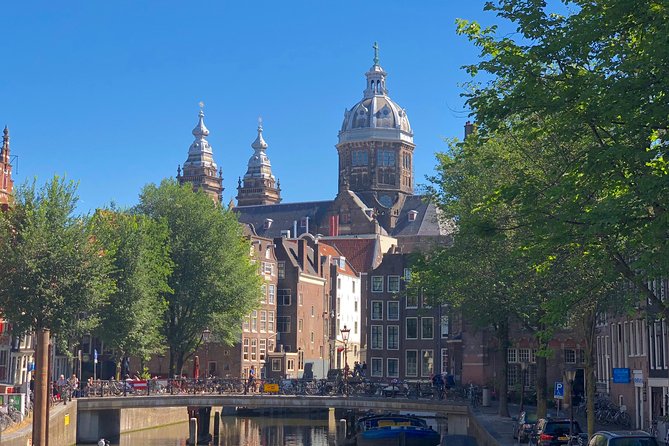
The Oostindisch Huis is one of the most revealing stops. On weekdays, the group can access a striking 17th-century courtyard hidden inside the building. The guide explains how Amsterdam became the center of a global trading empire and why the 17th century is remembered as the Dutch Golden Age.
This was the headquarters of the Dutch East India Company, described during the tour as the first and largest corporation in human history. The discussion connects the company to modern capitalism, showing how early corporate structures, global trade, investment, and profit shaped the modern world.
The strongest part is the balance. You hear how trade made Amsterdam one of the richest cities on the planet, but the guide also addresses the darker legacy of that wealth. A polished Golden Age story without its violence and exploitation would be incomplete. This stop gives you a more honest framework for the city’s grand canal houses, paintings, and merchant wealth.
Access to the courtyard is limited to weekdays, so the experience can vary by departure time. If seeing this interior matters to you, check the scheduled day before booking. Even without access, the historical explanation remains one of the tour’s most useful sections.
Waterlooplein: Jewish Amsterdam and wartime survival
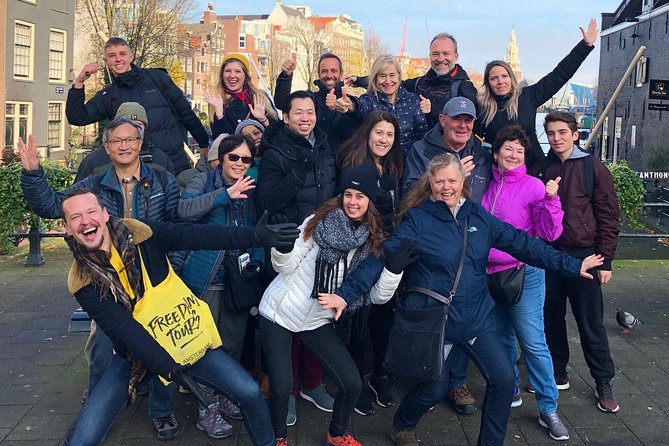
Waterlooplein is home to Amsterdam’s oldest market and sits in the former Jewish quarter. The guide explains how the neighborhood was nearly destroyed during the Second World War and describes the devastating effect of Nazi occupation on Amsterdam’s Jewish population.
The discussion avoids a simple or misleading explanation of the market’s destruction. You learn who was responsible, how the occupation affected ordinary people, and what Amsterdammers did to survive the final hunger winter of the war.
This is a sobering portion of the walk. It gives needed weight to the tour, which otherwise moves between architecture, art, policy, and city life. The market itself is free to see, and the guide places it within the neighborhood’s past rather than treating it as just another shopping stop.
You should be ready for a serious change in tone here. The tour does not keep every subject light, and that is part of its value. Amsterdam’s story includes beauty and freedom, but also persecution, deprivation, and loss.
The Amstel: canals, crooked houses, and open curtains
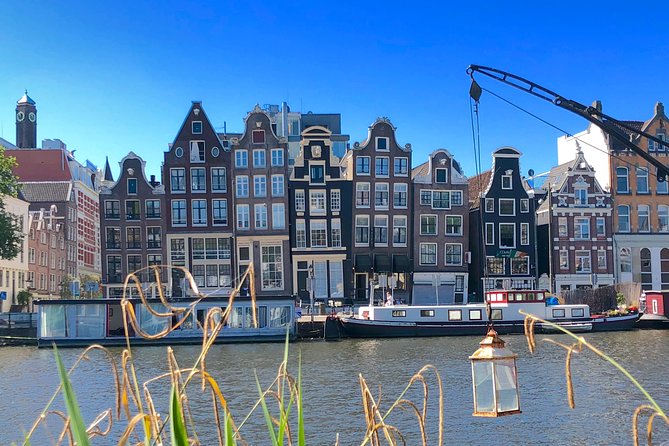
At the Amstel, the guide returns to the city’s physical character. You learn why Amsterdam has canals and why the canal houses are so narrow. Their odd angles and leaning facades are not all accidents. The guide also explains the hooks on the fronts of the houses and why many Dutch residents traditionally leave their curtains open.
These details are exactly the sort of thing that makes a walking tour worthwhile. You might notice the hooks, narrow buildings, and tilted facades on your own, but without context they remain quirks. A guide turns them into clues about how people built, moved goods, used space, and lived in close quarters.
The exact location can change with the weather. The guide may use another canal if conditions make the Amstel less suitable. That flexibility is sensible, though it means the precise view is not guaranteed.
This stop also offers a pause from heavier subjects. After trade, religious restrictions, drug policy, and wartime suffering, the focus returns to everyday architecture and social habits.
Oudemanhuispoort and Amsterdam’s bicycle culture
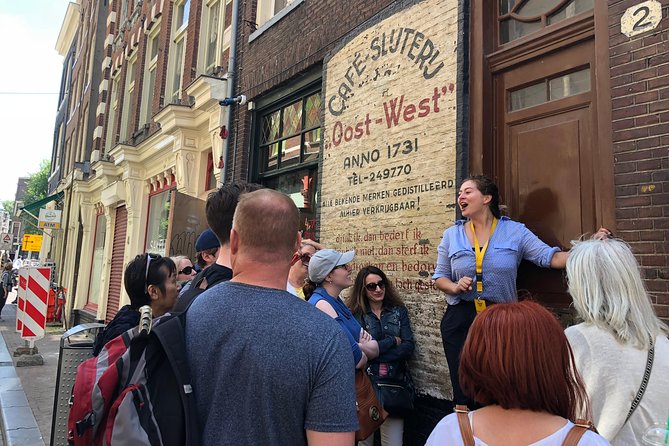
Oudemanhuispoort is a former monastery that later became a hospital and is now connected with the University of Amsterdam. It is a tucked-away passage with several layers of use, making it a good setting for a discussion of Dutch bicycle culture.
The guide explains why there are more bicycles than people and why so many bikes look plain, worn, or even ugly. That last point is useful. Amsterdam’s cycling culture is practical transportation, not a parade of expensive sports equipment. The city bike is built for daily use, weather, locks, and errands.
The stop lasts about 10 minutes, but the lesson carries into the rest of your visit. After this tour, you will better understand why bicycles have priority in so many parts of the city and why walking requires attention. Several guides stress the need to watch for bikes, and you should take that seriously. The danger is not dramatic, but bicycles move quickly and quietly.
Dam Square and the Royal Palace: from republic to monarchy
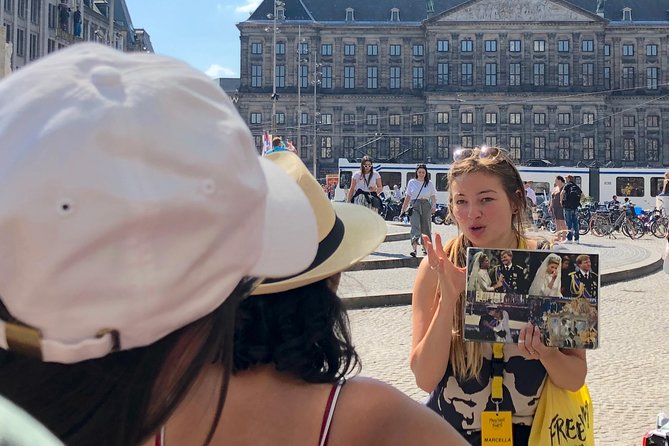
The final stop is the Royal Palace Amsterdam, on Dam Square. The guide explains the unusual path from a Dutch republic to a monarchy and introduces the current Royal Family with photographs. A lighter segment of royal gossip brings the tour to an easy finish.
The palace itself is not included as an indoor visit. You get an exterior and historical introduction, then the tour ends in Dam Square. That location is convenient for continuing your day, but it also means the group finishes in one of Amsterdam’s busiest areas.
The ending works because it brings several themes together. Amsterdam began as a trading city, grew through commerce and finance, developed a strong civic identity, and later adopted a monarchy. The palace is not simply a grand building. It represents a political change that the guide explains in approachable terms.
Price, group size, and the real value
At $5.93 per person, this is an unusually cheap way to receive two and a half hours of guided context. The price is designed as a tip-based model, so you can decide what the experience was worth after the walk.
That structure gives you flexibility, but it also means you should approach the advertised price with the right expectation. It is not a fixed-price private tour with museum admissions, a meal, or transport. You are paying for a shared walking experience and the guide’s time, with tipping left to your judgment.
The maximum group size is 15. That is a useful limit in narrow lanes and crowded squares, and it gives you a better chance to hear the guide than you would in a large group. The walking pace is described as manageable, but the route still covers a substantial part of central Amsterdam.
The tour is offered in English. Confirmation is provided at booking, service animals are allowed, and the activity is near public transportation. Most people can participate, though the format requires you to walk outdoors for about two and a half hours.
Free cancellation is available up to 24 hours before the start time for a full refund. Cancellations or changes made inside that window are not refunded, and the tour requires a minimum number of participants.
Who should choose this Amsterdam walk?
I would choose this tour early in a first visit, especially if I wanted the city’s major themes explained before tackling museums and neighborhoods on my own. It suits you if you like history presented through streets and buildings, and if you want a guide to connect familiar sights to less visible stories.
It also works for repeat visitors. The route stays in the old center, but the sections on the East India Company, religious tolerance, wartime Amsterdam, and Dutch cycling can add new layers even if you have already seen Dam Square.
You may want something else if you prefer long indoor visits, quiet small-group conversation, or a highly specialized subject. You will not tour the hidden church, enter the palace, or spend extended time inside the Waag. The city center can also feel crowded, and you must stay alert around bicycles.
Should you book Absolutely Amsterdam?
Book it if you want an affordable, well-paced introduction to central Amsterdam with a guide who can handle both serious history and lighter local details. The combination of the Red Light District, Chinatown, the former Jewish quarter, the Oostindisch Huis, canals, bikes, and the Royal Palace gives you a broad base for the rest of your stay.
I especially like it for your first full day, when a city walk can help you choose which places deserve a return visit. Wear good walking shoes, keep water handy, and do not expect admission to the indoor sights. If those limits suit you, the $5.93 price offers strong value, with the final tip reflecting how much the guide adds.
FAQ
How long does the Absolutely Amsterdam tour last?
The tour lasts approximately 2 hours and 30 minutes.
What language is the tour offered in?
The tour is offered in English.
Where does the tour start?
It starts at Freedam Tours, Beursplein 5, 1012 GZ Amsterdam, Netherlands.
Where does the tour end?
The activity ends at the meeting point area, at Dam Square by the Royal Palace Amsterdam.
How much does the tour cost?
The listed price is $5.93 per person. The format lets you tip as much as you would like.
Does the tour enter the hidden church at Our Lord in the Attic Museum?
No. The group sees the building from outside, and the guide has pictures of the interior. Admission is not included.
Is entry to the Royal Palace included?
No. The tour discusses the Royal Palace from outside, and entry is not included.
How many people can join the tour?
The tour has a maximum of 15 participants.
Can I cancel for a full refund?
Yes. You can cancel at least 24 hours before the experience start time for a full refund. Cancellations or changes made less than 24 hours before the start time are not refunded.
New walking tours around Amsterdam
- Amsterdam: Haunted History and Ghost Walking Tour★ 4.5 · 488 reviews
- Amsterdam: Food and Culture Walking Tour with Tastings★ 4.9 · 838 reviews
- Amsterdam: Small-group Guided Walking Tour (French/English)★ 5.0 · 289 reviews
- Amsterdam: Walking Tour, Jewish Museum & Synagogue Tickets★ 4.3 · 110 reviews
- Amsterdam Small-Group Walking Tour★ 4.7 · 995 reviews
- Amsterdam: Treasure Hunt Walking Tour “A Secret Sender”★ 4.7 · 71 reviews
- Amsterdam: Sex, Drugs, and Freedom Walking Tour★ 4.6 · 74 reviews
- Amsterdam: Jordaan District Local Food Walking Tour★ 4.8 · 311 reviews
Amsterdam Walking Tours, side by side.
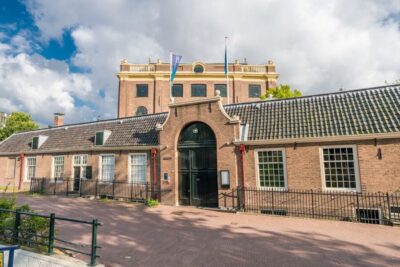
Amsterdam Anne Frank: Small-Group Walking Tour & Local Guide
Read our review →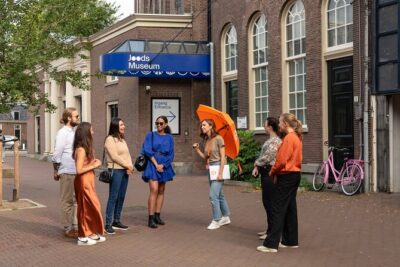
Anne Frank’s Story – Guided Walking Tour through Amsterdam
Read our review →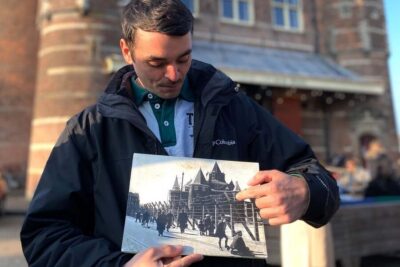
Amsterdam: Anne Frank Guided Small Group Walking Tour
Read our review →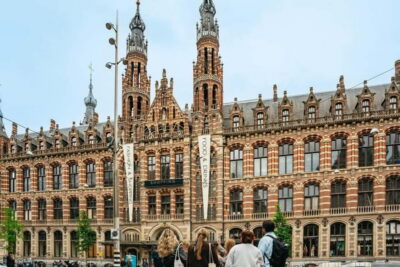
Anne Frank Walking Tour Amsterdam Including Jewish Cultural Quarter
Read our review →
Amsterdam Highlights Walking Tour: Small Group Experience
Read our review →
Lists this walk sits on