
Review · POLAND
Gdańsk City Sights & History Guided Walking Tour in English
Gdańsk’s old town looks polished today, but its story is anything but smooth. This walk connects the handsome rebuilt merchant houses with the harder chapters behind them: the outbreak of World War II, the destruction of the city, and the Solidarity movement that helped weaken communism across Eastern Europe.
I like the route for two clear reasons: it gives you the city’s essential sights on foot, and guides such as Tufi, Kate, Sandra, and Marcin bring real energy to the history. The main consideration is that you join a general walking tour, so the group can feel large at busy stops, and 150 minutes on your feet may feel long in cold or wet weather.
Key points to know before you book
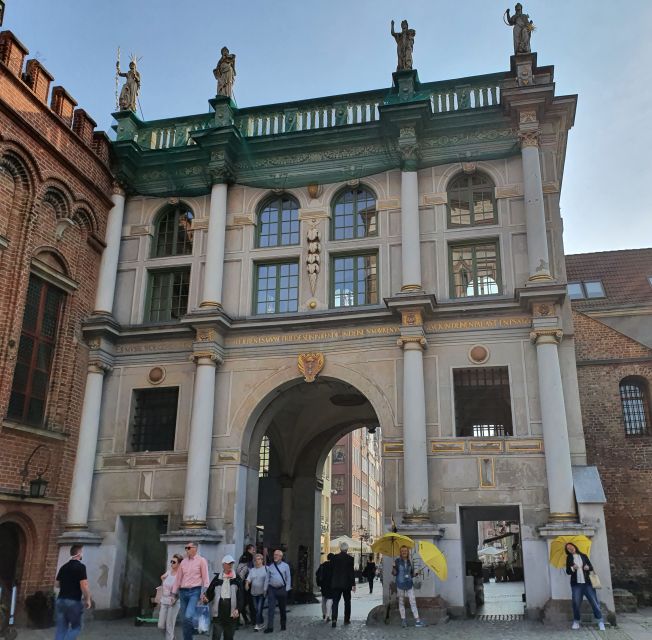
- The tour starts at the Golden Gate: Look for the yellow umbrella at Złota Brama, the traditional entrance to Gdańsk’s old town.
- The route covers the royal way: You walk along streets used for centuries by Polish kings, through Long Market and toward the harbor.
- History is the main event: Expect clear explanations of Gdańsk’s Polish, Dutch, and German influences, WWII, and Solidarity.
- The major sights come with context: Neptune’s Fountain, St. Mary’s Basilica, the canals, and the Żuraw crane are not just photo stops.
- The guides are a major strength: Tufi, Kate, Sandra, Philip, Marcin, and others are praised for humor, warmth, clear English, and strong storytelling.
- Weather matters: The walk runs rain or shine, so wear proper layers and shoes. In winter, gloves and a warm coat are not optional.
Starting at the Golden Gate
Meet your guide at the Golden Gate, or Złota Brama, at the agreed start time. The practical clue is the yellow umbrella, which should make the group easier to spot near this busy old-town entrance.
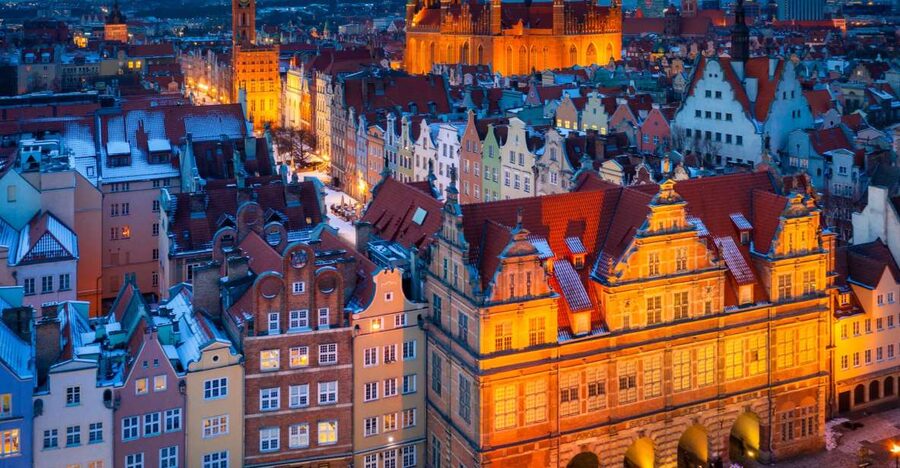
This is a sensible starting point. The Golden Gate introduces the city’s old defensive zone, but it also puts you directly onto the route once used by Polish kings. From here, the walk leads into a city center shaped by trade, politics, war, and repeated rebuilding.
The first stretch is about orientation. Your guide explains how Gdańsk developed as a Baltic port and how Polish, Dutch, and German influences shaped its buildings and culture. That background helps you read the streets instead of simply photographing them.
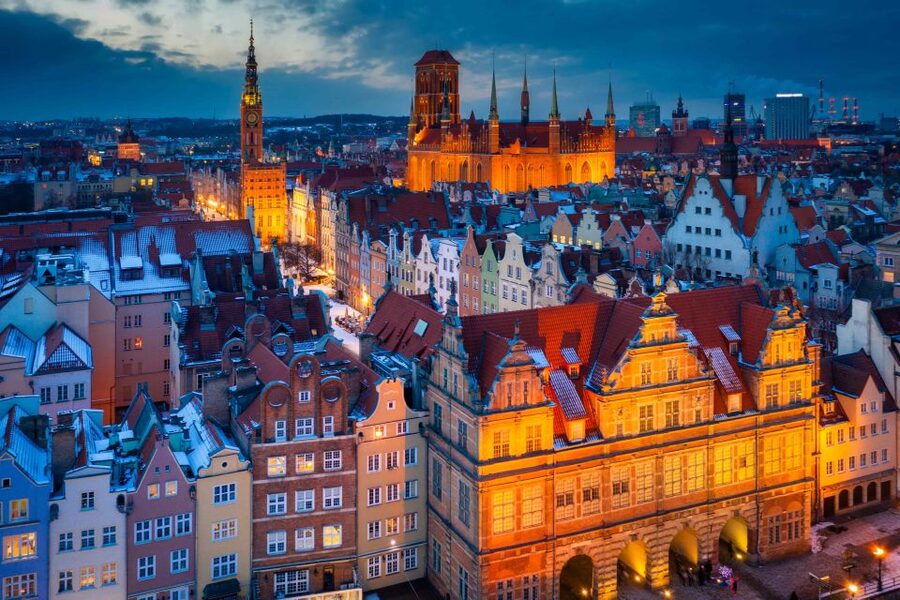
Gdańsk can look like a perfectly preserved medieval city at first glance. The important fact is that much of the historic center was destroyed during World War II and then rebuilt with painstaking care. The colorful façades are real in style, but many are the result of a major postwar reconstruction effort.
That distinction matters. You are not just admiring pretty houses. You are looking at a city that chose to restore its historic identity after immense damage.
More History Walking Tours in Poland:
- Warsaw: Jewish History Guided Walking Tour in English
★ 4.7 · 324 reviews - History and Hauntings of Salem Guided Walking Tour
★ 5.0 · 14,564 reviews - Lisbon: History, Stories and Lifestyle Walking Tour
★ 4.8 · 10,902 reviews
Long Market and the city’s merchant wealth
The walk continues through Long Market, or Długi Targ, one of the city’s most memorable public spaces. Its tall, narrow merchant houses show how trade shaped Gdańsk’s appearance and wealth.
Your guide explains how merchants helped make the city one of the richest ports on the Baltic Sea. The architecture makes more sense once you understand the commercial purpose behind it. These were not merely decorative homes. They reflected status, business, and the city’s close links with northern Europe.
At the center of the route, Neptune’s Fountain provides the classic Gdańsk photograph. It is an easy place to appreciate the scale of the old market and the tall façades around it.
The stop is likely to be busy, especially during peak daytime hours. You will get time for pictures, but do not expect a quiet, private look at the fountain. The guide’s value here is less about pointing out Neptune and more about explaining why this square mattered to the city.
A useful feature of the walk is the chance to ask questions. Guides including Kate, Tufi, and Sandra are repeatedly praised for answering clearly rather than rushing through a memorized speech. That makes a difference when you want to understand how Gdańsk’s identity changed over time.
St. Mary’s Basilica and a remarkable clock
St. Mary’s Basilica is one of the tour’s major visual moments. Its brick Gothic exterior is enormous, and it is described as the largest brick Gothic church in the world.
The basilica gives the tour a change of scale. The merchant houses are narrow and vertical, while the church feels vast and heavy. Even if you are not especially interested in church architecture, the brickwork and sheer size make this an important stop.
A particularly nice touch is the timing around the basilica’s clock. Several guides have arranged the route so the group can see the figurines move when the clock strikes noon. That is the sort of small detail that can turn a standard church visit into a memorable moment.
The exact timing depends on your start time, so you should not assume every departure will include it. Still, the guides clearly pay attention to the rhythm of the city and make useful choices when the schedule allows.
The basilica is also a good place to pause and absorb the long sweep of Gdańsk’s story. The tour does not treat the city as a simple medieval success story. It moves between prosperity, outside influence, war, political pressure, and the continuing push toward self-rule.
The Żuraw crane and Gdańsk’s working harbor
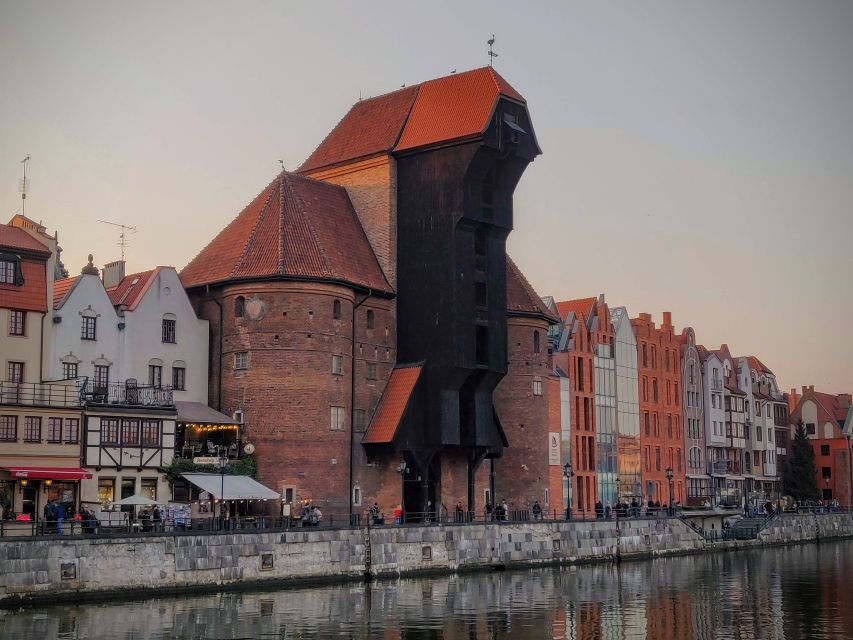
From the old town, the walk heads toward the water and the Żuraw crane. This medieval treadwheel crane is one of Gdańsk’s best-known symbols and is described as the largest of its type in the world.
The crane is especially useful because it shows the city as a working port, not just a collection of old façades. Its treadwheel design reminds you how much physical labor once went into loading ships and moving goods. The harbor setting also helps explain why Gdańsk became so important to merchants around the Baltic.
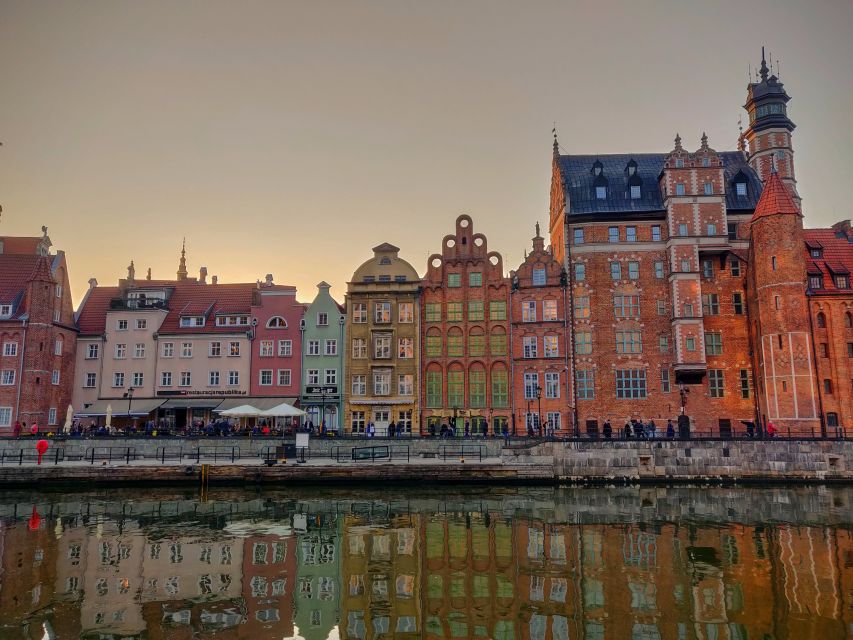
You will see rivers and canals along this part of the route. They give the old town a different feel from Long Market, with more open views and a clearer sense of how water shaped the city’s economy.
The crane is an excellent photo stop, but the area can be crowded. A larger group may need to gather tightly so everyone can hear. This is one reason to stay near the guide and avoid wandering ahead for pictures.
More City Highlights Walking Tours in Poland:
- Warsaw: Old Town Highlights Walking Tour in English
★ 4.7 · 1,516 reviews - Krakow: Old Town Highlights Walking Tour
★ 4.5 · 173 reviews - Krakow: Old Town Highlights Private Walking Tour
★ 4.9 · 79 reviews - Ho Chi Minh City Street Food Tour & Sightseeing By Motorbike
★ 5.0 · 9,413 reviews
WWII, the post office, and the city’s painful turning point
The tour’s history becomes more serious as it explains how World War II began in and around Gdańsk. The city’s position, its contested political identity, and its links with both Poland and Germany made it central to the tensions of the period.
This part is valuable because it moves beyond dates. Guides use places and stories to explain what the conflict meant for the city and its people. One especially powerful subject is the battle connected with the Polish post office, which helps bring the opening days of the war down to a human scale.
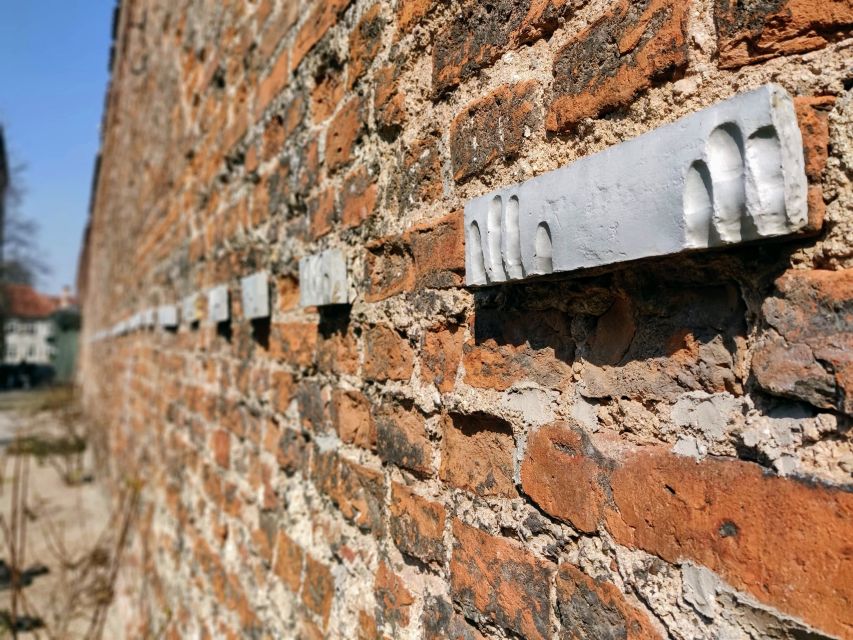
Gdańsk suffered enormous destruction during the war. The rebuilt old town you see today therefore carries a second story beneath the attractive façades. Your guide can help you notice what was reconstructed, why the city chose historic forms, and how rebuilding became part of modern Gdańsk’s identity.
The amount of history is a strength, but it can also be a lot to absorb. One guide may move quickly through centuries of political changes, and the 2.5-hour length leaves plenty of material to cover. If you prefer a very light sightseeing walk, this may feel too detailed. If you want context, the pace is worthwhile.
Solidarity and the road out of communism
The final historical thread is Gdańsk’s continuing push toward independence and political freedom. The guide connects the city’s earlier struggles with the Solidarity movement and its role in the fall of communism in the Eastern Bloc.
This gives the tour a modern ending instead of leaving you in the Middle Ages. Gdańsk’s story did not finish when the merchant houses were built. The city remained a place where questions of power, national identity, and freedom mattered.
The best guides make this section feel connected to the rest of the route. Gdańsk’s trading past, its mixed cultural influences, wartime suffering, and political resistance all become parts of one long story.
That broad time span is one of the tour’s strongest features. You leave with more than a list of buildings. You have a basic framework for understanding why the city looks the way it does and why it matters in Polish history.
Guide quality, group size, and the walking pace
The guide is the biggest variable, though the overall response has been remarkably strong. Names that receive especially warm praise include Tufi, Kate, Sandra, Philip, Marcin, Paul, Katie, and Zosia.
The common thread is not just factual skill. These guides are described as funny, clear, approachable, and passionate about Gdańsk. Tufi is praised for stories and humor, Kate for clear presentation and a sharp sense of timing, and Sandra for adapting the walk when the weather turns unpleasant.
English clarity is another strong point. The tour is delivered in English, and the guides are expected to speak loudly and clearly enough for an outdoor group. You should still stay close, particularly near the harbor or on busy streets.
Group size can vary. One departure may have only eight or nine people, while another may feel cumbersome at popular stops. A large group can make it harder to hear and may slow the walk, but it also keeps the price low.
The pace is generally relaxed enough for photographs and questions. Some guides include a short bathroom or coffee break, especially in winter. In freezing weather, groups have been brought indoors for parts of the explanation or given time to warm up with coffee or mulled wine.
Is $26 good value?
At $26 per person, this is a strong value if you want an introduction to Gdańsk rather than a private, highly tailored tour. You get 150 minutes with an English-speaking guide and a route covering the old town’s main sights, harbor, canals, WWII story, and Solidarity.
The important pricing detail is that you join the general walking tour. The payment covers the reservation and the guide’s fee. If you want a smaller private group, you can contact the supplier after booking to arrange one, though that may involve a different price.
The setup resembles a pay-what-you-want walking tour in its group format, but you should understand the payment before you arrive. One person found the arrangement awkward because the group was told it had joined a free tour and was then asked to pay what seemed appropriate, even though some people had already paid online.
That is worth clarifying in advance. You should not feel obliged to pay twice. A tip may be appreciated because guiding is the main source of income for these tours, but the listed $26 already covers the reservation and guide payment.
For the amount of history and time involved, the price is fair. A private guide would offer more flexibility, but this walk gives you a lot of city context for a modest cost.
Practical advice for a better walk
Wear shoes you can comfortably use for 2.5 hours. The route is accessible to wheelchair users, but old-town paving, crowds, and narrow gathering points may still affect how easy it feels in practice.
Dress for the forecast, not the calendar. The tour runs rain or shine, and winter departures can be bitterly cold. Guides have handled bad weather sensibly, but a coffee stop does not replace a warm coat.
If you are visiting Gdańsk for several days, book this near the beginning of your stay. The route gives you a map in your head, and guides often offer suggestions for restaurants and additional sights.
Keep some change handy if you need a public toilet during the walk. Breaks are possible, but stopping a large group takes time.
Also, arrive at the correct side of the Golden Gate and look for the yellow umbrella. The meeting point is clear once you are there, but the gates can create a little confusion if you are waiting on the wrong side.
Who should book this Gdańsk walking tour?
Book it if you want the main old-town sights tied together by a clear story. It suits first-time visitors, history fans, cruise passengers with a few hours, and anyone who wants help understanding why Gdańsk looks rebuilt yet still feels old.
It is also a good choice if you prefer a guide who talks about politics and society, not just façades and dates. The WWII and Solidarity sections give the tour more weight than a simple photo walk.
Think twice if you dislike groups, want a private pace, or find two and a half hours outdoors too demanding. A larger departure may feel less personal, and the amount of historical detail may be more than you want.
For most visitors, I would book it early in a Gdańsk stay. At $26, it offers a practical introduction to the city, and the best guides make the past feel connected to the streets beneath your feet.
FAQ
Where does the Gdańsk walking tour meet?
The meeting point is the Golden Gate, called Złota Brama in Polish. Look for the yellow umbrella.
How long does the tour last?
The tour lasts 150 minutes, or two and a half hours.
What language is the tour conducted in?
The live tour guide speaks English.
Is the tour wheelchair accessible?
Yes, the activity is listed as wheelchair accessible.
Does the tour run in bad weather?
Yes. The tour takes place rain or shine, so bring weather-appropriate clothing.
Can I cancel the booking for a refund?
You can cancel up to 24 hours in advance for a full refund. A reserve-now, pay-later option is also available.
New walking tours around Poland
- Krakow: Old Town Highlights Walking Tour★ 4.5 · 173 reviews
- Kraków: Old Town & Wawel Castle Walking Tour in English★ 4.8 · 532 reviews
- Krakow: Street Food Walking Tour★ 4.8 · 285 reviews
- Krakow: 2h Kazimierz (Jewish Quarter) Walking Tour★ 4.5 · 75 reviews
- Krakow: Legends and Tales of Old Town Walking Tour★ 4.8 · 227 reviews
- Krakow: Jewish Ghetto Walking Tour★ 4.6 · 349 reviews
- Krakow: Evening Walking Tour with Spooky Stories★ 4.7 · 500 reviews
- Krakow: Jewish Ghetto Guided Walking Tour★ 4.7 · 78 reviews
Poland Walking Tours, side by side.
Warsaw: Old Town Highlights Walking Tour in English
Read our review →
Kraków: Old Town & Wawel Castle Walking Tour in English
Read our review →
Krakow: Evening Walking Tour with Spooky Stories
Read our review →Lists this walk sits on