
Review · POLAND
Group city tour (walking tour) through Wroclaw in German
Wrocław’s best sights fit together neatly on foot, and this German-language tour gives you the city’s main story in one well-planned route. I like the way it moves from the medieval Market Square to Cathedral Island, and I like that the guide explains not only what you are seeing, but why each place matters to Wrocław.
The price is fair at $33 per person, especially if you want a useful first look without paying for a private guide. The main thing to consider is the pace: in about two hours, you will cover many stops, so this is an introduction rather than a slow, room-by-room look at every attraction.
Key points at a glance
- German-language guiding: You receive live commentary in German, with clear explanations of Wrocław’s architecture, institutions, legends, and past.
- A smart Old Town route: The walk links the Market Square, Town Hall, Salt Market Square, St. Elizabeth’s Church, and the University of Wrocław.
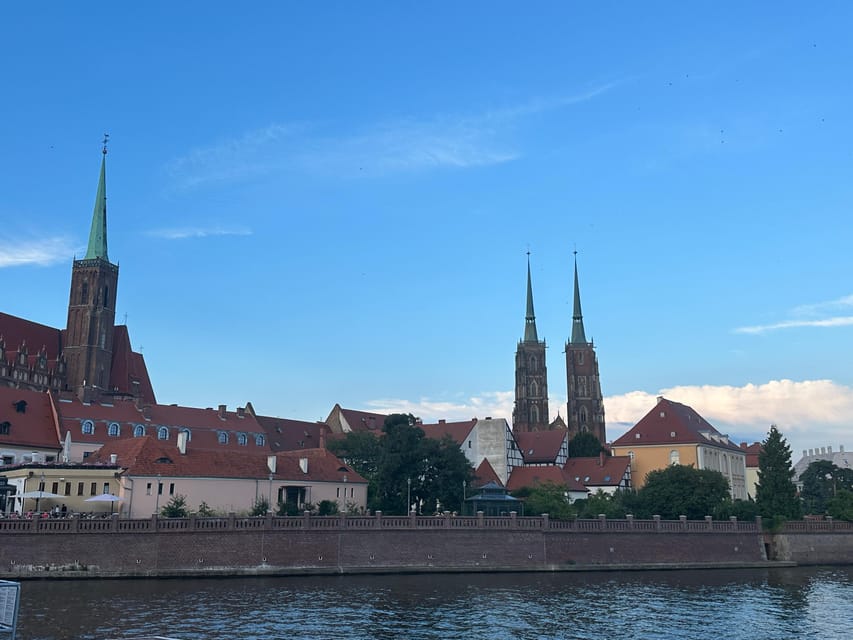
- Cathedral Island finale: The route ends at Wrocław Cathedral after crossing Sand Island and Tumski Bridge.
- Small details along the way: Look for the Hansel and Gretel houses, the Fencer Fountain, and Wrocław’s famous gnomes.
- Good value for a first visit: The tour costs $33 and includes a broad overview rather than a single attraction.
- Practical flexibility: You can cancel up to 24 hours before departure for a full refund, and reserve now while paying later.
Why this Wrocław walk works so well
Wrocław can feel confusing at first. Its central sights are close enough to reach on foot, yet the city’s story spreads across several islands, squares, churches, bridges, and university buildings. This tour gives you a route through that mix instead of leaving you to connect the pieces on your own.
You begin at the Pillory, near the center of the Market Square. From there, the walk follows a natural line through the Old Town and onward toward Cathedral Island. That route matters because it lets you watch Wrocław change character. The first half is civic and commercial, with grand façades, markets, and student life. The second half feels quieter and more religious, ending around the cathedral and the oldest part of the city.
I also like the balance between major monuments and smaller details. You see the Town Hall, University of Wrocław, and cathedral, but you also stop for the Hansel and Gretel houses, the Fencer Fountain, and the city gnomes. Those smaller sights help keep a brisk sightseeing walk from becoming a parade of large buildings.
The guide’s role is important here. You are not simply following a map and taking photographs. You can ask questions during the walk, and the tour is designed to adapt to the group’s interests. German-speaking visitors get the practical benefit of hearing dates, stories, and explanations in their own language.
More walking tours around Poland:
- Warsaw: Old Town Highlights Walking Tour in English
★ 4.7 · 1,516 reviews - Old Town Krakow & Wawel Castle Walking Tour
★ 5.0 · 1,508 reviews - Creepy Krakow: 2-Hour City Walking Tour
★ 4.7 · 1,131 reviews
From the Pillory to the Market Square
The Pillory is the starting point, right by Wrocław’s historic center. It is a useful meeting place because you move almost immediately into the Market Square, the city’s main showpiece.
The Market Square is surrounded by historic buildings in a variety of colors and styles. The square is not just a pretty open space. It has long been the center of public life, trade, and civic business, which makes it the right place to begin a city tour.
Your guide can help you read the façades instead of treating them as a single backdrop. Look for the changing shapes, details, and periods represented around the square. With a live German-language explanation, you get more than a quick photo stop and a name to remember later.
The tour is shared with other participants, so you should expect a social atmosphere rather than a private conversation. That can be a plus if you enjoy comparing impressions and asking questions in a group. If you prefer to stop for long periods at every building, the schedule may feel brisk.
Wrocław Town Hall and Salt Market Square
Wrocław Town Hall is the architectural centerpiece of the Market Square. Its Gothic form gives the square much of its character, and the building is one of the city’s most important landmarks.
The tour treats the Town Hall as part of the wider square, not as a separate museum visit. That distinction matters. You should expect an explanation from outside rather than time set aside for a full interior visit, since no interior admission is listed as part of the experience.
Next comes Salt Market Square, a smaller space with its own identity. It gives you a break from the scale of the main square and shows how Wrocław’s urban center is made up of linked public spaces rather than one single plaza.
I find this section especially useful at the beginning of a visit because it helps you get your bearings. After the tour, you can return to the Market Square, Town Hall, or Salt Market Square on your own and explore at a slower pace.
St. Elizabeth’s Church and the Hansel and Gretel houses
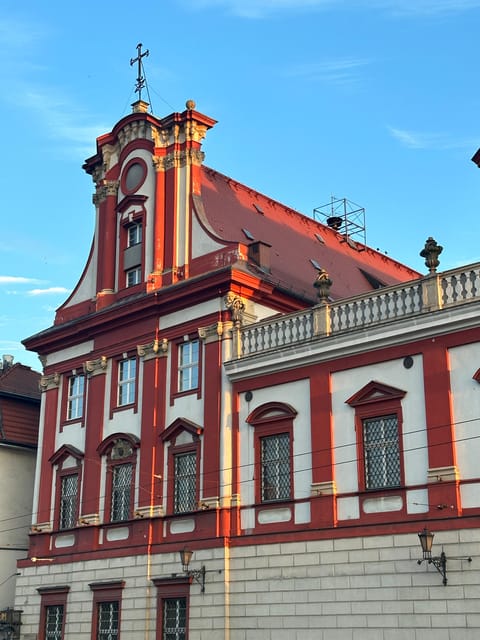
St. Elizabeth’s Church is one of the most striking stops on the route. The church is known for its tall form and prominent position in the Old Town. The tour also highlights its tower and the view associated with it, although you should not assume that tower entry is included unless your booking specifically says so.
The church gives the guide a chance to explain Wrocław’s religious and architectural story. It is also a useful reminder that the city’s center is not only about merchant houses and civic buildings. Churches have shaped its skyline and public life for centuries.
Nearby, the Hansel and Gretel houses provide a lighter moment. Their picturesque pairing and familiar name make them easy to remember, and the local legend adds a bit of storybook charm to the walk. This is the kind of stop that works well in a group tour because it gives you a clear visual detail to look for later.
Do not expect a long stop here. The value is in seeing how a small architectural feature connects with the larger setting around the church and Old Town. Your guide can add the context, while you take in the unusual shape and position of the houses.
Same streets, a different story:
- Gdańsk City Sights & History Guided Walking Tour in English
★ 4.8 · 876 reviews - Krakow: The Old Town Walking Tour
★ 4.8 · 794 reviews - Warsaw: Old Town Guided Walking Tour
★ 4.9 · 599 reviews - Krakow: Kazimierz Jewish Quarter Walking Tour
★ 4.8 · 571 reviews
University of Wrocław and the Fencer Fountain
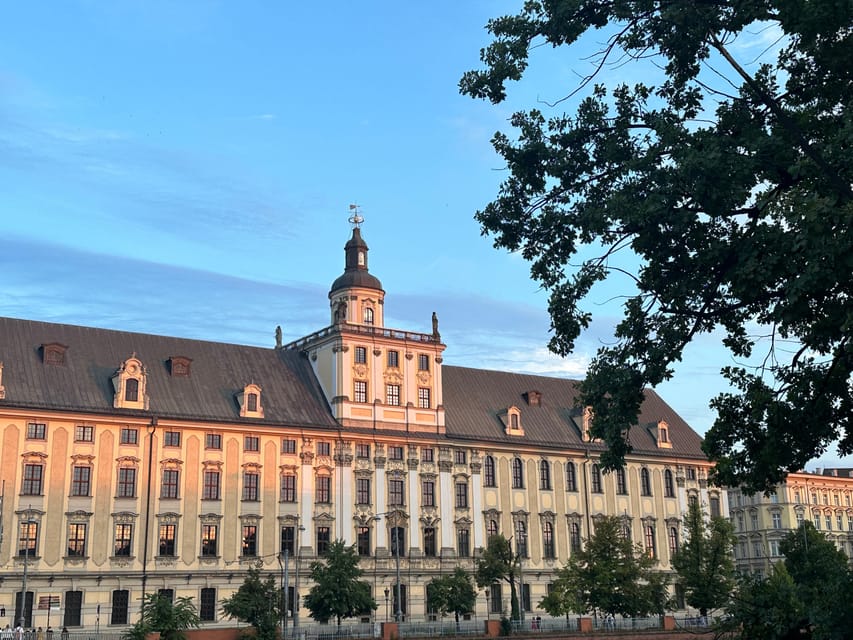
The University of Wrocław is one of the oldest universities in Central Europe and an important part of the city’s identity. It is not simply an academic building on the route. The university represents Wrocław as a place of learning, debate, and changing political and cultural influence.
The guide explains the institution’s role and points out its architectural importance. This makes the stop worthwhile even if you are not planning to visit a university museum or interior. You get a sense of how the center remains a working part of the city, not only a preserved historic district.
The Fencer Fountain adds a playful public-art stop. Its figure is easy to recognize and gives the group a chance to pause between larger buildings. I like including stops like this because they make the route more varied. You are not asked to absorb one grand monument after another.
This is also a good place to ask questions. The tour specifically allows interaction, so you can use the time to clarify something about Wrocław’s past, the university, or the city’s public spaces rather than waiting until the end.
Wrocław Market Hall and the route toward the islands
The historic Wrocław Market Hall brings the walk back to everyday city life. Here, the atmosphere shifts from grand façades to shopping, movement, and local activity. The hall shows how markets remain part of the city’s daily rhythm.
A guided visit to this area is valuable because it gives you a different view of Wrocław. Historic cities can become a collection of monuments if you only follow the most famous sights. The Market Hall helps balance that picture with a place built around ordinary commerce.
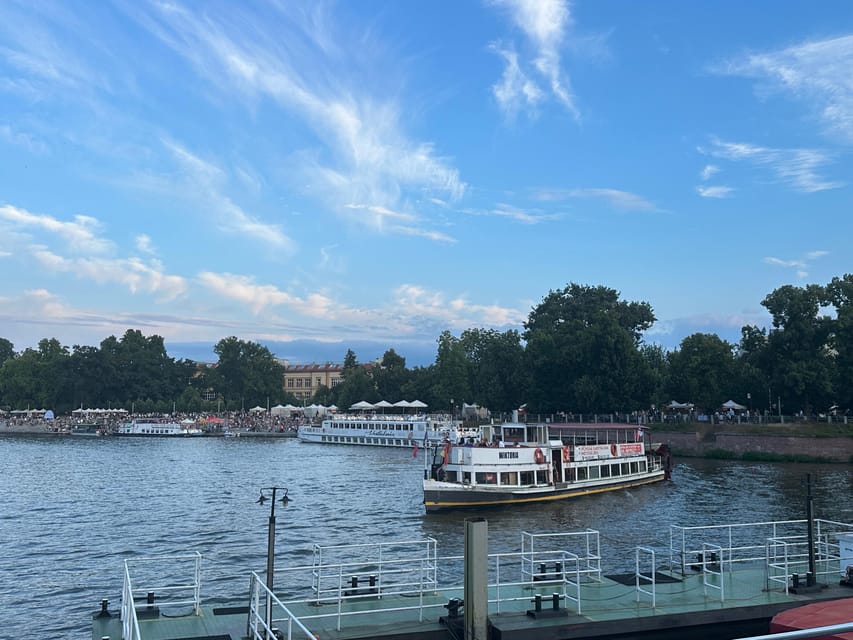
The tour then continues toward Sand Island. This section links the central Old Town with the river islands and Cathedral Island. You begin to see how water has shaped Wrocław’s layout and why bridges are such an important part of moving through the city.
The route includes several outdoor stops, so dress for the weather. The operator says tours normally run in all conditions and recommends suitable clothing. In extreme weather, the tour can be postponed or cancelled, with an alternative arrangement offered.
Sand Island, Tumski Bridge, and Cathedral Island
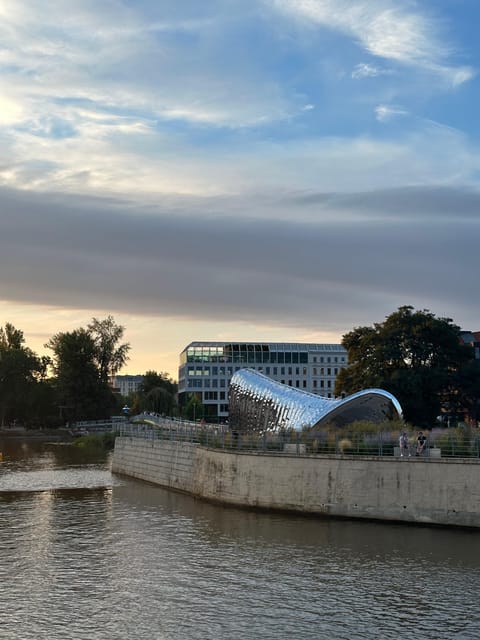
Sand Island is a key transition point. It takes you away from the busiest central streets and toward the oldest part of Wrocław. The walk across this area gives the itinerary a sense of progression, rather than feeling like a random list of attractions.
Tumski Bridge is another memorable part of the route. Bridges in Wrocław are not merely ways to cross the water. They connect the city’s districts and islands, and they help explain why Wrocław is often experienced as a city of waterways.
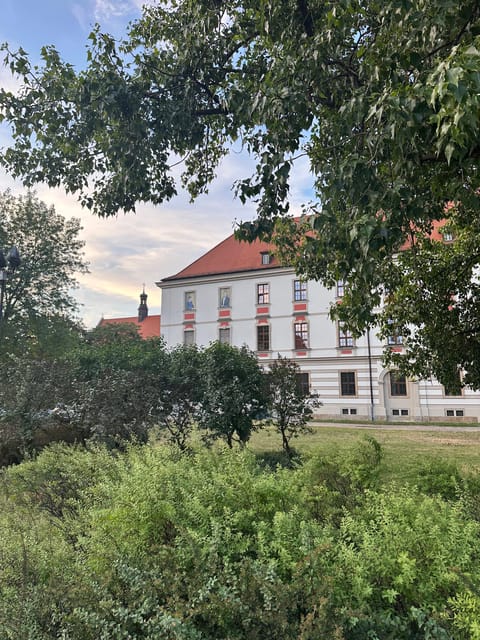
From here, you reach Cathedral Island, known in Polish as Ostrów Tumski. This is described as the oldest part of Wrocław, and it feels different from the commercial center. The architecture, religious buildings, and river setting create a calmer finish to the walk.
This part of the route is especially useful if you have limited time in Wrocław. You see the Old Town and the cathedral district in one outing, without needing separate orientation walks. The trade-off is that you may want to return later for a slower look at the churches and streets.
Wrocław’s gnomes add a local twist
The city gnomes are one of Wrocław’s most distinctive details. Small figures appear around the city, and they have become part of the local visual culture. The tour includes them as one of its lighter attractions.
Gnome spotting gives you something to look for after the guide has finished. It also adds humor to a route filled with serious institutions, churches, and civic buildings. Keep your eyes open during the walk, since these figures are easy to miss if you only look at rooflines and large monuments.
The gnomes are not a replacement for the city’s major sights. They work better as a small extra layer, one that encourages you to notice street-level details. Families and visitors who enjoy photography may find this part particularly appealing, though the tour is designed for adults and general sightseeing as well.
Wrocław Cathedral provides the finale
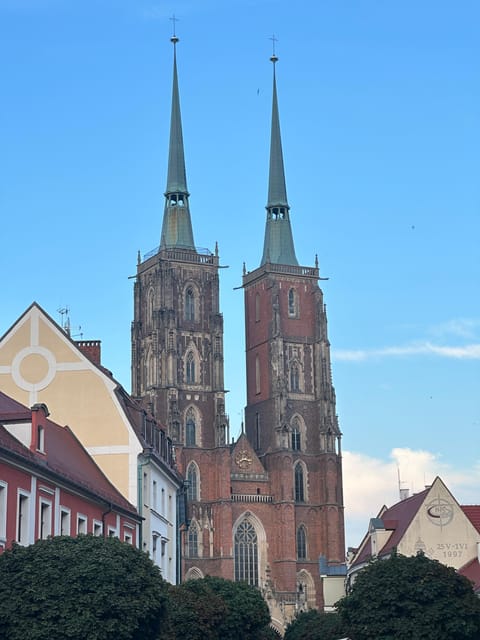
The walk finishes at Wrocław Cathedral on Cathedral Island. This is a strong ending because the building gives the route a clear final landmark and brings together many of the themes introduced earlier: faith, architecture, the city’s age, and the importance of the river islands.
The cathedral is a major Gothic monument, and the guide explains its role in Wrocław’s spiritual story. The stop is primarily a guided exterior and area visit based on the listed route, so check the booking details if you specifically want interior entry or tower access.
Ending here also gives you a useful choice. You can continue exploring Cathedral Island on your own, return toward the center, or simply pause after the walk. Since the tour covers many sights in a short time, I would leave extra time afterward if you want photographs or a quieter look around the cathedral district.
What $33 buys you
At $33 per person, this is priced as an affordable introduction rather than a luxury experience. You are paying for a live German-speaking guide, a planned route, local context, and the efficiency of seeing many important places in a single walk.
The value is strongest if this is your first time in Wrocław. A good orientation tour can save you from missing the connection between the Market Square, university quarter, market hall, islands, and cathedral. It can also help you decide which places deserve a longer return visit.
The cost is less compelling if you already know the Old Town well or prefer to explore entirely at your own speed. You could walk between many of these sights yourself, but you would lose the connected explanation and the chance to ask questions along the way.
The tour has a rating of 4.9 from 203 ratings, and the strongest praise focuses on the guide quality. Specific points include very clear German, strong historical framing, professional organization, and small-group conditions. One recent assessment singled out a small group and perfect German, while another praised the guide’s strong subject knowledge. No guide names are provided, so you should not book expecting a particular individual.
Timing, comfort, and practical limits
The advertised duration is two hours, while the detailed route describes a two-to-three-hour city walk. Plan your day around roughly two hours, with a little flexibility if the group pauses or the pace changes.
The tour is wheelchair accessible, which is useful for many visitors. Still, this is an outdoor walking route across squares, streets, bridges, and public areas, so confirm any personal mobility needs when booking.
The tour runs in German. That sounds obvious, but it is the key booking decision. If you understand German well enough to follow spoken historical explanations, the language format should make the experience much more useful. If you do not, the tour will not serve as an effective general sightseeing option.
You can cancel up to 24 hours in advance for a full refund, and the reserve-now, pay-later option helps if your schedule is still shifting. The operator normally runs the walk in all weather, so bring suitable clothing rather than assuming a sunny day.
Who should book this walk?
I would choose this tour if you want a broad first look at Wrocław, prefer live German commentary, and value a clear route over independent wandering. It also suits anyone with only a short stay who wants to see the main Old Town and Cathedral Island in one outing.
It is a good match for couples, families, solo visitors, and anyone who enjoys asking questions in a shared group. The mix of major sights, legends, public art, markets, and gnomes keeps the walk from feeling too formal.
You may want another option if you need a private pace, extensive interior visits, or long photography stops. This tour is built around coverage and orientation. Its strength is showing you how the city fits together, not giving you an hour inside each monument.
Should you book the Wrocław German walking tour?
Book it if you want an affordable, well-structured introduction in German and like the idea of covering the Market Square, Town Hall, St. Elizabeth’s Church, university, Market Hall, river islands, Cathedral Island, and cathedral in one route.
Skip it if you already know central Wrocław, dislike group walks, or want a private guide who can linger at a few selected sights. For most German-speaking first-time visitors, the combination of route, price, and strong guide feedback makes this a sensible way to begin exploring the city.
FAQ
What language is the tour conducted in?
The live tour guide speaks German. The activity information also notes that some content is shown in its original language.
How long does the walking tour last?
The advertised duration is two hours. The detailed tour description refers to a two-to-three-hour city tour, so allow some flexibility.
How much does the tour cost?
The listed price is $33 per person.
Where does the tour start?
The meeting point is the Pillory.
Where does the tour finish?
The tour finishes at Wrocław Cathedral on Cathedral Island.
Which major sights are included?
The route includes the Market Square, Wrocław Town Hall, Salt Market Square, St. Elizabeth’s Church, the Hansel and Gretel houses, University of Wrocław, Fencer Fountain, Wrocław Market Hall, Sand Island, Tumski Bridge, Cathedral Island, Wrocław’s gnomes, and Wrocław Cathedral.
Is the tour wheelchair accessible?
Yes, the activity is listed as wheelchair accessible.
Can I cancel the booking?
Yes. You can cancel up to 24 hours in advance for a full refund.
Can I reserve now and pay later?
Yes. The reserve-now, pay-later option lets you book without paying immediately.
What happens if the weather is bad?
The tour usually operates in all weather conditions, so you should dress accordingly. In extreme weather, the operator may cancel or postpone the tour and will offer an alternative solution.
New walking tours around Poland
- Krakow: Old Town Highlights Walking Tour★ 4.5 · 173 reviews
- Kraków: Old Town & Wawel Castle Walking Tour in English★ 4.8 · 532 reviews
- Krakow: Street Food Walking Tour★ 4.8 · 285 reviews
- Krakow: 2h Kazimierz (Jewish Quarter) Walking Tour★ 4.5 · 75 reviews
- Krakow: Legends and Tales of Old Town Walking Tour★ 4.8 · 227 reviews
- Krakow: Jewish Ghetto Walking Tour★ 4.6 · 349 reviews
- Krakow: Spooky Tales Guided Walking Tour★ 4.6 · 164 reviews
- Krakow: Evening Walking Tour with Spooky Stories★ 4.7 · 500 reviews
Poland Walking Tours, side by side.
Warsaw: Old Town Highlights Walking Tour in English
Read our review →
Gdańsk City Sights & History Guided Walking Tour in English
Read our review →
Kraków: Old Town & Wawel Castle Walking Tour in English
Read our review →Lists this walk sits on