
Review · VIETNAM
Hoi An Ancient Town – Walking Tour with Local Guide
Hoi An’s old town can feel easy to explore, but its best details are easy to miss. This small-group walk of up to 10 people connects the main sights with the stories behind them, from Chinese assembly halls to merchant houses and the Japanese Covered Bridge. Guides such as Trung, Duy, Tom, and Tin are praised for clear English, humor, and a strong sense of local pride.
I like the way the tour gives you a quick cultural map of Hoi An, then sends you off with practical ideas for food, coffee, tailoring, and later sightseeing. I also like the manageable pace and indoor stops, which matter in Hoi An’s heat, rain, and crowded festival periods. The main consideration is the separate 120,000 VND cash entrance ticket, and 150 minutes is enough for an introduction but not for lingering at every site.
Key points at a glance

- Small group, maximum 10 people: You can hear the guide, ask questions, and stay together more easily on busy streets.
- A useful first-day orientation: The route covers major landmarks, museums, old houses, temples, and the market in one walk.
- Strong local guiding: Guides including Trung, Duy, Tom, Tin, and others explain Hoi An’s past, architecture, customs, and present-day life in good English.
- A refreshing finish: The tour includes a traditional dessert or local tea, with many groups stopping at Mót for a herbal drink.
- Practical recommendations: You can ask for advice on local dishes, cafés, tailor shops, and other things to do.
- Bring cash for entry: The old town heritage ticket costs 120,000 VND per person and is not included.
Why a guided walk helps in Hoi An

Hoi An is compact, photogenic, and easy to wander. That is also the problem. Without context, the old town can become a pleasant parade of yellow walls, lanterns, souvenir shops, cafés, and tailor stores. A guide helps you understand why the streets look as they do and how Hoi An grew into a trading port shaped by Vietnamese, Chinese, Japanese, and other outside influences.
I see this tour as a strong starting point rather than a complete study of the town. You cover many of the headline sights in about two and a half hours, learn the basic story of the place, and collect recommendations for returning on your own. Several people who had already walked around aimlessly wished they had done this tour first. That is useful advice: take the walk early, then revisit the places that catch your eye.
The group limit matters. Ten people is small enough for a guide to keep everyone close and answer questions without shouting. That becomes especially useful around Tet or during busy periods, when the lanes fill quickly. One guide, Trung, was specifically praised for keeping the group together like sticky rice in crowded conditions. The pace is described as easy, with time for photographs and questions.
More History Walking Tours in Vietnam:
- Hoi An: Ancient Town Guided Walking Tour
★ 4.9 · 766 reviews - Hue Imperial Ancient City Walking Tour
★ 4.8 · 308 reviews - Hanoi: Cho Gioi Vietnam War History Walking Tour
★ 5.0 · 102 reviews
Starting at 95 Phan Chu Trinh Street
The meeting point is at 95 Phan Chu Trinh Street, in front of a tailor shop at the corner of an intersection. You are not collected from your hotel, so plan your own way there and arrive ready to walk. This is a central, practical place to begin, but check the exact meeting details before setting out so you do not confuse the starting point with a shop inside the old town.
The route takes you into Hoi An Ancient Town for a concentrated sightseeing loop. The advertised duration is 150 minutes, while the itinerary also describes the old town visit as three hours. I would plan for roughly two and a half hours, with some flexibility depending on crowd levels, questions, and how long the group spends at each stop.
Wear comfortable clothes and shoes. The walk includes narrow streets, heritage buildings, and outdoor stretches. There are indoor breaks, which help in hot or wet weather, but this is still a walking tour rather than a vehicle-based sightseeing trip. Baby strollers are not allowed, and the experience is not suitable for babies under one year.
Ba Mu Temple Gate and Hoi An’s first impressions
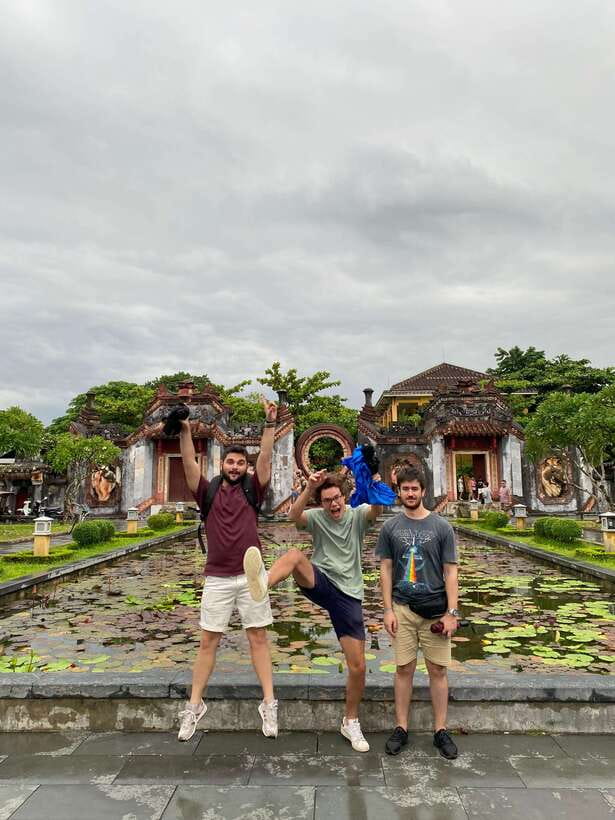
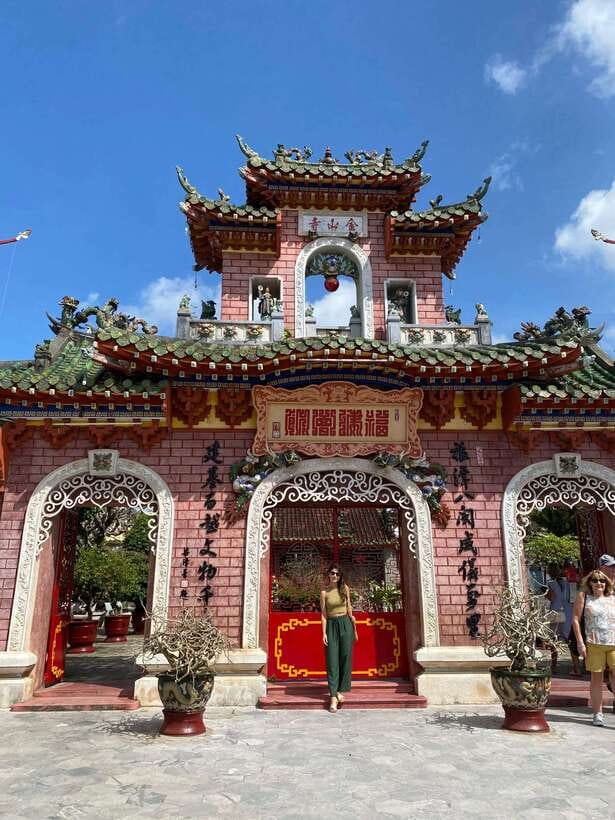
Ba Mu Temple Gate is an attractive early stop and a good introduction to Hoi An’s mixture of religion, architecture, and photography. The gate gives you a sense of the town’s visual character before the route moves into its more detailed heritage buildings.
This is the sort of place that rewards a guide’s explanation. You can take photographs on your own, but a local guide adds the missing layer: what the site represents, how it fits into the town, and how to look at the decorative details rather than simply passing through for a picture.
The stop also sets a sensible rhythm for the walk. You begin outdoors, hear the basic orientation, then move toward places where the town’s trading past is easier to understand. Do not expect a long visit here. The value comes from placing it within the larger story of Hoi An.
Assembly halls and the Chinese influence
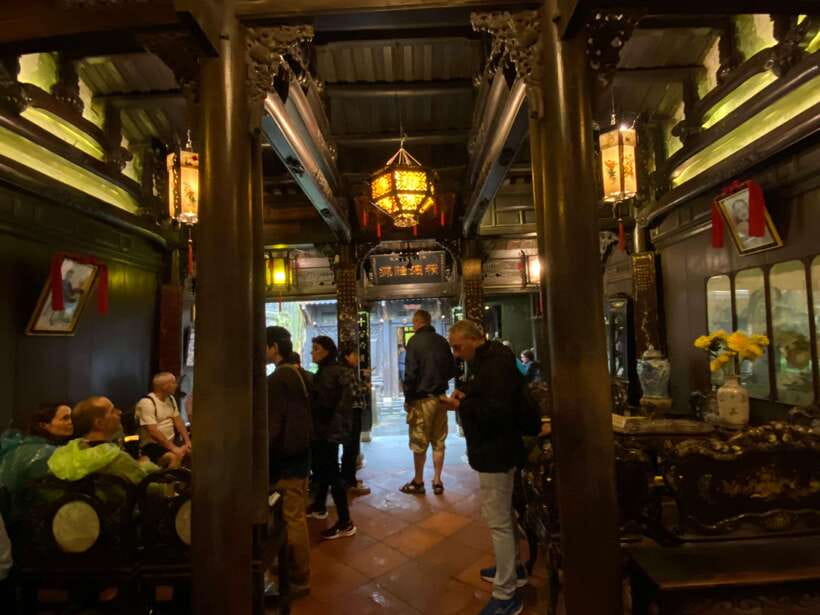
The route visits a Fujian or Cantonese Assembly Hall. These buildings were created by Chinese communities connected to Hoi An’s trading life, and they remain among the old town’s most striking cultural sites.
The exact assembly hall visited can depend on the day’s route, but the point is consistent: you see how immigrant communities maintained religious and social ties while doing business in the port. Look at the roof decoration, carved details, altars, courtyards, and the way the building directs visitors through its spaces.
This is one of the tour’s most useful stops because an assembly hall can look like an ornate temple if you do not know what you are seeing. Your guide can explain the difference and connect the building to Hoi An’s wider mix of communities. Guides such as Duy and Trung are repeatedly praised for answering questions about Vietnamese culture and history in clear English, which is particularly valuable here.
You may find the stop busy, especially around festivals. The small group helps, but the guide cannot control how long other people stay in a doorway or courtyard. Keep your camera ready, listen closely, and allow the group to move at the pace of the site.
More walks with a guide around Vietnam:
- Hanoi: Michelin Guide Street Food Walking Tour
★ 4.8 · 961 reviews - Ho Chi Minh City: Walking Tour with Local Guide
★ 4.8 · 363 reviews - Ho Chi Minh: City Highlights Guided Walking Tour
★ 4.9 · 188 reviews - Hoi An/Da Nang: Private Photoshoot & Guided Walking Tour
★ 5.0 · 160 reviews
The Japanese Covered Bridge
The Japanese Covered Bridge is Hoi An’s signature landmark and almost certainly the stop you will recognize from photographs. The bridge is more than a pretty crossing. It reflects the town’s connections with Japanese merchants and the wider trading networks that shaped old Hoi An.
A guide gives this famous structure some needed context. You will learn how the bridge fits into the old town’s street plan and why it matters as a symbol of Hoi An. It is also one of the tour’s best opportunities for photographs, although space can be tight and the area may be crowded.
Your guide may help with group photos, a small service repeatedly appreciated during the walk. That sounds minor, but it is useful when you are traveling alone or with a couple and want a proper picture without handing your phone to a stranger.
Do not expect a quiet, private encounter with the bridge. It is one of the most popular places in town. The benefit of visiting with a guide is not solitude. It is getting the story, finding a sensible viewing position, and moving on before the crowd consumes your time.
Kazik Park and the town’s public spaces

Kazik Park provides a change from temples and enclosed heritage buildings. It is named for Kazimierz Kwiatkowski, the Polish architect and conservation specialist associated with the preservation of Hoi An and other Vietnamese heritage sites.
The stop helps explain that Hoi An did not simply survive by accident. Conservation work, local care, and international attention all played a part in protecting the old town. This is a useful counterpoint to the romantic lantern-lit image. The buildings need maintenance, regulation, and thoughtful preservation, and the guide can connect the park to that modern story.
It is also a natural pause for photographs and orientation. By this point, you have seen enough of the old town to understand how the main lanes connect, and the guide can point out places worth returning to later.
Tan Ky Heritage House and merchant life
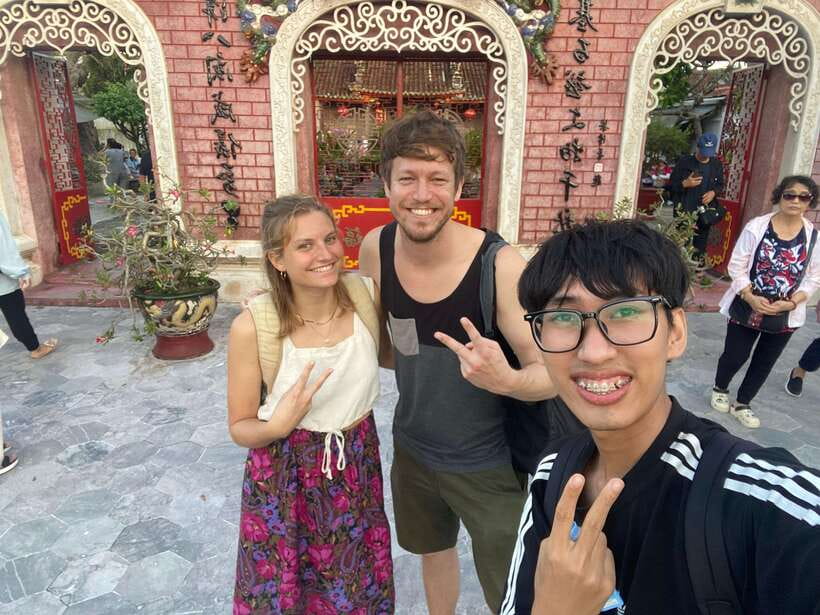
Tan Ky Heritage House is one of the most important indoor visits on the route. This old merchant home shows how business, family life, storage, and worship could share one narrow urban building.
The house is valuable because it makes Hoi An’s past physical. You are not just hearing about trade. You are looking at the structure that supported it, including the layout and details shaped by different cultural influences. The guide can explain how the building worked and why these old houses are central to the town’s character.
Indoor heritage houses also offer welcome relief from the weather. Hoi An can be hot, humid, or rainy, and the tour deliberately includes several interior stops. That makes the walk more comfortable than a route that relies entirely on outdoor monuments.
The tradeoff is time. You will get an explained visit, not an hour to inspect every beam and object. If Tan Ky interests you, note its location and return later when you have more time.
Traditional art and folk culture
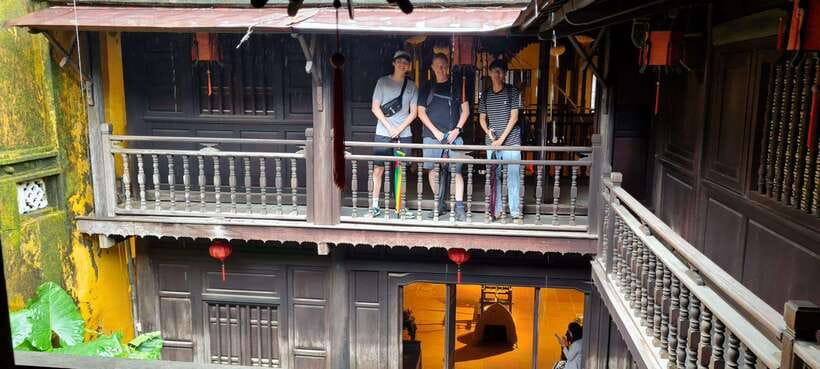
The Hoi An Traditional Art Performance House and the Museum of Folk Culture add depth to the walk. The performance house introduces local artistic traditions, while the museum focuses on everyday culture, customs, and folk life.
These stops prevent the tour from becoming only an architecture circuit. You get a better sense of the people and practices behind the old facades. The museum, in particular, helps connect Hoi An’s old buildings with the ordinary work, celebrations, beliefs, and objects of Vietnamese life.
The tour does not appear to include a full scheduled stage performance as its main event, so think of the performance house as a heritage stop rather than a separate evening show. If you want an extended cultural performance, ask the guide what is running during your visit.
One useful tip comes from a past participant who took this walk before a larger Hoi An cultural show and found the performance easier to understand afterward. The same logic applies to other cultural activities: learn the basic setting first, then watch the show with better context.
Hoi An Market and the final local treat
The route ends at Hoi An Market, where the old town’s polished heritage setting gives way to a more everyday commercial scene. It is a good place to discuss local food, shopping, and the practical side of visiting Hoi An.
Your guide can suggest dishes to try and explain where to look for cafés or other local stops. Recommendations are one of the tour’s strongest extras. Guides have offered advice on restaurants, coffee shops, tailor shops, and further activities, sometimes following up through WhatsApp after the walk.
The included tea or dessert gives the tour a pleasant finish. Several groups ended with a herbal drink at Mót, a popular local stop. The exact treat can vary, so consider it a small refreshment rather than a full food experience.
This is not a street-food tour, and you should not book it expecting a meal. The value is the combination of orientation and targeted suggestions. Once you know what to try, you can return to the market or follow the guide’s recommendations for dinner.
What the $14 price really buys you
At $14 per person, the tour is inexpensive for a guided introduction to Hoi An. The price includes an English-speaking local guide, the small group, visits to key heritage sites, hidden lanes and photo spots, plus tea or a traditional dessert.
The extra 120,000 VND heritage ticket changes the total cost, and you must pay that amount in cash. Even with the ticket, I consider the tour good value if you are new to Hoi An or have only one day. You are paying for local interpretation, a sensible route, help with photographs, and recommendations that can save you time later.
The value is lower for someone who has already studied Hoi An, visited the main houses and halls, or prefers to wander without a schedule. It is also not designed for travelers who want a slow architectural study. The tour moves through many places, so you will need to choose which sites deserve a return visit.
The booking terms are flexible: you can cancel up to 24 hours ahead for a full refund, and you can reserve now and pay later. Pick-up and drop-off are not included.
Which guide might you get?
The guide is assigned rather than selected by you. Names praised during recent tours include Trung, Duy, Tom, Tin, Trang, and Yui. Their shared strengths are clear English, humor, local insight, and a willingness to answer questions.
Trung appears especially often in the feedback, with people praising his friendly manner, cultural explanations, steady pace, group management, photographs, and restaurant suggestions. Duy is also praised for his English, humor, and ability to explain Hoi An’s past. Tom is described as welcoming and engaging, while Tin made the city’s history easy to follow.
That does not guarantee a particular guide on your date. It does tell you what kind of guiding style to expect: conversational, informative, and personal rather than formal or lecture-heavy.
One small caution is worth noting. In a busy public town, unexpected encounters can happen. One participant felt uncomfortable when an unrelated local followed the group for a short time, though the person eventually left. This does not define the tour, but it is a reminder to stay with the group and tell your guide if something feels wrong.
Who should book this walk?
I would choose this tour for a first visit, a short stay, solo travelers who want an easy introduction, couples who want help with photographs, and anyone who likes history explained in plain English. It also suits people who want a list of good places to eat, drink coffee, shop for tailoring, or explore after the tour.
It is a particularly smart choice on your first day. You will learn the old town’s layout, understand the main sights, and avoid spending your entire visit walking past buildings without knowing what they are.
I would be less likely to book it if you dislike group tours, cannot walk comfortably for around two and a half hours, or want a very slow and private experience. Families with babies under one year should choose another activity, and strollers are not permitted.
Should you book the Hoi An Ancient Town walk?
Yes, if you want a friendly, low-cost introduction before exploring on your own. The route covers most of the essential old town sights, the guides bring the buildings to life, and the small group keeps the experience personal without making it expensive.
Book it early in your Hoi An stay, carry 120,000 VND in cash for the heritage ticket, and wear comfortable clothes. Afterward, use the guide’s restaurant, café, tailor, and sightseeing suggestions to shape the rest of your time. If you only have one day in Hoi An, this walk gives you a sensible framework for making the most of it.
FAQ
Where does the walking tour start?
The meeting point is 95 Phan Chu Trinh Street in Hoi An, in front of a tailor shop at the corner of the intersection.
How long does the tour last?
The stated duration is 150 minutes. The old town visit is also described as lasting three hours, so allow roughly two and a half hours, with some flexibility.
Is the heritage entrance ticket included?
No. You must pay 120,000 VND per person separately, and the ticket is payable only in cash.
What language is the tour conducted in?
The tour is conducted in English with a live local guide.
How many people are in the group?
The group is limited to 10 participants.
Is hotel pick-up included?
No. Pick-up and drop-off are not included, so you need to reach the meeting point yourself.
New walking tours around Vietnam
- Hue Imperial City Walking Tour: Citadel & Forbidden City★ 4.8 · 245 reviews
- Hue Customizable Tour with Imperial Citadel & Forbidden City★ 4.9 · 937 reviews
- Hue Imperial Ancient City Walking Tour★ 4.8 · 308 reviews
- Hoi An/Da Nang: Private Photoshoot & Guided Walking Tour★ 5.0 · 160 reviews
- Hoi An: Ancient Town Guided Walking Tour★ 4.9 · 766 reviews
- Ho Chi Minh City: Private Street Food Evening Walking Tour★ 5.0 · 436 reviews
- Ho Chi Minh City: Highlights & Hidden Gems Walking Tour★ 4.8 · 113 reviews
- Ho Chi Minh City: Walking Tour with Local Guide★ 4.8 · 363 reviews
Vietnam Walking Tours, side by side.

Private Street Food Evening Walking Tour in Ho Chi Minh City
Read our review →
[HOT] Hanoi Old Quarter Walking Street Food – Small Group Tour
Read our review →
Super Niche Walking Street Food Tour in Ho Chi Minh City
Read our review →

Private Hanoi Street Food Walking Tour With Real Foodie
Read our review →

Hue Customizable Tour with Imperial Citadel & Forbidden City
Read our review →Lists this walk sits on