
Review · POLAND
Warsaw: Jewish History Guided Walking Tour in English
Warsaw’s Jewish story is best understood on foot, where an ordinary street corner can mark a vanished neighborhood, a ghetto boundary, or an act of resistance. This 150-minute English walking tour links surviving places with photographs, maps, and stories about the people who once made Jewish Warsaw one of Europe’s great cultural centers. I like the way it begins before the Second World War, not only with persecution, and I like its attention to resilience and the city’s Jewish life today.
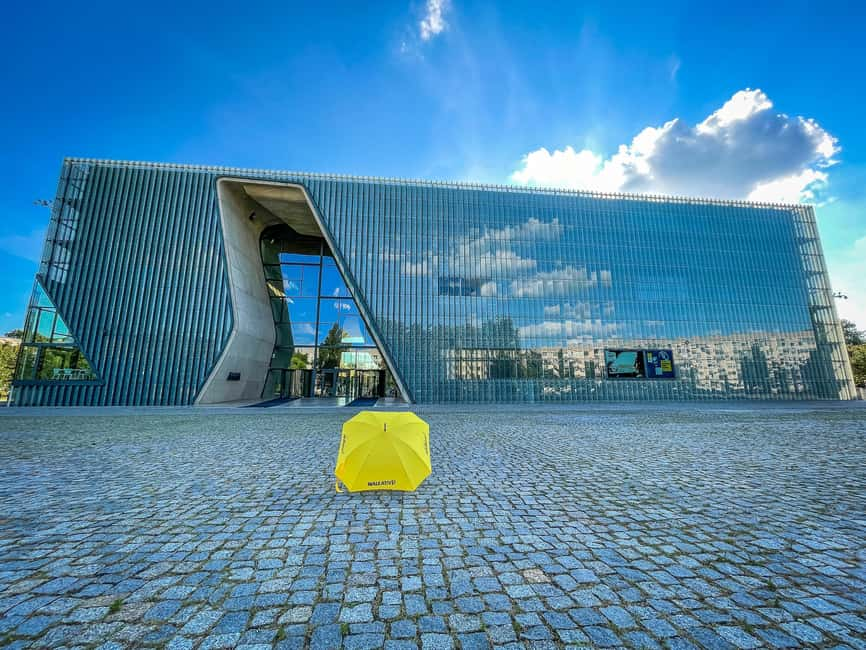
The meeting point beside All Saints Church is easy to find, thanks to the yellow umbrella. The main drawback is that you are outdoors for the entire walk, and much of what you learn is connected to buildings and streets that no longer look as they did. A large group can also make it harder to hear, while entry to Nożyk Synagogue is not guaranteed.
Key points to know before you book
- Nożyk Synagogue is Warsaw’s only surviving prewar synagogue, but this walk may focus on its exterior rather than promise interior access.
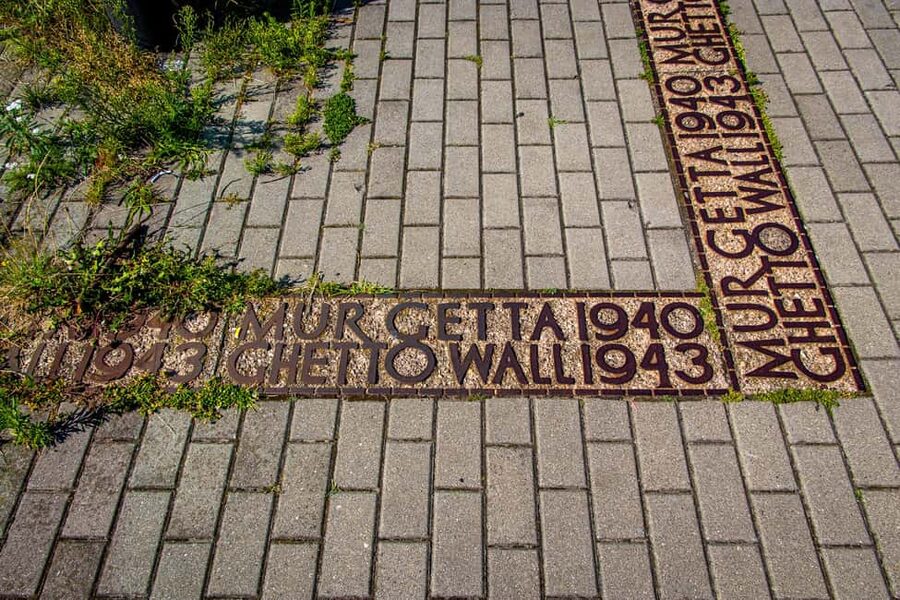
- Chłodna Street marks the former ghetto bridge, where a raised crossing once joined two sections of the sealed Jewish district.
- Waliców Street connects Jewish history with the Warsaw Uprising, adding a wider wartime view beyond the Holocaust.
- The story starts before 1939, covering Jewish artists, writers, actors, journalists, and political participation in Polish uprisings.
- Guides use photos, maps, questions, and personal stories, with especially strong feedback for Andrzej, Jacek, Aga, Luke, Christopher, Anna, and others.
- The $26 price covers a full 2.5-hour guided walk, with free cancellation up to 24 hours before departure and the option to reserve without paying at once.
Why this Warsaw walk matters
Before the war, Warsaw was the second-largest Jewish city in the world. That fact changes how you see the city. You are not simply walking through a site of wartime tragedy. You are walking through the former home of a major community with its own theaters, newspapers, schools, religious life, political movements, and artistic circles.
That wider frame is the tour’s greatest strength. The guide explains how Jewish residents took part in the city’s public life for centuries, including struggles against occupying powers and Polish uprisings in the 19th century. The point is clear: Jewish history in Warsaw is not a short chapter that begins with the German occupation.
The walk then moves toward the interwar years, when Jewish Warsaw supported hundreds of artists, actors, writers, and journalists. You hear about a cultural scene that was especially active and varied, which makes the later destruction more difficult to grasp. The tour asks you to picture a living city before it asks you to consider what was lost.
That approach suits you if you want context rather than a list of wartime dates. It also helps if your knowledge of the Warsaw Ghetto is limited. Guides explain the subject in accessible English, while leaving room for harder questions and quieter moments.
More Jewish Heritage Walking Tours around Poland:
- Krakow: Kazimierz Jewish Quarter Walking Tour
★ 4.8 · 571 reviews - Krakow: Jewish Ghetto Walking Tour
★ 4.6 · 349 reviews - Jewish Krakow Walking Tour in English
★ 4.8 · 102 reviews
Starting at Grzybowski Square and All Saints Church
Meet beside All Saints Church at Grzybowski Square and look for the yellow umbrella. The location is central and easy to identify, which matters when you are arriving for a walking tour in an unfamiliar city.
Grzybowski Square is a fitting place to begin because it sits within the former Jewish district and near important reminders of wartime Warsaw. Your guide sets the historical scene before the group starts moving, explaining how the area changed over time and how Jewish and non-Jewish life overlapped in the city.
The guide style is one of the strongest parts of this experience. Andrzej is praised for keeping a difficult subject thoughtful and engaging, while Jacek is noted for a steady pace and strong answers to questions. Aga, Luke, Christopher, Anna, and Yatzic are also singled out for clear delivery, humor, personal insight, and an ability to keep the group involved.
Names and guides can vary, of course. What you can reasonably expect is an English-speaking local guide who explains the sites as you walk rather than simply reading out a script. Some guides stay after the official end to answer questions or offer suggestions for the rest of your time in Warsaw.
Nożyk Synagogue and the Jewish city that survived
Nożyk Synagogue is the only surviving prewar synagogue in Warsaw. It is one of the walk’s most important stops because it gives you a physical link to the city’s Jewish past, rather than only an empty space or later memorial.
The synagogue also helps correct a common misunderstanding. Warsaw’s Jewish life was not erased from a city with no earlier presence. It was attacked and destroyed after centuries of religious, cultural, commercial, and political activity.
The tour includes Nożyk Synagogue, but you should not assume that interior entry is part of every departure. Some people on the walk have wanted to go inside, while the guide continued with the outdoor route. If seeing the interior is important to you, ask the supplier after booking about current access.
The wider story here is just as important as the building itself. You learn about the community’s role in daily city life, about artists and journalists in the interwar period, and about the many ways Jewish Warsaw shaped the city around it. This is where the tour moves beyond a simple Holocaust route and gives you the social setting needed to understand what was destroyed.
Chłodna Street and the former ghetto bridge
Chłodna Street is one of the most memorable parts of the walk. The street once passed through the Warsaw Ghetto, and a bridge was built above it to connect two parts of the sealed district. From street level, there is no grand surviving structure to admire. That is exactly why the stop benefits from a guide.
Your guide describes how the bridge functioned and why the divided layout mattered. You learn to read the gap between the present street and the wartime city, often with the help of old photographs or maps. A scene that now looks ordinary becomes evidence of forced separation, restricted movement, and daily hardship.
This is also a good example of the tour’s main challenge. Much of the original ghetto was destroyed, rebuilt, or altered. You will not find a complete preserved district waiting around the corner. Instead, the experience depends on explanation, visual material, and your willingness to imagine the missing city.
Several guides have used photographs and maps to make these locations easier to understand. That support is useful, especially for anyone who finds it hard to picture a vanished street plan. In a large group, stay close and make sure you can hear before the guide begins speaking.
More History Walking Tours in Poland:
- Gdańsk City Sights & History Guided Walking Tour in English
★ 4.8 · 876 reviews - History and Hauntings of Salem Guided Walking Tour
★ 5.0 · 14,564 reviews - Lisbon: History, Stories and Lifestyle Walking Tour
★ 4.8 · 10,902 reviews - Boston: Freedom Trail History Small Group Walking Tour
★ 5.0 · 6,450 reviews
Waliców Street, the ghetto border, and wartime resistance
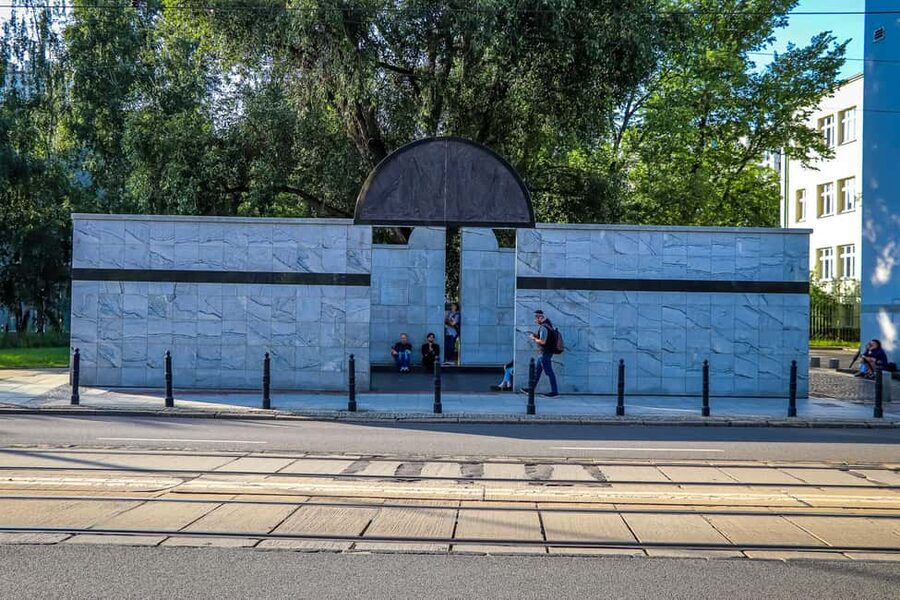
Waliców Street was once part of the ghetto border. Here, the guide connects the history of Jewish Warsaw with the Warsaw Uprising, broadening the story beyond the ghetto itself.
That connection matters because Warsaw’s wartime experience involved several overlapping forms of suffering, resistance, and destruction. The guide explains the Jewish experience while also placing it within the city’s wider wartime history. You are not asked to treat the ghetto and the Polish uprising as the same event. Instead, you gain a clearer sense of how different communities faced occupation, violence, and impossible choices.
The stop is especially useful if you have already visited a general Warsaw Uprising attraction and want to understand how Jewish history fits into the city’s larger wartime story. It also helps you see why surviving fragments and street lines matter, even when there is no intact building to enter.
The walk can be emotionally heavy here. Guides have been praised for handling painful facts with honesty, compassion, and occasional humor, but humor is used carefully and will not suit every group. If you prefer a strictly formal presentation, the conversational approach may feel less predictable. I see that as a minor consideration rather than a major flaw, since the subject requires both sensitivity and clear language.
From destruction to survival and Jewish Warsaw today
The tour does not end with death and destruction. It also tells stories of bravery, resistance, and survival, then brings the subject into the present by discussing Warsaw’s young, diverse, and active Jewish community.
That final step gives the walk a needed sense of balance. You are not left with the idea that Jewish Warsaw exists only in museums or memorials. The guide presents it as a living part of the city, with people looking toward the future while remembering what came before.
The subject still carries great weight, and you should expect a serious experience rather than light sightseeing. At the same time, guides work to keep the pace moving and invite questions. One guide reportedly answered questions after the tour ended, and others offered practical Warsaw suggestions, including places to get coffee.
The walk takes about two and a half hours, but several people have found that the time passes quickly. If you want an even longer discussion, ask questions as you go and remain afterward if the guide has time. Do not expect a café break built into the route, though. The walk remains outside from start to finish.
Guide quality, group size, and hearing the story
Guide quality is central to this tour. The strongest praise centers on clear English, strong command of the subject, an engaging manner, and the ability to answer questions without losing the group’s thread.
The guide may use humor, personal family experience, photographs, maps, films, or television recommendations to make the past easier to grasp. Christopher, Jacek, Luke, Andrzej, Aga, and others have received particularly warm comments for combining facts with human stories. One guide was even able to run the walk for a single customer, showing that a small booking may still go ahead.
This is a general walking tour, not automatically a private tour. The amount you pay covers the reservation fee and the guide’s payment. If you want a smaller private experience, contact Walkative Tours after booking and ask about arranging one.
Large groups bring a tradeoff. You may gain a lively mix of questions, but it can be harder to hear if the guide walks ahead or speaks while moving. Stay near the guide, especially on busy streets, and politely ask for a repeat if you miss a point.
Weather, clothing, and practical comfort
You are outside for the whole 150 minutes, so dress for the forecast. Cold weather can be a real issue, especially in late autumn and winter. Warm layers, a coat, and comfortable shoes will make a greater difference here than any extra sightseeing plan.
Several walks have taken place in freezing or very cold conditions, and the tour has continued successfully. Still, there is no scheduled café stop to warm up. On a wet or bitterly cold day, that may be the deciding factor for you.
Comfortable footwear is sensible because the route is entirely on foot. The supplied details do not give a precise distance or accessibility assessment, so ask the operator directly if you have mobility concerns or need a route tailored to you.
The meeting point is straightforward, and hotel pickup is not included. Plan to reach Grzybowski Square independently and arrive with enough time to find the yellow umbrella.
Is $26 good value for 150 minutes?
At $26 per person, this is a strong value if you want a guided introduction to Jewish Warsaw rather than a quick stop at one memorial. You get two and a half hours with a live English-speaking guide, several important locations, historical context from the 19th century through the present, and time for questions.
The price also makes sense because the route depends on interpretation. Many of the original buildings and boundaries are gone, so the value lies in the guide’s ability to connect street corners with maps, photographs, dates, and human stories.
It is less suitable if you want museum-style displays, indoor warmth, or guaranteed entry to Nożyk Synagogue. You may prefer a private tour if your group wants a slower pace or detailed family-history discussion.
Free cancellation up to 24 hours before departure reduces the risk of booking, and the reserve now, pay later option lets you keep plans flexible. Those policies are useful in Warsaw, where winter weather and changing sightseeing plans can affect a walking day.
Who should book this tour?
I would choose this walk early in a Warsaw visit if you want a framework for the city’s Jewish history before visiting museums or memorials. It is especially helpful if you know little about the Warsaw Ghetto, because the guide explains the basic sequence without assuming specialist knowledge.
It also suits people who already know something about Polish Jewish history and want to ask questions. Guides have handled subjects ranging from religion and wartime resistance to family connections and modern Jewish life.
Families with older children and teenagers may find the visual material and street-based approach easier to follow than a long indoor lecture, though the Holocaust content is serious. The tour works best for anyone prepared to listen, walk, and think carefully about places that no longer look the way they once did.
Should you book the Jewish History Walking Tour?
Book it if you want a thoughtful, place-based introduction to Jewish Warsaw and are comfortable spending the full two and a half hours outside. The strongest reasons are the broad historical frame, the focus on Nożyk Synagogue, Chłodna Street, and Waliców Street, and the quality of guides such as Andrzej, Jacek, Aga, Luke, and Christopher.
Skip it if you need an indoor tour, guaranteed synagogue entry, or a private group by default. Otherwise, $26 buys a substantial and serious walk that helps you understand not only what Warsaw lost, but also the community and culture that existed before the war and continues today.
FAQ
Where does the Jewish History Walking Tour meet?
Meet next to All Saints Church at Grzybowski Square. Look for the yellow umbrella.
How long does the tour last?
The tour lasts 150 minutes, or two and a half hours.
What language is the tour in?
The live tour guide speaks English.
Is hotel pickup included?
No. Hotel pickup and drop-off are not included, so you must reach the meeting point independently.
Does the tour visit Nożyk Synagogue?
Yes, Nożyk Synagogue is included in the route. However, interior entry is not guaranteed, so ask the supplier if going inside is important to you.
What other places does the tour cover?
The route includes Chłodna Street, the site of the former ghetto bridge, and Waliców Street, which was once part of the ghetto border.
Is this a private tour?
No. The standard experience joins a general walking tour. You can contact Walkative Tours after booking to ask about arranging a smaller private tour.
What is included in the price?
The price includes a local guide and the walking tour.
Can I cancel for a refund?
Yes. You can cancel up to 24 hours before the tour for a full refund.
Can I reserve now and pay later?
Yes. The reserve now, pay later option lets you book without paying immediately.
New walking tours around Poland
- Krakow: Old Town Highlights Walking Tour★ 4.5 · 173 reviews
- Kraków: Old Town & Wawel Castle Walking Tour in English★ 4.8 · 532 reviews
- Krakow: Street Food Walking Tour★ 4.8 · 285 reviews
- Krakow: 2h Kazimierz (Jewish Quarter) Walking Tour★ 4.5 · 75 reviews
- Krakow: Legends and Tales of Old Town Walking Tour★ 4.8 · 227 reviews
- Krakow: Jewish Ghetto Walking Tour★ 4.6 · 349 reviews
- Krakow: Spooky Tales Guided Walking Tour★ 4.6 · 164 reviews
- Krakow: Evening Walking Tour with Spooky Stories★ 4.7 · 500 reviews
Poland Walking Tours, side by side.
Warsaw: Old Town Highlights Walking Tour in English
Read our review →
Gdańsk City Sights & History Guided Walking Tour in English
Read our review →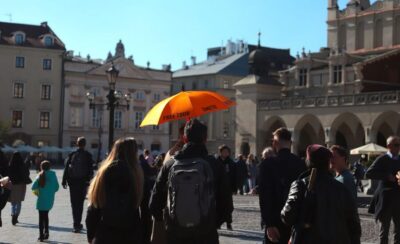
Kraków: Old Town & Wawel Castle Walking Tour in English
Read our review →Lists this walk sits on