
Review · LISBON
Lisbon: Belem Walking Tour with Jeronimos Monastery Entry
Jerónimos Monastery is the star here, and rightly so. Its carved cloisters, vast church, royal tombs, and links to Portugal’s Age of Discovery can be hard to appreciate on your own. This tour gives you prepaid entry and a guide who explains what the stonework, symbols, and grand scale were meant to say.
I like two things in particular: the early start, which helps you get into the monastery before the day becomes more crowded, and the stop for an original Pastel de Belém, made from the old monastery recipe. The main drawback is that Belém Tower is closed for restoration, so you can see and discuss it from outside but cannot go in.
Key points to know
- Jerónimos Monastery comes first: Spend about 90 minutes with the cloisters, church, tombs, and Manueline details.
- The guide adds real value: Luis, Leo, Leonardo, Federico, and other guides are praised for clear English, strong historical knowledge, humor, and useful answers.
- You taste the original custard tart: The stop at Pastéis de Belém is included, not an optional food detour.
- The walk connects major sights: You move from the monastery through Empire Square Garden to the Monument to the Discoveries and Belém Tower.
- Belém Tower is exterior-only for now: Restoration work prevents entry, but the guide still explains its role and architecture.
- Plan for a proper walk: The experience lasts 3 to 3.5 hours and is not suitable for wheelchair users or people with mobility impairments.
Why Jerónimos Monastery is worth a guided visit
You can admire Jerónimos Monastery by yourself, but the building gives you little help. The signs inside are limited, so many visitors see beautiful stone and leave without understanding why it was built or what its carvings mean.
That is where the guide earns the tour price. The visit begins around 9:30 in the morning, with tickets already purchased. The guide meets you at the monastery entrance, near the south entrance to the church and the access queue. Pay close attention to the meeting-point photo and arrive early. One person nearly missed the start after traffic delayed a ride, and Lisbon traffic around Belém can slow you down.
The separate access arrangement is a major practical benefit. On busy days, the ticket queue can be long, and several people specifically valued getting inside without spending much of the morning waiting. You still need to meet the guide at the correct place and on time, but the prepaid entry removes one of the biggest hassles at this sight.
More walking tours around Lisbon:
- Lisbon: History, Stories and Lifestyle Walking Tour
★ 4.8 · 10,902 reviews - Best of Lisbon Small-Group Guided Walking Tour
★ 5.0 · 4,869 reviews - Lisbon: Food and Wine Small Group Walking Tour
★ 4.9 · 4,082 reviews
Inside the upper cloister
The tour starts in the upper cloister, where you get an immediate view of the monastery’s most famous details. Arches, twisted columns, carved stone, and repeated maritime motifs turn what might seem like decoration into a visual record of Portugal’s power during the 15th and 16th centuries.
Your guide explains Manueline architecture, the Portuguese style that combines late Gothic structure with Renaissance influences. This matters because the monastery was not simply a place for monks. It reflected royal wealth, religious purpose, and the profits and ambition tied to overseas navigation.
The upper level is also a good place to understand the building as a whole. From here, you can see how carefully the spaces fit together and how much work went into the stone carving. Guides such as Luis, Leo, Leonardo, and Federico have been praised for using pictures, answering questions, and adjusting the pace to the group.
That last point is worth noting. The amount of information can be substantial. One person found the tour almost too detailed to follow at times, although still very informative. If you enjoy architecture and history, that depth is a benefit. If you prefer a quick photo stop, three hours of guided sightseeing may feel long.
The lower cloister, chapter room, and old refectory
The lower section brings you closer to the daily and institutional life of the monastery. You see important rooms including the Chapter Room and the old Refectory, spaces that help move the visit beyond grand facades and royal names.
You also see the tomb of Fernando Pessoa, one of Portugal’s best-known writers. His remains were moved here in the 20th century, so this part of the visit links the monastery’s medieval and early modern identity with more recent Portuguese culture.
The guide’s role is especially useful in these quieter spaces. Without context, a room such as the Chapter Room may look like another ornate interior. With explanation, you begin to understand how the monastery functioned and how religious life fitted into the wider political order.
The tour usually uses headsets when needed, a helpful feature when several people are standing together in a large stone building. Small groups are often available, and a private group can be requested. The experience is offered in English.
Santa Maria de Belém Church and the royal tombs
The church, known as Santa Maria de Belém Church, is one of the tour’s strongest stops. Its size and decoration show Manueline architecture at its most confident, but the church also carries the memory of Portugal’s royal family and its navigators.
You see the tombs of King Manuel I and his son, King João III, members of the Avis dynasty. You also see the tomb of Vasco da Gama, the navigator whose voyage to India became one of Portugal’s defining achievements, and Luiz Vaz de Camões, the poet associated with Portugal’s Age of Discovery.
A good guide helps you place these names in context instead of treating them like a list. The tour connects the monastery, the monarchy, religion, and navigation, showing why Belém became such an important symbolic district.
The church is also a place where the tour’s pace matters. There is a lot to absorb, and a rushed explanation would flatten it into dates and names. Guides praised by the booking audience, including Luis and Leo, are often noted for making the material engaging rather than classroom-like.
Same streets, a different story:
- Best of Lisbon Walking Tour: Rossio, Chiado & Alfama
★ 4.9 · 2,700 reviews - Age of Discoveries Walking Tour in Belém
★ 5.0 · 1,513 reviews - Lisbon Food Tour with 10+ Tastings of Local Delicacies & Wines
★ 5.0 · 1,339 reviews - Lisbon Roots – Small group Food & Culture Walking Tour w/tastings
★ 5.0 · 910 reviews
Pastéis de Belém and the original custard tart
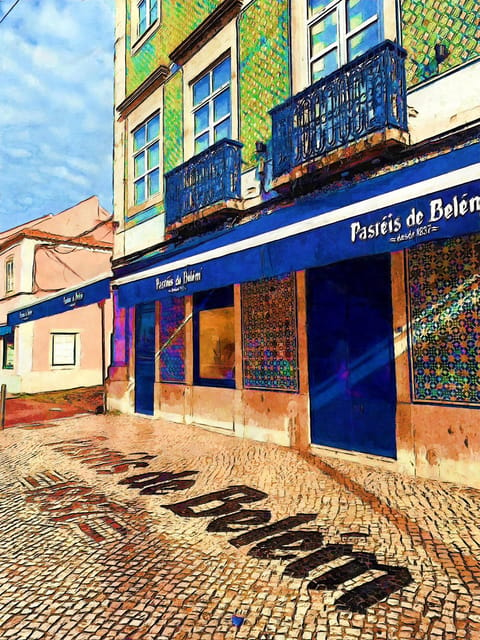
After the monastery and church, you walk to Pastéis de Belém for the included pastry. This is not just a convenient snack. The recipe was created by monks connected with Jerónimos Monastery and has been sold at the same establishment since the mid-19th century.
You receive an original Pastel de Belém, Lisbon’s famous custard tart. The stop lasts about 30 minutes, giving you time to try it before continuing through the district.
I like this part because it connects food to place. You are not simply stopping at a famous shop chosen for convenience. The tart belongs to the story of the monastery and to Belém’s identity. Several guides also offer practical recommendations for other places to eat and visit in Lisbon, which can make this pause useful beyond the pastry itself.
Do not expect a full meal. Lunch is not included, and the tart is a tasting rather than a replacement for breakfast or lunch. If you need a substantial meal, plan one separately after the tour.
Empire Square Garden and the walk through Belém
The route then moves through Empire Square Garden, with about 15 minutes of walking before reaching the Monument to the Discoveries. This is easy walking compared with Lisbon’s steep central hills, but it is still an outdoor tour. Wear comfortable shoes, bring sunscreen, and carry water.
The open setting changes the feel of the morning. Inside the monastery, you focus on carved stone and religious spaces. Outside, the guide can explain how Belém’s monuments were arranged to present Portugal’s national story.
Weather matters here. The tour runs in rain or sunshine, so bring an umbrella when rain is possible and a sun hat on hot days. A summer visit can feel exposed, especially during the walk toward the riverfront. One tour took place on a very hot morning and still worked well, but sensible clothing makes a real difference.
The Monument to the Discoveries
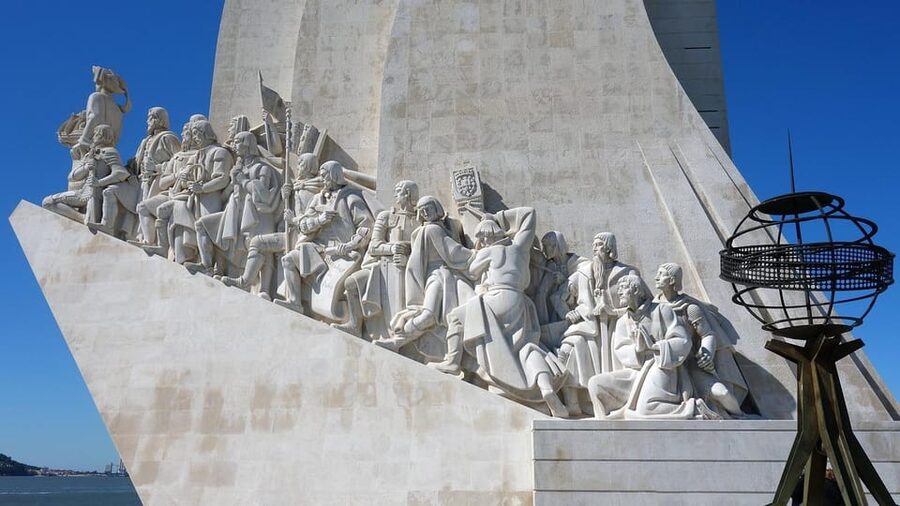
The Monument to the Discoveries was built in 1960 to mark the 500th anniversary of the death of Infante D. Henrique, often called Henry the Navigator. He appears with other figures linked to Portugal’s expansion by sea.
The guide gives you the political and cultural background for the monument, rather than treating it as a simple photo stop. You learn how the figures represent the people associated with navigation and the spread of Portuguese culture around the world.
This is also a place where a balanced explanation matters. The monument presents a proud national story, and the guide helps you understand what it was designed to commemorate. The tour focuses on Portugal’s achievements and influence during the navigation era, while the broader history also invites questions about empire and expansion.
The stop lasts about 20 minutes. That is enough for an explanation and sightseeing, but not a long visit inside a museum. The tour is best for someone who wants a connected overview of Belém rather than extensive time at every monument.
Belém Tower during restoration
A roughly 15-minute walk brings you to Belém Tower. Together with Jerónimos Monastery, it has UNESCO World Heritage status and is one of Lisbon’s best-known sights.
The tower is a fine example of Manueline architecture, with a defensive purpose that shaped its position near the river. It was built to help protect access to Lisbon from invaders approaching by water. Your guide explains both the structure and its place in Portugal’s maritime story.
At present, restoration work means you cannot visit the inside. This is the clearest limitation of the tour, especially if you booked expecting to climb the tower or inspect its rooms. You can still view it from outside and hear the historical explanation, but the experience is shorter than it would be with interior access.
The tour finishes at Torre de Belém. If you want to continue sightseeing afterward, you can plan your next stop from there, but transportation and additional entrance fees are not included.
Is $70 a fair price?
At $70 per person, this is not the cheapest way to see Belém. You are paying for the monastery ticket, an English-speaking guide, the pastry, and the convenience of having the main historical connections explained in one morning.
The strongest value comes from the monastery entry and the time saved. On crowded days, avoiding a long ticket queue can protect a large part of your morning. The guide also adds information that is difficult to gather inside the monastery, where signage is limited.
The price makes less sense if you are happy to wait in line, read on your own, and only want exterior views. It also offers less than expected if your main goal is entering Belém Tower, since restoration prevents that.
For many people, the fee is reasonable because the tour combines the monastery, church, pastry shop, Monument to the Discoveries, and tower in a single route. It is especially useful on a first Lisbon visit, when you want a clear introduction to Belém without arranging each stop yourself.
Who will enjoy this walking tour most?
I would choose this experience if you care about Portuguese history, architecture, royal stories, religious buildings, or the Age of Discovery. It suits visitors who want explanation, not just admission tickets and photographs.
It also works well for a small group seeking a structured morning. Guides are regularly praised for clear English, humor, prompt communication, and the ability to answer questions. Luis and Leo receive particularly warm praise, while Leonardo, Federico, Renan Stein, Ricardo, and Daniel are also named as engaging guides on different departures.
You should think twice if you have mobility limits. The tour includes several hours of walking and is not suitable for wheelchair users or people with mobility impairments. It also runs outdoors in all weather, so heat, sun, and rain can affect your comfort.
The level of detail is another personal choice. Some guides give a great deal of historical background, which is excellent if you want the larger story. If you prefer a brief visit with plenty of free time, a self-guided stop may suit you better.
Small details that make the morning easier
Arrive early at the monastery entrance and confirm the precise meeting point before leaving your accommodation. The tour provider asks you not to arrive late because the group moves on together.
Wear shoes suitable for several hours of walking. Bring sunscreen, a hat, comfortable clothing, and an umbrella when the forecast is uncertain. Alcohol and drugs are not permitted, and the tour requires quiet behavior inside the religious complex.
The tour lasts 3 to 3.5 hours, depending on the departure and pace. Lunch and transportation are not included. You can cancel up to 24 hours in advance for a full refund, and the reserve-now, pay-later option keeps your plans flexible. The tour may be canceled if the minimum number of participants is not reached.
Should you book it?
Book this tour if you want Jerónimos Monastery explained properly, prefer not to waste time in a ticket queue, and like the idea of linking the monastery with Belém’s other major sights. The included Pastel de Belém is a small but fitting bonus.
I would not book it solely for Belém Tower, because restoration currently prevents an interior visit. I would also skip it if you dislike guided history or cannot manage a long walk.
For a first visit to Lisbon, though, this is a well-organized way to understand Belém. The monastery is the main reason to go, the guides give the stonework meaning, and the route finishes with a useful view of how religion, monarchy, navigation, food, and national memory all meet in this part of the city.
FAQ
Is entry to Jerónimos Monastery included?
Yes. The entrance ticket to Jerónimos Monastery is included, and the guide has the tickets purchased before the visit.
Is the tour conducted in English?
Yes. The tour includes a live English-speaking guide.
How long does the Belém walking tour last?
The tour lasts approximately 3 to 3.5 hours.
Where does the tour meet?
You meet the guide in front of Jerónimos Monastery, near the south entrance to the church where access queues form. Check the meeting-point photo carefully to avoid confusion.
Does the tour include a Pastel de Belém?
Yes. An original custard tart from Pastéis de Belém is included.
Can I enter Belém Tower?
No. Belém Tower is currently undergoing restoration and cannot be visited inside. The tour includes exterior sightseeing and an explanation from the guide.
Is transportation included?
No. Transportation to the meeting point and after the tour is not included.
Is lunch included?
No. The included food is an original Pastel de Belém. You need to arrange lunch separately.
Is the tour suitable for wheelchair users?
No. The tour is not suitable for wheelchair users or people with mobility impairments.
New walking tours around Lisbon
- Lisbon: Walking Tour in the Center (Max 12 Participants)★ 5.0 · 741 reviews
- Lisbon Tram No. 28 Ride & Walking Tour★ 4.1 · 766 reviews
- Lisbon: Kickstart Street Art Walking Tour★ 4.9 · 717 reviews
- Lisbon Through the Eyes of a Local – Food and Walking Tour★ 4.9 · 141 reviews
- Lisbon: Private Boat Trip, Guided Walking Tour, Bike & Tram★ 4.8 · 116 reviews
- Lisbon: Jewish Walking Tour★ 4.9 · 96 reviews
- Lisbon: Food and Culture 3-Hour Walking Tour★ 4.7 · 95 reviews
- Lisbon: Street Art Walk★ 5.0 · 79 reviews
Lisbon Walking Tours, side by side.

Lisbon: History, Stories and Lifestyle Walking Tour
Read our review →
Best of Lisbon Small-Group Guided Walking Tour
Read our review →
Lisbon: Food and Wine Small Group Walking Tour
Read our review →
Best of Lisbon Walking Tour: Rossio, Chiado & Alfama
Read our review →

Lisbon Food Tour with 10+ Tastings of Local Delicacies & Wines
Read our review →
Lisbon Roots – Small group Food & Culture Walking Tour w/tastings
Read our review →
Lisbon Private Food Tour – Taste 10+ Local Dishes & Wines
Read our review →Lists this walk sits on