
Review · LONDON
London: Secrets of the London Underground Walking Tour
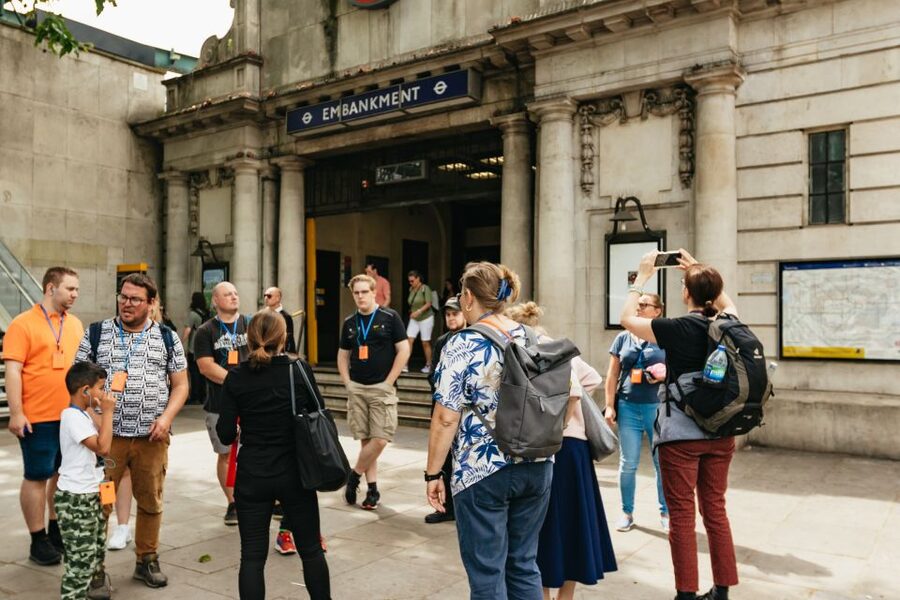
The London Underground began in 1863, and this tour starts right where that story matters most: Baker Street Station, one of the original stops on the world’s first underground railway. In 2.5 hours, you follow the Tube from steam trains and early tunnels to wartime shelters, secret storage, ghost stories, and the famous roundel sign.
I like the way the tour makes an ordinary commute feel new, and I like the audio headsets, which help you hear the guide over the station noise. Guides including John, Aaron, Angela, and Peter have earned praise for clear explanations and good humor. The catch is simple: this is a walking and public-transport tour, not a guaranteed trip inside an abandoned station.
Key points to know before you go
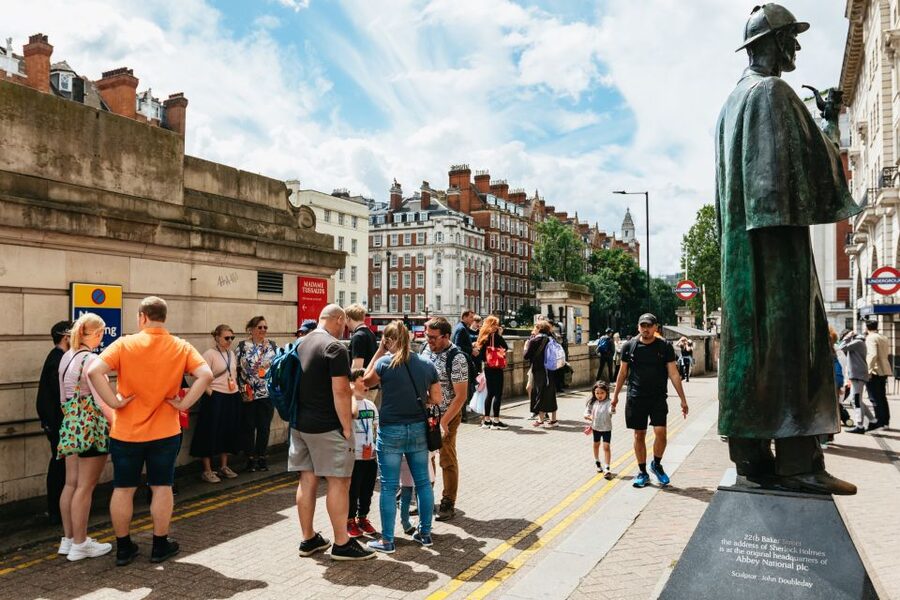
- Begin at Baker Street’s original Underground station: Meet by the Sherlock Holmes statue outside the station and start with the Tube’s earliest chapter.
- Follow the change from steam to electricity: The tour explains how the first underground trains worked and how the network developed.
- Hear the stranger side of the Tube: Stories include haunted stations, a Pharaoh’s daughter, a nun, and a station above the remains of 1,000 bodies.
- See the Underground as more than transport: Learn how stations and tunnels served during the Blitz, as an aircraft factory, and as storage for British Museum treasures.
- Use public transport during the tour: Bring a Zone 1 to 2 travel card or Oyster card. It is not included in the price.
- Expect stairs and steady walking: The route is not suitable for wheelchair users or people with reduced mobility.
Why Baker Street is the right starting point
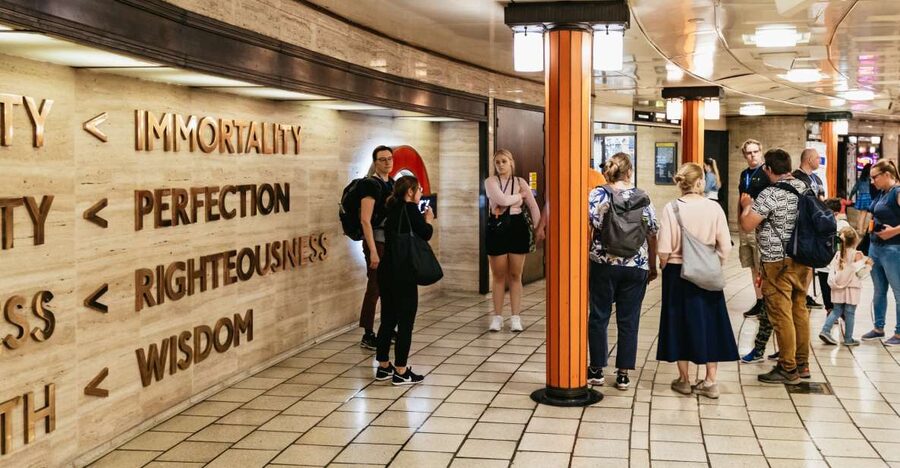
Baker Street is more than a convenient meeting place. It was one of the original stations on the Metropolitan Railway, which opened in 1863 and began the age of underground rail travel.
You meet your guide beside the Sherlock Holmes statue outside Baker Street Station. That landmark makes the meeting point fairly easy to find, though you should allow a little time to locate the correct station exit and statue in the busy area.
The opening section sets up the basic story: London needed a way to move people through a crowded city, and engineers began building rail lines below the streets. The first tunnels were built using methods very different from modern tube construction, and the guide explains how the railway changed from steam-powered trains to electric service.
I find this opening useful because it gives the rest of the tour a clear frame. You are not simply hopping between stations. You are watching a transport system grow from a bold Victorian experiment into the network London depends on today.
More Hidden Gems Walking Tours in London:
- Dublin Highlights and Hidden Gems Guided Walking Tour
★ 5.0 · 6,020 reviews - Explore Berlin: See All The Iconic Sights & Some Hidden Gems
★ 5.0 · 4,429 reviews - Kyoto Geisha Walking Tour: Gion District & Hidden Gems
★ 4.7 · 3,273 reviews
Looking closely at stations you normally rush through
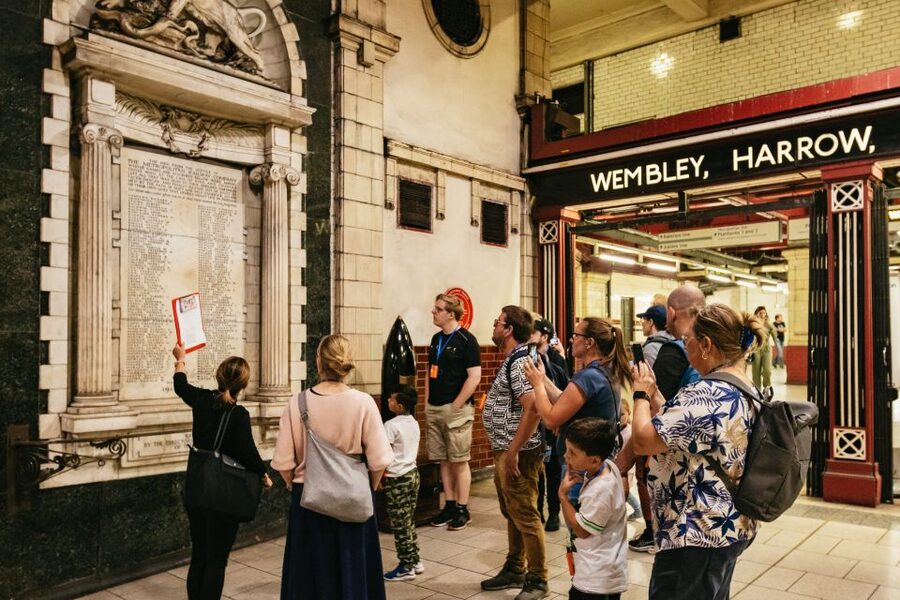
Most people enter a Tube station with one thought: get to the platform. This tour asks you to slow down and notice details that are easy to miss when you are following a map or trying to catch a train.
Your guide points out architectural features, old signs, station design, and clues to the Underground’s earlier life. One of the pleasures of the route is seeing familiar places with new eyes. Even people who have used London’s Underground for years can find features they had never noticed.
The tour uses an audio headset. That matters underground, where trains, announcements, footsteps, and ventilation systems can make a guide hard to hear. The equipment has been praised as especially useful in noisy stations, although one report noted crackling above ground. It worked better below street level.
The route also includes public transport for about 10 minutes. That portion is part of the experience, not dead time. You get a small taste of the system as a passenger while the guide continues the story and manages the route.
From steam engines to the modern Tube
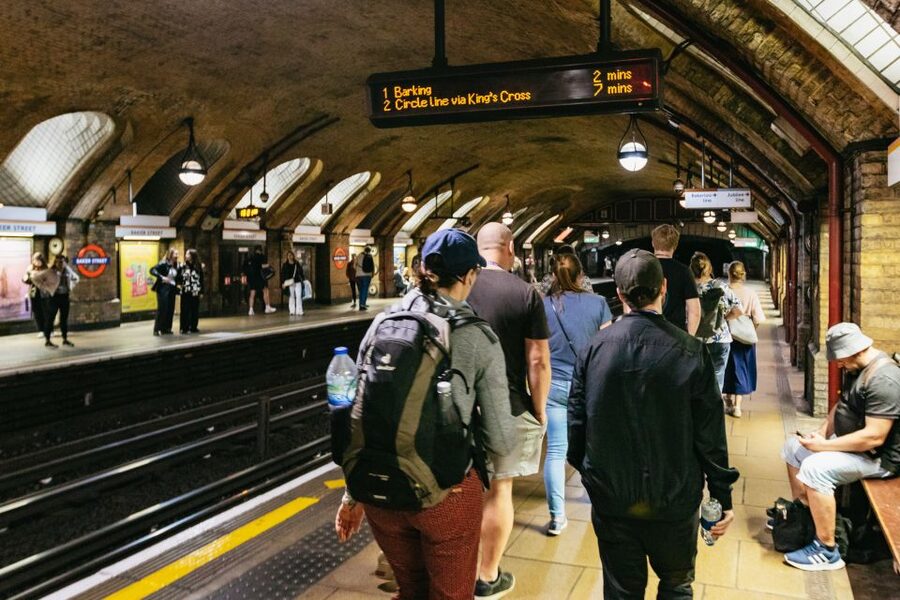
The earliest Underground trains were powered by steam, an awkward solution for railway lines running below a city. The guide explains how smoke, engineering limits, and growing passenger demand shaped the next stage of development.
The move to electric trains changed the Underground. It made longer and cleaner journeys possible and helped create the network that now reaches 270 stations. The Tube carries more than 1.3 billion passenger journeys each year, so the scale of the system today is hard to grasp without understanding its early problems.
I like this part because it ties engineering to daily life. The Underground was not designed all at once. It developed in pieces, through changing technology, new routes, expanding suburbs, and the practical demands of a growing city.
You also hear about how the first tunnels were built. The exact method and challenges are part of the fun, especially if you enjoy old engineering, city planning, or railway history. The tour keeps the information moving, rather than turning the whole outing into a technical lecture.
The Tube during the Blitz and beyond
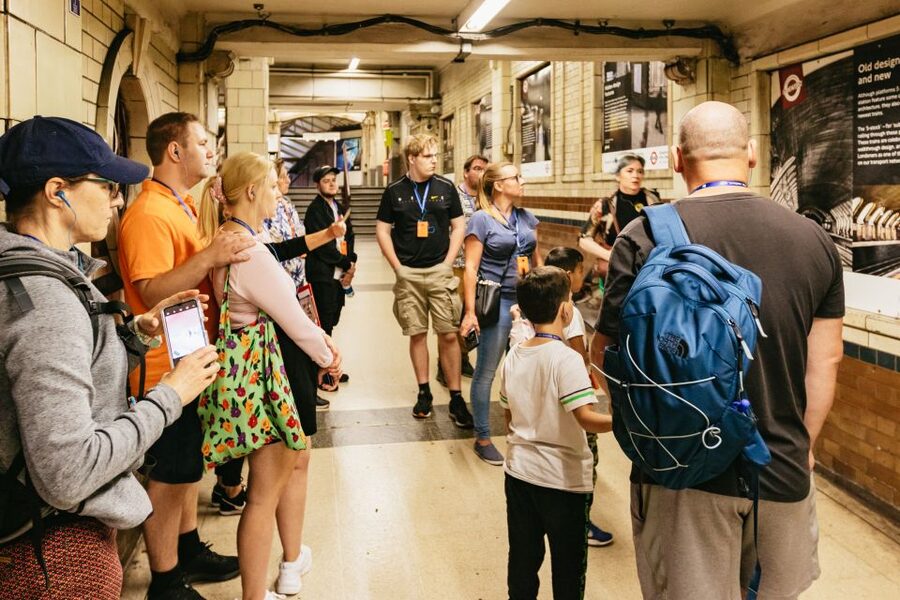
One of the most useful parts of the tour is the explanation of how the Underground served purposes far beyond transport.
During the Blitz, Tube stations were used as refuges. For Londoners facing air raids, the railway became part of the city’s emergency shelter system. The tour places that wartime role alongside other surprising uses, including an aircraft factory and storage for treasures from the British Museum.
These details show why the Underground matters as part of London’s story. It was not only a way to get across town. It also became a protected space, a workplace, and a place where valuable objects could be kept safe.
The guide connects these stories to the stations and streets around you. That makes the history easier to picture than a list of dates. You are walking through places that had several lives, sometimes at the same time.
More walking tours around London:
- Magical London: Harry Potter Guided Walking Tour
★ 4.7 · 22,044 reviews - London: The Original Jack the Ripper Walking Tour
★ 4.7 · 7,833 reviews - Tour for Muggles The Ultimate Harry Potter Walking Tour in London
★ 5.0 · 4,684 reviews - London Jack The Ripper Guided Walking Tour
★ 5.0 · 3,131 reviews
Abandoned stations, ghost stories, and the limits of the tour

More than 40 Underground stations have been abandoned or left out of regular service. The tour explains why stations closed, how routes changed, and what happens when a once-important stop no longer fits the network.
This is where expectations matter. The tour may let you see a ghost station or signs of disused parts of the network, but it does not promise entry into a closed station. Several people enjoyed hearing about disused stations yet hoped for more behind-the-scenes access.
You should book this experience for the stories and visible clues, not for an underground exploration of sealed platforms. If your main goal is to walk inside an abandoned station, this may not meet your expectations.
The ghost stories add a lighter note. You hear about stations reputed to be haunted by a Pharaoh’s daughter and a nun. These tales are presented as part of the Tube’s folklore, alongside more solid accounts of construction, wartime use, and transport history.
The tour also covers a station built above the remains of 1,000 bodies. That is the kind of detail that stays with you, especially because it links the Underground to older layers of London’s past.
Finishing near the London Transport Museum
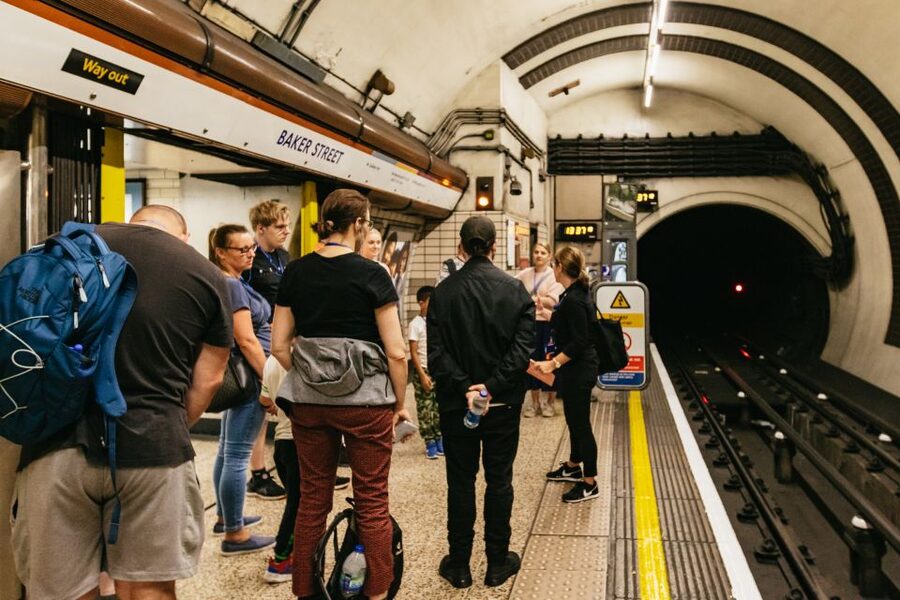
The tour ends at 10B Bridge Street, near the London Transport Museum. The museum visit is part of the planned route, giving you a chance to connect the guide’s stories with London’s wider transport collection.
The museum stop helps round out the tour. The walking route gives you the setting, the guide provides the explanation, and the museum offers a more formal place to continue looking at transport design and history.
Because the exact balance between walking, station stops, public transport, and museum time can depend on the day, do not expect every minute to follow a rigid script. Underground delays, closed lines, or service changes can force a detour. One guide handled a strike-related disruption by changing the route and walking through the city, but delays can still affect the pace.
That flexibility is useful, though it means the experience is partly shaped by the Tube itself. The Underground is an active transport network, not a controlled museum exhibit.
What the guide adds to the experience
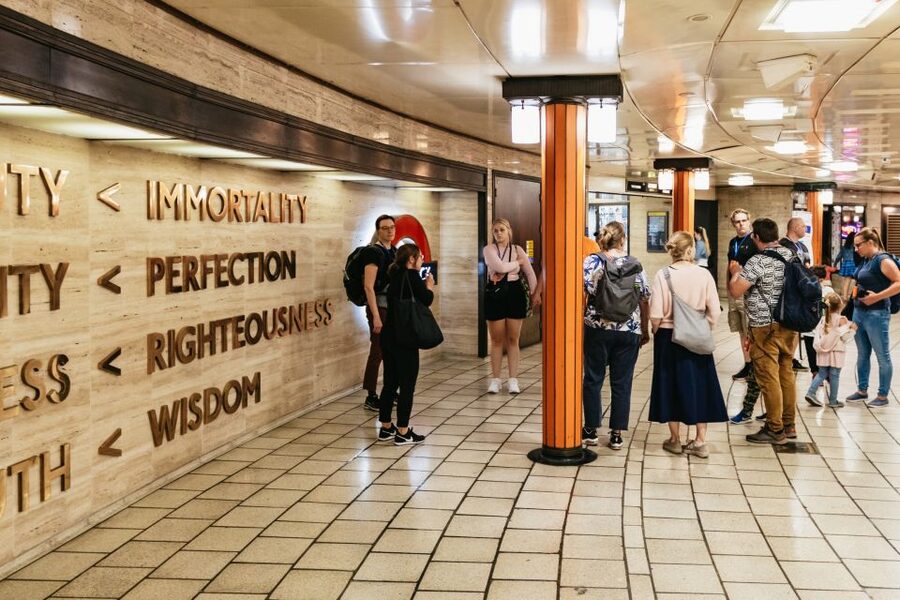
The guide is the main reason this tour works. You receive information at each station, but the quality depends on how well it is explained and connected.
John is often praised for combining clear facts with humor and for answering questions, including questions from children. Aaron has been described as passionate and able to connect Underground history with landmarks above street level. Angela has received praise for keeping groups together, speaking clearly, and handling practical problems. Peter has been noted for a funny and personable approach.
Guide assignments can change, so you should not book on the assumption that one specific person will lead your tour. Still, the repeated pattern is clear: the best guides keep the history lively, explain what you are looking at, and handle the group at a sensible pace.
The audio headsets also help the guide. You do not need to stand directly beside the speaker to hear every sentence, which is valuable in a station where part of the group may be several steps behind.
Walking, tickets, and the practical side
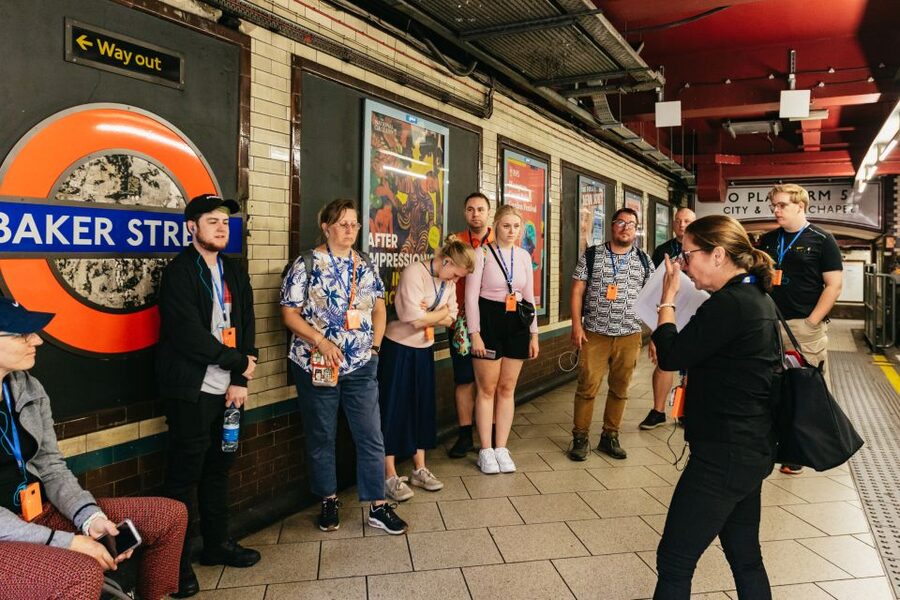
The $40 price is reasonable if you want a guided history experience rather than simply a Tube ride. You are paying for 2.5 hours of interpretation, route planning, station context, and the guide’s ability to connect scattered facts into one story.
You must pay separately for public transport. Bring a Zone 1 to 2 travel card or an Oyster card before you arrive. A contactless bank card may also be used on London transport, but one person reported being charged £17 after using a credit card, while a travel pass cost less. The safest practical advice is to arrange the required travel option in advance and check the current fare rules.
Food and drinks are not included, and there is no hotel pickup or drop-off. Baby strollers, luggage, and large bags are not allowed, so this is best scheduled when you are carrying only a small day bag.
A moderate amount of walking is involved, with stairs throughout the Underground system. The tour is not suitable for wheelchair users or people with reduced mobility. If stairs are difficult for you, choose a transport museum visit or an above-ground walking route instead.
Wear comfortable shoes. You may also want a light layer, since you will move between street level and stations during the same outing.
Who will enjoy this Tube history tour
I would recommend it most strongly to:
- People who use the Underground but want to understand how it developed
- Railway and engineering enthusiasts
- Families with older children who enjoy unusual city stories
- First-time visitors looking for a less standard London walk
- London residents who want to notice familiar stations in a new way
- Anyone interested in wartime London, architecture, or urban history
The tour is also a good choice if you like learning through places rather than sitting in a lecture. You hear the story where the events and design features make sense.
It is less suitable if you want a short, low-effort activity, a private tour, or guaranteed access to closed stations. It is also a poor fit for anyone who cannot manage stairs or a steady amount of walking.
Is $40 good value?
At $40 per person, the value depends on what you want from London’s transport system. A basic Tube journey costs far less, but it does not explain why the network was built, how it changed, or what happened inside its stations during wartime.
The tour makes the most sense when you treat it as a guided history walk that uses the Tube as its setting. The station access, headset, route planning, and live explanation add value, particularly if you are visiting London for a short stay and want one activity that combines transport, architecture, and local stories.
The separate travel cost is easy to overlook. Add that expense when comparing the tour with other London activities. Even so, the overall price can be fair for 2.5 hours, especially with a strong guide such as John, Aaron, Angela, or Peter.
Free cancellation up to 24 hours before the start and the option to reserve now and pay later make it easier to fit into a changing London schedule.
Should you book it?
Book this tour if you want to understand the Tube instead of simply using it. The strongest parts are the original Baker Street setting, the stories of wartime and unusual Underground uses, and the guides who bring plenty of facts and humor to a noisy, complicated route.
Go in with the right expectations. You will hear about abandoned and haunted stations, and you may spot traces of lost lines, but you should not assume you will enter a sealed station. Bring your Zone 1 to 2 travel pass or Oyster card, leave large bags behind, and be ready for stairs.
For a curious visitor, this is a smart way to spend a morning or afternoon in London. It turns one of the city’s most familiar systems into a place of engineering, survival, folklore, and everyday life.
FAQ
Where does the London Underground walking tour begin?
It begins at Baker Street Station. Meet the guide by the Sherlock Holmes statue outside the station.
Where does the tour finish?
The tour finishes at 10B Bridge Street, Westminster, London SW1A 2JR, near the London Transport Museum.
How long does the tour last?
The tour lasts 2.5 hours. The route includes walking, a public-transport section of about 10 minutes, and a visit to the London Transport Museum.
Is a Tube ticket included?
No. You need to bring your own public-transport ticket. A Zone 1 to 2 day travel card or an Oyster card is recommended.
Is the tour suitable for wheelchair users?
No. The tour includes many Underground stairs and is not suitable for wheelchair users or people with reduced mobility.
Is food or drink included?
No. Food and drinks are not included.
What language is the tour in?
The live tour is conducted in English. An audio headset is included to help you hear the guide.
New walking tours around London
- London: Old City Walking Tour★ 4.8 · 135 reviews
- London: Witches and History Bankside Walking Tour★ 4.8 · 223 reviews
- London: Palaces and Parliament Walking Tour★ 4.8 · 365 reviews
- London: Winston Churchill and London in WWII Walking Tour★ 4.8 · 143 reviews
- London: Westminster Walking Tour & The Tower of London Entry★ 4.6 · 131 reviews
- London: Tootbus Christmas Lights Tour incl walking tours★ 3.6 · 227 reviews
- London: Westminster Walking Tour & Westminster Abbey Visit★ 4.7 · 315 reviews
- London: Best Landmarks Walking Tour★ 4.6 · 132 reviews
London Walking Tours, side by side.

Magical London: Harry Potter Guided Walking Tour
Read our review →
London: The Original Jack the Ripper Walking Tour
Read our review →
Tour for Muggles The Ultimate Harry Potter Walking Tour in London
Read our review →
London: Harry Potter Movies Walking Tour (Kids Go Free)
Read our review →
London Bridge & Borough Market Food Tour with 7 Authentic Dishes
Read our review →
Changing of the Guard Guided Walking Tour in London
Read our review →
London: The Great British Rock and Roll Music Walking Tour
Read our review →Lists this walk sits on