
Review · PORTUGAL
Aveiro: Stories, Canals, and Tiles Guided Walking Tour
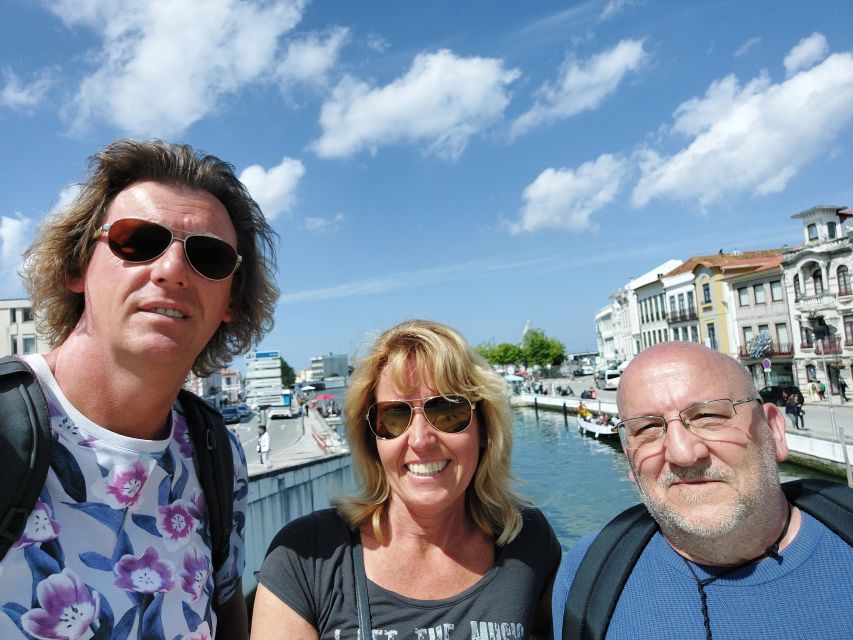
Aveiro makes far more sense once you know what you are looking at. This two-hour walk connects the canals, salt lagoon, and traditional boats with the tiled churches, Art Nouveau façades, and long rise and fall of the city. Guide Antonio, known as Tony Walker, brings the setting to life with history, local stories, and plenty of time for questions.
I like the route’s mix of grand landmarks and small details, especially the black-and-white Portuguese paving and the tile panels that are easy to pass without a second glance. I also like that the Church of Mercy and Carmelite Convent Church are included, rather than treated as outside views only.
The main consideration is pace and access. This is a walking tour on city streets, with some cultural stops and a route toward the saltpans. It is not suitable for children under 10, wheelchair users, people with mobility impairments, or anyone with a low level of fitness. Some interiors may also be unavailable depending on the day.
Key points at a glance
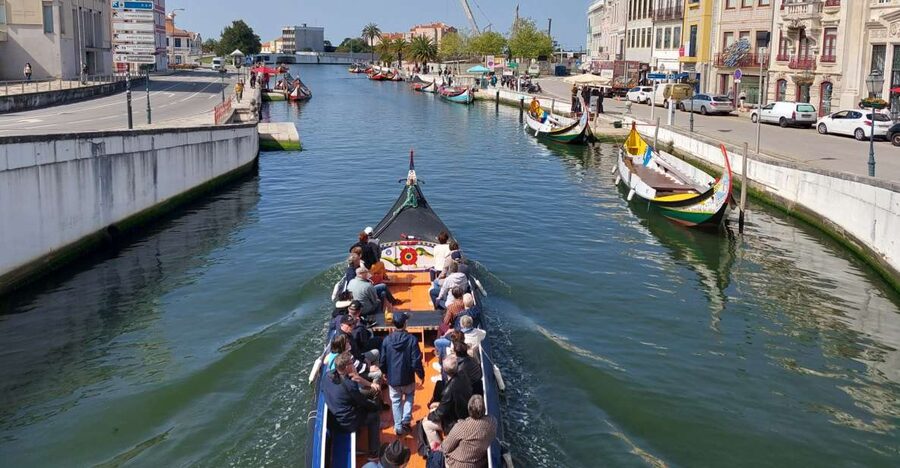
- Canals with a purpose: Learn why Aveiro’s waterways exist and how moliceiros and mercanteis served the lagoon.
- Tile spotting made easy: Read the azulejos from early modern designs through Art Nouveau and Art Deco styles.
- Two church interiors included: Visit the Church of Mercy and the small but striking Carmelite Convent Church.
- A local guide with years of connection: Antonio has lived in Aveiro for more than 20 years and is a retired teacher.
- A useful first look at the city: The walk links major sights, local food, saltmaking, architecture, and city history in two hours.
- A modest price: At $23 per person, the tour offers a strong introduction if you want context before exploring on your own.
Why Aveiro needs a guide on foot
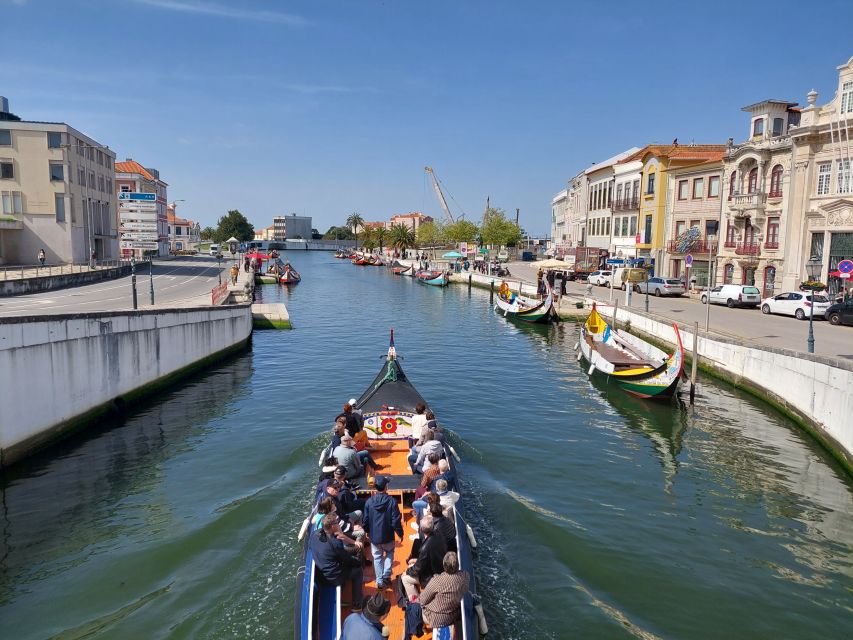
Aveiro is often reduced to a quick canal ride and a photo of a striped moliceiro. That gives you the outline, but not much of the story. The city’s appeal comes from the connections between its waterways, lagoon economy, ceramics, religious buildings, tiled façades, and changing fortunes.
This walk gives those connections a clear shape. You move from the Praça da República toward the canals and the Beira Mar neighbourhood, then toward the saltpans and back through the city. The route is not just a parade of sights. It explains why they are there.
Antonio is the named guide for the experience, and his background matters. He is a retired teacher and has lived in Aveiro for more than 20 years. His style is described as warm, patient, funny, and willing to answer questions. That should suit you if you prefer a conversational walk rather than a fast list of dates.
The group format can also work in your favour. The experience is described as a small, informal tour, and Antonio has adjusted the walk to suit people’s interests. Do not expect a fully private tour every time, but you can reasonably expect a more personal feel than on a large coach outing.
More walks with a guide around Portugal:
- Best of Lisbon Small-Group Guided Walking Tour
★ 5.0 · 4,869 reviews - Experience Porto’s Charm: 3-Hour Guided Walking Tour
★ 5.0 · 2,432 reviews - Madeira: Enjoy a Guided Levada Walk in the Rabaçal Valley
★ 4.7 · 2,197 reviews
Starting at Praça da República
The walk begins near the statue in the center of Praça da República. Look for the guide wearing a yellow and blue card. This is a useful meeting point because the square places two important buildings right in front of you: the Town Hall and the Misericórdia Church.
The first stop sets up the city’s mix of civic pride and religious art. Entry to the Church of Mercy is included, so you get more than an exterior explanation. This is one of the practical benefits of the $23 price: two church interiors are part of the tour, rather than extra costs you need to arrange later.
From here, the walk continues along Rua de Coimbra. The subject may seem small, but the black-and-white calçada à portuguesa is worth your attention. Portuguese pavement can look like background decoration until someone points out its patterns, stone colors, and place in the character of the street.
I like this early focus on details. It trains your eye for the rest of the walk. Once you start noticing paving, tile borders, ironwork, and façade patterns, Aveiro becomes much more than a pretty canal town.
The Carmelite Convent Church at Praça Marques de Pombal
At Praça Marques de Pombal, the route enters the Carmelite Convent Church. It is described as a small but impressive Baroque interior, which makes it a useful contrast with the larger public churches elsewhere in Portugal.
The stop is not about size. It is about how much visual interest can fit into a compact religious space. Antonio explains what you are seeing, so the decoration has context instead of becoming a blur of gilded details and painted surfaces.
The paid underground car park at Praça Marques de Pombal is about 200 metres from the meeting point. That makes the area a practical option if you arrive by car, though parking itself is not included. If you are driving, allow a little extra time to leave the garage and find the statue in the square.
Tiles at Casa de Santa Zita and Sapataria Leão
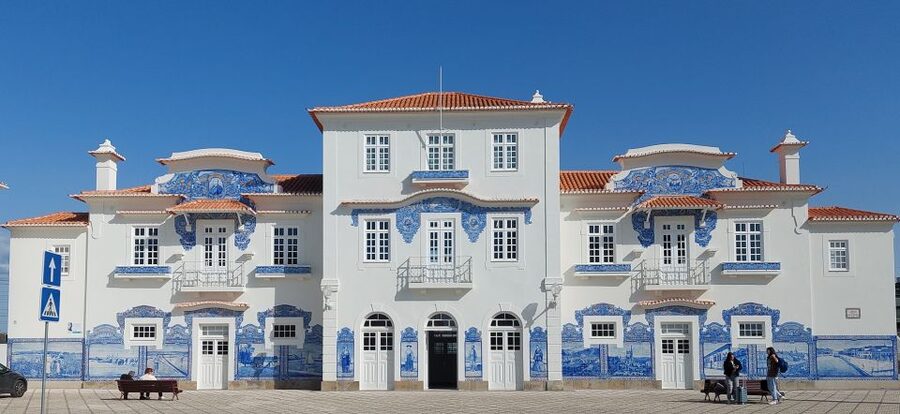
The next section shows why Aveiro is such a good city for a walking tour. The route passes the tile panels of Casa de Santa Zita and Sapataria Leão, two places where decoration becomes part of the street scene.
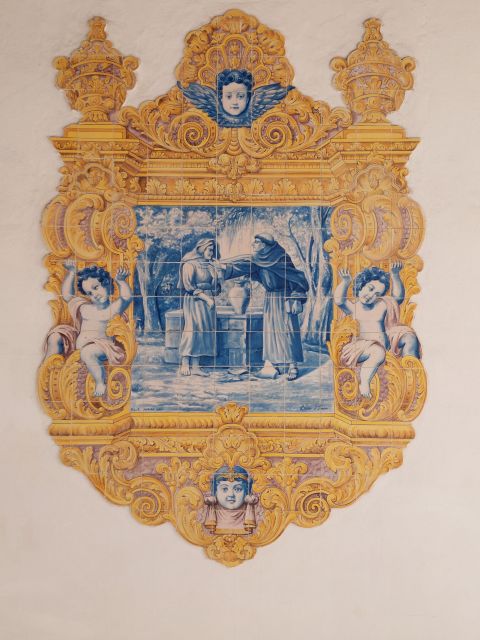
Azulejos are not limited to churches or museums here. They appear on ordinary urban façades and commercial buildings, giving the city a visual language that changes from one block to the next. Antonio points out the panels and helps you place them within a wider story, from early modern tilework to later styles.
This is the kind of information you could miss while walking alone. You can photograph a tiled façade easily, but a guide helps you understand what makes one panel different from another. The result is a more attentive walk through the city, not simply a collection of attractive pictures.
More walking tours around Portugal:
- Lisbon: History, Stories and Lifestyle Walking Tour
★ 4.8 · 10,902 reviews - Lisbon: Food and Wine Small Group Walking Tour
★ 4.9 · 4,082 reviews - Porto Walking Tour, Lello Bookshop, River Cruise and Cable Car
★ 5.0 · 3,354 reviews - Funchal: Old Town Walking Tour
★ 4.7 · 3,233 reviews
Santa Joana and the cathedral
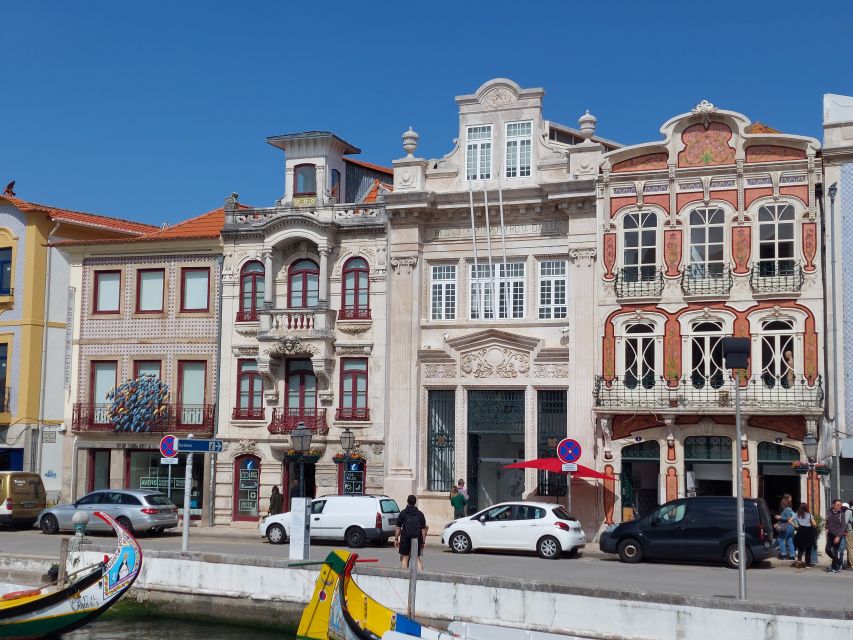
The route passes beside the Dominican Convent of Jesus, where the story of Princess Santa Joana comes into focus. She is the patron saint of Aveiro, and her connection to the city gives the religious buildings a personal and local dimension.
The walk then continues past the cathedral. This part of the route adds another layer to Aveiro’s identity, linking devotion, civic life, and the city’s place in Portugal’s past. Antonio also discusses Aveiro’s changing fortunes, including its power from the 11th through the 15th centuries, its difficult period in the 17th and 18th centuries, and its revival in the 19th century.
That timeline is especially useful because Aveiro can seem uniformly cheerful and picturesque today. The historical story is less tidy. The city’s success was tied to the lagoon and its trade, while later changes brought serious setbacks before the 19th-century recovery.
Fonte Nova Canal and the old ceramics industry
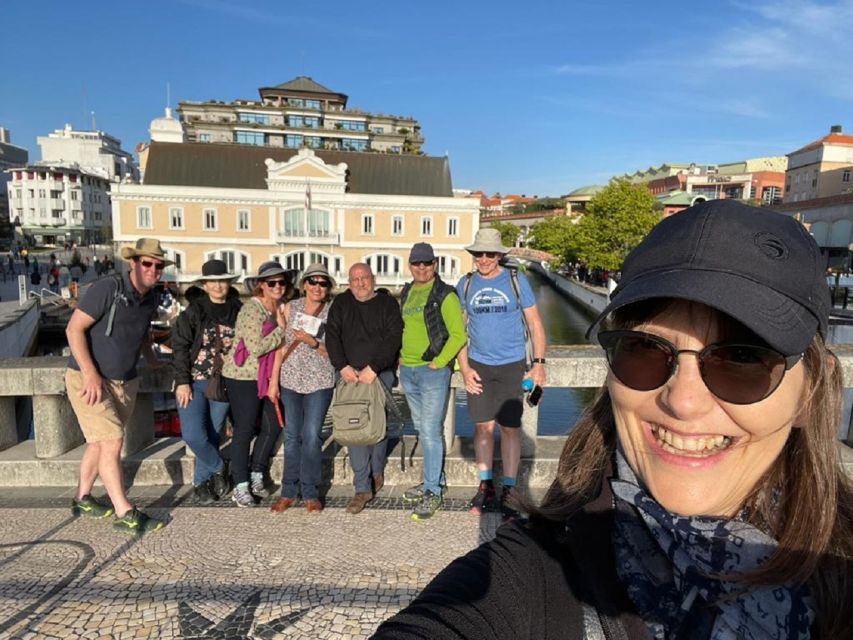
At the Canal da Fonte Nova, the tour shifts from churches and façades to industry. You see the remaining building of one of the many ceramics factories that once operated in the area.
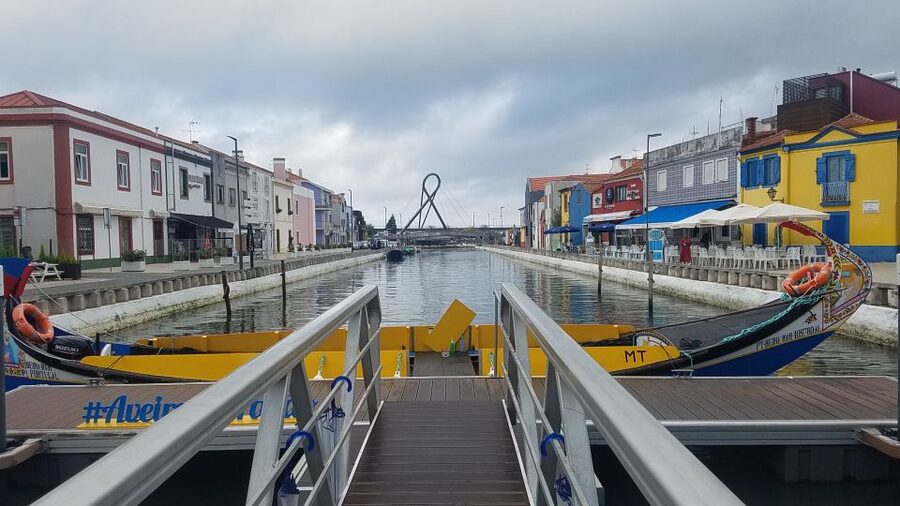
This stop gives the canals economic meaning. They were not placed in the city simply for decoration, and they are not only a setting for sightseeing boats. The waterways supported work, transport, saltmaking, and the movement of goods.
The canal is also a good place to learn about Aveiro’s traditional boats. You will be introduced to moliceiros, mercanteis, and other boats from the Ria de Aveiro. The point is not just to learn names. You learn to recognize the different roles these boats played in lagoon life.
If you are considering a separate boat ride, this walking tour can help you decide what you want from it. One previous participant preferred taking this two-hour walk and booking a boat trip separately, rather than choosing a combined walk-and-boat format. That is sensible if you want the guide’s full attention during the history and architecture portion.
Beira Mar, Art Nouveau, and ironwork
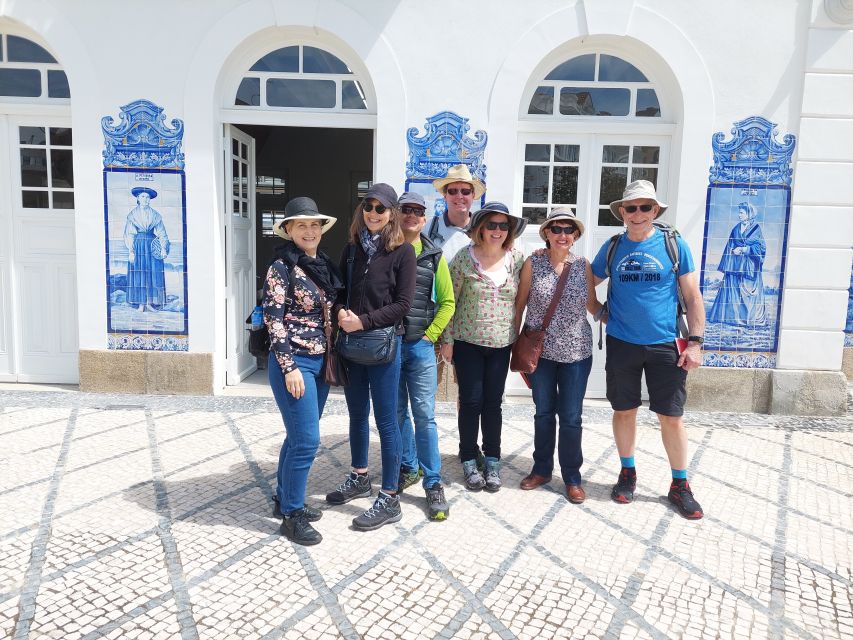
The Beira Mar neighbourhood is one of the most visually rewarding parts of the route. Here, tiles fill the streets, while Art Nouveau and Art Deco details appear on façades and around windows and doors.
The tour also points out iron architecture from the turn of the 19th to the 20th century. These details can be easy to ignore because they are part of the street furniture and building fronts. A guide’s explanation gives them a place in Aveiro’s development.
The two façades of the Museum of Art Nouveau are included in the walk. The route description does not promise museum entry, so think of this as an architectural stop rather than a museum visit. You can study the exterior design and hear about the style without adding another admission or a separate visit to your schedule.
This section should appeal to anyone who enjoys architecture but does not want a formal museum-heavy tour. You get style, history, and local buildings in their original setting. The drawback is that the experience depends on looking carefully, listening, and walking at street level. If you want long indoor visits, this is not that kind of tour.
Toward the saltpans
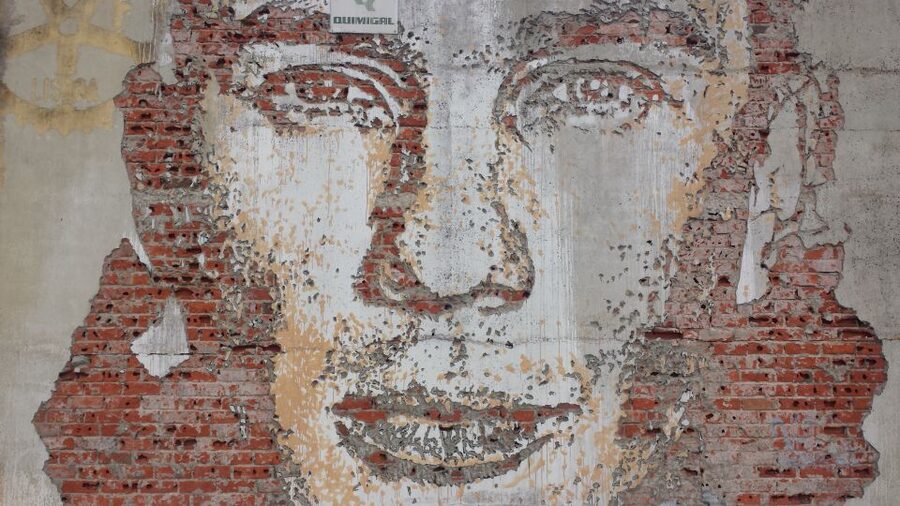
On the way to the saltpans, the guide returns to the lagoon and salt economy. The tour’s emphasis on the smell of the lagoon and its salt helps place Aveiro in its physical setting. This is not only a city of canals. It is a city shaped by water, mudflats, boats, and salt production.
The walk toward the saltpans also gives historical events more meaning. When you hear about Aveiro’s earlier power and later decline, the lagoon is not an abstract backdrop. It is tied to the city’s trade and work.
You should bring comfortable shoes and weather-appropriate clothing. Sunscreen is sensible, too, since parts of the route are outdoors and the tour runs rain or shine. Large bags, luggage, bikes, and baby carriages are not allowed, so this is best done with a light day bag.
Food stories on the way back
The return route brings in local food. Antonio refers to eel stew and Aveiro’s traditional sweets, especially ovos moles.
Ovos moles are one of the city’s best-known treats, made with sweet egg yolk and associated with Aveiro. The tour does not include food or drinks, so you will need to buy anything you want to taste separately. Still, the food talk is useful because it gives you ideas for what to look for after the walk.
Antonio has also offered restaurant suggestions during the tour. That can be handy if your walk is early enough to shape your lunch plans. Treat this as local guidance rather than a meal stop built into the experience.
São Gonçtinho and the January festival
The tour finishes at the Church of São Gonçalinho, with an explanation of the traditional January festival held there.
The festival includes a striking custom: a hard, heavy sweet is thrown over the heads of the faithful. It is a joyful ritual with a strong local identity, and it gives the final stop a memorable sense of place.
Ending here works well because the church and festival connect architecture, food, faith, and public celebration. The walk begins with formal civic and religious buildings, then closes with a local tradition that is much more playful.
Is $23 good value?
At $23 per person, this is good value if you want a guided introduction rather than a quick orientation. You get two hours, a live guide, entrance to the Church of Mercy, entrance to the Carmelite Convent Church, and a route that covers canals, boats, tiles, religious sites, industry, salt, architecture, and food.
The strongest value is the interpretation. Aveiro’s sights are spread through normal streets, and many of the best details are not marked with large signs. A guide helps you notice the symbolic tilework, the old factory building, the role of the canals, and the changes in the city’s fortunes.
The price is less compelling if you only want a canal cruise or a short photo walk. It also does not include food, drinks, or a boat trip. If those are your main priorities, plan them separately.
The overall rating is 4.9 from 134 reviews, with repeated praise for Antonio’s warmth, humor, patience, local knowledge, and ability to answer questions. One practical point is that museums and other interiors may have limited opening hours, especially on Mondays. The route itself still works, but the experience can change when a building is closed or when a local festival opens extra sites.
Who should book this walk?
I would choose this tour for a first visit to Aveiro, especially if you have only a day or part of a day. It gives you enough context to make your later canal ride, meal, or independent walk more meaningful.
It also suits adults and older children over 10 who enjoy history, architecture, and local stories. The pace is described as easy by one family, but the tour still requires steady walking and is not designed for people with mobility limitations.
You may prefer another option if you want a boat-only experience, a food tour, or a museum tour with long indoor stops. This is a city walk with a broad subject range. Its strength is the way it connects many parts of Aveiro in a short time.
Should you book the Aveiro walking tour?
Book it if you want to understand the city rather than simply photograph it. Antonio’s teaching background, long connection with Aveiro, and flexible approach make this especially useful for people who like to ask questions and notice architectural details.
I would book it early in your Aveiro visit, then use the rest of your time for a boat trip, the sites you want to revisit, and local food. Wear comfortable shoes, bring sunscreen, leave luggage behind, and check your schedule if you are visiting on a Monday.
Skip it if walking is difficult or if you only want a short canal outing. For most independent visitors seeking history, tiles, boats, and a local sense of place, $23 is a fair price for two hours that can change how you see Aveiro.
FAQ
How long is the Aveiro walking tour?
The tour lasts two hours.
What does the tour cost?
The price is $23 per person.
Who guides the tour?
The guide is Antonio, also known as Tony Walker. He speaks English, Portuguese, Spanish, and French.
Where is the meeting point?
Meet near the statue in the center of Praça da República. The guide will be wearing a yellow and blue card.
Are church entrances included?
Yes. Admission to the Church of Mercy and the Carmelite Convent Church is included. Other places are walk-through stops or have free entry.
Is a boat ride included?
No. The tour explains Aveiro’s traditional boats, including moliceiros and mercanteis, but food, drinks, and a boat trip are not included.
Is the tour suitable for everyone?
The tour is not suitable for children under 10, wheelchair users, people with mobility impairments, or people with a low level of fitness. It takes place rain or shine, and you should bring comfortable shoes, sunscreen, and weather-appropriate clothing.
New walking tours around Portugal
- From Funchal: Madeira Peaks Mountain Walk★ 4.8 · 380 reviews
- Taste Funchal: food, wine and cultural tour★ 4.8 · 680 reviews
- Madeira: Santana Jeep Safari and Referta Levada Walk★ 4.8 · 239 reviews
- Lisbon: Walking Tour in the Center (Max 12 Participants)★ 5.0 · 741 reviews
- Lisbon Tram No. 28 Ride & Walking Tour★ 4.1 · 766 reviews
- Lisbon: Kickstart Street Art Walking Tour★ 4.9 · 717 reviews
- Lisbon Through the Eyes of a Local – Food and Walking Tour★ 4.9 · 141 reviews
- Lisbon: Private Boat Trip, Guided Walking Tour, Bike & Tram★ 4.8 · 116 reviews
Portugal Walking Tours, side by side.

Lisbon: History, Stories and Lifestyle Walking Tour
Read our review →
Best of Lisbon Small-Group Guided Walking Tour
Read our review →
Lisbon: Food and Wine Small Group Walking Tour
Read our review →
Porto Walking Tour, Lello Bookshop, River Cruise and Cable Car
Read our review →
Best of Lisbon Walking Tour: Rossio, Chiado & Alfama
Read our review →
Experience Porto’s Charm: 3-Hour Guided Walking Tour
Read our review →
Madeira: Enjoy a Guided Levada Walk in the Rabaçal Valley
Read our review →Lists this walk sits on