
Review · PALERMO
Palermo: Art and Architecture Walking Tour
Palermo’s greatest sights are packed into a walk that moves from Phoenician beginnings to Arab-Norman splendor, Baroque theater, and modern Sicilian life. You’ll see the Cappella Palatina and Palermo Cathedral, then follow the old streets to grand squares, fountains, markets, and opera houses.
I like the private-group format, which gives you room to ask questions and adjust the pace. I also like the guide’s practical role: Roberta helped an older couple manage poor weather, lines, seating, and an elevator, while Francesca added local streets, markets, and small shop stops. The main catch is cost. At $317.20 for up to five people, it is sensible for a full group but expensive for one or two, and monument tickets are extra.
Key points to know before you book
- Cappella Palatina: The Arab-Norman chapel inside the Palazzo Reale is the tour’s main interior highlight.
- A compact historic-center route: You’ll visit Fontana Pretoria, the Cathedral, Quattro Canti, and Teatro Massimo without arranging separate transport.
- Private group up to five: The price works best when shared by a family or small party.
- Guides who can adapt: Maria, Diana, Roberta, and Francesca are among the named guides associated with especially personal tours.
- Tickets cost extra: Monument entry is paid to the guide, with a €3 reservation fee even for people entitled to free entry.
- Plan for proper clothing: Shorts, large bags, and backpacks are not allowed inside the monuments.
A strong introduction to Palermo’s layered past
This walking tour works because Palermo’s story is easiest to understand on foot. The route links religious buildings, public squares, theaters, and old streets, so you are not just looking at isolated monuments. You can see how different rulers and cultures left their mark on the same city.
Your guide introduces Palermo from its Phoenician birth through the Roman Republic, Byzantine rule, the Arab-Norman period, and later centuries. That broad timeline matters here. Palermo can feel visually confusing at first, since Gothic, Renaissance, Baroque, Arab, Norman, and later styles often sit close together. A good guide gives those layers an order.
The route begins at either Teatro Politeama Garibaldi or Villa Bonanno, depending on the option you book. Since the starting point can vary, check the confirmed meeting place carefully before setting out. The tour ends back at the meeting point, so you will not need to arrange a ride back from another part of the city.
The advertised duration is three hours, although the stop schedule adds up to roughly three hours of guided visits before allowing for walking between sites. I would keep a little extra time free, especially if you want to ask questions, take photographs, or make a short market or shop detour.
More Architecture Walking Tours around Italy:
- Lecce: Baroque Architecture and Underground Walking Tour
★ 4.6 · 1,248 reviews - The Official Art Deco Walking Tour by The Miami Design Preservation League
★ 5.0 · 1,580 reviews - Miami South Beach Art Deco Walking Tour
★ 5.0 · 1,039 reviews
From Politeama to the city’s grand stages
If you start at Teatro Politeama Garibaldi, you begin beside one of Palermo’s major 19th-century monuments. The theater gives you an early look at the city’s later architectural confidence, with an exterior designed for public spectacle and ceremony.
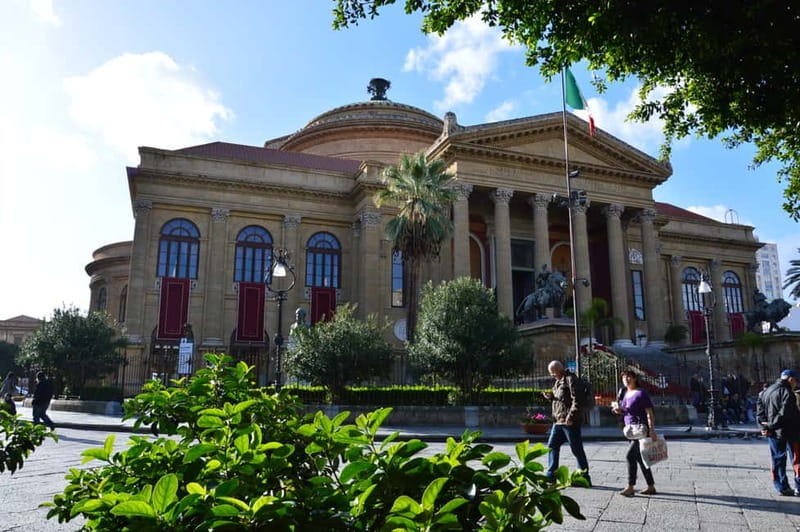
The route then heads toward Teatro Massimo, one of Europe’s largest opera houses. The building is important even if you do not attend a performance. Its scale and formal design offer a sharp contrast to the narrow medieval streets farther into the historic center.
The visit here is listed as a 29-minute guided stop. That is enough time for an explanation of the theater, photographs, and a sense of its place in Palermo’s cultural life. Do not expect a full performance or an extended backstage visit unless your guide specifically confirms one. This is primarily a city walk with selected monument visits.
I like this opening because it prevents the tour from treating Palermo as only an ancient or medieval city. The theater district shows you a later chapter, then the route turns toward older streets and religious buildings.
Fontana Pretoria and Palermo’s public face
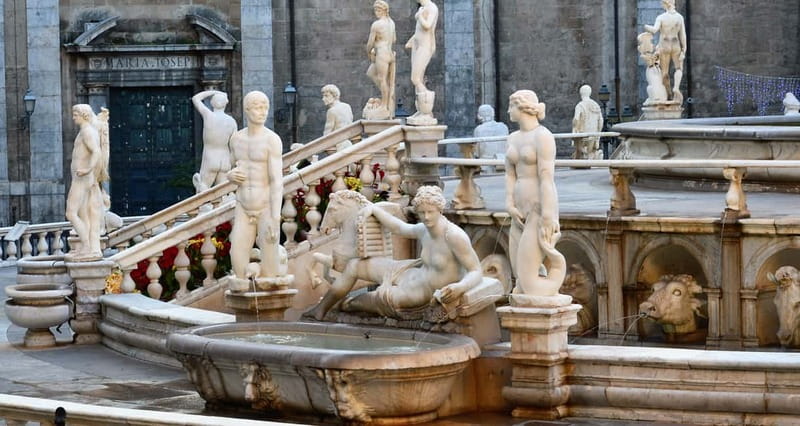
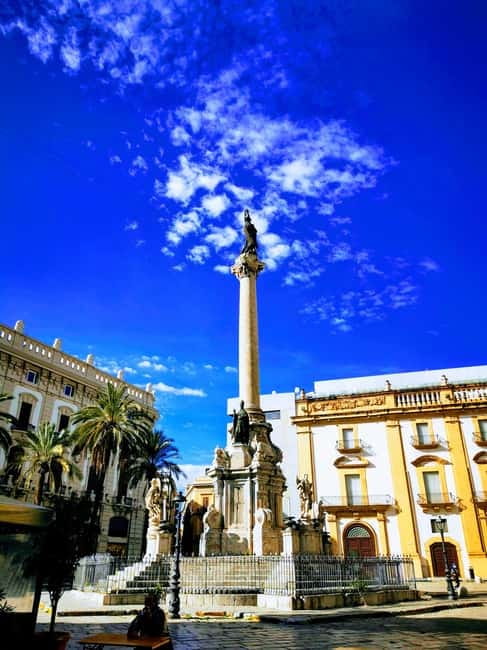
The stop at Fontana Pretoria lasts about 15 minutes, making it one of the shorter pauses. Even so, this is a useful place for your guide to explain how Palermo’s public spaces were shaped and how grand civic decoration became part of the city’s identity.
You’ll have time for photographs and a guided explanation of the fountain. The broad arrangement of sculpture and stone is particularly effective when viewed as part of the surrounding square rather than as a single object. Your guide can also help you read the nearby buildings and connect the fountain to the wider old center.
This is a place where a short stop can work well. You do not need an hour at every monument, but you do need enough context to understand why each site matters. If photography is important to you, keep your camera ready before arriving, since the schedule moves on fairly quickly.
Sun protection matters here. Palermo can be bright, and the tour involves several outdoor stretches. Comfortable shoes, sunglasses, a sun hat, and sunscreen are sensible choices.
Palermo Cathedral, where styles meet
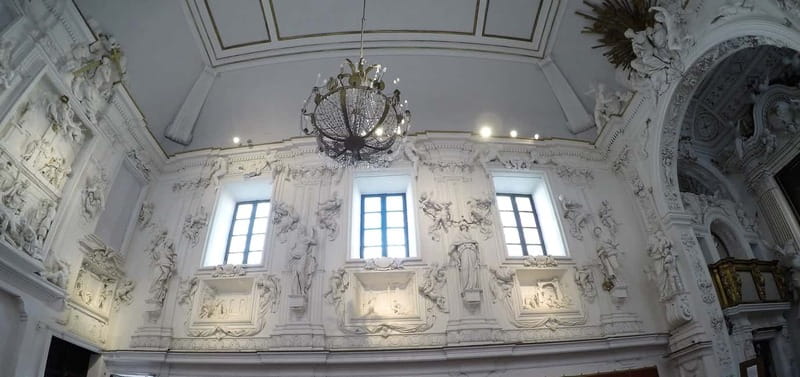
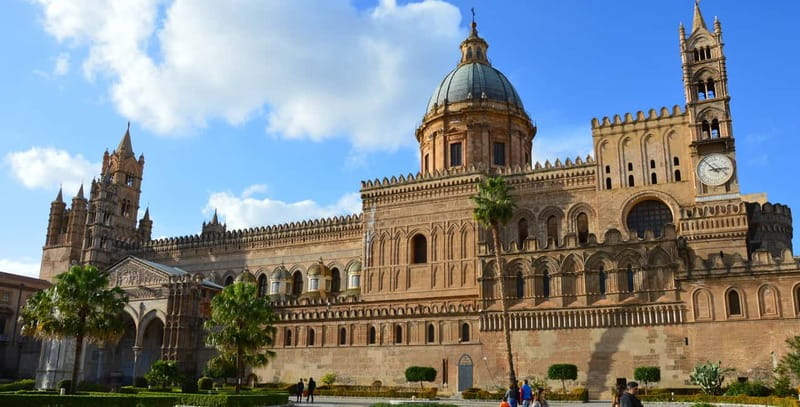
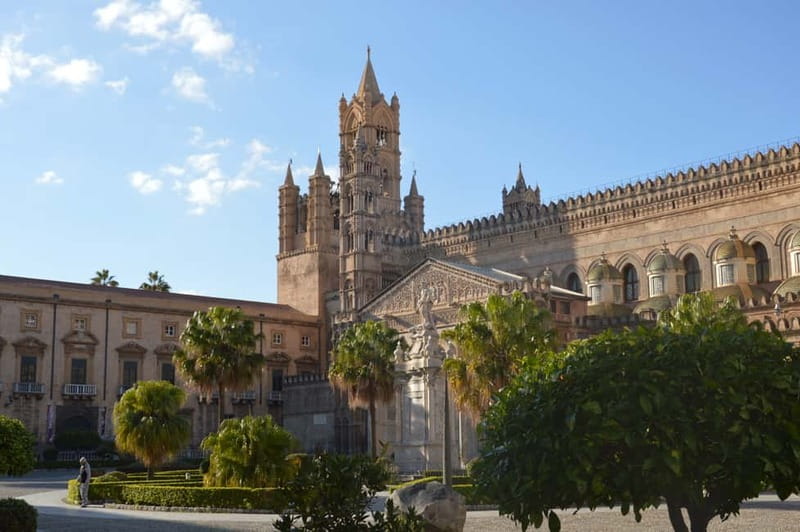
The Cathedral receives the longest scheduled visit, about one hour, and rightly so. Its façade shows several periods of construction, including Gothic, early Renaissance, and Baroque elements. Rather than presenting one clean architectural style, the building records Palermo’s changing fortunes.
That mixture is part of the pleasure. You can look at one section and see a medieval character, then notice later alterations nearby. Your guide’s job is to point out those changes and explain why the building does not look like a single-period church.
The tour includes a visit and guided explanation, but entrance tickets are not included in the advertised price. You pay monument fees directly to your guide before departure. If you qualify for free admission, you still pay a €3 reservation fee per person. On the first Sunday of each month, entrance to the monuments is free, though the €3 per-person fee for booking and headsets still applies.
Dress carefully. Shorts are not allowed, and religious sites require respectful clothing. Large bags and backpacks are also prohibited inside the monuments, so carry only what you need. This is one of the most important practical details because a casual sightseeing outfit that works outdoors may not meet the entry rules.
The Cathedral is also the stop where the tour may work best for travelers who want more than photographs. Ask questions about the changes in style, religious practice, and the people connected to the building. The private format gives you a better chance to shape that conversation than a large group tour does.
More walking tours around Italy:
- Venice: Doge’s Palace and St Mark’s Basilica Walking Tour
★ 4.4 · 6,291 reviews - Milan: Guided Walking Tour & Last Supper Visit with Ticket
★ 4.7 · 5,409 reviews - Naples: Street Food Walking Tour with Local Guide
★ 4.9 · 4,976 reviews - Florence: Highlights Walking Tour with Expert Guide
★ 4.6 · 4,662 reviews
Cappella Palatina and the Arab-Norman chapter
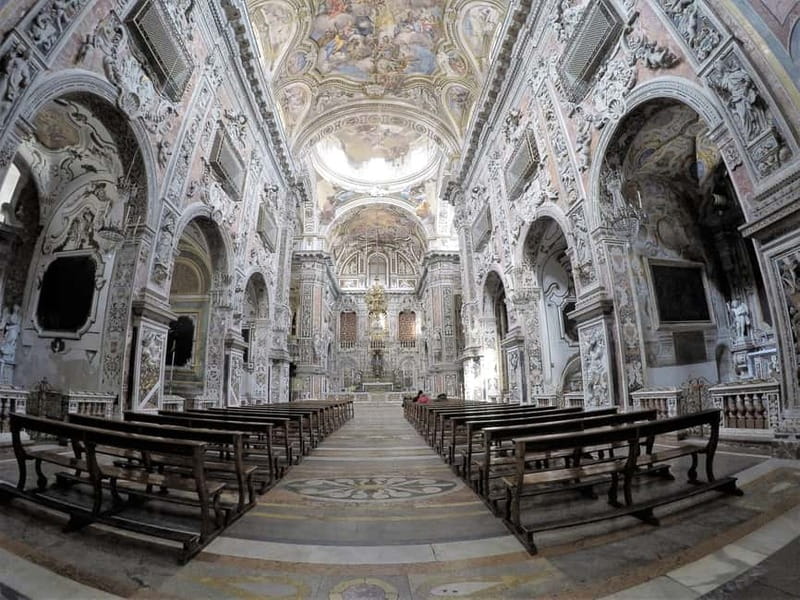
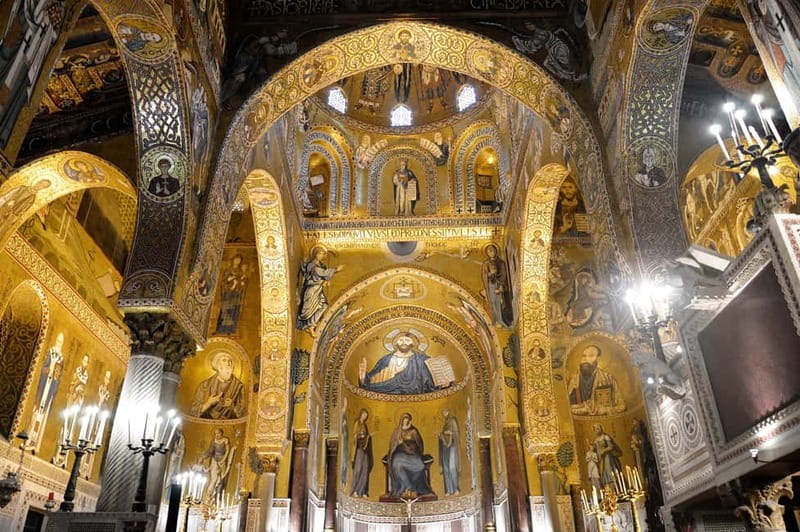
The Cappella Palatina, or Palatine Chapel, is the most distinctive religious stop on the route. Located inside the Palazzo Reale, this 12th-century chapel represents the Arab-Norman period, when artistic and architectural traditions from different cultures came together in Sicily.
The supplied route description places the chapel among the main attractions, but the stop list does not give it a separate time allotment. That means your exact time inside may depend on entry conditions and the guide’s pacing. Confirm what is included when you book, especially since monument tickets are separate.
I would make this the site you prepare for most. Look beyond the broad impression of the chapel and listen for the explanation of its religious rites, decorative program, and Arab-Norman setting. The point is not simply that it is old or beautiful. It shows how Palermo developed through contact among different powers and traditions.
The separate entrance arrangement can help you avoid the main line, though it does not mean every delay disappears. Monument access can still involve checks and timing. Keep your group together and avoid bringing a large bag.
Quattro Canti and the old street plan
Quattro Canti provides one of the clearest outdoor pauses on the walk. This formal crossroads helps you understand the structure of central Palermo, where major streets and ceremonial spaces meet.
The stop lasts about 30 minutes, which gives your guide time to explain the square’s design and the role of the surrounding streets. It is also a useful transition between the Cathedral area and the theatrical world of Teatro Massimo.
This is where a guide can add value beyond dates and names. Look at the four matching corners and consider how the space frames movement through the city. The square was designed to be seen from several directions, so your guide may have you change position for better views and photographs.
Francesca’s style, based on the tour details, included adding local streets, markets, and cultural background beyond the headline monuments. That sort of flexibility suits Quattro Canti well. If you want the walk to include a little more everyday Palermo, ask early rather than waiting until the final stop.
Teatro Massimo and the finish at Politeama
The final major stop is Teatro Massimo, followed by the return to Teatro Politeama Garibaldi. Teatro Massimo gives the route a strong finish because it brings you back to performance, public life, and Palermo’s later architectural history after the medieval and Norman sites.
The scheduled 29-minute visit should give you time to understand the building and take photographs. As with the other monuments, do not assume a full interior tour unless that is confirmed. The activity is built around a guided city walk, not a series of long admissions.
Ending at Politeama is practical if you are staying near the central districts or want to continue on foot. Since the tour returns to its meeting point, you can plan lunch or another activity without dealing with a distant pickup location.
What the private format is really worth
The price is $317.20 per group of up to five. Divided among five people, that is about $63.44 per person before admission fees. For a couple, the same tour costs about $158.60 each, which makes the value harder to justify unless you place a high price on a private guide and flexible pacing.
The strongest value comes from the small-group setup. You can ask about a particular building, slow down for an older family member, or request more local streets and market time. Diana is described as adapting a tour to specific interests, while Roberta adjusted plans during poor weather and helped older parents with lines, seating, and elevator access.
That does not make the price automatically good for everyone. If you mainly want exterior photographs and a quick orientation, you can see much of the route independently. The cost makes more sense if you plan to enter the Cathedral and Cappella Palatina, want a guide in your preferred language, or are traveling with four or five people.
Food and drinks are not included, and there is no hotel pickup or drop-off. You are paying for the licensed guide and guided route, not transportation or a meal.
Pace, access, and what to bring
The tour is listed as wheelchair accessible, and the experience can accommodate all ages. The examples involving Roberta and older parents suggest that pacing and access can be discussed with the guide. Still, tell the operator about mobility needs before departure, since historic centers and monument entrances can vary.
The walking itself calls for sensible shoes. You will move through streets and squares, with time spent standing outdoors and inside major buildings. A sun hat, sunglasses, and sunscreen are useful in warm weather, while poor weather may require a more flexible plan.
Do not bring oversized luggage or a backpack. Large bags are not permitted inside the monuments, and you may have to leave them elsewhere before entry. Shorts are also not allowed, so dress for both walking and religious sites.
Headsets are supplied for groups larger than 15 participants. Since this booking is described as a private group of up to five, you may not need them, but ask your guide if hearing clearly is a concern.
The available languages are English, Italian, French, Spanish, German, and Russian. Select your language when booking and confirm the meeting point, since the starting location may be Teatro Politeama Garibaldi or Villa Bonanno.
Who will enjoy this Palermo walk most
I would recommend it to a first-time visitor who wants a quick but serious introduction to Palermo. In three hours, you get the city’s major architectural themes without spending the day on a bus or arranging several separate visits.
It also suits families and mixed-age groups. The guide can involve children, and the private setting makes it easier to pause when someone needs a break. Older visitors may appreciate the help with access and seating, especially if you communicate needs in advance.
It is a good choice for anyone who wants Palermo explained rather than simply photographed. The Phoenician, Roman, Byzantine, Arab-Norman, Gothic, Renaissance, Baroque, and modern chapters can be hard to sort out alone. A strong guide can turn that jumble into a clear story.
You might skip it if you are traveling alone on a tight budget, dislike guided schedules, or only want to see the exteriors. You also need to budget for admission fees, follow the clothing rules, and accept that the tour covers a lot of ground in a short time.
The named guides associated with this experience include Maria, Diana, Roberta, and Francesca. Their reported strengths are personal explanations, flexibility, help with poor weather, patience with older visitors, and attention to local culture. Guides can vary by date, so you should not assume you will receive a particular person unless the booking confirms it.
Should you book it?
Book this Palermo art and architecture walk if you are traveling with up to five people and want one guide to connect the Cathedral, Cappella Palatina, Quattro Canti, Fontana Pretoria, Teatro Massimo, and Teatro Politeama. The private format is the main reason to pay for it, especially if your group includes children, older relatives, or people with specific interests.
Think twice if the price is being paid by only one or two people and you do not plan to enter the monuments. In that case, the route may cost more than you need. For a full small group seeking context, flexibility, and help navigating Palermo’s major sights, it is a practical first-day orientation with enough substance to shape the rest of your stay.
FAQ
How long does the Palermo art and architecture tour last?
The activity is listed as three hours. The scheduled guided stops total about three hours as well, with walking between locations.
What monuments are included on the route?
The route includes the Cappella Palatina, Palermo Cathedral, Fontana Pretoria, Quattro Canti, Teatro Massimo, and Teatro Politeama Garibaldi. The tour also passes through Palermo’s historic center.
Are entrance tickets included in the price?
No. Monument entrance fees are not included and should be paid directly to the guide before departure.
Is there still a fee when monument admission is free?
Yes. On the first Sunday of each month, monument entrance is free, but a €3 per-person fee is required for booking and headsets. People entitled to free entrance also pay a €3 reservation fee per person.
Where does the tour start and finish?
The starting point may be Teatro Politeama Garibaldi or Villa Bonanno, depending on the option booked. The tour ends back at the meeting point.
Is the tour private?
Yes. It is offered as a private group experience for up to five people.
Which languages are available?
The live guide can provide the tour in Russian, English, French, Italian, Spanish, or German.
Is the tour wheelchair accessible?
Yes. The activity is listed as wheelchair accessible, and guides can involve visitors of all ages. You should communicate specific mobility needs before departure.
New walking tours around Italy
- Rome: Fountains and Squares Small-Group Walking Tour★ 4.7 · 335 reviews
- Napoli: Walking Tour of Naples with Local Tour Guide★ 4.9 · 95 reviews
- Naples: Spanish Quarters Walking Tour★ 4.6 · 72 reviews
- Naples: Street Art, Wine and Food Tasting Walking Tour★ 5.0 · 163 reviews
- Naples: Historic Center and Sansevero Chapel Walking Tour★ 4.8 · 208 reviews
- Naples: Old Town Guided Walking Tour★ 4.8 · 553 reviews
- Naples: Street Food Experience With 6 Stops★ 4.7 · 392 reviews
- Naples Essentials: Monuments, Local Life & Street Art★ 4.9 · 79 reviews
Palermo Walking Tours, side by side.

Palermo Original Street Food Walking Tour by Streaty
Read our review →
Palermo: Street Food and History Walking Tour
Read our review →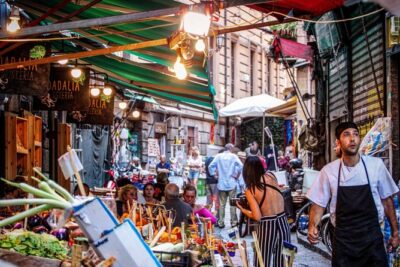
Palermo No Mafia walking tour: discover the Anti-mafia culture in Sicily
Read our review →Lists this walk sits on