

Review · RIO DE JANEIRO
Rio De Janeiro: Half-Day Rocinha Favela Walking Tour
Rocinha is not a museum or a movie set. It is a working community, and this small-group walking tour gives you a chance to see it without sitting in a jeep and pointing at homes. Local guides, including Wellington, Alberto, Daniel, and Martin, explain daily life, community rules, social pressures, and the long history behind Rio’s largest favela.
I like two things right away: you walk with people who know the neighborhood, and your money includes a contribution to the community. I also like the mix of serious conversation, sweeping views, and cultural stops such as capoeira. The main caution is physical: narrow alleys, steep stairs, and uneven walking make this a poor fit for anyone with mobility or knee problems.
Key points
- Local guides give the tour its meaning: Guides such as Wellington, Alberto, Daniel, and Martin bring personal knowledge of Rocinha and its past.
- You walk instead of riding through: Small groups can pause, ask questions, and see ordinary streets at a human pace.
- Capoeira adds a cultural highlight: A visit to a local capoeira school may include music, instruments, dance, and a demonstration.
- The rooftop viewpoint is memorable: From high in Rocinha, you can see the sharp contrast between the favela, wealthy neighborhoods, and Rio’s coastline.
- The $35 price is strong value: It covers three hours, a local guide, and a community contribution, but food, drinks, and hotel transport cost extra.
- The route is demanding: Wear proper shoes and expect stairs, narrow lanes, and a few tight spaces.
Why Rocinha is worth seeing on foot
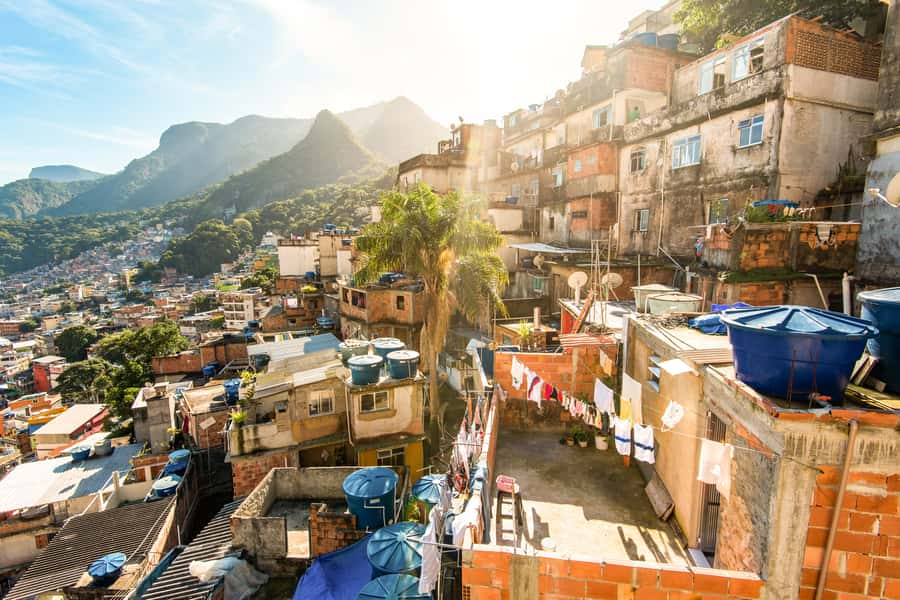
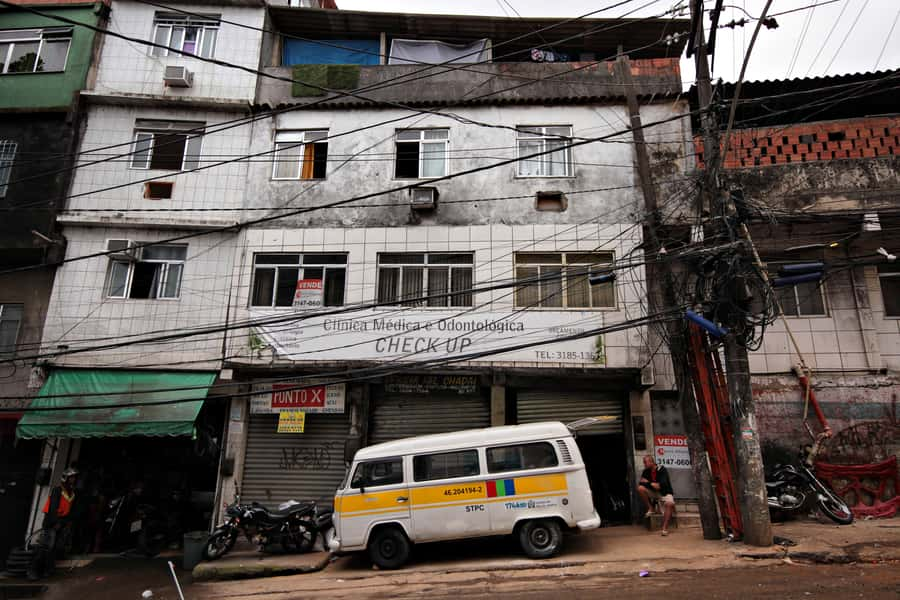
Rocinha is often reduced to a few loaded images: poverty, danger, crowded buildings, and crime. Those issues are part of the story, but they are not the whole story. A walking tour lets you see the neighborhood as a place where people work, raise families, study, run shops, create art, and build community life.
That matters because the physical setting tells you plenty. Rocinha climbs the hills above Rio, with tightly packed homes, lanes, stairs, and sudden openings toward the city. You see how close the community is to wealthy districts, yet how different the daily realities can be.
I prefer the walking format here. A vehicle can make a neighborhood feel like a spectacle viewed through glass. Walking asks you to pay attention to the people around you and gives the guide more chances to explain what you are seeing. The tour is designed to be respectful, with small groups and local hosts rather than a drive-by look at residents’ homes.
You should still approach the experience with care. This is someone’s neighborhood, not a theme park. Ask before photographing people, keep your voice down in residential areas, and listen when your guide explains where photography is unwelcome.
More half-day walks around the world:
- Discover Berlin Half-Day Walking Tour
★ 5.0 · 9,624 reviews - Istanbul: Fener Balat Half-day Guided Walking Tour
★ 4.9 · 1,711 reviews - La Paz Half-Day Walking Tour
★ 4.8 · 591 reviews
Meeting at Copacabana Palace at 13:25
The meeting point is in front of the Belmond Copacabana Palace Hotel, at Avenida Atlântica 1702. Look for the statue of journalist Ibrahim Sued beside the main entrance, on the same sidewalk, and wait there at 13:25.
There is no hotel pick-up, so you need to make your own way to Copacabana. Build in extra time. A famous hotel and a busy beachfront avenue are easy landmarks, but Rio traffic can be slow, and arriving late could mean missing the group.
The listed duration is three hours. That is enough time for a solid introduction without consuming your whole afternoon. I like this timing because it leaves room for another Rio activity later, though the stairs and heat may make you want a quiet evening afterward.
The tour is offered in English, Portuguese, and Spanish. The quality of the experience depends heavily on the guide assigned that day. Wellington is repeatedly singled out for clear English, warmth, and a calm approach. Alberto is known for explaining the neighborhood through his own long life there, while Daniel and Martin have also led highly personal tours. You cannot necessarily request a particular guide, but it is worth asking when you book.
Entering Rocinha with a local guide
The first useful shift in perspective comes when you stop seeing Rocinha as an abstract problem and start seeing it as a lived-in place. Your guide explains how the community developed, how people earn a living, and how residents deal with limited services and social and economic pressure.
Alberto, described as someone who grew up and lived in Rocinha for more than 60 years, has even shown parts of his own home and talked about the difficulties of favela life. That kind of personal context is more useful than a string of statistics. It connects the large issues to a real person and a real neighborhood.
Wellington is also praised for making difficult subjects clear without turning the tour into a lecture. His humor and friendly manner help, but the better guides do not dodge the serious parts. You hear about inequality, the relationship between the community and police, and the ways residents organize daily life.
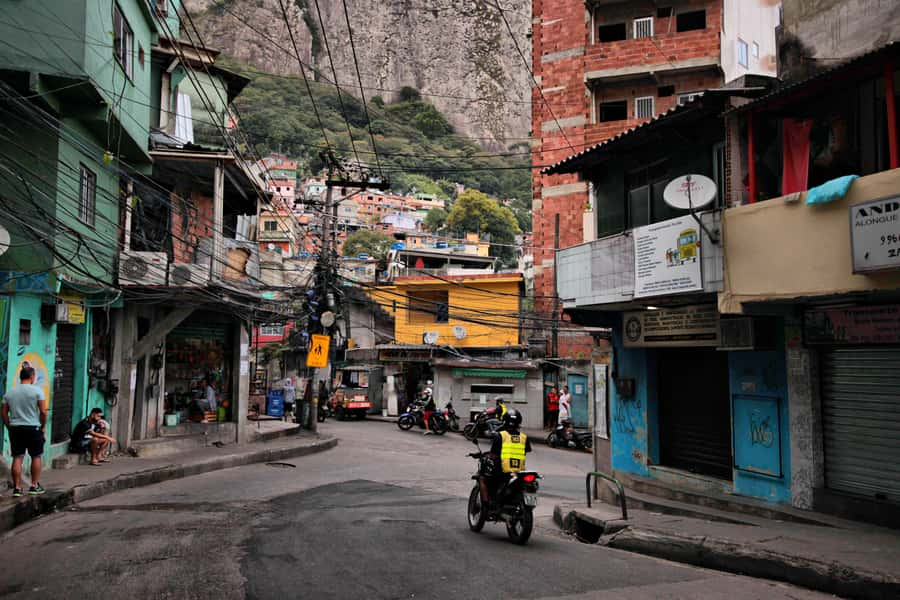
Do not expect a polished sightseeing route. You will pass through narrow alleys and climb stairs. The setting can feel crowded and confusing, particularly if you are used to broad streets and clear signs. That is part of what makes the tour informative, but it also means you need to stay close to the group.
What the three-hour walk feels like

The tour moves through the community rather than stopping at one single attraction. You may pause at viewpoints, local businesses, cultural spaces, and streets where your guide can explain how Rocinha functions.
The pace is shaped by the route and the guide. Some groups describe a relaxed afternoon with plenty of time for questions. That is important here. A guide who rushes you through can point out buildings, but a guide who pauses can explain why a particular lane, view, or gathering place matters.
The physical effort is moderate to demanding. The tour information specifically warns about narrow passages and stairs, and that warning deserves attention. Comfortable shoes are essential. Avoid sandals with poor grip, and think twice about booking if you have recent surgery, knee trouble, limited balance, or a mobility impairment.
The activity is not suitable for wheelchair users or children under six. The booking information also lists age and weight restrictions, but the age limits appear in two forms, over 70 and over 75, and the weight limits appear as both 130 kilograms and 140 kilograms. If either applies to you, confirm the current rule before paying.
More walking tours around the world:
- Magical London: Harry Potter Guided Walking Tour
★ 4.7 · 22,044 reviews - Reykjavik Food Walk – Local Foodie Adventure in Iceland
★ 5.0 · 18,952 reviews - History and Hauntings of Salem Guided Walking Tour
★ 5.0 · 14,564 reviews - New Orleans Premier Ghost, Voodoo and Vampire Walking Tour
★ 4.5 · 12,856 reviews
Rooftop views over Rio

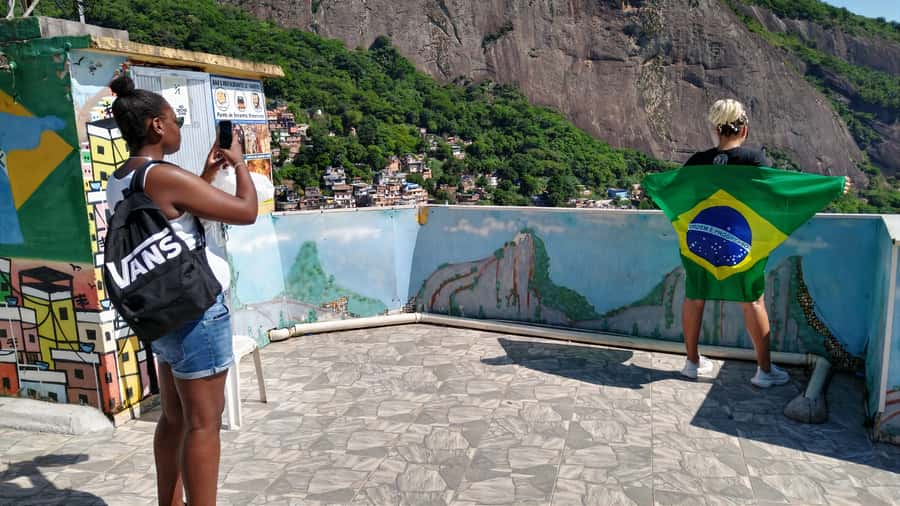
One of the best visual moments comes at a high viewpoint above Rocinha. From there, Rio opens up in a way that is hard to understand from the beach. You can see the dense hillside community set against the city, mountains, and coastline.
A rooftop bar called Novo Visual Rocinha is included on routes described by recent guests. Drinks are not part of the $35 price, but a caipirinha or soft drink gives you a chance to sit, talk, and take in the view. One guest also mentioned a drone video costing about R$200. Treat that as an optional purchase, not part of the tour.
The view is more than a photo stop. It makes the city’s inequalities visible without needing a long explanation. Wealthy areas and favela housing can sit remarkably close together, separated by roads, money, public services, and opportunity. Your guide can help put that contrast into context.
There is a small tradeoff. A rooftop bar is a commercial stop, and some visitors may feel it adds a tourist layer to a serious experience. I see it as worthwhile if you treat it as a local business and keep your attention on the setting, not just the selfie.
Capoeira, samba, and community culture
Capoeira is another strong part of this experience. The tour can include a visit to a local capoeira school, where you may see a demonstration, hear music, handle instruments, and learn how the practice combines movement, rhythm, history, and community teaching.
This stop gives the afternoon a needed change of pace. The discussion of poverty and public policy can be heavy. Capoeira shows how culture grows from community life and how local organizations can give young people a place to learn and perform.
Recent routes have featured Tiane and her team, with children and local performers taking part. Guests have described the session as one of the most memorable parts of the afternoon. Donations may be suggested, so carry some Brazilian reais if you want to support the school directly.
Samba and music may also appear in the cultural portion of the visit. Do not expect a large stage show with fixed production values. The appeal is the local setting and the chance to see an activity connected to residents rather than a separate tourist performance.
Safety, respect, and the difficult questions
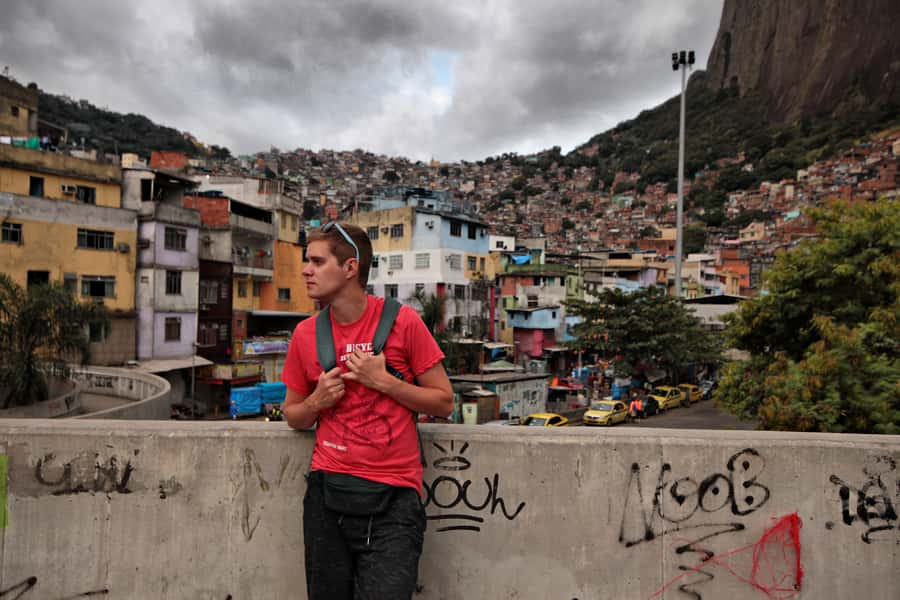
Safety is the most common concern before booking a favela tour. The route is organized with local guides and hosts, and many people feel well looked after when they stay with the group. Several guides have lived in Rocinha for years, which helps them read the neighborhood and explain how to behave.
That does not mean you should treat the area as risk-free. Conditions can change, and your guide’s instructions matter. Stay together, avoid wandering off, do not display expensive items, and ask before taking photographs. The tour aims to be non-intrusive, but good behavior is also your responsibility.
The experience works best when you are ready to ask thoughtful questions. You can ask about housing, schools, work, policing, community organization, and the way media portray favelas. Avoid treating residents as evidence for a preconceived idea. You are there to listen, not to judge who has the more authentic story.
I also appreciate that the tour cost includes a monetary contribution to the favela community. That does not solve the ethical question by itself, but it gives the activity a clearer local benefit than simply paying an outside operator to drive through.
Is $35 good value?

At $35 per person, this is one of the more affordable ways to spend three hours with a local guide in Rio. The price includes the walking tour and guide, and it also includes a community contribution. For that amount, the tour offers more than a viewpoint or a quick photo stop.
You should budget extra for anything you buy along the way. Food and drinks are not included, and a rooftop beverage costs more. A donation at the capoeira school may also be appropriate. Hotel transportation is not included, so factor in your own cost and time getting to Copacabana Palace.
The value depends on what you want. If you want a carefully scripted history tour with guaranteed stops, this may feel loose. If you want direct conversation, local perspective, and a look at ordinary life away from Rio’s postcard attractions, the price is sensible.
The high overall rating is supported by repeated praise for the guides, especially Wellington, Alberto, Daniel, and Martin. One useful criticism is that a guest wanted more explanation during the walk. That is a fair reminder that guide style varies. Most people find the tour informative, but the experience is not identical every day.
Who should book this tour?
I would choose this tour if you want to understand Rio beyond Copacabana, Ipanema, Sugarloaf Mountain, and Christ the Redeemer. It suits curious adults who can walk comfortably and who are willing to listen to complicated stories without expecting a simple good-versus-bad answer.
It is especially useful for first-time visitors who feel uneasy about favela tours but want to avoid the vehicle-based zoo-tour approach. Walking with local hosts is a more human way to enter the community, provided you respect the setting.
It is less suitable if you dislike stairs, feel uncomfortable in tight lanes, need a fixed accessible route, or want a quiet scenic tour. Families with very young children should also look elsewhere because children under six cannot join.
Book with flexible plans if possible. Free cancellation is available up to 24 hours before the tour, and you can reserve now and pay later. Check the starting time when booking, since availability can vary.
Should you book the Rocinha walk?

Book it if you want a grounded look at Rio and can handle the physical demands. The combination of local stories, hillside views, capoeira, and ordinary street life gives you a fuller picture than the usual tourist circuit.
Do not book it just to collect dramatic photographs or to prove that you visited a dangerous place. That attitude works against the tour’s purpose. Go with comfortable shoes, an open mind, and respect for the people who live there.
For most fit visitors interested in social history and local culture, I think the $35 price is fair. The strongest reason to go is not the claim that Rocinha is Rio’s largest favela. It is the chance to meet guides who can replace a stereotype with a more complicated, more human view.
FAQ
Where does the Rocinha tour meet?
Meet in front of the Belmond Copacabana Palace Hotel at Avenida Atlântica 1702 in Copacabana. Wait beside the statue of journalist Ibrahim Sued, next to the hotel’s main entrance, at 13:25.
How long does the tour last?
The walking tour lasts three hours.
What languages are available?
The tour is available in English, Spanish, and Portuguese.
Does the price include hotel pick-up?
No. Hotel pick-up is not included. You need to reach the meeting point at Copacabana Palace yourself.
Are food and drinks included?
No. Food and drinks are not included in the tour price.
Is the tour suitable for people with mobility issues?
No. The route includes narrow alleys and stairs and can be physically demanding. It is not recommended for people with knee problems or mobility issues, and it is not suitable for wheelchair users.
Can I cancel the booking?
Yes. You can cancel up to 24 hours in advance for a full refund. You can also reserve now and pay later.
New walking tours around the world
- Niagara Falls, Canada: White Water Walk Entry Ticket★ 4.5 · 147 reviews
- NYC: Walking Tour with Local Guide and 30+ Top NYC Sights★ 4.5 · 248 reviews
- Zadar: Food Tasting & Old Town Walking Tour★ 5.0 · 94 reviews
- Niagara Falls: Walking Tour, Journey Behind Falls, & Cruise★ 4.8 · 773 reviews
- New York City: Gangsters and Ghosts 2-Hour Walking Tour★ 4.7 · 615 reviews
- NYC: History of Slavery & Underground Railroad Walking Tour★ 4.7 · 87 reviews
- New York City’s Hell’s Kitchen: Walking Food Tour★ 4.8 · 200 reviews
- New York City: Central Park Walking Tour★ 4.7 · 82 reviews