
Review · BATH
Bath: City Walking Tour with Optional Roman Baths Entry
Bath’s best sights are close enough to connect on foot, but the city’s story is not always easy to read from its honey-colored stone. This tour links Roman engineering, medieval religion, and Georgian ambition in a brisk walk from Bath Abbey to the Royal Crescent, with the Roman Baths available as an optional add-on.
I like the way the route combines major sights with the people and ideas behind them. I also like the local guide approach: George, Jamie, John, Ewan, Tom, Anna, and others have been praised for humor, clear storytelling, and a pace that lets you see a lot without feeling hurried.
The main thing to understand is that the guide does not lead you through the Roman Baths. The optional ticket gives you entry for a self-guided visit with an audio guide, so allow extra time if the baths are your main reason for booking.
Key points at a glance

- Roman baths and hot springs: Choose the entry option to visit Bath’s famous Roman site after the walking tour, using the audio guide inside.
- A useful first look at Bath: The route covers Pulteney Bridge, Bath Abbey, the Circus, Upper Assembly Rooms, and Royal Crescent.
- Guides with personality: George, Jamie, John, Ewan, Tom, Anna, and other local guides are known for humor, history, and friendly conversation.
- A short but full route: The walk lasts 1.5 to 2 hours and covers a lot of central Bath on foot.
- Good value at $26: The price includes the walking tour and an Abbey donation, with Roman Baths entry included only when selected.
- Best timing tip: A 9 a.m. start can mean quieter streets and a smaller group, though starting times depend on availability.
Why this Bath walk works so well
Bath can feel almost too polished at first. The grand stone buildings are easy to admire, but a good guide helps you see the city as a sequence of bold projects rather than one pretty view after another.
This tour moves through Bath’s major chapters in a sensible order. You begin in the center near Bath Abbey, see the river and bridge, visit or enter the Roman Baths, then move into the Georgian city of crescents, terraces, assemblies, and carefully planned public spaces.
I like that balance. You are not spending two hours on one narrow topic, and you are not simply ticking off buildings for photographs. You get a working outline of how Bath grew from a Roman settlement into a fashionable Georgian city.
At $26 per person, the walking portion offers good value if you are visiting Bath for the first time. It gives you a useful orientation before you decide where to spend the rest of your day. The Roman Baths ticket changes the calculation, since entry is an optional part of the booking rather than a standard inclusion.
More walking tours around the UK:
- Magical London: Harry Potter Guided Walking Tour
★ 4.7 · 22,044 reviews - Edinburgh: Harry Potter Magical Guided Walking Tour
★ 4.8 · 11,944 reviews - Edinburgh Castle: Guided Walking Tour with Entry Ticket
★ 4.7 · 11,699 reviews
Starting beside Bath Abbey
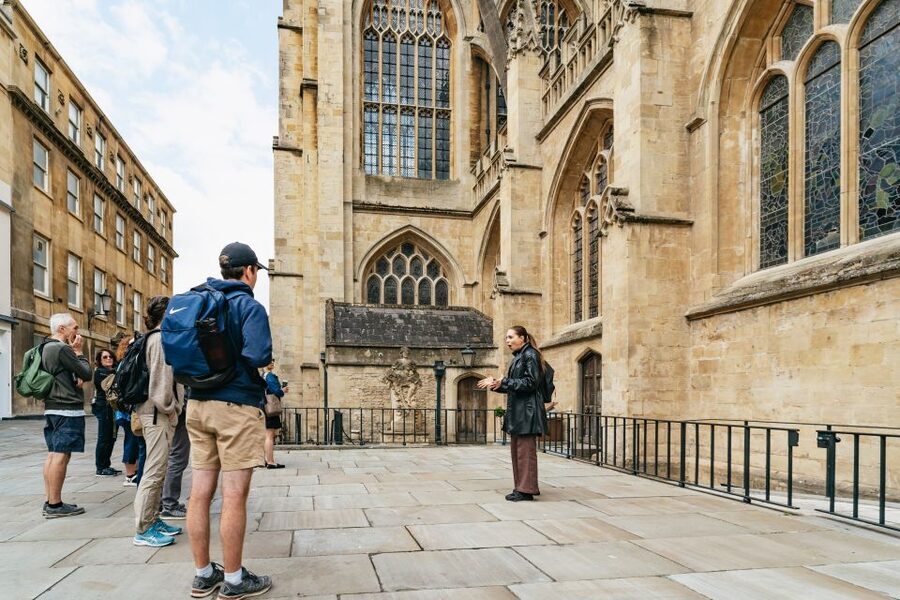
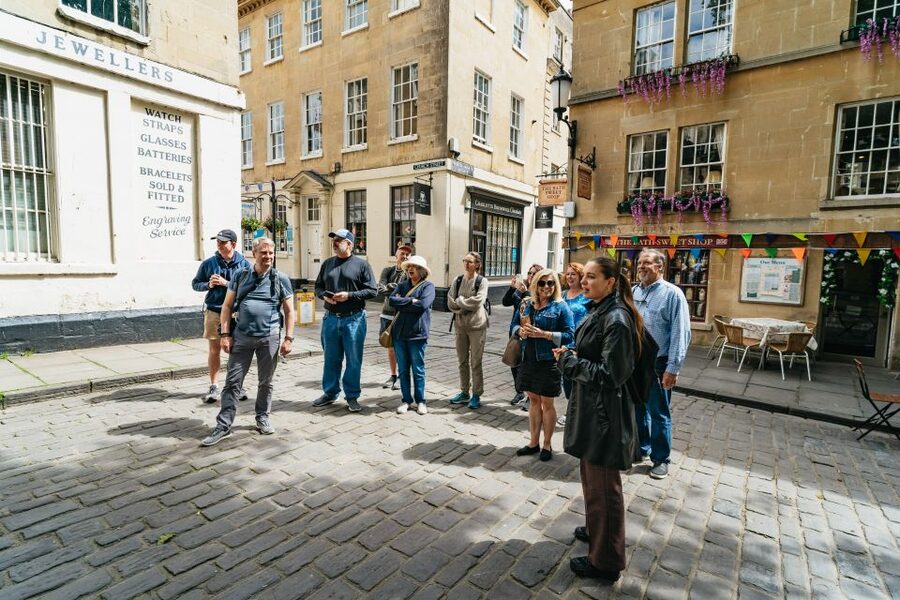
The tour begins in the morning or afternoon at Bath Abbey, though the exact meeting point can vary with the option you book. Arrive carefully and check your confirmation, since one person found that an incorrect meeting point caused confusion. The guide was patient, but it is better to avoid that scramble at the start.
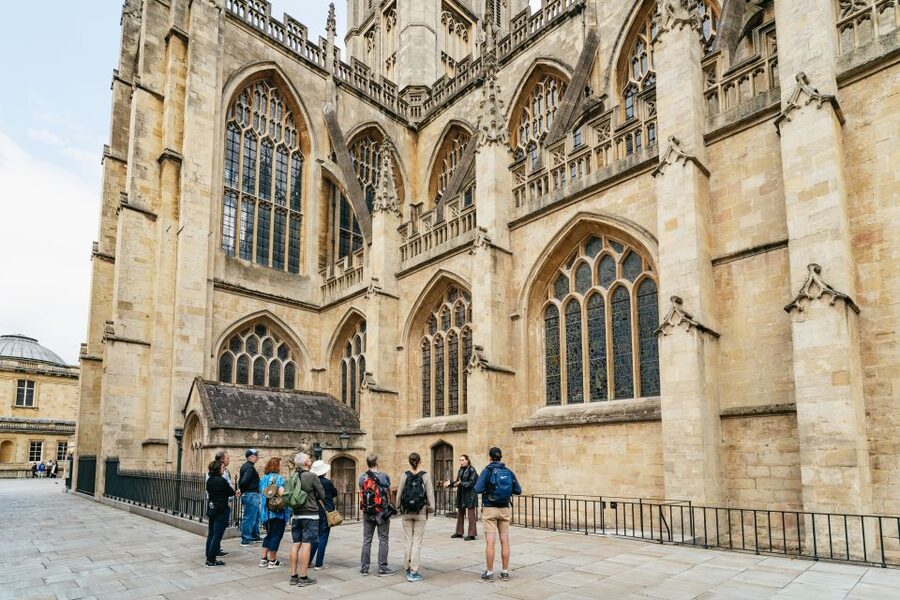
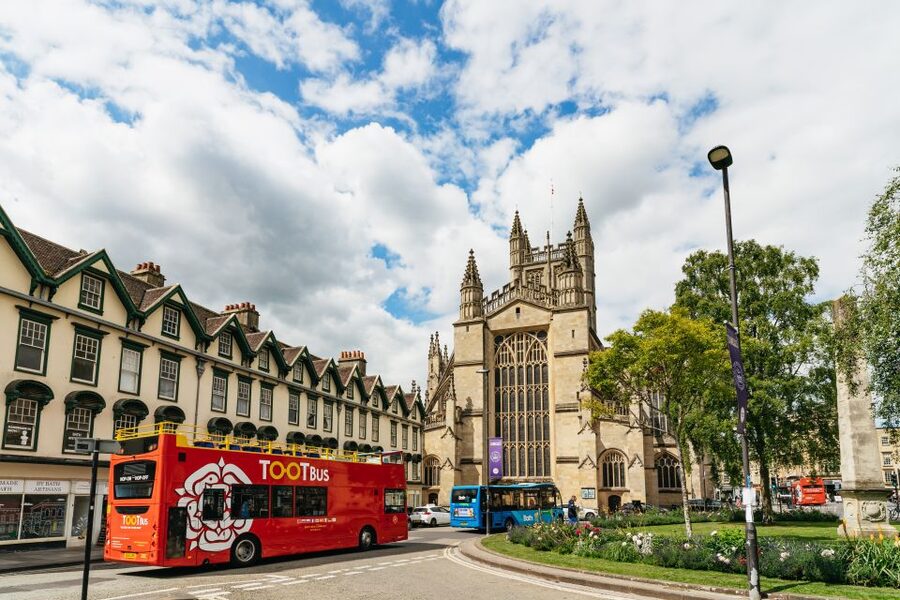
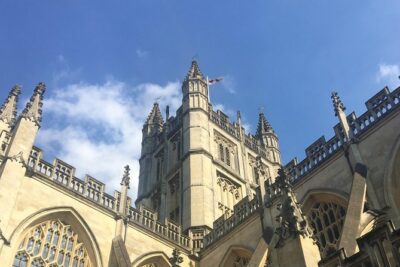
Bath Abbey is an excellent place to begin. Its perpendicular Gothic design gives you an immediate sense of Bath’s medieval side, long before the elegant Georgian streets appear. The tour includes a donation to the abbey, which is a small but useful detail in the overall value.
Your guide sets the tone here. The strongest guides do not merely recite dates. They explain how Bath’s religious, civic, and commercial life shaped the buildings around you. George has been especially good at connecting Bath’s growth from a small settlement through the Roman period and into its Georgian heyday.
The route is conducted in English. It is designed for visitors of different ages, and the guides tend to keep the mood light with stories and jokes. That helps when the subject turns architectural, since a long run of building names can otherwise blur together.
Pulteney Bridge and the river view
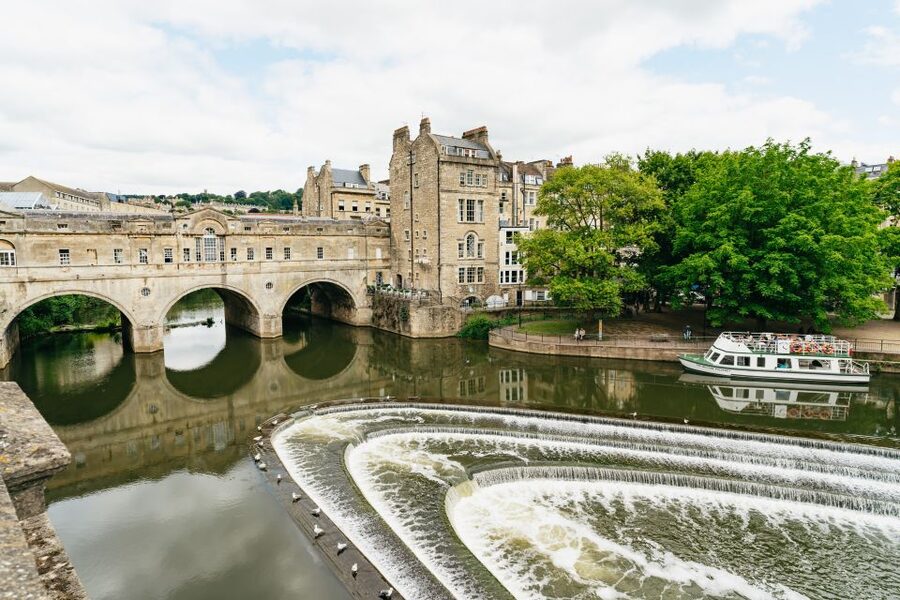
Pulteney Bridge is one of the early highlights, and rightly so. Its Palladian design gives it an unusually graceful look, while the shops built into the bridge make it more than a crossing point.
You may recognize it from Les Misérables, but the film connection is only part of its appeal. The bridge helps explain Bath’s relationship with the River Avon and shows how ambitious Georgian planning could be. From here, you get one of the city’s most useful visual pauses before the route turns back toward the central sights.
This is also a good place to listen for local detail. The tour is not only about famous buildings. Guides such as John and Ewan have been praised for adding personal observations and local context, which can make the city feel less like a museum display.
The walk is generally manageable, but it is still a city walk. You will be on your feet for up to two hours, and the route includes a small hill toward the end. Wear shoes you can comfortably walk in, especially if you plan to continue exploring afterward.
The Roman Baths and their hot springs
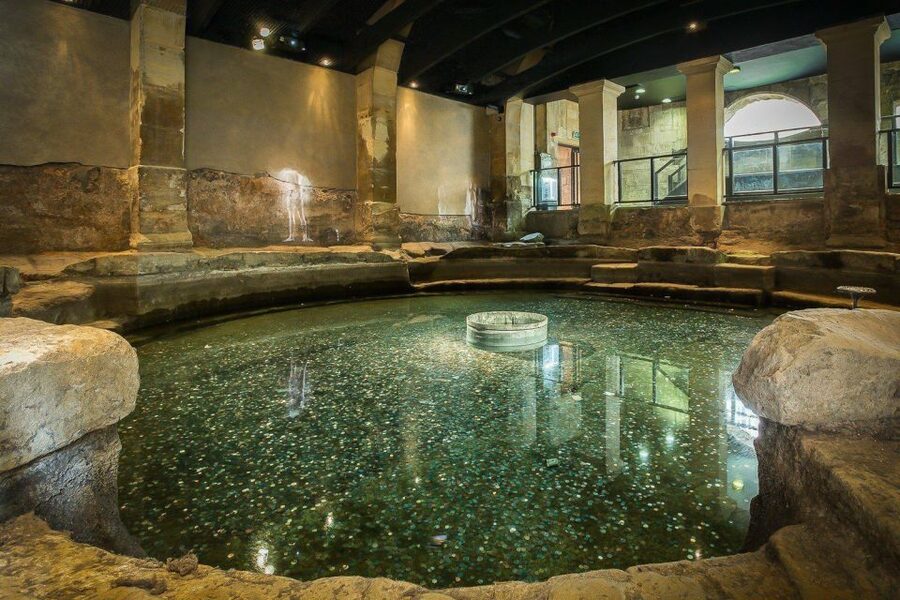
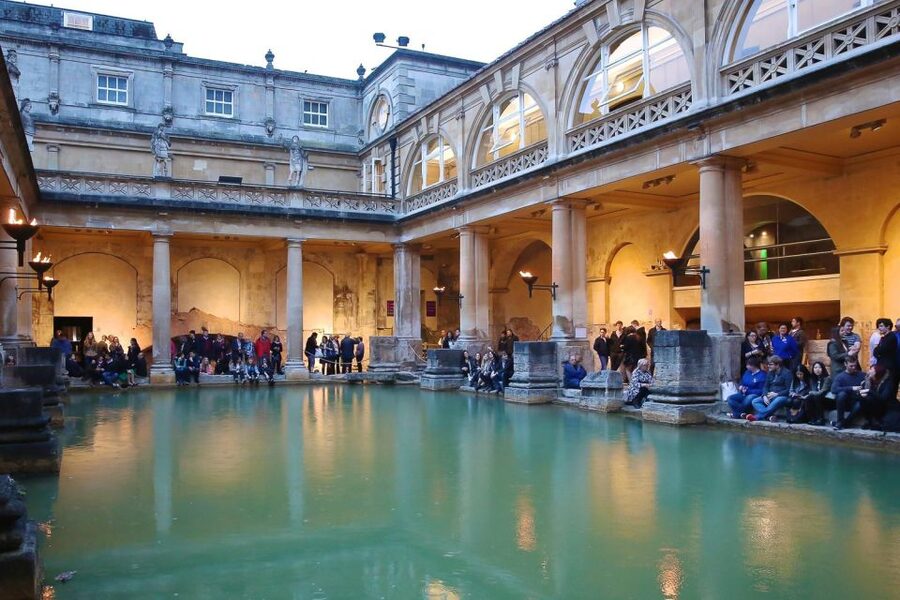
The Roman Baths are the major optional attraction. Here, you see the remains of the Roman bathing complex, objects connected with Roman life, and the hot geothermal springs that made this place important in the first place.
The springs are the key to Bath’s identity. They explain why people settled here, why the Romans built such an elaborate complex, and why the city later became a fashionable spa destination. Seeing the water and the surviving structures gives you a stronger sense of place than simply hearing that Bath was once Roman.
Be clear about how this part works. If you select Roman Baths entry, the walking guide takes you to the attraction or helps arrange entry, but the interior visit is self-guided. An audio guide is available inside. One particularly useful practical point is that the two-hour tour time refers to the outdoor walking portion, not the whole experience with the baths.
I would allow roughly another 1.5 to 2 hours if you want to explore the Roman Baths properly. That makes the whole outing closer to 3.5 or 4 hours, depending on your pace. If you are interested in Roman archaeology, do not squeeze the baths into a tight schedule.
Crowds can affect this visit. One person found the interior so busy that it was hard to see some sections. An early start can help, and a 9 a.m. booking has another advantage: the streets may be quieter and the group smaller before the city fills up.
The optional entry is still worthwhile for many first-time visitors, but it is important to know what you are buying. If you want detailed interpretation from a live guide inside the baths, this is not that format. If you are happy to move through the displays with an audio guide, the ticket gives you freedom to stop and look at your own pace.
Same streets, a different story:
- Underground Vaults Walking Tour in Edinburgh Old Town
★ 4.5 · 8,506 reviews - London: The Original Jack the Ripper Walking Tour
★ 4.7 · 7,833 reviews - Oxford University Walking Tour With University Alumni Guide
★ 5.0 · 6,905 reviews - Edinburgh Castle: Guided Walking Tour with Entry Ticket
★ 5.0 · 5,540 reviews
Bath Abbey and the city’s medieval layer
Bath Abbey is more than a meeting point. Its tall Gothic interior and detailed stonework offer a sharp contrast with the Roman remains and the later Georgian streets.
The tour uses the abbey as part of the city story rather than treating it as an isolated stop. That helps you understand the layers beneath modern Bath. Roman engineering, medieval worship, and Georgian social life all occupy the same compact center.
The donation included with the walk is modest, but it signals that the abbey is an active place rather than simply a backdrop. You should not expect a full interior tour as part of the walking experience. The supplied information promises a donation and an exterior and city-centre visit, not an extended guided exploration inside every building.
That distinction matters if you want to enter several major buildings. One person would have liked to see inside more of the key sites. The tour is strongest at explaining the city from its streets, squares, and viewpoints.
The Georgian route from the Pump Rooms

After the central sights, the route turns to Bath’s Georgian architecture. From the Pump Rooms, you walk toward the Upper Assembly Rooms, the Circus, and Royal Crescent.
This is where the city’s sense of order becomes clear. The buildings use repeated proportions, pale local stone, and carefully planned curves to create a unified look. A guide can point out how the architects shaped the streets for display, movement, and social life rather than treating each building as a separate object.
The Upper Assembly Rooms represent the social side of Georgian Bath. This was a city where visitors came to meet, dress well, dance, and be seen. You may not enter the rooms during the walk, but the route places them within the wider story of fashionable Bath.
The strongest part of the Georgian section is the connection between architecture and status. The elegant facades were not just decorative. They helped create a setting for the city’s wealthy visitors and made Bath feel ordered, modern, and exclusive in the eighteenth century.
The Circus, an architectural puzzle
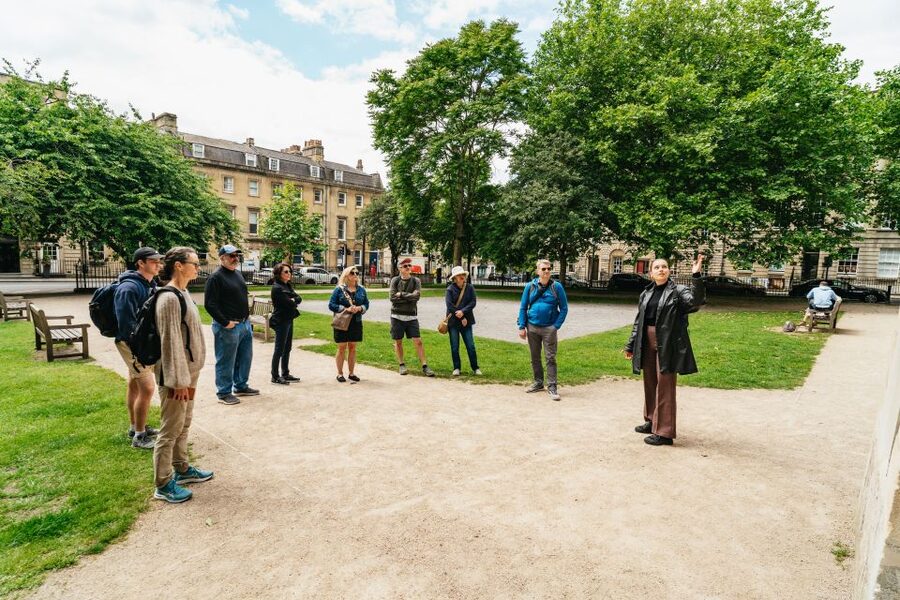
The Circus is one of Bath’s most memorable spaces. Its curved arrangement makes it feel almost circular from the center, though the three sections work together as a carefully planned architectural composition.
The guide’s job here is to help you see the design rather than just photograph it. Look up at the repeated details, compare the three curved sections, and listen for the explanation of how the space was conceived. The name adds a little mystery, but the real interest is the way the buildings create a complete urban room.
This is a good stop for visitors who enjoy architecture but do not want a technical lecture. Guides such as Jamie and William Darcy Jones have been praised for making the subject entertaining and easy to follow. Jamie, in particular, is described as enthusiastic enough to speak quickly, so do not hesitate to ask him to repeat a point if needed.
Royal Crescent and the grand finish
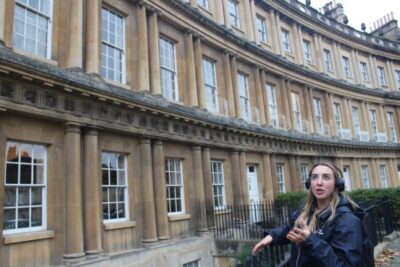
Royal Crescent is the route’s big architectural finish. Its thirty Grade I listed houses form one of England’s clearest examples of Georgian design, and the long curve gives you a sense of scale that smaller streets cannot provide.
The crescent is best understood from a little distance, where the sweep of the facade becomes obvious. The repeated windows and columns create a calm, unified front, while the individual houses reveal the social hierarchy and private life behind the public face.
This is a satisfying endpoint because it gathers together the themes introduced earlier. Bath’s Georgian planners wanted beauty, order, and prestige. Royal Crescent delivers all three in a single view.
The walk toward this section includes a small hill. It is not presented as a strenuous hike, but you should expect some effort after the flatter central streets. The reward is a strong final view and a clear sense of how Bath’s eighteenth-century expansion moved beyond the Roman core.
The guides make the difference
The tour’s strongest feature is the human element. You may be led by George, Jamie, John, Ewan, Tom, Anna, William, Marcel, or another member of the Footprints Tours team, so the exact style will vary.
Across the different guides, the useful traits are similar: a local connection, clear explanations, humor, and a willingness to answer questions. George has been particularly effective at mixing facts with stories and keeping everyone involved. Jamie is known for energy and warmth. John often brings a conversational style, while Ewan has been praised for covering a lot of ground without rushing.
A smaller group can make the experience better. One early morning tour had only a few people, which made it easier to hear, ask questions, and speak directly with the guide. Later departures may have more people, and one person noted that headphones would have helped in a larger group.
The guides generally keep the walk moving. That is useful in Bath, where you want to see several districts in a short time. It also means this is not the right choice if you prefer to spend twenty minutes at every stop or pause for long photo sessions.
Price, timing, and the real value
The listed price is $26 per person. For the walking tour alone, that is a fair price for a first visit, particularly if you want a quick orientation and a local explanation of the main sights.
The value is strongest when you use the walk to plan the rest of your day. You can return to a building that caught your attention, choose a museum, or spend more time around the Roman Baths after learning how the sites connect.
The Roman Baths entry is optional. If you add it, compare the total price with your interest level and available time. The ticket is useful, but the visit is self-guided with an audio guide, and you should allow extra time beyond the advertised 1.5 to 2 hours.
Morning departures deserve serious thought. A 9 a.m. start may offer a quieter Bath and a smaller group. This can make a real difference at Pulteney Bridge, around the abbey, and inside the Roman Baths. Afternoon departures may suit your schedule better, but you could encounter more people and busier streets.
The activity is non-refundable, so confirm the date, starting time, and meeting point before booking. A private group is available, which may be worth considering if your party wants a more personal pace or has specific questions.
Who should book this Bath tour?
I would choose this tour if you have one day in Bath and want a clear introduction without spending the whole day inside museums. It is also useful at the start of a longer stay, since the route shows you where the main sights are and gives you ideas for later.
It suits families, couples, older visitors who are comfortable walking, and mixed groups with different levels of interest in history. The guides make an effort to involve everyone, and the humor keeps the subject from becoming too formal.
You may want another option if you need a fully accessible route, a tour in a language other than English, or a guided visit inside the Roman Baths. Those details are not offered here. You should also reconsider if you dislike walking or want long, unhurried visits at each building.
Should you book it?
Yes, if you want to see Bath’s major sights in a short time and prefer a local guide to an audio tour alone. The best reason to book is the combination of Roman, medieval, and Georgian Bath in one well-paced route, with guides such as George, Jamie, John, and Ewan adding humor and local detail.
Choose the Roman Baths option if the springs and archaeology are central to your plans, but set aside extra time for the self-guided interior. Book an early start if you can. You will have a better chance of a calm walk, a smaller group, and a clearer view of Bath before the day gets busy.
FAQ
How long does the Bath walking tour last?
The walking tour lasts between 1.5 and 2 hours, depending on the selected starting time and the pace of the group.
What sights are included in the walk?
The route includes Bath Abbey, Pulteney Bridge, the Roman Baths area, the Pump Rooms, the Upper Assembly Rooms, the Circus, and the Royal Crescent.
Is entry to the Roman Baths included?
Roman Baths entry is included only if you select the option that includes it. Otherwise, the booking covers the walking tour and an Abbey donation.
Does the guide lead the tour inside the Roman Baths?
No. The Roman Baths visit is self-guided, with an audio guide available inside. The live guide leads the city walking portion.
How much extra time should I allow for the Roman Baths?
Allow about 1.5 to 2 additional hours if you want to visit the baths without rushing. The full outing can take around 3.5 to 4 hours with the museum visit included.
What language is the tour conducted in?
The live tour guide speaks English, and English is the stated tour language.
Can I book a private group?
Yes. A private group option is available.
Is the tour refundable if my plans change?
No. The activity is non-refundable, so check the date, meeting point, and starting time before you book.
New walking tours around the UK
- London: Old City Walking Tour★ 4.8 · 135 reviews
- Manchester: Music-Themed City Walking Tour★ 4.4 · 109 reviews
- Manchester: Media City & The Quays Guided Walking Tour★ 5.0 · 165 reviews
- Manchester City Highlights Walking Tour★ 4.8 · 299 reviews
- London: Witches and History Bankside Walking Tour★ 4.8 · 223 reviews
- London: Palaces and Parliament Walking Tour★ 4.8 · 365 reviews
- London: Winston Churchill and London in WWII Walking Tour★ 4.8 · 143 reviews
- London: Westminster Walking Tour & The Tower of London Entry★ 4.6 · 131 reviews
Bath Walking Tours, side by side.
Walking Tour of Bath with Blue Badge Tourist Guide
Read our review →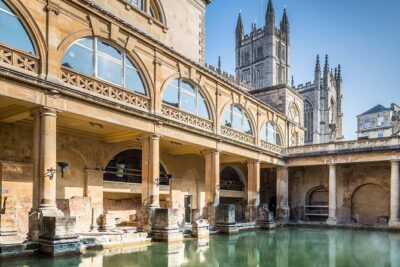
Bath: Bridgerton Filming Locations Walking Tour with Music
Read our review →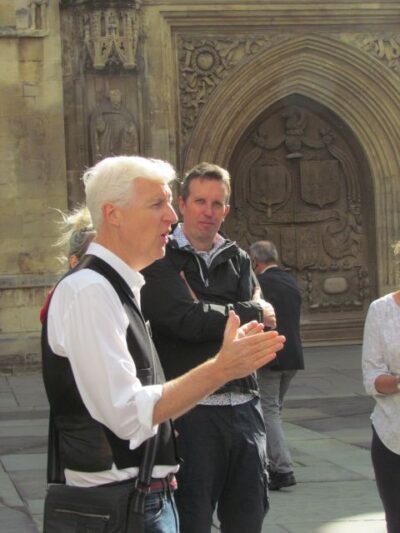
Bath: Private Bridgerton Walking Tour for upto 20 people
Read our review →Lists this walk sits on