Review · CHARLESTON
Historic Charleston Guided Sightseeing Walking Tour
Charleston’s past is packed into a walkable stretch of streets, and this tour takes you from the Four Corners of Law to the waterfront Battery in about two hours. You’ll see churches, grand homes, old civic buildings, Rainbow Row, and sites tied to both Charleston’s proudest moments and its hardest truths.
I like the clear route and the human storytelling. Guides including Evans, Al, Dennis, and Duggar have been praised for explaining architecture, war, slavery, storms, and local personalities in a way that keeps the city from feeling like a collection of pretty facades. I also like the price: at $30, you get a useful first look at the historic peninsula without committing half a day.
The main limitation is that this is an outdoor walking tour with no public restrooms along the route and few places to buy water. Stops can vary by guide, the Battery is not covered end to end, and hot, cold, or wet weather will affect your comfort.
Key points at a glance
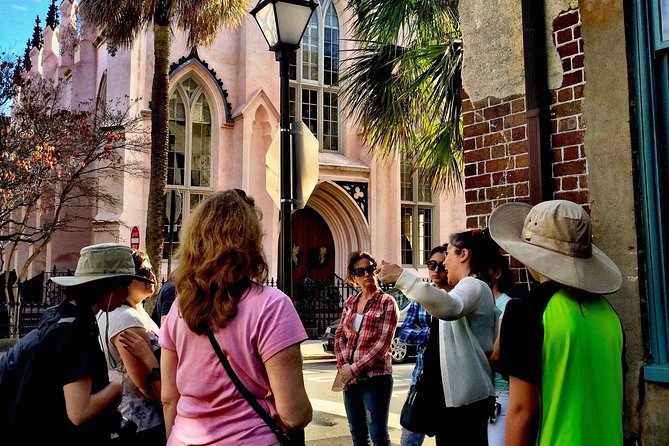
- City Hall begins the story: Meet at 80 Broad Street and start among the courthouse, post office, and St. Michael’s Church.
- The French Quarter packs in the landmarks: Expect the Dock Street Theatre, St. Philip’s Church, the Powder Magazine, the French Huguenot Church, the Pink House, and the Slave Mart Museum area.
- Rainbow Row is more than a photo stop: Your guide explains how this famous line of colorful houses fits into the South of Broad neighborhood.
- The Battery provides the big finish: White Point Garden brings water views and a look toward Fort Sumter.
- The guides make the difference: Evans, Al, Dennis, and Duggar have received especially strong praise for clear explanations, humor, stories, and practical suggestions.
- Plan for a real walk: The route is mostly flat, but you should bring water, wear comfortable shoes, arrive 15 minutes early, and use a restroom before starting.
Why this two-hour Charleston walk works
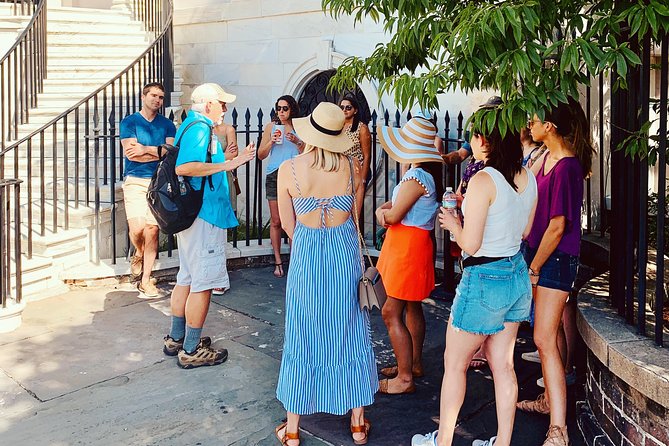
I see this as a strong first activity in Charleston. The route gives you a map in your head: civic Charleston around Broad Street, the French Quarter, the residential streets South of Broad, and the waterfront. Afterward, you can return to the places that caught your attention instead of wandering without a plan.
The tour is capped at 20 people, which is a useful middle ground. It is not a private walk, but the group is small enough that you should be able to hear the guide and ask questions. The experience is offered in English, with several departure times that can fit around meals, museums, or a harbor visit.
The price also makes sense for a short orientation. At $30 per person, you are paying for a local guide who connects buildings and streets to events, rather than simply pointing out facades. You will not enter every landmark, and admissions are not included, but that is part of why the cost stays reasonable.
More History Walking Tours in the USA
- History and Hauntings of Salem Guided Walking Tour
★ 5.0 · 14,564 reviews - Boston: Freedom Trail History Small Group Walking Tour
★ 5.0 · 6,450 reviews - Savannah History and Haunts Candlelit Ghost Walking Tour
★ 5.0 · 3,235 reviews
Starting at City Hall and the Four Corners of Law
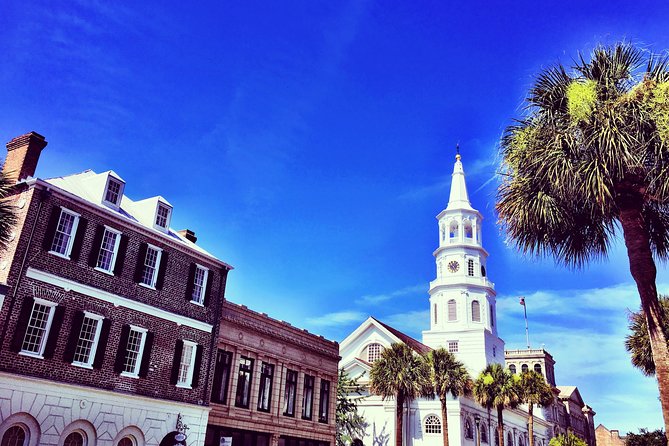
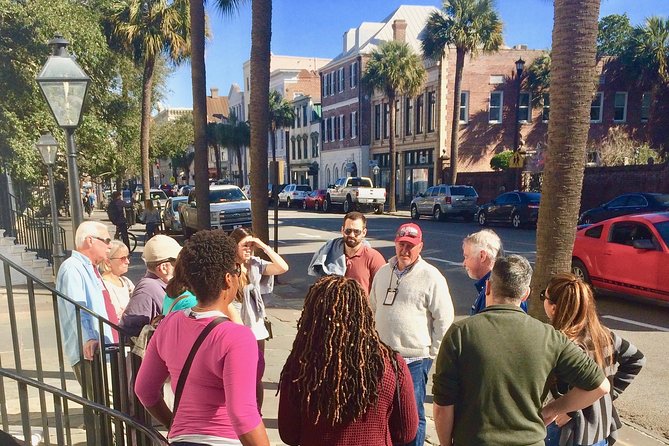
The meeting point is in front of Charleston City Hall at 80 Broad Street. Arrive 15 minutes early because the walk begins promptly. This is a good starting place, not just a convenient address. City Hall sits at one of Charleston’s most important intersections, known as the Four Corners of Law.
The other corners are the courthouse, the post office, and St. Michael’s Church. The first 15 minutes set up the city’s civic and religious center, and you will hear about St. Michael’s connection to George Washington, who is known to have worshipped there.
This opening is useful because it gives you context before the prettier residential streets arrive. Charleston is often sold through pastel houses and balconies, but its public buildings reveal how the city governed itself, worshipped, handled commerce, and presented its power.
Admission to City Hall is not included, and the tour is primarily a walking and viewing experience. If you want interior visits, you should plan those separately.
The French Quarter’s churches, theater, and difficult past
The next section usually takes about 45 minutes and covers the French Quarter. This is where the route gathers many of Charleston’s best-known landmarks, although the exact stops can vary with the guide.
The Dock Street Theatre is a major highlight. It is described as America’s first theater, giving the stop a place in the wider story of American performance and public life. St. Philip’s Church adds another important religious landmark, while the French Huguenot Church points to the French Protestant community that helped shape Charleston.
You will also see the Powder Magazine, an early military structure, and the Pink House, one of the city’s most recognizable small historic buildings. The range is part of the appeal. In a short distance, you move from theater and worship to military defense and domestic architecture.
The Slave Mart Museum is included among the landmarks you may see, though entry is not part of the walking tour. This portion deserves your attention. Charleston’s beauty cannot be separated from the people who were bought, sold, forced to work, and denied freedom here. A useful guide should connect the city’s buildings to that history rather than treating slavery as a footnote.
The strongest comments about this experience point to guides who explain not just what happened, but where it happened and why it mattered. You may hear about figures connected to the Revolutionary War, the Civil War, the rebuilding of Charleston, and the city’s changing public memory. The exact emphasis depends on your guide, but the route gives the subject plenty of room.
Rainbow Row and the South of Broad streets
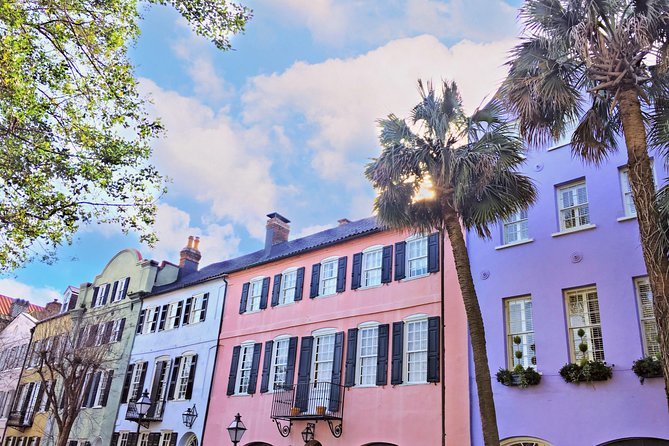
Rainbow Row takes about 10 minutes on the stated route. It is one of Charleston’s most photographed sights, a line of 13 colorful houses near the waterfront. You will have time to see the row and hear how it fits into the larger South of Broad area.
The stop itself is short, so do not expect an extended architectural inspection of every house. Its value comes from placement. Your guide can point out how Rainbow Row differs from the larger homes and streets nearby, and you can begin to read Charleston’s architecture as part of a neighborhood rather than as isolated Instagram backdrops.
The South of Broad section is also where Charleston’s residential character becomes most apparent. The tour includes historically significant homes and antebellum mansions along the Battery. Guides have been praised for explaining why houses were designed as they were, as well as for discussing architecture, vegetation, storms, and repairs.
That last subject is more practical than it may sound. Charleston’s historic buildings face heat, hurricanes, wind, and water. A guide who explains maintenance and storm damage helps you understand why preservation here is an ongoing job, not a finished project.
Same streets, a different story:
- New Orleans Premier Ghost, Voodoo and Vampire Walking Tour
★ 4.5 · 12,856 reviews - Little Havana Food and Walking Tour in Miami
★ 5.0 · 8,882 reviews - Chicago: Gangsters and Ghosts Walking Tour
★ 5.0 · 7,155 reviews - New Orleans Food Walking Tour of the French Quarter with Small-Group Option
★ 5.0 · 6,118 reviews
The Battery and White Point Garden
The final major section lasts about 30 minutes and brings you to the Battery and White Point Garden. This is the tour’s best open view, with water in front of you and Fort Sumter visible in the distance.
White Point Garden sits at the heart of the historic district. The setting gives you a break from close streets and house fronts, while the view helps place Charleston in its harbor. You can connect the city’s defenses, shipping, war, and waterfront economy to the geography around you.
Keep your expectations precise: the tour does not cover the entire length of the Battery, and the exact stopping points vary by guide. The end point is generally South of Broad, though the guide and route determine the exact finish. If you ask, the guide will walk you back to the starting point.
This is a good place to pause and take photographs, but the tour remains a guided walk rather than a long scenic stop. If you want to spend more time by the water, return later on your own.
The guides are the main reason to book
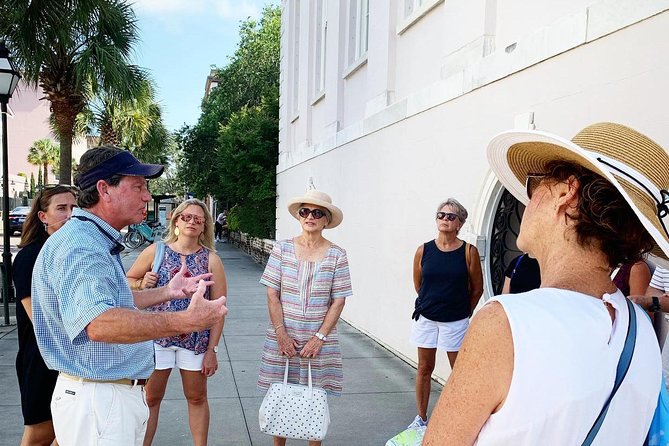
The route is excellent, but the guide determines how much you take away. The strongest guide names connected with this experience are Evans Byrd, Al, Dennis, and Duggar.
Evans is repeatedly described as an engaging storyteller who links major events to the buildings in front of you. His explanations cover the Revolutionary War, Charleston’s recovery after the Civil War, and the wider meaning of the city’s past. If you enjoy history told through people and specific places, his style should suit you.
Al is noted for humor, architecture, local facts, and an ability to keep the walk moving. He has also been praised for answering questions without hesitation and for offering useful ideas for the rest of a Charleston visit. Dennis is valued for clear communication, wit, and bringing historical characters into the story.
Duggar is described as personable and entertaining, with a strong command of local history. He has also provided restaurant suggestions, which can be handy when you are deciding what to do after the walk.
You cannot guarantee a particular guide unless the operator confirms it, so book this for the route and format rather than for one named person. Still, the consistent praise for multiple guides is a good sign. The experience does not seem to depend on only one personality.
What the pace and physical effort feel like
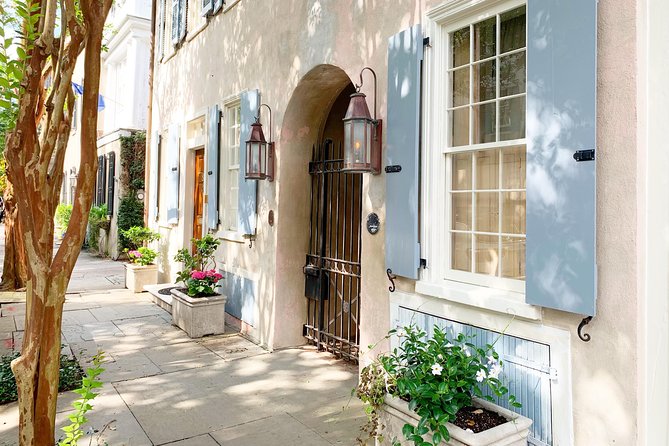
This is a moderate city walk, not a strenuous hike. The route is generally flat, with no hills noted, but you will be on your feet for about two hours. Comfortable walking shoes matter more than speed.
The walk suits most people who can manage ordinary city walking. Families, couples, solo visitors, and older adults can all find the pace workable, based on the available descriptions. Ask questions as you go, but remember that the group may need to keep moving to cover the route.
Charleston weather can change the experience quickly. The tour operates in all weather conditions, though dangerous weather may lead to cancellation. Check the forecast, carry water, and dress for the conditions. Water is not provided, and there are very few places to buy it along the way, especially a concern during summer.
Use the restroom before meeting the group. There are no public restrooms along the route. Service animals are allowed, and the tour is near public transportation.
How to make the most of the route
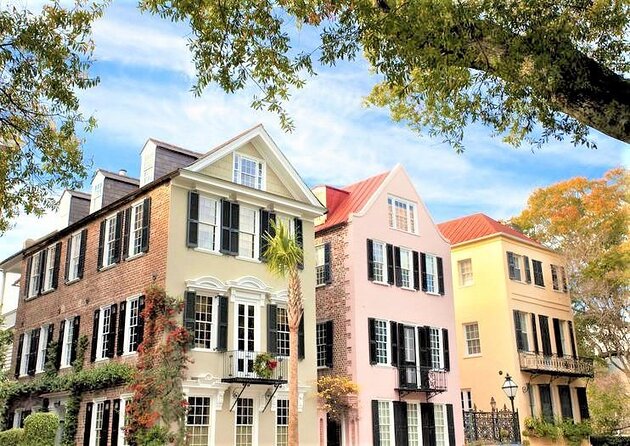
I would schedule this walk near the beginning of your Charleston stay. Take notes on restaurants, museums, churches, and streets you want to revisit. Several guides provide local suggestions, and those recommendations can help you use the rest of your time well.
Keep your phone ready for photos, but do not let Rainbow Row become the whole point. The best parts are often the connections between places: how civic buildings relate to churches, how the French Quarter leads toward residential streets, and how the Battery changes your sense of the peninsula.
If you have a particular interest in military history, architecture, slavery, religion, or preservation, say so early. The route touches all of these subjects, and a good question can steer the explanation toward what matters most to you.
The tour is not an interior museum program. You will generally view landmarks from the street, and admission tickets are not included. Pair it with a separate museum visit if you want more time with Charleston’s African American history, military past, or decorative arts.
Cancellation, meeting point, and practical value
Free cancellation is available up to 24 hours before the start time. Inside that window, changes are not accepted and the payment is not refunded. If unsafe weather causes the operator to cancel, you receive the choice of another date or a full refund.
Parking is available in downtown garages and open-air lots. The suggested garage is at 85 Queen Street, though you should allow time to walk to 80 Broad Street. Public transportation is also nearby.
At $30, this is a fair buy if you want a guided introduction with a licensed local guide, a limited group size, and a route that covers several major areas. It is less useful for you if you prefer to move at your own pace, spend long periods inside buildings, or avoid walking in uncertain weather.
Should you book this Charleston walking tour?
I would book it if this is your first visit, you have only a short time in town, or you want Charleston’s landmarks explained rather than simply photographed. The route covers the city’s essential historic core, and the guides bring in architecture, war, slavery, religion, preservation, and local personalities.
I would skip it if you already know the historic district well or want a specialized tour focused on one subject. For most first-time visitors, though, two hours and $30 is a sensible way to get oriented. Bring water, use the restroom first, arrive early, and let the guide give you a framework for the rest of your Charleston visit.
FAQ
Where does the Historic Charleston Guided Sightseeing Walking Tour begin?
The tour begins in front of Charleston City Hall at 80 Broad Street, Charleston, South Carolina 29401.
Where does the tour finish?
The end location varies with the guide and route, but it is in the South of Broad area. The guide will walk you back to the starting point if you request it.
How long is the walking tour?
The tour lasts approximately two hours.
What landmarks are included?
The route generally includes City Hall and the Four Corners of Law, the French Quarter, the Dock Street Theatre, St. Philip’s Church, the Slave Mart Museum area, the Powder Magazine, the French Huguenot Church, the Pink House, Rainbow Row, the Battery, and White Point Garden. Stops can vary by guide.
What should I bring?
Wear comfortable walking shoes and bring a water bottle. Water is not provided, and there are very few places to buy it along the route. You should also use the restroom before the tour because there are no public restrooms along the route.
What happens if bad weather cancels the tour?
The tour normally operates in all weather, but it may be canceled in dangerous conditions. If that happens, you will be offered another date or a full refund.
More City Highlights Walking Tours in the USA
- Highlights of Charleston Guided Walking Tour
★ 5.0 · 2,206 reviews - Downtown Nashville Guided Sightseeing Walking Tour
★ 5.0 · 1,304 reviews - Boston History Tour: Scenic Walk Through Time & Landmarks
★ 5.0 · 627 reviews - Downtown Las Vegas Food Tour of 6 Iconic Dishes & Hidden Gems
★ 5.0 · 606 reviews
New walking tours around the USA
- NYC: Walking Tour with Local Guide and 30+ Top NYC Sights★ 4.5 · 248 reviews
- New York City: Gangsters and Ghosts 2-Hour Walking Tour★ 4.7 · 615 reviews
- NYC: History of Slavery & Underground Railroad Walking Tour★ 4.7 · 87 reviews
- New York City’s Hell’s Kitchen: Walking Food Tour★ 4.8 · 200 reviews
- New York City: Central Park Walking Tour★ 4.7 · 82 reviews
- NYC: Brooklyn Bridge and DUMBO Guided Walking Tour★ 4.8 · 93 reviews
- New Orleans: French Quarter Ghost and Legends Walking Tour★ 4.3 · 129 reviews
- New Orleans: Witches Coven Garden District Walking Tour★ 4.9 · 113 reviews
Charleston Walking Tours, side by side.

Ghosts of Charleston Night-Time Walking Tour with Unitarian Church Graveyard
Read our review →
Hidden Alleyways and Historic Sites Small-Group Walking Tour
Read our review →

Charleston French Quarter or Brunch Food Tour with 7+ Tastings
Read our review →
Charleston Haunted Booze and Boos Ghost Walking Tour
Read our review →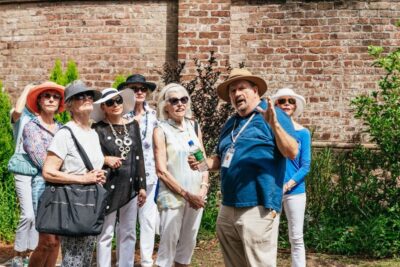
Charleston: Old Walled City Historical Walking Tour
Read our review →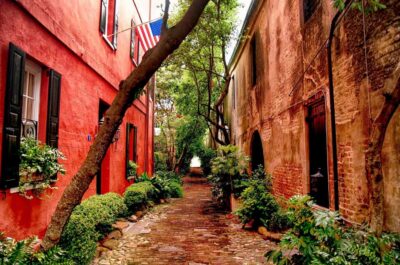
Charleston: History and Architecture Guided Walking Tour
Read our review →