Review · BELFAST
Belfast: Best of Belfast History, Culture & Art Walking Tour
Belfast’s story is far bigger than Titanic and the Troubles. This three-hour walk connects medieval beginnings, Victorian industry, punk music, street art, local legends, and the people who shaped the city. I like the way it gives you both the big historical picture and small details you could easily miss on your own.
I also like the short route, the clear headsets, and the warm, witty style reported from guides including Mark, Steve, James, Chris, and Mylie. The one drawback is that three hours can feel long if you prefer a quick orientation, and one previous participant felt the tour ran on too long while missing some other sights.
Key points at a glance
- Four sides of Belfast in one walk: See the Cathedral Quarter, Waterfront, historic Entries, and central streets.
- History without a single-track story: Learn about trade, religion, politics, industry, music, rebellion, and daily life.
- A short route with plenty of stops: The walk covers less than two miles and includes 14 stops.
- Headsets make a real difference: You can hear the guide clearly while standing on busy streets.
- Good practical advice: Guides share ideas for food, pubs, Irish music, shops, and free things to do.
- Best early in your stay: The tour helps you understand Belfast before you visit places such as Titanic Belfast or explore farther afield.
Why this Belfast walk is more than a standard city orientation
Many city walks point at buildings, recite dates, and move on. This one aims to explain how Belfast became Belfast. You begin with a small settlement by the River Lagan and follow the city through trade, linen, shipbuilding, political change, cultural conflict, and its present-day creative life.
That wider frame matters. If you visit only Titanic Belfast, you learn about one famous chapter. If you focus only on the Troubles, you see another important but incomplete part of the city. This walk places both subjects inside a longer story that includes merchants, reformers, rebels, artists, workers, musicians, and ordinary residents.
I especially like the attention to small acts of kindness and individual stories. Those details help turn Belfast from a collection of buildings into a place shaped by people. The guides also bring in local legends, such as the Salmon of Knowledge, and explain what such stories reveal about Belfast’s character.
The approach is serious without being gloomy. The history includes religion, division, violence, and political change, but the tone also allows room for wit, music, architecture, and everyday life. Several guides are praised for making difficult subjects clear without turning the walk into a lecture.
More City Highlights Walking Tours in the UK
- Wizard Walk of York – WINNER Best Tour & Best of York Award
★ 5.0 · 918 reviews - York: City Highlights Small Group Walking Tour
★ 4.9 · 867 reviews - London Sightseeing Walking Tour with 30+ sights
★ 5.0 · 705 reviews
Starting at Belfast City Hall
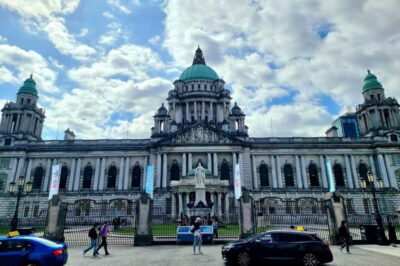
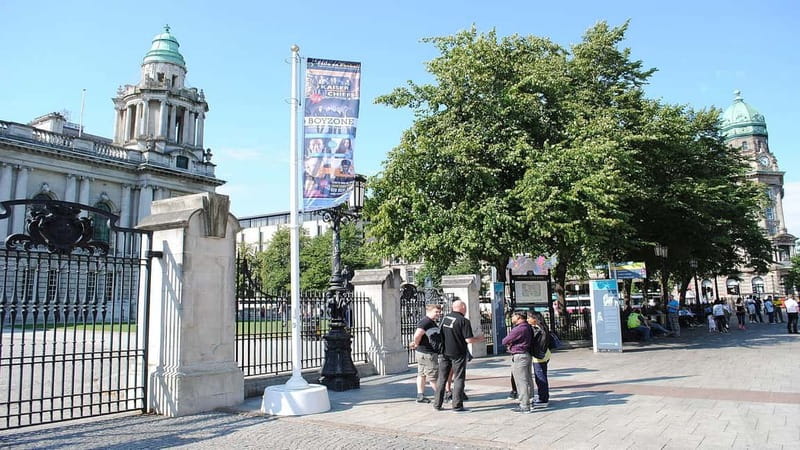
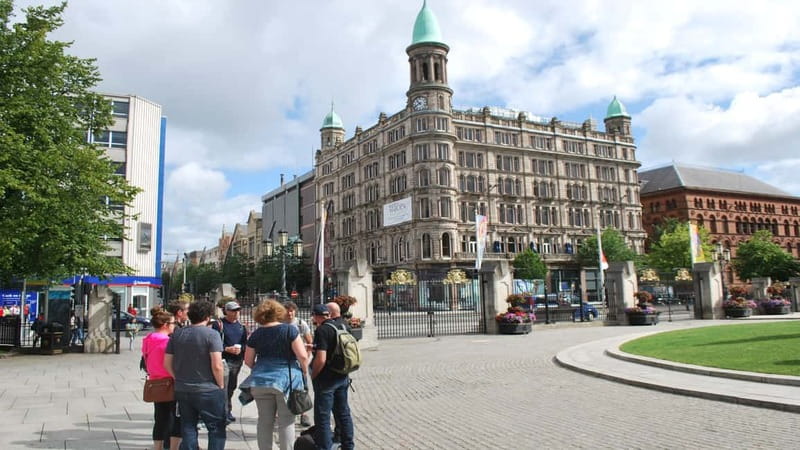
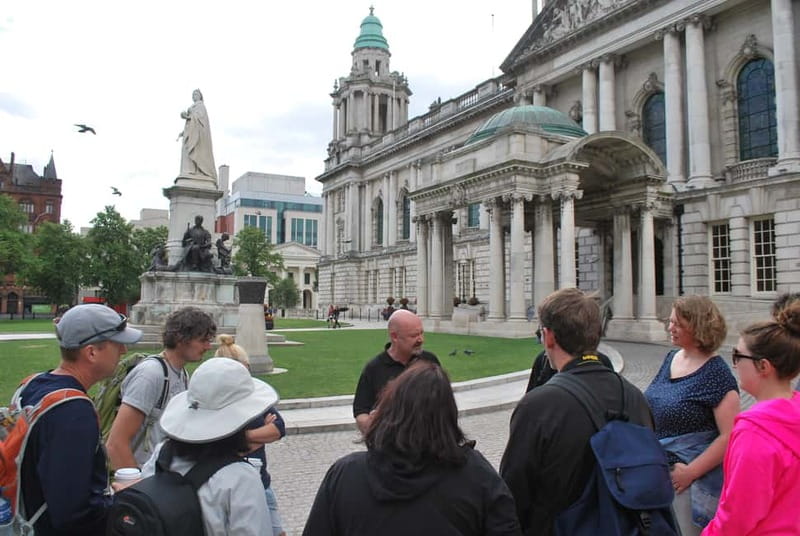
The tour begins at the front gates of Belfast City Hall in Donegall Square North. This is a sensible meeting point. The building gives you an immediate introduction to the civic confidence of Victorian Belfast, while the square places you close to the city center’s main streets.
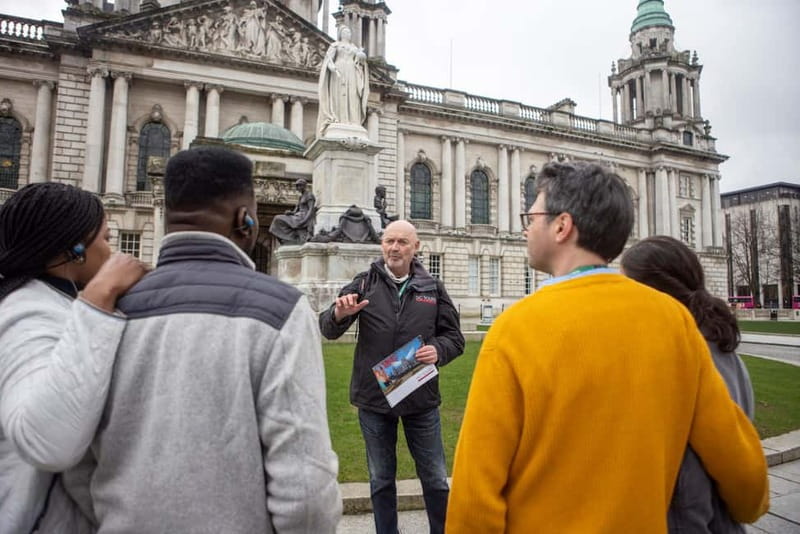
Look for a guide wearing a black jacket or T-shirt with the DC Tours logo on the left breast. That small detail matters at a busy meeting point, especially if several groups are gathering nearby.
From here, your guide sets up the main themes. You hear how Belfast grew from a river settlement into an industrial city with international connections. The discussion includes the linen trade and the money, ambition, and architecture that came with it.
This opening is useful because it helps you read the city as you walk. A grand facade is not just an attractive building. It may reflect wealth from manufacturing, shipping, trade, or civic competition. The guide’s job is to connect those clues.
Through the Cathedral Quarter and the historic Entries
The Cathedral Quarter is one of the tour’s central areas. It is now associated with pubs, restaurants, art, music, and nightlife, but the guide places that modern identity beside its older commercial and social life.
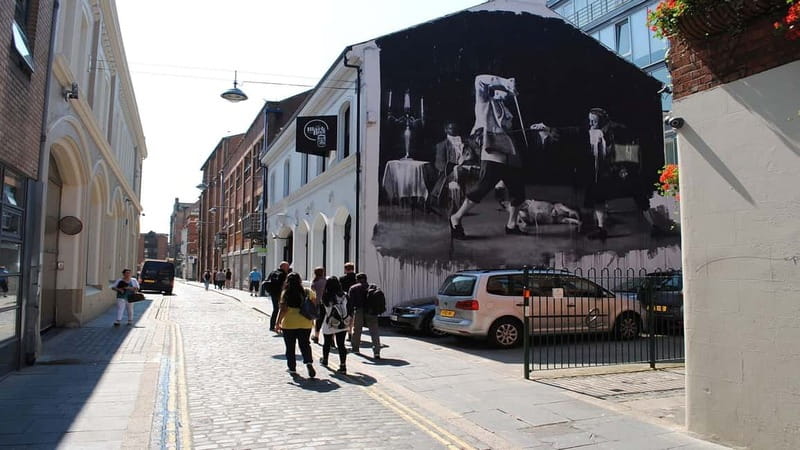
You learn why this part of Belfast became a cultural center and how its present character grew from earlier uses. The walk also takes you through historic Entries, narrow lanes that many people pass without noticing. These spaces offer a more intimate view of the city than the large public buildings do.
The Entries are especially valuable for visitors who want more than postcard Belfast. You may see small architectural details, older street patterns, or traces of how people moved through the city in earlier periods. The guide fills in what the walls cannot tell you.
This is also where the tour’s storytelling style works well. Rather than treating Belfast as a row of monuments, the walk brings in the people who used these streets. Merchants, workers, rebels, musicians, and reformers all become part of the picture.
The Cathedral Quarter can be lively, and city noise may occasionally compete with the guide. That is where the supplied headsets earn their keep. You can stand back from the group, take in the surroundings, and still follow the explanation.
Along the Waterfront and River Lagan
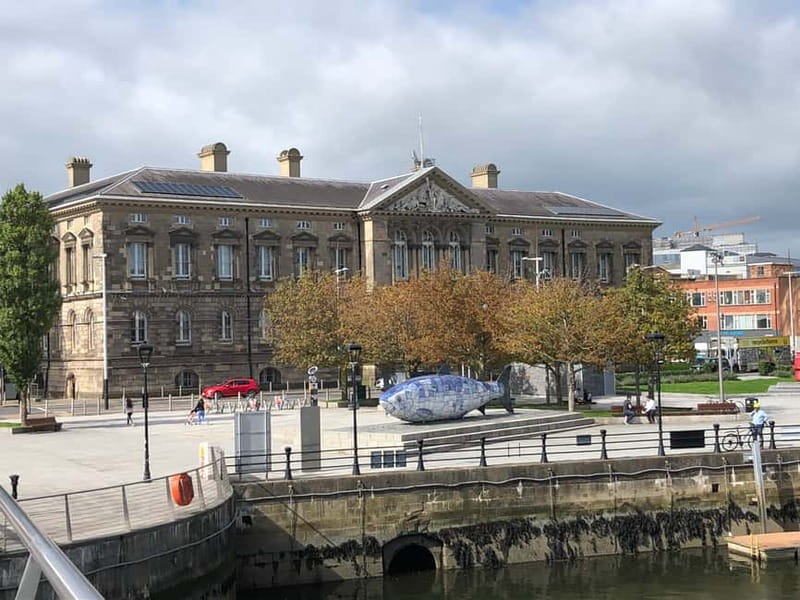
The route includes Belfast’s Waterfront and the River Lagan, which are key to understanding the city’s growth. Belfast’s position beside the river helped it become a center for trade and industry. The water is not simply scenery. It is part of the reason the city developed as it did.
This section gives the tour room to explain the connection between commerce, shipbuilding, industry, and Belfast’s wider place in the world. Titanic is discussed, but it is not allowed to swallow the whole walk.
That balance is one of the strongest features here. You get enough context to understand why Titanic matters, but the tour also makes room for the city’s linen industry, Victorian buildings, political history, and present-day culture.
The Waterfront also helps you notice Belfast’s changing appearance. Older structures sit near modern architecture and public art. Your guide explains how these newer works reflect a city still working out how to express itself.
The route remains under two miles, but the three-hour duration comes from stopping often and talking in detail. This is not a fitness challenge. It is a slow city walk with 14 stops. Comfortable shoes still matter, since you remain on your feet for much of the morning or afternoon.
More History Walking Tours in the UK
- A History of Terror – Belfast City Centre Walking Tour
★ 5.0 · 2,883 reviews - Edinburgh: Old Town History and Tales Walking Tour
★ 4.8 · 2,361 reviews - Old Town Walking Tour History and Tales in Edinburgh
★ 5.0 · 2,168 reviews - Shadows of York: Ghost Walk and Horrible History.
★ 5.0 · 1,403 reviews
Architecture, public art, and the city’s changing face
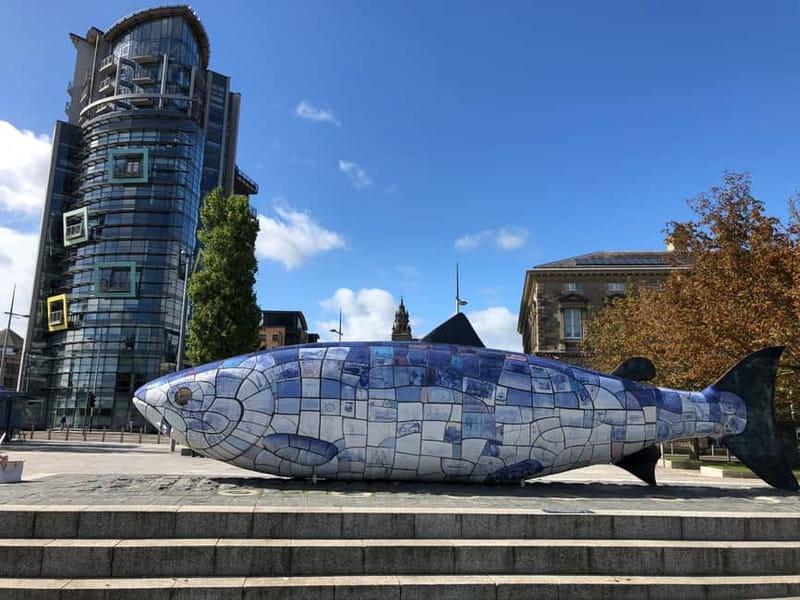
Belfast offers a useful lesson in how architecture records social change. The tour points out Victorian grandeur, commercial buildings, civic spaces, modern designs, and artistic details that might otherwise pass unnoticed.
I like this part because it gives you something to look for after the tour ends. Instead of seeing one uniform city center, you begin to spot layers. Industrial wealth, civic pride, religious identity, commercial ambition, and newer creative energy all appear in the built environment.
Public art adds another layer. It can reflect local memory, political feeling, humor, or the city’s effort to present itself in a new way. The guide explains these references rather than asking you to admire them without context.
The tour also includes Belfast’s connection to punk. That may surprise people who expect only traditional Irish music. You learn where to hear the best trad music, while also hearing why punk mattered to Belfast and how music became part of the city’s cultural identity.
This mix is a real strength. Belfast is not presented as a museum of old stories. Its culture includes traditional music, rebellious music, popular television references, public art, and new creative work.
Titanic and the Troubles, placed in the wider story
You will hear about Titanic and the Troubles, but the tour does not present either subject as the only key to Belfast. That is important for first-time visitors who want honest context without spending the entire walk on one difficult chapter.
The discussion of the Troubles includes the political and social forces that shaped Northern Ireland. It also touches on the effects that continued beyond the formal end of violence, including transgenerational trauma. The subject is handled as part of the city’s lived experience, not as a sensational story.
A balanced guide is essential here. The tour’s strongest feedback consistently points to clear, even-handed explanations. Guides such as James, Mark, Steve, Chris, and Thomas are described as able to discuss Belfast’s divisions without turning the walk into a partisan speech.
You should still expect serious material. This is not a purely lighthearted sightseeing stroll. Adults and teens who are comfortable with basic historical themes should find the treatment approachable, but families with very young children may find some sections difficult to follow or explain.
The optimistic note comes from Belfast’s ability to keep changing. The point is not that the past has vanished. It is that the city continues to build a future alongside it.
The people and legends behind the streets
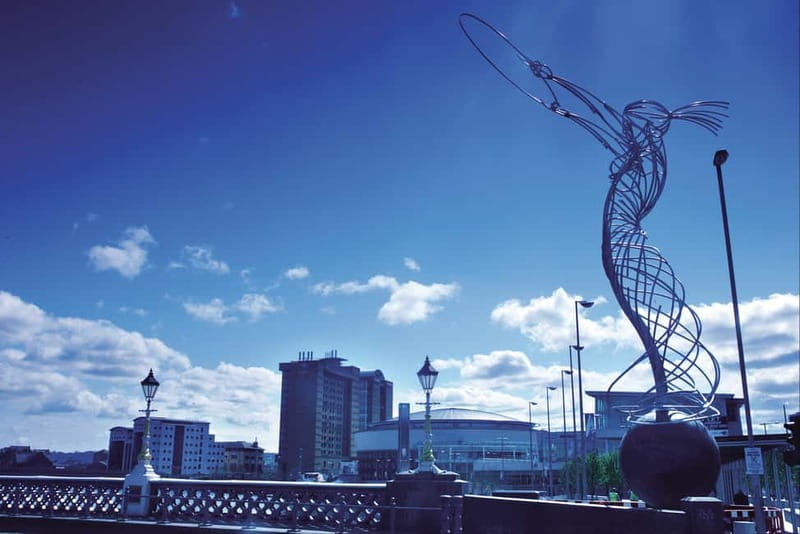
Dates are easier to remember when they are attached to people. The tour introduces merchants, rebels, reformers, artists, and other figures connected with Belfast. Guides also add personal stories and local anecdotes, which help you understand how large events affected daily life.
The Salmon of Knowledge is one example of the tour’s wider method. A local legend can seem playful, but it also gives you a way to think about identity, memory, and how communities tell stories about themselves.
The guides bring different personalities to the experience. Mark is praised for presenting just enough detail without padding the walk. Steve is repeatedly described as humorous and able to make history stick. James is noted for remembering names and making a small group feel personal. Chris is known for a dry sense of humor and strong local stories. Mylie is praised for linking people and events as the walk moves through the streets.
You cannot request a particular guide based on the information provided, so treat those names as examples of the style rather than a promise. Whoever leads your walk, the important features are local knowledge, storytelling, questions, and a clear effort to connect past and present.
Why the headsets and short break improve the experience
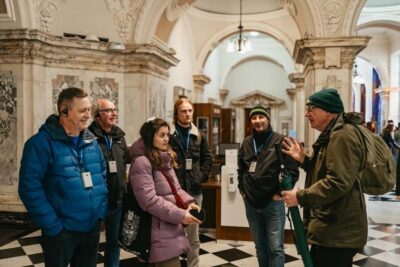
The supplied headsets are a practical touch, not a gimmick. Streets can be noisy, and city walking tours often lose people at the back. With an earpiece, you can hear the guide while looking at a building or moving into position.
The equipment also lets the guide speak at a normal volume. That makes the experience less tiring for everyone and helps preserve the conversational tone.
Some guides include a short coffee or comfort stop around the theater. It is a useful pause during a three-hour walk, though you should not treat it as a guaranteed cafe visit. The main value is the change of pace and the chance to ask questions.
Guides also offer practical suggestions for the rest of your stay. These can include places to eat, pubs, Irish music, shops, free activities, and further sights. That advice is most useful when you take notes or ask specific questions before the walk ends.
Is $35 a fair price for three hours?
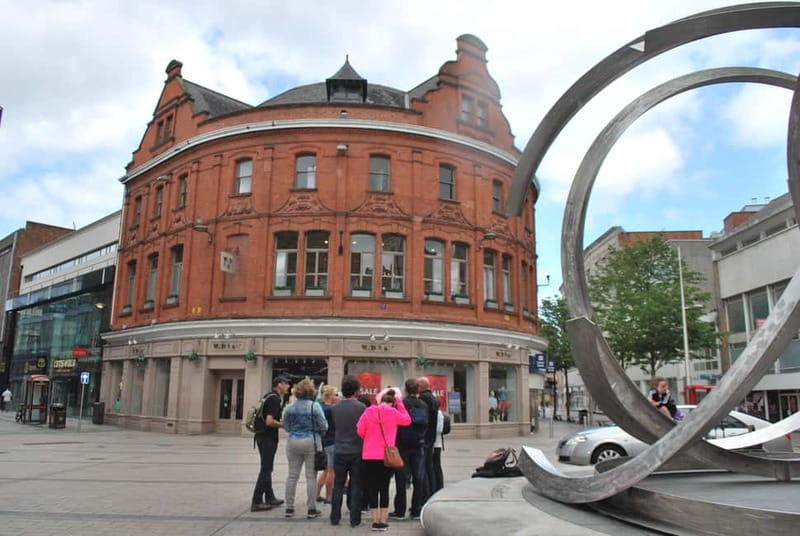
At $35 per person, this is good value if you want context rather than a quick list of landmarks. The route is short, but the guide spends time explaining the forces behind Belfast’s architecture, industries, politics, music, and public art.
You are also paying for the human connection. A guide can answer questions, adjust the pace, explain a detail that catches your eye, and add local stories that are not obvious from a map.
The value is strongest when you take the tour near the beginning of your Belfast stay. You can use the orientation to decide how much time to give Titanic, which areas to revisit, and where to find food or music later.
There is one fair caution. If you want a fast walk past the major sights, three hours may feel slow. One person found that the tour went on too long and felt it missed some other highlights. The short distance can also create a mismatch for people expecting a broad sightseeing circuit.
Practical details before you book
The tour lasts three hours and takes place in English with a live guide. It operates rain or shine, so bring weather-appropriate clothing and comfortable shoes. Belfast weather can change quickly, and you may be standing outdoors while the guide explains a building or street.
The entire route is less than two miles and includes 14 stops. It is wheelchair accessible, though anyone who needs precise information about surfaces or individual access points should confirm those details before booking.
Cancellation is free up to 24 hours before the start for a full refund. You can also reserve now and pay later, which helps if your Belfast plans are still shifting.
The meeting point is easy to find at Belfast City Hall, but arrive with enough time to identify the DC Tours logo on your guide’s black jacket or shirt. Headsets are included.
Who should take this walk?
I would choose this tour for a first visit, especially if you want to understand Belfast before exploring it independently. It suits people who like history with human stories, architecture with context, and practical local advice.
It is also a strong choice if you want a wider picture than the Troubles alone. The tour does not ignore that history, but it gives equal room to industry, music, legends, social change, and the city’s present identity.
History lovers should enjoy the range, while casual visitors should appreciate the plain explanations and humor. Teens can follow it if they are comfortable with serious subjects.
I would choose something else if your priority is a dedicated Titanic visit, a political mural tour, or a full bus tour of Belfast and its surrounding neighborhoods. This experience stays mainly in the central city and gives depth to its stops rather than covering a large area.
Should you book the Best of Belfast walking tour?
Yes, if you want a strong first look at Belfast that feels local, balanced, and easy to follow. The combination of City Hall, the Cathedral Quarter, the Entries, the Waterfront, music, public art, Titanic, and the Troubles gives you a useful mental map in three hours.
Book it early in your stay, wear sensible shoes, and use the guide’s food and music suggestions. At $35, the tour earns its price through explanation and local perspective, not through a long checklist of attractions.
Skip it only if you dislike extended walking commentary or want a narrowly focused tour. For most first-time visitors, it is a smart way to learn what Belfast is, how it got here, and where to go next.
FAQ
Where does the Belfast walking tour begin?
It begins at the front gates of Belfast City Hall in Donegall Square North.
How long is the tour?
The tour lasts three hours.
How far do you walk?
The entire route is less than two miles and includes 14 stops.
What parts of Belfast does the tour visit?
The route includes the Cathedral Quarter, the Waterfront, historic Entries, and central Belfast streets.
What topics does the guide cover?
You learn about Belfast’s medieval beginnings, linen trade, Victorian architecture, Titanic, the Troubles, music, punk, public art, local legends, important people, and the city’s changing identity.
Is the tour offered in English?
Yes. The experience includes a live English-speaking guide.
Is the tour wheelchair accessible?
Yes, the tour is described as wheelchair accessible.
What should I bring?
Bring comfortable shoes and clothing suited to the weather. The tour operates rain or shine.
More Cultural Walking Tours around the UK
- Best Of Liverpool Heritage, History & Culture Guided Walking Tour
★ 5.0 · 539 reviews - Savannah First Squares Culinary & Cultural Walking Food Tour
★ 5.0 · 3,229 reviews - Tokyo Tsukiji Fish Market Food and Culture Walking Tour
★ 5.0 · 3,184 reviews - New Orleans French Quarter, Voodoo and Culture Walking Tour
★ 4.5 · 2,961 reviews
New walking tours around the UK
- London: Old City Walking Tour★ 4.8 · 135 reviews
- Manchester: Music-Themed City Walking Tour★ 4.4 · 109 reviews
- Manchester: Media City & The Quays Guided Walking Tour★ 5.0 · 165 reviews
- Manchester City Highlights Walking Tour★ 4.8 · 299 reviews
- London: Witches and History Bankside Walking Tour★ 4.8 · 223 reviews
- London: Palaces and Parliament Walking Tour★ 4.8 · 365 reviews
- London: Winston Churchill and London in WWII Walking Tour★ 4.8 · 143 reviews
- London: Westminster Walking Tour & The Tower of London Entry★ 4.6 · 131 reviews
Belfast Walking Tours, side by side.
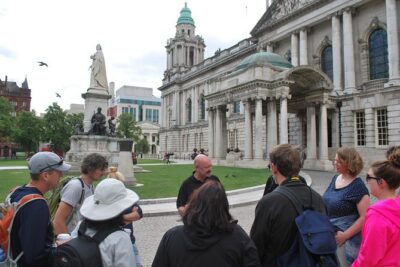
A History of Terror – Belfast City Centre Walking Tour
Read our review →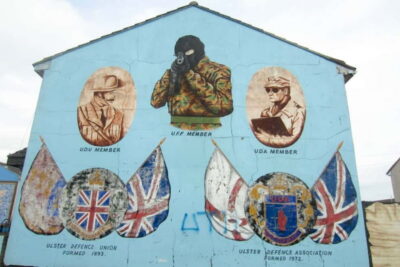
Belfast: Political Conflict 3-Hour Walking Tour
Read our review →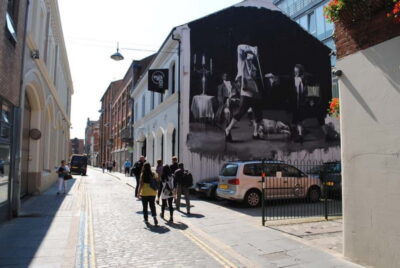
Belfast: The Troubles Walls & Bridges Guided Walking Tour
Read our review →