

Review · BUCHAREST
Bucharest: Communism and History Guided City Walking Tour
Bucharest’s communist past is easiest to understand on foot, where grand plans, demolished neighborhoods, moved churches, rationing, and the 1989 Revolution all connect. This three-hour walk takes you from the Patriarchal Cathedral to Revolution Square, with the enormous Palace of the Parliament as its visual centerpiece.
I like two things here. First, the guide links major events to ordinary life, including food shortages, nationalization, surveillance, and family memories. Second, the route uses lesser-known corners alongside major sights, so you get more than a parade of famous buildings. The main drawback is that Parliament is viewed only from outside, and the walk can be tiring in bad weather.
Key points to know before booking
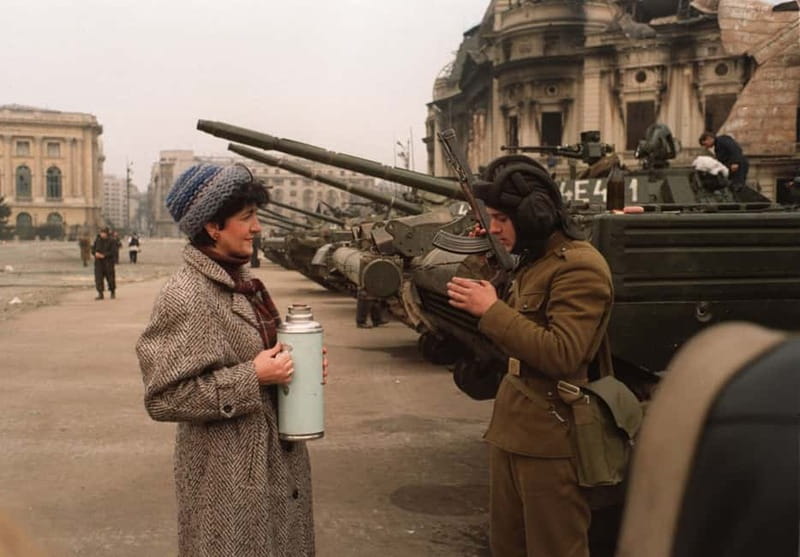
- The route follows a clear historical line: from the start of communist rule through dictatorship, demolition, daily shortages, and the 1989 Revolution.
- Personal stories add weight: guides including Andreea, Daniela, Mihai, Octavian, and Ion use family experiences and visual aids to explain life under the regime.
- Parliament is an exterior stop only: you get time for views and background, but not an interior visit.
- You visit places many city walks skip: Antim Monastery, an old Alimentara grocery store, former Secret Police sites, and less obvious communist markers.
- A short café break breaks up the walking: your drink or food costs extra, but the stop gives you time to rest and ask questions.
- Comfortable shoes matter: the tour lasts three hours, takes place outdoors, and is not suitable for wheelchair users or people with back problems.
Why this tour helps explain Bucharest
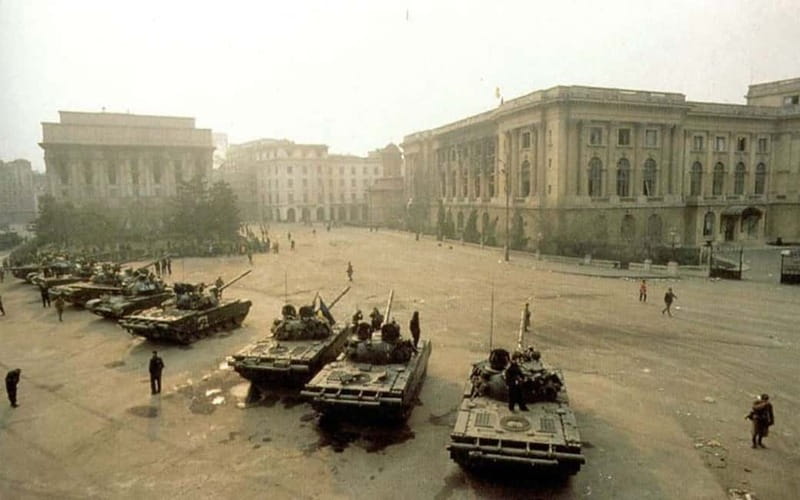
Communism can be difficult to understand through dates alone. In Bucharest, the subject is written into the streets. Apartment blocks replaced older homes. Churches were shifted out of the path of demolition. A huge government building consumed much of the historic center. Grocery stores became symbols of scarcity, and public squares became stages for protest.
This tour gives those changes a human scale. Instead of treating Nicolae Ceausescu as only a dictator in a textbook, the guide explains how his policies affected housing, food, religion, work, family life, and movement around the city.
That is the route’s greatest strength. You are not simply shown a collection of buildings. You are asked to connect each place with a particular part of Romania’s communist timeline.
The tour is delivered in English and has earned a 4.9 rating from 918 bookings. The guide can vary, but the team includes Andreea, Daniela, Mihai, Octavian, Ion, and John, also identified in one account as Iwan. Across the available guide feedback, the most praised qualities are clear English, careful explanations, personal examples, patience with questions, and a warm sense of humor.
More History Walking Tours in the world:
- History and Hauntings of Salem Guided Walking Tour
★ 5.0 · 14,564 reviews - Lisbon: History, Stories and Lifestyle Walking Tour
★ 4.8 · 10,902 reviews - Boston: Freedom Trail History Small Group Walking Tour
★ 5.0 · 6,450 reviews
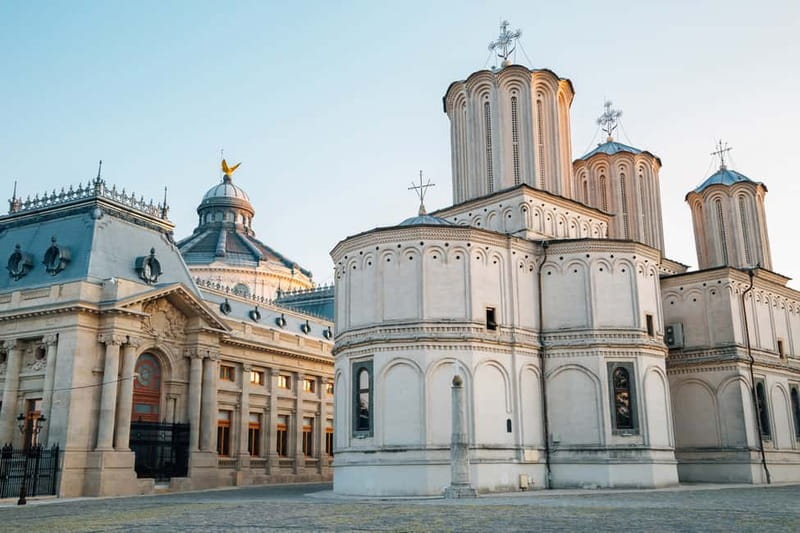
Starting at the Patriarchal Cathedral
The meeting point is in front of the Patriarchal Cathedral, above Union Square. From Piata Unirii metro station, you climb the hill toward the cathedral, so allow a little extra time rather than arriving at the last minute.
The cathedral is a smart starting point because it opens the story before Ceausescu’s rule. Here, you learn about religion under communism and the political events that helped bring the communist regime to power in Romania.
Religion was not simply a side issue. The regime sought control over public life, while churches and religious institutions had to operate within strict limits. Beginning here gives you useful context for later stops, especially Antim Monastery and the buildings threatened by Ceausescu’s redevelopment plans.
The cathedral area also gives you your first sense of Bucharest’s uneven character. Older religious buildings, modern roads, apartment blocks, and monumental government projects sit close together. That mixture is one reason a walking tour works better than a quick drive-by.
Nationalization and the reshaped neighborhood
The route continues through a nearby neighborhood where the guide explains nationalization. This is one of the most important ideas on the walk because it shows how communism changed private life, not just government buildings.
Homes and businesses were taken into state ownership. Property, work, and personal security no longer followed the rules familiar to people in a private economy. The neighborhood becomes a practical example of how national policy reached into ordinary streets and households.
This portion may not deliver a single famous photo stop. Its value is explanatory. You begin to see why Bucharest has such a layered appearance, with older houses beside large blocks and buildings altered for new public purposes.
Guides such as Andreea and Ion have been praised for adding family experiences and personal details to this part of the story. That matters because nationalization can sound abstract until you hear how it affected a household, a job, or a family’s sense of ownership.
Seeing the Palace of the Parliament from outside
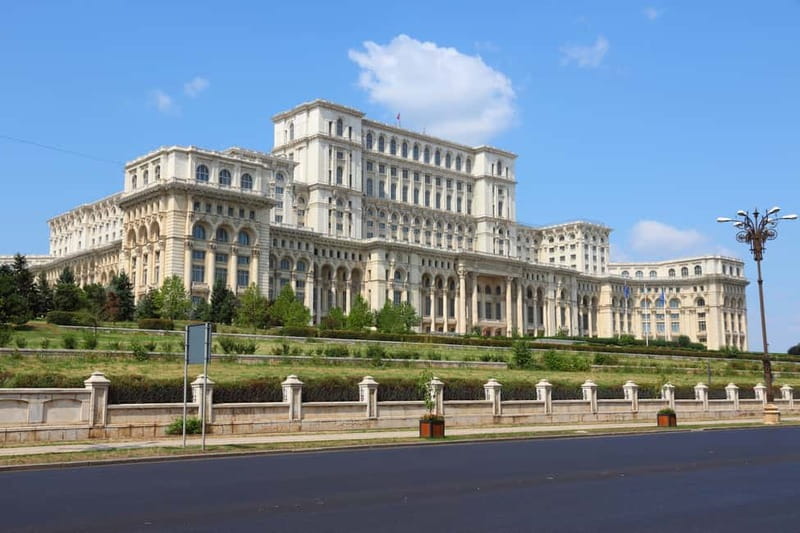
The Palace of the Parliament, also called the House of the People, is the largest visual statement on the route. You stop for photographs and receive an explanation of its construction, cost, purpose, and connection to Ceausescu’s megalomania.
The important practical point is simple: you do not go inside. If an interior visit is high on your Bucharest list, you will need to arrange that separately. Still, an exterior stop gives you the essential view and, more importantly, lets the guide explain what was sacrificed to create it.
The building was part of a vast redevelopment scheme that caused the biggest destruction of a European city during peacetime. Entire sections of Bucharest were demolished, including homes, churches, and historic streets. The scale of the project is hard to grasp from a photograph. Standing near the building, then hearing how much of the city was cleared for it, makes the policy easier to understand.
This is also where the tour moves from everyday control to grand political theater. The Palace was designed to project power and obedience. Its size was not an accident. It was meant to make the state feel permanent and its leader appear larger than ordinary life.
More walks with a guide around the world:
- Magical London: Harry Potter Guided Walking Tour
★ 4.7 · 22,044 reviews - Amsterdam Anne Frank: Small-Group Walking Tour & Local Guide
★ 4.8 · 12,789 reviews - Edinburgh: Harry Potter Magical Guided Walking Tour
★ 4.8 · 11,944 reviews - Edinburgh Castle: Guided Walking Tour with Entry Ticket
★ 4.7 · 11,699 reviews
Antim Monastery and the buildings that were moved
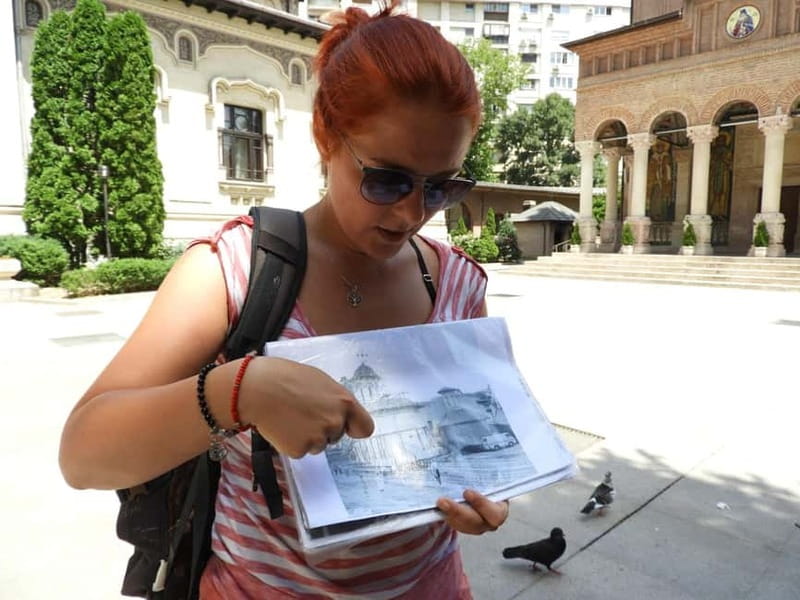
One of the most unusual parts of the walk is the discussion of buildings moved to save them from destruction. Antim Monastery is the key example.
Rather than treating the monastery as a pretty old building, the guide explains how it survived Ceausescu’s urban changes. This stop shows that demolition was not the only response. Some structures were physically shifted, protected, or worked around, often through remarkable technical and political efforts.
Antim Monastery also connects back to the opening discussion of religion. You see how a religious building could be both a historic monument and an obstacle to a state project. That tension gives the tour one of its clearest lessons: communist planning often valued ideology and spectacle over the existing character of the city.
You should expect to walk and pass by rather than spend a long period inside each site. The tour covers around 15 objectives in three hours, so the guide’s explanation is the main experience.
A short café stop and a communist-era snack
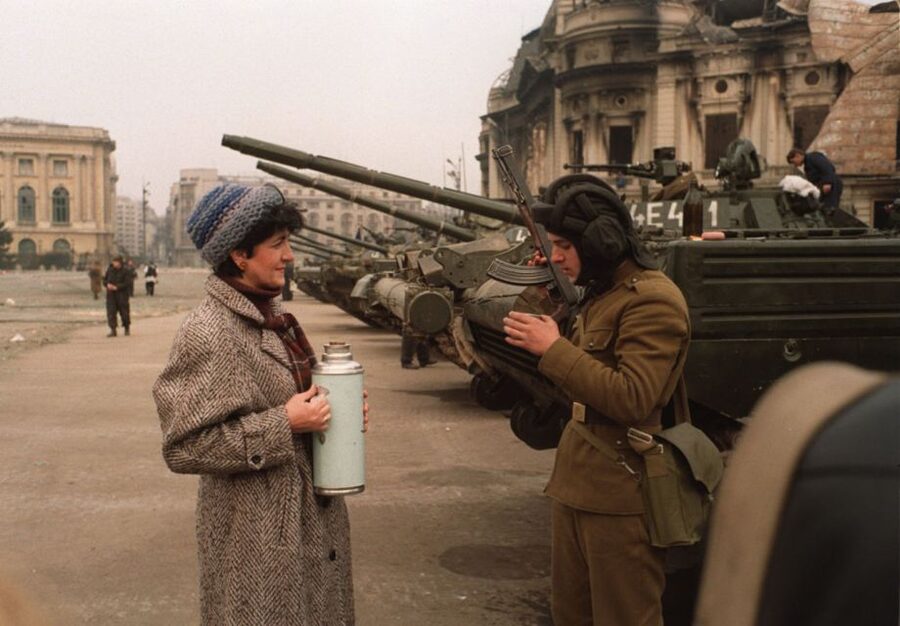
The planned break at a local café lasts about 15 minutes. Your coffee, food, or other purchase is not included, but the pause is useful. Three hours of city walking is easier when you can sit, use the bathroom, and let the earlier material settle.
The tour also includes a communist-style snack. One guide has used a rum-flavored biscuit associated with the period to help explain food shortages and the effort required to feed a family under rationing. It is a small detail, but it makes the subject more physical and memorable.
At an old Alimentara grocery store, the guide talks about food availability and everyday well-being. The shop is not presented as a nostalgic curiosity. It helps explain queues, limited choice, shortages, and the gap between official promises and daily reality.
This may be the most useful part of the tour for anyone who knows little about Romanian communism. Grand architecture tells you what the government wanted people to see. The grocery store helps explain what people actually experienced.
Secret Police sites and the cost of silence
The route includes buildings and locations connected with the Secret Police, including a former center used to torture people. The guide explains how surveillance and intimidation shaped Romanian life.
This section is likely to be serious rather than visually dramatic. You may pass an ordinary-looking building and learn that it played a role in interrogations, coercion, or monitoring. That contrast is precisely what gives the stop its force. Repression did not always look like a prison wall. It could operate from offices embedded in the city.
The tour also covers the wider influence of the Secret Police. You learn why people were cautious about what they said, whom they trusted, and how openly they discussed politics. This helps explain the atmosphere surrounding the final days of the regime.
If you prefer tours that focus only on architecture, this section may feel heavy. If you want to understand how dictatorship worked at street level, it is essential.
Calea Victoriei and Caru’ cu bere
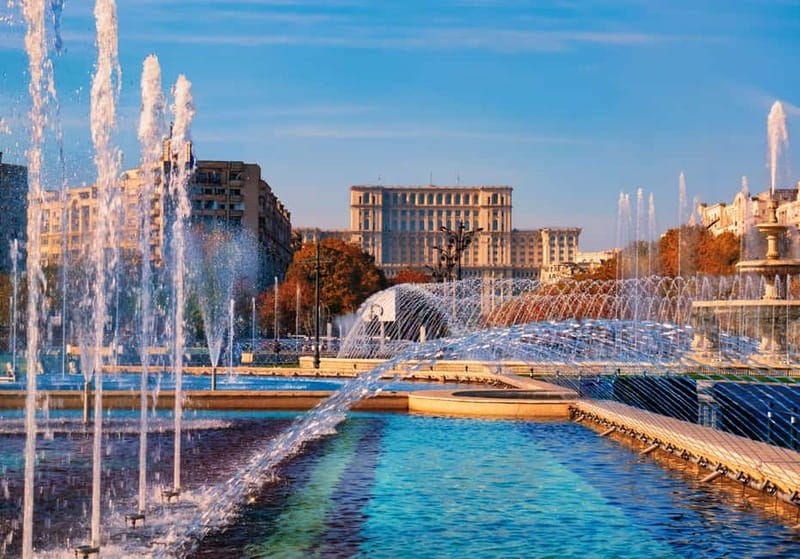
After the more concentrated communist sites, the group reaches Calea Victoriei. This is one of Bucharest’s most attractive boulevards, and the walk continues at a normal pace.
The change of setting is helpful. You see how the communist period sits within a much longer urban story. Calea Victoriei is not only a route between stops. It gives you a chance to compare the city’s older identity with the symbols and scars of the twentieth century.
Caru’ cu bere is included as a sightseeing stop. The restaurant is one of the city’s recognizable historic places, and it helps broaden the tour beyond government buildings and political trauma. The guide uses the surrounding streets to connect different periods of Bucharest’s development.
You should not expect a meal or a long restaurant visit here. It is a brief pass-by and explanation, part of the larger historical walk.
The final stretch through lesser-known places
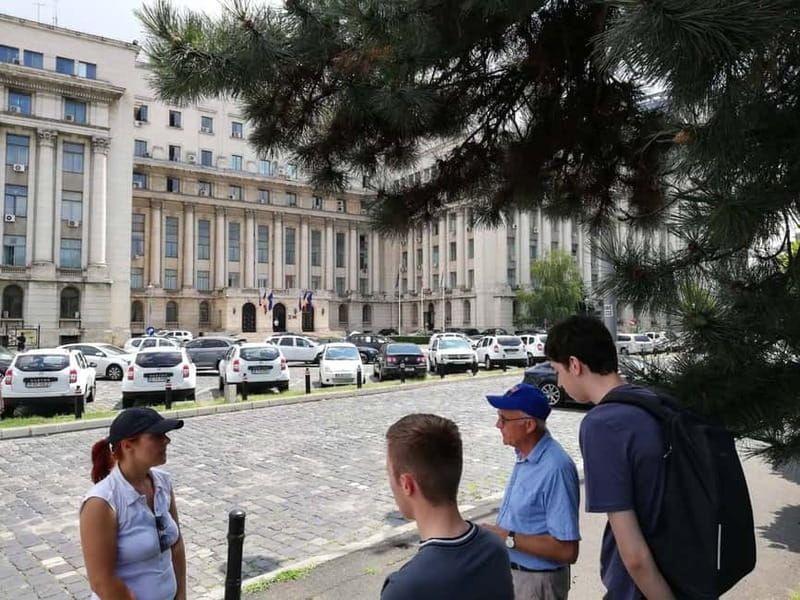
Several additional stops are described as secret or less obvious locations. Their exact character can vary with the guide’s route and presentation, but the purpose is consistent: to show you communist symbols and traces that are easy to miss on your own.
This is where guides bring the subject to life with photographs, visual aids, and anecdotes. Daniela has been especially praised for explaining buildings in clear sequence, while Octavian is noted for taking time with questions. Andreea’s storytelling often links public events to personal experiences.
The route does not rely on museum displays. Instead, the guide supplies the missing information in front of the actual buildings. That is valuable in Bucharest, where a plain facade may conceal a story that is not explained by a plaque.
The trade-off is that the quality of your experience depends heavily on the guide assigned to your group. The available feedback points to a strong guiding team, but each person has a different style. Some visitors may prefer a more emotional approach, while others may want a tighter political lecture.
Revolution Square and the fall of communism
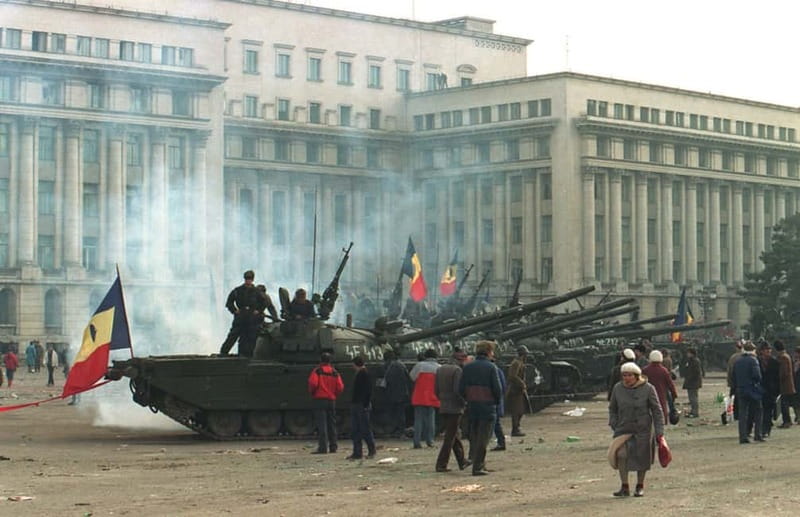
The tour ends at Revolution Square, where you hear the story of the 1989 Revolution and the end of communist rule. This is the right place to finish because the square connects public space, political power, protest, and the beginning of democracy.
The guide explains the days of the Revolution and how the regime came to an end. You also look at the continuing effects of communism in present-day Romanian life. That final link matters. The tour is not only about what happened before 1989. It asks you to consider how a long dictatorship continues to shape buildings, institutions, family memories, and political attitudes.
Several guides use personal or family experiences here. Mihai, in particular, has been praised for combining firsthand childhood memories with a wider explanation of the period. That balance is important. Personal stories can make the history vivid, but the guide also needs to place those stories within the national picture.
By the time you reach the square, you have followed a clear arc: the rise of communism, nationalization, religious restrictions, urban destruction, food shortages, surveillance, and finally revolution.
The pace, physical demands, and weather
The walk lasts three hours and includes about 15 objectives. Most stops take roughly 15 to 20 minutes, with short walks between them. The route is not described as strenuous, but it is still a substantial period on your feet.
Wear comfortable shoes. The meeting point requires a climb up to the cathedral, and the route continues through city streets. People with back problems should think carefully before booking, and the activity is not suitable for wheelchair users.
The tour runs rain or shine unless conditions become unsafe. Heavy rain, blizzards, extreme wind, or extreme heat can lead to cancellation or rescheduling. Bring weather protection and do not count on the café stop to shelter you for most of the walk.
One useful detail from the guide feedback is that umbrellas have sometimes been supplied when rain caught the group out. That is kind and practical, but I would still dress for the forecast.
Is $31 a fair price?
At $31 per person, the tour offers solid value if you want context rather than a checklist of sights. You receive three hours with a live English-speaking guide, a route covering around 15 locations, a communist-style snack, and a structured explanation of Romania’s modern history.
The price does not include drinks or food at the café, hotel transport, or an interior visit to Parliament. Those limits are clear, so the value depends on what you want. If your goal is to enter the Palace of the Parliament, book a separate visit. If your goal is to understand why the building exists and what was destroyed to create it, this walk does that more efficiently than an isolated photo stop.
The reserve-now, pay-later option and free cancellation up to 24 hours before departure also make it easier to fit into a changing Bucharest schedule.
Who should book this Bucharest walking tour?
I would recommend it to first-time visitors who want a framework for the city. Several hours spent on this route can make later sightseeing more meaningful because you will recognize the political and social forces behind Bucharest’s mixed architecture.
It suits people interested in modern European history, dictatorships, urban planning, religion, political change, and everyday life under state control. Families with teenagers may also find the personal stories and snack more approachable than a formal museum visit.
It is less suitable if you dislike walking, want a light sightseeing tour, or expect extensive interior access. The subject includes torture, surveillance, shortages, and demolition, so this is not a cheerful city stroll.
Book it early in your stay if you want context for the rest of Bucharest. Choose it later if you prefer to first see the city without explanation, then use the tour to make sense of what you have already noticed.
FAQ
Where does the tour begin?
It begins in front of the Patriarchal Cathedral in Bucharest.
Where does the tour finish?
It finishes at Revolution Square in Bucharest.
How do I reach the meeting point?
The closest metro station is Piata Unirii, also called Union Square. From there, climb the hill leading to the cathedral.
How long does the tour last?
The walking tour lasts three hours.
What language is the tour in?
The tour is conducted in English by a live guide.
Do I visit the inside of the Palace of the Parliament?
No. The Palace of the Parliament is viewed from outside, with a photo stop and guided explanation.
Is food included?
A communist-style snack is included. Anything you choose to buy during the café break is at your own expense.
Is hotel pickup included?
No. You must make your own way to the Patriarchal Cathedral, and hotel pickup and drop-off are not included.
What should I bring?
Bring comfortable shoes. The tour takes place outdoors and continues in most weather conditions.
Is the tour suitable for wheelchair users?
No. The activity is listed as unsuitable for wheelchair users and people with back problems.
Can I cancel for a refund?
You can cancel up to 24 hours in advance for a full refund. You can also reserve now and pay later.
New walking tours around the world
- Niagara Falls, Canada: White Water Walk Entry Ticket★ 4.5 · 147 reviews
- NYC: Walking Tour with Local Guide and 30+ Top NYC Sights★ 4.5 · 248 reviews
- Zadar: Food Tasting & Old Town Walking Tour★ 5.0 · 94 reviews
- Niagara Falls: Walking Tour, Journey Behind Falls, & Cruise★ 4.8 · 773 reviews
- New York City’s Hell’s Kitchen: Walking Food Tour★ 4.8 · 200 reviews
- New York City: Gangsters and Ghosts 2-Hour Walking Tour★ 4.7 · 615 reviews
- NYC: History of Slavery & Underground Railroad Walking Tour★ 4.7 · 87 reviews
- New York City: Central Park Walking Tour★ 4.7 · 82 reviews
Bucharest Walking Tours, side by side.
Bucharest: City Highlights Guided Walking Tour
Read our review →
Bucharest: Hidden Markets Walking Tour with Tastings
Read our review →
Bucharest: Ghost Stories & Romanian Mythology Walking Tour
Read our review →
Bucharest: Guided Walking Tour with Romanian Snack
Read our review →
Bucharest: Relics of Communism 3-Hour Walking Tour
Read our review →Lists this walk sits on