
Review · MUNICH
Third Reich Walking Tour Munich
Munich’s Nazi past is not tucked away in a distant museum. It is written into the city center, along grand squares, beer halls, government buildings, and memorials. This 2.5-hour walking tour connects those places into a clear story about how Hitler and the Nazi Party gained power in Munich.
I like the route for two reasons: it brings you to places you could easily pass without understanding, and the guides make room for questions rather than simply reciting dates. Guides including Michael, Jake, Nicola, Aileen, and Paul have been praised for clear explanations, photographs, humor, and thoughtful handling of difficult subjects. The main drawback is simple: you are outside for the entire tour, so cold or wet weather can make the experience tiring.
Key points to know before booking
- Munich was central to the Nazi rise: The tour explains why this city mattered to Hitler and the early Nazi movement.
- Königsplatz gives the clearest sense of Nazi spectacle: Its grand design and political use make the past feel close at hand.
- The route includes beer halls, not just monuments: The Hofbräuhaus helps explain how social spaces became political meeting places.
- Guides use photos and stories: This helps you compare modern Munich with scenes from the Nazi era.
- The walk ends at Marienplatz: You finish in the city center, ready to continue sightseeing.
- Plan for weather and a steady walk: A group of up to 25 people moves between several stops over two and a half hours.
Why this Munich tour matters
I find this subject easier to understand when the history is tied to real streets. A book can explain the Nazi Party’s ideology and rise to power, but standing in the places where speeches, marches, meetings, and acts of resistance took place adds a useful physical sense of scale.
The tour focuses on Munich as the birthplace and early stronghold of the Nazi movement. You learn about the propaganda machine, the political climate that helped Hitler gain support, and the violent path from party activism to dictatorship and war.
This is not a light sightseeing walk. The subject includes hatred, persecution, war, and death. Still, the guides aim to make the material understandable rather than sensational. Jake, for example, has been praised for adding humor and warmth while keeping the subject serious. That balance matters during a long outdoor tour.
The route also includes memorials to people who opposed Nazi ideology. This gives the walk a wider purpose. You are not only studying how a regime gained power. You are also pausing to remember those who resisted it and those who suffered under it.
More walking tours around Munich:
- Munich: Third Reich & WWII Walking Tour
★ 4.6 · 6,181 reviews - Munich: Old Town & Viktualienmarkt City Walk in German
★ 4.7 · 2,304 reviews - Munich: Night Watchman Walking Tour
★ 4.7 · 2,092 reviews
Starting at Radius Tours on Dachauer Strasse
The meeting point is Radius Tours at Dachauer Str. 4, near central Munich. Check-in takes about five minutes, and the tour begins on foot.
This is a practical starting point for a visitor staying near the main station or central Munich. The meeting point is described as easy to find, which helps when you are still getting used to the city. Confirmation is sent at booking, and the tour is offered in English.
The group can include up to 25 people. That is small enough for a guide to answer questions, though it is not a private walk. If your group is interested and engaged, the shared format can add useful questions and discussion. If you prefer a quiet, highly personal pace, a full group may feel less flexible.
A guide may use printed photographs to show how locations looked during the Nazi period. This is especially useful in a city where many buildings and streets now look ordinary. You can see the present-day setting while connecting it to the political events that took place there.
Königsplatz and the power of political staging
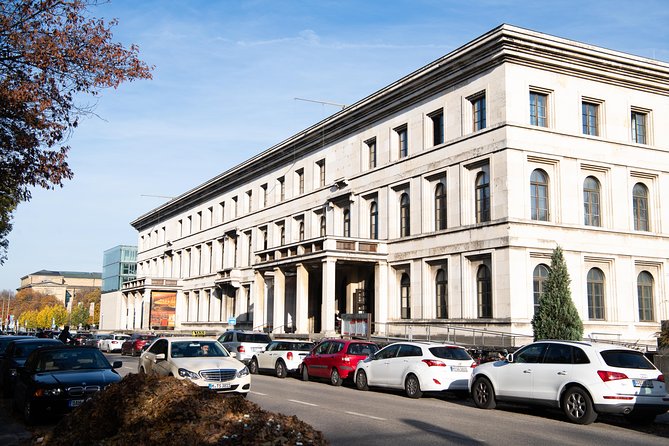
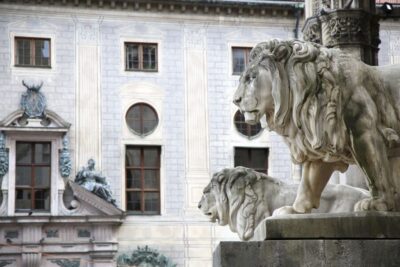
Königsplatz is one of the key stops, with about 15 minutes set aside for explanation. The square was an important Nazi landmark, and its monumental design helped create the kind of setting the party wanted for ceremonies, marches, and public displays.
The value of this stop is not only architectural. The guide explains how space itself can serve politics. A grand square can make a movement appear organized, powerful, and permanent. That is easier to grasp when you are standing in the setting rather than looking at a photograph in a book.
You will likely hear about Nazi propaganda and the methods used to shape public opinion. The tour places these methods within Munich’s political and social setting, helping you understand the steps between a fringe movement and a force capable of controlling a nation.
Fifteen minutes is enough for a focused explanation, but not enough for every detail. History specialists may want to return later and spend more time with the site. The walk gives you a strong framework, not a full academic treatment.
Odeonsplatz and the path to power
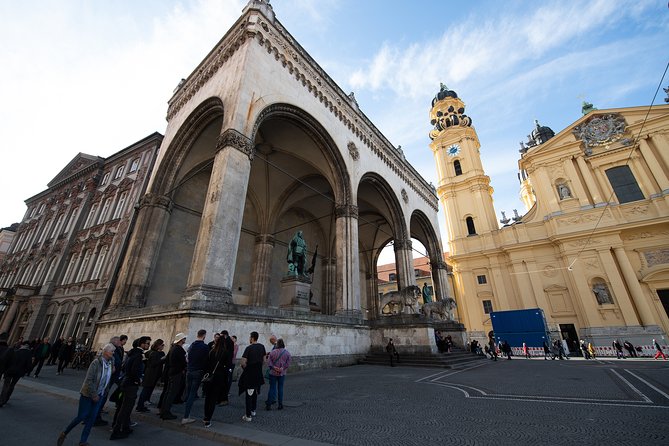
Odeonsplatz receives roughly 30 minutes, making it one of the longer stops. The Nazi Party used the square for marches and memorial events, so it offers a chance to discuss both public ceremony and political confrontation.
This part of the walk helps explain how the Nazi movement presented itself to the public. Marches, uniforms, symbols, speeches, and carefully staged gatherings were not side details. They helped create loyalty, fear, and the appearance of momentum.
The guide also connects the site to Hitler’s early fight for power in Munich. You hear about the people and events that shaped the movement before it became the ruling force in Germany. The emphasis is on cause and effect: how political frustration, organized propaganda, public spectacle, and intimidation worked together.
Odeonsplatz is also a good place to ask questions. Several guides have been praised for answering openly, including questions about uncomfortable parts of the subject. That is important here, since a useful tour should not reduce the period to a simple story of good people and bad people. It should explain how ordinary political conditions were manipulated.
Same streets, a different story:
- Munich Ghosts and Spirits Evening Walking Tour
★ 5.0 · 1,900 reviews - Munich: Birthplace of the Third Reich Guided Walking Tour
★ 4.6 · 771 reviews - Munich: Old Town Walking Tour
★ 4.7 · 589 reviews - Discover Munich 2-Hour Small Group Walking Tour
★ 4.6 · 491 reviews
The Hofbräuhaus and politics in a beer hall
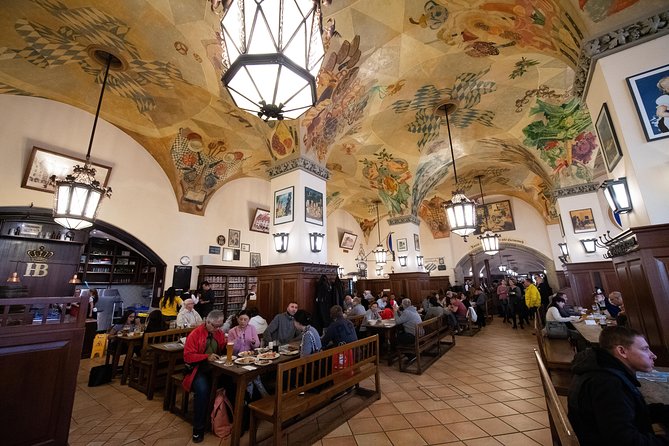
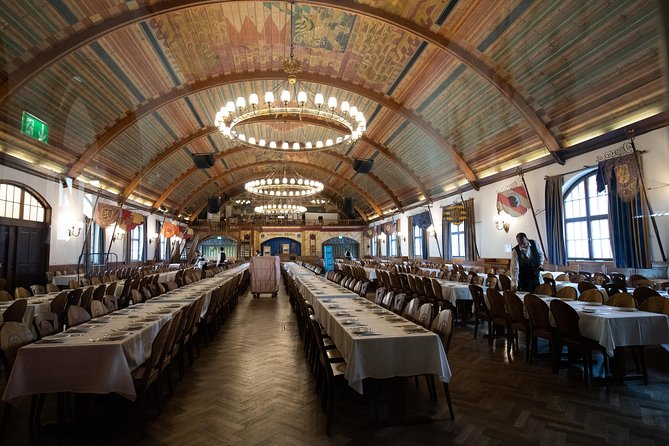
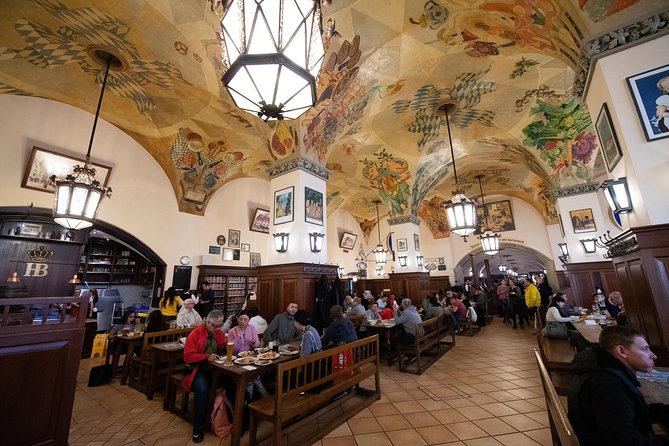
The Hofbräuhaus stop lasts about 20 minutes. Munich is famous for its beer halls, but this part of the route shows that they were also important political gathering places.
You do not simply hear about beer culture as a tourist attraction. The guide explains how a large public hall could help political speakers reach an audience, build support, and turn meetings into visible events. That makes the Hofbräuhaus relevant to the story of the Nazi Party’s early growth.
This stop may appeal to visitors who want more than a list of official Nazi buildings. Political movements grow in social spaces as well as government offices. The beer hall setting helps show how ideology moved into everyday public life.
The stop is also a reminder that the city’s past is layered. The Hofbräuhaus remains part of modern Munich’s tourist life, yet it also carries a difficult political history. A good guide helps you hold both facts in mind without turning the location into a spectacle.
The Old Town Hall and Marienplatz
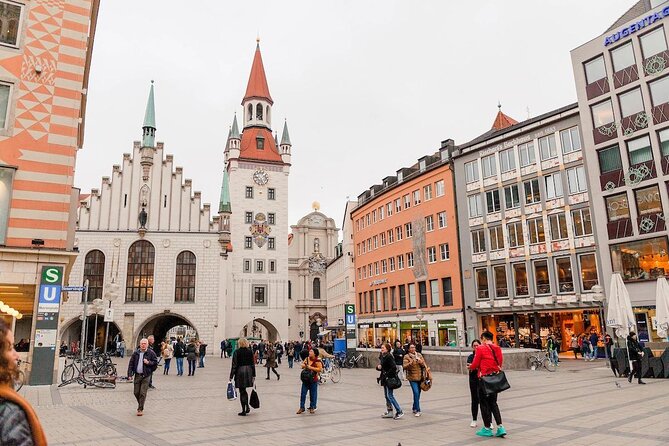
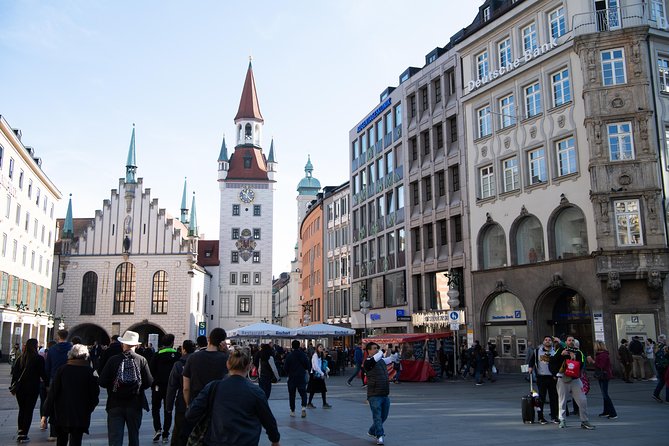
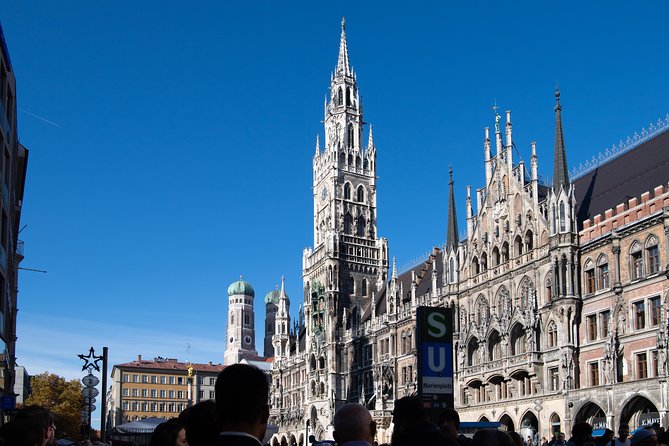
The route continues to Munich’s Old Town Hall, with about 15 minutes for the stop, then finishes around Marienplatz after about 20 minutes. These central locations help connect the Nazi period to the city you see today.
The Old Town Hall is included as part of the wider story of Munich’s public and political center. It is not presented as an isolated sight. Instead, the guide places it within the city’s changing role during the rise of the Nazi movement.
Marienplatz is the final point and a useful place to end. You are left in the heart of Munich, close to shops, restaurants, public transport, and major sights. That makes it easy to continue your day rather than spend time getting back from an outlying location.
Do not expect a long indoor visit at either stop. This is a walking experience, and the value comes from the guide’s explanations at the locations. You see the exteriors and public spaces while hearing how they fit into the period.
What the guides add to the walk
The guide is the most important part of this experience. The route itself is accessible, but its meaning depends on how well someone explains the political setting and keeps the group focused.
Several named guides have received strong praise for different strengths. Michael is described as generous with information and willing to handle difficult questions. Jake is known for making the material interesting while staying sensitive to the group. Nicola is praised for giving enough time at each landmark without making the walk feel disjointed.
Aileen has been described as clear and thoughtful, with photographs that helped connect past and present. Paul is noted for speaking loudly and clearly, which matters in an outdoor group. Other guides, including Nik, Alex, Scott, Steve, Sarah, Michelle, and Daniel, have also been praised for their presentation and command of the subject.
Guide assignments can vary, so you cannot book a specific person based on this information. What you can expect is an English-speaking local guide with a strong focus on Munich’s Nazi-era history.
The best guides do more than deliver facts. They explain why events happened, answer questions honestly, and watch the group’s comfort. One guide arranged a short bathroom and coffee break after asking the group to vote. That kind of small adjustment can make a difference on a cold day.
Weather, pace, and what to bring
Dress for an outdoor walk in Munich. One participant described a cold, grey day, and another specifically advised warm clothing. You should bring comfortable shoes and enough clothing for two and a half hours outside.
The tour moves through central streets and squares rather than along a remote trail, but you are still on your feet for most of the experience. One person noted that you should be ready to walk. If you have mobility concerns, the provided information says most people can participate and that service animals are allowed, but it does not give a detailed accessibility breakdown.
A short break may be possible, depending on the group and guide, but do not count on a café stop as a fixed part of the schedule. Bring water, and consider using the bathroom before the tour begins.
The tour requires good weather. If poor weather causes cancellation, you are offered another date or a full refund. The provider can also cancel if the minimum number of participants is not reached.
Is $45.95 a fair price?
At $45.95 per person, the price is reasonable if you want a focused introduction to Munich’s Nazi past. The fee covers a two-and-a-half-hour guided walk and gives you historical context at several sites that would otherwise be easy to overlook.
You are not paying for museum entry, transport, or a meal. That keeps the format simple, but it also means the value rests heavily on the guide. A strong guide can turn ordinary-looking streets into meaningful historical locations. A rushed or less engaging guide would make the same route feel thinner.
The tour is particularly good value early in a Munich visit. It gives you a framework for later sightseeing and may point you toward places you want to explore in greater detail, including memorials connected with resistance to the Nazi regime.
History specialists should set their expectations carefully. The tour covers a lot in 150 minutes, and one participant wished for several more hours. You will gain a broad, well-organized understanding, but not an exhaustive study of every event or site.
Who should book this walking tour?
I would recommend it to first-time visitors who want to understand Munich beyond palaces, churches, and beer halls. It also suits students, history fans, and anyone who wants a serious introduction before visiting more specialized museums or memorials.
You do not need an advanced background. The guides explain political, social, and cultural factors in plain language. At the same time, people who have already studied the period can still find new details, especially when the story is tied to actual locations.
This may not suit you if you dislike outdoor walking, need a highly flexible schedule, or want extensive time inside museums. The subject is also emotionally heavy, so book it when you have the energy to pay attention rather than squeezing it between hurried appointments.
Should you book the Third Reich Walking Tour?
Book it if you want a clear, place-based explanation of how Munich became important to Hitler and the Nazi Party. The combination of Königsplatz, Odeonsplatz, the Hofbräuhaus, the Old Town Hall, and Marienplatz gives you a strong route through the city’s political past.
I especially like it as an early Munich activity. You learn how to read the city before moving on to other sights, and you finish in Marienplatz with the rest of the day ahead.
Skip it if you want a museum-heavy experience or a private tour with unlimited time for questions. For most visitors, though, the price, central route, and careful English presentation make this a worthwhile introduction. Book at least 24 hours ahead if your plans may change, since cancellations within 24 hours are not refunded.
FAQ
How long does the Third Reich Walking Tour last?
The tour lasts approximately two hours and 30 minutes.
Where does the tour begin?
It begins at Radius Tours, Dachauer Str. 4, 80335 München, Germany.
Where does the tour finish?
The tour ends at Marienplatz in central Munich.
Is the tour offered in English?
Yes. The tour is offered in English.
What places are included on the route?
The route includes Königsplatz, Odeonsplatz, the Staatliches Hofbräuhaus, Munich’s Old Town Hall, and Marienplatz.
Is transportation included?
No. This is a walking tour, and the listed inclusions are the two-and-a-half-hour walk and a local guide.
How many people can join the tour?
The maximum group size is 25 travelers.
Can service animals join the tour?
Yes. Service animals are allowed.
What happens if I cancel?
You receive a full refund if you cancel at least 24 hours before the start time. Cancellations or changes made within 24 hours are not refunded. If bad weather or an insufficient number of participants causes cancellation, you are offered another date or a full refund.
New walking tours around Munich
- Munich : Private Walking Tour with A Guide (Private tour)★ 4.5 · 85 reviews
- Munich: Raven Black Witches and Executioners Walking Tour★ 4.7 · 294 reviews
- Munich: Guided Food Walking Tour with Beer Tasting★ 4.7 · 183 reviews
- Munich Old Town – Guided Walking Tour in English★ 4.7 · 153 reviews
- Munich: Old Town Guided Walking Tour★ 4.6 · 479 reviews
- Munich: Birthplace of the Third Reich Guided Walking Tour★ 4.6 · 771 reviews
- Munich: Old Town Walking Tour★ 4.7 · 589 reviews
- Discover Munich 2-Hour Small Group Walking Tour★ 4.6 · 491 reviews
Munich Walking Tours, side by side.
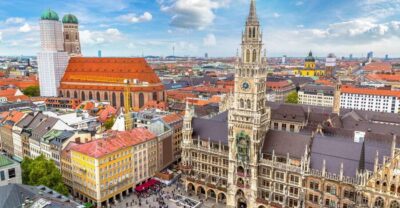
Munich: Old Town & Viktualienmarkt City Walk in German
Read our review →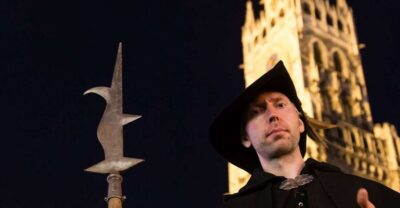
Munich Ghosts and Spirits Evening Walking Tour
Read our review →
Munich: Birthplace of the Third Reich Guided Walking Tour
Read our review →
Discover Munich 2-Hour Small Group Walking Tour
Read our review →
Munich Private Tour with a Local – Highlights & Hidden Gems
Read our review →Lists this walk sits on