
Review · NASHVILLE
Downtown Nashville Guided Sightseeing Walking Tour
Nashville’s story gets much stranger once you leave the honky-tonks. This two-hour walk links Ryman Auditorium, Printers Alley, Fort Nashborough, and the Tennessee State Capitol, showing how country music, river trade, politics, Civil Rights, and old-fashioned nightlife share a few downtown blocks. I like that the route gives you both the famous Broadway side and the less polished corners behind it.
I especially like the $25 price and the way the tour helps you get your bearings early in a Nashville visit. I also like the use of a portable speaker when Ryan leads, since Broadway noise can swallow a guide’s voice. The main caution is pace: one guide speaks quickly, and the walk includes hills and time in the shade. A late start has also caused trouble for at least one group, so arrive early and keep your phone ready for updates.
Key points to know before you book
- Two hours from Broadway to the Capitol: The route covers music landmarks, the riverfront, Printers Alley, and downtown churches.
- Ryan brings the comedy: When Ryan leads, expect jokes, songs, dance moves, quick facts, and a strong personal style.
- A good first morning in Nashville: You get a useful map of downtown before deciding where to return later.
- Mostly an outdoor history lesson: Stops are generally short, around five minutes, and free, rather than long interior visits.
- Small-group format: The maximum is 20 people, though the tour requires at least six to run.
- Weather matters: The experience can be rescheduled or canceled in poor weather, with a refund offered.
Broadway is only the starting point
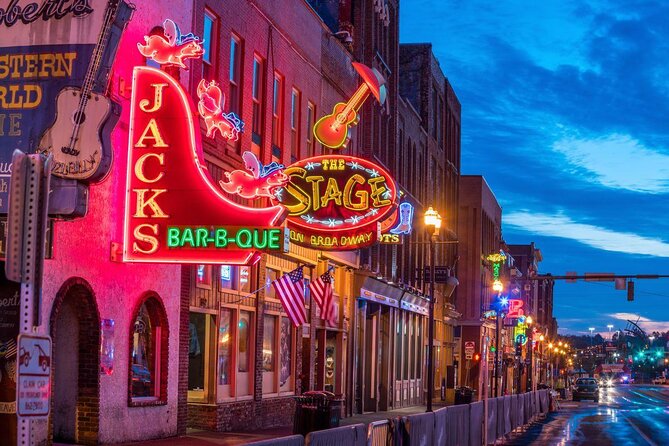
The tour begins at 501 Broadway at 10 a.m., near the loud center of Nashville’s honky-tonk district. You meet the guide around 5th and Broadway, then start with the city’s modern musical identity before stepping into its older stories.
This is a useful contrast. Broadway is full of neon signs, live music, and packed bars, but the tour explains what came before the current party scene. You hear about performers, record shops, saloons, river commerce, and the people who shaped Nashville long before the city became a weekend destination.
The route is not a museum-style walk with long stops indoors. Most points take about five minutes. That keeps the group moving, but it also means you should expect storytelling and exterior views rather than full visits to every building.
More City Highlights Walking Tours in the USA:
- Historic Charleston Guided Sightseeing Walking Tour
★ 5.0 · 6,216 reviews - Highlights of Charleston Guided Walking Tour
★ 5.0 · 2,206 reviews - Boston History Tour: Scenic Walk Through Time & Landmarks
★ 5.0 · 627 reviews
Ryman Auditorium and the music that built Nashville
Ryman Auditorium is one of the early anchors. Known as the Mother Church of Country Music, it was the original home of the Grand Ole Opry and remains one of Nashville’s key music landmarks.
The tour uses the Ryman as a doorway into Music City’s larger story. You learn why this building matters, then connect it with the people and places that made country music a business as well as a sound. The stop is brief, so book a separate Ryman visit if you want to see the inside at length. This walk gives you context, not a full auditorium tour.
Next comes Tootsie’s Orchid Lounge, one of the city’s best-known honky-tonks. Its location close to the Ryman helps explain the old relationship between performers, audiences, and late-night drinking spots. The guide ties the place to Nashville’s rougher music culture, with stories about artists who passed through before becoming household names.
Ernest Tubb Record Shop adds another piece of the puzzle. It is linked with the Grand Ole Opry and with the film Coal Miner’s Daughter. If you care about country music, this stop makes the route feel less like a general city walk and more like a tour of the machinery behind Nashville’s fame.
Candy bars, country stars, and quick downtown stories
The itinerary includes a brief candy-related stop involving peanuts, caramel, chocolate, and the first combination candy bar sold in the United States. It is a small detail, but that is part of the tour’s appeal. The walk is not limited to major monuments. It also collects odd bits of local culture that help break up the heavier history.
The George Jones stop shifts back to country music. George Jones, known by nicknames including Possum and No Show, is remembered as a major figure in the genre. The guide uses his story to keep the music thread running through the city rather than treating Nashville’s famous names as isolated statues and signs.
This quick-fire approach works best if you enjoy a lot of information in a short time. One person found the guide’s delivery too fast and felt the jokes sometimes made it hard to separate fact from comedy. If you prefer slow, quiet interpretation, this may feel rushed. If you like a lively host who keeps moving, the pace will likely suit you.
Fort Nashborough and the Cumberland River
The walk heads toward Fort Nashborough and the riverfront. The fort site represents one of the first Anglo settlements west of the Appalachians, while the Cumberland River explains why Nashville became an important trading center.
From Riverfront Park, you can take in the river, the Tennessee Titans stadium, and the area once tied to heavy river commerce. This is one of the tour’s most useful changes of scene. Broadway can make Nashville seem like a city built only for nightlife, but the riverfront shows the economic reason the city grew here.
The route also addresses the Cherokee presence before the Anglo settlement. That context matters. The story is not presented as a simple tale of pioneers building a city from nothing. You get at least a brief reminder that people already lived here and that settlement changed the region.
The stop at Fort Nashborough is short, so do not expect a detailed archaeological or architectural tour. Its value is in connecting the river, the settlement, and Nashville’s early development. You also get views toward the Titans stadium, which makes it easy to place old Nashville beside the present-day city.
More walks with a guide around the USA:
- History and Hauntings of Salem Guided Walking Tour
★ 5.0 · 14,564 reviews - Cambridge: Harvard University Student-Guided Walking Tour
★ 4.6 · 3,931 reviews - Harvard University Campus Guided Walking Tour
★ 4.5 · 3,632 reviews - Historic Savannah Guided Walking Tour
★ 5.0 · 2,918 reviews
Printers Alley and Skull’s Rainbow Room
Printers Alley is where the tour changes mood. Once tied to printing businesses, it became known for nightlife, clubs, and a more secretive side of downtown. The guide connects the alley with performers such as Jimi Hendrix, Johnny Cash, Little Richard, Tim McGraw, and Paul McCartney.
Skull’s Rainbow Room gets its own stop. The venue is associated with names including Andy Griffith, Buck Owens, Bob Dylan, Johnny Cash, and Paul McCartney. The point is not simply to tick off famous names. It is to show how Nashville’s music world crossed paths in small, smoky rooms rather than only on major stages.
This part suits you if you enjoy stories about a city’s less respectable past. It is also a reminder that Nashville’s history is not all polished country music heritage. Drinking, gambling, clubs, performers, and questionable behavior are part of the downtown story too.
The guide’s personality matters most here. Ryan is described as funny, theatrical, and comfortable singing or dancing while telling the stories. That energy can make an alley walk memorable, but his style may not suit you if you want a restrained, academic presentation.
Woolworth, Civil Rights history, and the difficult parts of downtown
The tour then reaches the former Woolworth on Fifth area, an important site connected with the Nashville Civil Rights sit-ins of the 1960s. This is one of the most serious sections of the walk.
The guide discusses the Nashville Freedom Riders and the struggle against Jim Crow laws. It gives the city’s art district and downtown streets a larger meaning. You are not just looking at old buildings. You are standing in places where people challenged segregation through organized protest, faced hostility, and helped force change.
This segment may feel different from the jokes and music stories earlier in the tour, and that is appropriate. A good city walk should not turn every subject into entertainment. At the same time, the guide’s political framing can be direct. One participant objected to the discussion of Andrew Jackson and the guide’s views about the 1960s. If you want a strictly neutral presentation, ask questions and judge whether this style fits you.
I value the inclusion of this stop because it keeps the tour from presenting Nashville as only neon, whiskey, and country songs. It adds a necessary account of conflict and courage to the city picture.
Andrew Jackson, the Capitol, and downtown architecture
At Nashville Public Square, the guide tells stories about Andrew Jackson and his many duels. The subject fits the tour’s interest in colorful characters, but it can also lead to strong opinions and lively interpretation. You will hear more than a list of dates and offices.
The Tennessee State Capitol appears later in the route. The stop gives you a look at Tennessee’s political center and helps connect the city’s local stories with state government. The tour description also traces a route toward Nashville’s oldest home, though the detailed stop list does not identify that building by name. Treat this as part of the broader route rather than a guaranteed interior visit.
Downtown Presbyterian Church is one of the architectural highlights. Its Egyptian Revival design is unusual for a church in the United States, making it a welcome change from the music venues and bars. The five-minute pause is enough to point out the exterior and explain why it catches the eye. It is not enough for a long architectural study.
The walk finishes back near central Nashville and returns to the meeting point. Ending where you began is handy, especially if you want to continue to the Ryman, Broadway, a museum, or lunch nearby.
What the $25 price really buys you
At $25 per person, this is a strong-value orientation walk. You are paying for two hours of live narration, a local guide, a planned route, and recommendations about what to do next. You are not paying for entry to the Ryman, Fort Nashborough, the Capitol, or other attractions.
I would book this early in your stay. The route covers enough ground to show you where the key districts sit, and you can return later to the places that catch your interest. One person specifically used the walk to decide which spots to revisit after the tour.
The group limit is 20, which is reasonable for a city walk. Smaller groups can hear the guide more easily and move through busy streets with less fuss. The tour must have at least six people, however, or it may be rescheduled or canceled with a refund.
Most people can take part, and service animals are allowed. The meeting point is near public transportation. You should bring comfortable shoes, water, and a layer. One morning felt cold because much of the route was in shade, while rain or other poor weather can also affect the schedule.
How the guide affects the experience
The strongest reports center on Ryan. He is praised for humor, energy, clear storytelling, and the ability to answer questions. His portable microphone and speaker are especially useful around Broadway, where music and traffic can make a normal speaking voice hard to hear.
His style is not quiet. Expect quick facts, jokes, strong opinions, and possibly singing or dancing. That makes the walk feel more like a live performance than a formal lecture. For many people, this is exactly what makes two hours of city history pass quickly.
The tradeoff is that speed and personality can sometimes get in the way of detail. If you need time to take notes or ask questions after every stop, you may find the format hurried. Try to save questions for natural pauses, and stay close enough to hear the speaker clearly.
Guides can vary, so Ryan’s style should not be treated as a guarantee for every departure. Still, his approach gives you a useful sense of the tour’s character: informal, funny, packed with stories, and more interested in memorable people than a dry timeline.
Who should book this Nashville walk?
I would recommend it to first-time visitors who want a city introduction before choosing how to spend the rest of their stay. It also suits music fans, families with older children, couples who enjoy stories, and anyone who prefers seeing a city on foot instead of from a bus.
It is a good match if you like:
- Country music and famous performance venues
- Strange local anecdotes and colorful personalities
- A mix of music, architecture, politics, and Civil Rights history
- A guide with a strong comic style
- A moderate two-hour walk with short pauses
I would hesitate if you dislike crowds, outdoor walking, fast narration, political discussion, or guides who make themselves part of the show. The route is not a deep architectural tour, a full Ryman visit, or a quiet history seminar.
Book at least 24 hours before the start time if you need a full refund later. Cancellations made within 24 hours are not refunded. Since the operator may send rain or rescheduling updates by text, provide a working cell phone number when you book.
Should you book it?
Yes, if you want a lively first look at Nashville for $25. The best part is the range: Ryman Auditorium and Tootsie’s for music, Fort Nashborough and the river for early settlement, Printers Alley for nightlife, Woolworth for Civil Rights history, and the Capitol for politics.
Go in expecting a fast, personality-led walk rather than a polished museum program. Arrive early, wear good shoes, dress for shade or weather, and keep an open mind when the guide offers opinions along with facts. If that sounds like your kind of city introduction, this is an efficient and entertaining way to get oriented.
FAQ
How long is the Downtown Nashville Guided Sightseeing Walking Tour?
The tour lasts approximately two hours.
Where does the tour begin?
It begins at 501 Broadway, Nashville, Tennessee 37203, near 5th and Broadway.
What time does the tour start?
The scheduled start time is 10 a.m.
Where does the tour end?
The activity ends back at the meeting point in central Nashville.
Is admission to the attractions included?
The tour includes a live walking tour and guided commentary. The listed stops are free, and separate admission to interiors or attractions is not included.
How many people can join the tour?
The maximum group size is 20 people. At least six people are required for the tour to operate.
Is the tour suitable for families?
Yes. The tour is described as family-friendly, and most people can participate.
What happens if the weather is poor or the tour does not meet its minimum group size?
You may be offered a different date or experience, or a full refund. You can also cancel for a full refund if you do so at least 24 hours before the start time.
New walking tours around the USA
- NYC: Walking Tour with Local Guide and 30+ Top NYC Sights★ 4.5 · 248 reviews
- New York City: Gangsters and Ghosts 2-Hour Walking Tour★ 4.7 · 615 reviews
- NYC: History of Slavery & Underground Railroad Walking Tour★ 4.7 · 87 reviews
- New York City’s Hell’s Kitchen: Walking Food Tour★ 4.8 · 200 reviews
- New York City: Central Park Walking Tour★ 4.7 · 82 reviews
- NYC: Brooklyn Bridge and DUMBO Guided Walking Tour★ 4.8 · 93 reviews
- New Orleans: French Quarter Ghost and Legends Walking Tour★ 4.3 · 129 reviews
- New Orleans: Witches Coven Garden District Walking Tour★ 4.9 · 113 reviews
Nashville Walking Tours, side by side.

Nashville: Food Tour with 5+ Tastings of Local Delicacies
Read our review →

The Ghosts of Nashville Night-Time Walking Tour
Read our review →
East Nashville Walking Food Tour with 5+ Tastings
Read our review →
Lists this walk sits on