
Review · CHICAGO
Chicago: Secret Interiors Architecture Walking Tour
Chicago’s best architectural surprises are often inside buildings you pass without a glance. This two-hour walk takes you from Union Station through the Loop to grand lobbies, glittering mosaics, domes, and carefully engineered interiors that are easy to miss on your own.
I especially like the way the tour links design to practical problems, such as bringing daylight into tall buildings and supporting their heavy ornament. I also like the guides’ strong track record: Grant, Talia, Annie, Angel, and Matthew are repeatedly praised for clear explanations, humor, and local stories. The main drawback is that the walk is outside much of the time, about 90 percent according to one guest, so winter requires serious bundling.
Key points at a glance
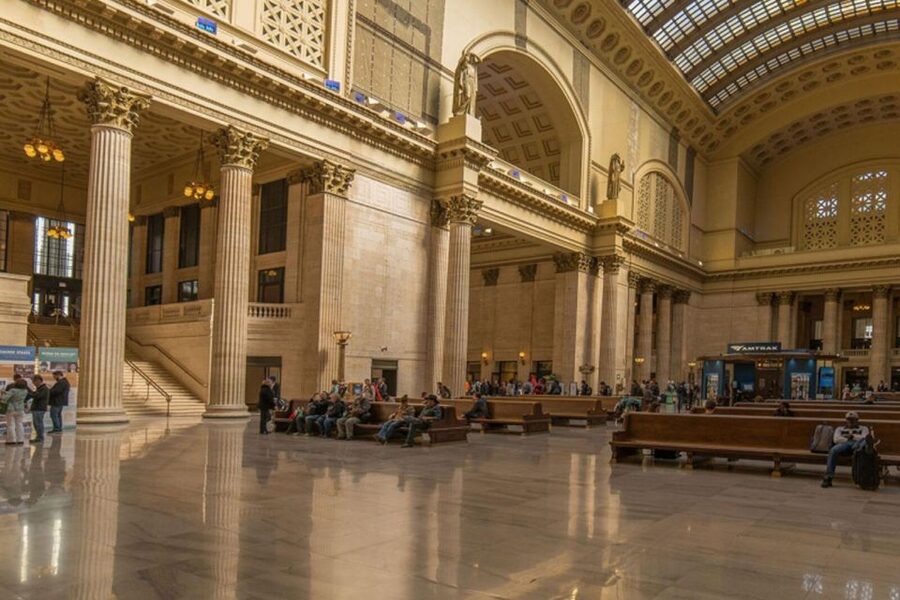
- Union Station is the starting point: Meet beneath the Clinton Street sign in the Great Hall, a fitting place to begin a tour about Chicago’s grand public interiors.
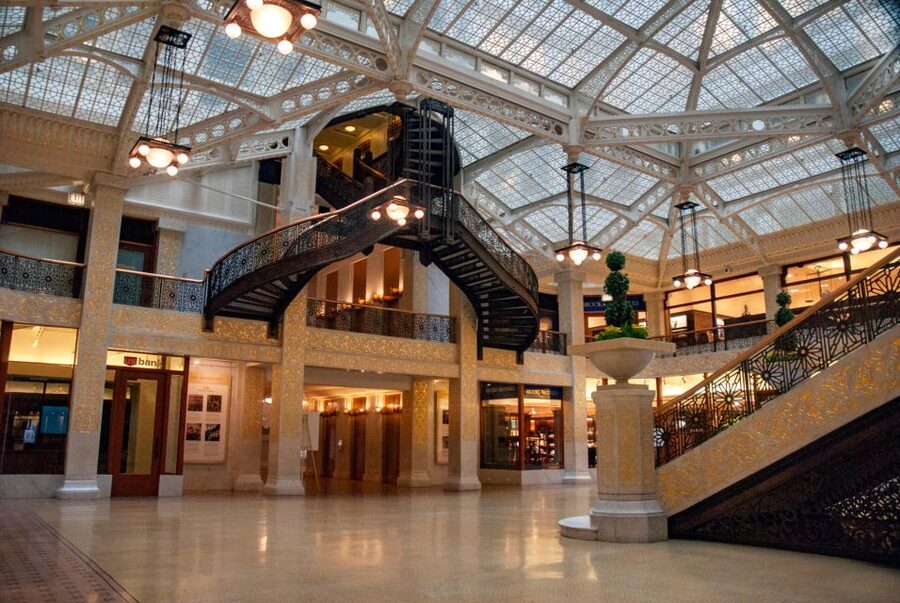
- The Rookery is a major highlight: Its interior combines historic ornament with the work of Frank Lloyd Wright, but it is closed on Sundays.
- You see more than façades: The route visits the Field Building, Marquette Building, Palmer House, Chicago Cultural Center, and Marshall Field and Company Building.
- The tour explains how buildings work: Expect discussion of lighting, structure, materials, architectural styles, and the reasons behind decorative details.
- Guides make a real difference: Grant, Talia, Annie, Angel, and Matthew have been praised for storytelling, clear speech, humor, and thoughtful answers.
- Plan for city walking: Wear comfortable shoes, expect a brisk but manageable pace, and be ready for outdoor stretches and some stairs.
Why Chicago’s interiors deserve two hours
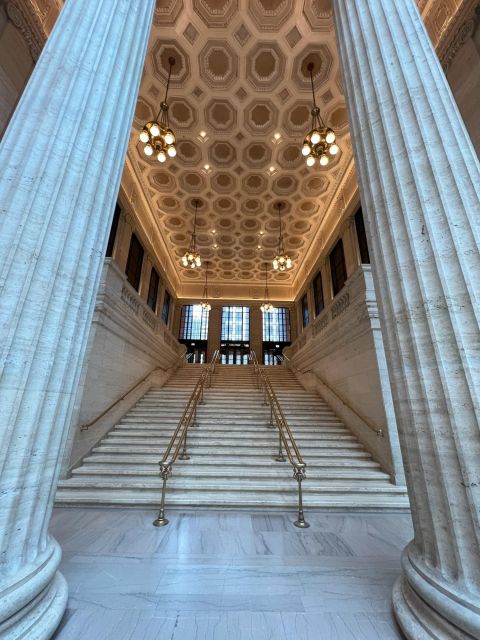
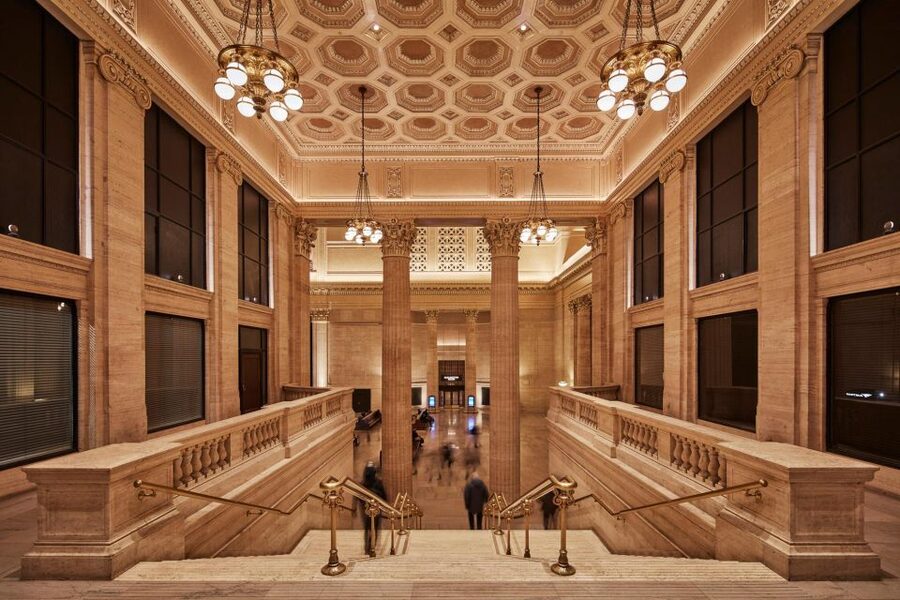
Chicago is famous for its skyline, but the street view only tells half the story. The Loop’s older office buildings, hotels, department stores, and public halls often save their finest work for the inside: patterned floors, carved stone, decorative metalwork, stained glass, mosaics, and ceilings that were designed to impress people arriving from the street.
This tour is built around that contrast. You move from one building to another with a guide who explains what you are seeing and why it mattered. The point is not simply to collect pretty rooms. You learn how architects and engineers dealt with narrow urban sites, limited daylight, heavy materials, and the need to make commercial buildings feel grand.
I find that approach useful because it gives you a way to read Chicago after the tour ends. A doorway is no longer just a doorway. A light court may reveal a solution to a practical problem. A mosaic may express a building’s purpose, its owner’s ambitions, or the period’s preferred style.
The cost is $35 per person. For two hours of guided sightseeing in several major buildings, that is a fair price, especially if you are interested in architecture but do not want a highly academic lecture. You are paying for access, context, and a planned route through places you might otherwise walk past.
More Architecture Walking Tours around Chicago:
- The Official Art Deco Walking Tour by The Miami Design Preservation League
★ 5.0 · 1,580 reviews - Lecce: Baroque Architecture and Underground Walking Tour
★ 4.6 · 1,248 reviews - Miami South Beach Art Deco Walking Tour
★ 5.0 · 1,039 reviews
Meeting at Union Station’s Great Hall
The tour begins inside Union Station, under the Clinton Street sign in the Great Hall. This is a simple meeting point, but it also sets the tone. You start in one of Chicago’s best-known civic interiors rather than on an ordinary sidewalk.
Arrive ready to walk. The activity is listed as wheelchair accessible, but one guest noted that the route included many stairs in and out of buildings. If you use a wheelchair or have difficulty with stairs, ask about the day’s exact route before setting out, since access can vary from one historic building to another.
The guide leads the group through the Loop, with stops for both exterior views and interior visits. Group size can vary. Some outings have been intimate, including one with only two people, while others have had enough people to create a more typical group atmosphere. Smaller groups give you more time for questions, but the quality of the experience also depends on how well the guide handles the pace and street noise.
Grant has been praised for clear delivery and strong historical detail. Talia is often described as warm, funny, and attentive to the group’s comfort. Annie is known for friendly explanations and useful suggestions about food and drink nearby. Angel and Matthew have also been praised for making architecture easy to follow rather than dry or technical.
South LaSalle Street and Chicago’s financial core
The route continues through the Loop and along South LaSalle Street, an area where Chicago’s commercial ambitions are written across the façades. This is a good place to connect the city’s architectural growth with the people who financed and occupied these buildings.
The tour focuses on how Chicago became a major testing ground for new building methods. As offices grew taller, architects had to think about elevators, steel frames, natural light, ventilation, and safe circulation. Decorative design still mattered, but it had to work alongside new structural systems and busy commercial life.
A guide can also put the streets into human terms by discussing the industrial magnates, public figures, and infamous characters who moved through these corridors during the Gilded Age and the Roaring Twenties. That social detail keeps the route from becoming a string of dates and architects.
You will spend part of this section outside, stopping for views and photographs. Listen closely near traffic, since guides may need to speak over cars and city noise. Comfortable shoes matter more than dressy clothes, and you should leave room in your schedule afterward if you want to revisit a building at a slower pace.
The Rookery Building and its bright central space
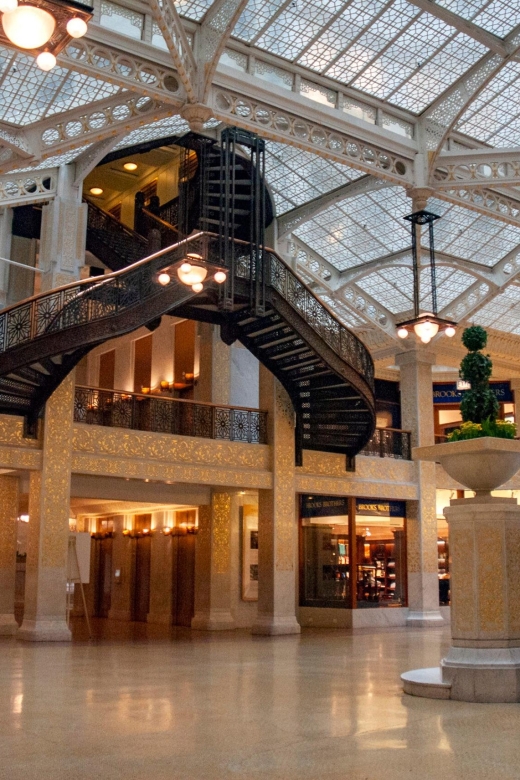
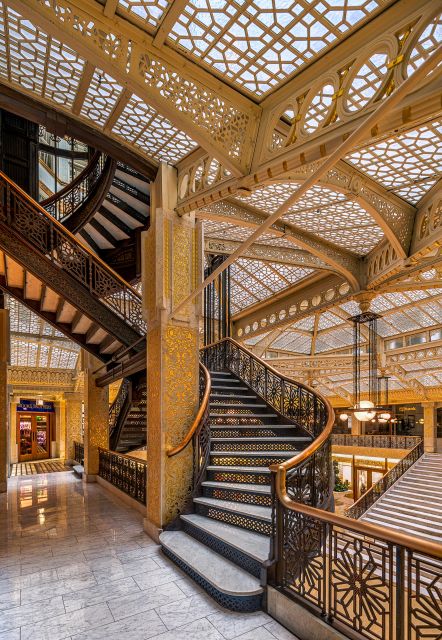
The Rookery is one of the tour’s strongest stops. Its interior is known for elaborate craftsmanship and a dramatic central light court, where design and engineering meet in a single space.
The building gives the guide plenty to explain. You may hear how architects used light to make a deep urban structure feel more open, and how decorative elements were arranged to guide the eye upward and through the building. The tour also addresses the building’s changing architectural identity, including Frank Lloyd Wright’s contribution to its interior.
That combination makes the Rookery more than a photo stop. You are looking at a place where an older commercial building was adapted and refined rather than treated as a disposable relic. The result helps explain why Chicago’s architecture continues to influence designers far beyond Illinois.
There is one important scheduling point: the Rookery is closed on Sundays. On that day, the tour includes an alternative stop. If this building is your main reason for booking, choose another day and confirm the current schedule before you go.
More Hidden Gems Walking Tours in Chicago:
- Chicago: Underground Pedway & Downtown Secrets Walking Tour
★ 4.7 · 268 reviews - Dublin Highlights and Hidden Gems Guided Walking Tour
★ 5.0 · 6,020 reviews - Explore Berlin: See All The Iconic Sights & Some Hidden Gems
★ 5.0 · 4,429 reviews - Kyoto Geisha Walking Tour: Gion District & Hidden Gems
★ 4.7 · 3,273 reviews
Field Building and Marquette Building
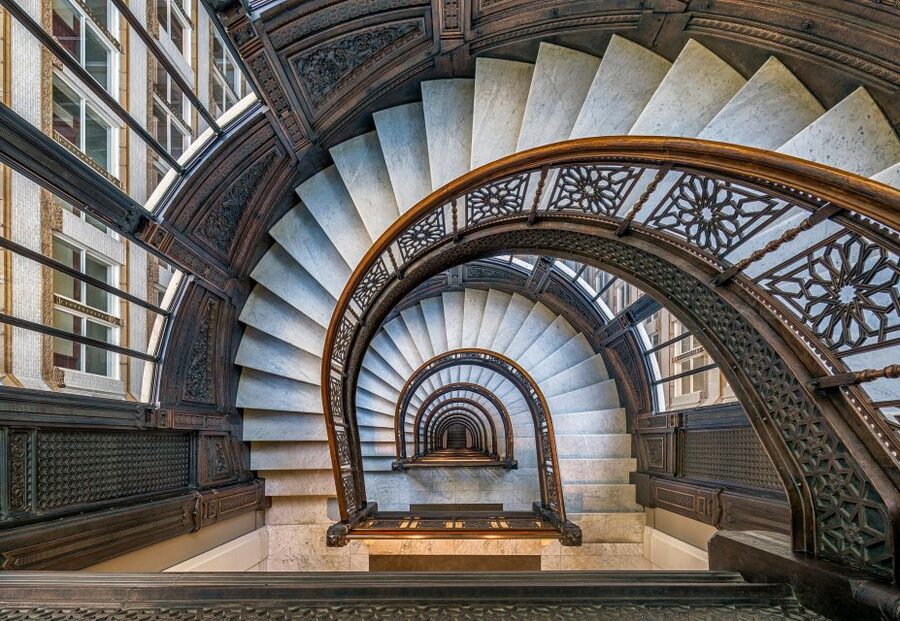
The Field Building and Marquette Building show how Chicago’s office architecture developed different personalities while solving similar problems. Both are part of the tour’s effort to show you that the Loop is not one uniform style.
At the Field Building, look for the relationship between the exterior structure and the interior finish. The guide explains architectural choices that can be difficult to understand from a sidewalk view alone. This is where the tour’s focus on materials, lighting, and structural integrity becomes useful.
The Marquette Building offers another lesson in ornament and storytelling. Decorative work can reflect the building’s period, its commercial purpose, and the city’s desire to present itself as modern, prosperous, and culturally serious. Your guide points out features that you might not notice while crossing the lobby alone.
These stops also show why a guided route has value. You could enter a public lobby independently, take a quick photo, and leave without understanding what you saw. A good guide slows down the important details, explains their purpose, and answers follow-up questions. Guests have especially praised Grant, Talia, and Annie for handling questions well.
Palmer House and the art of a grand hotel
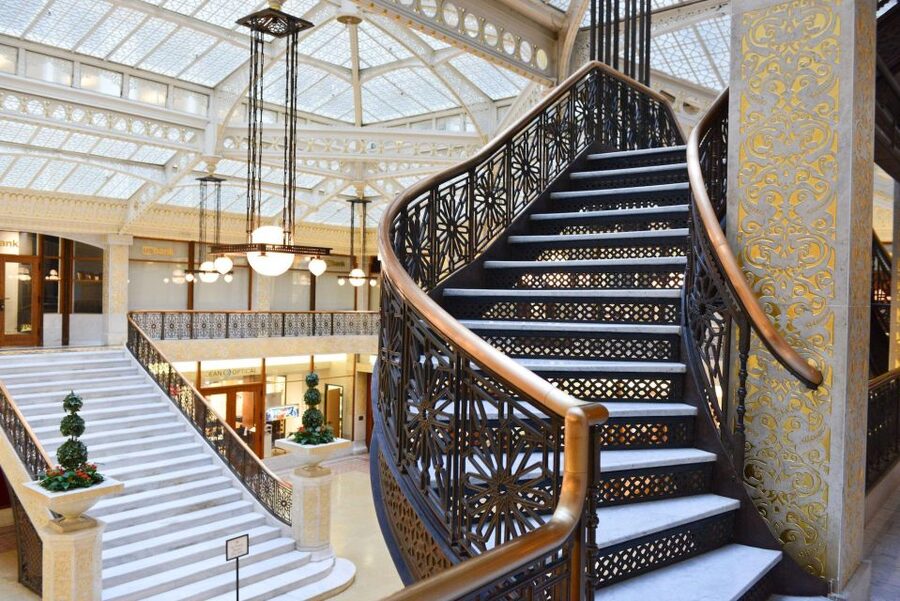
Palmer House adds a different mood to the route. This is a hotel interior rather than an office building, so the design aims to impress guests, signal comfort, and create a sense of occasion.
The tour uses the hotel to broaden your view of Chicago architecture. The city’s celebrated interiors were not all built for the same reason. An office building had to support work and circulation. A department store had to encourage browsing and buying. A hotel had to make arrival feel memorable.
That distinction is useful when you start comparing details. Notice how public spaces are arranged, how ornament frames movement, and how surfaces create a sense of luxury. The guide also connects the building to the famous people and busy social world associated with Chicago during the late nineteenth and early twentieth centuries.
You may not get a long, quiet period in every interior. These are working or public buildings, not museum rooms reserved for a tour group. The experience is strongest when you accept that the city continues around you. You are seeing architecture in use, with the practical limits that come with it.
Chicago Cultural Center and the Tiffany glass dome
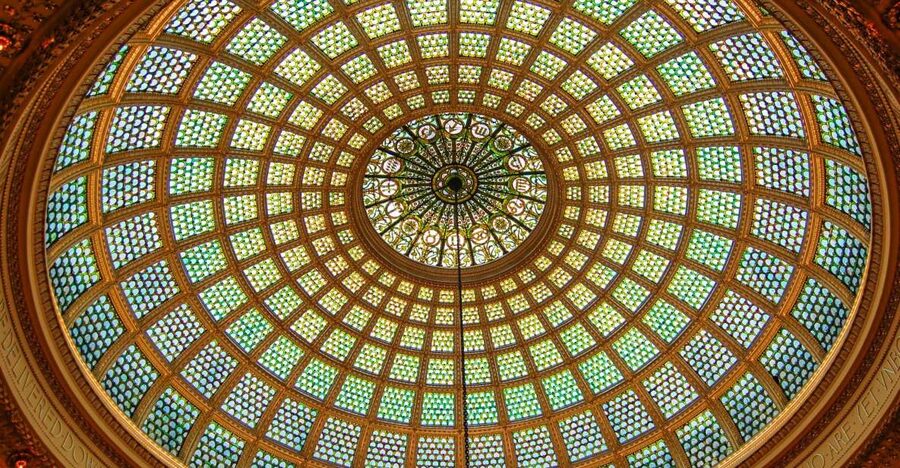
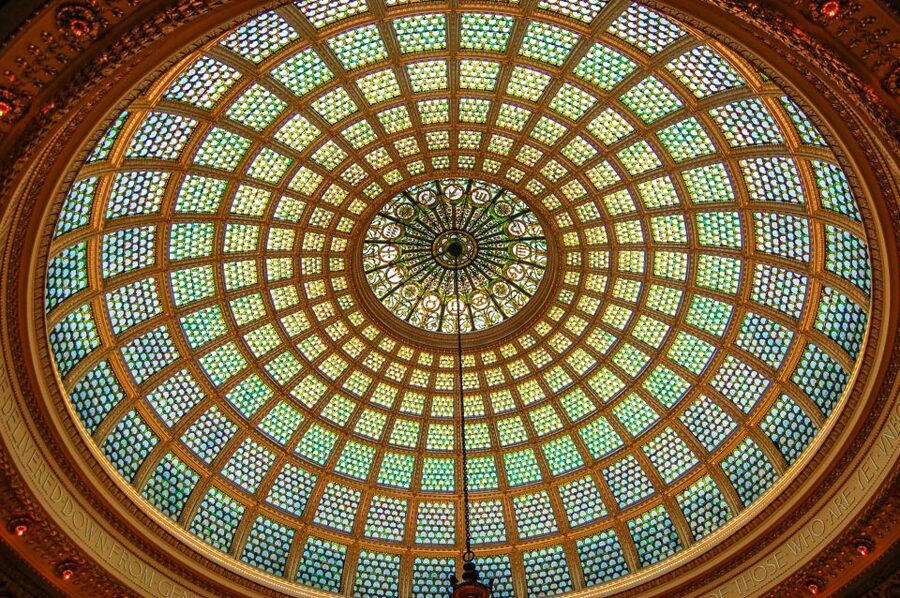
The Chicago Cultural Center is one of the most rewarding stops for visitors who enjoy decorative arts. Its interior includes elaborate mosaics and a celebrated glass dome, giving you a chance to see how architecture, craftsmanship, and natural light can work together.
This is the kind of place that can change your plans for the rest of the day. You may enter expecting a quick look and find yourself studying the ceiling, wall patterns, and small design details instead. The guide explains what makes the interior significant and how its decorative program fits the city’s larger architectural story.
The building also helps balance the tour. Not every stop is about skyscraper technology or business power. Here, craftsmanship takes the lead. You see how tile, glass, color, and pattern can create grandeur without relying only on height.
Bring a camera, but do not let photography replace looking. The most useful part of the stop is learning how to notice the relationship between light and ornament. Once the guide points it out, you can use the same habit in other buildings across the Loop.
Marshall Field and Company Building
The tour finishes at the Marshall Field and Company Building, another stop that shows Chicago’s commercial side at its most decorative. The building’s public interiors reflect the importance of department stores as places to shop, socialize, and display wealth.
The guide explains design elements that are easy to miss when you are focused on getting somewhere. Doorways, ceilings, wall finishes, and circulation areas all contribute to the experience. One guest wished for more unprompted detail about decorations and doorways, which is a useful reminder: ask questions when a feature catches your eye. Guides such as Annie and Grant have been praised for giving fuller explanations when prompted.
Ending here works well because you finish near a major concentration of downtown sights and shopping. It also leaves you with a final example of how buildings were designed to shape behavior. Architecture was not only about shelter or office space. It guided movement, framed commerce, and told people what kind of place they had entered.
Pace, weather, and the practical side
The tour lasts two hours and covers a substantial part of the Loop. The pace has been described as comfortable by several people, but one guest found it brisk for their legs. The route is not a long-distance hike, yet you will be moving between buildings, stopping outdoors, and dealing with city sidewalks.
Winter needs special planning. January and February outings can be cold, and much of the tour takes place outside. Wear a warm coat, gloves, and shoes with good grip. The interiors offer relief, but this is not a fully indoor activity.
Summer and early fall should be easier for outdoor walking, though the itinerary does not provide a weather guarantee. On holidays, some buildings may have limited access. One guest booked on Labor Day and found that several locations were closed, so check the operating conditions for your date if a particular interior matters to you.
The tour is in English only. Guides are live rather than recorded, which is important here because the best moments often come from questions. Grant, Talia, Annie, Angel, and Matthew have all been praised for making the information conversational and easy to follow.
How this compares with a Chicago architecture boat tour
This walk and a river architecture cruise serve different purposes. A boat tour gives you a broad view of the skyline and lets you compare many façades from the water. This walk takes you into the buildings and pays attention to lobbies, mosaics, domes, doorways, and construction details.
I would choose the boat first if you are visiting Chicago for the first time and want the clearest overview of the skyline. I would choose this walking tour if you have already seen the river view, prefer interiors, or want to understand how buildings function from the inside.
The two experiences work especially well together. The boat shows you the city’s outer profile. This tour explains what lies behind the walls. One guest described the walking route as a good companion to an architecture cruise, and that is a sensible way to plan both.
Who should book this Loop walking tour?
You should consider booking if you enjoy historic buildings, decorative arts, urban stories, or the practical side of architecture. It is also a good choice for Chicago residents who have spent years passing through the Loop without entering many of its older buildings.
Families can manage the two-hour format, especially with a guide who mixes history, stories, and visual details. It is also suitable for visitors arriving by train, since the meeting point is inside Union Station and the route moves toward the center of the Loop.
This may not be ideal if you want a fully indoor activity, dislike brisk city walking, or prefer a single building explored in great depth. It is a carefully connected sampler rather than a specialist lecture on one architect or one period.
Should you book it?
At $35, I think this is a good-value introduction to Chicago’s architectural interiors. You get a planned route, live commentary, several important buildings, and access to details that are easy to miss from the street.
Book it if you want the Loop to make more sense, not just look impressive. Choose a day other than Sunday if the Rookery is essential, bundle up in winter, and ask about stairs if mobility is a concern. If you can, request a guide such as Grant, Talia, Annie, Angel, or Matthew, though availability will vary.
FAQ
Where does the Chicago Secret Interiors Architecture Walking Tour begin?
Meet your guide inside Union Station’s Great Hall, beneath the Clinton Street sign.
How long does the tour last?
The walking tour lasts two hours.
What buildings are included?
The route includes the Chicago Loop, South LaSalle Street, the Rookery Building, Field Building, Marquette Building, Palmer House, Chicago Cultural Center, and Marshall Field and Company Building.
Is the Rookery Building open every day?
No. The Rookery is closed on Sundays, and an alternative stop is used on those tours.
What should I bring?
Wear comfortable shoes. Since much of the experience takes place outside, dress warmly in winter.
Is the tour wheelchair accessible?
The activity is listed as wheelchair accessible. However, one guest reported many stairs in and out of buildings, so ask about the specific route if stairs may be difficult.
New walking tours around Chicago
- Chicago: Treasures of the Golden Age Walking Tour★ 4.8 · 206 reviews
- Chicago: The Ultimate Foodie Walking Tour with Tasty Stops★ 4.6 · 92 reviews
- Chicago: Underground Pedway & Downtown Secrets Walking Tour★ 4.7 · 268 reviews
- Chicago: Gangsters and Food Tasting Walking Tour★ 4.6 · 228 reviews
- Chicago: Prohibition Speakeasies Bus Tour or Walking Tour★ 4.8 · 168 reviews
- Chicago: Must See Chicago 90 minute Walking Tour★ 4.7 · 73 reviews
- Chicago: Taste of Chinatown Food and Cultural Walking Tour★ 4.9 · 97 reviews
- Chicago: Classic Food & Walking Tour with Free Bike or Kayak★ 4.9 · 145 reviews
Chicago Walking Tours, side by side.


Chicago Favorites Ultimate Food and Walking Tour
Read our review →
Chicago Loop District Food Tour with Deep Dish & Beef Sandwich
Read our review →
Chicago: Underground Pedway & Downtown Secrets Walking Tour
Read our review →
Chicago: Gangsters and Food Tasting Walking Tour
Read our review →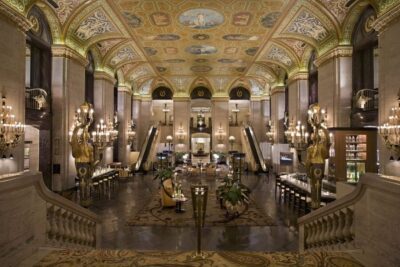
Chicago: Prohibition Speakeasies Bus Tour or Walking Tour
Read our review →
Chicago: Classic Food & Walking Tour with Free Bike or Kayak
Read our review →Lists this walk sits on