
Review · VIENNA
Vienna: World War II Historical Walking Tour
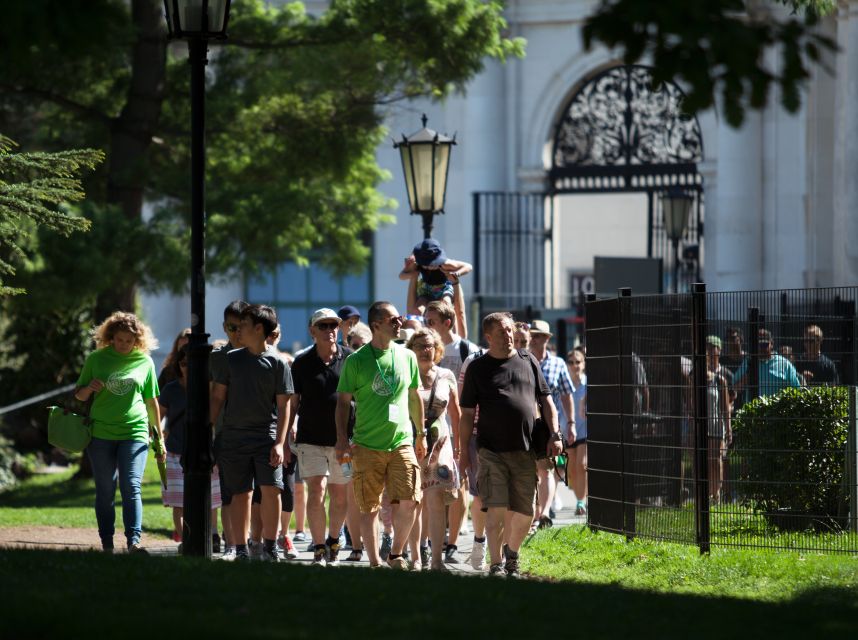
Vienna’s World War II story is more complicated than a simple tale of a city occupied by Nazi Germany. This walking tour shows how local politics, antisemitism, Hitler’s early years, wartime destruction, and postwar Allied rule shaped the city you see today. I like the surviving synagogue and the sober Holocaust memorial stops, which give the history a human focus. I also like the way guides such as Dieter, Stefan, Siggi, and Michael connect events to the streets around you rather than reciting a list of dates.
The main consideration is the subject itself. This is a serious tour about persecution, dictatorship, and mass murder, not a light sightseeing walk. You cover about 4 kilometers in two and a half hours, and the tour does not return to its starting point, so wear good shoes and plan your next stop near public transport.
Key points at a glance
- Start beside the Vienna Opera House: Meet under the green umbrella by Albrechtsbrunnen, below the Albertina Museum and near Karlsplatz/Oper subway station.
- Follow Hitler’s Vienna: Learn about his early years as an art student and the political and social setting that shaped his ideology.
- See Vienna’s surviving synagogue: The tour highlights the only synagogue in Vienna said to have survived the Nazi regime.
- Pause at the Holocaust memorial: This solemn stop brings the persecution of Vienna’s Jewish community into the city center.
- Understand the city’s wartime scars: Hear how more than 100,000 bombs affected Vienna and see surviving traces of the conflict.
- Walk through postwar Vienna: Learn why Vienna was divided among the Allied powers and why the city’s occupation was unusual.
Starting beside the Opera House
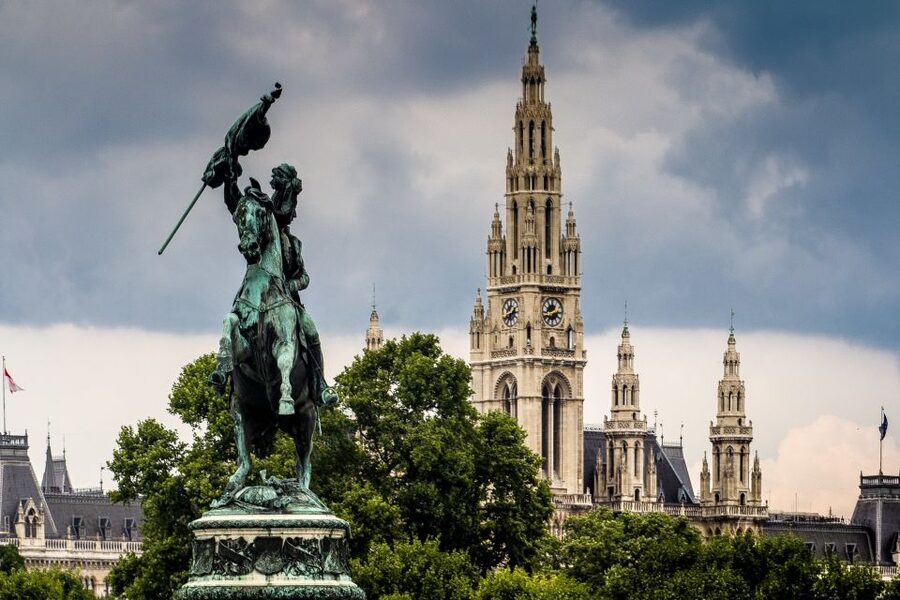
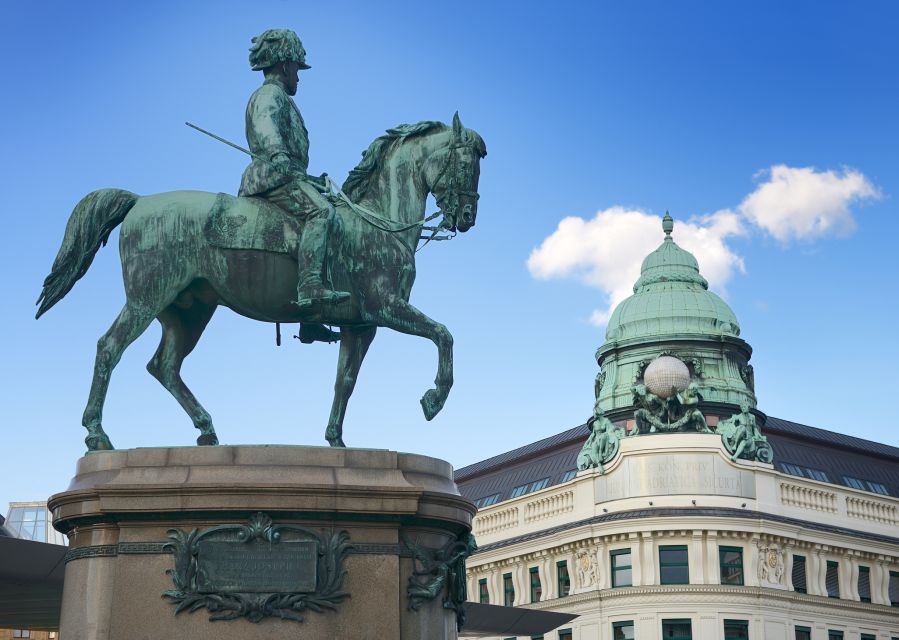
The tour begins in one of Vienna’s most recognizable locations, in front of the Albertina Museum and next to the Vienna State Opera. Look for the green umbrella at Albrechtsbrunnen, the fountain downstairs at the Albertina.
This is a useful starting point because it is easy to reach by subway. Karlsplatz/Oper station is nearby, and the setting immediately places you in the grand center of imperial Vienna. That contrast matters. The tour begins among celebrated museums, palaces, and monumental architecture, then asks you to look beyond the polished surface at the political forces that helped destroy Europe.
Arrive with enough time to find the exact meeting point. The fountain is downstairs at the Albertina, so do not simply wait at the museum’s main entrance. A green umbrella is the key marker.
More History Walking Tours in the world:
- History and Hauntings of Salem Guided Walking Tour
★ 5.0 · 14,564 reviews - Lisbon: History, Stories and Lifestyle Walking Tour
★ 4.8 · 10,902 reviews - Boston: Freedom Trail History Small Group Walking Tour
★ 5.0 · 6,450 reviews
Hitler’s early Vienna and the making of an ideology
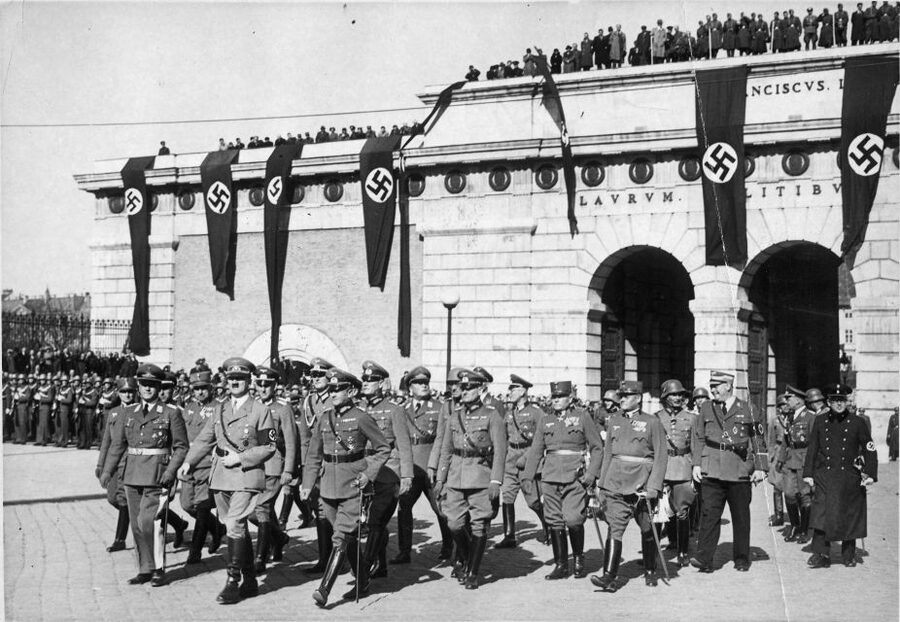
The first part examines Adolf Hitler’s years in Vienna and the city’s social climate during his early adulthood. The guide explains how an aspiring art student became a dictator, while also placing that personal story within the wider political world around him.
This is one of the tour’s strongest features. It does not treat Hitler as a mysterious figure who appeared from nowhere. Instead, you get a discussion of the ideas, resentments, ethnic rivalry, and fear that helped create fertile ground for extremism.
A good guide also keeps the focus from becoming too narrow. Dieter, Stefan, Wolfgang, Charles, Michael, and Siggi have each been praised for adding context, asking thought-provoking questions, and linking individual events to wider developments. That approach is helpful if you already know the basic outline of World War II. You are likely to gain more from the Viennese point of view, especially the way local society responded to annexation and Nazi rule.
The tour is not designed to excuse Hitler or reduce responsibility. Its value is in showing how ideology develops in a real city, among real institutions and communities. You hear about Vienna as a place where political pressure, prejudice, and public fear had consequences long before the war ended.
The Jewish community and the synagogue that survived
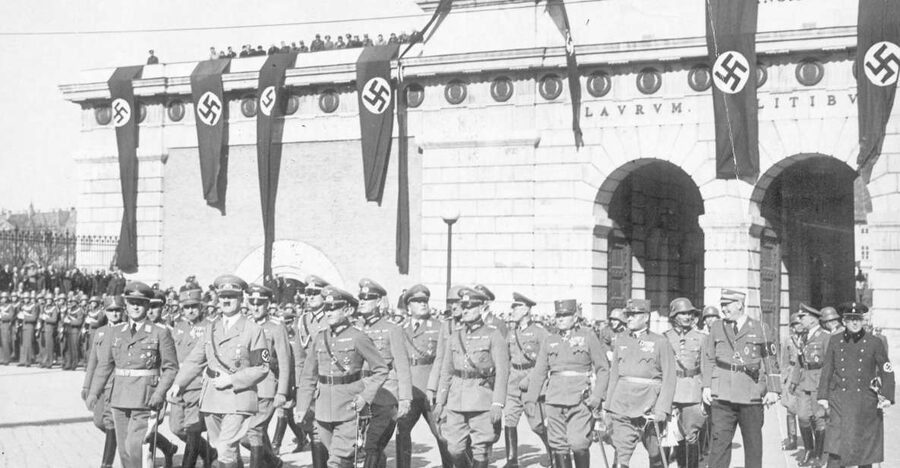
The tour then turns toward Vienna’s Jewish community and the forces that made ordinary life dangerous. You learn what happened when antisemitism, ethnic rivalry, and fear took hold in the city.
The stop at the synagogue is especially important because it gives you a physical point of reference for a community that was nearly destroyed. The experience is described as a visit to the only synagogue in Vienna that survived the Nazi regime. Since entrance fees are not included, you should understand that the tour’s focus is the historical site and the guide’s explanation, not a guaranteed interior visit to every location.
This part can be emotionally difficult. The subject is not presented as distant military history. You are considering what happened to neighbors, families, places of worship, and a major part of Vienna’s civic life.
Guides have used photographs and printed historical images to make these events easier to understand. Siggi, in particular, has been praised for bringing visual material that clarified the difference between the city as it looks now and the city during the period under discussion. That is useful because modern Vienna often gives few obvious clues about the scale of what happened.
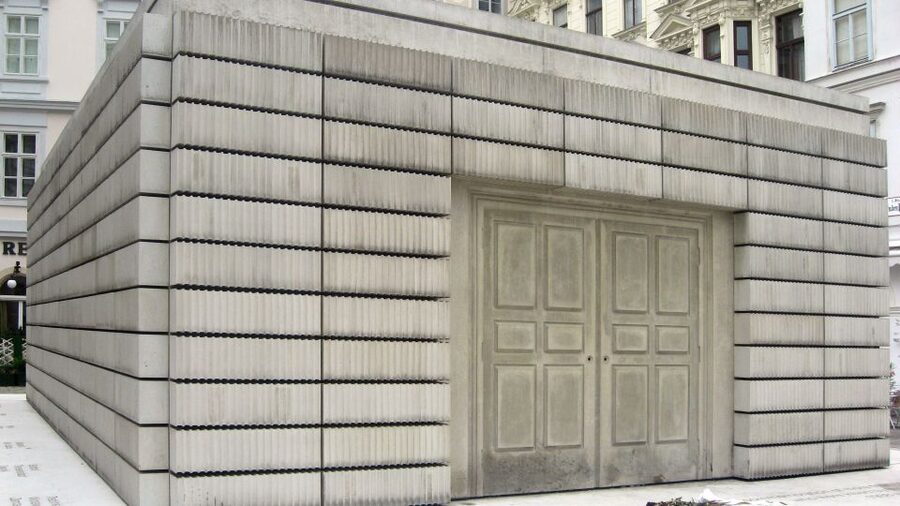
The Holocaust memorial in central Vienna
The Holocaust memorial is one of the tour’s most serious stops. Its purpose is not simply to mark a date or repeat a number. It gives the group time to consider the destruction of Vienna’s Jewish community in a place where the city’s daily life continues around it.
Expect the guide to slow down here. This is not the kind of stop where you should rush in for a photograph and move on. The strength of a walking tour is that the memorial is connected to the surrounding streets and buildings. You can consider how persecution took place within the everyday city, not in some remote setting removed from normal life.
The tone of the best tours is careful and restrained. Charles has been praised for handling difficult material with sensitivity and clear analysis, while several guides have used personal or family accounts to give the subject a more human scale. The exact guide varies, but the format is built around explanation, questions, and discussion.
More walking tours around the world:
- Magical London: Harry Potter Guided Walking Tour
★ 4.7 · 22,044 reviews - Reykjavik Food Walk – Local Foodie Adventure in Iceland
★ 5.0 · 18,952 reviews - New Orleans Premier Ghost, Voodoo and Vampire Walking Tour
★ 4.5 · 12,856 reviews - Amsterdam Anne Frank: Small-Group Walking Tour & Local Guide
★ 4.8 · 12,789 reviews
Vienna under bombs and the marks left by war
The tour also explains the physical damage caused by the war. More than 100,000 bombs affected Vienna, and the guide points out scars and surviving traces connected with the conflict.
This adds an important layer to the tour. Vienna is often associated with music, cafés, grand buildings, and imperial ceremony. Those images are real, but they can hide the fact that the city endured bombardment, occupation, political collapse, and a difficult recovery.
You will not simply hear about destruction in the abstract. The guide connects the bombing to locations along the route, helping you see how war altered the city’s buildings and public spaces. The route includes important landmarks and historical remains, though the exact order can vary with the guide and group.
This is also where the walk becomes more than a Hitler tour. You learn about the wider wartime experience of Vienna, including the annexation of Austria, the city’s liberation, and the years immediately after the fighting.
Liberation and the divided city after 1945
One of the most unusual parts of Vienna’s postwar story is its division among the Allied powers. Vienna was the only city where the Allied powers managed a zone together, and the tour explains how that arrangement affected the capital after World War II.
This section helps you understand why Vienna’s postwar story differs from a basic account of occupation. The city was not merely controlled by one victorious power. Its districts were divided among the Allies, creating a complicated political arrangement in the heart of Austria.
The guide also discusses the transition from Nazi rule to liberation and occupation. That matters because the end of the fighting did not instantly solve every problem. The city had to deal with destruction, political change, responsibility, and the need to rebuild public life.
I especially like this part for anyone who has already visited Vienna’s palaces and museums. It shows that the city’s modern identity was shaped not only by the Habsburg era, but also by the political tensions that followed 1945.
A 2.5-hour walk that stays manageable
The experience lasts 150 minutes and covers about 4 kilometers. That is a fair amount of walking, but the pace is broken up by frequent historical stops rather than being a continuous march.
The best practical detail is the balance between walking, standing, and sitting. Guides have built in pauses, bathroom opportunities, snack breaks, and occasional shelter from cold or rain. On wet days, the route may include indoor pauses or protected places where the guide can continue speaking.
That said, this is still an outdoor walking tour. Wear comfortable shoes and dress for Vienna’s weather. The route can be manageable for someone with mobility limitations, but the tour information does not promise a fully step-free route or a formal accessibility service. If you have a serious mobility concern, contact the provider before booking.
The tour ends away from the Albertina starting point. A subway stop is close to the endpoint, which makes it easy to continue your day, but you should not plan to return automatically to the Opera House with the group.
Why the headsets make a real difference
Large walking groups can make serious history hard to follow. You end up standing close to the guide, competing with traffic and city noise, or missing half a sentence while crossing a street.
This tour uses a microphone and earpieces for larger groups. That is a small feature with a big practical effect. You can keep a little distance from the guide and still hear the explanation, which makes it easier to look at buildings, take notes, or keep pace without crowding around one person.
The equipment is not described as guaranteed for every group size, so do not assume it will always be used. Still, it has been particularly useful on busy city streets and has helped keep the group together.
The guide can shape the experience
Because the tour is led by a live English-speaking guide, the personality and teaching style matter. Names associated with the experience include Dieter, Stefan, Michael, Wolfgang, Charles, Florian, and Siggi.
The most praised qualities are consistent: clear speaking, strong command of the subject, careful treatment of painful events, and an ability to answer questions. Dieter has been described as especially good at connecting separate parts of the story and pacing the walk with regular breaks. Stefan has been praised for storytelling and for asking questions that keep you thinking. Siggi has used photos and adjusted discussion toward the group’s interests.
You may get a guide who teaches like a historian, or one who leans more toward personal stories and narrative. That variation is part of the nature of a live tour. The fixed route gives the experience structure, while the guide determines how much time goes into Hitler’s youth, the Jewish community, bombing, liberation, or postwar occupation.
If you have a particular interest, ask questions as you go. The format clearly allows time for them, and several guides are noted for responding thoughtfully rather than rushing through a prepared script.
Is $31 a fair price?
At $31 per person, the tour offers 150 minutes of live guiding in central Vienna. There are no attraction admissions included, but that is not a major weakness here because the main value comes from interpretation at outdoor locations and memorials.
I consider the price fair if you want context rather than a list of places to photograph. You are paying for the route, the guide’s historical preparation, the ability to ask questions, and the connection between visible city landmarks and events that are easy to miss on your own.
The value is strongest for first-time visitors who want to understand Vienna early in their stay. The walk gives you a framework for later visits to museums and memorials. It also suits anyone who has read about World War II but wants to see how the events affected one particular city.
The price may feel less attractive if you prefer to explore independently, dislike long discussions, or want to enter several museums. This is not an admission-based tour, and it does not replace a visit to a full museum collection.
Who should book this walking tour?
I would choose this experience if you:
- Want an Austrian and Viennese perspective on World War II
- Are interested in Hitler’s early years and the rise of Nazi ideology
- Prefer serious history tied to real streets and buildings
- Value a live guide who can answer questions
- Can comfortably walk about 4 kilometers over 2.5 hours
- Want to understand Vienna’s Jewish history, wartime destruction, and Allied occupation
It may not suit you if you want a light introduction to Vienna, a short sightseeing circuit, or a tour focused mainly on imperial architecture. The subject is hard, and the Holocaust memorial and synagogue stop call for attention and respect.
I also recommend booking it near the beginning of your stay. The tour provides useful context for Vienna’s central districts, and you may look at familiar buildings differently afterward.
Small practical details worth knowing
The tour is offered in English. The meeting point is the green umbrella in front of Albrechtsbrunnen, downstairs at the Albertina Museum, beside the Opera House. Karlsplatz/Oper is the nearest named subway stop.
Attraction entry is not included, and the tour itself is the walking route with a live guide. Bring weather-appropriate clothing, comfortable footwear, and water. The route includes pauses, but you should still be ready to spend much of the two and a half hours outside.
You can cancel up to 24 hours before the start for a full refund, and you can reserve while paying later. Those terms are useful if your Vienna plans are still shifting.
Should you book it?
Book this tour if you want Vienna’s World War II story explained with care, context, and a strong connection to place. The surviving synagogue, Holocaust memorial, bomb damage, and postwar Allied division give the walk a wider scope than a tour focused only on Hitler.
I would especially recommend it for history-minded visitors, teachers, students, and anyone who wants more than polished imperial Vienna. The $31 price is reasonable for the length and live instruction, and the headsets, regular pauses, and nearby transport at the end make the format practical.
Skip it if you are seeking only cheerful sightseeing or if a 4-kilometer walk would be difficult. For everyone else, this is a serious, useful way to understand the city’s most painful modern chapter.
FAQ
How long does the Vienna World War II Historical Walking Tour last?
The tour lasts 150 minutes, or two and a half hours.
Where does the tour begin?
It begins in front of the Albertina Museum, next to the Vienna Opera House. Look for the green umbrella at Albrechtsbrunnen, the fountain downstairs at the Albertina.
Which subway stop is closest to the meeting point?
The meeting point is near Karlsplatz/Oper subway station.
What language is the tour offered in?
The live guided tour is offered in English.
Does the tour include attraction entrance fees?
No. Entrance fees to attractions are not included. The experience includes the walking tour and live guide.
How far do you walk?
The route covers about 4 kilometers according to the tour information provided by the guide experience. The walk lasts two and a half hours and includes stops and pauses.
Does the tour return to the starting point?
No. The tour does not return to the Albertina starting point, but a subway stop is close to the endpoint.
Can I cancel for a full refund?
Yes. You can cancel up to 24 hours in advance for a full refund.
New walking tours around the world
- Niagara Falls, Canada: White Water Walk Entry Ticket★ 4.5 · 147 reviews
- NYC: Walking Tour with Local Guide and 30+ Top NYC Sights★ 4.5 · 248 reviews
- Zadar: Food Tasting & Old Town Walking Tour★ 5.0 · 94 reviews
- Niagara Falls: Walking Tour, Journey Behind Falls, & Cruise★ 4.8 · 773 reviews
- New York City: Gangsters and Ghosts 2-Hour Walking Tour★ 4.7 · 615 reviews
- NYC: History of Slavery & Underground Railroad Walking Tour★ 4.7 · 87 reviews
- New York City’s Hell’s Kitchen: Walking Food Tour★ 4.8 · 200 reviews
- New York City: Central Park Walking Tour★ 4.7 · 82 reviews
Vienna Walking Tours, side by side.

Vienna: Guided Walking Tour of City Center Highlights
Read our review →
Vienna: Guided Walking Tour of City Highlights & Hidden Gems
Read our review →
Vienna: Viennese Underworld Guided Walking Tour
Read our review →
Vienna Historic Center Small Group Walking Tour
Read our review →
Lists this walk sits on