
Review · THE USA
San Francisco: Castro LGBTQ Walking Tour
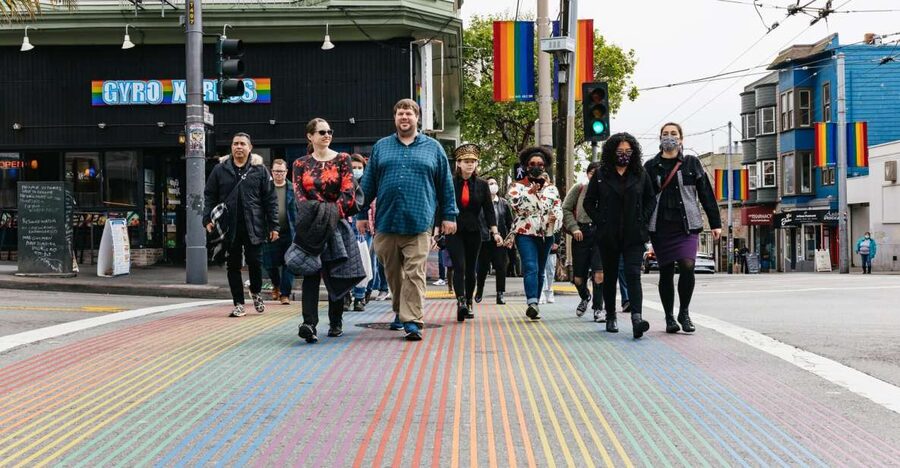
The Castro is more than a nightlife district with rainbow flags. It is a living record of LGBTQ political action, loss, courage, and community building. This two-hour walk puts that story on the streets, led by Kathy, a longtime resident and LGBTQ activist who has guided the tour for years.
I like the strong local connection and the thoughtful route, which links Harvey Milk’s work with memorials, public art, and present-day community life. I also like that the walk is easy and ADA-compliant, with no large hills. The main consideration is emotional weight: stories of wartime persecution and the AIDS crisis can be painful, so this is not a lightweight sightseeing stroll.
Key points before you book
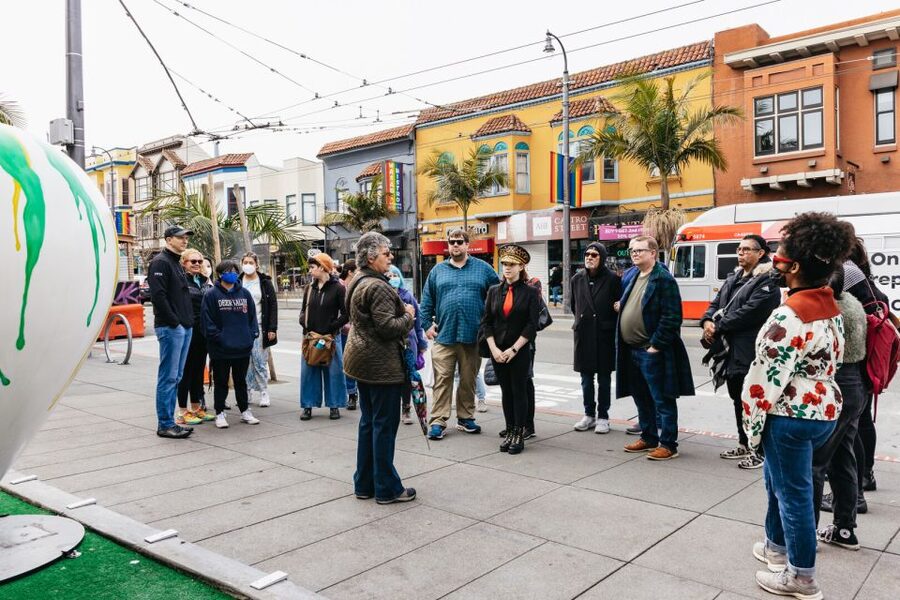
- Harvey Milk’s Castro: Visit places tied to Milk’s home, work, activism, and legacy at Harvey Milk Plaza.
- Memorials with purpose: Pause at Pink Triangle Park and the AIDS Memorial Quilt and Names Project.
- History under your feet: Read bronze plaques on the Rainbow Honor Walk, honoring LGBTQ figures from around the world.
- A guide with roots here: Kathy brings decades of life in the Castro and a clear connection to LGBTQ civil rights.
- Easy for many walkers: The two-hour route is ADA-compliant and avoids large hills.
- Good value at $40: You get a focused local history lesson across several major Castro sites, rather than only a general neighborhood walk.
Starting at 400 Castro Street
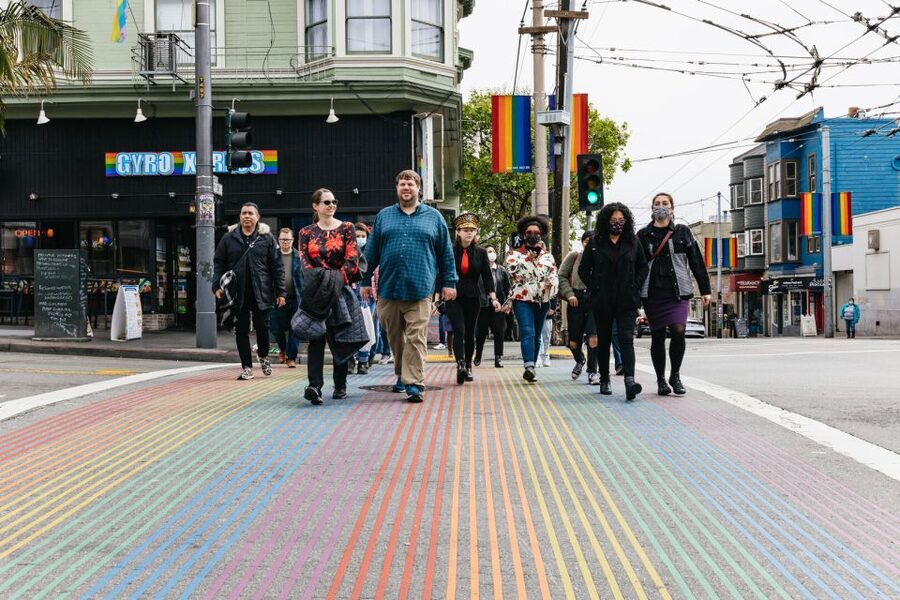
The meeting point is 400 Castro Street, in front of Soul Cycle at the corner of Castro and Market Streets. Look for the Big Rainbow Flagpole Landmark nearby. This is the practical detail to get right: the map location is correct, but the accompanying location photo may show the Castro Theatre instead.
That mix-up could waste a few minutes, so use the street address rather than relying on the photo. Arrive ready to walk, and wear comfortable shoes. Large bags and luggage are not allowed, which makes sense on a pavement-based tour where you will be stopping often.
The experience lasts two hours and is conducted in English. Hotel pickup and drop-off are not included, so you need to make your own way to the Castro and arrange your return afterward.
More LGBTQ-friendly walks around the USA:
- Berlin: Gay Berlin Out in Schöneberg Walking Tour
★ 4.8 · 281 reviews - Florence: LGBTQ Renaissance Walking Tour with Mila
★ 4.9 · 85 reviews
Why Kathy changes the feel of the walk
The guide matters greatly here. Kathy has lived in the Castro for decades and has led this tour for many years. She is also an LGBTQ activist, so the walk is not just a list of dates and famous names. It connects public places with the people and struggles behind them.
Her approach, as described through the tour’s long record of feedback, combines facts with empathy and humor. That balance is useful. The subject includes discrimination, violence, political resistance, and the AIDS crisis, but the Castro is also about friendship, pride, creativity, and the hard work of building a community.
Kathy also encourages interaction. You may hear personal stories from people on the walk and see the neighborhood through more than one generation’s eyes. The group can include singles, couples, families, and people from different countries, and the tour is presented as suitable for anyone interested in LGBTQ history, not only LGBTQ visitors.
That broad welcome is one of the experience’s strongest points. You do not need to arrive with a detailed understanding of queer history. You also do not need to be part of the LGBTQ community. The tour is designed to explain, connect, and encourage more thoughtful allyship.
Harvey Milk Plaza and the Castro’s political story
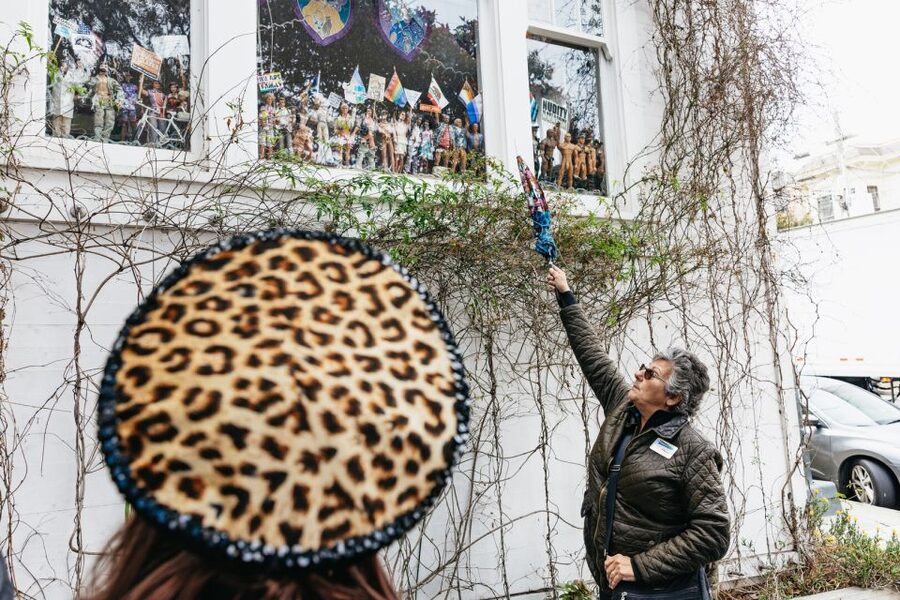
Harvey Milk is central to the route, and rightly so. Milk was a San Francisco supervisor and LGBTQ civil rights leader whose life helped shape the Castro’s public identity and the wider LGBTQ rights movement.
The tour explains where he lived, worked, and advocated for equality. That approach gives you more than a biography. You see how political work took place within a neighborhood, among shops, homes, meeting places, and public streets.
Harvey Milk Plaza is one of the key stops. It is both a civic space and a place for reflection, linking Milk’s campaign for equal rights with the Castro’s continuing role in LGBTQ public life. The plaza helps explain why the neighborhood became such an important center for political organizing and visibility.
I like this part because it keeps Milk from becoming only a historical symbol. You learn about his work in the places connected to it, then consider how his ideas helped shape the culture that followed. The stop also gives the tour a clear center, so the two hours do not feel like a random walk between unrelated plaques.
Pink Triangle Park and the cost of persecution
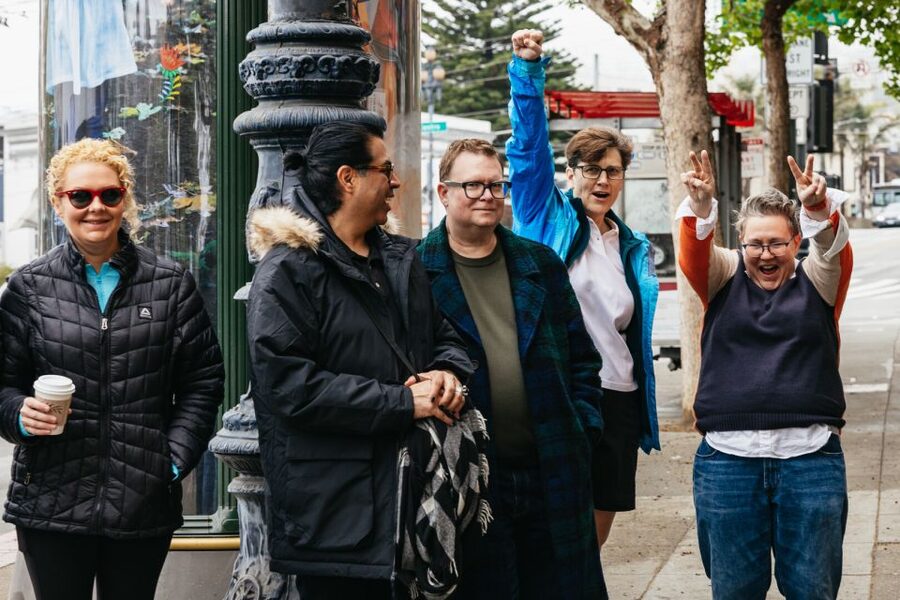
Pink Triangle Park and Memorial adds a more solemn chapter. The site remembers the thousands of homosexual men persecuted during World War II. The simple setting asks you to pause rather than rush through another photo stop.
This is likely to be one of the most affecting parts of the route. The memorial connects the Castro with LGBTQ history beyond San Francisco, showing that the community’s story includes state persecution, forced identification, imprisonment, and death.
The subject can be difficult, and the tour does not pretend otherwise. That is a reason to book this walk when you have the attention and emotional space for it. If you want only cheerful neighborhood color, the memorial portion may feel heavy. If you want a fuller understanding of why remembrance and public visibility matter, it is essential.
Pink Triangle Park also shows how the Castro uses public places to preserve memory. The route does not keep history inside a museum. It places it in the neighborhood, where residents and visitors can encounter it during an ordinary walk.
More walking tours around the USA:
- History and Hauntings of Salem Guided Walking Tour
★ 5.0 · 14,564 reviews - New Orleans Premier Ghost, Voodoo and Vampire Walking Tour
★ 4.5 · 12,856 reviews - Little Havana Food and Walking Tour in Miami
★ 5.0 · 8,882 reviews - Chicago: Gangsters and Ghosts Walking Tour
★ 5.0 · 7,155 reviews
The AIDS Memorial Quilt and Names Project
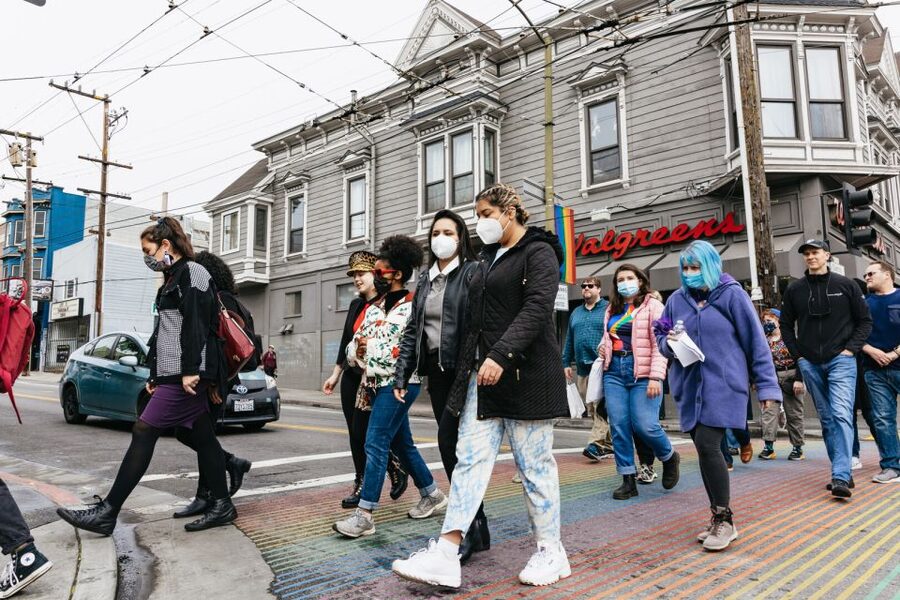
The AIDS Memorial Quilt and Names Project brings the story into a more recent period. Here, the tour addresses the human cost of the AIDS crisis and the organizing, care, and remembrance that followed.
This stop helps you see how the Castro’s past is not sealed away in the 1970s. The neighborhood has continued to face major health, social, and political challenges. Memorials such as this one give names and personal meaning to a crisis that is sometimes reduced to statistics.
I find this kind of stop especially useful on a walking tour because it slows the pace. You are not only collecting information. You are being asked to think about the people represented by the memorial and the community response that grew around them.
The tour’s emotional range is important. Harvey Milk Plaza may feel energizing and political. Pink Triangle Park is solemn. The AIDS memorial is personal and reflective. Together, these stops make the Castro’s story more honest than a simple celebration of rainbow flags and nightlife.
The Rainbow Honor Walk, one plaque at a time
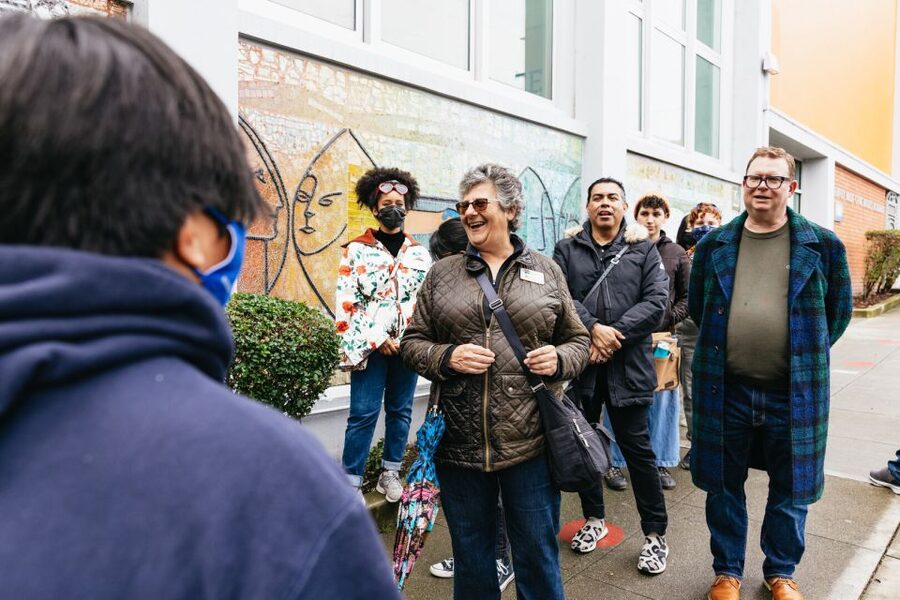
The Rainbow Honor Walk uses bronze sidewalk plaques to honor LGBTQ people who made an impact on world history. The plaques are easy to pass without noticing, which is exactly why having a guide helps.
Kathy can explain who these figures were and why their contributions matter. The walk turns ordinary pavement into a record of writers, artists, activists, public figures, and other LGBTQ people whose lives changed culture and politics.
This part adds breadth to the tour. Harvey Milk gives you a strong local focus, while the Rainbow Honor Walk places San Francisco within a wider international story. You begin to see the Castro not as an isolated district, but as a place connected to LGBTQ progress and struggle around the world.
The plaques also reward curiosity after the tour. If you return to the Castro later, you can notice more of them and spend extra time with the names that interest you. That makes the walk useful beyond its scheduled two hours.
The GLBT Historical Society and other important stops
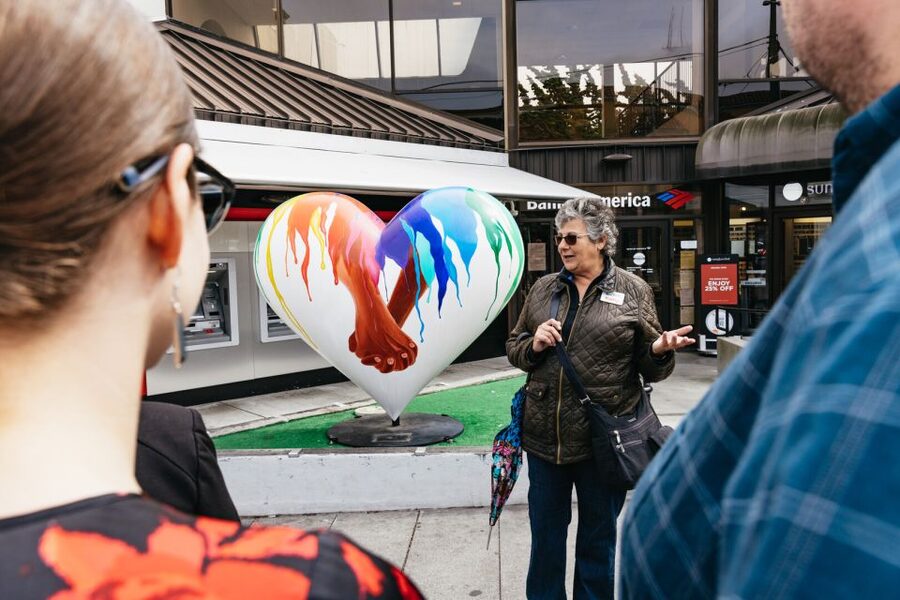
The route also includes the GLBT Historical Society, along with other LGBTQ sites representing the past, present, and future of the community. The exact amount of time at each location can vary, but the overall plan gives you a guided framework for understanding the neighborhood.
The historical society is important because it points to the preservation of records, photographs, stories, and objects that might otherwise be lost. A neighborhood’s history is not kept alive only by monuments. It also depends on archives, community groups, and people willing to document everyday lives.
The tour’s value comes from the connections between these places. You move from individual figures to public memorials, from wartime persecution to civil rights organizing, and from past crises to the community’s ongoing development.
You might want to return to some sites afterward for a longer visit. Two hours is enough for an introduction and a strong narrative, but not enough to explore every institution or read every plaque at length. Think of the tour as a well-guided orientation that gives meaning to the rest of your time in the Castro.
An easy walk with useful access details
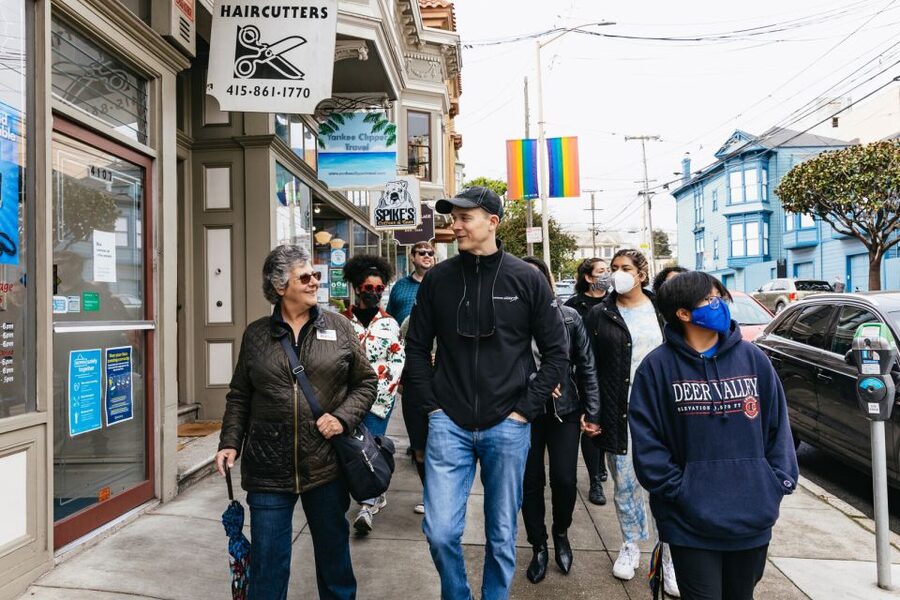
The route is explicitly ADA-compliant and involves no large hills. That matters in San Francisco, where even a short walk can become tiring when steep streets enter the picture. The route should be manageable for many people who want a history tour without a demanding hike.
You still need comfortable shoes. The tour runs rain or shine, so check the forecast and dress for changing weather. Since large bags and luggage are not allowed, bring only what you need for two hours outside.
The route’s easy design also makes it suitable for families and mixed-age groups. A family review described the tour as working well with adult children, and other feedback points to a welcoming mix of ages and backgrounds. The material is serious, but the guide’s humor and interaction help keep the experience accessible.
Wheelchair access is listed as available. If you have specific mobility needs beyond the general ADA information, it is sensible to confirm details before booking, especially regarding your personal comfort with standing and moving between stops.
Is $40 a fair price?
At $40 per person, this is not the cheapest way to see the Castro. You can walk the streets on your own for free, read public plaques, and visit the neighborhood at your own pace.
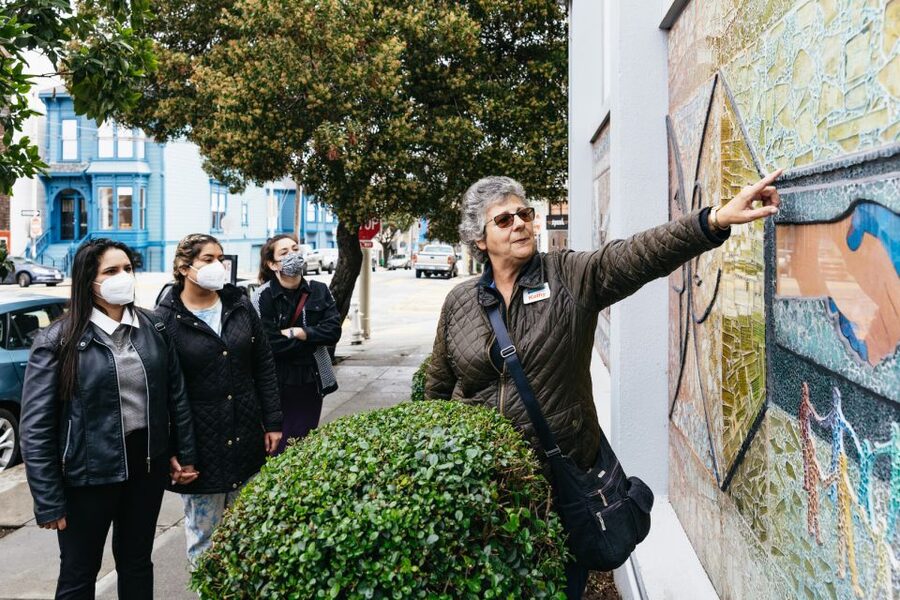
The difference is the interpretation. For the price, you get two hours with a local LGBTQ activist who can explain why the places matter, link them to national and world events, and add personal knowledge from decades of life in the area.
I consider that fair value if you care about context. The tour includes several major sites in one outing, and you avoid spending your own time researching Harvey Milk, the Pink Triangle Memorial, the AIDS memorial, and the Rainbow Honor Walk separately.
The value is weaker if you want a quick photo tour or prefer complete independence. You will spend two hours following a set route and listening to a focused presentation. But for a first visit to the Castro, the structure helps you notice more than you would by simply wandering along Castro Street.
The free cancellation policy up to 24 hours before the start also reduces the risk of booking ahead. You can reserve now and pay later, which is useful if your San Francisco plans are still shifting.
Who should take this tour?
I would choose this walk if you want to understand how LGBTQ rights, public memory, and neighborhood life connect. It suits first-time visitors to the Castro, people with a strong interest in civil rights, and anyone who wants a more meaningful introduction than a quick stop for photographs.
It is also a good choice for allies. The tour can help you understand the language, events, losses, and achievements that shape LGBTQ life in San Francisco. One of its useful qualities is that it encourages reflection rather than treating the community as an attraction.
Families with older children and young adults may also find it worthwhile. The material is serious, but the route is easy and the guide’s style includes humor and conversation. You should use your judgment about younger children, since the tour includes persecution, violence, and the AIDS crisis.
The experience is less suited to people who dislike guided walks, cannot comfortably spend two hours outdoors, or want a tour focused mainly on restaurants, bars, and shopping. It is a history and community tour first.
Should you book the Castro LGBTQ Walking Tour?
I would book it if you want the Castro to make sense, not merely look colorful. The combination of Kathy’s long connection to the neighborhood, Harvey Milk sites, the Rainbow Honor Walk, Pink Triangle Park, the AIDS memorial, and the GLBT Historical Society gives you a clear and human account of why this district matters.
Go in ready for both pride and grief. The route is easy, the meeting point is straightforward once you use the correct address, and $40 is reasonable for two hours of focused local guidance. If you have only a short time in San Francisco, this walk gives the Castro a strong sense of place and purpose.
FAQ
Where does the Castro LGBTQ Walking Tour meet?
The tour meets at 400 Castro Street, in front of Soul Cycle, at the corner of Castro and Market Streets. It is next to the Big Rainbow Flagpole Landmark.
Is the meeting-point photo accurate?
The map location at 400 Castro Street is correct. The location photo may be incorrect because it shows the Castro Theatre.
How long does the tour last?
The walking tour lasts two hours.
What language is the tour conducted in?
The live tour is conducted in English.
Is the route wheelchair accessible?
Yes. The tour is listed as wheelchair accessible and ADA-compliant, with no large hills on the route.
What should I bring?
Bring comfortable shoes. The tour runs rain or shine, so you should also prepare for the weather.
Can I bring luggage or a large bag?
No. Luggage and large bags are not allowed on the tour.
What happens if I need to cancel?
You can cancel up to 24 hours in advance for a full refund. You can also reserve your place and pay later.
New walking tours around the USA
- NYC: Walking Tour with Local Guide and 30+ Top NYC Sights★ 4.5 · 248 reviews
- New York City: Gangsters and Ghosts 2-Hour Walking Tour★ 4.7 · 615 reviews
- NYC: History of Slavery & Underground Railroad Walking Tour★ 4.7 · 87 reviews
- New York City’s Hell’s Kitchen: Walking Food Tour★ 4.8 · 200 reviews
- New York City: Central Park Walking Tour★ 4.7 · 82 reviews
- NYC: Brooklyn Bridge and DUMBO Guided Walking Tour★ 4.8 · 93 reviews
- New Orleans: Witches Coven Garden District Walking Tour★ 4.9 · 113 reviews
- New Orleans: French Quarter Ghost and Legends Walking Tour★ 4.3 · 129 reviews
USA Walking Tours, side by side.
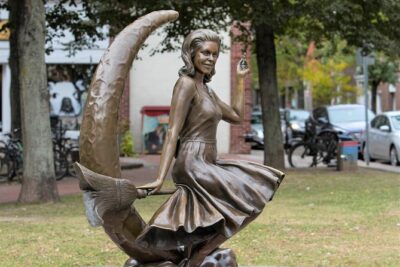
History and Hauntings of Salem Guided Walking Tour
Read our review →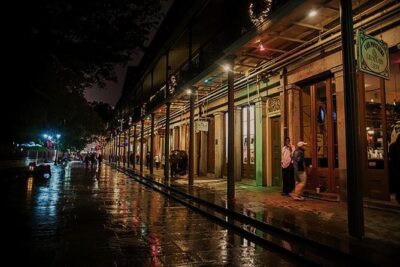
New Orleans Premier Ghost, Voodoo and Vampire Walking Tour
Read our review →
Boston: Freedom Trail History Small Group Walking Tour
Read our review →
Historic Charleston Guided Sightseeing Walking Tour
Read our review →
New Orleans Food Walking Tour of the French Quarter with Small-Group Option
Read our review →
St. Louis Cemetery No. 1 Official Walking Tour
Read our review →Lists this walk sits on