
Review · POLAND
Warsaw: Old Town Guided Walking Tour
Warsaw’s Old Town looks old, but much of it was rebuilt after World War II. That contrast gives this walk its real force: you see pretty squares and royal buildings while learning how war, occupation, and stubborn local pride shaped every street. The tour also reaches beyond the postcard center, touching Jewish Warsaw and the 1944 Warsaw Uprising.
I like the clear mix of landmarks and difficult history, and I like the way guides such as Anthony, Antek, Thomas, and Anton use humor, personal stories, and old photographs to keep two hours moving. You also get practical tips for Polish restaurants, cafés, and a traditional pastry shop. The main drawback is pace: there is a lot to cover, and the group can include up to 25 or 30 people.
Key points to know before you go
- Start beneath Sigismund’s Column: Meet in Castle Square, in front of the 22-meter monument, and look for the guide with a white umbrella.
- See more than the pretty center: The route includes the Old Town, New Town, Royal Castle Gardens, Jewish heritage sites, and the Warsaw Uprising Monument.
- Expect history with humor: Anthony, Antek, Thomas, Anton, and other guides are praised for making painful subjects understandable without turning the walk into a lecture.
- Plan for a fast two hours: You will cover many stops, so wear comfortable shoes and save detailed museum visits for another time.
- Understand the payment wording: The $13 charge covers the reservation and guide payment arrangement, while the tour is presented as a pay-as-you-wish walk.
- Use the recommendations: Guides point you toward Polish food, cafés, and a traditional pastry shop in the Old Town.
Why this two-hour walk gives Warsaw useful context
I would book this near the start of a Warsaw stay. The walk gives you a mental map of the center, but its bigger value is historical. Warsaw is not simply a handsome old European capital with a castle and market square. It is a city that was almost destroyed, lost much of its Jewish population during the war, and rebuilt its historic center with remarkable care.
That story can be hard to grasp from photographs alone. A guide can point out what survived, what was reconstructed, and why certain monuments matter. The best guides on this tour, including Anthony and Thomas, are described as balancing facts with jokes and personal anecdotes. That tone matters in Warsaw. The subject matter includes Nazi occupation, the Holocaust, the Jewish Uprising of 1943, and the Warsaw Uprising of 1944. A dry list of dates would not do the city justice.
The group size is capped at about 25 to 30 people. That is not truly intimate, but it is smaller than many mass-market city walks. You should be able to hear the guide and ask questions, though the experience will feel more like a public group tour than a private stroll.
More Old Town Walking Tours in Poland
- Warsaw: Old Town Highlights Walking Tour in English
★ 4.7 · 1,516 reviews - Old Town Krakow & Wawel Castle Walking Tour
★ 5.0 · 1,508 reviews - Krakow: The Old Town Walking Tour
★ 4.8 · 794 reviews
Castle Square and the Royal Castle Gardens
The meeting point is easy to identify: Sigismund’s Column in Castle Square. The column rises 22 meters and gives the group a strong visual marker in the middle of the square. Arrive five to ten minutes early, then look for a white umbrella.
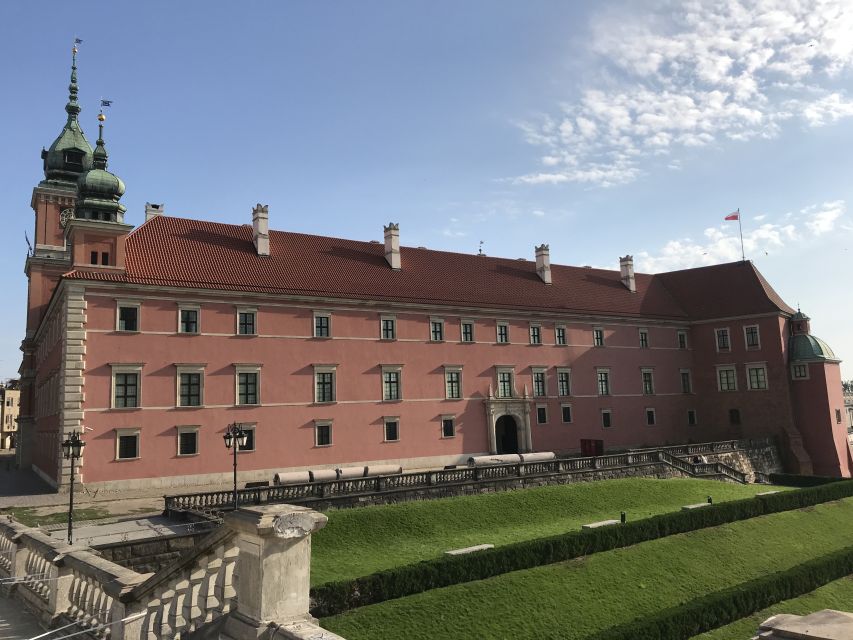
The opening section introduces Warsaw’s royal past. You visit the Royal Castle Gardens and see the Royal Castle from the outside. The supplied itinerary lists the castle as a visit, but it does not include an interior tour, so you should not expect time inside the castle galleries or rooms.
That distinction matters if you want a full castle visit. This walk is an orientation, not a substitute for a museum ticket. You get the setting, the royal story, and useful background before deciding if you want to return for a longer visit.
The gardens offer a calmer change from the square. They also help explain the relationship between the castle, the old royal center, and the rest of Warsaw. Your guide may pause here to discuss Poland’s monarchy and the city’s later destruction and reconstruction.
The Old Town Market Square and Warsaw Mermaid
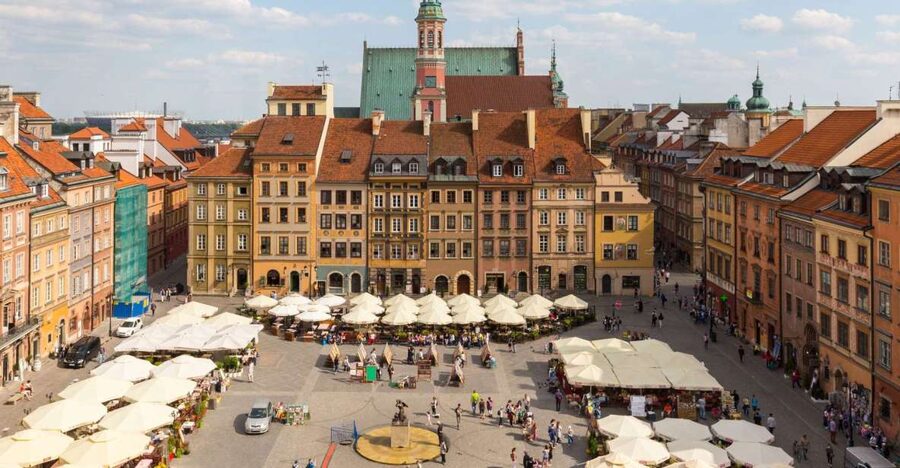
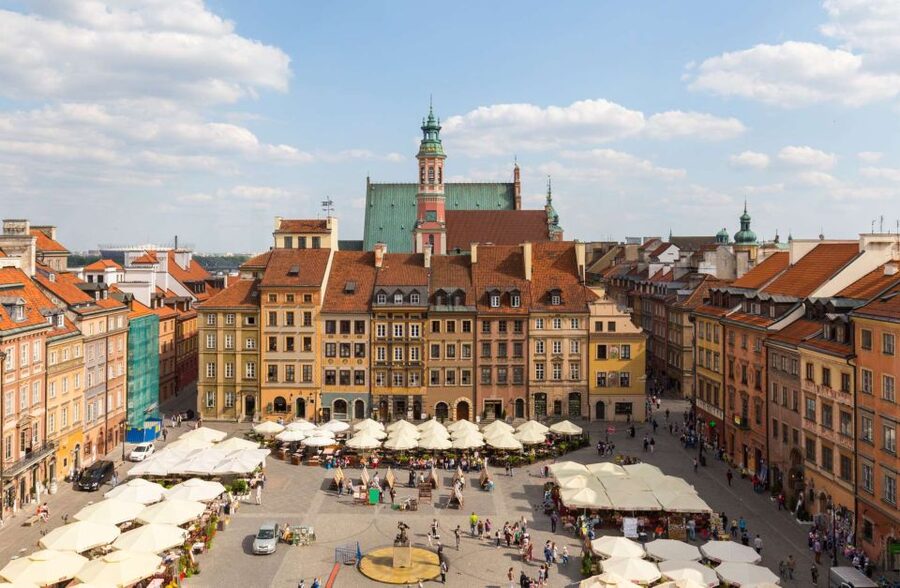
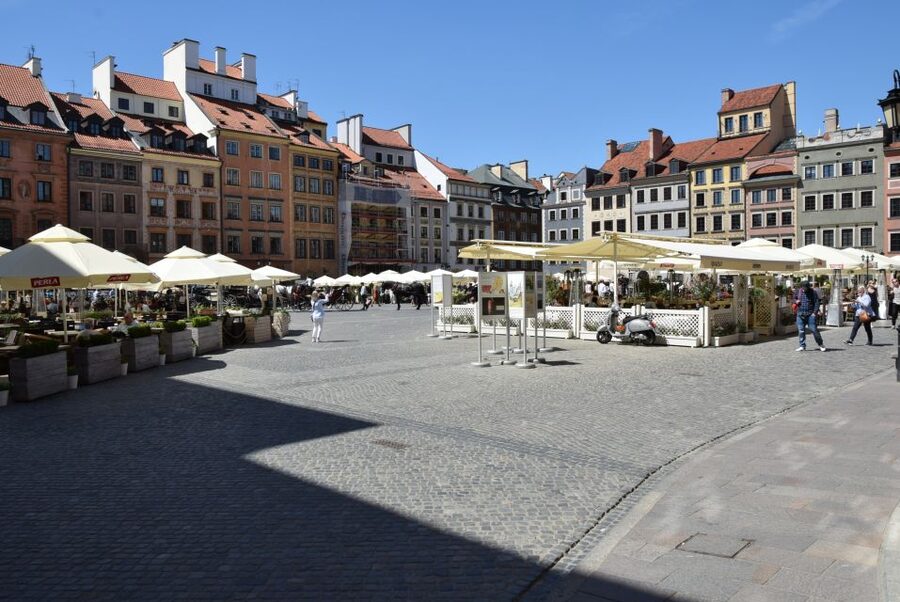
From Castle Square, the route moves into the heart of the Old Town. Market Square is the scene most people picture when they think of Warsaw: colorful façades, a compact medieval-style layout, and the famous Warsaw Mermaid at its center.
Take your photograph here, but listen before rushing on. The mermaid is more than a decorative mascot. She is linked with Warsaw’s identity and appears throughout the city. The square also gives your guide a chance to explain how the Old Town was rebuilt after the war.
The Old Town has UNESCO World Heritage status, awarded in 1980. Its importance comes not just from age. The careful reconstruction recreated the historic street plan and façades after the wartime destruction. That makes this one of Europe’s most striking examples of a historic center restored on a large scale.
The guide also points out the narrowest house façade, an entertaining architectural curiosity that fits Warsaw’s compact old streets. It is a quick stop, but it adds variety to the heavier historical material. You get a small detail to photograph and a reminder that old cities are often full of odd corners rather than grand monuments alone.
St. John’s Cathedral, the Jesuit Church, and the old defenses
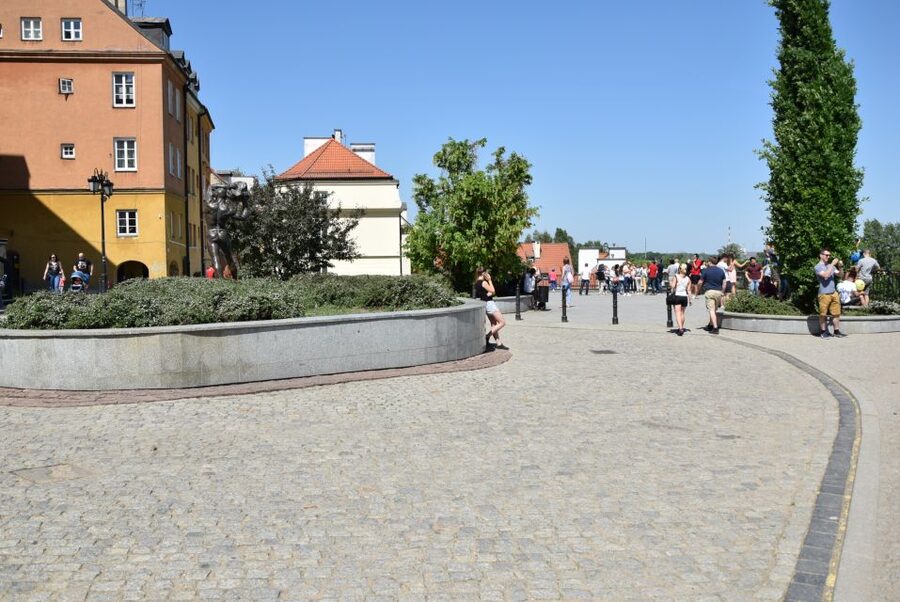
The route continues past St. John’s Cathedral and the Jesuit Church. These religious buildings offer two different windows into Warsaw’s past and architecture. The tour focuses on their external setting and historical importance, rather than promising a long interior visit.
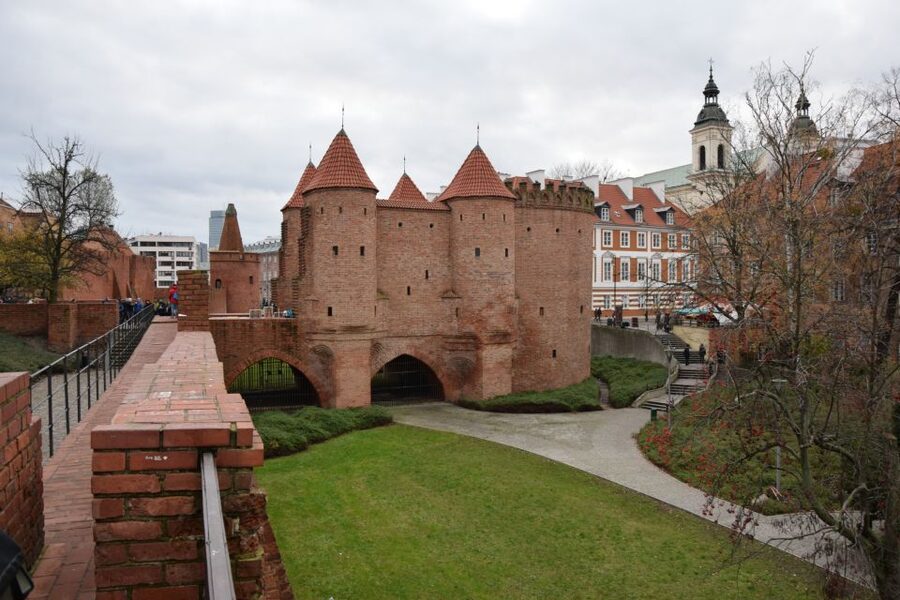
You will also see sections of the city wall and the Barbican. The Barbican’s brick defensive structure makes the medieval outline of Warsaw easier to picture. It is a useful counterpoint to the polished squares: this was once a fortified city, not simply a royal residence and trading center.
I like this section because it breaks up the timeline. The castle and market square bring up monarchy and civic life. The churches bring in religion and architecture. The walls show how the city was protected. The guide connects these pieces so the Old Town feels like a real place with changing purposes, not a string of photo stops.
Same streets, a different story:
- Creepy Krakow: 2-Hour City Walking Tour
★ 4.7 · 1,131 reviews - Gdańsk City Sights & History Guided Walking Tour in English
★ 4.8 · 876 reviews - Krakow: Kazimierz Jewish Quarter Walking Tour
★ 4.8 · 571 reviews - Kraków: Old Town & Wawel Castle Walking Tour in English
★ 4.8 · 532 reviews
A view over the river and the city
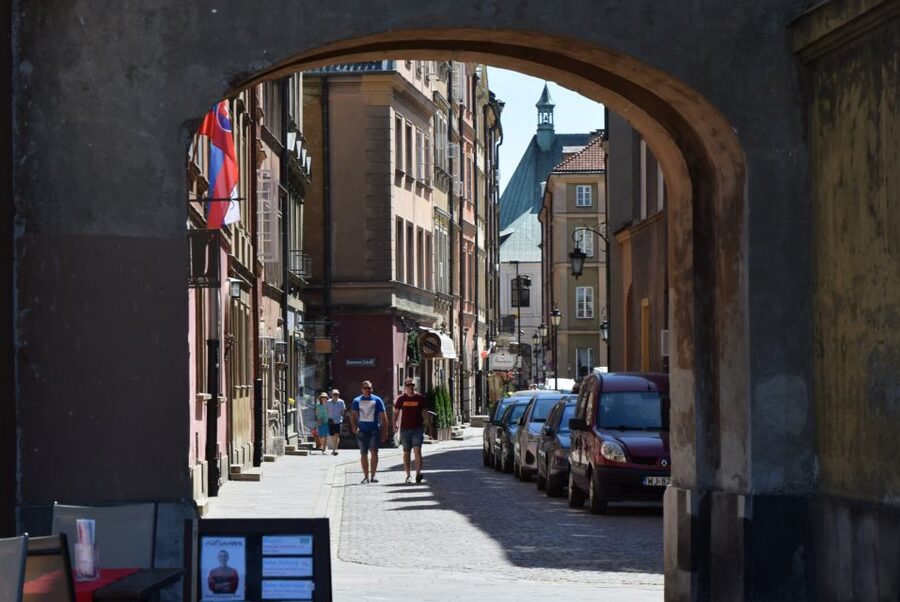
The walk includes a viewing terrace in the Old Town, where you can look toward the river and across the city. This is one of the best moments to pause and get your bearings.
The view also helps explain Warsaw’s shape. You are not looking at a sealed historic quarter. The Old Town sits beside a larger modern capital, and the contrast between rebuilt streets, open space, and the wider city is part of the experience.
Keep your camera ready, but do not expect a long rest stop. The tour is only two hours, and the guide has several major subjects to cover. If you want quiet time for photographs, return later on your own.
New Town and Marie Curie’s birthplace
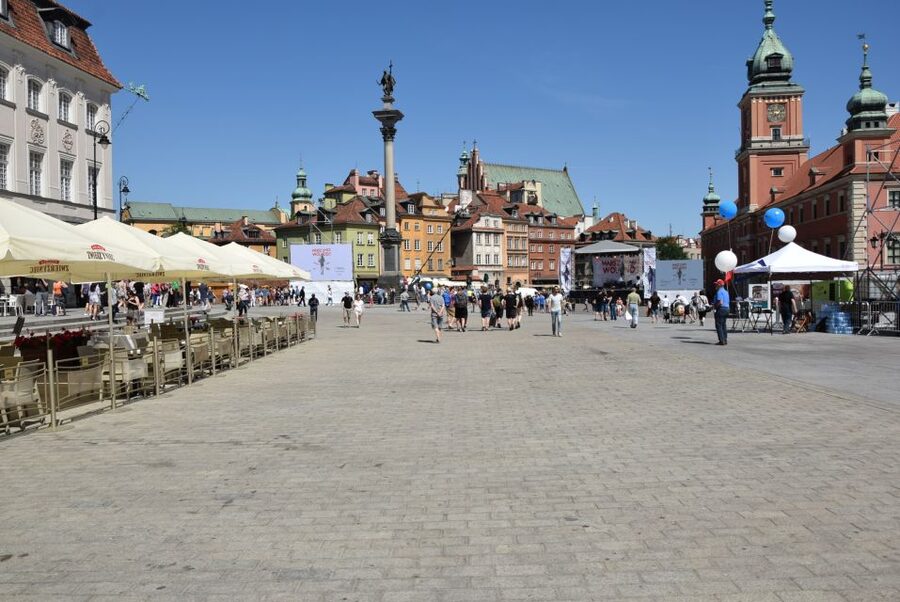
The route continues north into New Town, sometimes called Warsaw’s New Old Town. It has its own squares, churches, and streets, but it feels different from the main Old Town. This change makes the walk more interesting than a simple loop around Market Square.
A notable stop is the birthplace of Marie Curie. The visit connects Warsaw with one of Poland’s most famous scientists and gives the tour a subject beyond kings and battles. You learn about her life and achievements while seeing the city setting connected with her early years.
This stop may be brief, and the tour does not present itself as a full museum visit. Think of it as a meaningful location on a broader city walk. If Marie Curie is a special interest, you will want additional time elsewhere, but the birthplace adds welcome range to the itinerary.
Jewish Warsaw and the Ghetto Wall Monument
The tour then turns toward Jewish heritage and the former ghetto boundary. You see ghetto wall boundary markers and learn about the Jewish community that lived in Warsaw before World War II, the destruction carried out during the Nazi occupation, and the Jewish Uprising of 1943.
This is among the most important parts of the walk, and it requires attention. The Old Town’s attractive façades can make it easy to forget how much of Warsaw was erased. A guide helps connect the visible city with places and communities that are no longer there.
The material is serious, but the guides are praised for explaining it in a direct, human way. Personal stories and clear context can make the subject easier to understand than reading isolated dates. You should expect a respectful discussion, not a light sightseeing stop.
The tour does not replace the larger museums devoted to Warsaw’s Jewish history or the war. It does give you a starting point and shows why the city’s Jewish past cannot be separated from its modern identity.
The 1944 Warsaw Uprising Monument
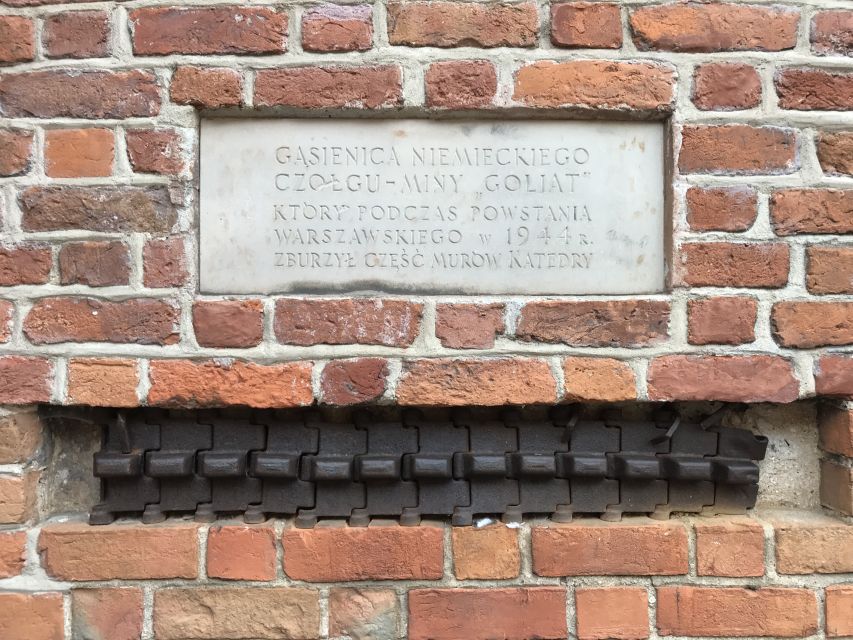
The final major stop is the Warsaw Uprising Monument at plac Krasińskich. The guided explanation here lasts about 15 minutes, giving the group more time than at some of the earlier landmarks.
The monument commemorates the Warsaw Uprising of 1944, when the Polish resistance fought German forces in an effort to liberate the city before Soviet control took over. The event ended in defeat and brought immense destruction, but it remains central to how Warsaw understands courage, loss, and resistance.
This section is valuable because it follows naturally from the earlier discussion of the Jewish Uprising. The two events are different, and a good guide should keep them separate while explaining how both shaped Warsaw’s wartime memory.
The route ends at plac Krasińskich, near the monument. That is useful for planning because you finish away from your starting point rather than returning to Castle Square. The endpoint also puts you in a different part of the historic center, where you can continue exploring on foot.
Guide style, group size, and the pace
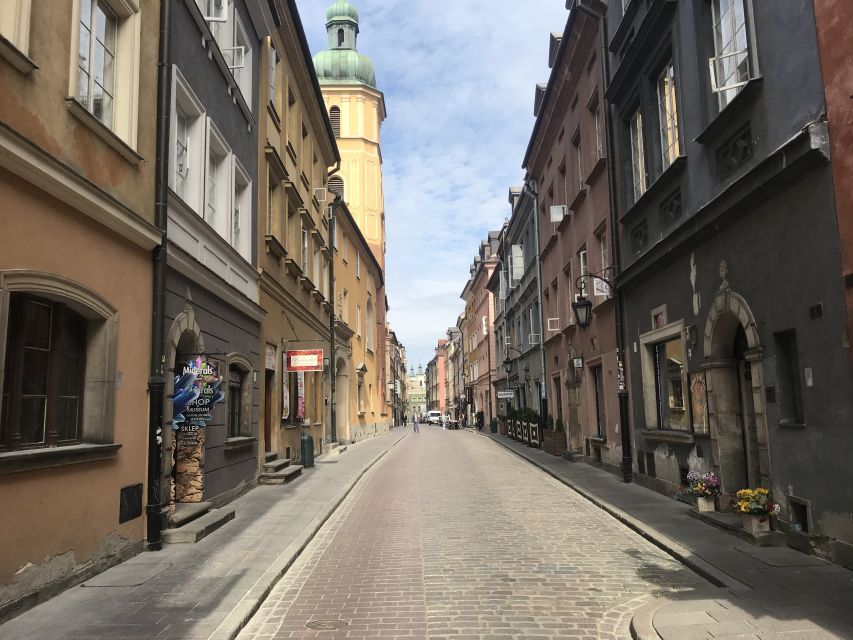
The strongest feature of this tour is the guide’s presentation. Anthony and Antek are repeatedly described as funny, warm, and well prepared. Thomas is praised for explaining Warsaw’s tragic past clearly while keeping the mood human. Anton is noted for answering questions and using anecdotes to make the city easier to understand.
That does not mean every departure will feel identical. Guides have different personalities, and the tour company assigns the guide. Still, the repeated pattern is clear: expect a lively delivery, good English or German, and room for questions.
Several useful touches appear in the guide style. Guides have adjusted pauses for shade, waited for a slower family member, and spent extra time with questions. Those details matter more than polished speeches when you are walking outdoors.
The pace is fairly quick because the route covers many districts and subjects in two hours. One visitor described it as fast moving but thorough. I would not choose it if you want long stops for drawing, sitting, or taking dozens of photos. I would choose it if you want a strong first look at Warsaw and plan to explore selected sites afterward.
Price, payment, and practical value
At $13 per person, the price is low for a licensed city guide and two hours of walking around central Warsaw. The value is strongest if you use the tour as an introduction, then return to the castle, museums, churches, or viewpoints that interest you most.
There is an important payment detail. This is described as a general pay-as-you-wish tour, with the booking amount covering the reservation fee and the guide’s payment arrangement. Read the booking terms carefully so you understand what the $13 covers and how any suggested reward for the guide is handled.
You can cancel up to 24 hours before the start for a full refund, and you can reserve now and pay later. Starting times vary, so check availability for your date.
Dress for the weather. The walk runs in winter as well as warmer months, and recent departures have taken place in freezing temperatures, snow, rain, and summer heat. Comfortable shoes are essential, and a waterproof layer or warm coat can make the difference between enjoying the history and thinking only about your fingers.
Who should book this Warsaw walk
I would recommend it to first-time visitors, short-stay visitors, and anyone who wants the big picture before choosing museums. It also suits people who enjoy history but prefer stories, jokes, and conversation over a formal lecture.
Families can benefit from the moving pace and light humor, though younger children may find the wartime sections difficult. The route is also useful for solo visitors because the guide can point you toward restaurants, cafés, and a traditional pastry shop after the walk.
You may want something else if you need a private guide, a slow photography tour, or detailed interior visits. The group can reach 25 to 30 people, and the itinerary covers enough ground that some stops are necessarily brief.
Should you book it?
Book this tour if you want Warsaw explained as a city of royalty, faith, Jewish life, war, and rebuilding, not just as a pretty old square. The guides bring strong energy to difficult subjects, and the $13 price makes it a sensible first activity.
Skip it only if you already know central Warsaw well or prefer to explore at your own pace. For most visitors, the combination of Old Town views, Royal Castle Gardens, Jewish history, the 1944 Uprising, and practical food advice makes this a useful and moving introduction.
FAQ
Where does the Warsaw Old Town walking tour begin?
It begins in Castle Square, in front of the 22-meter-high Sigismund’s Column.
How do I recognize the guide?
Look for a guide holding a white umbrella. Arriving five to ten minutes early is enough.
How long does the tour last?
The walking tour lasts two hours.
What languages are available?
The tour is offered in English and German.
How much does the tour cost?
The listed price is $13 per person.
Does the tour include the Royal Castle interior?
The route includes the Royal Castle Gardens and a visit connected with the Royal Castle, but the provided details do not specify an interior castle tour.
Which major historic sites are included?
The route includes the Old Town Market Square, the Warsaw Mermaid, the Royal Castle Gardens, New Town, the ghetto wall boundary markers, and the Warsaw Uprising Monument.
Does the tour discuss Jewish history?
Yes. The guide discusses Warsaw’s Jewish heritage, the ghetto boundary, and the Jewish Uprising of 1943.
Does the tour explain the Warsaw Uprising of 1944?
Yes. The tour includes a guided stop at the Warsaw Uprising Monument, with about 15 minutes devoted to the monument and its history.
Can I cancel the booking?
You can cancel up to 24 hours in advance for a full refund. You can also reserve now and pay later.
New walking tours around Poland
- Krakow: Old Town Highlights Walking Tour★ 4.5 · 173 reviews
- Kraków: Old Town & Wawel Castle Walking Tour in English★ 4.8 · 532 reviews
- Krakow: Street Food Walking Tour★ 4.8 · 285 reviews
- Krakow: 2h Kazimierz (Jewish Quarter) Walking Tour★ 4.5 · 75 reviews
- Krakow: Legends and Tales of Old Town Walking Tour★ 4.8 · 227 reviews
- Krakow: Jewish Ghetto Walking Tour★ 4.6 · 349 reviews
- Krakow: Spooky Tales Guided Walking Tour★ 4.6 · 164 reviews
- Krakow: Evening Walking Tour with Spooky Stories★ 4.7 · 500 reviews
Poland Walking Tours, side by side.
Warsaw: Old Town Highlights Walking Tour in English
Read our review →
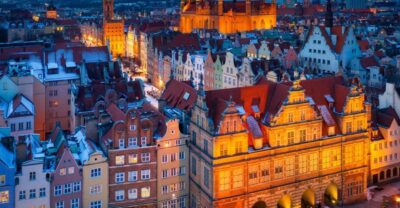
Gdańsk City Sights & History Guided Walking Tour in English
Read our review →
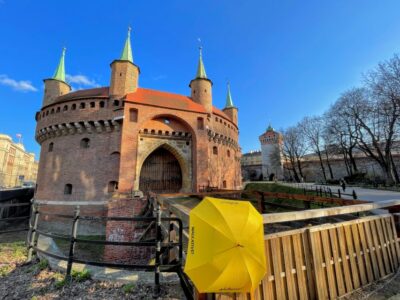
Kraków: Old Town & Wawel Castle Walking Tour in English
Read our review →
Krakow: Evening Walking Tour with Spooky Stories
Read our review →Lists this walk sits on