

Review · VERONA
Verona: Romeo and Juliet Guided Walking Tour
Verona’s Romeo and Juliet story works best when it is tied to the real streets, squares, towers, and family monuments that shaped the city. This walk begins at the ancient Arena, then moves through Juliet’s House and balcony, Piazza Erbe, Piazza dei Signori, Casa di Romeo, and the Scala family tombs.
I like the short 90-minute route, which gives you a useful first look without taking half a day. I also like the local guiding style: Francesco, Maria Pia, Frank, and Mauro are praised for clear storytelling, patience, humor, and helpful answers. The main drawback is that the Romeo and Juliet theme can compete with the broader story of Verona, and one past participant wanted more Shakespeare.
Key points
- Begins beneath King Vittorio Emanuele’s statue: Meet in Piazza Bra, beside Verona’s famous Arena.
- Covers the city’s major historic core: The route links Roman, Romanesque, Gothic, and Renaissance sights.
- Includes Juliet’s balcony and statue: You see Verona’s most famous Shakespeare-related stop, but entry fees are extra.
- Local guides shape the experience: Francesco, Maria Pia, Frank, and Mauro are praised for warmth, humor, and clear explanations.
- A compact walking tour: The 1.5-hour format suits a first afternoon in Verona or a short city break.
- Rain or shine: Tours run in poor weather when conditions are safe, so bring suitable shoes and a rain layer.
Starting in Piazza Bra beside Verona’s ancient Arena

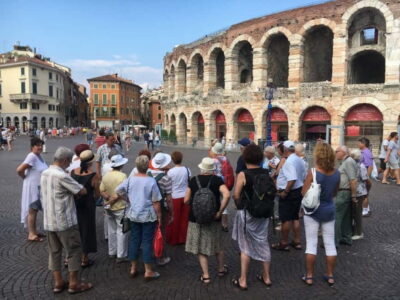
You meet under the equestrian statue of King Vittorio Emanuele II in Piazza Bra. This is a practical starting point because the square is next to the Arena, Verona’s enormous Roman amphitheater and one of the city’s easiest landmarks to find.
The Arena was built before Rome’s Colosseum and still hosts cultural events. That detail gives the tour a strong opening: before you hear about Shakespeare’s lovers, you are reminded that Verona’s story reaches back to Roman times.
I like beginning here because it helps you place the city on a timeline. Verona is not just the setting for a famous play. Its center brings together Roman remains, medieval streets, and later Renaissance buildings, often within a short walk of one another.
The tour is conducted in English and lasts about 90 minutes. You will be walking throughout, with no vehicle transfer or included admission. The guide waits a maximum of 10 minutes after the scheduled departure, so arrive early and use the Arena as your visual meeting point.
More walks with a guide around Italy:
- Milan: Guided Walking Tour & Last Supper Visit with Ticket
★ 4.7 · 5,409 reviews - Naples: Street Food Walking Tour with Local Guide
★ 4.9 · 4,976 reviews - Florence: Highlights Walking Tour with Expert Guide
★ 4.6 · 4,662 reviews
Walking Via Giuseppe Mazzini toward the old center
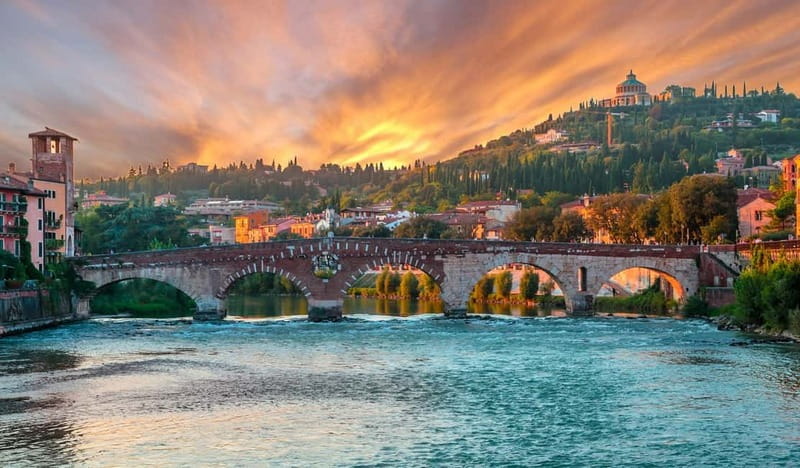
From Piazza Bra, the route continues on foot for about 20 minutes before reaching Via Giuseppe Mazzini. This passage takes you from the broad space around the Arena into Verona’s central streets.
Via Giuseppe Mazzini is useful as a transition rather than a single major sight. Your guide can connect the busy modern street with the older city around it, helping you understand how Verona functions today while preserving its historic core.
The walking pace matters here. This is not a stop-at-every-building architecture course, and 90 minutes does not allow for long indoor visits. Instead, you get a guided orientation, with short explanations at key places and enough movement to connect them.
If you want detailed time inside the Arena, Juliet’s House, or any museum, plan a separate visit. The tour’s included service is the guide-led walk, and entrance fees are not part of the $70 price.
Piazza Erbe, market life, and the Lamberti Tower
Piazza Erbe is one of the most interesting stops because it combines everyday city life with centuries of architecture. You can expect a lively market in the square, along with views of the Lamberti Tower and the ancient Domus Mercatorum.
This is where the tour’s broader Verona story becomes especially useful. The square is not only a backdrop for photographs. It shows how public, commercial, and political life gathered in one central place.
The Lamberti Tower gives the square a strong vertical landmark. The Domus Mercatorum, an old building associated with merchants, points to Verona’s commercial past. Your guide can help you read the buildings instead of simply walking past them.
I especially like this part for visitors who arrive in Verona focused only on Juliet. The square shifts the mood from romantic legend to the practical life of a medieval city. You still get the drama of rival families and public power, but you also see the places where ordinary business and social life unfolded.
The market may make this stop feel less formal than a museum visit. That is part of its value, though it can also mean more street activity around the group. Keep your attention on the guide when the square is active.
Piazza dei Signori and Verona’s political heart
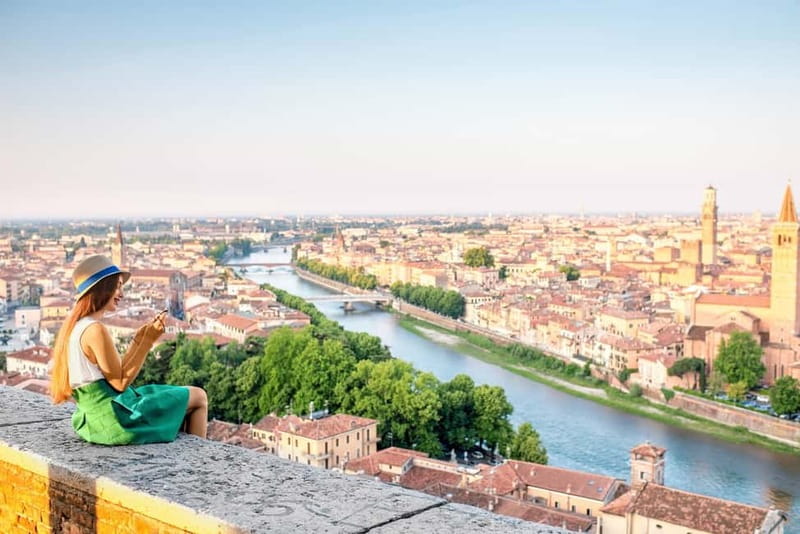
The route continues to Piazza dei Signori, a more enclosed and stately square. Here, the guide turns toward Verona’s political and ruling families, including the powerful della Scala, or Scaliger, dynasty.
The move from Piazza Erbe to Piazza dei Signori is short, but the feeling changes. Piazza Erbe is open and commercial. Piazza dei Signori feels more controlled, with grand buildings and a stronger sense of authority.
This is an important stop for understanding the family feuds behind the Romeo and Juliet story. The play is fiction, but Shakespeare placed it in a city where powerful families, politics, status, and conflict were believable parts of public life.
The tour also points out buildings from several periods, including Romanesque, Gothic, and Renaissance work. You do not need to be an architecture expert to benefit. The guide’s job is to show you what changed, why the buildings look different, and how the city developed over time.
Past guides such as Maria Pia have been praised for welcoming simple questions and giving practical tips along the way. That matters in a short tour, since you may want to ask about a tower, a family symbol, or a detail you noticed but cannot identify.
More walking tours around Italy:
- Venice: Doge’s Palace and St Mark’s Basilica Walking Tour
★ 4.4 · 6,291 reviews - Venice: San Marco to Rialto Walk & Spritz Like a Local
★ 4.2 · 3,651 reviews - Uffizi & Accademia Timed Entry: Small Group Duomo Walking Tour
★ 4.5 · 3,630 reviews - Venice Walking Tour and Gondola Ride
★ 3.5 · 3,630 reviews
The Scala family tombs on Via Arche Scaligere
From Piazza dei Signori, you walk along Via Arche Scaligere toward the Scala family tombs. These Gothic monuments are among the most striking outdoor sights in central Verona.
The tombs connect the city’s political story with its architecture. The Scala family was not just part of a romantic plot. It helped shape Verona’s government, power structure, and public image.
This stop also adds visual weight to the tour. After the market and squares, the ornate tombs provide a more solemn look at how ruling families displayed status and memory.
You pass through medieval courtyards and streets on the way. These smaller spaces can be more revealing than the famous postcard sights because they show how the old center is arranged beyond its main squares.
The route is not designed as a slow photography session. If you want close study of every carved detail, you may need to return later. The guide gives you the story and setting, then keeps the group moving toward Casa di Romeo and Juliet’s House.
Casa di Romeo and the real-world side of the legend
The walk reaches Casa di Romeo, a stop linked with the Romeo side of the story. This is a useful counterpoint to Juliet’s House, since the tour does not present the romance as a one-sided visit to Juliet’s balcony.
The Shakespeare connection is part literary tradition and part Verona tourism, while the surrounding streets and family monuments provide the historical setting. A good guide helps you hold both ideas at once: Romeo and Juliet is a famous drama, and Verona is also a real medieval city with its own families, rivalries, and political past.
Francesco has been particularly praised for explaining both Shakespeare and Verona, while Frank has been described as a punctual, energetic local who enjoys answering questions. You may get a guide with a different style, but the experience depends heavily on how well that person links the legend to the city around you.
This is also where expectations matter. If you want a tour devoted almost entirely to Shakespeare’s plot, you may find the history of Verona takes up more time than expected. If you want the play used as a doorway into the city, the balance makes sense.
Juliet’s House, balcony, and famous statue

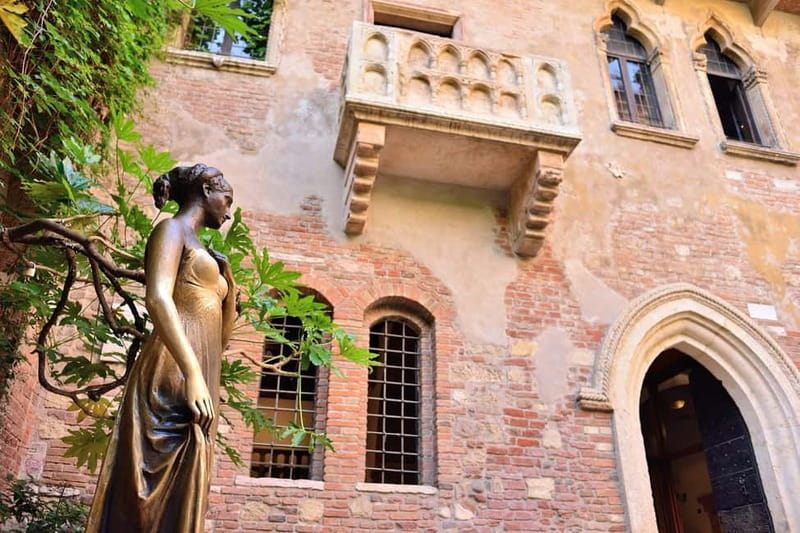
The final major stop is Juliet’s House, where you see the famous balcony and statue of Juliet. This is the most recognizable point on the route and likely the moment many people have been waiting for.
The courtyard and statue are tied to Verona’s long relationship with Shakespeare’s story. You can expect an explanation of why this place became a symbol of the romance, along with time to take in the setting.
The balcony is the visual centerpiece, but the guide’s explanation gives it context. The city has turned a literary association into a physical place people can visit, photograph, and remember.
The statue of Juliet is another well-known feature. It is worth knowing that seeing these sights on the walking tour does not include entrance fees. The tour price covers the guided walk, so ask your guide or check current local arrangements if you want an indoor visit or extra time at the house.
One useful point comes from the tour’s mixed emphasis. Most of the strongest feedback focuses on storytelling, local history, and the guides’ friendly manner. One participant specifically wanted more Romeo and Juliet content. If Shakespeare is your main reason for booking, say so early and ask your guide questions. That can help shape the conversation.
What the guides add to a short tour
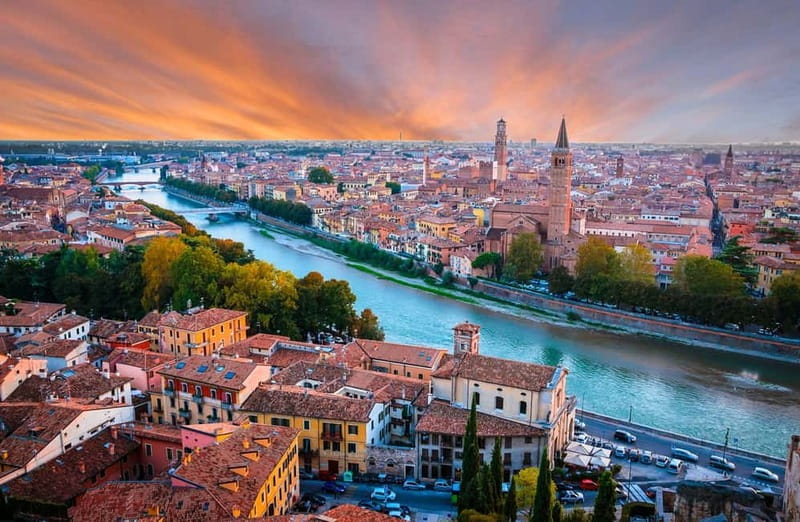
A 90-minute walk can easily become a string of names and dates. The strongest part of this experience is the human guide who turns the route into a story.
Francesco, also called Frenk or Frank in the feedback, is praised for careful attention, humor, local knowledge, and his ability to answer questions. One group arrived late after struggling to find a place to leave their car, and Francesco kept in touch through WhatsApp before showing them what they had missed. That does not change the tour policy, but it gives you a useful practical lesson: do not count on a late arrival being accommodated, and contact the guide if a genuine delay occurs.
Maria Pia receives similar praise for warmth, patience, and clear explanations. She is described as someone who makes basic questions comfortable, which is valuable when a tour moves through unfamiliar architecture and family names.
Mauro is praised for passion about Verona and for making the walk a highlight of a holiday. You cannot choose a particular guide from the information provided, but these names show the kind of guiding style to expect: personal, conversational, and focused on the city rather than a memorized script.
Is $70 a fair price for 90 minutes?
At $70 per person, this is not a bargain-priced orientation walk. The value depends on what you want from Verona.
You are paying for an English-speaking guide who links several major sights into one route. The walk covers the Arena area, Via Giuseppe Mazzini, Piazza Erbe, Piazza dei Signori, the Scala tombs, Casa di Romeo, and Juliet’s House. If you are new to Verona and want those places explained in a single outing, the price can make sense.
The tour is less useful if you plan to spend the whole day studying individual monuments or if you only want a quick photograph at Juliet’s balcony. Since entrance fees are extra, budget separately for any indoor attractions you choose to visit.
I see the best value in using this as a first orientation. Take notes on the places you want to revisit, then return on your own after the walk. The guide supplies the city’s framework, while your later visits can be slower and more focused.
Weather, timing, and who should book
The tour operates in bad weather when conditions are safe, so you should dress for the forecast. A rain jacket and comfortable walking shoes are sensible choices, since the route remains outdoors and continues rain or shine.
The 1.5-hour length suits first-time visitors, couples interested in the Romeo and Juliet setting, families who prefer a short activity, and anyone with only a limited amount of time in Verona. It also works well near the start of a stay because Piazza Erbe, Piazza dei Signori, Casa di Romeo, and Juliet’s House are easier to revisit once you have heard the basic story.
You should think twice if you dislike group walking tours, need extensive indoor seating, or want a detailed literary lecture. The walk includes several outdoor passages and does not include entrance fees.
The English-only format is clear and simple. Free cancellation is available up to 24 hours before the start, and you can reserve now and pay later, which helps if your Verona plans are still shifting.
Should you book the Romeo and Juliet walking tour?
Book it if you want a compact introduction to Verona that uses Romeo and Juliet as the starting point, not the entire subject. You will see the famous balcony and statue, but you will also learn about Roman Verona, medieval commerce, the Scaliger family, and the city’s changing architecture.
I would recommend it most strongly for a first visit, especially if you value a friendly guide who can answer questions and point out details you would miss alone. Ask about Shakespeare during the walk if that is your main interest.
Skip it if you want a full indoor visit to Juliet’s House included in the price, or if you prefer to explore at your own pace. For most visitors, though, the route offers a useful mix of famous sights and real city history in a manageable 90 minutes.
FAQ
Where does the Verona Romeo and Juliet tour meet?
The meeting point is under the equestrian statue of King Vittorio Emanuele II in Piazza Bra.
How long does the walking tour last?
The tour lasts 1.5 hours, or 90 minutes.
What language is the tour in?
The tour is conducted in English with a live English-speaking guide.
Does the tour include entrance fees?
No. Entrance fees are not included. The booking covers the guided walking tour.
Does the tour visit Juliet’s balcony and statue?
Yes. The route includes Juliet’s House, the famous balcony, and the statue of Juliet.
What happens if it rains?
The tour operates in bad weather when conditions are safe. It takes place rain or shine, so dress for the forecast.
New walking tours around Italy
- Rome: Fountains and Squares Small-Group Walking Tour★ 4.7 · 335 reviews
- Napoli: Walking Tour of Naples with Local Tour Guide★ 4.9 · 95 reviews
- Naples: Spanish Quarters Walking Tour★ 4.6 · 72 reviews
- Naples: Street Art, Wine and Food Tasting Walking Tour★ 5.0 · 163 reviews
- Naples: Historic Center and Sansevero Chapel Walking Tour★ 4.8 · 208 reviews
- Naples: Old Town Guided Walking Tour★ 4.8 · 553 reviews
- Naples: Street Food Experience With 6 Stops★ 4.7 · 392 reviews
- Naples Essentials: Monuments, Local Life & Street Art★ 4.9 · 79 reviews
Verona Walking Tours, side by side.
Verona: History and Hidden Gems Guided Walking Tour
Read our review →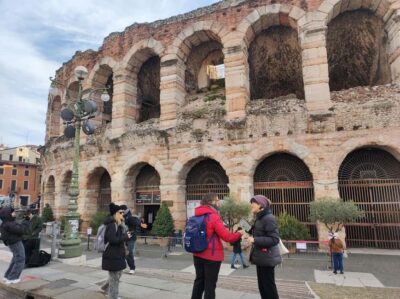
Verona: Small Group Guided Walking Tour with Arena Tickets
Read our review →
Discover Verona: City Highlights Guided Walking Tour
Read our review →Lists this walk sits on