Review · VERONA
Verona Highlights Walking Tour in Small-group
Verona’s best introduction is on foot, and this two-hour walk packs in Roman ruins, medieval power, Shakespearean legend, and lively public squares without turning the city into a checklist. You’ll see the Roman Arena, Juliet’s House, Castelvecchio, Piazza delle Erbe, and the Scaliger tombs, with a local guide explaining what you are looking at.
I like the small maximum of 16 people, which makes it easier to hear the guide and ask questions. I also like the route’s mix of famous sights and easy-to-miss details, including Roman remains tucked into modern buildings. The main drawback is that admission tickets are not included, and two hours can feel brisk if you want long visits inside the Arena or museums.
Key points to know before booking
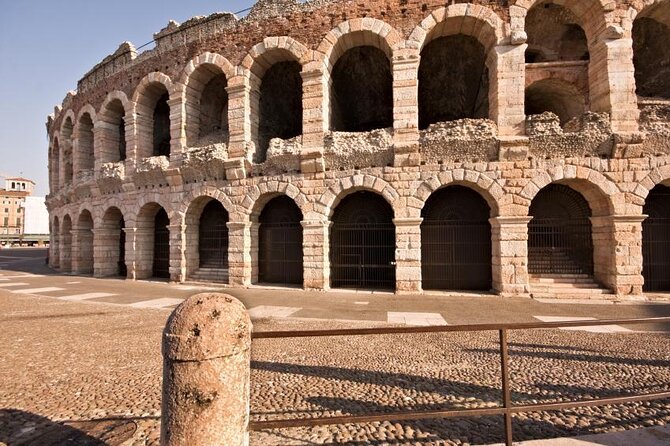
- The Roman Arena anchors the walk: You learn how this first-century amphitheater still serves as a major opera venue, but entry is not part of this tour.
- The route covers Verona’s historic core: Castelvecchio, Scaligero Bridge, Piazza Bra, Piazza delle Erbe, Piazza dei Signori, and the Scaliger tombs all fit into one outing.
- Guides add personality: Frank, Isabella, Priscilla, and Maria are among the guides praised for clear English, humor, local knowledge, and thoughtful attention to the group.
- Juliet’s House is mainly an exterior stop: You see the Capuleti courtyard, but admission and access to Juliet’s Balcony are not included.
- It is useful on a first visit: The walk gives you a map of central Verona and helps you decide which places deserve a return visit.
- You need comfortable walking shoes: The pace is manageable, but the route covers a good stretch of the center and may not suit every mobility level.
Why this two-hour walk works in Verona
Verona can seem easy to cover on a map. The Arena, Piazza Bra, Juliet’s House, and Piazza delle Erbe all sit in the central area, yet the city’s story is spread across layers of Roman, medieval, Venetian, and modern life. A guide helps connect those layers instead of leaving you with a series of attractive façades.
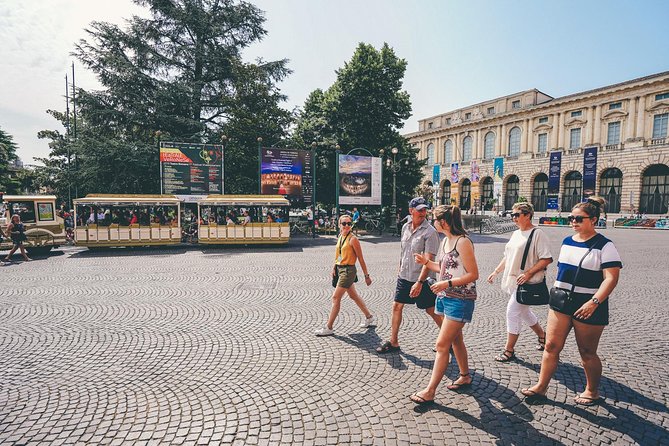
The tour begins and ends at Piazza Bra, the broad square beside the Arena. That makes the meeting point simple to find and keeps the outing practical if you are arriving by train, staying in the center, or planning another visit to the amphitheater afterward.
The format is best for getting your bearings. You will not spend an hour inside one monument, and this is not a substitute for visiting the Arena or Castelvecchio Museum properly. Instead, you get a well-paced introduction, plenty of orientation, and a chance to ask questions as the city unfolds around you.
The English-speaking guides have different personalities, but the strongest pattern is clear communication with a touch of humor. Frank is often described as warm, engaging, and good at turning historical facts into stories. Isabella is praised for combining history and cultural background with energy. Priscilla brings a local connection to Verona and wider Italy, while Maria has been singled out for making a rainy walk enjoyable.
More City Highlights Walking Tours in Italy
- Florence: Highlights Walking Tour with Expert Guide
★ 4.6 · 4,662 reviews - Skip-the-Line Florence Highlights and David Walking Tour
★ 5.0 · 1,127 reviews - Venice: Walking Guided Tour of the City Must-See Sites
★ 4.7 · 1,095 reviews
Castelvecchio and the Scaligero Bridge
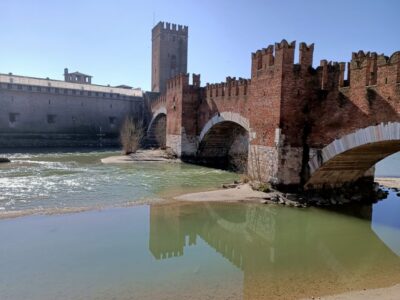
From Piazza Bra, the route takes you toward Castelvecchio, Verona’s late-medieval castle. Even if you do not enter, it gives you an immediate sense of the city’s former military and political power.
The castle connects to the Adige River through the Scaligero Bridge. It was almost destroyed during wartime bombing, then rebuilt to closely match the original structure. That detail matters because the bridge is not simply an old crossing. It also tells a story about the effort to restore Verona’s historic center after severe damage.
I would treat this part of the walk as an introduction rather than a museum visit. The tour does not include entry to Castelvecchio, so you will see the exterior and hear its background but will need a separate ticket and more time if you want the paintings, sculpture, and interiors.
Near the castle is the Arch of Gavi, a first-century Roman monument linked to the Gavia family. Its past is unusually complicated. Napoleon had it demolished in 1805, and it was later reconstructed in its current location in 1931. A short stop here helps you see how Verona’s Roman remains were moved, reused, damaged, and restored over time.
Roman Verona beyond the main monuments
One of the tour’s strengths is that it does not treat Verona as only a Romeo and Juliet destination. You pass along streets that follow the older Roman city, including the remains of Porta Borsari, the marble front of an ancient city gate.
You may also hear about Roman ruins preserved inside a modern Benetton store. That kind of detail gives the walk its local texture. Verona’s past is not confined to a single archaeological park. It can appear behind a shopfront, in a wall, or under the pavement you are crossing.
The guide also explains the city’s long timeline, from Roman foundations to medieval rule and later changes. One area for variation is depth. Some guides focus heavily on the major periods and architecture, while you may get less discussion of modern Verona, its university, population, or present-day business life. If those subjects matter to you, ask directly.
That is one reason the small-group format helps. You can request more detail about Roman engineering, medieval politics, local customs, or the sites you plan to revisit. The tour is not a lecture delivered at a distance. At its best, it becomes a conversation while you walk.
The Arena and Piazza Bra
Piazza Bra is Verona’s largest square and the natural stage for the Arena. Cafés, restaurants, and handsome buildings line the space, making it a useful place to pause after the tour or return later for a meal.
The Arena was built by the Romans in the first century AD, during the Augustan period. It predates Rome’s Colosseum by several decades and remains remarkably well preserved for a building nearly 2,000 years old. The original structure could hold as many as 30,000 people, though only part of the outer ring survives today.
Your guide explains how the amphitheater changed over time and how restoration has helped keep it in use. The Arena is not a dead ruin. It still hosts major concerts and the Verona Arena Festival, the city’s famous summer opera season. That ongoing use gives the building an extra charge, even when you are viewing it from the piazza.
The listed stop allows about 10 minutes, which is enough for orientation and photographs but not an interior visit. Admission is not included. If entering the Arena is important to you, plan a separate visit or look for a combined option that specifically includes admission. Do not assume this walking tour ticket covers it.
More Small-Group Walking Tours in Italy
- Uffizi & Accademia Timed Entry: Small Group Duomo Walking Tour
★ 4.5 · 3,630 reviews - Eat Like a Local: Venice 3-Hour Small-Group Food Tasting Tour
★ 5.0 · 3,137 reviews - Michelangelo’s David, Accademia & Uffizi Small Group Tour
★ 4.5 · 1,986 reviews - Florence: Uffizi & Accademia Small Group Walking Tour
★ 4.7 · 1,380 reviews
Juliet’s House and the limits of the legend
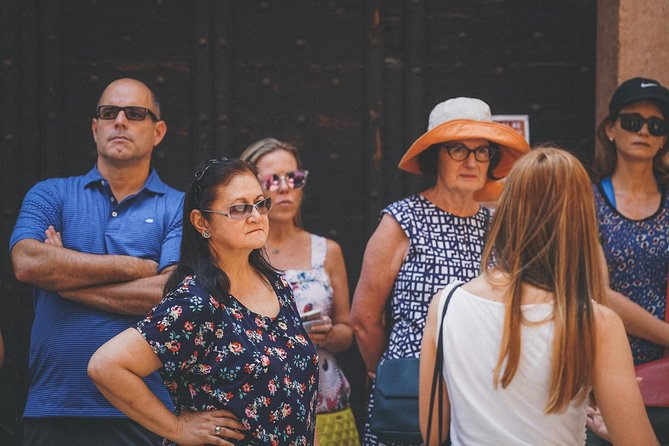
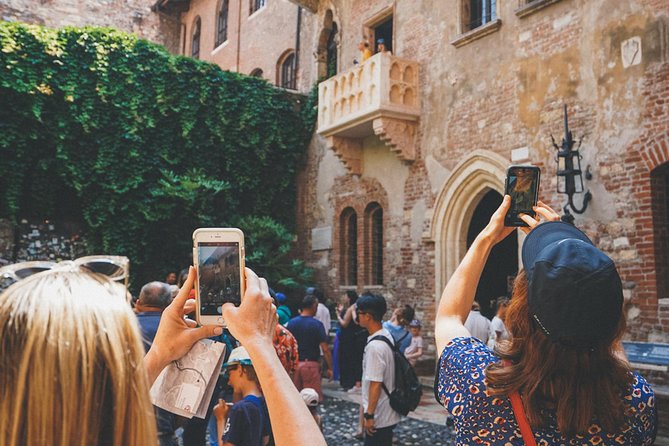
La Casa di Giulietta is one of Verona’s most popular stops, and the tour takes you into the courtyard associated with the Capuleti family. It is a brief visit, listed at about five minutes, so expect an introduction and time for a look rather than a full museum experience.
The building’s connection to Shakespeare’s Juliet is part history, part literary tradition, and part twentieth-century presentation. The famous balcony and much of the site’s romantic image were shaped for visitors, including a 1930s creation using an Egyptian sarcophagus. A good guide can explain that distinction without spoiling the fun.
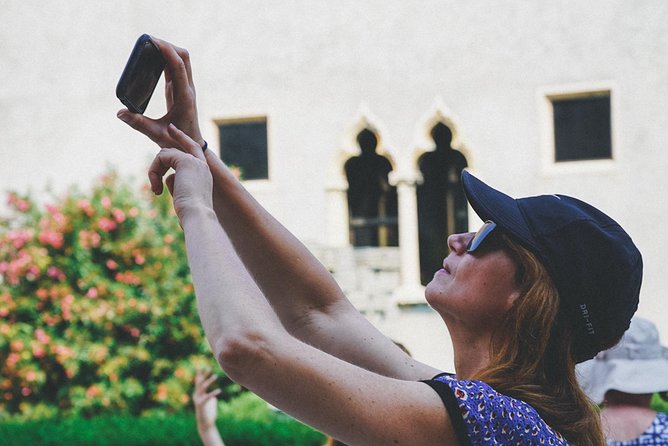
The courtyard can be crowded, and the visit may feel more commercial than the ancient squares and Roman remains elsewhere on the route. Still, it is worth seeing because the Romeo and Juliet story has become part of Verona’s public identity.
Access rules can change. From December 6, 2025, through January 6, 2026, access to Juliet’s Balcony requires a separately purchased ticket because of high visitor numbers. The tour provider does not buy that ticket for you. The walking tour itself does not include admission.
You also pass Romeo’s House, a medieval palace once associated with the Montecchi family in legend and literary tradition. The building is private and inhabited, so you can see it only from outside. This is a quick but useful counterpoint to Juliet’s House, reminding you that the famous story rests on a mix of literature, local tradition, and modern presentation.
Piazza delle Erbe and Piazza dei Signori
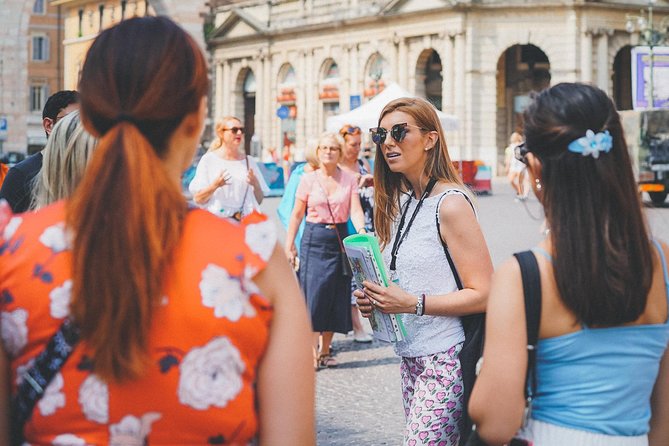
Piazza delle Erbe occupies the site of Verona’s Roman Forum. It remains one of the city’s most appealing public spaces, with buildings, market activity, cafés, and layers of decoration surrounding the square.
Your guide points out monuments connected with Verona’s different rulers, including the fountain at the center. Look upward as well as ahead. Painted façades and older architectural details reward a slower second visit, since a two-hour group walk cannot pause at every building.
From here, the route reaches Piazza dei Signori, once the center of political power. A statue of Dante has dominated the square since 1865, giving it the informal name Piazza Dante. The square feels more formal and enclosed than Piazza delle Erbe, and the shift helps you understand how Verona’s civic spaces served different purposes.
The tour may also point out the Torre dei Lamberti viewpoint nearby. The tower is not part of the included experience, but you can note it for later if you want a high view over the center.
The Scaliger tombs and medieval Verona
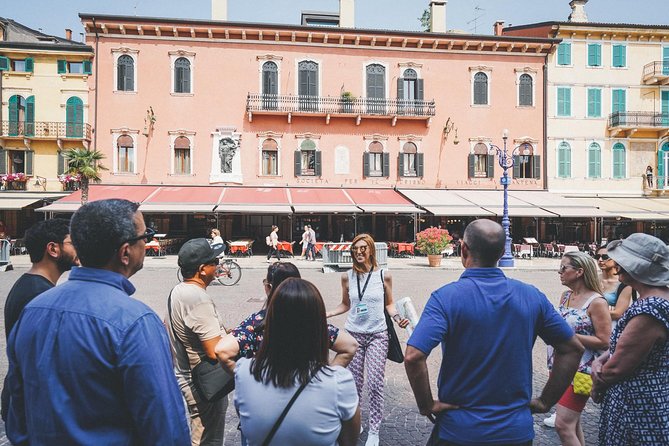
The Arche Scaligere are the outdoor tombs of the Scaligeri, the family that ruled Verona in the Middle Ages. Their Gothic arches and stone sarcophagi are among the city’s most distinctive sights.
The stop is short, around five minutes, and admission is not included. That is enough to explain the monuments and admire their detail from outside, but not enough for a slow study of every carving. If medieval architecture is your main interest, return on your own.
This part of the route helps balance the more famous Roman and Shakespearean stops. The Arena tells you about Roman public life. Juliet’s House points toward literature and modern tourism. The Scaliger tombs show how medieval rulers used architecture to display authority, family, and devotion.
Guide style and group experience
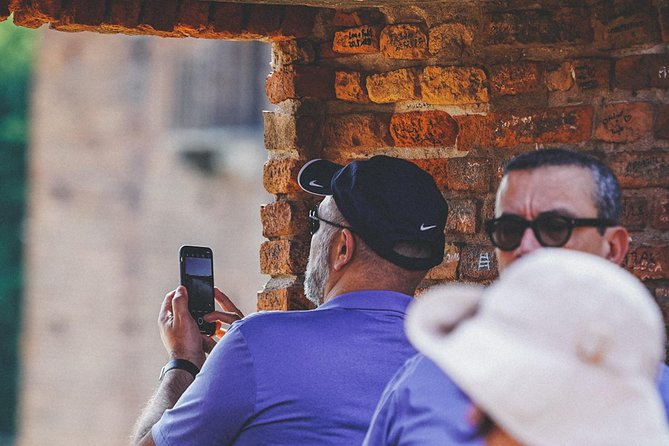
The tour runs with a maximum of 16 people and requires at least two participants. That is small enough for a more personal feel without becoming a private tour.
Guide quality matters greatly on a history walk, and the names attached to especially strong experiences include Frank, Isabella, Priscilla, and Maria. You may not receive a particular guide, but the useful qualities to look for are clear English, a good sense of pace, and the willingness to answer questions.
Several guides have been praised for humor and storytelling. That matters in Verona, where dates and dynasties can blur together. A funny detail or a well-told local story can make the route easier to remember.
The pace is generally comfortable, but you should still expect steady walking. One description specifically notes that you need to walk somewhat quickly. The tour runs in rain, so bring suitable clothing and shoes. Parts of the route may not be easy for people with reduced mobility or other disabilities, so contact the provider if you need exact accessibility information.
Is $42.33 a fair price?
At $42.33 per person, this is not the cheapest way to wander through Verona, since much of the city center can be explored independently. The value comes from the guide’s explanations, the efficient route, and the time saved figuring out how the Roman, medieval, and literary landmarks fit together.
The price makes more sense if this is your first visit, if you have only a short stay, or if you enjoy asking questions as you walk. It is also useful at the start of a longer visit because you can mark places for a second look, such as the Arena interior, Castelvecchio Museum, Torre dei Lamberti, or Juliet’s Balcony.
It is less useful if you want extended time inside monuments. The tour includes no hotel pickup or drop-off, and entry fees for the Arena, Juliet’s House, and the Scaliger tombs are not included. You pay for orientation and interpretation, not a bundle of admissions.
Free cancellation is available if you cancel at least 24 hours before the local start time. Late cancellations and changes are not accepted for a refund, and a minimum of two participants is required for the tour to operate.
Should you book the Verona Highlights Walking Tour?
Book it if you want a friendly, efficient first look at Verona with a guide who can explain the city’s Roman foundations, medieval rulers, famous squares, and Shakespearean associations. It is particularly useful for first-time visitors, families with older children, and anyone with only a few hours in town.
Think twice if you need step-free access, dislike a steady walking pace, or want long interior visits. In that case, a private or slower tour may suit you better.
For most people, I would book this early in a Verona stay, then return to the Arena or Castelvecchio with your own time afterward. The walk gives you the city’s basic shape, its best-known stories, and enough context to make the rest of your visit more rewarding.
FAQ
How long does the Verona Highlights Walking Tour last?
The tour lasts approximately two hours.
Where does the tour begin and end?
It begins and ends at Piazza Bra in Verona.
What language is the tour offered in?
The tour is offered in English.
What is included in the price?
A local tour guide is included.
Are Arena tickets included?
No. Admission to the Arena is not included.
Is entry to Juliet’s House included?
No. Admission to Juliet’s House is not included.
Does the tour include hotel pickup and drop-off?
No. Hotel pickup and drop-off are not included.
How many people can join the tour?
The tour has a maximum of 16 participants.
Does the tour operate in bad weather?
The tour runs rain or shine. In cases of severe storms, extreme events, sudden monument closures, or similar unforeseen problems, a full refund is not guaranteed.
New walking tours around Italy
- Rome: Fountains and Squares Small-Group Walking Tour★ 4.7 · 335 reviews
- Napoli: Walking Tour of Naples with Local Tour Guide★ 4.9 · 95 reviews
- Naples: Spanish Quarters Walking Tour★ 4.6 · 72 reviews
- Naples: Street Art, Wine and Food Tasting Walking Tour★ 5.0 · 163 reviews
- Naples: Street Food Experience With 6 Stops★ 4.7 · 392 reviews
- Naples: Historic Center and Sansevero Chapel Walking Tour★ 4.8 · 208 reviews
- Naples: Old Town Guided Walking Tour★ 4.8 · 553 reviews
- Naples Essentials: Monuments, Local Life & Street Art★ 4.9 · 79 reviews
Verona Walking Tours, side by side.
Verona: History and Hidden Gems Guided Walking Tour
Read our review →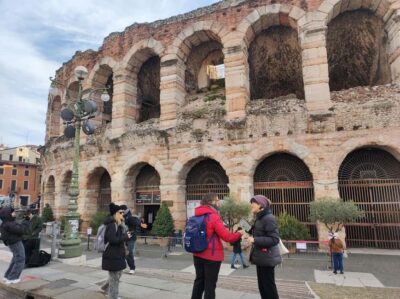
Verona: Small Group Guided Walking Tour with Arena Tickets
Read our review →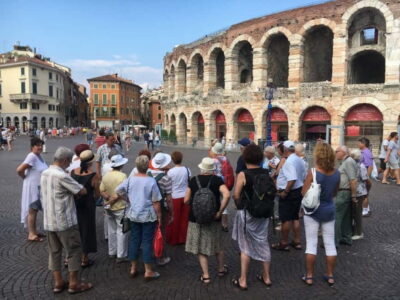
Discover Verona: City Highlights Guided Walking Tour
Read our review →