
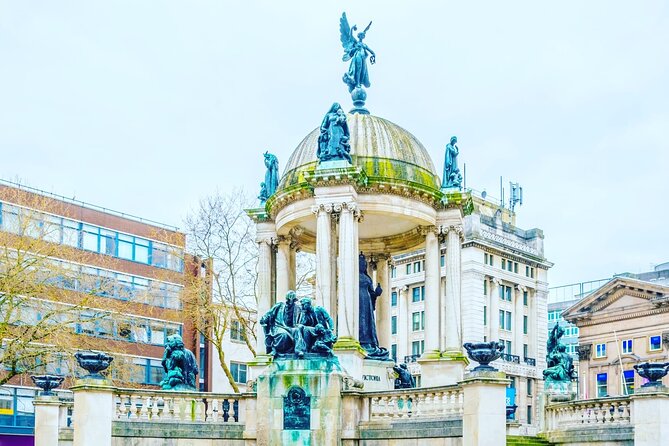
Review · LIVERPOOL
A Walk Through Time: History of Liverpool Walking Tour
Liverpool’s story comes into focus when you follow the city from its medieval beginnings in 1207 to its rise as a global port. This walk links the Three Graces, old town sites, Castle Street, the first commercial wet dock, and Royal Albert Dock, so you see how trade shaped Liverpool rather than simply ticking off landmarks.
I like the route’s clear sense of progress, and I like that the guide does not skip the harder chapters, including Liverpool’s role in the Atlantic slave trade. Guides John and Julio bring different personalities to the walk, but both are described as engaging, informed, and easy to hear. The main drawback is pace: there is a lot to absorb in 1 hour 50 minutes, and one person found the guide spoke too quickly.
Key points at a glance
- A history-first route: Follow Liverpool from its 1207 charter and medieval church site to its modern shopping district and waterfront.
- The port is the main character: Old Dock, the Cotton Exchange, and Royal Albert Dock explain how Liverpool grew through world trade.
- Strong local guiding: John is especially praised for his passion, detail, humor, and ability to answer questions. Julio also leads the walk.
- Outdoor and weather-dependent: River wind can be cold, so wear a warm jacket and comfortable shoes.
- Good first-day choice: The tour gives you a useful map of central Liverpool before you explore museums, docks, and Beatles sites on your own.
- Reasonable price: At $27.74 per person, the tour offers nearly two hours of guided context for less than many paid attractions.
Start beneath the Three Graces
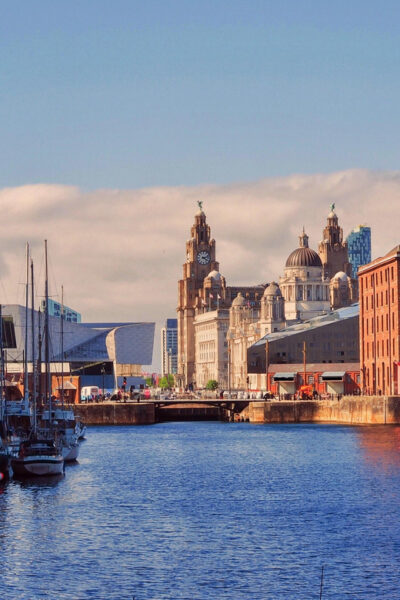
The walk begins at the Royal Liver Building on Pier Head, one of Liverpool’s unmistakable waterfront landmarks. You receive an introduction here before looking at the Three Graces, the group formed by the Royal Liver Building, the Cunard Building, and the Port of Liverpool Building.
The opening is useful because it puts Liverpool’s identity in plain terms. This is not just a city with attractive waterfront architecture. It is a city built around ships, cargo, insurance, passengers, and overseas connections. The guide uses the Three Graces to set up that larger story.
You do not get admission to the Royal Liver Building as part of the tour, so think of this as an exterior history stop. If you want to visit the building separately, you will need another ticket and more time. For the walking tour itself, the outdoor introduction is enough to establish the setting.
The meeting point is Liver Building, Pier Head, Liverpool L3 1HU. Arrive ready to walk rather than expecting a short sightseeing loop. The route covers several parts of central Liverpool, and the guide talks at many of the stops.
More History Walking Tours in the UK
- A History of Terror – Belfast City Centre Walking Tour
★ 5.0 · 2,883 reviews - Edinburgh: Old Town History and Tales Walking Tour
★ 4.8 · 2,361 reviews - Old Town Walking Tour History and Tales in Edinburgh
★ 5.0 · 2,168 reviews
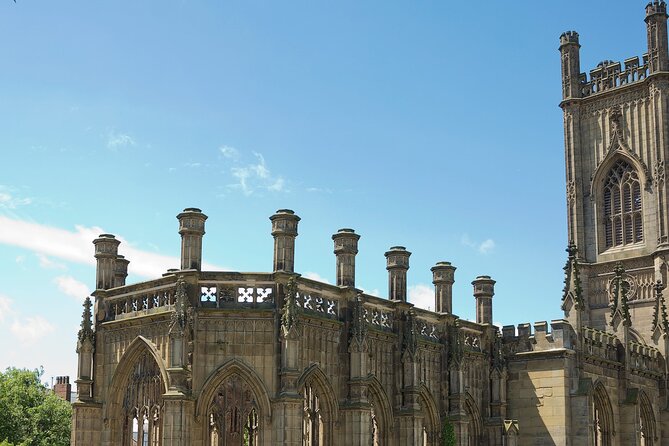
Liverpool Parish Church Gardens and the medieval city
From the waterfront, the group crosses the Strand to Liverpool Parish Church Gardens. This site connects the modern city to its earliest recorded development. The church was associated with St. Nicholas, the patron saint of the sea, which fits Liverpool’s long relationship with maritime trade.
The key date here is 1207, when Liverpool received its town charter. The guide points to physical evidence at the site and explains how a small medieval settlement developed before becoming a major port. That link between place and date makes the early story easier to grasp than a string of facts delivered without context.
This stop is free and outdoors. It is also one of the best parts of the walk for anyone who wants to find Liverpool’s older remains, since the modern commercial center can otherwise make the medieval city easy to miss.
You should expect a detailed explanation rather than a quick photo stop. The tour is designed around connected stories, so the guide may spend time showing how early civic and religious sites relate to Liverpool’s later growth.
Old Hall Street and the difficult story of trade
Old Hall Street takes you into another layer of the city’s development. The route passes buildings from Liverpool’s older commercial core and continues toward the Cotton Exchange, where goods and trade from around the world were handled.
This is where the tour addresses Liverpool’s involvement in Atlantic trade, including the city’s role in the transatlantic slave trade. That subject is essential to understanding Liverpool’s wealth, and I appreciate that the walk includes it instead of presenting port growth as a simple success story.
The guide explains how Liverpool’s cotton trade expanded and how the city overtook London in that trade by the late 18th century. You also hear about the links between commerce, buildings, docks, and the city’s wider influence.
The stop is free, but the surrounding streets can be active. One practical point matters here: a guide may need to speak over traffic and city noise. John is praised for being clear enough to hear in those conditions, but you will want to stay close if you have difficulty hearing or if the group reaches the maximum size of 40 people.
Liverpool Town Hall and Georgian ambition
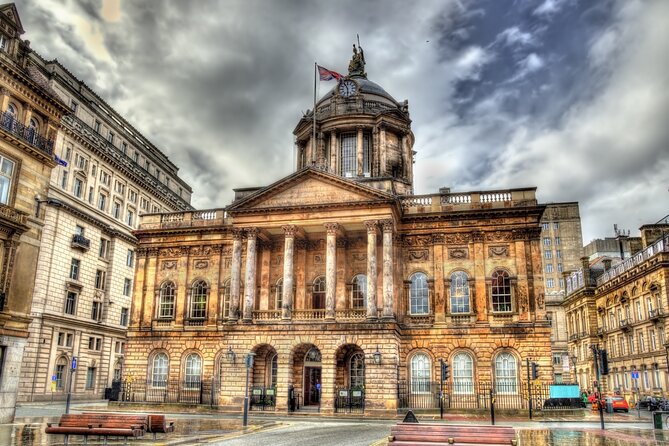
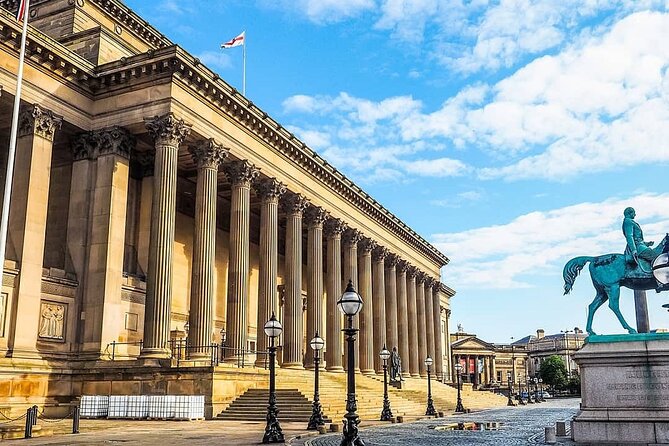
Liverpool Town Hall, built in 1749, offers a change of architectural mood. The building represents the confidence of a city that had become a major commercial center. Its Georgian design gives the guide a solid place to explain civic power, commerce, and Liverpool’s transformation into a port city with global reach.
The tour does not include entry to the Town Hall. You examine it from outside and hear its story as part of the walking route. That is a sensible arrangement for a compact tour, though anyone hoping to tour the interior should plan a separate visit.
I find this stop valuable because it shows that Liverpool’s rise was not confined to the docks. Trade changed civic buildings, streets, public life, and the ambitions of local leaders. The city’s commercial success left its mark well beyond the water’s edge.
Same streets, a different story:
- Magical London: Harry Potter Guided Walking Tour
★ 4.7 · 22,044 reviews - Edinburgh: Harry Potter Magical Guided Walking Tour
★ 4.8 · 11,944 reviews - Edinburgh Castle: Guided Walking Tour with Entry Ticket
★ 4.7 · 11,699 reviews - Underground Vaults Walking Tour in Edinburgh Old Town
★ 4.5 · 8,506 reviews
Castle Street and the lost castle
Castle Street gives you a strong visual sense of Liverpool’s changing past. Its buildings and layout reflect different periods of development, and the guide uses the street to explain the role of Liverpool Castle and the city’s growth during the 18th century.
The castle itself is not presented as a standing attraction you can enter. Instead, the tour helps you understand the location and importance of a site that shaped the old town. This is one of those moments when a history walk adds something a self-guided stroll cannot: you are looking at a present-day street while learning how an earlier city occupied the same ground.
At the Queen Victoria Monument, the guide continues the story of Liverpool’s rise and its role in global trade by 1800. The monument also serves as the stated end point at One Derby Square, at the bottom of Castle Street.
There is a small route detail worth noting. The walk also includes Liverpool ONE, the Old Dock, and Royal Albert Dock, while the meeting information identifies the Queen Victoria Monument as the final location. Since the supplied route describes a return to the Three Graces before also naming the monument as the end, check the exact end point shown for your booked departure. Either way, the route is centered on the waterfront and old commercial district.
Liverpool ONE and the modern city
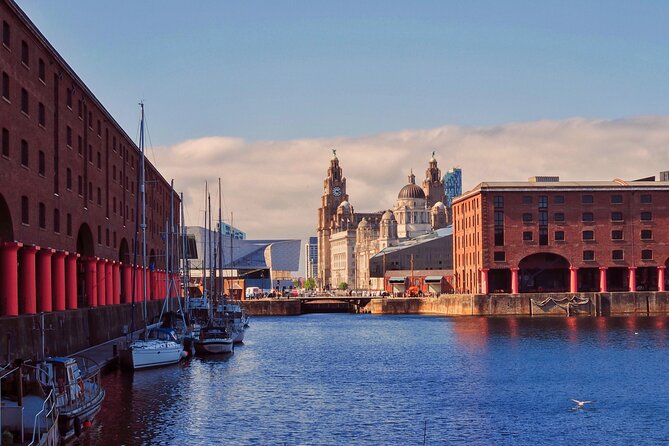
Liverpool ONE is the most modern stop on the walk. This large shopping and leisure district shows how central Liverpool has been reshaped for present-day use.
A guided explanation here gives you a useful contrast with the older streets. After hearing about medieval settlement, Georgian commerce, and dock expansion, you see how the city now uses much of its central space for shops and attractions.
The stop is free, and there is no pressure to shop. You simply receive an orientation to the area. That can help if you are staying nearby or want a central place to return after the tour.
This section is less historically substantial than the dock stops, but it helps connect the old Liverpool to the current city. It also gives you a practical sense of where the shopping district sits in relation to the waterfront.
Old Dock, where Liverpool’s port changed course
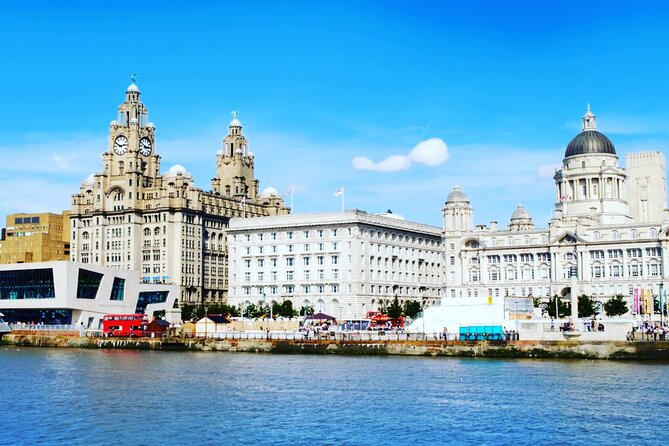
The Old Dock is one of the tour’s most important stops. Built in 1715, it was the first commercial wet dock on the planet. The guide explains how this innovation allowed ships to load and unload with greater efficiency and helped Liverpool develop into a powerful port.
You may not immediately see a dramatic dock basin in the modern streetscape, which makes the explanation especially useful. The value here comes from understanding what the site did, not simply looking at a preserved structure.
The Old Dock also explains why Liverpool’s commercial rise accelerated. Better dock facilities supported larger volumes of trade and tied the city more closely to overseas markets. When you later hear about cotton, shipping, and the waterfront, this earlier piece helps the rest fit together.
At this point, the tour’s focus on commerce becomes very clear. If you mainly want music history, famous personalities, or Beatles locations, this walk will not be your best single tour. If you want to understand why Liverpool became so important, Old Dock is central.
Royal Albert Dock and the 19th century
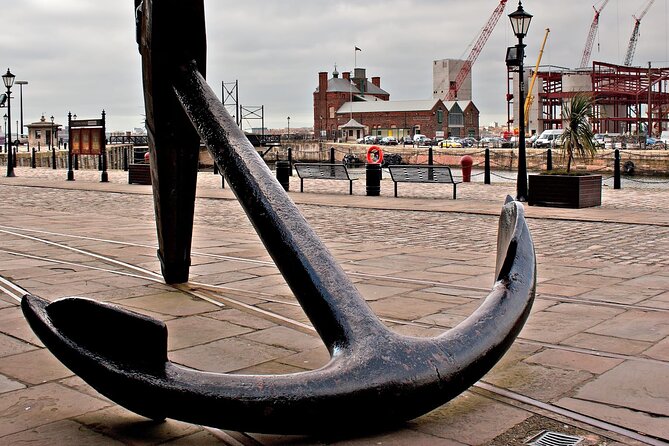
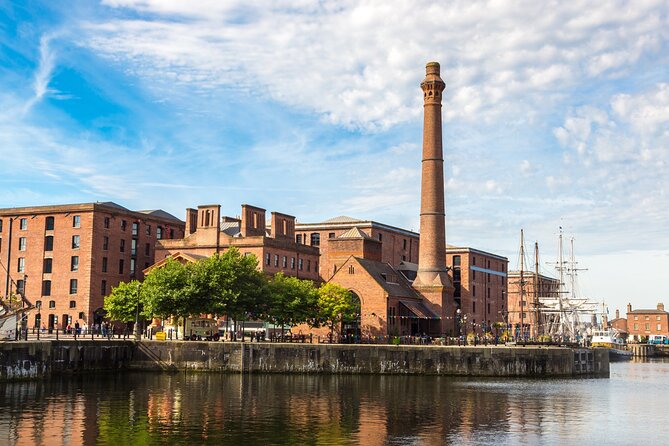
Royal Albert Dock shifts the story into the 1800s. Built in 1846, it became a major center of Liverpool’s commercial life and remains one of the city’s most recognizable waterfront areas.
Here you learn how the docks worked within the wider commercial system. The guide also covers Liverpool’s involvement in the First and Second World Wars, giving the site another layer beyond trade and architecture.
Royal Albert Dock is an effective later stop because you can see the scale of Liverpool’s maritime ambition. The earlier stops explain origins and growth; this one shows the mature port city.
The route’s waterfront sections can be exposed to wind. One practical tip comes directly from the experience itself: bring a warm coat or jacket even if the day seems mild, and wear shoes you can walk in comfortably. Cold weather did not stop one group from enjoying the tour, but it did make the walk less comfortable.
A guide-led history lesson, not a casual stroll
The best part of this experience is the guide’s ability to connect separate places into one story. John is repeatedly described as passionate about Liverpool, generous with information, friendly, and able to keep the group engaged. He also encourages questions and adds humor, including a local Scouse touch.
Julio is another named guide associated with the experience. He is described as engaging and effective, particularly for giving people a useful background before the rest of their stay.
The style can vary by guide, but you should expect a serious amount of information. This is not a relaxed walk with only a few short facts at each landmark. It is closer to a compact outdoor history class, delivered while you move through the city.
That density is a strength if you enjoy context. It is also the main caution. One person found the pace fast, and that is believable given the number of subjects covered in less than two hours. Stay near the guide, ask for a slower explanation if needed, and do not worry about remembering every date. The main goal is to understand the chain from medieval town to world port.
Price, group size, and practical value
At $27.74 per person, the tour is fairly priced for 1 hour 50 minutes with a historian guide. You are paying for interpretation rather than entry tickets, and that matters because most of the route uses free outdoor locations.
I think the value is strongest for a first visit. A few pounds spent on context can make your later time at the waterfront, Town Hall, Old Dock, and Royal Albert Dock more meaningful. The walk also helps you decide which sites deserve a longer return visit.
The maximum group size is 40. That is not a tiny private walk, so do not expect constant one-to-one attention. Still, the guide’s role is clear: explain the city in a way that can be heard by a group and leave room for questions.
The tour is offered in English and uses a mobile ticket. Confirmation arrives when you book. Service animals are allowed, and most people can take part, but you should be comfortable walking outdoors for nearly two hours.
This experience requires good weather. If poor weather cancels the tour, you are offered another date or a full refund. You can cancel for a full refund up to 24 hours before the start time. A late cancellation or change is not accepted within 24 hours, so keep that cutoff in mind when planning a tight Liverpool schedule.
Who should book this Liverpool walk?
I would choose this tour if you want a broad introduction to Liverpool’s civic, commercial, and maritime past. It suits first-time visitors, history fans, and even locals who know the city’s streets but have never connected the sites into one story.
It is also a good match if you want more than the Beatles. Liverpool’s music identity is famous, but this walk explains the older forces that made the city prosperous and internationally important.
You may want a different experience if you prefer museums, interior visits, or a slow photo walk. The route includes several exterior stops, some admission tickets are not included, and the guide covers a lot in a short time.
Should you book it?
Book it if you want Liverpool explained through its docks, trade, architecture, and medieval roots. The strongest reasons are the connected route, the honest treatment of Atlantic trade, and the guides’ clear passion for the city, especially John and Julio.
Skip it if you want a small private group, a Beatles-focused itinerary, or a leisurely pace with little narration. For most people who want a practical first look at central Liverpool, $27.74 buys a useful foundation, provided you dress for the river wind and keep up with the guide.
FAQ
Where does the walking tour start?
It starts at the Liver Building, Pier Head, Liverpool L3 1HU, UK.
Where does the tour end?
The stated end point is the Queen Victoria Monument at One Derby Square, James Street, Liverpool L2 1AB, at the bottom of Castle Street.
How long does the tour last?
The tour lasts approximately 1 hour and 50 minutes.
What language is the tour offered in?
The tour is offered in English.
Is entry to the Royal Liver Building included?
No. The Royal Liver Building stop is an exterior visit, and admission is not included.
Is entry to Liverpool Town Hall included?
No. The Town Hall stop is listed as an exterior visit, and admission is not included.
How many people can join the tour?
The maximum group size is 40 people.
What happens if bad weather cancels the tour?
If poor weather causes cancellation, you are offered a different date or a full refund.
New walking tours around the UK
- London: Old City Walking Tour★ 4.8 · 135 reviews
- Manchester: Music-Themed City Walking Tour★ 4.4 · 109 reviews
- Manchester: Media City & The Quays Guided Walking Tour★ 5.0 · 165 reviews
- Manchester City Highlights Walking Tour★ 4.8 · 299 reviews
- London: Witches and History Bankside Walking Tour★ 4.8 · 223 reviews
- London: Palaces and Parliament Walking Tour★ 4.8 · 365 reviews
- London: Winston Churchill and London in WWII Walking Tour★ 4.8 · 143 reviews
- London: Westminster Walking Tour & The Tower of London Entry★ 4.6 · 131 reviews
Liverpool Walking Tours, side by side.
Beatles Famous Walking Tour Of Liverpool- Fully Guided
Read our review →
Best Of Liverpool Heritage, History & Culture Guided Walking Tour
Read our review →
Liverpool: A Walk Through Time: Full History Walking Tour
Read our review →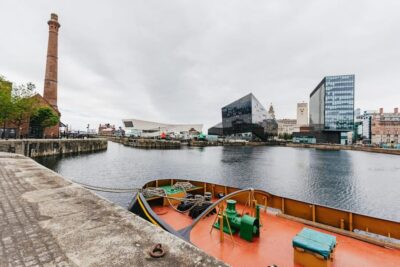
Liverpool: The Beatles and Cavern Quarter Walking Tour
Read our review →
Lists this walk sits on