

Review · AMSTERDAM
Amsterdam: Anne Frank Guided Walking Tour in DE/EN/IT/ES
Anne Frank’s diary becomes the thread running through this moving walk around Amsterdam’s Jewish Quarter. As you pass the Portuguese Synagogue, the Auschwitz Monument, and the National Holocaust Names Monument, selected passages give a personal voice to the wider story of persecution, resistance, and loss. Guides such as Lilly, Josh, Valentina, Zoe, and Francesco have been praised for handling this difficult subject with care.
I like two things in particular: the tour connects Anne Frank’s story to Amsterdam’s wider Jewish history, rather than treating her life as an isolated tale, and it uses real streets, buildings, memorials, and Stolpersteine to make the past easier to grasp. The main consideration is simple: this is an outdoor walking tour, not a museum visit, and it does not go to or show the Anne Frank House.
Key points
- Anne Frank diary readings: Short passages are read during the walk, linking her words to the places around you.
- A broader Jewish story: Learn about Amsterdam’s Jewish community before, during, and after World War II.
- Resistance and the February Strike: The tour gives attention to Jewish and non-Jewish people who resisted Nazi rule.
- Important memorials: See the Auschwitz Monument, the Dokwerker, Stolpersteine, and the National Holocaust Names Monument.
- Four language choices: Book an English, German, Italian, or Spanish tour. The tour is conducted in one language, not bilingually.
- Good value for a history-focused walk: At $28 per person, the tour includes a live guide and has no admission fees at the stops.
Starting at Waag in Nieuwmarkt

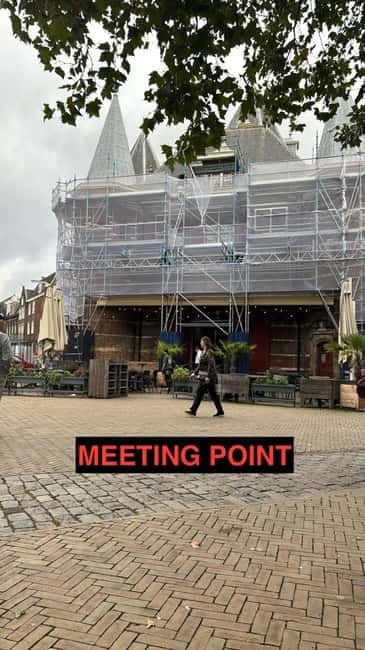
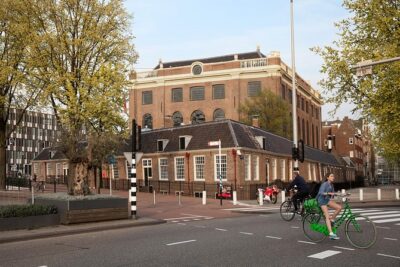
The meeting point is outside De Waag, a historic building with a castle-like appearance in the center of Nieuwmarkt. Look for the guide wearing a red name tag around the neck. This is a busy part of Amsterdam, so arrive with enough time to find the building and gather before the walk begins.
The tour lasts about two hours and covers roughly 2 to 3 kilometers. That is manageable for most people, but the route is still a proper city walk. Wear shoes that can handle uneven streets, bring water, and dress for the weather. The tour runs in rain as well as sunshine, so an umbrella is sensible.
Nieuwmarkt also gives the tour a useful starting point. The square sits beside the old Jewish Quarter, and the guide can quickly place you in the part of Amsterdam where Jewish families, merchants, artists, and religious communities shaped city life for centuries.
More Jewish Heritage Walking Tours around Amsterdam:
- Amsterdam Anne Frank: Small-Group Walking Tour & Local Guide
★ 4.8 · 12,789 reviews - Anne Frank’s Story – Guided Walking Tour through Amsterdam
★ 5.0 · 11,619 reviews - Amsterdam: Anne Frank Guided Small Group Walking Tour
★ 4.8 · 2,722 reviews
Nieuwmarkt and the foundations of the Jewish Quarter

The first stop is Nieuwmarkt, where the guide introduces the Jewish community’s arrival and growth in Amsterdam. Many Jewish families came after being expelled from Iberia during the Spanish Inquisition. Over time, they helped turn Amsterdam into one of Europe’s great commercial centers.
That background matters. The tour does not begin with persecution and death. You first hear about ordinary Jewish life, trade, faith, family, and the way the community helped shape Amsterdam. The Jewish Quarter was not simply a place of suffering. It was a home, a working district, and a center of culture long before the Nazi occupation.
You also hear why this part of the city attracted Jewish residents. The route uses streets and buildings to explain how the quarter developed, making the neighborhood itself part of the lesson rather than just a backdrop.
Zuiderkerk and Huis de Pinto
At Zuiderkerk, the focus shifts toward the physical setting of the old quarter. The church is a useful reminder that Jewish and non-Jewish communities lived close together in this part of Amsterdam.
The tour then continues to Huis de Pinto, linked with the influential De Pinto family. Short stops such as this one help you see that the Jewish Quarter was made up of homes, businesses, religious buildings, and public spaces. You are not simply moving from one memorial to another. The guide builds a picture of a functioning community.
These early stops are also a good test of the tour’s pace. The guide usually pauses for about ten minutes at Zuiderkerk and around five minutes at Huis de Pinto. That leaves enough time for explanation without turning the walk into a long lecture at every corner.
Rembrandt House and everyday Jewish life
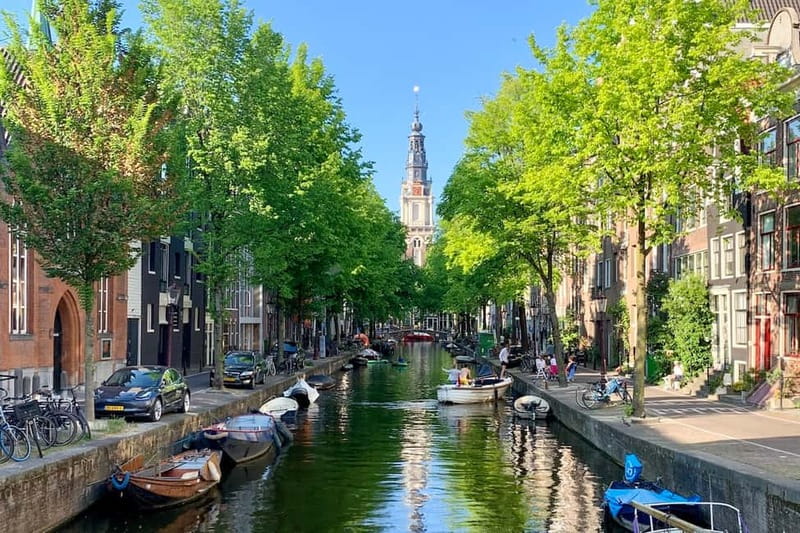
The stop at the Rembrandt House lasts about fifteen minutes. Rembrandt lived in the middle of the Jewish Quarter, and his presence helps show how the district was shared by Jewish and non-Jewish residents.
This is one of the more useful parts of the tour because it adds texture to the story. Amsterdam’s Jewish history is not separate from the rest of the city. It overlaps with art, trade, housing, religion, and daily life. The guide can also explain how the area looked and functioned before World War II.
Do not expect to enter the Rembrandt House during this tour. The focus is on the building and its place in the neighborhood. Admission to attractions is not included because the route stays outdoors and the sights can be viewed without an entry fee.
More walks with a guide around Amsterdam:
- Amsterdam: Guided Anne Frank Small-Group Walking Tour
★ 4.2 · 485 reviews - Amsterdam: Small-group Guided Walking Tour (French/English)
★ 5.0 · 289 reviews - Magical London: Harry Potter Guided Walking Tour
★ 4.7 · 22,044 reviews - History and Hauntings of Salem Guided Walking Tour
★ 5.0 · 14,564 reviews
Sint Antoniesluis and the Portuguese Synagogue

At Sint Antoniesluis, the guide continues the story of the old Jewish Quarter through its streets and waterways. The route then reaches the Portuguese Synagogue, where there is a photo stop and a short talk of about ten minutes.
The synagogue is one of the clearest reminders of the community’s religious and cultural life. Its presence gives the tour a strong visual point, and it is worth taking a moment to look closely at the building before the group moves on.
One important detail: you pass the Portuguese Synagogue, but you should not expect an interior visit as part of the two-hour walk. The same applies to the Jewish Historical Museum. Some descriptions of the route may sound as if the group goes inside these attractions, but the tour is built around exterior stops and guided explanation.
That distinction matters if you are hoping for museum time. If you want to visit the synagogue or the Jewish Historical Museum properly, plan a separate visit and allow extra time.
Jewish Historical Museum and the story beyond Anne Frank
The Jewish Historical Museum is another brief stop, lasting about five minutes. Here the guide helps connect the street you are walking through with the institutions that preserve Amsterdam’s Jewish culture and memory.
Anne Frank is the best-known individual connected with this subject, but the tour does not let her story swallow everything else. You learn about the community before the war, the impact of Nazi rule, and the lives of people whose names are less familiar but whose experiences were just as real.
That wider view is one of the tour’s main strengths. You hear about Jewish people who hid, resisted, fled, or were deported, along with non-Jewish Amsterdammers who took great risks to help them. The guide also explains the February Strike of 1941, when workers protested the persecution of Jewish residents.
The stop is short, so it cannot replace time inside the museum. Still, it gives you a clear reason to return for a longer visit if the subject interests you.
Anne Frank’s diary on the streets of Amsterdam
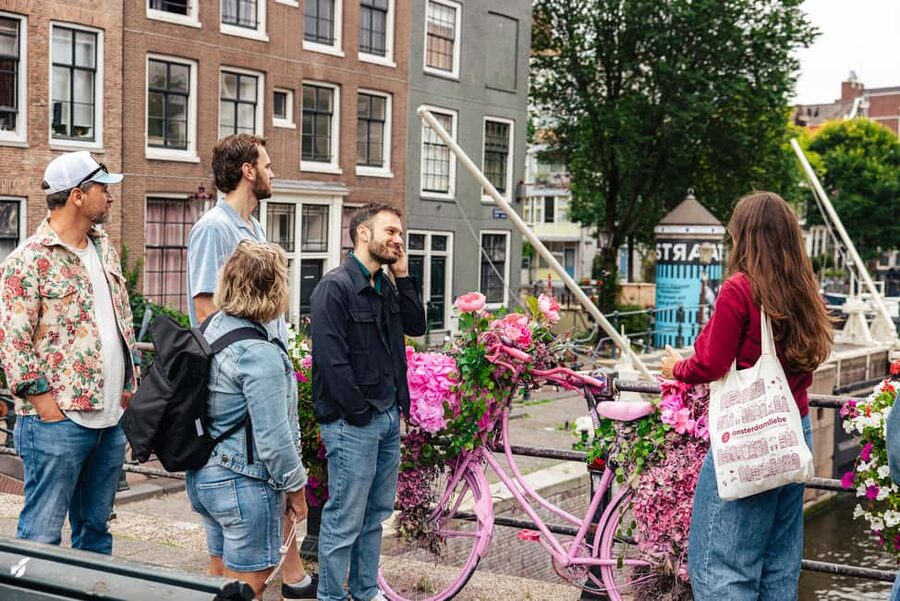
The diary readings are the emotional center of the experience. Guides read selected passages as the group moves through the city, connecting Anne’s words with the history being explained around you.
This works best when the guide keeps the reading focused. Several guides have been especially praised for the way they handled these passages, including Lilly, Lili, Valentina, Kaya, and Marie. Marie also used historical photographs during her tour, which helped place people and events in a clearer setting.
You should expect a serious tone. This is not a light sightseeing walk with Anne Frank added as a theme. The story includes deportation, separation, fear, and the destruction of much of Amsterdam’s Jewish community. The strongest guides make the subject understandable without making it theatrical.
The diary gives the tour a personal scale. Statistics can tell you how many people were deported, but Anne’s words help you consider what life felt like for a young person confined in hiding. The guide then places her experience beside the thousands of other lives affected by the Holocaust.
Auschwitz Monument and the Dokwerker
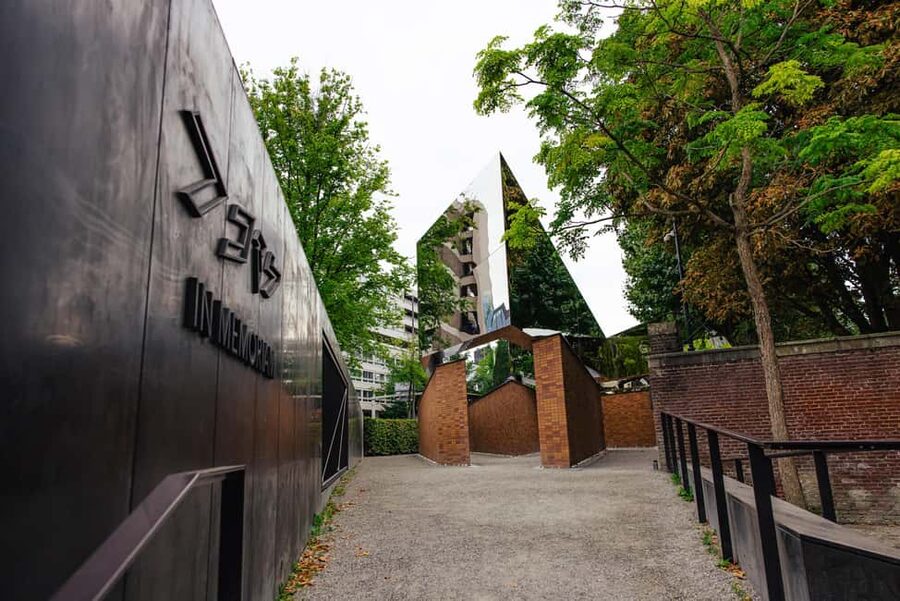
The route next reaches the Auschwitz Monument, with about ten minutes for explanation. This is a quiet and serious section of the walk. The guide discusses the fate of Amsterdam’s Jewish population and the fact that very few of those deported returned.
You then stop at the Dokwerker, a memorial to the February Strike. The stop is shorter, around five minutes, but its meaning is important. It points to public opposition to Nazi persecution and reminds you that resistance in Amsterdam took different forms.
The tour does not present resistance as a simple story of heroes and villains. People who helped others often endangered themselves and their families. Some Jewish and non-Jewish residents resisted openly, while others hid people, forged papers, passed information, or offered practical aid.
This part of the route gives needed balance. The history is devastating, but the walk also recognizes courage and moral choices made under extreme pressure.
The National Holocaust Names Monument
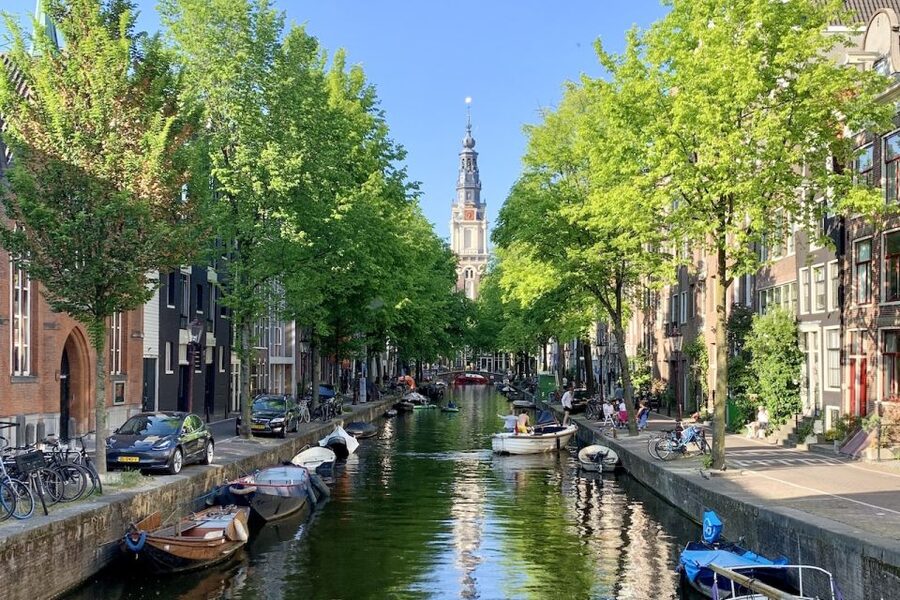
The tour ends at the National Holocaust Names Monument, where the guide spends about fifteen minutes. This is the most substantial final stop and a fitting place to gather the themes of the walk.
The memorial contains the names of Dutch Jewish victims of the Holocaust. Reading names rather than hearing only broad figures changes the way the history feels. You can pause, look closely, and consider the scale of the loss in human terms.
The tour finishes here rather than at the Anne Frank House. That is worth planning around. If you have a timed Anne Frank House ticket afterward, allow time to walk across the city and find the entrance. If you visit the house first, this tour can give useful context afterward, but it will not serve as a guided visit to the house itself.
What the guides do best
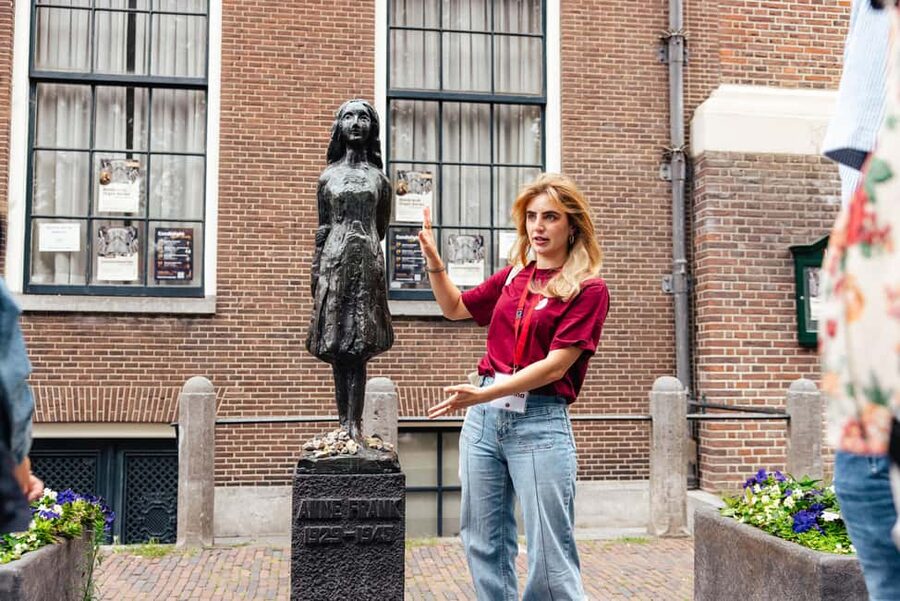
The guide can make or break a history walk, and the individual feedback here points to a clear pattern. Strong guides explain difficult material with warmth, structure, and restraint.
Josh has been praised for patience, clear explanations, and a willingness to answer questions. Valentina is especially associated with passionate storytelling about Anne Frank. Zoe has been described as personable and well prepared, while Emilia, Julia, Linn, Deborah, Bianca, and Francesco have also received praise for their approach and subject knowledge.
You should still expect some variation because this is a live tour led by different people. One guide may use more photographs, another may focus more on the city, and another may read longer diary passages. The common thread is a serious interest in the subject and an effort to keep the walk accessible.
Small groups are another advantage when available. You can hear the guide more easily, ask questions, and keep a comfortable pace. The tour is not designed as a rushed march between photo stops. Guides have adjusted their speed for groups and, in at least one case, made an unplanned bathroom stop.
Price, pace, and practical value
At $28 per person, this is a fair price for a two-hour guided walk in central Amsterdam. You are paying for a live guide, a structured route, language support, and context that would be difficult to assemble from plaques and maps alone.
The value is strongest if you already plan to visit the Anne Frank House, the Jewish Historical Museum, or other World War II sites. The walk can help you understand what you are seeing before you enter a museum. It also works well on an early day in Amsterdam because it gives you a useful introduction to the Jewish Quarter and the city’s wartime past.
The value is weaker if you expect entry to museums, the Portuguese Synagogue, or the Anne Frank House. None of those admissions is included, and the route does not enter them. You are buying interpretation and access to the outdoor history, not a bundle of attraction tickets.
The route is wheelchair accessible, but it remains an outdoor city walk of 2 to 3 kilometers. Ask yourself how comfortable you are with that distance, cobbled or uneven streets, and changing weather. Comfortable shoes are not optional advice here.
Choosing your language and group type
You can book the experience in English, German, Italian, or Spanish. Choose one language carefully because the tour is not bilingual. A mixed-language group should not expect explanations to be repeated in two languages.
The German and English options appear frequently in the guide details, while Italian and Spanish are also available. One Spanish-language guide, Simone, was praised for explaining the history clearly and adding stories that made the places easier to understand.
Private groups are available if you want a more personal format. A private tour may suit a family or group with a particular interest in Anne Frank, Jewish Amsterdam, or wartime resistance. The standard walk is likely the better value if you are happy to learn alongside other people and want to keep the cost low.
Who should book this walk?
I would recommend it to anyone who wants more than a quick photo outside a memorial. It suits first-time visitors, people preparing for an Anne Frank House visit, and anyone interested in how Jewish life shaped Amsterdam before the war.
It is also a good choice if you prefer learning outdoors. You move through the actual district, see surviving buildings, and notice details such as Stolpersteine and memorials that are easy to miss alone.
I would think twice if you dislike serious subject matter, walking in bad weather, or short exterior stops. This is not a museum tour, and it cannot explain every building in depth within two hours. Its strength is the way it joins the places together into one clear story.
Should you book the Anne Frank Jewish Quarter walk?
Book it if you want a thoughtful introduction to Jewish Amsterdam, Nazi occupation, resistance, and Anne Frank’s life, all tied to real places. The diary readings and the guides’ careful delivery give the tour an emotional center, while the Jewish Quarter stops keep the story from becoming only about one person.
Do not book it expecting the Anne Frank House. You will not see or enter it. But if you understand that limitation, $28 buys a well-paced, serious, and useful walk with no extra admission costs. Bring good shoes, choose your language carefully, and leave room in your schedule to reflect afterward.
FAQ
Does this tour visit the Anne Frank House?
No. The Anne Frank House is not visited or seen during the walking tour.
How long does the tour last?
The tour lasts two hours.
How far do you walk?
The route covers about 2 to 3 kilometers.
Which languages are available?
You can choose English, German, Italian, or Spanish.
Is the tour bilingual?
No. The tour is conducted in the one language you select when booking.
Where does the tour begin?
Meet at the entrance to De Waag restaurant, a historic building in the middle of Nieuwmarkt. The guide wears a red name tag around the neck.
Where does the tour finish?
The tour finishes at the National Holocaust Names Monument.
Are museum or synagogue admission fees included?
There are no admission fees during the walking route because the stops are viewed from outside. Entry to museums, the Portuguese Synagogue, and the Anne Frank House is not included.
Is the tour wheelchair accessible?
Yes. The activity is listed as wheelchair accessible, although it remains a 2 to 3 kilometer outdoor walking tour.
New walking tours around Amsterdam
- Amsterdam: Haunted History and Ghost Walking Tour★ 4.5 · 488 reviews
- Amsterdam: Food and Culture Walking Tour with Tastings★ 4.9 · 838 reviews
- Amsterdam: Small-group Guided Walking Tour (French/English)★ 5.0 · 289 reviews
- Amsterdam: Walking Tour, Jewish Museum & Synagogue Tickets★ 4.3 · 110 reviews
- Amsterdam: Treasure Hunt Walking Tour “A Secret Sender”★ 4.7 · 71 reviews
- Amsterdam: Sex, Drugs, and Freedom Walking Tour★ 4.6 · 74 reviews
- Amsterdam Small-Group Walking Tour★ 4.7 · 995 reviews
- Amsterdam: Jordaan District Local Food Walking Tour★ 4.8 · 311 reviews
Amsterdam Walking Tours, side by side.
Amsterdam Anne Frank: Small-Group Walking Tour & Local Guide
Read our review →
Anne Frank’s Story – Guided Walking Tour through Amsterdam
Read our review →
Absolutely Amsterdam – the Essential Introductory Walking Tour
Read our review →
Amsterdam: Anne Frank Guided Small Group Walking Tour
Read our review →
Anne Frank Walking Tour Amsterdam Including Jewish Cultural Quarter
Read our review →
Amsterdam Highlights Walking Tour: Small Group Experience
Read our review →Lists this walk sits on