
Review · BATH
Bath: Guided City Walking Tour with Entry To The Roman Baths
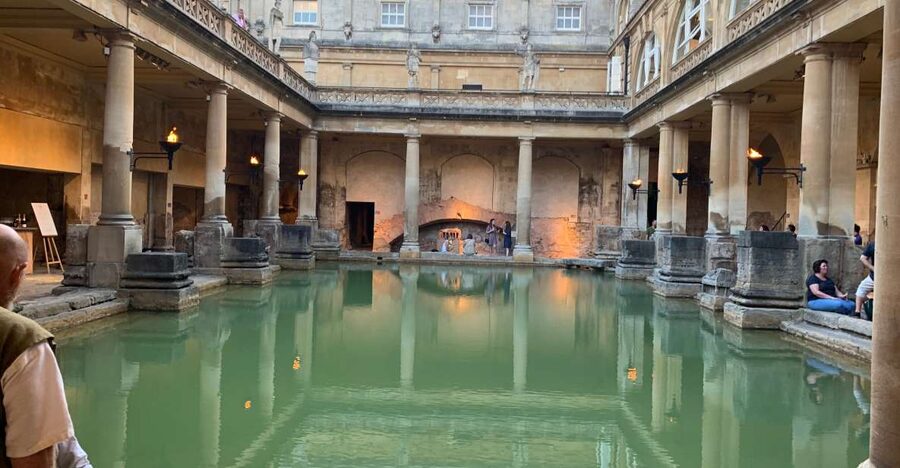
Bath’s Roman past is not tucked away in a museum here. It still shapes the city’s streets, buildings, and identity. This tour makes that connection clear, beginning at Bath Abbey and the Pump Room before leading you through the Royal Crescent, Circus, Queen Square, and Pulteney Bridge. You finish with entry to the Roman Baths, where the ancient bathing complex comes into sharper focus.
I like the strong mix of walking and storytelling, especially the way guides such as Jess, Owen, Victoria, Andrew, and Fred connect architecture with Jane Austen, local characters, and Bridgerton filming locations. I also like the practical layout: see the city first, then explore the Roman Baths at your own pace. The main drawback is timing. The walk lasts about two hours, but your Roman Baths entry comes later, so this is not a two-hour total experience.
Key points to know before booking
- Bath’s grandest streets are covered: The route includes the Royal Crescent, Circus, Queen Square, Pulteney Bridge, Bath Abbey, and the Pump Room.
- The Roman Baths visit comes afterward: A morning tour at 11:30 AM leads to entry at about 2:30 PM. The 2:30 PM tour leads to entry at about 4:30 PM.
- Guides make the difference: Jess, Owen, Victoria, Andrew, Fred, Phil, and others are praised for clear delivery, humor, and strong local knowledge.
- Jane Austen and Bridgerton add a modern angle: You get more than Roman and Georgian history, with literary and television connections folded into the walk.
- Expect outdoor walking in all weather: Comfortable shoes and weather-proof clothing matter, and large bags are not allowed.
- The value depends on your schedule: At $93 per person, the combination works best if you want a guided introduction plus the city’s leading paid attraction.
Why this Bath walk works so well

Bath can look easy to understand at first glance. You see pale stone, handsome terraces, a grand church, and the River Avon. But the city’s story moves across two very different eras: Roman Aquae Sulis and the elegant Georgian resort that followed centuries later.
A good guide helps you connect those layers. The tour does not simply point at attractive buildings. It explains how Rome’s influence helped shape Bath, then shows how later generations built a fashionable city around the hot springs.
That context matters. Without it, the Royal Crescent is a beautiful curve of houses. With it, you begin to see Bath as a carefully planned social city, shaped by visitors, money, status, health, and display.
The guides also seem to bring a relaxed style to the subject. Jess is repeatedly praised for turning a wet, gloomy day into an entertaining trip through the past. Owen is noted for answering questions and helping one participant find the Roman Baths afterward. Victoria, Andrew, Fred, Phil, and others are described as clear, friendly, witty, and easy to follow.
You should not expect every departure to feel identical. The guide is the personality at the center of the experience. Still, the repeated pattern is clear: this tour suits you if you want history explained in plain English rather than delivered as a formal lecture.
More walks with a guide around the UK:
- Magical London: Harry Potter Guided Walking Tour
★ 4.7 · 22,044 reviews - Edinburgh: Harry Potter Magical Guided Walking Tour
★ 4.8 · 11,944 reviews - Edinburgh Castle: Guided Walking Tour with Entry Ticket
★ 4.7 · 11,699 reviews
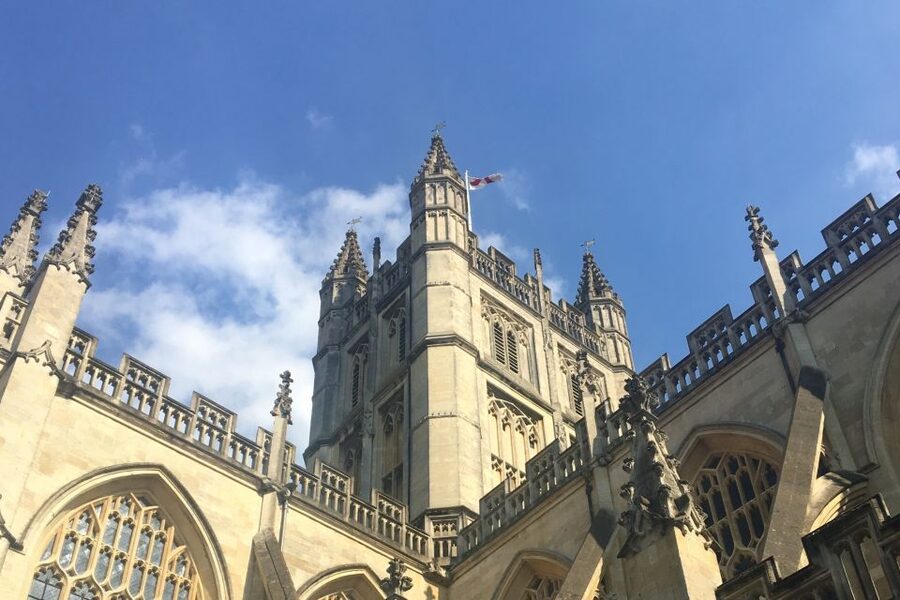
Starting at Bath Abbey and the Pump Room
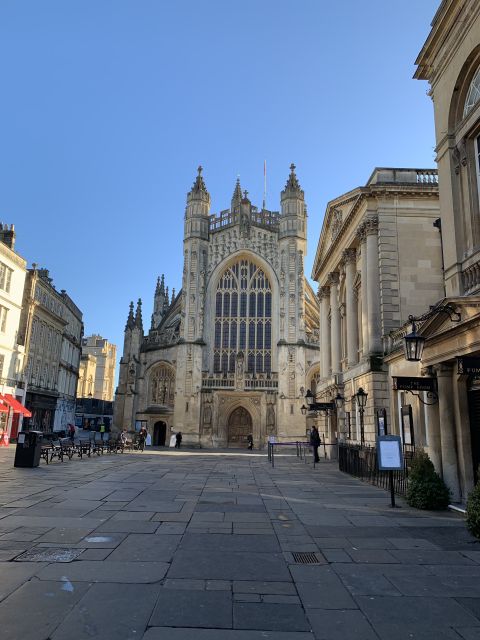
The meeting point is in Abbey Churchyard, in front of Bath Abbey and the entrance to the Roman Baths. Look for the tour flag and board. This is a useful central location, although the square can be crowded with several groups and tours. Give yourself time to identify the right guide.
Bath Abbey is an ideal starting point. It anchors the modern city beside two of its most famous historic attractions, the Roman Baths and the Pump Room. Your guide uses this area to set the scene before the walk moves into Bath’s streets.
The Pump Room is especially important because it represents Bath as a place of health and fashion, not only ancient engineering. The Roman springs drew people long before the Georgian period, but the city later became a social destination where visitors came to see, be seen, and take the waters.
You are mainly looking and listening during this part of the tour. The included Roman Baths admission is used later, not at the opening of the walk. That arrangement is worth noting because you will not be entering the attraction immediately after meeting your guide.
The Royal Crescent and Circus reveal Bath’s grand design
The Royal Crescent is one of Bath’s most famous sights, and the walking tour gives you a chance to appreciate it as part of a wider plan. Its long sweep of pale stone is made for photographs, but the guide adds the social detail that turns a façade into a story.
The Circus, with its circular arrangement and classical decoration, provides a useful contrast. These buildings were designed to impress. Their proportions, repeated details, and position within the city show how much Bath’s appearance was shaped by Georgian taste.
I like seeing these places on foot because scale is hard to understand from a quick stop beside a coach. Walking lets you take in the curve of the Royal Crescent and the shape of the Circus at a human pace. You can also ask questions while the guide explains what you are seeing.
There are some practical limits. This is a city walk, not a private architectural inspection, so the focus is on exteriors and commentary. You should expect to share the space with other people and allow time for the group to gather at each stop.
Queen Square and Bath’s literary connections
Queen Square adds another piece to Bath’s Georgian story. It is one of the city’s major planned spaces and helps show how Bath’s designers created a sense of order and ceremony.
This is also where the tour’s literary angle becomes useful. Jane Austen spent time in Bath, and the city appears in her novels Northanger Abbey and Persuasion. The guide brings you into the world she knew, linking streets and buildings with the social life that made Bath such a suitable setting for her sharp observations.
The Austen material is not presented as a separate literary lecture. It forms part of the broader story of Bath as a place where people came to socialize, make connections, and worry about status and money. That makes the subject more useful, even if you are not an Austen specialist.
The walk also points out places connected with Bridgerton filming. This gives the tour a modern hook without replacing the older stories. If you have watched the series, you will recognize the appeal of seeing Bath as a working film location. If you have not, the buildings still make sense as part of the city’s Georgian setting.
More walking tours around the UK:
- Underground Vaults Walking Tour in Edinburgh Old Town
★ 4.5 · 8,506 reviews - London: The Original Jack the Ripper Walking Tour
★ 4.7 · 7,833 reviews - Oxford University Walking Tour With University Alumni Guide
★ 5.0 · 6,905 reviews - Edinburgh Castle: Guided Walking Tour with Entry Ticket
★ 5.0 · 5,540 reviews
Pulteney Bridge brings the river into the picture
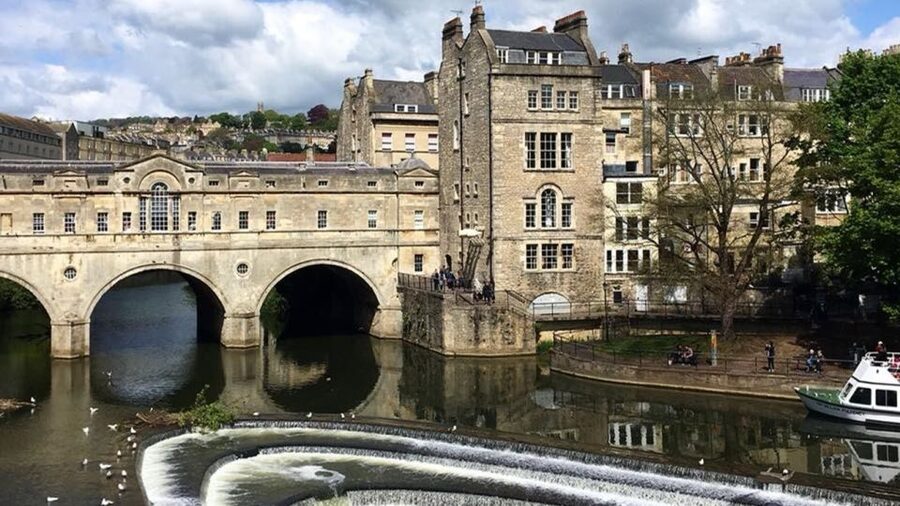
Pulteney Bridge is one of the most memorable stops because it combines architecture, commerce, and water. Its buildings cross the River Avon, giving it a distinctive character among Bath’s landmarks.
Your guide explains the bridge and its place in the city rather than treating it as a quick photo stop. The route helps you see how the river fits into Bath’s layout and how the city’s development was not limited to grand terraces and formal squares.
This is one of the places where a walking tour earns its keep. You move from the planned elegance of the Georgian streets to a structure with a more practical role. The change gives the route variety and keeps the two hours from becoming a parade of similar stone façades.
You should still wear sensible shoes. Bath is walkable, but the route includes hills and changing surfaces. One group found the pace manageable for different ages, including people with baby buggies, but your comfort will depend on footwear, weather, and mobility.
The Roman Baths are the strongest finish
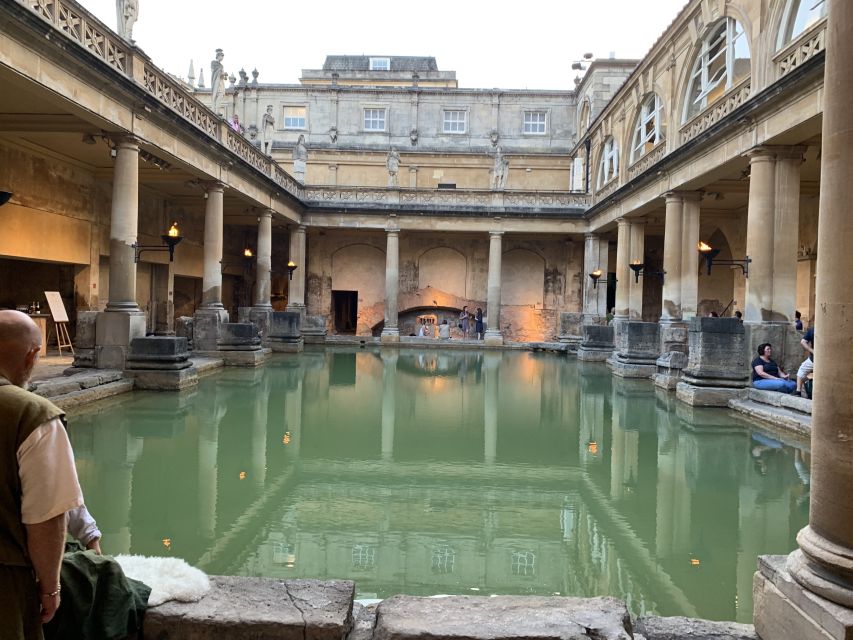
The Roman Baths are the centerpiece of Bath, and visiting them after the city walk is a smart order. By the time you enter, you have already heard how Roman influence shaped the city and have seen the later Bath built around that legacy.
Inside, you can examine the bathing complex and learn how complicated Roman society in Aquae Sulis could be. The attraction is not only about a pool of hot water. It shows the engineering, social customs, religious life, and public activity linked to the springs.
The visit is self-guided after the walking tour. That gives you freedom to move at your own speed, pause at displays, and spend longer on the sections that interest you. One person spent about an hour and a half inside, while another noted that you could easily spend three hours there. Your ticket gives you room to decide.
The timing requires planning. If you take the 11:30 AM walking tour, entry is scheduled for approximately 2:30 PM. If you take the 2:30 PM tour, Roman Baths entry is approximately 4:30 PM. That creates a substantial gap after the walk, but it can work well if you use the time for lunch, shopping, or a rest.
Do not book this expecting to walk straight from the guide into the baths. The delayed entry is the main scheduling issue. Check the exact departure and admission times before you pay, especially if Bath is part of a tightly planned day trip.
What the guides add to the experience
The strongest feature of this tour is the human delivery. You are not just following a route with facts attached. The guide shapes the mood, decides how long to pause, and makes connections between buildings, people, and events.
Jess is described as energetic and especially good at turning history into a performance. Owen is praised for his patience, friendly manner, and ability to answer questions. Victoria is noted for speaking clearly and setting the sights in context. Andrew is repeatedly described as entertaining, warm, and well informed.
Other guides, including Fred, Phil, Andy, Jim, Tony, Julia, and Oliver, are also associated with enjoyable walks. Several are praised for humor, clear English, and a willingness to handle questions. That is helpful if English is not your first language.
You cannot choose the guide from the information provided, so keep expectations sensible. What you can count on is an English-language tour with a live guide. The best experience will suit people who like asking questions and listening to stories while walking through a city.
Price, timing, and practical value
At $93 per person, this is not a bargain-priced orientation walk. The price makes more sense when you count both parts: a two-hour guided city tour and admission to the Roman Baths.
The value is strongest for a first visit. You get the city’s major sights in a compact route, a guide to explain what you are seeing, and the ticket to Bath’s biggest attraction. You also receive useful advice about the best times to return to certain sights, which can help you plan the rest of your day.
The value is weaker if you already know Bath well or plan to visit only the Roman Baths. In that case, you may prefer to pay for the attraction alone and explore the city independently. You also need enough free time to handle the gap between the walk and your timed entry.
The tour runs in all weather. Bath’s beauty does not disappear in rain, but your enjoyment may. Bring a waterproof layer and shoes with a good grip. Large bags and luggage are not allowed, so leave bulky belongings elsewhere before meeting the group.
The activity is wheelchair accessible, which is important, though the route still takes place on city streets and includes hills. If you have specific mobility needs, confirm the route details when booking.
Cancellation is free up to 10 days in advance for a full refund. That is useful if your Bath plans are still changing, but it is a fairly early cutoff, so do not treat the booking as flexible until the last few days.
Who should book this Bath experience
I would choose this tour for a first-time visitor who wants a quick but meaningful introduction to Bath. It gives you the essential architecture, a Roman connection, Jane Austen context, filming locations, and a proper visit to the Roman Baths.
It is also a good fit for families with older children and adults who prefer stories to silent sightseeing. The guides use humor and answer questions, which helps keep the walk lively.
You may want something else if you dislike timed attractions, cannot spare the gap before Roman Baths entry, or prefer exploring at your own pace from the beginning. Independent visitors who already know the Royal Crescent, Circus, and Pulteney Bridge may find the walking portion less useful.
FAQ
How long does the Bath walking tour last?
The guided walking tour lasts approximately two hours.
When do I visit the Roman Baths?
You visit the Roman Baths after the walking tour, not at the start.
What time is Roman Baths entry after the 11:30 AM tour?
Entry is scheduled for approximately 2:30 PM after the 11:30 AM walking tour.
What time is Roman Baths entry after the 2:30 PM tour?
Entry is scheduled for approximately 4:30 PM after the 2:30 PM walking tour.
Where is the meeting point?
Meet in Abbey Churchyard, in front of Bath Abbey and the entrance to the Roman Baths. Look for the tour flag and board.
Which sights are included on the walking route?
The route includes the Pump Room, Royal Crescent, Circus, Queen Square, Pulteney Bridge, Bath Abbey, and places connected with Jane Austen and Bridgerton filming.
Is the tour offered in English?
Yes. The tour has a live English-speaking guide.
Is the activity wheelchair accessible?
Yes, the activity is listed as wheelchair accessible.
What should I bring?
Bring comfortable shoes and clothing suited to the weather. The tour operates in all weather.
Can I bring luggage or a large bag?
No. Luggage and large bags are not allowed.
Should you book this tour?
Book it if you want Bath explained rather than simply photographed. The combination of a lively two-hour walk and Roman Baths entry gives you a useful first look at the city’s Roman, Georgian, literary, and screen history.
Skip it if your schedule cannot handle the delayed Roman Baths entry or if you already know Bath’s central sights. For most first-time visitors with half a day to spare, the tour offers a well-planned introduction, with the guide’s storytelling providing the main reason to choose it over wandering alone.
New walking tours around the UK
- London: Old City Walking Tour★ 4.8 · 135 reviews
- Manchester: Music-Themed City Walking Tour★ 4.4 · 109 reviews
- Manchester City Highlights Walking Tour★ 4.8 · 299 reviews
- Manchester: Media City & The Quays Guided Walking Tour★ 5.0 · 165 reviews
- London: Witches and History Bankside Walking Tour★ 4.8 · 223 reviews
- London: Palaces and Parliament Walking Tour★ 4.8 · 365 reviews
- London: Winston Churchill and London in WWII Walking Tour★ 4.8 · 143 reviews
- London: Westminster Walking Tour & The Tower of London Entry★ 4.6 · 131 reviews
Bath Walking Tours, side by side.
Walking Tour of Bath with Blue Badge Tourist Guide
Read our review →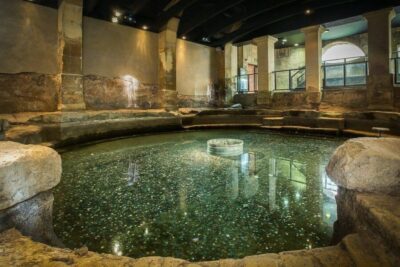
Bath: City Walking Tour with Optional Roman Baths Entry
Read our review →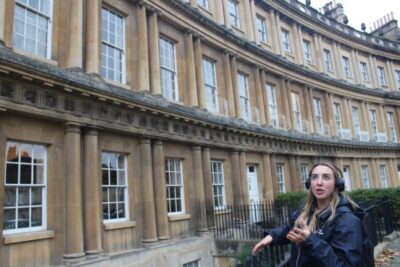
Bath: Bridgerton Filming Locations Walking Tour with Music
Read our review →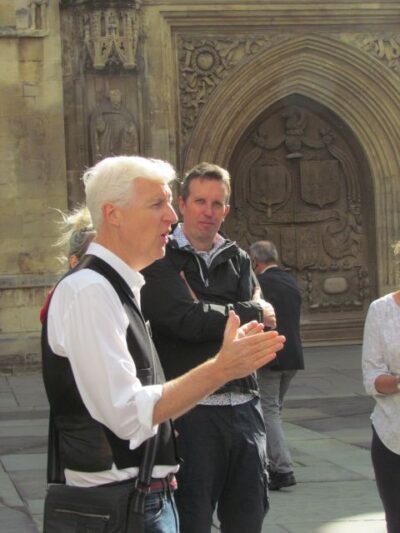
Bath: Private Bridgerton Walking Tour for upto 20 people
Read our review →Lists this walk sits on