
Review · BOSTON
Boston: Freedom Trail Guided Walking Tour in French
Boston’s Freedom Trail is much easier to understand when someone connects the scattered buildings, graves, meetinghouses, and street corners into one story. This French-language walking tour does exactly that, beginning at Boston Common and ending in the North End, where the city’s past meets its Italian restaurants and modern street life.
I especially like the small maximum of 15 people, which should make it easier to hear the guide and ask questions. I also like the range of subjects, from the American Revolution to immigration, abolition, education, architecture, and even contemporary Boston. The main consideration is pace: 150 minutes covers a lot of ground, and most stops are viewed from outside rather than visited inside.
Key points at a glance
- French from start to finish: The guide explains Boston’s past in French, with Maria frequently leading the tour.
- A full Freedom Trail overview: The route connects Boston Common, the State House, historic meetinghouses, Faneuil Hall, the North End, and the Old North Church.
- Small-group format: With no more than 15 people, the tour feels more personal than a large sidewalk group.
- Strong first-day choice: You finish with a useful mental map of downtown Boston and the North End.
- Lots of stories beyond the Revolution: Expect subjects such as the Mayflower, abolition, American education, immigration, architecture, and city building.
- Outdoor sightseeing: Museum admission is not included, so plan separate visits if you want to go inside the historic buildings.
Why this French Freedom Trail walk works well on a first visit
The best reason to take this tour early in your Boston stay is orientation. Boston’s historic center is compact, but its story is not. A cemetery may sit beside a church, a colonial meetinghouse may be only a few blocks from a modern memorial, and a famous revolutionary event may have taken place on an ordinary-looking street corner.
A guide gives those places order. You start at Boston Common, follow the red-brick path through central Boston, and finish in the North End. By then, you have seen the city as an open-air museum rather than as a pile of unrelated attractions.
The tour is conducted in French, which matters more than a simple language preference. Historical names, political arguments, and old institutions can be hard to follow in a second language, especially outdoors with traffic and other tour groups nearby. Several guests specifically appreciated receiving an earpiece from Maria, making her explanations easier to hear while walking.
The group size also works in your favor. A maximum of 15 people is small enough for the guide to manage questions and keep the group together without turning every stop into a crowd scene. At $45 per person, the price is reasonable if you want two and a half hours of explanation and orientation. It is less compelling if you only want photographs or intend to enter several buildings, since admission tickets are not part of the tour.
More walks with a guide around Boston:
- Harvard University Campus Guided Walking Tour
★ 4.5 · 3,632 reviews - Boston Freedom Trail Walking Tour with Costumed Guide
★ 4.5 · 2,531 reviews - Self Guided Classic Freedom Trail Location Aware (GPS) Walking Audio Tour
★ 4.5 · 258 reviews
Starting at Boston Common and the State House
Meet inside Boston Common, in the alley to the left of the entrance to the Visitor Center. Your guide holds a sign reading Gilded Age Tour. This detail is worth noting because the starting area has several nearby paths and landmarks, and finding the correct person quickly makes the beginning less stressful.
The tour opens with Boston Common, one of the city’s most recognizable public spaces. The guided portion here lasts about 10 minutes. This is a useful place to begin because the common helps you understand Boston’s layout before the group moves into denser streets.
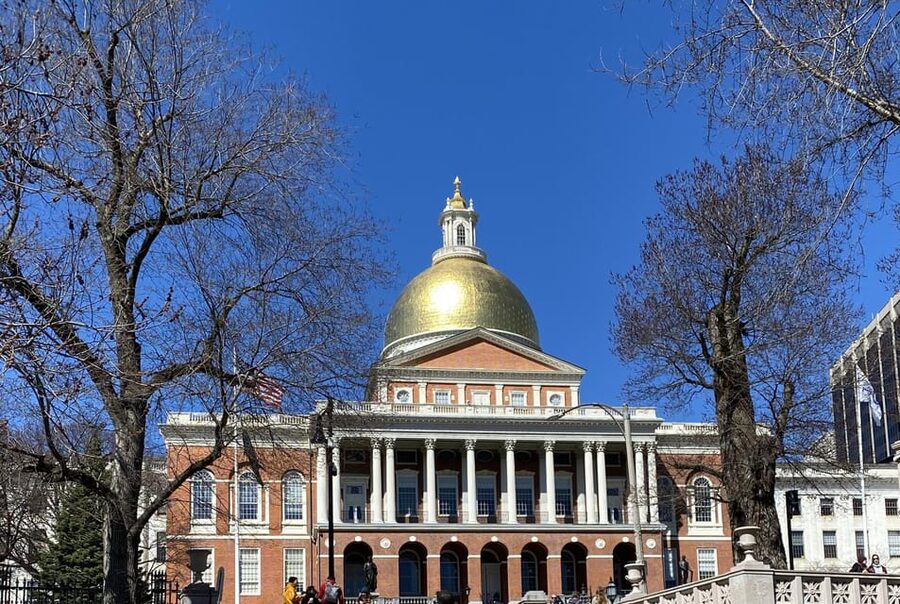
You then reach the Massachusetts State House for a five-minute photo stop. The building connects the historic center to the city’s continuing political life. Do not expect a long interior visit here. The emphasis is on the exterior, the setting, and the story the guide provides.
This opening section is not about checking off attractions at top speed. It gives you the basic frame for Boston’s founding and growth. The guide also places the city in the story of the first pilgrims arriving from the Mayflower, a subject that helps set up the larger story of colonial America.
Churches, graves, and the early city
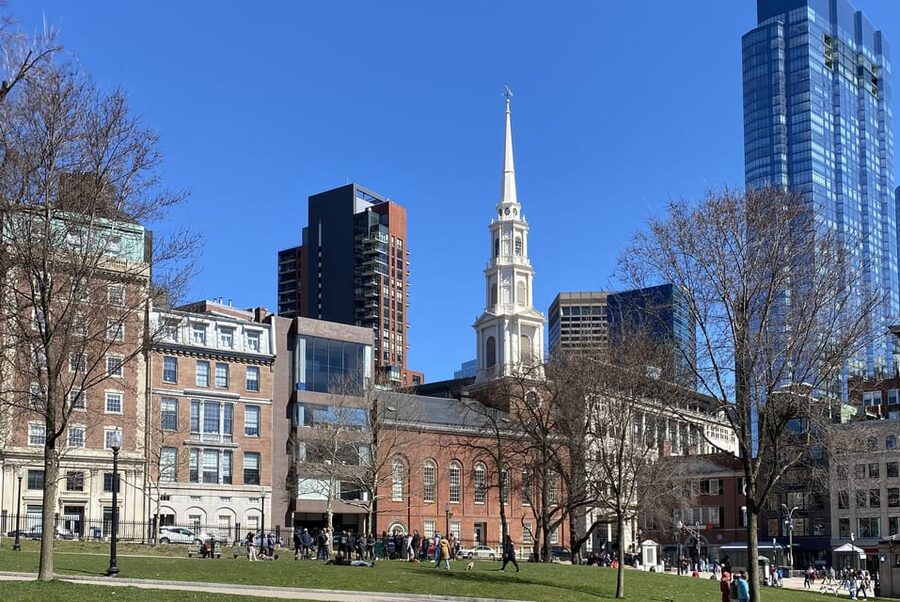
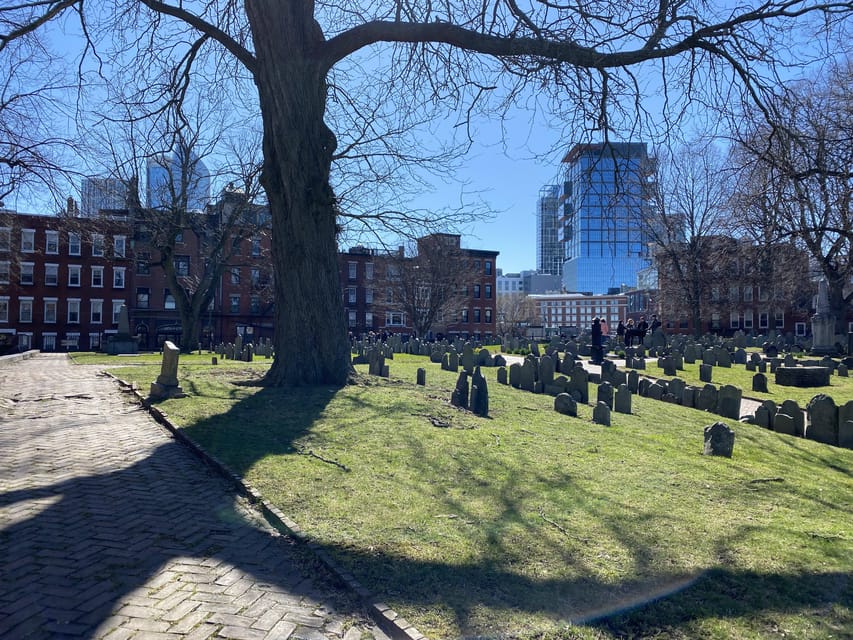
The next portion brings together several places that reward explanation more than a quick photograph. Granary Cemetery and King’s Chapel show how closely religion, public life, and burial customs were tied together in early Boston. The tour also includes Park Street Church, another important landmark near the common.
You will hear about notable figures and the city’s changing institutions as you walk. The value here is in the connections. A graveyard is not only a quiet place with old stones, and a church is not merely a handsome building. Each helps explain who held influence, how people worshipped, and how Boston’s public identity took shape.
The route also points out the statue of Benjamin Franklin and the site of the Latin School. Franklin’s connection to education and public life gives the walk a broader focus than military history alone. The Latin School brings American education into the story, showing how the city’s institutions helped shape the new country.
One practical point: these stops are primarily outdoor viewing points. You should think of the tour as a guided introduction, not a series of museum visits. If you want to study inscriptions, interiors, or exhibits at length, set aside extra time afterward.
The Revolution around the Old South Meeting House
The Old South Meeting House receives about 10 minutes as a photo stop. It is one of the places where the political tension leading to the American Revolution becomes easier to picture. The guide explains the people and arguments tied to Boston’s revolutionary period, rather than leaving you with only a building facade.
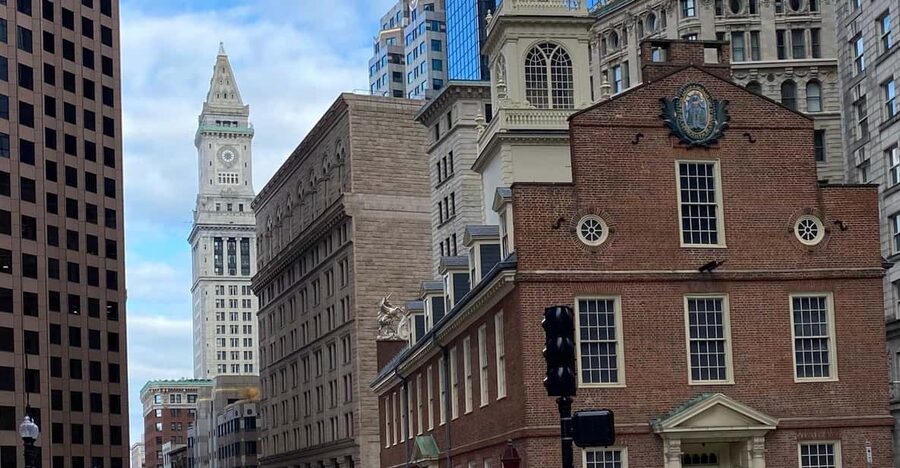
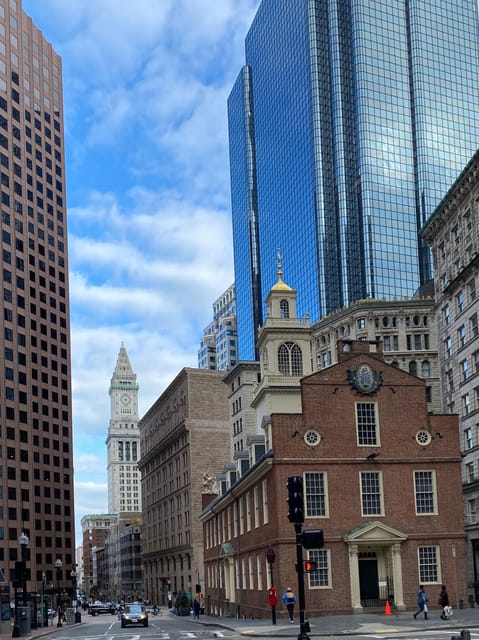
From there, the tour continues to the Old State House, with another short photo stop. This is one of the most important points on the route because it brings government, protest, and revolutionary conflict together in a small area.
The nearby site of the Boston Massacre adds another layer. The event became powerful in part because of the way it was presented to the public, and the guide’s broader discussion of Boston’s role in the Revolution helps you understand why this location mattered.
You will also hear about the Old Corner Bookstore. The name can sound modest, but it adds a literary and commercial side to the walk. Boston was not only a place of protests and political speeches. It was also a city of publishing, business, education, and public debate.
More walking tours around Boston:
- Boston: Freedom Trail History Small Group Walking Tour
★ 5.0 · 6,450 reviews - The Full Revolutionary Story Epic Small Group Boston Walking Tour
★ 5.0 · 2,356 reviews - Boston’s Freedom Trail: A Revolutionary Walking Tour
★ 4.9 · 1,748 reviews - Boston: Freedom Trail History Small Group Walking Tour
★ 4.9 · 1,590 reviews
Faneuil Hall and the city’s public voice
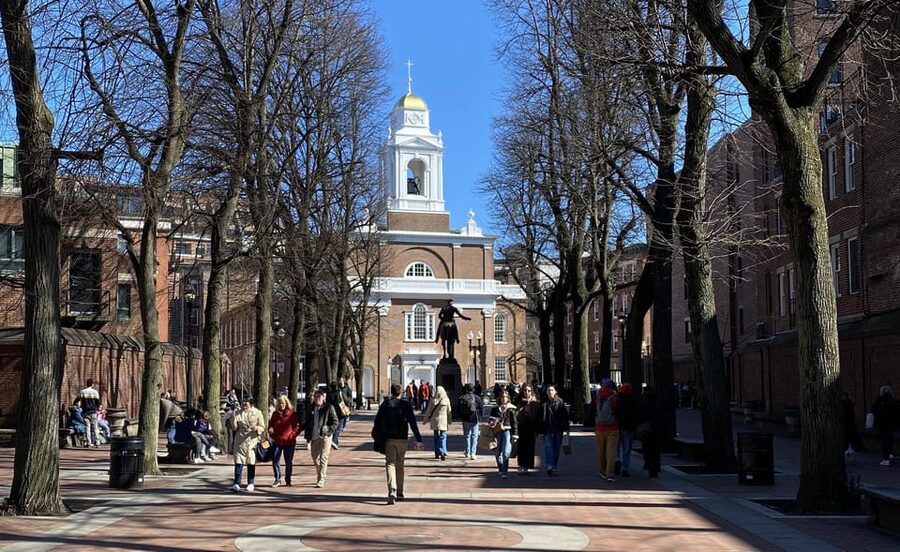
Faneuil Hall is one of the central stops, with about 10 minutes set aside for photographs and explanation. The building is tied to public meetings, commerce, and Boston’s political culture. It is also one of those places that makes more sense once the guide explains how public space worked in the colonial and revolutionary city.
Nearby, the route includes the famous Oyster House restaurant and Haymarket. These stops help shift the story from the Revolution to everyday urban life. Markets and restaurants show how people gathered, traded, ate, and moved through the city.
This is also where the tour’s wider range becomes clear. The guide does not limit the story to famous men and battlefield events. You hear about immigration, the way Boston was built, architecture, and the ordinary activity that shaped downtown.
The Holocaust Memorial is another poignant point along the route. Its presence reminds you that Boston’s history did not stop with independence. The tour links older landmarks with later chapters of the city’s life, giving the walk more emotional and historical range.
Modern sculptures beside old Boston
The walk also includes modern public art, including The Embrace, a sculpture dedicated to Martin Luther King, and A Donkey, acquired from Italy. These works may seem far removed from colonial churches and revolutionary sites, but they help show that historic Boston is still a living city.
I like this part of the route because it prevents the experience from becoming a museum display frozen in the eighteenth century. You move from colonial buildings to modern memorials and public sculpture within the same downtown walk. The contrast makes the city’s layers easier to see.
The guide also discusses abolition and notable figures beyond the familiar revolutionary names. That wider lens is important. Boston’s history includes national ideals, but also arguments about who benefited from those ideals and how the city changed over time.
Entering the North End and following Paul Revere
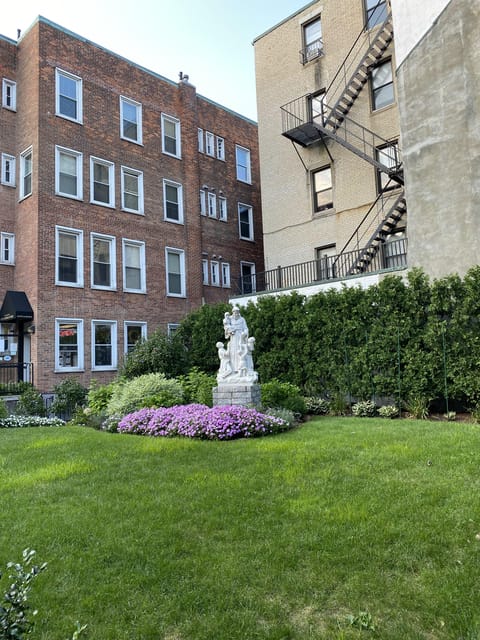
The second half of the route leads toward the North End, Boston’s Italian district. The neighborhood receives about 30 minutes of guided attention, making it one of the more substantial sections of the experience.
The North End is where the tour begins to feel less like a line between monuments and more like a real neighborhood. Streets are tight, historic sites sit close to restaurants and shops, and the area has a strong connection to immigration and everyday city life.
Paul Revere’s house is included, along with his equestrian statue. The tour places Revere within the wider story rather than treating him as a single heroic figure detached from his neighborhood. You also hear about the Old North Church, one of Boston’s most recognizable landmarks and a key stop in the revolutionary story.
The Old North Church is listed as a 10-minute photo stop. If you want to go inside, remember that museum or site admission is not included. The guide gives you the context; a separate visit gives you more time with the interior and exhibits.
Copp’s Hill Terrace, Old North Church, and the final view
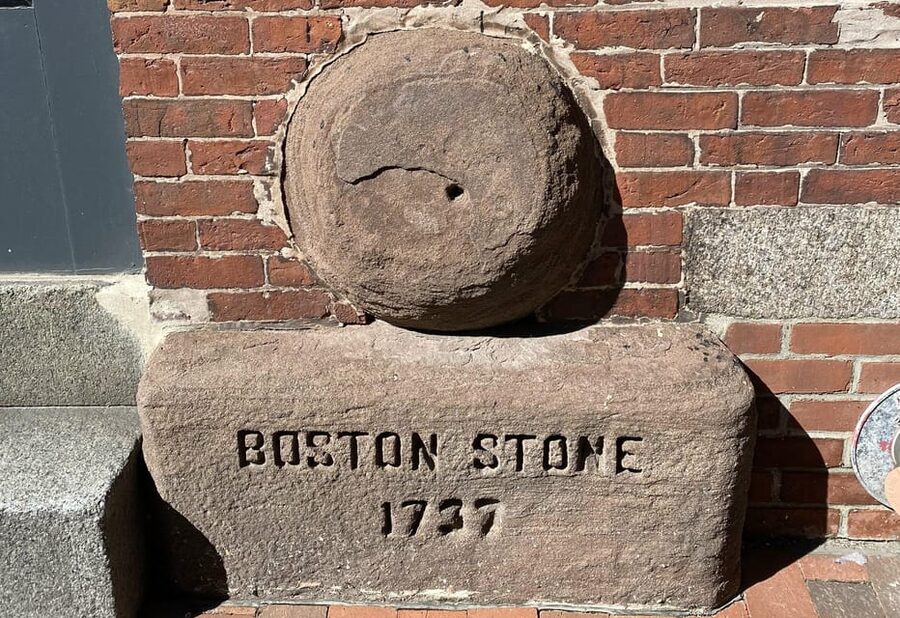
The walking tour ends at Copp’s Hill Terrace, only steps from the Old North Church and the North End’s Italian restaurants. This is a practical finish because you can continue exploring without needing to return to Boston Common.
Copp’s Hill Cemetery is part of the wider route, and the closing area keeps the focus on burial grounds, the revolutionary period, and the city’s changing neighborhoods. The ending also leaves you in a useful location for lunch or dinner.
The supplied route information also identifies the USS Constitution and Bunker Hill Monument among the emblematic Freedom Trail sites discussed during the experience. Because the tour is listed as a 150-minute walk ending at Copp’s Hill Terrace, confirm the exact treatment of those farther sites when booking if seeing both in detail is especially important to you. The tour description presents the experience as covering all 16 Freedom Trail sites, but the listed itinerary gives more specific time to the central landmarks and North End.
That distinction matters. You are paying for a guided overview of Boston’s historic core, not necessarily extended time at every location. For a first visit, that can be the right tradeoff. You get the big picture, then choose which places deserve a return visit.
What the $45 price buys you
At $45, the tour offers three main things: a French-speaking guide, a planned route, and historical interpretation over 150 minutes. The price is easiest to justify if you want the city explained in French and prefer a small group rather than a self-guided walk.
The tour also saves you the work of sorting the Freedom Trail’s sites into a sensible order. Boston is walkable, but independent visitors can miss the connections between the Old State House, the Boston Massacre site, Faneuil Hall, and the North End.
The price does not cover museum visits. That keeps the basic cost clear, but you should budget extra if you want to enter historic buildings. You may also want a separate food stop in the North End after the tour, since the route finishes close to Italian restaurants but does not include a meal.
The overall rating is 4.9 from 106 ratings, and the strongest pattern in the written feedback is consistent: Maria is repeatedly praised for making the tour interesting, explaining the city clearly, and keeping the time moving quickly. One family also found that she adapted well to two young children, ages two and four. That suggests a considerate guide, though the tour remains a long walk and families should decide if 150 minutes suits their children.
Who should book this tour?
I would choose this experience if you are visiting Boston for the first time, want French explanations, and prefer historical context over a quick photo circuit. It is also a good fit if you want to finish near the North End, where you can continue exploring on your own.
The tour suits adults, French-speaking families, and anyone who wants a guide to connect architecture, politics, immigration, education, abolition, and daily life. The small group and reported use of earpieces are useful advantages in a busy city center.
I would hesitate if you want long interior visits, a relaxed pace, or a tour focused only on the American Revolution. You will see many sites, but some receive only five or 10 minutes. For that reason, I would take this tour early in your stay, then return independently to the places that catch your interest.
FAQ
Is the tour conducted in French?
Yes. The live tour guide speaks French, and the experience is designed for French-speaking visitors.
How long does the walking tour last?
The tour lasts 150 minutes, or two and a half hours.
Where does the tour start?
It starts at the Boston Common Visitors Center. Meet in the alley to the left of the Visitor Center entrance, inside Boston Common.
How do I identify the guide?
The guide holds a sign that says Gilded Age Tour.
Where does the tour end?
The tour ends at Copp’s Hill Terrace in the North End, near the Old North Church and Italian restaurants.
Are museum entrance fees included?
No. The experience includes the French-speaking guide and walking tour, but museum visits are not included.
Is the tour wheelchair accessible?
Yes, the activity is listed as wheelchair accessible.
Should you book it?
Book it if you want a clear, French-language introduction to Boston’s historic center, especially on your first day. The combination of Maria’s engaging explanations, a small group, a 150-minute route, and a North End finish gives you both orientation and useful local context.
Skip it only if your priority is entering every major building or spending a long time at individual sites. For most French-speaking visitors who want Boston’s story explained while they walk, $45 is a fair price for a focused introduction to the Freedom Trail.
New walking tours around Boston
- Cambridge, Massachusetts: MIT and Harvard Walking Tour★ 4.7 · 486 reviews
- Boston: North End Pizza Walking Tour with 3 Slices & Cannoli★ 4.8 · 162 reviews
- Boston: Salem by Boat – Witch Trials & Walking Tour★ 4.3 · 263 reviews
- Boston: Full Revolution Story Epic Small Group Walking Tour★ 4.9 · 132 reviews
- Boston: 2-Hour Historic Walking Tour★ 4.7 · 88 reviews
- Self Guided Classic Freedom Trail Location Aware (GPS) Walking Audio Tour★ 4.5 · 258 reviews
- Beacon Hill Boston History + Photo Walking Tour (SMALL Group)★ 5.0 · 163 reviews
- Boston History Tour: Scenic Walk Through Time & Landmarks★ 5.0 · 627 reviews
Boston Walking Tours, side by side.
Boston: Freedom Trail History Small Group Walking Tour
Read our review →
Harvard University Campus Guided Walking Tour
Read our review →
Boston Freedom Trail Walking Tour with Costumed Guide
Read our review →
The Full Revolutionary Story Epic Small Group Boston Walking Tour
Read our review →
Boston’s Freedom Trail: A Revolutionary Walking Tour
Read our review →
Boston North End Food Tour of 6+ Tastings, Cannoli, Lobster Roll
Read our review →
Boston Pizza Lovers Food and History Walking Food Tour
Read our review →
Boston History Tour: Scenic Walk Through Time & Landmarks
Read our review →Lists this walk sits on