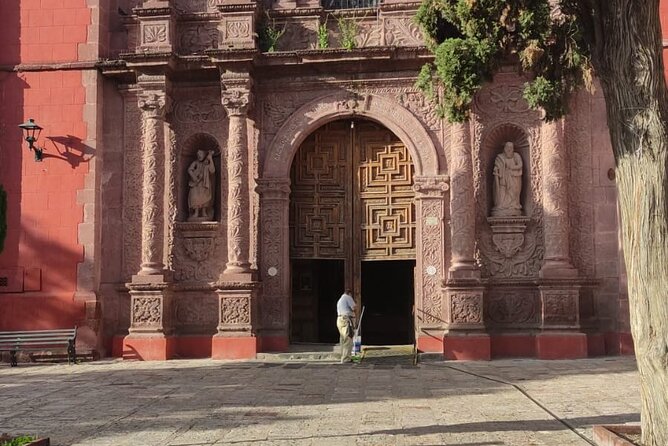
Review · MEXICO
Historical and Cultural Walking Tour of San Miguel de Allende
San Miguel de Allende reveals itself best on foot, one church facade, courtyard, and cobblestone street at a time. This two-hour walk gives you a clear first look at the city, from the Canal district to the famous pink parish church, while explaining how families, faith, architecture, and the independence hero Ignacio Allende shaped the town.
I like the easy pace, with chances to sit along the way, and the practical advice guides such as Jalal and Felipe offer about food and places to visit. I also like the route’s balance of grand landmarks and smaller clues in the streets. The tradeoff is that two hours can feel tight, so a guide who spends too long on dates and names may leave less time for simply looking around.
Key points at a glance
- A useful first-day orientation: The walk covers the central sights and helps you understand the layout before exploring alone.
- Seven historic stops: You visit former convents, churches, civic plazas, a colonial mansion, and the home of Ignacio Allende.
- Certified federal guide: The tour is led in English by a guide licensed at the federal level.
- Comfortable but uneven walking: The pace is generally leisurely, but San Miguel’s cobblestones, slopes, and steps call for good shoes.
- Guides add local advice: Food suggestions and answers to questions are an important part of the experience.
- Small enough to hear: The group can reach 25 people, and some departures use earpieces so you can follow the guide without standing shoulder to shoulder.
Why this is a smart first walk in San Miguel
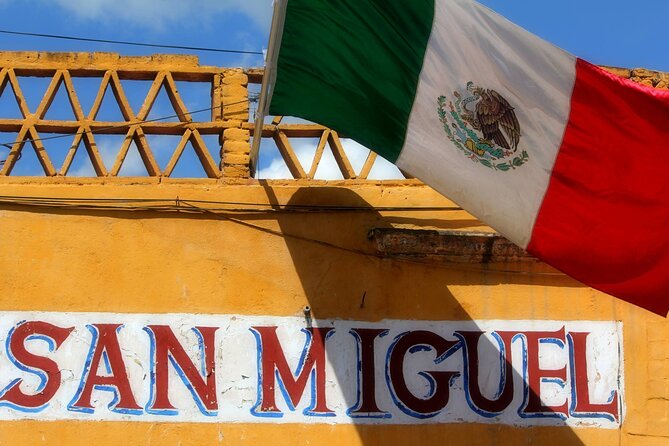
San Miguel de Allende can feel confusing at first. Its Centro is compact, but the streets twist, rise, and change character quickly. A church that looks like a simple landmark may connect to a religious order, a wealthy family, or a turning point in the city’s past.
This walk gives you that framework. You start near Starbucks at Canal 3 and finish outside the Parroquia de San Miguel Arcángel, the city’s most famous church. That point-to-point route is useful because you do not simply circle one plaza and return to where you began. You cross several parts of the historic center and finish in a spot you can easily recognize later.
I would book it early in your stay, ideally on your first day or soon after arrival. The route helps you decide which churches deserve a second look, where to return for photographs, and which food or shopping suggestions fit your plans. Several guides have also stayed a little longer to answer questions, though you should not count on an extended finish every time.
More History Walking Tours in Mexico
- Historic Downtown Walking Tour
★ 5.0 · 1,289 reviews - Mexico City: Historic Downtown Walking Tour
★ 4.8 · 1,039 reviews - Walking Tour of the Historic Center of Mexico City
★ 5.0 · 870 reviews
Casa del Mayorazgo de Canal and the families behind the city
The first stop is Casa del Mayorazgo de Canal, where the guide introduces the family credited with helping give San Miguel much of its early shape. You are not just looking at an old facade. You are beginning with the people who had money, influence, and a role in building the town’s public and private life.
The ten-minute stop is brief, but that is appropriate at the start. It gives you a name and a family story to carry through the rest of the walk. As you see churches, plazas, and old homes, you have a better sense that San Miguel was shaped by households and institutions, not only by famous buildings.
If you prefer a tour that focuses on visual details and short stories, this opening should work well. If you want a long architectural study of the house, ten minutes will feel limited.
Bellas Artes, where religious space became an art center
The former convent at Bellas Artes is one of the more interesting changes of use on the route. Here, you learn about the city’s religious past and how the building later became an art center. The stop lasts about 15 minutes, enough to connect the building’s original purpose with its later cultural role.
This is a good example of how San Miguel’s buildings tell more than one story. A convent is not frozen in the period when it was built. Its walls also reflect changes in education, art, public life, and the way the city uses old structures today.
Your guide may point out colors, doors, and architectural features that are easy to miss when walking alone. You will get more from the stop if you look up and around instead of treating Bellas Artes as a quick photo stop.
Three connected landmarks: Oratorio, Our Lady of Health, and the Plaza Cívica
The next section brings together the Oratorio Church, Templo de Nuestra Señora de la Salud, and the Plaza Cívica. At around 30 minutes, this is the longest stop, and it gives the guide room to explain how religion and civic life worked together in San Miguel.
The churches are not presented as isolated monuments. You learn how they fit into the city’s development and how their facades and interiors reflect different periods. The Plaza Cívica adds a public setting to the religious story, helping you see how people moved between worship, trade, government, and daily life.
This is likely to be one of the most information-heavy parts of the tour. Guides such as Jalal and Fernando have been praised for adding humor and keeping people involved, while Felipe is known for giving clear explanations and taking questions. Still, if your attention fades when a guide lists many dates and family names, this is the point where you may want to ask for the story behind the facts.
More History Walking Tours in the world:
- History and Hauntings of Salem Guided Walking Tour
★ 5.0 · 14,564 reviews - Lisbon: History, Stories and Lifestyle Walking Tour
★ 4.8 · 10,902 reviews - Boston: Freedom Trail History Small Group Walking Tour
★ 5.0 · 6,450 reviews - Historic Charleston Guided Sightseeing Walking Tour
★ 5.0 · 6,216 reviews
Plaza de la Soledad and the clues hidden in the streets
At Plaza de la Soledad, the tour shifts from major interiors to the cultural history of the city’s streets. The plaza contains a prominent monument, but the guide also explains that the site once held a much larger building. That contrast gives you a useful lesson in reading San Miguel: what you see now may be only part of the story.
The 15-minute stop also breaks up the church visits. You have time to notice the shape of the square, the surrounding buildings, and the way old streets open into small public spaces. The guide’s comments here can make later solo walks more rewarding because you start looking for changes in scale and building use.
San Miguel’s Centro is not a flat, polished museum setting. The streets are cobbled, and the route can rise and fall. The walk is described as easy by many participants, but comfortable shoes still matter. One of the tour’s strengths is its slow pace, with benches available at regular points, often every 10 to 15 minutes.
Iglesia de San Francisco and the city’s changing architecture
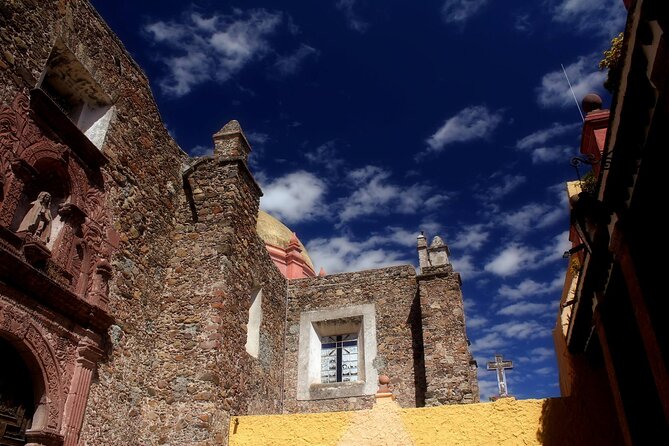
The Church of San Francisco adds another layer to the architectural story. The guide explains how the city’s design changed over the centuries, using the church as a clear example rather than treating every building as if it belonged to the same period.
This stop lasts about 15 minutes. You can expect to hear about the role churches played in San Miguel’s development and why this one remains important to the city’s identity. Even if you are not a church specialist, the stop helps you compare styles seen earlier in the walk.
I like this part because it turns a series of pretty facades into a timeline. You begin to notice that San Miguel’s charm comes from variation: different periods, materials, colors, and building purposes close together.
Casa de Ignacio Allende and the name behind San Miguel de Allende
At Casa de Ignacio Allende, the tour turns to the local hero whose name was added to the city. The stop takes about ten minutes and is not simply a patriotic pause. It connects San Miguel to Mexico’s independence story and gives you a person to associate with the city’s full name.
Admission to this stop is not included, so check the cost before you go. The rest of the listed stops have no separate admission charge, making this the one place where an entry fee may affect the flow of the group.
The guide’s storytelling matters here. Family connections and local figures can blur together when delivered as a string of names. A good guide makes Allende’s role understandable and ties his story back to the streets you have already walked.
The Parroquia of San Miguel Arcángel as the grand finish
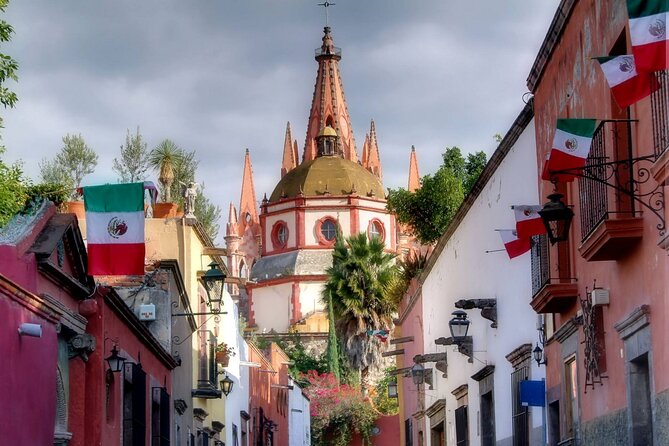
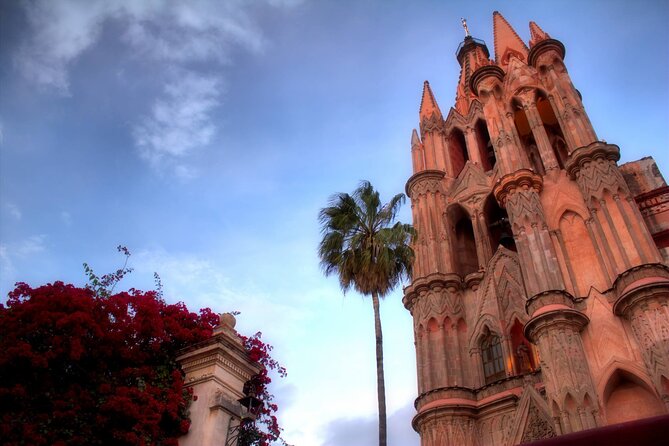
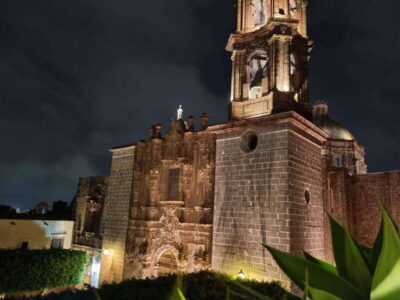
The walk ends outside the Parroquia de San Miguel Arcángel, the postcard church that defines so many views of San Miguel. The final 25 minutes focus on the building and its place in the city’s identity.
Ending here works well. You finish with the sight most people want to photograph, but you arrive with more context than you would have had at the start. The church is not just an attractive backdrop. It becomes the final piece in a story about faith, architecture, civic space, and the people who shaped the town.
The tour ends outside the parish church, not as a private interior visit. That is useful to know if you expect a detailed inside tour. It also leaves you in a practical location for continuing on foot through Centro.
How the guides shape the experience
The guide is the main variable in any walking tour, and this one has several named guides associated with strong departures. Jalal is described as friendly, interactive, considerate, and generous with restaurant suggestions. Felipe brings a warm manner, clear explanations, and a good mix of history, culture, daily life, and humor.
Fernando is noted for an engaging style and for making the subject easy to follow. Other guides have been praised for answering questions and staying after the official end when time allowed. The common thread is that the best experience comes when the guide connects the past to present-day San Miguel rather than reciting facts alone.
There is one important caution. One particularly unhappy participant felt the route was rushed, disorganized, and lighter on history than expected. Another found the detail too heavy and would have preferred more movement and visual storytelling. That tells you what to watch for: this tour works best when your guide keeps the facts tied to what you are seeing.
Some departures use earpieces, which can make a major difference in a group. You can hear the guide without pressing close to the front, especially near busy streets or large plazas. The maximum group size is 25, so it is not a private walk, but it is still small enough to remain manageable when the guide handles the group well.
Price, timing, and physical effort
At $34.28 per person, the tour is reasonably priced for a two-hour guided introduction. You are paying for a certified federal guide and a route that links seven historic places without needing taxis or other transport. There are no meals, rides, or major entrance packages included, so the value rests on the guide’s explanations and your ability to use the orientation later.
The walk usually takes about two hours, though some departures have run closer to two and a quarter hours. Plan a little breathing room afterward rather than scheduling a meal or appointment immediately at the advertised finish.
You need a moderate level of physical fitness. San Miguel’s cobbled streets and hills are the real challenge, not the distance alone. Wear shoes with good grip, bring water, and avoid carrying more than you need. The pace is generally gentle, and benches can provide regular breaks, but this is still a walking tour through uneven streets.
The tour is offered in English and includes mobile ticketing. It starts at Starbucks, Canal 3, in Zona Centro, and finishes outside the parish church. Public transportation is nearby, service animals are allowed, and the activity depends on good weather.
Who will get the most from this walk
I would recommend it to first-time visitors who want a clear introduction before exploring San Miguel on their own. Solo visitors, couples, and friends can all use the route as a practical map of the Centro.
It is also a good fit if you enjoy history in moderate portions and want local suggestions about places to eat. The food advice is not the formal focus, but it can be one of the most useful extras when a guide takes time to answer questions.
You may want something else if you already know the central churches well or want a slow, highly detailed architectural study. The route covers a lot in two hours, and the amount of detail can vary by guide. If you mainly want photographs and free time inside each site, a self-guided walk may feel less restricted.
Should you book the San Miguel walking tour?
Book it if you are new to San Miguel and want to understand the city before wandering farther afield. The route gives you major churches, a former convent, a colonial family home, a civic plaza, an independence figure, and the parish church in one manageable outing.
I would schedule it early, wear comfortable shoes, and arrive ready to ask questions. For $34.28, it offers a useful foundation, especially with a guide such as Jalal, Felipe, or Fernando who adds humor, practical food advice, and present-day context.
Skip it if you dislike guided history or need a perfectly fixed route with long stops at every site. For most first-time visitors, though, this is a sensible way to get your bearings fast and turn San Miguel’s beautiful but sometimes confusing center into a place you can explore with confidence.
FAQ
How long does the Historical and Cultural Walking Tour of San Miguel de Allende last?
The tour lasts about two hours, although some departures may run slightly longer.
Where does the walking tour start?
It starts at Starbucks, Canal 3, in Zona Centro, San Miguel de Allende.
Where does the tour finish?
The tour finishes outside the Parroquia de San Miguel Arcángel.
What language is the tour offered in?
The tour is offered in English.
What is included in the price?
A certified federal guide is included. Transportation, meals, tips, personal expenses, and admission to Casa de Ignacio Allende are not included.
How much does the tour cost?
The listed price is $34.28 per person.
How large can the group be?
The activity can have a maximum of 25 travelers.
Can I cancel for a full refund?
Yes. You can cancel at least 24 hours before the local start time for a full refund. Cancellations or changes made within 24 hours are not refunded or accepted. If poor weather or an insufficient number of participants causes cancellation, you will be offered another date or experience, or a full refund.
More Cultural Walking Tours around the world
- Savannah First Squares Culinary & Cultural Walking Food Tour
★ 5.0 · 3,229 reviews - Tokyo Tsukiji Fish Market Food and Culture Walking Tour
★ 5.0 · 3,184 reviews - New Orleans French Quarter, Voodoo and Culture Walking Tour
★ 4.5 · 2,961 reviews - Amsterdam: Cultural Highlights Walking Tour
★ 4.9 · 2,629 reviews
New walking tours around the world
- Niagara Falls, Canada: White Water Walk Entry Ticket★ 4.5 · 147 reviews
- NYC: Walking Tour with Local Guide and 30+ Top NYC Sights★ 4.5 · 248 reviews
- Zadar: Food Tasting & Old Town Walking Tour★ 5.0 · 94 reviews
- Niagara Falls: Walking Tour, Journey Behind Falls, & Cruise★ 4.8 · 773 reviews
- New York City: Gangsters and Ghosts 2-Hour Walking Tour★ 4.7 · 615 reviews
- NYC: History of Slavery & Underground Railroad Walking Tour★ 4.7 · 87 reviews
- New York City’s Hell’s Kitchen: Walking Food Tour★ 4.8 · 200 reviews
- NYC: Brooklyn Bridge and DUMBO Guided Walking Tour★ 4.8 · 93 reviews
Mexico Walking Tours, side by side.
Frida Kahlo VIP [Museum Tickets Included] Walk, Markets & Churros
Read our review →
Historical & Cultural Walking Tour of San Miguel de Allende
Read our review →
Mexico City: Guided walking tour through the most historic parts of the city.
Read our review →