
Review · LISBON
Lisbon: Alfama and São Jorge Castle Quarters Walking Tour
Lisbon’s oldest streets tell their story one steep step at a time. This 150-minute walk leads you from the Casa dos Bicos and Roman Olisipo to Alfama’s Moorish lanes, fado corners, Lisbon Cathedral, and the Portas do Sol viewpoint. I like the way the route links big history to ordinary streets, so you see where the past still shapes daily life.
I also like that cathedral entry is included and that the guides, including Ricardo, Agatha, Helena, Elena, Lucy, and Fatima, have been praised for clear storytelling and friendly conversation. The main catch is the São Jorge Castle title: you reach the castle walls and quarter, but admission to the castle itself is not included.
Key points at a glance
- Start at the spiky Casa dos Bicos: Meet beside one of Lisbon’s most unusual buildings, a survivor of the 1755 earthquake.
- Trace Roman Olisipo: See the Cetária, linked to old Roman salting tanks, and hear how Alfama’s thermal waters got their name.
- Walk Alfama’s maze: Follow alleys, stairways, patios, and small squares toward the former Jewish Quarter.
- Enter Lisbon Cathedral: See a 12th-century church altered across several architectural periods.
- Connect streets with fado: Learn about the music’s beginnings and one of Alfama’s old customs at Largo do Chafariz de Dentro.
- Finish with a city view: Portas do Sol gives you a broad look over Alfama and the Tagus area.
Starting beneath the Casa dos Bicos

The meeting point is Campo das Cebolas, beside Casa dos Bicos. Look for the building covered in diamond-shaped stone points and a guide carrying a black bag marked Lisboa Autêntica. The nearest metro stop is Terreiro do Paço.
This is a useful place to begin because Casa dos Bicos immediately shows how Lisbon mixes grand history with odd, memorable details. Built around 1523, it survived the 1755 Lisbon earthquake and later became one of the city’s most recognizable facades. You do not need a long museum visit to appreciate it. The building gives your guide a visual starting point for explaining Lisbon before the walk turns uphill.
Give yourself enough time to reach the meeting point. The tour does not include transport to Campo das Cebolas, and the walk begins from there. Comfortable clothes matter, since Alfama is made for walking rather than smooth, level pavement.
More Castle and Palace Walking Tours around Lisbon:
- Edinburgh Castle: Guided Walking Tour with Entry Ticket
★ 4.7 · 11,699 reviews - Venice: Doge’s Palace and St Mark’s Basilica Walking Tour
★ 4.4 · 6,291 reviews - Prague: 3-Hour Walking Tour of Old Town & Prague Castle
★ 4.7 · 5,696 reviews
Roman Olisipo and the old salt tanks
The route reaches the Cetária, where you can see traces connected with Roman salting tanks. This part helps you picture Lisbon under its old Roman name, Olisipo, as a working port tied to food production and trade.
The story is not only about ruins. You hear how the Romans discovered the thermal waters in the Alfama area, then how Muslims gave the springs the name Al-Hamma. That small change in language shows how the district gathered layers of culture over time.
I find this early section useful because it stops Alfama from becoming just a pretty maze. The narrow lanes have a much older purpose. They grew around water, work, worship, defense, and homes. A guide can point out links that would be easy to miss if you were simply wandering with a map.
Into Alfama’s stairways and small squares

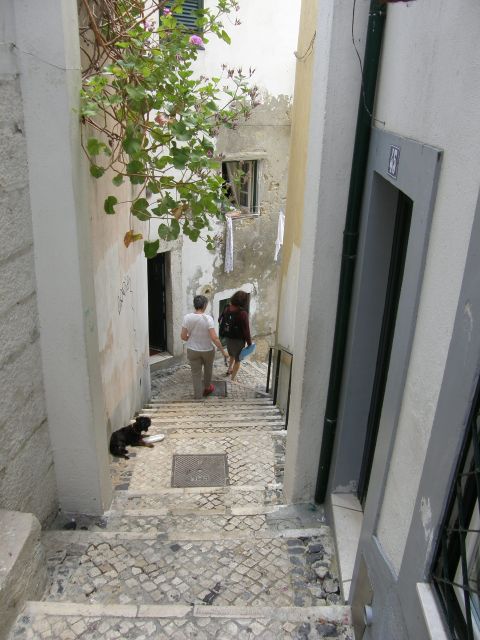
Alfama is the heart of the tour. You follow a route through alleys, interior patios, stairways, and tucked-away squares near the old castle quarter. The walk also reaches the former Jewish Quarter, giving you another piece of Lisbon’s religious and cultural past.
Expect the route to feel more like a neighborhood walk than a parade of major monuments. You will see spaces where residents live, pass through, and carry on their routines. That is one of the tour’s strongest points. The guide helps you understand how the area works, not just where to take a photograph.
The trade-off is physical. The activity is not suited to people with mobility impairments, and the streets of Alfama require walking through uneven, inclined areas. If stairs are difficult for you, this is not the best way to see the district. For everyone else, wear shoes you can trust and bring comfortable clothing.
Small group sizes may vary. Some bookings have been especially intimate, with one family describing a three-person tour that felt almost private. You should not count on having a private walk, but a smaller group can make it easier to ask questions or request a slight route adjustment when practical.
Fado at Largo do Chafariz de Dentro

Fado is treated here as part of Alfama’s social life, not just as a concert you attend after dinner. At Largo do Chafariz de Dentro, the guide explains the birth of the music and one of Lisbon’s oldest customs.
That context is valuable because fado can seem mysterious if you only encounter it in a formal restaurant. Here, you connect the music with the streets where local traditions took shape. The stop may not include a fado performance, so book this walk for explanation and atmosphere, not live music.
The best guides make this kind of subject feel personal. Agatha was praised for combining warmth with a strong sense of place, while other guides such as Ricardo and Helena were noted for making history easy to follow and responding to questions. The exact guide depends on the departure, but the experience is built around live commentary rather than an audio recording.
More walking tours around Lisbon:
- Lisbon: History, Stories and Lifestyle Walking Tour
★ 4.8 · 10,902 reviews - Best of Lisbon Small-Group Guided Walking Tour
★ 5.0 · 4,869 reviews - Lisbon: Food and Wine Small Group Walking Tour
★ 4.9 · 4,082 reviews - Best of Lisbon Walking Tour: Rossio, Chiado & Alfama
★ 4.9 · 2,700 reviews
Lisbon Cathedral and its changing styles
The walk includes entrance and a guided visit to Lisbon Cathedral, known as the Sé. Built in the 12th century, the cathedral has been changed over time, so you see a mix of architectural styles rather than one perfectly uniform design.
This is a smart inclusion. After the narrow outdoor lanes, the cathedral gives you a substantial interior stop and a chance to discuss how Lisbon’s buildings changed with new rulers, tastes, repairs, and religious needs. You also avoid paying a separate entry fee for this part of the experience.
The cathedral visit makes the tour more than a general orientation walk. You get one important interior sight, while the rest of the route focuses on streets, viewpoints, and urban history. If you want a long, detailed cathedral study, you may need to return on your own. Within a 150-minute walk, though, the visit adds welcome variety.
The castle quarter, with one important limit
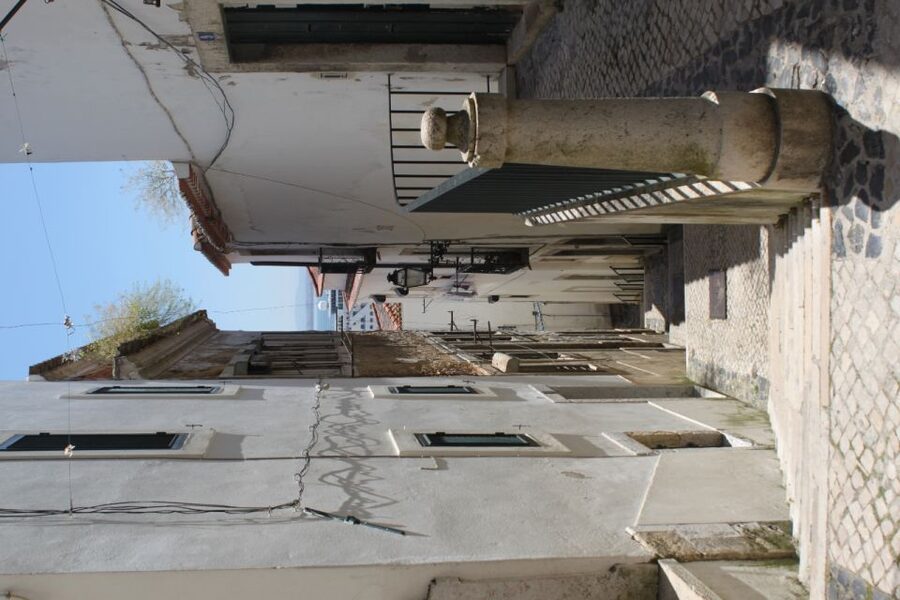
The route follows the old city walls and reaches the area around São Jorge Castle. This is where you explore the maze of streets shaped by the castle’s presence and hear how the fortified hill relates to Lisbon’s beginnings.
Be clear about what you are buying. São Jorge Castle admission is not included, and the tour does not take you inside the castle. You see the castle quarter and its walls from the route, but anyone wanting the ramparts, courtyards, or full castle visit must arrange a separate ticket and visit.
This is the one point most likely to disappoint someone booking quickly from the title. The tour is about the neighborhood around the castle, not a castle tour. If your main goal is to spend time inside São Jorge Castle, plan that as a separate stop. If you want the wider story of Alfama and the hilltop city, the route still gives you useful context.
Portas do Sol and the view over Lisbon
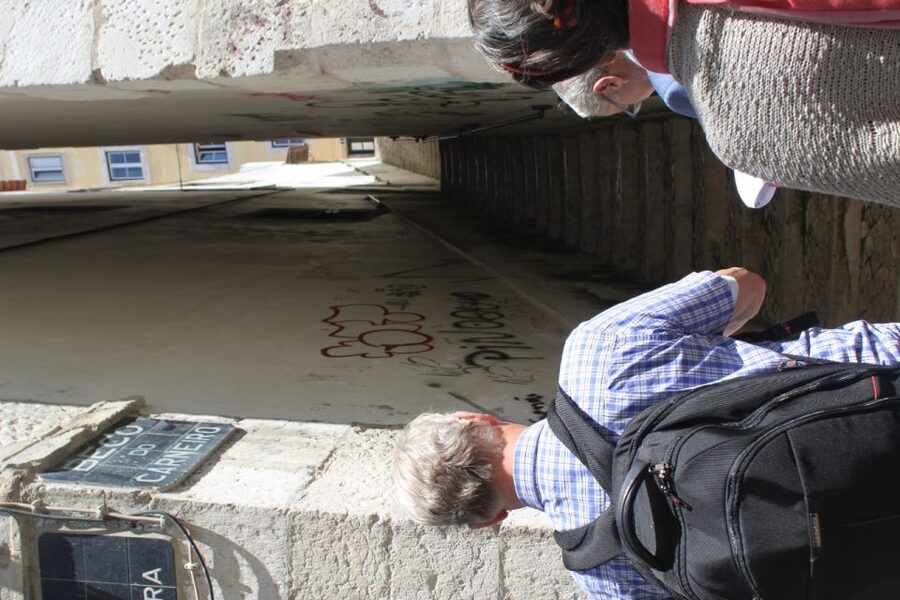
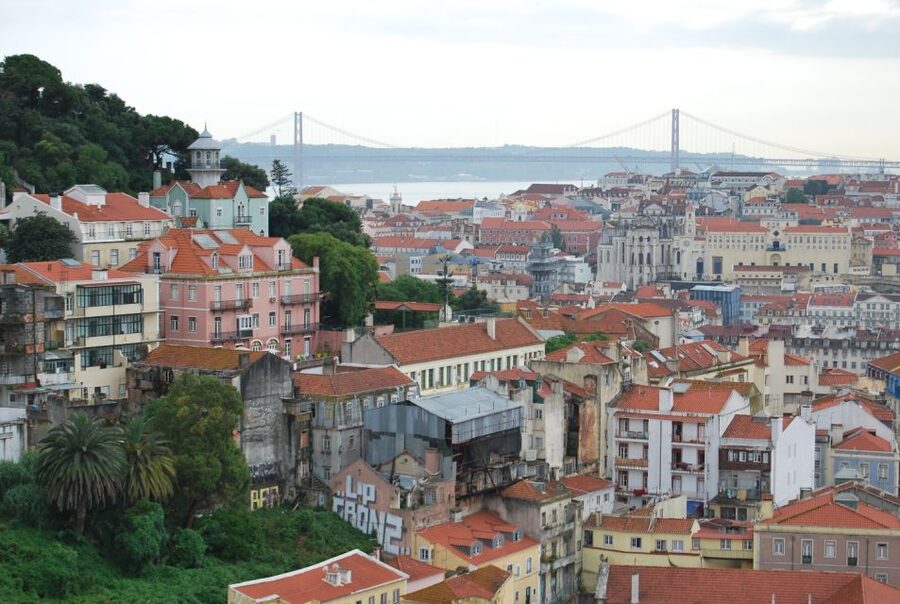
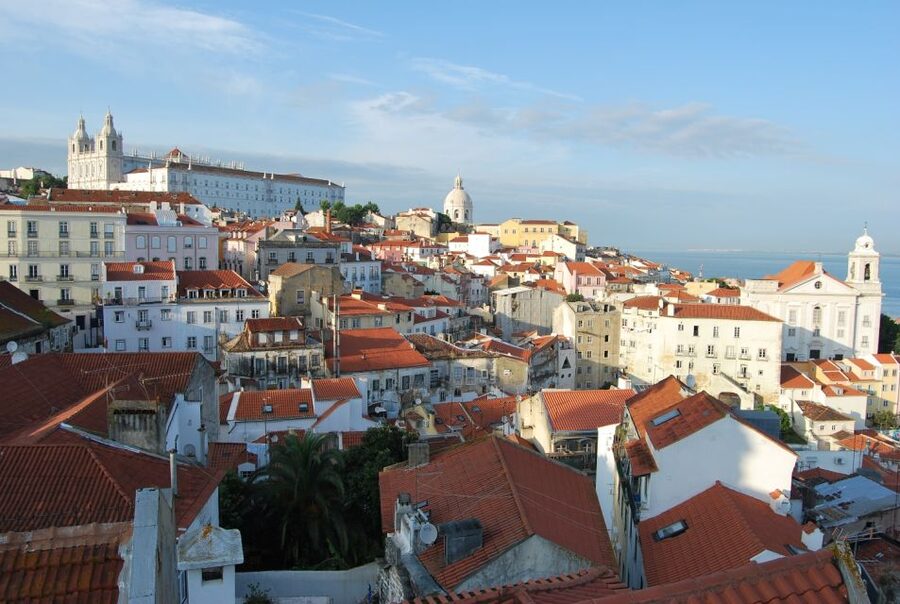
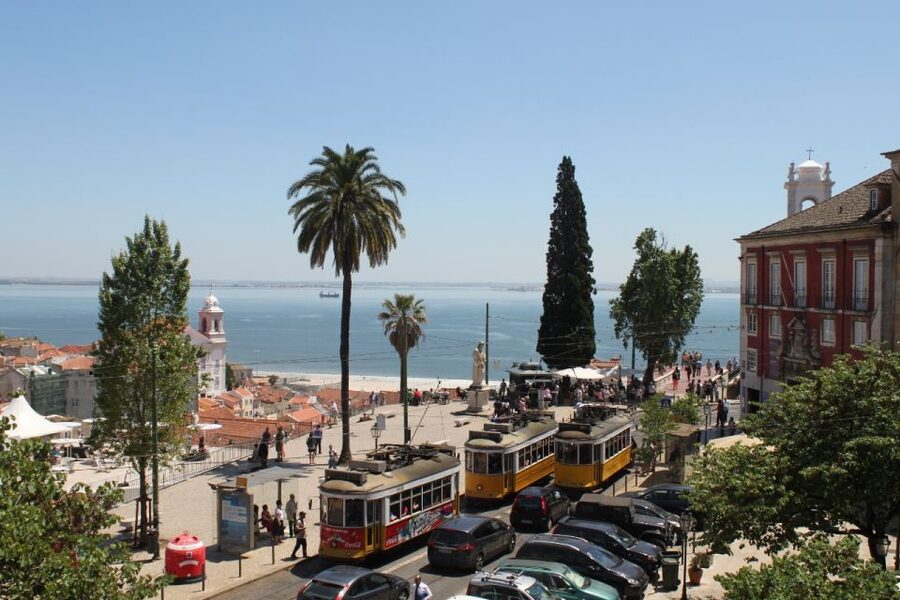
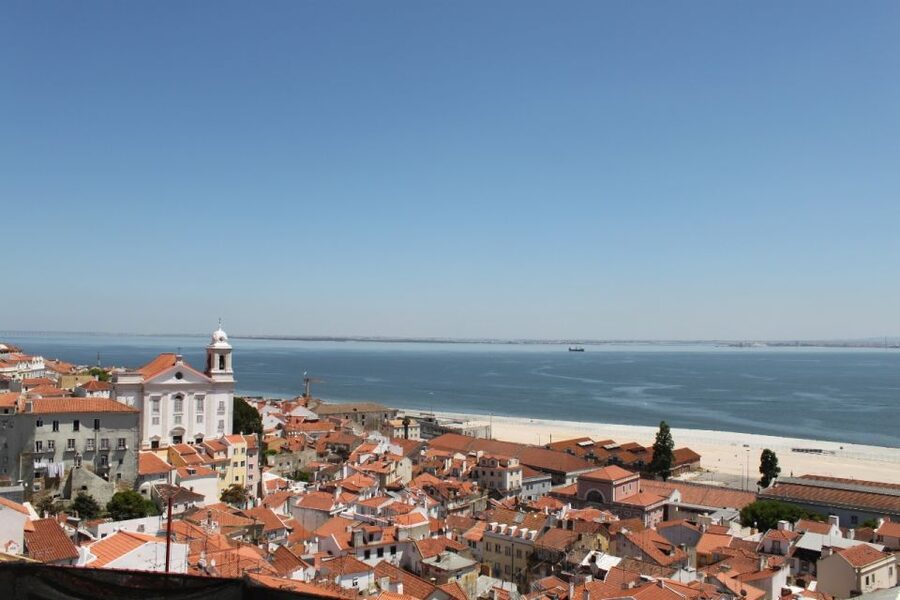
The walk reaches Portas do Sol, one of Alfama’s best-known belvederes. From here, you get a broad view over the district and toward the Tagus area, with the tightly packed streets below helping you understand the shape of Lisbon.
This viewpoint works best near the end because you have already walked through the lanes it overlooks. The view is no longer an isolated photo stop. You recognize the quarter beneath you, and the guide can tie the slopes, walls, churches, and houses together.
It is also a good place to get your bearings for the rest of your stay. Several guides have been praised for pointing out places worth returning to, along with practical suggestions for the remaining days of a Lisbon visit. Take note of those recommendations while the route is still fresh.
What the guides add
The strongest part of this experience is the guiding. Ricardo, described as a history teacher, is one example of the sort of host you might get: someone able to explain facts clearly while keeping a younger listener interested. One family said their 15-year-old enjoyed the tour, which is useful if you are visiting Lisbon with teenagers.
Other named guides, including Agatha, Helena, Elena, Lucy, Fatima, Beatrice, and Beatrix, have been praised for warmth, flexibility, detailed explanations, and an engaging manner. Those qualities matter in Alfama because the route has no shortage of stories, but a poor guide could turn them into a list of dates.
The languages offered are English, French, German, Portuguese, and Spanish. When booking, check the available departure language and time. The guide can explain local customs and history in a way that is easier to absorb than reading plaques as you walk.
Is $23 a fair price?
At $23 per person, this is a good-value introduction to Alfama if you want a guide and plan to use the orientation for the rest of your visit. The price includes the live guide and Lisbon Cathedral entry, but not transport, São Jorge Castle entry, food, or drinks.
The value comes from the route’s range. In two and a half hours, you cover Roman traces, Moorish influence, the former Jewish Quarter, fado, the cathedral, the castle neighborhood, and a major viewpoint. You also get help making sense of the city’s oldest quarter, which can otherwise feel confusing.
The price is less attractive if you only want to wander freely or if you already know Alfama well. It also does not replace a full castle visit. Think of it as a guided orientation with one included interior sight, not an all-inclusive attraction pass.
Free cancellation up to 24 hours before the tour and the option to reserve now and pay later make it easier to fit into a changing Lisbon schedule. These terms are useful if your arrival plans are not fixed.
Who should book this walk?
I would choose this tour early in a Lisbon stay. It gives you a basic map of Alfama, explains the places you are likely to pass again, and can help you decide where to return for more time.
It suits first-time visitors, families with older children, history fans, and anyone who prefers local streets to a bus window. The mix of Roman, Muslim, Jewish, Christian, and fado-related stories also makes it a good choice if you want more than a list of viewpoints.
You should think twice if you have limited mobility, dislike hills and stairs, or want an in-depth visit inside São Jorge Castle. The tour moves through an old district whose charm comes partly from its difficult terrain.
Final call: a strong first look at Alfama
Book it if you want the old city explained by a personable local guide, with cathedral entry and a well-planned route included. The 4.8 rating from 136 reviews fits the repeated praise for clear storytelling, friendly guides, and useful advice for the rest of a Lisbon stay.
Just adjust your expectations about the castle. You will explore its quarter and approach its walls, but you will not enter São Jorge Castle. For most people seeking a compact, practical introduction to Alfama, that limitation is manageable. Add a separate castle visit if its interior is high on your list.
FAQ
How long does the Alfama and São Jorge Castle Quarters Walking Tour last?
The tour lasts 150 minutes, or two and a half hours.
Is entry to São Jorge Castle included?
No. The tour explores the streets and castle quarter around São Jorge Castle, but admission to the castle is not included.
Is Lisbon Cathedral included?
Yes. Entrance and a guided visit to Lisbon Cathedral are included.
Where does the tour meet?
Meet at Campo das Cebolas beside Casa dos Bicos, the building covered in spikes. The nearest metro station is Terreiro do Paço. The guide carries a black bag with the Lisboa Autêntica logo.
Which languages are available?
The live tour is offered in English, Spanish, Portuguese, German, and French.
Is the tour suitable for people with mobility impairments?
No. The experience is not suitable for people with mobility impairments, so comfortable clothes and practical walking shoes are important.
New walking tours around Lisbon
- Lisbon: Walking Tour in the Center (Max 12 Participants)★ 5.0 · 741 reviews
- Lisbon Tram No. 28 Ride & Walking Tour★ 4.1 · 766 reviews
- Lisbon: Kickstart Street Art Walking Tour★ 4.9 · 717 reviews
- Lisbon Through the Eyes of a Local – Food and Walking Tour★ 4.9 · 141 reviews
- Lisbon: Private Boat Trip, Guided Walking Tour, Bike & Tram★ 4.8 · 116 reviews
- Lisbon: Jewish Walking Tour★ 4.9 · 96 reviews
- Lisbon: Helicopter Ride, Boat Trip, & Old Town Walking Tour★ 4.7 · 480 reviews
- Lisbon: Food and Culture 3-Hour Walking Tour★ 4.7 · 95 reviews
Lisbon Walking Tours, side by side.

Lisbon: History, Stories and Lifestyle Walking Tour
Read our review →
Best of Lisbon Small-Group Guided Walking Tour
Read our review →
Lisbon: Food and Wine Small Group Walking Tour
Read our review →
Best of Lisbon Walking Tour: Rossio, Chiado & Alfama
Read our review →

Lisbon Food Tour with 10+ Tastings of Local Delicacies & Wines
Read our review →
Lisbon Roots – Small group Food & Culture Walking Tour w/tastings
Read our review →
Lisbon Private Food Tour – Taste 10+ Local Dishes & Wines
Read our review →Lists this walk sits on