
Review · OSLO
Oslo: Best of Oslo Walking Tour
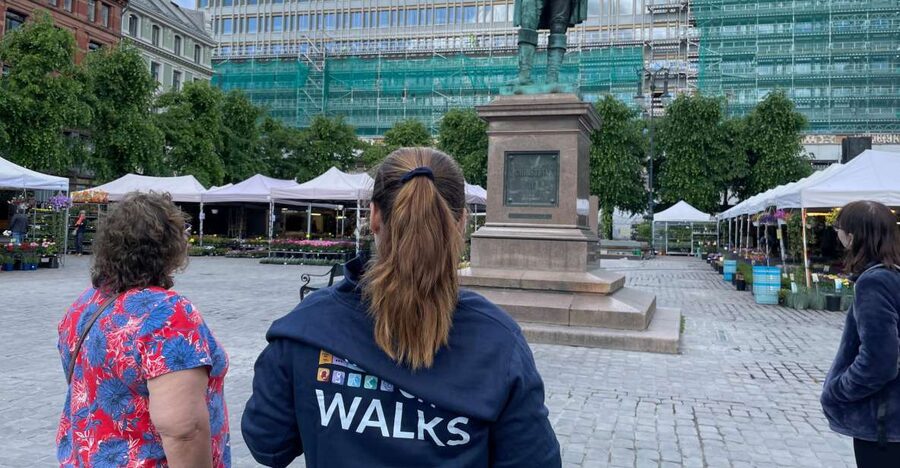
Oslo reveals its story block by block on this two-hour walk. You move from the Nobel Peace Center and grand university buildings to old Christiania, the Opera House, Akershus Fortress, and the waterfront quarters of Aker Brygge and Tjuvholmen. It is a quick lesson in how Norway’s capital grew, changed its name, and turned toward the fjord.
I like the strong first-day orientation and the way the route mixes major sights with smaller details, such as the Oslo Bazaars, the Tiger sculpture, old town squares, and the ceremonial waterfront. I also like the live storytelling. Guides such as Amelia, Anastasia, Olaf, Oliver, Judit, and Minji have been praised for clear English, humor, and useful suggestions for cafés, museums, ferries, and later walks.
The main tradeoff is pace. Two hours is enough for an overview, not for entering museums or exploring each landmark in depth. You will pass by most sights, and winter snow, rain, or hail can make the walk harder, especially for anyone using a wheelchair.
Key points to know before you book
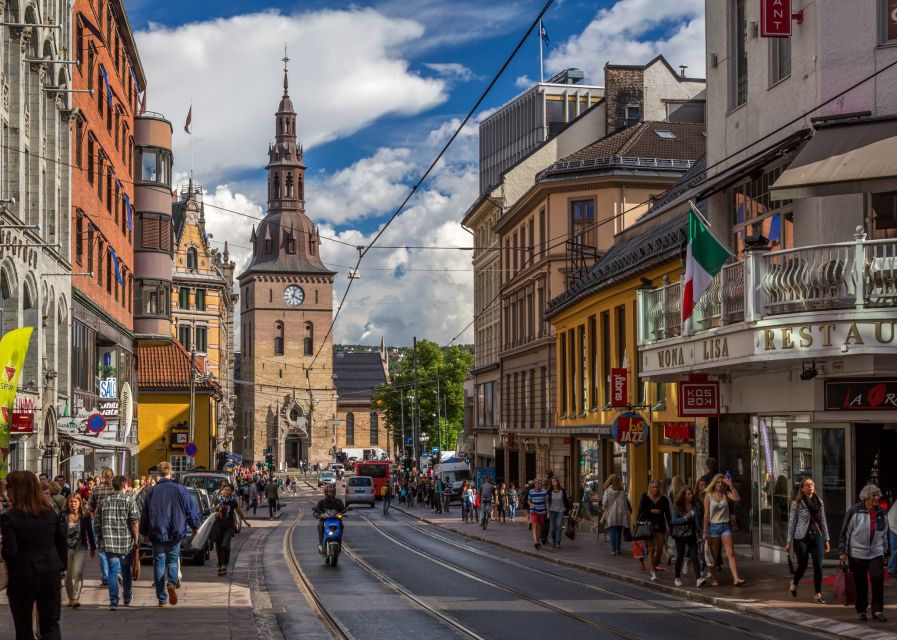
- The route links Oslo’s old and new centers: You see Christiania Torv and Kvadraturen alongside the Opera House, Aker Brygge, and Tjuvholmen.
- You learn the city’s changing name: The walk explains Christiania, the original city center, and why Oslo has carried different names over the past 300 years.
- The guide adds practical value: Past guide styles have included history, Norwegian government, local culture, restaurant ideas, and café tips.
- The Nobel Peace Prize gets special attention: Oslo hosts the Nobel Peace Award ceremony, the only Nobel ceremony held outside Sweden.
- The app extends the experience: Scan the voucher’s QR code to access an audio-guided route with more sights around Oslo.
- It is a walking overview, not an admission tour: Entry fees, public transport, and museum visits are not included.
Start at the Nobel Peace Center or University Square
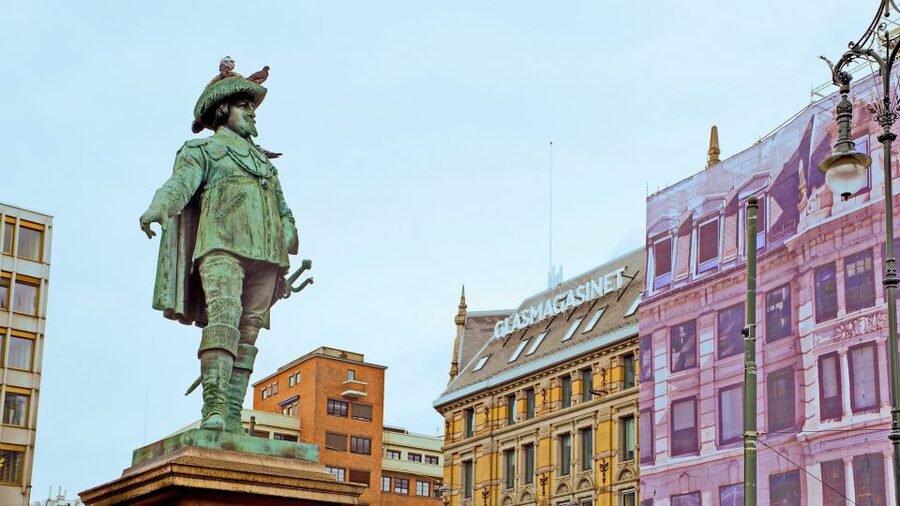
Your meeting place depends on the language and option you book. English groups meet near the statue of P.A. Munch by the Faculty of Law entrance at University Aula, Karl Johan Street 47. German groups meet outside the Nobel Peace Center at Brynjulf Bulls plass 1.
Arrive about five minutes early. This matters because the group may begin moving right on time, and the meeting points sit among busy central streets. The walk can finish at University Square or the Nobel Peace Center, so you remain in a useful part of central Oslo afterward.
The opening area gives the guide plenty to work with. The Nobel Peace Center introduces one of Oslo’s most important international roles. While most Nobel ceremonies take place in Stockholm, the Peace Prize is awarded in Oslo. The tour explains the story behind that arrangement and why the prize matters to Norway’s public identity.
From there, the route moves toward the city center. You begin to see the contrast that defines Oslo: formal nineteenth-century institutions, compact old streets, and bold newer buildings close to the water.
More City Highlights Walking Tours in the world:
- Historic Charleston Guided Sightseeing Walking Tour
★ 5.0 · 6,216 reviews - Dublin Highlights and Hidden Gems Guided Walking Tour
★ 5.0 · 6,020 reviews - Vienna: Guided Walking Tour of City Center Highlights
★ 4.7 · 4,989 reviews
Karl Johan Street and the city’s grand civic core
Karl Johan Street is Oslo’s main ceremonial avenue. Along the way, you pass Paleet, the Norwegian Parliament, the Grand Hotel, the National Theater, and the University of Oslo. These are not just photo stops. Together, they show how the capital presents its monarchy, government, culture, and civic life along one central route.
The Parliament is a natural place to discuss Norway’s political system. The guide can also connect the building to modern Norwegian society, which several past participants valued because the tour covers more than dates and architectural labels.
The Grand Hotel is tied to Oslo’s public life and sits near the Nobel Peace Prize setting. The National Theater and University buildings add the cultural side of the story. You get a compact explanation of how the street functions as both a practical shopping corridor and a national stage.
This part of the tour is fairly easy to follow because the route stays in the city center. You should still wear comfortable shoes. Even a mostly flat city walk becomes tiring when you stop repeatedly, listen, take pictures, and keep pace with a group.
Bazaars, the Cathedral, and everyday Oslo
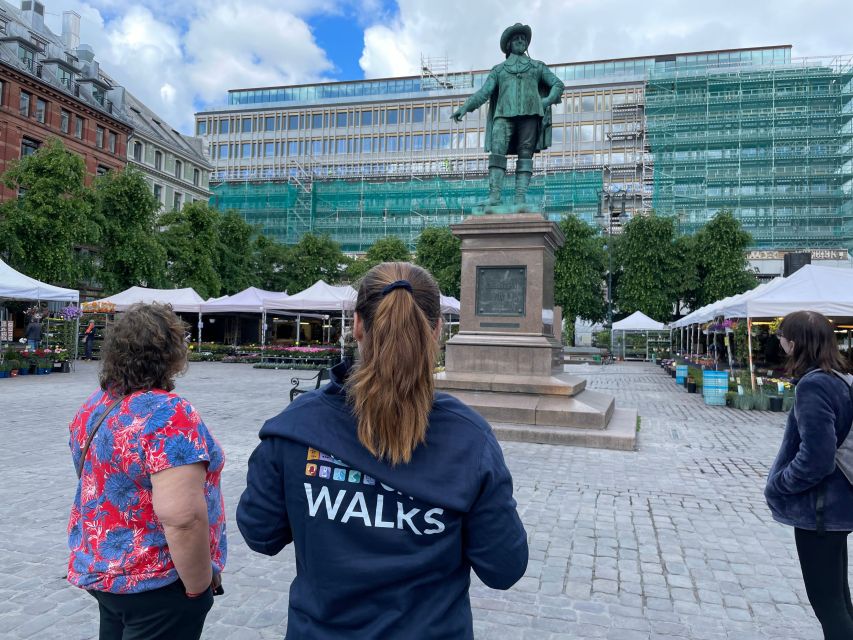
The Oslo Bazaars and GlasMagasinet Stortorv bring the route down from grand institutions to the daily center of town. The Bazaars sit near the Cathedral, while GlasMagasinet is a long-established shopping landmark on Stortorvet.
Oslo Cathedral gives the guide another chance to explain the city’s religious and civic traditions. You pass by rather than entering, so think of this stop as an exterior introduction. If the cathedral interests you, mark it for a separate visit after the walk.
The nearby Tiger sculpture is one of the city’s familiar symbols. The nickname Tiger City is tied to Oslo’s tough, urban character, and the guide explains how that idea became part of the city’s image. It is a small detail, but it helps the capital feel like a place with a sense of humor about itself.
This is also where local recommendations can be useful. Several guides have pointed out cafés and places to eat, including W.B. Samson for coffee and cinnamon buns. A suggestion like that is more useful after a morning walk than a generic list of restaurants because you can act on it immediately.
Christiania Torv and the older city center
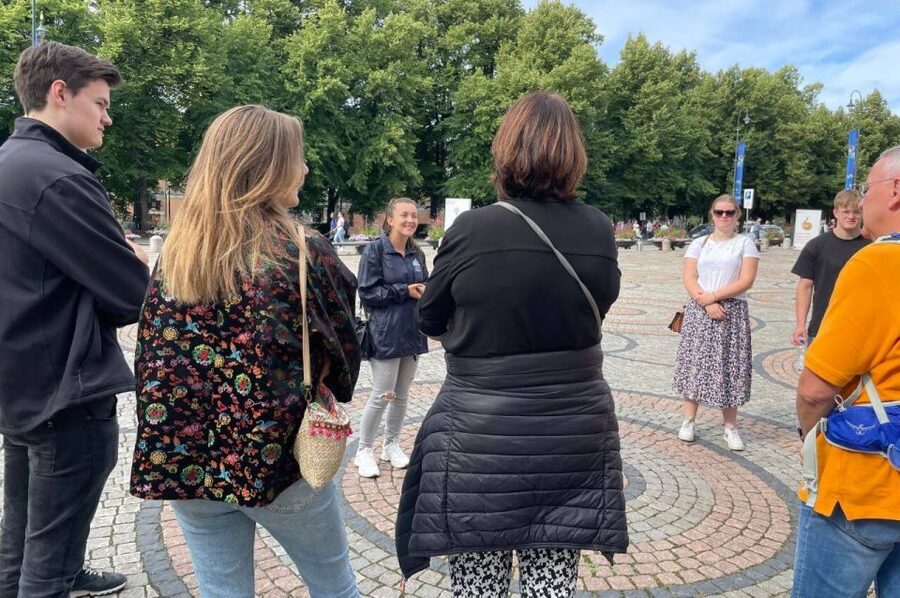
The stop at Christiania Torv is one of the most worthwhile parts of the route. The square belongs to the old center of Oslo, known historically as Christiania or Kristiania. The city’s name changed several times over roughly three centuries, and the guide explains the reasons behind those changes.
This section gives you a better sense of Oslo before its newer waterfront buildings and broad avenues reshaped the center. Kvadraturen, the grid-shaped quarter around Christiania Torv, contains some of the oldest urban fabric on the walk. The route also includes Gamle rådhus, or the Old Town Hall, and Anatomigården.
Because the tour passes through rather than stopping for long inside individual buildings, you need to listen closely here. The value is in the connections: old city planning, royal and civic power, fires, rebuilding, and the gradual movement of Oslo’s center toward the harbor.
I would pay particular attention if you enjoy city history. The Christiania section explains why Oslo can feel both old and new without having a single, uninterrupted medieval center.
More walking tours around the world:
- Magical London: Harry Potter Guided Walking Tour
★ 4.7 · 22,044 reviews - Reykjavik Food Walk – Local Foodie Adventure in Iceland
★ 5.0 · 18,952 reviews - History and Hauntings of Salem Guided Walking Tour
★ 5.0 · 14,564 reviews - New Orleans Premier Ghost, Voodoo and Vampire Walking Tour
★ 4.5 · 12,856 reviews
Opera House, Langkaia, and the fjord edge
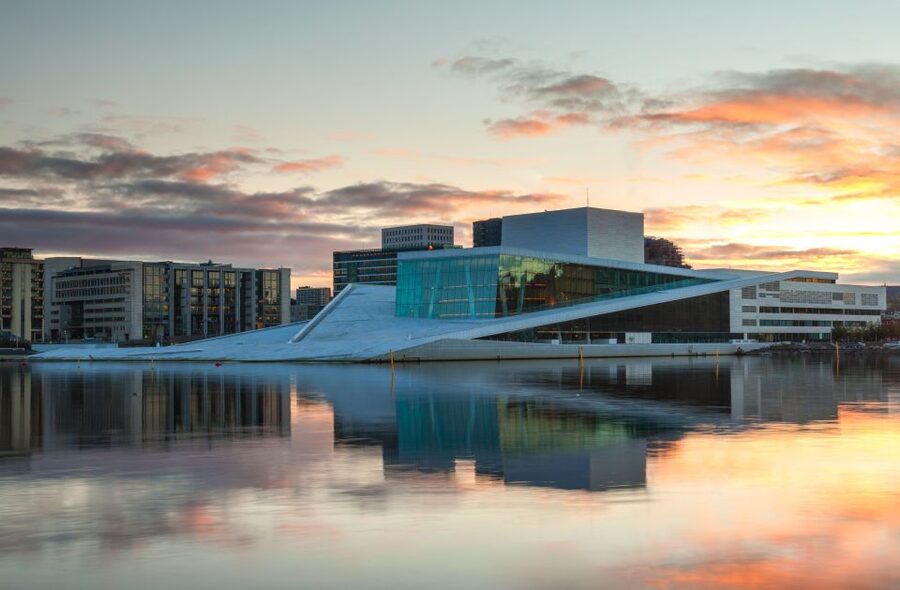
The Norwegian Opera House changes the mood of the walk. Its low, sloping exterior invites people to walk across the roof, and its white form has become one of the city’s most recognizable modern buildings. On this tour, you see it as part of Oslo’s larger turn toward the water.
The route continues past Langkaia and KOK Oslo Sauna. The sauna is a contemporary waterfront feature, while the Opera House represents a major cultural project. Together, they show how Oslo uses the harbor as public space rather than treating it only as a working edge.
You should not expect time to enter the Opera House or use the sauna. These are sightseeing stops, not booked admissions. Still, the waterfront gives the group a change of scenery and helps you understand Oslo’s position on the Skagerrak strait.
The Opera House is also a good place to ask your guide what deserves a return visit. The included app can help with that later, offering an audio-guided route through additional neighborhoods and sights.
Akershus Fortress and the waterfront story
Akershus Fortress is the route’s strongest historic landmark. Its position above the harbor made it important for Oslo’s defense and government. The walk presents the fortress as part of the city’s long relationship with the water, rather than as an isolated monument.
Again, you pass by rather than receive entry to the fortress. If you want its interiors, exhibits, or grounds in greater detail, plan a separate visit and check opening information for your date.
The route then moves toward Oslo City Hall and the Ceremony Pier. City Hall is closely linked to the Nobel Peace Prize ceremony, and the waterfront setting makes the connection easy to understand. You also pass Oslo’s Second City Hall, adding another piece to the city’s civic story.
This section can feel exposed in bad weather. Rain and wind from the harbor have made the walk enjoyable for some people but uncomfortable for others. Bring a waterproof layer, especially outside the warmer months.
Aker Brygge and Tjuvholmen: Oslo’s newer face
Aker Brygge is described as Oslo’s alternative quarter, and it gives the tour a more modern finish. Restaurants, bars, public spaces, and waterfront paths replace the older squares and formal buildings of the first half.
Tjuvholmen continues that shift. The area is associated with contemporary development and art, and it offers a different view of how Oslo has renewed its harbor districts. The guide helps you read these places as part of the city’s recent growth rather than simply as places to shop or eat.
This is where the tour feels most useful for planning the rest of your stay. You can decide if you want a waterfront meal, a slower walk, a museum visit, or time around the harbor. The route does not give you long stretches to sit, so return later if you want to enjoy the area at your own pace.
The contrast between Christiania Torv and Tjuvholmen is the central idea of the walk. Oslo’s story is not only about old buildings. It is also about a capital remaking its relationship with the fjord.
What the guides add in two hours
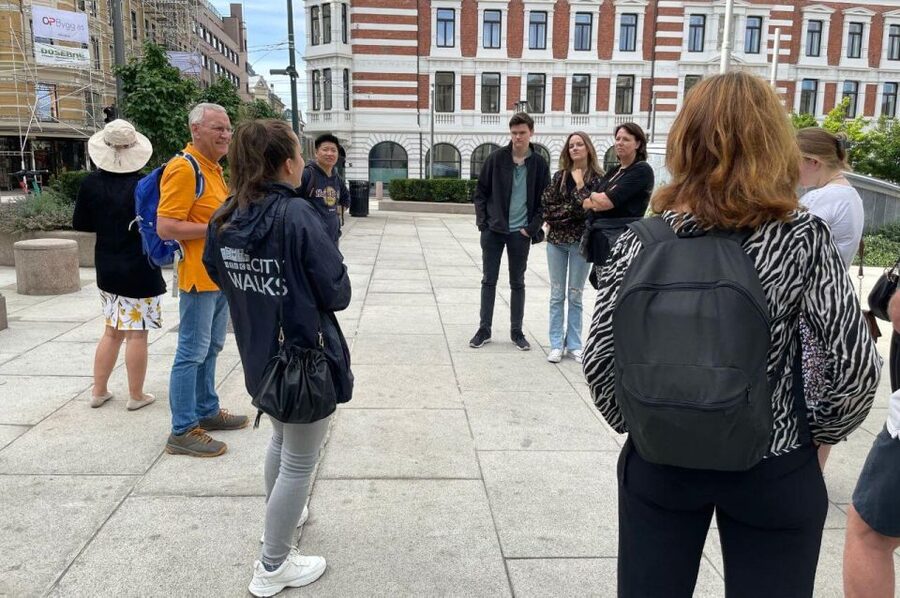
The strongest part of this experience is the guide’s ability to make a large amount of information manageable. Amelia has been praised for answering questions and keeping groups together. Anastasia has been singled out for storytelling, clear English, and a lively approach to the city’s main sights.
Olaf’s tours have included humor and stories about Oslo, Norway, and places worth visiting afterward. Oliver has been described as friendly, helpful, and good at answering a wide range of questions. Judit has combined history with advice about Norwegian culture, government, museums, and restaurants.
Guide quality can vary from one departure to another, but the pattern is clear: this is more than a silent march between photo stops. You should expect history, stories about people and politics, and practical suggestions for the rest of your visit.
Large groups may use an earpiece, as one group of 13 did, though that is not promised for every departure. Stay near the guide and keep an eye on the group at crossings and busy streets.
Price, pace, and practical value
At $38 per person, the tour is not the cheapest way to walk around Oslo. You can see many central exteriors on your own. The price becomes easier to justify if you want a guide to explain the city’s name changes, Nobel connection, political institutions, old center, and waterfront renewal in one well-planned route.
You also receive access to a sightseeing app with an audio-guided route. That gives the tour more value than a single two-hour outing, especially if you use it to continue exploring areas such as Frogner Stadion, Trinity Church, Grensen, Karl Johan’s monument, and Aamodt Bridge.
The app does not replace the live guide. It is best treated as a follow-up tool for days when you want to wander alone. You need to scan the QR code on your voucher to access it.
The tour runs in English or German and lasts about two hours. Public transport and attraction admission are not included. Free cancellation is available up to 24 hours before the activity, and you can reserve now and pay later, which helps if your Oslo plans are still shifting.
Winter deserves special attention. Snow and uncleared sidewalks can make the route difficult for wheelchair users or anyone with limited mobility. The walk has been described as reasonably flat, but flat does not mean fully accessible in winter conditions.
Who should book the Best of Oslo walk?
I would choose this tour for a first or second day in Oslo. It gives you a useful map in your head, points out places to return to, and helps you decide how to spend your limited time. It also suits cruise passengers or short-stay visitors who want a broad introduction without committing to a full-day excursion.
History fans will get the most from Christiania Torv, Kvadraturen, Akershus Fortress, and the Nobel Peace Center. Architecture fans will enjoy the contrast between the University, Parliament, Cathedral, Opera House, City Hall, and newer harbor districts.
You might skip it if you prefer long museum visits, private touring, or a very slow pace. Since the main sights are viewed from outside, this is an orientation walk rather than an in-depth tour of any one attraction.
Should you book it?
Book the Best of Oslo Walking Tour if you want a clear, lively introduction to the capital and plan to explore independently afterward. The strongest reasons are the compact route, the mix of old and new Oslo, the useful local suggestions, and the extra audio app.
I would book it early in your stay, wear weatherproof shoes, and leave time afterward for the place that catches your interest. For $38, you are paying less for admission and more for a well-shaped story that helps the rest of Oslo make sense.
FAQ
How long does the Best of Oslo Walking Tour last?
The guided walking tour lasts approximately two hours.
What languages are available?
The tour is offered in English or German. You select your language when booking.
Where does the English tour meet?
The English tour meets near the statue of P.A. Munch by the Faculty of Law entrance at University Aula, Karl Johan Street 47.
Where does the German tour meet?
The German tour meets at the Nobel Peace Center at Brynjulf Bulls plass 1.
Where does the tour finish?
The listed drop-off locations are University Square and the Nobel Peace Center.
Does the tour enter the museums and landmarks?
No. The route passes the landmarks, and attraction entry is not included.
Is public transportation included?
No. You are responsible for public transportation tickets.
What is included in the booking?
The booking includes the guided walking tour, live commentary in English or German, and access to a sightseeing mobile app.
How do I access the sightseeing app?
Scan the QR code on your voucher to access the app and its audio-guided route.
Can I cancel for a full refund?
Yes. You can cancel up to 24 hours in advance for a full refund. You can also reserve now and pay later.
New walking tours around the world
- Niagara Falls, Canada: White Water Walk Entry Ticket★ 4.5 · 147 reviews
- NYC: Walking Tour with Local Guide and 30+ Top NYC Sights★ 4.5 · 248 reviews
- Zadar: Food Tasting & Old Town Walking Tour★ 5.0 · 94 reviews
- Niagara Falls: Walking Tour, Journey Behind Falls, & Cruise★ 4.8 · 773 reviews
- New York City: Gangsters and Ghosts 2-Hour Walking Tour★ 4.7 · 615 reviews
- NYC: History of Slavery & Underground Railroad Walking Tour★ 4.7 · 87 reviews
- New York City’s Hell’s Kitchen: Walking Food Tour★ 4.8 · 200 reviews
- New York City: Central Park Walking Tour★ 4.7 · 82 reviews
Oslo Walking Tours, side by side.
Oslo: Guided Walking Tour of Central Oslo with Local Guide
Read our review →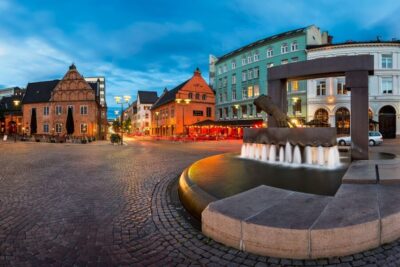
Oslo: Historic Myths & Legends Evening Walking Tour
Read our review →
Lists this walk sits on