
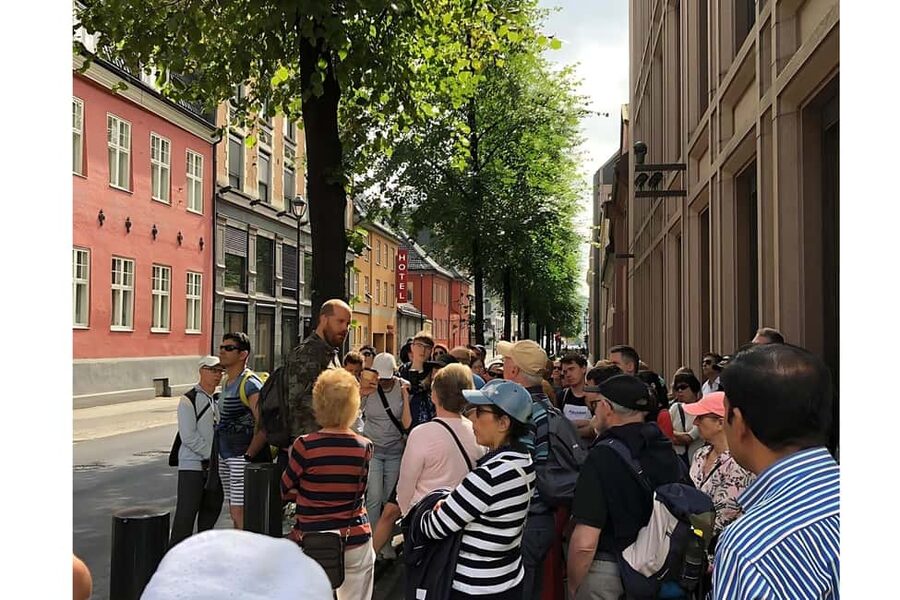
Review · OSLO
Oslo: Guided Walking Tour of Central Oslo with Local Guide
Oslo reveals itself well on foot, and this tour links its big sights into one useful first look at the city. You begin at the Tiger outside Central Station, then walk from the waterfront and medieval core up Karl Johans Gate to the Royal Palace. The route gives you a clear sense of Oslo’s shape, not just a string of photo stops.
I like the strong mix of history and practical advice, especially the way guides such as Daniel, Marta, Camille, and Ramon use humor to keep the past from feeling dusty. I also like the gentle two-hour pace, which gives you a useful introduction without taking up your whole day. The main consideration is group size: the tour is intended to be limited, but some departures have grown beyond 20 people, with one guide handling as many as 48.
Key points to know before you book
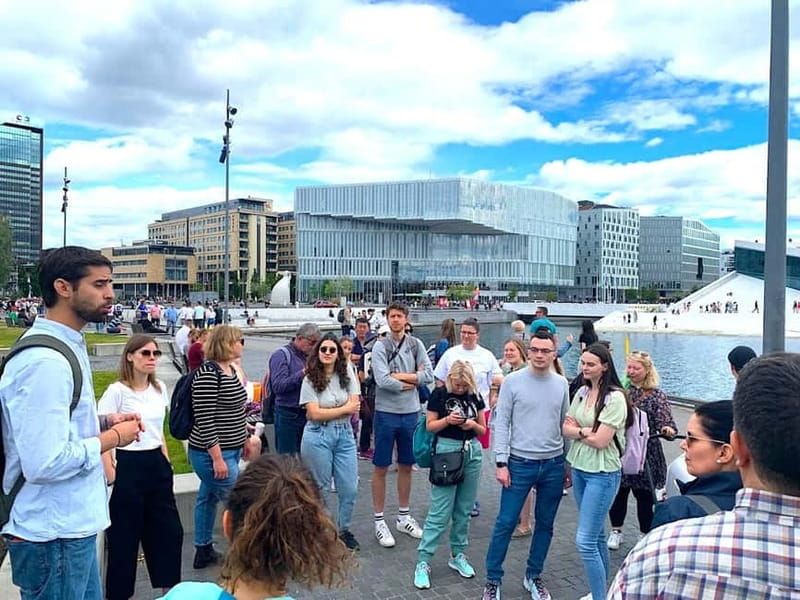
- Meet beside the Tiger at Jernbanetorget: The sculpture outside Oslo Central Station is easy to find, but look for the guide holding a Nordic Freedom Tours sign.
- See Oslo’s main sights in two hours: The route includes the Opera House, Akershus Fortress, City Hall, Cathedral, Aker Brygge, Parliament, and the Royal Palace.
- Expect history with a light touch: Guides use stories, questions, Scandinavian humor, and local suggestions rather than giving a dry lecture.
- The tour ends by the Royal Palace: You finish at Slottsplassen, a useful central location for continuing your sightseeing.
- Good value at $14: For a guided overview of central Oslo, the price is modest, especially if you use the advice to plan the rest of your stay.
- English is the tour language: The guide leads the walk in English, and the experience lasts about two hours.
Why this two-hour route works for first-time visitors
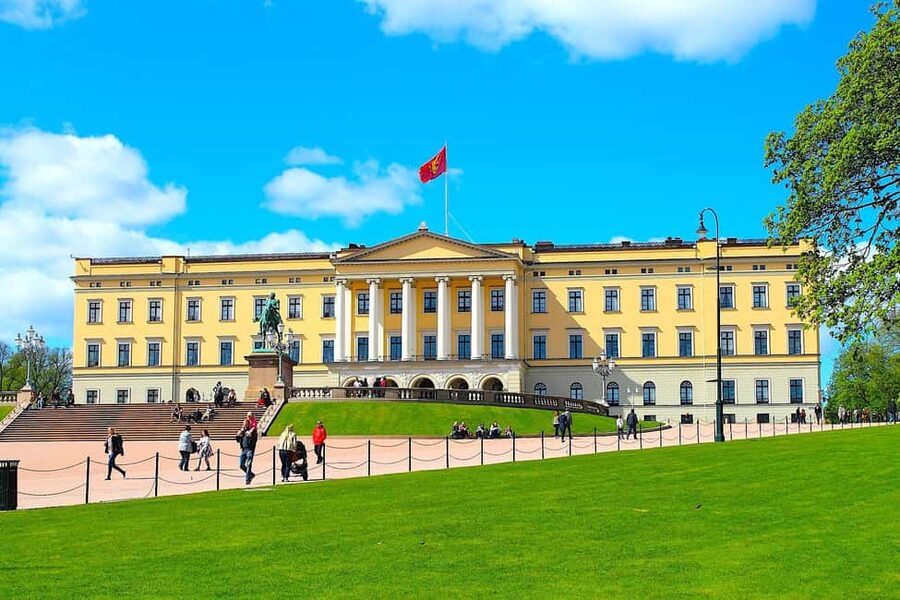
Oslo can feel spread out when you first arrive. The city center, fjord, waterfront, government buildings, historic squares, and Royal Palace all sit within walking distance, but you may not immediately see how they connect.
This walk solves that problem. Starting at Central Station, you move toward the Opera House and water, then back through the older parts of town before crossing the central boulevard and finishing uphill near the palace. You get both orientation and context, which is more useful than simply collecting isolated photographs.
The experience is led by Nordic Freedom Tours, a Scandinavian operator established in 2015. The company presents the walk as well organized and punctual, with local guides who keep the route moving while leaving room for questions.
The guide makes a major difference. Daniel is repeatedly praised for funny, interactive storytelling and useful recommendations. Marta is described as warm, clear, and enthusiastic. Camille, Ramon, Alexia, Susanne, Kamil, and others have also led departures, with the strongest praise focused on friendly delivery, clear history, and a willingness to answer questions.
That variety is worth noting. You are not booking one named private guide, so the tone can change from one departure to another. Still, the repeated pattern is encouraging: guides tend to mix historical facts with local suggestions, and they aim to include the whole group rather than simply recite a script.
More walks with a guide around the world:
- Magical London: Harry Potter Guided Walking Tour
★ 4.7 · 22,044 reviews - History and Hauntings of Salem Guided Walking Tour
★ 5.0 · 14,564 reviews - Amsterdam Anne Frank: Small-Group Walking Tour & Local Guide
★ 4.8 · 12,789 reviews
Meeting the guide beside Oslo’s bronze Tiger
Your starting point is The Tiger, the large bronze sculpture outside Jernbanetorget metro station near Oslo Central Station. This is a sensible meeting place because it is central and easy to reach.
Look for a guide carrying a sign marked Nordic Freedom Tours. The meeting point is open and busy, so arriving a little early will make the start less stressful. If you arrive late and the group has already left, the instructions say to send a message through the booking website for help.
The first stop is a short photo pause at the Tiger itself. The sculpture gives the group a clear landmark and sets up the city’s modern identity before the walk moves toward the fjord.
From the start, you can expect the guide to introduce Oslo’s change from a medieval settlement into a modern Scandinavian capital. That broad theme gives the entire walk a useful thread. You are not only looking at buildings. You are watching the city shift from older political and commercial centers toward contemporary public spaces.
The Opera House and Oslo’s fjord-facing side
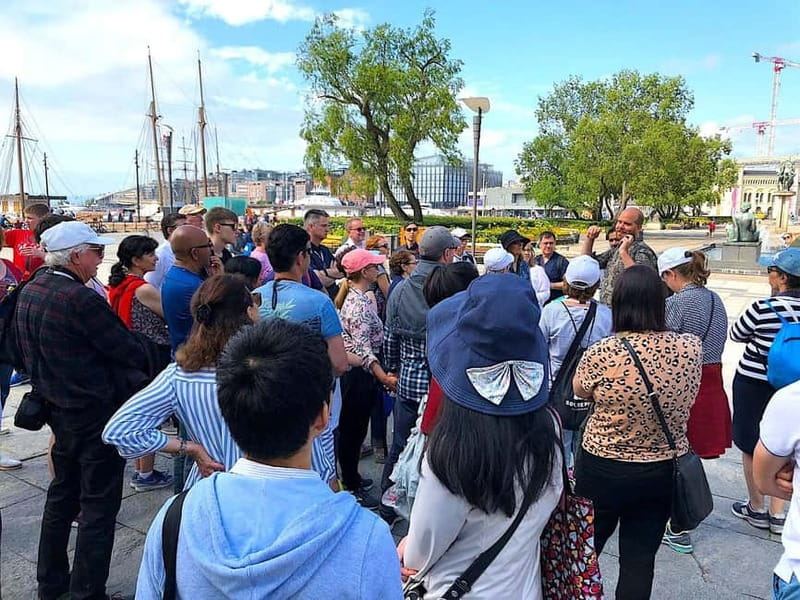
The Oslo Opera House is one of the tour’s most photogenic stops. You get a short pause for pictures, followed by a guided walk through the nearby area.
The building represents Oslo’s modern architectural face and sits beside the Oslo Fjord. That contrast is one of the pleasures of the route: historic squares and fortifications appear alongside newer public architecture and waterfront development.
You should think of this as an introduction, not an interior visit or a full architectural tour. The time here is brief, so the guide’s role is to explain why the Opera House matters and point out the relationship between the building, the water, and the wider city.
This is also one of the places where weather matters. On a clear day, the fjord setting adds a great deal to the experience. In cold, wet, or windy conditions, you may spend less time lingering for photographs. Dress for a walk beside the water, not just a stroll through sheltered streets.
Akershus Fortress and the older Oslo story
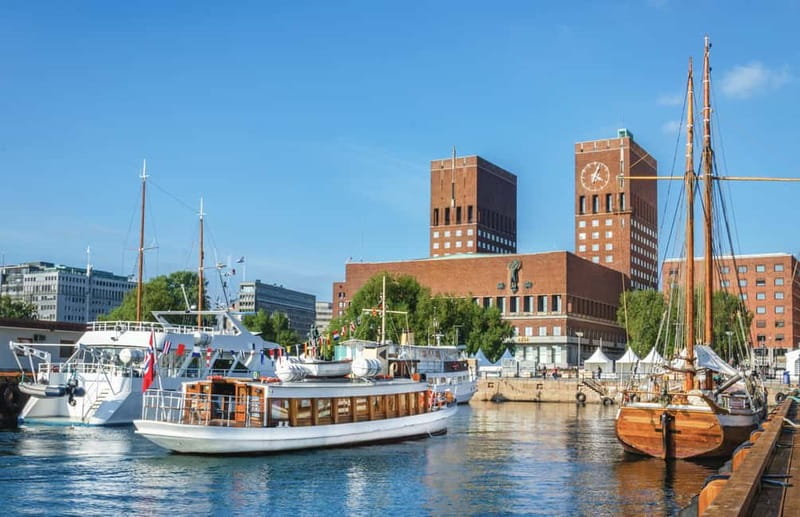
The walk continues to Akershus Fortress, where you receive a guided visit and sightseeing time. This is the strongest historical stop on the route, since the fortress connects directly with Oslo’s earlier development and its role as a seat of power.
You will not have time for an exhaustive examination of every corner. The stop lasts about seven minutes in the planned schedule, so treat it as a focused introduction. The guide brings out the important points, explains the setting, and gives you a reason to return later if you want a slower look.
I like the way this stop breaks up the newer waterfront views. After the Opera House, Akershus gives the walk a sense of age and defense. You see that Oslo is not only a modern city beside the fjord. It also has older layers that shaped its growth.
The fortress can involve uneven surfaces and outdoor walking, so sensible shoes are a good idea. The tour is a walking experience from beginning to end, with no vehicle transfer to rescue tired feet.
More walking tours around the world:
- Reykjavik Food Walk – Local Foodie Adventure in Iceland
★ 5.0 · 18,952 reviews - New Orleans Premier Ghost, Voodoo and Vampire Walking Tour
★ 4.5 · 12,856 reviews - Edinburgh: Harry Potter Magical Guided Walking Tour
★ 4.8 · 11,944 reviews - Edinburgh Castle: Guided Walking Tour with Entry Ticket
★ 4.7 · 11,699 reviews
City Hall, politics, and public Oslo
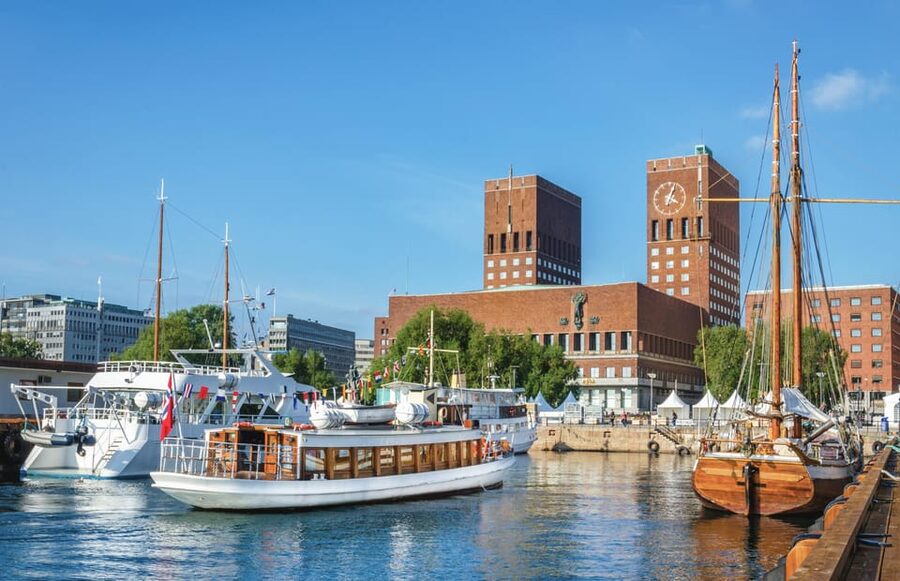
Oslo City Hall receives a longer stop of about ten minutes, with time for photographs, a visit, and guided sightseeing. The building helps shift the conversation from medieval power to the workings of the modern city.
This is one of the useful parts of the route for visitors who want more than landmark photographs. The guide can connect City Hall with civic life and explain how Oslo presents itself as a capital. You get a better sense of the city’s public institutions before moving toward the central boulevard.
The tour then passes Oslo Cathedral, with another sightseeing and photo pause. The cathedral adds a religious and architectural note to the route, while also showing how close the city’s major landmarks are to one another.
The schedule allows around ten minutes here. That is enough for an introduction and some pictures, but not for a long interior visit or a detailed architectural study. If the cathedral is high on your personal list, make a note to return independently.
Karl Johans Gate, Oslo’s central promenade
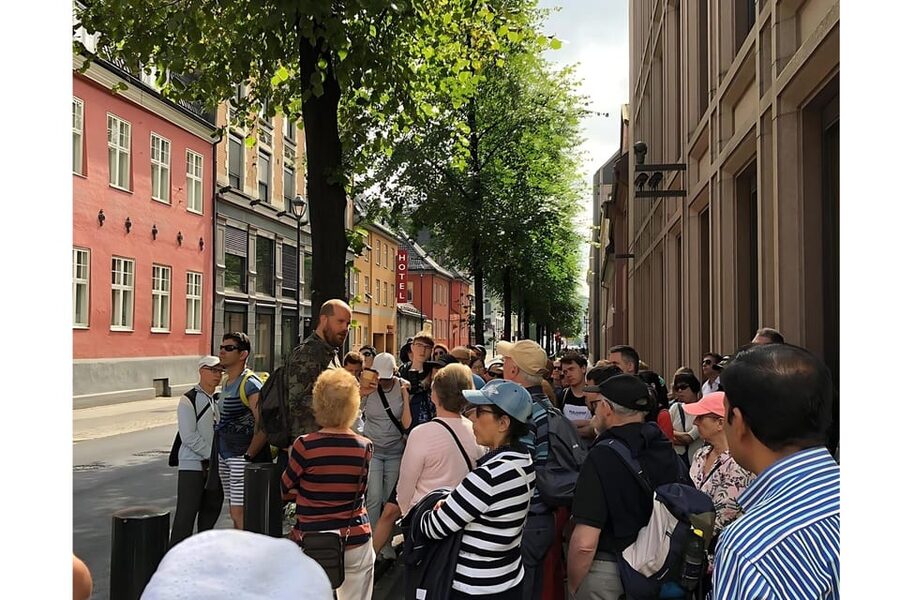
Karl Johans Gate is Oslo’s main boulevard, and the walk follows it for about ten minutes. This is where the tour shifts from individual sights to everyday city life.
You pass shops, historic buildings, and the main flow of people moving through central Oslo. The guide uses the street to explain how the capital’s key institutions and public spaces fit together. It is also a good point for asking practical questions about places to eat, things to do, and what to see after the tour.
Several people who took the walk valued these recommendations. Daniel, in particular, is praised for suggesting free activities and helping visitors plan the rest of their time. That is one reason I would schedule this tour near the start of your stay, rather than on your final afternoon.
The boulevard is also a reminder that this is an orientation walk, not a museum tour. You spend time outside, moving between sights, and learning how the city connects. If you prefer long visits inside buildings, you will need to add those separately.
Aker Brygge and a useful waterfront pause
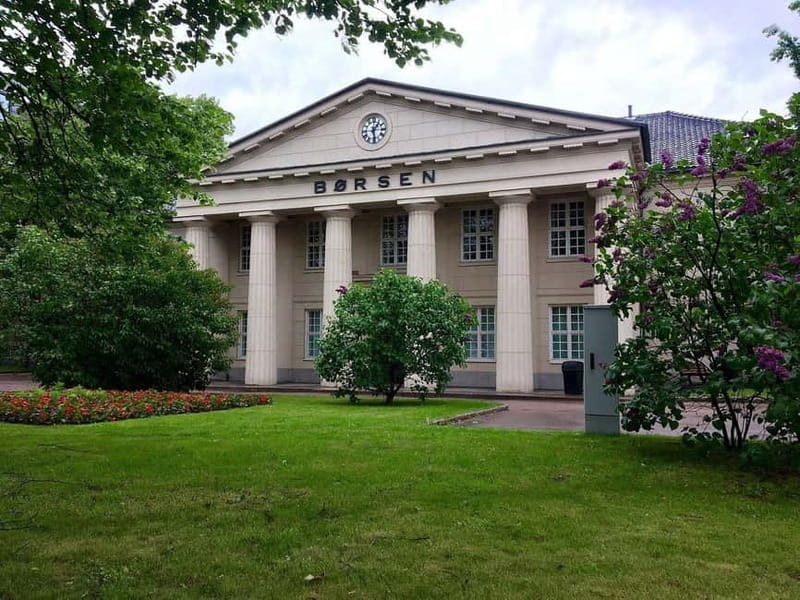
Aker Brygge is the route’s most relaxed stop. The schedule allows about ten minutes for photographs, guided explanation, sightseeing, and free time.
The area is known for its maritime past, restaurants, and views across the fjord. After the history-heavy fortress and civic buildings, Aker Brygge gives you a chance to see Oslo’s contemporary waterfront life.
The free time is useful, but short. You can take photographs and get a quick feel for the restaurants and public spaces. You will not have enough time for a full meal, extended shopping, or an unhurried waterfront visit during the tour itself.
I would use the guide’s comments here as a starting point for later. If you like the area, return after the walk and explore at your own speed. The tour gives you the location and basic context, then lets you decide if it deserves more of your day.
Parliament and the final walk to the Royal Palace
The route passes the Norwegian Parliament for a short photo and sightseeing stop. The building brings the political story into the present and helps explain the transition from royal power and fortress defenses to modern governance.
The final major stop is the Royal Palace. You receive guided sightseeing and time for photographs, with the tour ending at Slottsplassen, the palace square. This is a satisfying finish because the route has moved from Central Station through the waterfront, old city, civic center, shopping boulevard, and political heart of Oslo.
The palace stop lasts around ten minutes in the planned schedule. The guide discusses Norway’s monarchy and its place in modern governance, giving you context without turning the walk into a specialist political lecture.
Finishing near Slottsplassen is practical. You are still in central Oslo, with the rest of the city available for further exploring. The tour does not return you to the station, but the end point is central and easy to use as a base for your next activity.
What the guide style adds to the walk
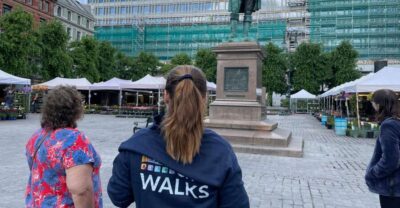
The most praised part of this experience is the delivery. Guides are described as friendly, funny, clear, and well prepared. Daniel’s Scandinavian humor and interactive approach receive especially strong attention, while Marta is praised for making the history easy to follow without rushing.
That matters because Oslo’s history can become a list of dates and buildings if presented poorly. A good guide gives you a reason to care about the place in front of you. The strongest departures use short stories, invite questions, and connect old events with present-day life.
One useful detail is that some guides use a microphone, which helps when the group is large. This is important because the advertised format suggests a limited group, but actual departures can vary. A group of 20 or more can still work well, yet it offers less personal contact than a small walk.
The pace has also received praise. It is brisk enough to cover the center but not so fast that you feel dragged from stop to stop. One guide even managed a much larger-than-expected group while keeping people engaged, though a large departure will naturally feel less intimate.
Is $14 good value for Oslo?
At $14 per person, this is an inexpensive way to get two hours of guided sightseeing in central Oslo. You are paying for the guide, the route, and the context, not admission to museums or attractions.
The value is strongest if you are visiting for the first time. In two hours, you see many of the city’s key landmarks and receive suggestions for what to do next. A private guide would cost far more, while walking alone would leave you to piece together the history yourself.
The price is less compelling if you already know central Oslo well or want extensive time inside each sight. You will only pause briefly at several locations, and the experience does not include transport, meals, or entrance fees.
The tour also offers free cancellation up to 24 hours before the start and a reserve-now, pay-later option. Those terms make it easier to place the walk early in a flexible itinerary.
Who should book this Oslo walking tour?
This is a strong fit for first-time visitors, cruise passengers with a short stay, couples, families, and solo visitors who want an easy introduction to the capital. The humor and questions can also help younger children stay interested, although everyone must be comfortable walking for two hours.
History fans should enjoy the sequence from medieval Oslo and Akershus Fortress to the monarchy, Parliament, and modern city. You also get enough practical advice to shape the rest of your trip.
The tour is less suitable if you need a fully private experience, dislike public groups, or want long periods inside museums and historic buildings. It is also not designed for party groups, bachelor or bachelorette groups, or professional filming. Smoking, alcohol, drugs, bikes, professional cameras, video recording, and audio recording are not allowed. Assistance dogs are allowed, but other pets are not.
FAQ
How long does the Oslo walking tour last?
The tour lasts two hours.
Where does the tour begin?
Meet outside Jernbanetorget metro station beside the large bronze Tiger sculpture near Oslo Central Station.
How do I identify the guide?
Look for a guide holding a sign that reads Nordic Freedom Tours.
What language is the tour conducted in?
The live tour guide speaks English.
Where does the tour finish?
The walk finishes near the Royal Palace at Slottsplassen 1, Oslo.
Which major sights are included?
The route includes the Tiger, Oslo Opera House, Akershus Fortress, Oslo City Hall, Oslo Cathedral, Karl Johans Gate, Aker Brygge, the Norwegian Parliament, and the Royal Palace.
Can I cancel the booking?
You can cancel up to 24 hours in advance for a full refund.
Should you book it?
Book this walk if you want a well-priced introduction to Oslo that combines major sights, local stories, humor, and practical advice. Schedule it early in your stay so you can use the guide’s suggestions for the rest of your visit.
You should set realistic expectations. This is a public walking tour, not a private deep-history seminar, and several stops are short. Group size may also be larger than expected. Still, at $14, the route covers a lot of central Oslo in two hours, and the consistently strong guide feedback makes it a sensible first step into the city.
New walking tours around the world
- Niagara Falls, Canada: White Water Walk Entry Ticket★ 4.5 · 147 reviews
- NYC: Walking Tour with Local Guide and 30+ Top NYC Sights★ 4.5 · 248 reviews
- Zadar: Food Tasting & Old Town Walking Tour★ 5.0 · 94 reviews
- Niagara Falls: Walking Tour, Journey Behind Falls, & Cruise★ 4.8 · 773 reviews
- New York City’s Hell’s Kitchen: Walking Food Tour★ 4.8 · 200 reviews
- New York City: Gangsters and Ghosts 2-Hour Walking Tour★ 4.7 · 615 reviews
- NYC: History of Slavery & Underground Railroad Walking Tour★ 4.7 · 87 reviews
- New York City: Central Park Walking Tour★ 4.7 · 82 reviews
Oslo Walking Tours, side by side.
Oslo: Historic Myths & Legends Evening Walking Tour
Read our review →
Lists this walk sits on