
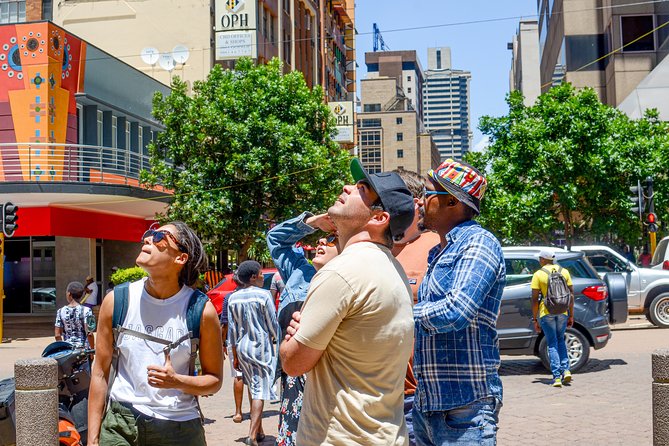
Review · SOUTH AFRICA
Johannesburg: City Centre Walking Tour
Johannesburg makes the most sense at street level. This walk starts at Gandhi Square and follows the city’s gold rush beginnings, political struggles, working-class story, and creative present all the way to Nelson Mandela Bridge. I like the way it connects famous names such as Mandela and Oliver Tambo with ordinary city streets. I also like that guides such as Refiloe, Thabo, Mulalo, and Mathapelo explain the CBD as it is now, not as a polished museum piece. The main consideration is that some stops may be closed, and the walk can run longer than three hours when a guide gives you extra time.
I especially like the honest look at Johannesburg’s current condition. You will hear about politics, migration, housing pressure, safety, and the changing CBD while walking through the places where those stories unfolded. This is not a sightseeing loop designed to keep you behind a bus window. It asks you to pay attention.
Key points at a glance

- Gold rush beginnings: Follow Main Street, Ferreirasdorp, and the first mining settlements that shaped Johannesburg.
- Mandela and Tambo’s law office: Visit Chancellor House, where the two lawyers established one of the first black-owned law firms.
- Working-class Johannesburg: Learn about migrant labour at the Workers Museum, when it is open.
- Creative Newtown: See Mary Fitzgerald Square, Market Theatre, public art, galleries, and cultural spaces.
- A changing city centre: Hear direct discussion of the CBD’s present-day challenges and possibilities.
- Mandela Bridge finish: End with city views and a useful sense of how Johannesburg’s neighbourhoods connect.
Why this Johannesburg walk is worth your time
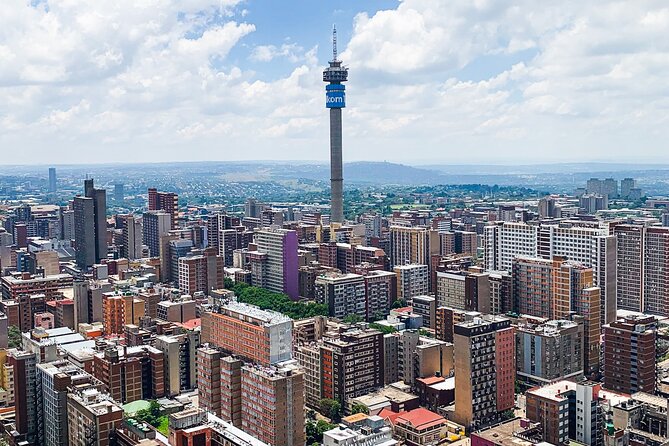
Johannesburg is often treated as a place to pass through on the way to a safari or a suburban hotel. That is a shame. Sandton may offer towers, malls, and polished offices, but the central city tells you why Johannesburg exists and why South African history took the shape it did.
This tour gives you that context in a compact three-hour route. You begin at Gandhi Square, then move through central Johannesburg toward Newtown and Braamfontein. The route covers mining, law, apartheid, migrant labour, theatre, street art, architecture, and present-day city life without separating them into tidy museum displays.
The strongest feature is the guide. Refiloe is praised for his warmth, humour, and command of Johannesburg’s past and present. Thabo brings an entertaining and passionate approach, while Mulalo and Mathapelo have also led thoughtful tours. If you are the only person booked, the experience may become a private walk, and guides have sometimes extended the outing to around four hours.
That extra time can be a real bonus, but do not assume it is guaranteed. The advertised duration is three hours, and the route includes plenty of walking and several stops.
More walking tours around the world:
- Magical London: Harry Potter Guided Walking Tour
★ 4.7 · 22,044 reviews - Reykjavik Food Walk – Local Foodie Adventure in Iceland
★ 5.0 · 18,952 reviews - History and Hauntings of Salem Guided Walking Tour
★ 5.0 · 14,564 reviews
Starting at Gandhi Square and the Carlton Centre
Meet your guide outside Nando’s at Gandhi Square, near the Metropolitan Building. This is a practical starting point because the square places you right in the central business district rather than at a suburban attraction.
The opening section introduces Johannesburg’s gold mining origins. Main Street and the surrounding blocks show how quickly the city grew after gold was found on the Witwatersrand. Your guide uses the buildings and street plan to explain the rush of workers, money, businesses, and government institutions that followed.
The Carlton Centre is one of the first substantial stops, with about 20 minutes set aside for a guided visit. It is one of the most recognizable towers in the city, and its scale helps you understand the ambition of Johannesburg’s downtown development.
There is one point to check before booking if you are specifically expecting a tower-top view. Access to the famous 360-degree viewpoint has not always been available, despite older tour descriptions suggesting it. Guides have offered another skyline viewpoint when necessary, but the exact experience can change.
Courts, post offices, and the working city
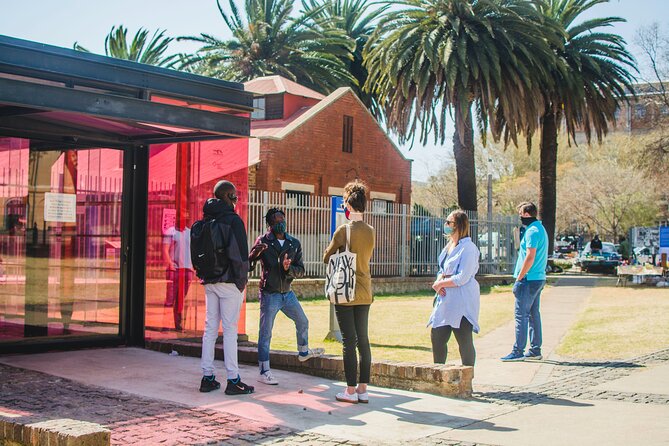
The route then turns toward the High Court of South Africa, Gauteng Local Division. Allow around 20 minutes for a visit, photographs, and explanation. This stop adds a legal and political layer to the mining story. Johannesburg was never only about digging for gold. It also became a centre of business, courts, government, protest, and power.
The Marshalltown Post Office receives a shorter visit of about 10 minutes. It may seem modest beside a tower or a major court, but stops like this help you read the city as a functioning place rather than a string of famous monuments.
You then spend about 30 minutes walking and sightseeing around Marshalltown and central Johannesburg. This is where the tour’s street-level approach pays off. You see the architecture, traffic, shops, and daily activity while your guide explains how the district has changed.
Expect a frank discussion of safety and the condition of the CBD. The guide does not pretend every block is thriving, but the tone is not simply negative. The point is to understand why the centre has faced pressure and why many people still see great potential in it.
Ferreirasdorp and the first gold diggings
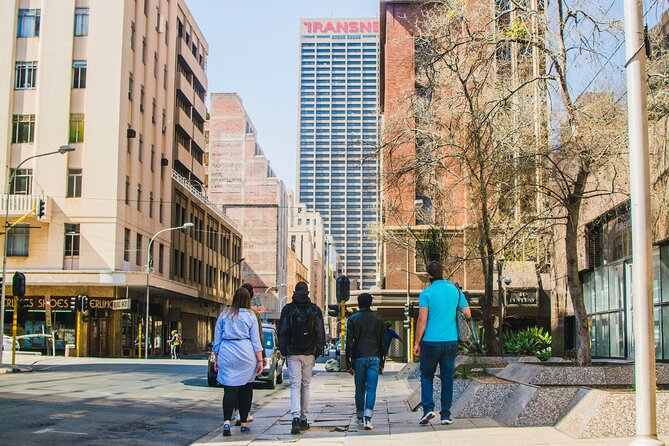
Ferreirasdorp is one of the most important historical sections of the walk. It is often called the cradle of Johannesburg because the first gold diggings began here and early diggers settled nearby.
This is where the city’s origin story becomes physical. You are not just hearing that gold created Johannesburg. You are walking through the area connected with the first settlement and the earliest mining activity.
The stop also helps correct a common impression that Johannesburg appeared fully formed as a modern business city. Its beginnings were rough, crowded, commercial, and driven by people arriving in search of work and opportunity. That pattern continued to shape the city for generations.
Same streets, a different story:
- New Orleans Premier Ghost, Voodoo and Vampire Walking Tour
★ 4.5 · 12,856 reviews - Amsterdam Anne Frank: Small-Group Walking Tour & Local Guide
★ 4.8 · 12,789 reviews - Edinburgh: Harry Potter Magical Guided Walking Tour
★ 4.8 · 11,944 reviews - Edinburgh Castle: Guided Walking Tour with Entry Ticket
★ 4.7 · 11,699 reviews
Chancellor House and Mandela’s legal work
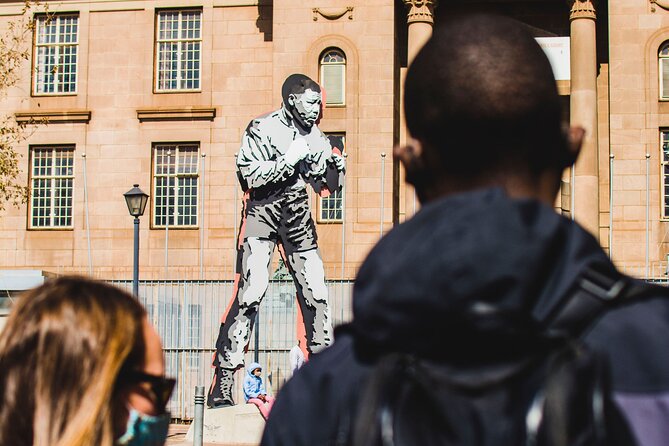
Chancellor House is one of the tour’s most meaningful stops. Nelson Mandela and Oliver Tambo established their first black-owned law firm here, giving the building a direct connection to the legal and political fight against apartheid.
Your guide explains the people and events tied to the site, but the value is also in the setting. Mandela is often presented through grand memorials and official portraits. Here, you connect him with a workplace, a legal practice, and the practical effort involved in defending clients under an unjust system.
This section suits anyone interested in South African politics, but you do not need a specialist background. The guide places the building within the broader story of Johannesburg and explains why the city became so important in the national struggle.
Beyers Naude Square and Johannesburg’s civic story
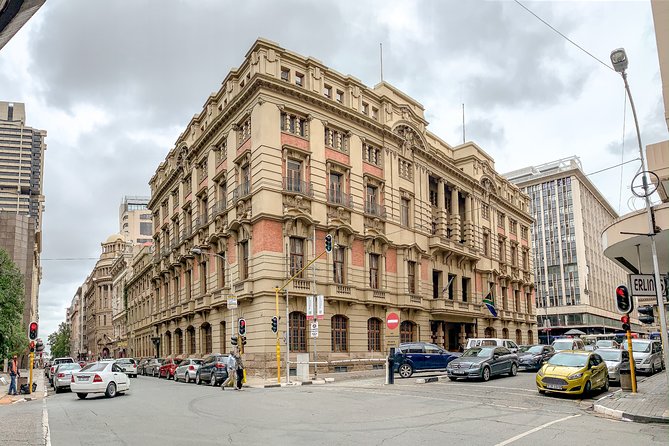
Beyers Naude Square is another photo and sightseeing stop, with about 20 minutes planned. The square provides a pause in the route and another chance to look at the architecture around central Johannesburg.
The tour also passes the Anglo American corporate offices and the Johannesburg Central Magistrate’s Court. These stops are shorter, around 10 to 20 minutes each, but they help show the contrast between corporate wealth, public institutions, and the everyday pressures of the CBD.
I like this part because the guide is able to move between large historical forces and ordinary urban details. You may hear about mining companies, legal institutions, apartheid, and present-day housing concerns in the same stretch of road. That mixture is central to understanding Johannesburg.
The Workers Museum and the migrant labour story
The Workers Museum offers one of the clearest links between Johannesburg’s mines and the people who powered them. The focus is migrant labour and the living conditions faced by workers who came to the city from elsewhere.
The museum is scheduled as a 15-minute stop, but its availability is important. It has been closed on some Mondays, and access cannot always be assumed. If the doors are shut, your guide can still explain the migrant labour system and the conditions workers faced, but you will lose the chance to see the displays directly.
That is the main practical weakness in the itinerary. If the museum is a priority, check its opening days before you reserve, and ask the tour operator about current access. Even without entry, the subject remains essential. Johannesburg’s wealth was built not only by gold, but by a labour system that separated workers from families and communities.
Newtown, Mary Fitzgerald Square, and the Market Theatre
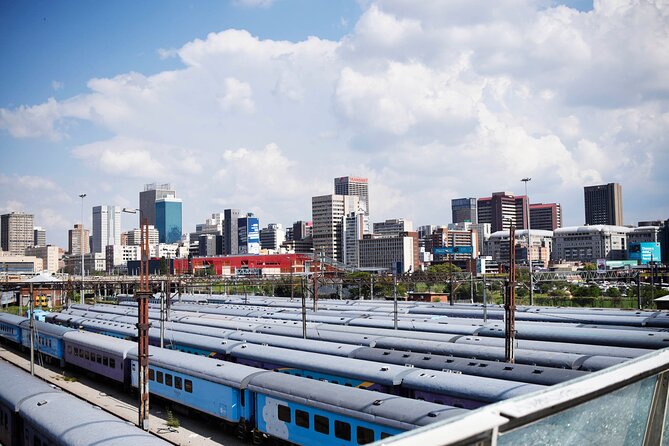
Newtown changes the mood. The district is associated with culture, street art, galleries, music, and creative spaces, offering a different view of Johannesburg from the courts and mining offices.
Mary Fitzgerald Square is a major stop, with about 15 minutes for photographs, sightseeing, and discussion. The square helps show how public spaces can hold several layers of the city’s story: labour, protest, performance, and redevelopment.
The Market Theatre follows. The tour passes by the theatre, with about five minutes listed for the stop. That sounds brief, so do not expect a full theatre visit or a long backstage tour. Instead, your guide explains its role in the city’s cultural life and points out the surrounding artistic activity.
Newtown is valuable because it resists the idea that Johannesburg is only a financial or industrial city. You will see a more creative side of the centre, though the route is still a walking introduction rather than a full gallery crawl.
Nelson Mandela Bridge and the route into Braamfontein
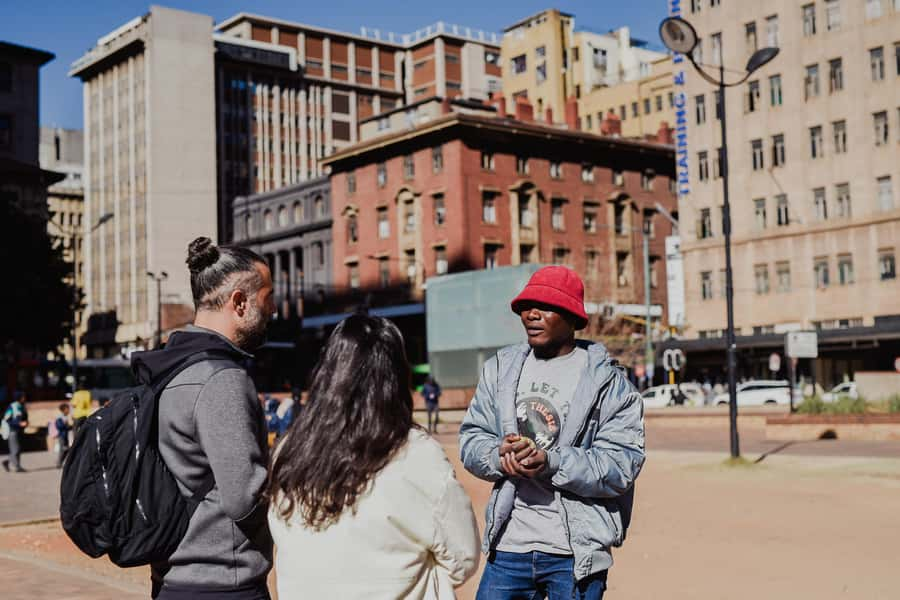
Nelson Mandela Bridge is one of the most photogenic points on the walk. The route takes about 10 minutes here, including a photo stop, views, and a look at the bridge’s role in connecting different parts of Johannesburg.
From the bridge, you get a strong sense of the city’s scale and variety. It is also a fitting place to connect the political story of Mandela with the present-day movement between neighbourhoods.
The tour concludes at Sha’p Braai, a shisanyama restaurant in the Braamfontein area. Lunch is not included, but finishing at a local-style food spot gives you the option of continuing the experience over a meal. One past booking specifically praised the food, though you should budget separately for anything you order.
Braamfontein is known for youthful energy, art, and cultural activity. The ending gives the tour a forward-looking note. You start with gold mining and early settlement, then finish in an area associated with a younger creative culture shaping Johannesburg today.
How safe and comfortable is the walk?
Safety is a sensible concern in central Johannesburg, and the guides take it seriously. The strongest practical benefit of this tour is that you are not trying to work out the CBD’s streets and boundaries alone. Your guide chooses the route, explains where to go, and keeps the group together.
Past participants repeatedly felt safe with guides including Refiloe, Thabo, Mathapelo, and Clement. That does not mean you should switch off your normal city awareness. Keep valuables secure, follow the guide’s directions, and stay with the group.
Wear comfortable shoes. The route includes several hours on foot, with repeated walking between sites rather than one fixed museum visit. Bottled water is included, which is useful, but bring sensible clothing for the weather and be ready for an active afternoon.
The tour description says wheelchair accessible, but it also lists wheelchair users among those for whom the activity is not suitable. That is a clear inconsistency. If you use a wheelchair or have limited mobility, contact One Day Africa before booking and ask about the current route, surfaces, and access to each stop.
Price, group size, and overall value
At $40 per person, this is not the cheapest way to look around Johannesburg, but the value is good if you want context rather than a quick photo stop.
The fee includes the guide, walking tour, bottled water, and entrance fees. Lunch, hotel pickup, and hotel drop-off are not included. Since the meeting point is at Gandhi Square and the finish is in Braamfontein, you need to arrange your own way to the start and onward transport after the tour.
The price becomes especially fair when the group is small. Several bookings turned into private tours, allowing the guide to answer questions and add extra detail. Some walks lasted four hours rather than three when the guide had the time and the group wanted more.
Do not book this expecting a fixed, tightly timed museum program. The appeal is the guide’s interpretation and the range of subjects covered. The tour has a 4.8 rating from 152 reviews, and the most consistent praise is for the guides’ local insight, friendly manner, sense of humour, and ability to make the city feel safe and understandable.
Who should book this city centre tour?
I would choose this walk if you want to understand how Johannesburg became Johannesburg. It suits first-time visitors, history fans, architecture lovers, photographers, and anyone tired of seeing South African cities only through shopping malls and hotel districts.
It is also a good choice if you have one free afternoon and want a broad introduction. You will not master every neighbourhood or political event in three hours, but you will leave with a clearer map in your head and better questions for the rest of your trip.
You may want a different activity if you dislike walking, want a relaxed sightseeing ride, or need guaranteed access to every listed building. The Workers Museum may be closed, Carlton Centre viewing access may change, and the Market Theatre is mainly a pass-by stop.
Book this tour if you want an honest, human introduction to Johannesburg’s centre, led by someone who can explain both its achievements and its problems. Skip it if you are only looking for polished attractions. The CBD is more complicated than that, and this walk is at its best when you are ready to see the complications.
FAQ
How long is the Johannesburg City Centre Walking Tour?
The scheduled duration is three hours. A guide may extend the walk when the group is small or when extra time is available, but this is not guaranteed.
Where does the tour begin?
It begins outside Nando’s at Gandhi Square, near the Metropolitan Building area.
Where does the tour finish?
The walk finishes at Sha’p Braai, a shisanyama restaurant in Braamfontein.
What language is the tour conducted in?
The live tour guide speaks English.
What is included in the price?
The $40 price includes the walking tour, guide, bottled water, and entrance fees.
Is lunch included?
No. Lunch is not included, although the tour finishes at Sha’p Braai, where you can choose to buy food separately.
Does the tour include hotel pickup and drop-off?
No. You must make your own way to Gandhi Square and arrange onward transport after the tour.
Will I visit the Workers Museum?
The route includes the Workers Museum, but opening access can vary. It has been closed on some Mondays, so check before booking if entry is important to you.
Is the Carlton Centre viewing platform guaranteed?
No. Access to the Carlton Centre’s 360-degree view has not always been available. The guide may provide another skyline viewpoint if access is closed.
Is the tour suitable for wheelchair users?
The activity information is inconsistent. It describes the tour as wheelchair accessible but also lists wheelchair users as unsuitable. Contact One Day Africa before booking to confirm current access and route conditions.
New walking tours around the world
- Niagara Falls, Canada: White Water Walk Entry Ticket★ 4.5 · 147 reviews
- NYC: Walking Tour with Local Guide and 30+ Top NYC Sights★ 4.5 · 248 reviews
- Zadar: Food Tasting & Old Town Walking Tour★ 5.0 · 94 reviews
- Niagara Falls: Walking Tour, Journey Behind Falls, & Cruise★ 4.8 · 773 reviews
- New York City: Gangsters and Ghosts 2-Hour Walking Tour★ 4.7 · 615 reviews
- NYC: History of Slavery & Underground Railroad Walking Tour★ 4.7 · 87 reviews
- New York City’s Hell’s Kitchen: Walking Food Tour★ 4.8 · 200 reviews
- New York City: Central Park Walking Tour★ 4.7 · 82 reviews
South Africa Walking Tours, side by side.

Soweto: Walking Tour with a Local Guide and Lunch
Read our review →
Plettenberg Bay: Bungee Jumping with Zipline and Sky Walk
Read our review →
Cape Town Walking Tour: Bo-Kaap & City Highlights
Read our review →
Cape Town: Bo-Kapp Walking Tour and Malay Cooking Class
Read our review →
Lists this walk sits on