
Review · SOUTH AFRICA
Cape Town: Bo-Kapp Walking Tour and Malay Cooking Class
Bo-Kaap is more than a row of pretty painted houses. This four-hour experience connects the color, faith, food, and daily life of the neighborhood, beginning with a guided walk and ending at a local home over samosas, curry, roti, salsa salad, and koesisters.
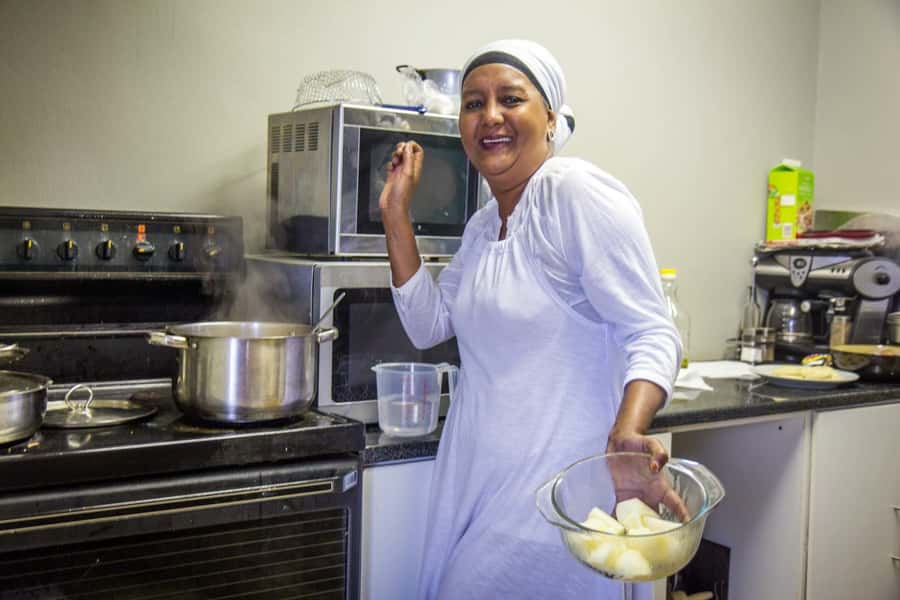
I like the local connection, especially when guides such as Faldela, Gadija, and Ilyas introduce you to people and places they know personally. I also like the hands-on cooking, since you do more than watch: you fold samosas, work with spices, and learn the tricks behind flaky roti.
The main consideration is the cooking space. One account found it small enough for only one or two people to work comfortably at a time, so this is a social class with demonstrations as well as participation. If you want a formal, individual cooking lesson, this may feel crowded.
Key points to know before booking
- Bo-Kaap beyond the photo stop: Learn about the area’s Muslim Cape Malay community, old buildings, first mosque in South Africa, and local traditions.
- A real cooking session: Help prepare samosas, chili bites, chicken curry, roti, salsa salad, and koesisters.
- Local hosts matter: Faldela is often the cooking host, while walking guides may include Gadija, Ilyas, or Gandija.
- Spice knowledge is part of the fun: A stop at a spice shop covers uses and reported health benefits of different spices.
- A generous finish: Sit down with your host and fellow participants to eat the food you helped prepare.
- Good value at $68: The price covers four hours, the museum entrance fee, water, instruction, and a full meal experience, though the food and other drinks are listed separately in the booking details.
Why this Bo-Kaap experience is different
Many Cape Town visitors come to Bo-Kaap for a quick photograph of its purple, yellow, pink, and blue houses. That gives you the postcard, but not much sense of the people who live there. This experience slows the visit down and gives the neighborhood a voice.
You begin with a walking tour through the cobbled streets. The guide explains the area’s cultural traditions, architecture, and connection to Islam. You also learn about the first and oldest mosque in South Africa and visit or pass the cultural museum, with the museum entrance fee included.
The walking portion is not a long hike. That matters because the real focus is the conversation and the cooking afterward, not covering a huge part of the city. Still, you should wear comfortable shoes. Bo-Kaap’s streets can be uneven, and the tour moves through a lived-in neighborhood rather than a polished outdoor attraction.
I especially like the way the walk can introduce you to local businesses. The experience may include art and souvenir shops, meetings with artists, and a stop at a spice shop. These small encounters give you something more useful than a list of dates. You see how the neighborhood functions today.
More cooking classes around the world:
- Budapest: Hungarian Cooking Class and Market Walk
★ 5.0 · 91 reviews - Naxos: Food Walking Tour & Cooking Class with Meal & Drinks
★ 4.9 · 86 reviews
Meet the people behind the colorful houses
A local guide makes a major difference here. Faldela is described as a warm host with a lively sense of humor, while Gadija has led both the historical walk and the cooking session. Ilyas has also guided visitors through the streets, offering a personal connection to the community.
The guide names can vary, so do not book with the expectation that one specific person is guaranteed unless the operator confirms it. The consistent feature is a local English-speaking host who can explain the area from personal experience.
You may hear about the history of the Cape Malay community, Islamic traditions, old houses, and the way the neighborhood has changed. You may also notice political messages painted on homes. One account appreciated the cultural context but felt that political commentary was more than expected during a food-focused activity. That is worth keeping in mind: the tour is not limited to architecture and recipes.
The best part of this walk is its human scale. You can ask questions, meet shopkeepers, and get a sense of how close-knit the area remains. It is also a good way to understand why walking Bo-Kaap with a guide is more useful than simply arriving alone with a camera.
The spice shop is a small highlight
The spice stop adds flavor to the walking section, literally and otherwise. You learn about different spices, how they are used in Cape Malay food, and their possible health benefits. Faldela is particularly praised for explaining spices at length, so this is a good moment to pay attention or record notes if permitted.
This part is useful because it prepares you for the cooking class. Instead of treating curry as a single powder from a supermarket jar, you begin to understand how individual spices shape aroma and taste.
The spice discussion can also be one of the most memorable parts of the experience for anyone who enjoys cooking at home. You leave with more than a full stomach and recipes. You gain a better sense of what to look for when buying spices and how they fit into the dishes you have just made.
Cooking samosas, chili bites, curry, and roti
After the walk, you return to your host’s home and start preparing the meal. The exact menu can include samosas, chili bites, chicken curry, roti, and sambal, also described as a salsa salad. The meal is substantial, not a token tasting.
You help fold the samosas, which is one of the clearest hands-on parts of the class. You may also prepare chili bites before moving on to the main dishes. The recipes are practical enough to repeat at home, and several participants specifically valued receiving them afterward by email.
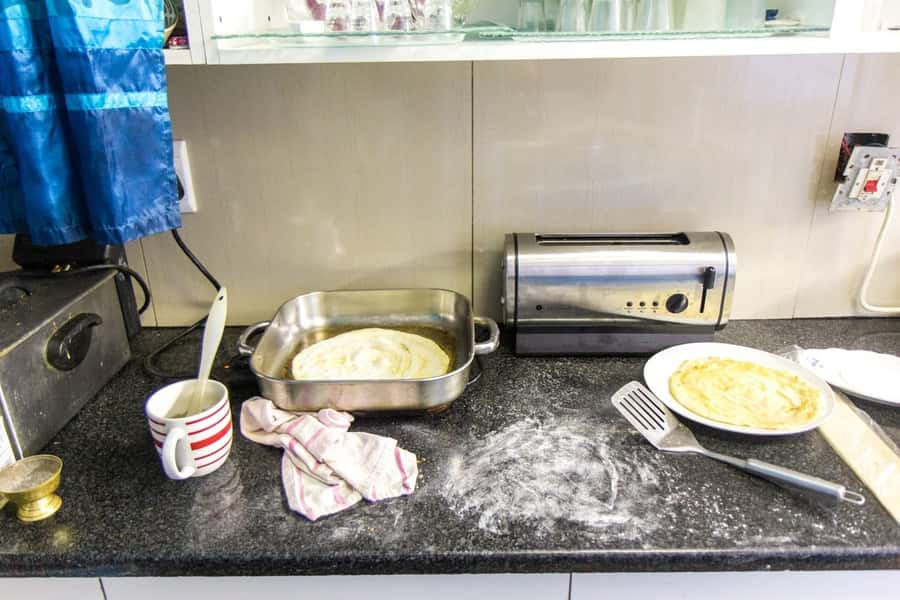
The roti is a highlight. Making it from scratch gives you a feel for the dough, folding, and cooking process that a demonstration alone would not provide. One useful tip from the experience is that even people who do not consider themselves cooks can take part and still end up with good food. The host handles the tricky parts when needed.
The cooking room is reportedly small. That is the one practical weakness to plan around. If the group is large, you may spend some time watching while another person folds dough or works near the stove. The class is still interactive, but not every participant will have constant access to the work surface.
I would treat the crowding as part of the home setting rather than a major flaw. You are cooking in a local residence, not a purpose-built culinary school. The tradeoff is less counter space in exchange for a more personal setting.
More hands-on stops around the world:
- Brussels Chocolate Walking Tour and Workshop
★ 4.5 · 885 reviews - Brussels: Chocolate Workshop and Guided Walking Tour
★ 4.6 · 263 reviews
Cape Malay food with a place at the table
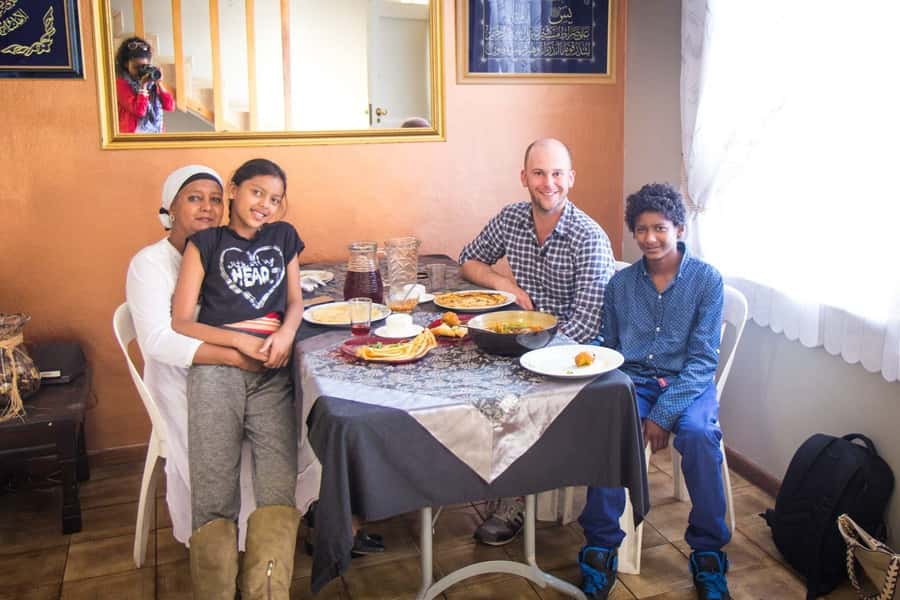
When the cooking is finished, you sit down and eat together. The menu is built around familiar, filling dishes: curry, roti, samosas, salsa salad, and sweet or spiced fried treats. Koesisters, described here as spicy savory donuts, are served with cardamom tea.
The meal is valuable because it brings the cultural discussion back to daily life. Food is not presented as a separate show. You have just handled the ingredients, listened to explanations, and watched the dishes come together. Now you taste the result with the host and other people in the group.
Portions are described as plentiful, and dietary needs have been handled well in at least one booking. Still, you should mention any dietary requirements when booking or before the class begins. The supplied details do not promise that every dietary request can be accommodated, so it is best to confirm rather than assume.
The meal also creates room for conversation. You can talk with the host and fellow participants, compare travel plans, and ask follow-up questions about Bo-Kaap. For many people, this shared table is the strongest part of the afternoon.
What the $68 price buys you
At $68 per person, this is not the cheapest way to see Bo-Kaap. You can walk around the neighborhood on your own for little or no cost. The price makes more sense when you treat the activity as four experiences joined together: a guided cultural walk, a museum visit, a spice lesson, and a cooking class with a full meal.
You also receive recipes, which adds practical value if you want to recreate the food at home. The class is not just entertainment during your Cape Town stay. It gives you skills and context you can carry home.
The booking information includes museum entry and water. It separately lists food and drinks as not included, even though the prepared meal is central to the experience, so check the final booking terms carefully to understand what is covered in your specific reservation. Alcohol is not included.
The value is strongest for people who would otherwise pay separately for a city walking tour and a cooking class. It is less attractive if you only want quick photographs of the houses or if you do not enjoy group activities around food.
Timing, meeting point, and practical details
The activity lasts four hours, with starting times depending on availability. You meet your host at a purple house with flower pots on top. That landmark is specific, but still allow time to identify it without rushing.
English is the listed tour language. The guide leads the walking portion and explains the cooking, though the people involved may vary. Names connected with the experience include Faldela, Gadija, Ilyas, Gandija, and Bilquis.
Comfortable shoes are the only listed item to bring. That is sensible for the cobbled streets and walking tour. You may also want a phone for photographs and notes, especially during the spice explanation, but do not let the camera distract you from the people and stories around you.
Free cancellation is available up to 24 hours before the start for a full refund, and you can reserve while paying later. These terms make it easier to fit the activity into a Cape Town schedule that may depend on weather or other plans.
Who will enjoy this most
I would choose this for you if you want food to explain culture rather than simply eat a restaurant meal. It suits curious first-time visitors to Cape Town, home cooks, families with older children, and anyone who prefers meeting local people to ticking off landmarks.
It is also a good choice if you have already seen Table Mountain, the waterfront, or the main city sights and want a slower afternoon. The walk is short enough to leave room for conversation, while the cooking gives the outing a clear purpose.
You may want another option if you dislike group participation, have limited mobility on cobbled streets, or want a polished cooking studio with a separate workstation for every person. The small kitchen can limit direct cooking time, particularly when several people want to work at once.
Non-cooks should not rule it out. The hosts guide you through the steps, and you can learn by watching as well as doing. The atmosphere is social and relaxed, not a test of your culinary skill.
My verdict on the Bo-Kaap cooking class
I would book this if you want to understand Bo-Kaap through its streets, spices, and table. The strongest elements are the local guides, the warm home setting, the spice lesson, and the chance to make real dishes rather than watch a short demonstration.
The main caution is the compact cooking area and the variable guide lineup. Confirm what food costs are included, share dietary needs in advance, and arrive ready for a group activity. If that sounds comfortable, $68 is a fair price for four hours of history, local contact, cooking instruction, recipes, and a generous meal.
FAQ
How long does the Bo-Kaap walking tour and cooking class last?
The full experience lasts four hours. It combines the neighborhood walk, cultural and historical explanations, the spice shop visit, the cooking class, and the shared meal.
What food will I prepare?
The meal can include samosas, chili bites, chicken curry, roti flatbread, and sambal or salsa salad. Dessert is koesisters, served with cardamom tea.
Who leads the experience?
The English-speaking guides and hosts can vary. Names connected with the activity include Faldela, Gadija, Ilyas, Gandija, and Bilquis.
Is the museum entrance included?
Yes. The museum entrance fee and water are listed as included.
What should I bring?
Bring comfortable shoes for walking on Bo-Kaap’s cobbled streets. The meeting point is a purple house with flower pots on top.
Can I cancel the booking?
You can cancel up to 24 hours before the activity for a full refund. The booking also offers a reserve now and pay later option.
New walking tours around the world
- Niagara Falls, Canada: White Water Walk Entry Ticket★ 4.5 · 147 reviews
- Zadar: Food Tasting & Old Town Walking Tour★ 5.0 · 94 reviews
- Niagara Falls: Walking Tour, Journey Behind Falls, & Cruise★ 4.8 · 773 reviews
- NYC: Walking Tour with Local Guide and 30+ Top NYC Sights★ 4.5 · 248 reviews
- New York City: Gangsters and Ghosts 2-Hour Walking Tour★ 4.7 · 615 reviews
- NYC: History of Slavery & Underground Railroad Walking Tour★ 4.7 · 87 reviews
- New York City’s Hell’s Kitchen: Walking Food Tour★ 4.8 · 200 reviews
- New York City: Central Park Walking Tour★ 4.7 · 82 reviews
South Africa Walking Tours, side by side.
Soweto: Walking Tour with a Local Guide and Lunch
Read our review →
Plettenberg Bay: Bungee Jumping with Zipline and Sky Walk
Read our review →

Cape Town Walking Tour: Bo-Kaap & City Highlights
Read our review →
Lists this walk sits on