
Review · LISBON
Lisbon by Night: Guided Walking Tour – The Unholy Secrets
Lisbon’s prettiest streets have a grim underside, and this walking tour brings it forward. From Rossio and Baixa to Alfama, you’ll hear about the Portuguese Inquisition, the 1506 New Christian massacre, Aljube prison, the 1755 earthquake, and the people caught in Lisbon’s secret plots. Theatrical storytelling gives the past a human face.
I like the route’s useful mix of history and orientation, especially the walk from central Rossio toward Alfama. I also like the guides’ dramatic style: Maria, Amanda, Andreia, Clara, and others are praised for acting out characters and making difficult subjects easier to follow. The main drawback is physical: you’ll walk quickly, climb hills, and finish in Alfama, so this is not a good choice for anyone with limited mobility.
Key points to know before you book
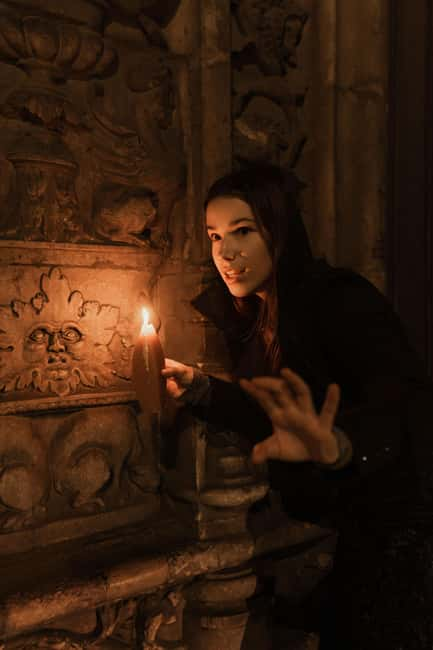
- A dark history tour, not a standard ghost walk: Real events such as the Inquisition and the 1506 massacre receive more attention than made-up hauntings.
- A 105-minute route: You begin beside Joalharia Ferreira Marques on Rossio Square and finish in Alfama.
- Strong guide-led performance: Guides including Maria, Amanda, Andreia, Clara, and Ameira use character work and vivid narration.
- A useful first-night activity: The walk helps you get oriented around Baixa and Alfama while pointing out places worth revisiting.
- One serious hill and a brisk pace: Comfortable shoes matter, and the route does not suit wheelchair users or people with mobility impairments.
- Good value at $23: You pay for a focused story, a live guide, and nearly two hours of walking rather than monument admission.
Lisbon’s darker side begins in Rossio
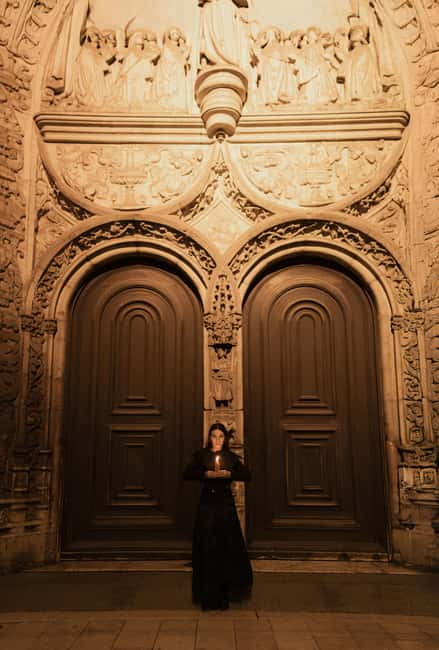
The meeting point is easy to identify if you know what to look for. Meet beside Joalharia Ferreira Marques, the old jewelry shop on the south side of Rossio Square. Your guide holds a lantern, which is a practical marker in a busy central square and fits the mood without turning the evening into a costume show.
The tour opens in the historic center, where grand public spaces can hide painful chapters. Rossio is an effective starting point because you are not dropped straight into a remote alley. You begin in a familiar square, then move into the streets of Baixa as the stories grow darker.
This is not presented as a dry lecture. The guide uses theatrical narration, changes tone, and brings people from the past into the story. Maria has been especially praised for combining acting with clear historical explanation, while Amanda is known for answering questions and helping with directions after the walk. Andreia, Clara, and Ameira have also been singled out for their strong delivery.
That variation matters. The experience depends heavily on the person leading it. A good storyteller can make a complicated subject such as the Inquisition understandable in a few minutes. A less dramatic guide might make the same material feel like a list of dates. The available feedback points strongly toward energetic guides, but you should still book this because you want a performance-based history walk, not a formal academic seminar.
More Hidden Gems Walking Tours in Lisbon:
- Dublin Highlights and Hidden Gems Guided Walking Tour
★ 5.0 · 6,020 reviews - Explore Berlin: See All The Iconic Sights & Some Hidden Gems
★ 5.0 · 4,429 reviews - Kyoto Geisha Walking Tour: Gion District & Hidden Gems
★ 4.7 · 3,273 reviews
Baixa turns familiar streets into a stage
The route continues through Baixa de Lisboa, the central district rebuilt after the great earthquake of 1755. You are not paying to enter monuments, and the tour does not include admission to attractions along the way. Instead, the streets themselves become the setting for stories about power, punishment, faith, disaster, and survival.
The Baixa section is useful because it connects Lisbon’s physical layout with its past. The earthquake and the rebuilding associated with Marquês de Pombal are part of the story, giving you a better sense of why the center looks and feels different from Alfama. The guide places major events in the streets around you rather than keeping history inside a museum.
You may also receive practical local advice as you walk. One account highlights tips about places to eat, and another mentions a stop connected with ginjinha, Lisbon’s familiar sour-cherry drink. Do not expect a full food tour or a tasting package, since neither is included in the published details. Think of these moments as small cultural pointers that add color to the walk.
The pace is worth noting. One person found the walking straightforward but mentioned a good hill, while another described the tour as fast between stops and uphill in places. That sounds manageable for most active walkers, but it is not a gentle stroll with long breaks. Wear shoes with a firm sole, and bring water since bottles are not included.
The Inquisition takes center stage
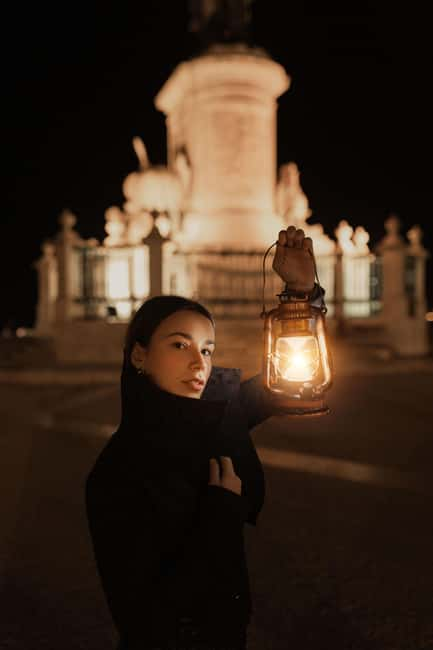
The strongest part of the experience is its focus on Lisbon’s religious persecution and social divisions. The Portuguese Inquisition is not treated as a vague backdrop. It becomes a central subject, alongside the 1506 New Christian massacre and the human cost of official power.
For you, this focus offers a different angle on the city. Many first-time walks concentrate on explorers, tiled facades, viewpoints, and royal monuments. This one asks who suffered behind those grand stories, how suspicion was used, and how ordinary people experienced fear. It gives you a less polished but more honest way to understand Lisbon.
The 1506 massacre is particularly important to the tour’s point of view. The story connects a major event to real people and public spaces, rather than leaving it as an isolated date in a guidebook. The guide’s job is to make you picture the human choices and consequences without losing the historical setting.
The tone can be heavy. You will hear about terror, imprisonment, persecution, and lost lives. That is the point, but it may not suit you if you want a light evening activity after dinner. The theatrical delivery keeps the walk engaging, yet the material remains serious. I appreciate that balance. One account specifically noted that the content does not rely too heavily on typical ghost stories, instead joining documented events with their eerie aftermath.
Aljube prison and the stories of confinement
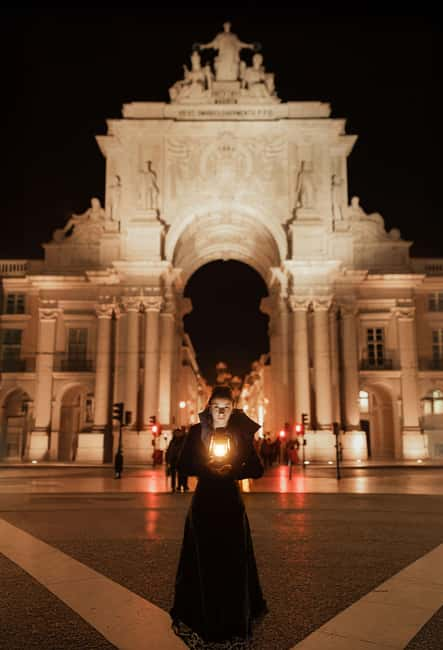
Aljube prison adds another layer to the walk. The site is linked with imprisonment and political repression, and it gives the guide a setting for stories about people who disappeared into a system built on fear. The tour description places the prison among the haunting locations connected with Lisbon’s past.
You should not expect an interior visit. Entrance to monuments is not included, and the experience is an outdoor walking tour. The value comes from hearing what happened in relation to the city around you, then seeing how the location fits into Lisbon’s wider story.
This is where the lantern and evening timing help the atmosphere. The light is lower, the streets feel less like a sightseeing checklist, and the guide can use pauses and movement to create suspense. Still, this is historical storytelling, not a supernatural attraction. The most effective moments come from knowing that the events were real.
More Night Walking Tours in Lisbon:
- Private Street Food Evening Walking Tour in Ho Chi Minh City
★ 5.0 · 3,175 reviews - Granada: Albaicín and Sacromonte Guided Sunset Walking Tour
★ 4.9 · 2,962 reviews - Bremen: Walking Tour in German with Night Guard
★ 4.7 · 2,922 reviews - Ghosts of Charleston Night-Time Walking Tour with Unitarian Church Graveyard
★ 4.5 · 2,835 reviews
Alfama provides the right final act
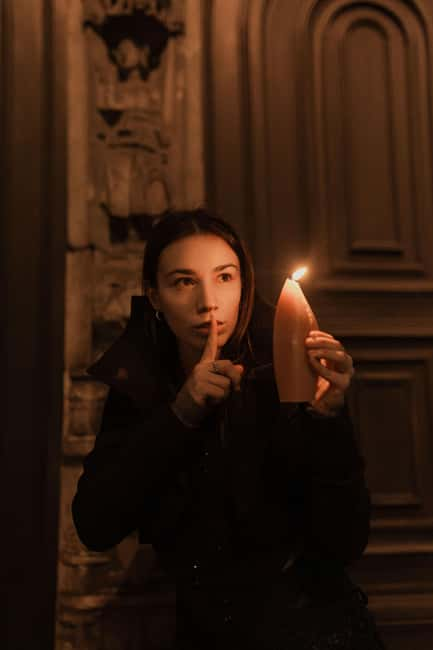
The walk ends in Alfama, Lisbon’s oldest-feeling central district and one of the city’s most atmospheric areas. The route from the broad streets of Baixa into narrower lanes changes the mood naturally. The city begins to feel more enclosed, and the guide can connect the medieval street pattern with legends, plots, and stories of people who once moved through these passages.
You should expect uneven streets and uphill sections here. Alfama is not laid out like a flat city grid, so the finish makes the physical warning important. The tour is not suitable for wheelchair users or people with mobility impairments, and it may be tiring if you have already spent the day climbing Lisbon’s hills.
One especially appealing detail is the possibility of ending near a viewpoint overlooking the Tagus River. That specific ending has been described as a memorable final scene, though you should treat it as part of the guide’s route rather than a guaranteed formal viewpoint stop. Either way, finishing in Alfama gives you a useful base for a later meal, a return visit, or continued evening wandering.
I like the route for a first night in Lisbon because it teaches you how the center fits together. You move from Rossio through Baixa and toward Alfama, passing areas you may want to explore again in daylight. One person who took the tour early in a stay found it useful for getting the lay of the city.
What the storytelling adds
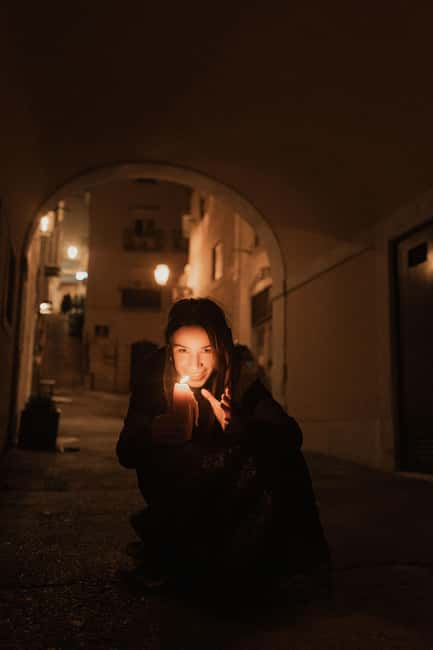
The guide is the real engine of this activity. The walk covers familiar subjects, but the delivery changes the experience. Instead of hearing a list about the Inquisition or the earthquake, you hear about characters, decisions, and consequences while standing in the places tied to them.
Maria has received repeated praise for turning poor weather into part of the fun and for using dramatic side stories. Amanda is described as both an engaging performer and a reliable source of historical context. Andreia is praised for being personable and well informed, while Clara is noted for giving the city a fresh angle. These details suggest that the company places real weight on presentation rather than simply handing a guide a script.
That performance also makes the tour a good choice for mixed groups. A history enthusiast can follow the political and religious context, while someone who usually avoids formal history tours can enjoy the characters and suspense. The guide can also answer questions, as Amanda did, which gives the experience more flexibility than a recorded audio walk.
There is a limit. The theatrical style may not suit you if you prefer quiet observation, precise academic detail, or long time at each site. The group moves from place to place, so this is a narrative route rather than a detailed study of individual buildings.
How much value do you get for $23?
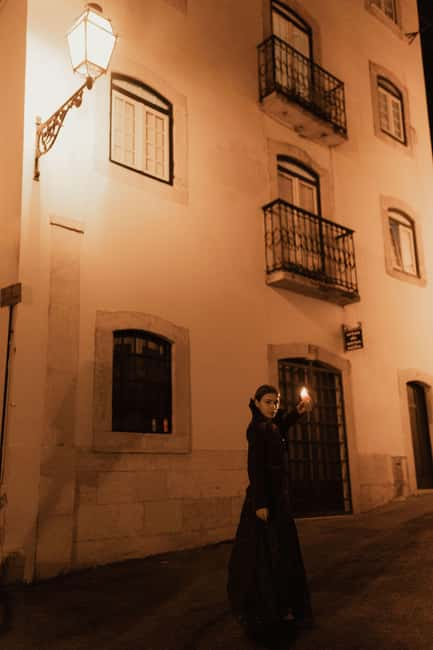
At $23 per person, the tour sits in a reasonable range for a live, English-language city walk lasting 105 minutes. You are paying for the guide’s time, route planning, storytelling, and local context. You are not paying for entry to monuments, food, or drinks, so compare it with other guided walks on the basis of the live performance rather than included extras.
The value is strongest if you enjoy learning through stories. A book may cover more dates and detail, but it cannot point out a street, shift into a historical character, answer your question, and lead you from central Lisbon into Alfama in the same session. One person felt the price was slightly high for a walking tour, yet still found the experience worthwhile because it combined history with useful orientation.
The tour also works well at the beginning of a Lisbon stay. You can note restaurants, viewpoints, and streets you want to revisit, then return in daylight when you have more time for photographs and building details. If you already know Lisbon’s history well, the value will depend on how much you enjoy the performance and the darker angle.
Flexible booking helps with planning. You can reserve now and pay later, and cancellation is free up to 24 hours before the activity for a full refund. Starting times vary, so you need to check availability for your date.
Who should take this walk?
I would choose this for you if you like:
- Serious history presented in an entertaining way
- Real events mixed with legends and unsettling aftermath
- Walking tours that show the city rather than keeping you in a museum
- Small-group energy and a guide who can act, explain, and answer questions
- A first-night activity that helps you understand central Lisbon
I would hesitate if you need a flat route, frequent rest stops, or step-free access. The tour is not suitable for wheelchair users or people with mobility impairments. It also may not be ideal for young children, although no specific age restriction is provided. The subject matter includes persecution, prison, massacre, and death, so consider your group’s comfort with dark themes.
Bring comfortable shoes. Since water is not provided, carry your own bottle. The tour is in English, and you should be ready to walk for the full 105 minutes, including uphill sections.
Should you book Lisbon by Night?
Book it if you want Lisbon’s less comfortable stories, delivered with energy and a strong sense of place. The best reason to choose it is not the spooky label. It is the chance to connect Rossio, Baixa, and Alfama with the Inquisition, the 1506 massacre, the earthquake, Aljube prison, and the people shaped by those events.
Skip it if you want monument interiors, a flat route, or a relaxed sightseeing stroll. At $23, it offers good value for an engaging live performance, especially on your first evening in Lisbon. Just arrive ready for hills, serious subjects, and a guide who may turn the city’s shadows into characters.
FAQ
Where does the Lisbon by Night tour begin?
It begins at Praça Dom Pedro IV 7, beside Joalharia Ferreira Marques on the south side of Rossio Square. The guide will be holding a lantern.
Where does the tour finish?
The walk finishes in Alfama.
How long does the tour last?
The stated duration is 105 minutes, or 1 hour and 45 minutes.
What language is the tour conducted in?
The live tour guide speaks English.
What historical subjects are covered?
The tour covers the Portuguese Inquisition, the 1506 New Christian massacre, the 1755 earthquake, Marquês de Pombal, Aljube prison, medieval Lisbon, and other dark episodes and legends.
Are monument entrances included?
No. Entrance to monuments at the stops is not included.
What should I bring?
Bring comfortable shoes. Water bottles are not included, so you may also want to carry your own water.
Is the tour suitable for wheelchair users?
No. The activity is not suitable for wheelchair users or people with mobility impairments. The route includes walking through Lisbon’s historic center and uphill sections.
New walking tours around Lisbon
- Lisbon: Walking Tour in the Center (Max 12 Participants)★ 5.0 · 741 reviews
- Lisbon Tram No. 28 Ride & Walking Tour★ 4.1 · 766 reviews
- Lisbon: Kickstart Street Art Walking Tour★ 4.9 · 717 reviews
- Lisbon Through the Eyes of a Local – Food and Walking Tour★ 4.9 · 141 reviews
- Lisbon: Private Boat Trip, Guided Walking Tour, Bike & Tram★ 4.8 · 116 reviews
- Lisbon: Jewish Walking Tour★ 4.9 · 96 reviews
- Lisbon: Food and Culture 3-Hour Walking Tour★ 4.7 · 95 reviews
- Lisbon: Street Art Walk★ 5.0 · 79 reviews
Lisbon Walking Tours, side by side.
Lisbon: History, Stories and Lifestyle Walking Tour
Read our review →
Best of Lisbon Small-Group Guided Walking Tour
Read our review →
Lisbon: Food and Wine Small Group Walking Tour
Read our review →
Best of Lisbon Walking Tour: Rossio, Chiado & Alfama
Read our review →

Lisbon Food Tour with 10+ Tastings of Local Delicacies & Wines
Read our review →
Lisbon Roots – Small group Food & Culture Walking Tour w/tastings
Read our review →
Lisbon Private Food Tour – Taste 10+ Local Dishes & Wines
Read our review →Lists this walk sits on